Loading...
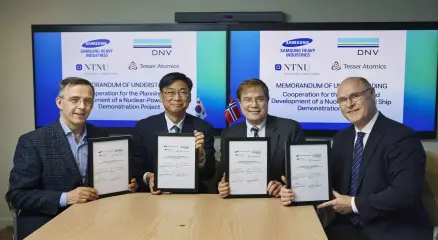
Samsung Heavy Industries (SHI), Norwegian classification society DNV, US-based nuclear technology developer Tesser Atomics and the Norwegian University of Science and Technology (NTNU) have joined forces to advance the development of a nuclear-powered liquefied natural gas (LNG) carrier designed for commercial operations between the United States and Europe. The collaboration marks a significant step towards exploring nuclear propulsion for commercial maritime transportation. The four organisations have signed an agreement to develop a demonstration vessel concept incorporating Tesser Atomics' fluoride-salt-cooled nuclear reactor technology. The initiative will focus on establishing a comprehensive development roadmap covering vessel design, reactor integration, maritime safety, regulatory approvals and the commercial feasibility of nuclear-powered shipping. Under the proposed arrangement, Samsung Heavy Industries will lead vessel design, marine integration and shipbuilding feasibility assessments. Tesser Atomics will be responsible for developing the nuclear reactor system and addressing nuclear-specific safety and licensing requirements. DNV will contribute its maritime classification and technical expertise, including developing the safety assessment framework and evaluating potential operational risks. Meanwhile, NTNU will coordinate research activities, feasibility studies, modelling, simulations, testing and funding proposals. The project will form part of the activities of SFI SAINT, a Norwegian research centre led by NTNU that focuses on advancing nuclear propulsion technologies for commercial shipping. The consortium aims to bridge the gap between established nuclear propulsion applications in naval vessels and their potential adoption in merchant shipping. For Samsung Heavy Industries, the collaboration builds on its ongoing investments in next-generation marine propulsion technologies. In September 2025, the shipbuilder secured Approval in Principle (AiP) from the American Bureau of Shipping (ABS) and the Liberian Registry for a 174,000-cubic-metre LNG carrier concept powered by a molten salt small modular reactor (SMR). The latest initiative also reflects growing industry interest in alternative propulsion technologies that could support maritime decarbonisation and improve long-term energy efficiency. The partners are additionally exploring the possibility of adapting nuclear propulsion technology for container ships and other commercial vessel categories. However, significant challenges remain before nuclear-powered commercial vessels can become operational. Nuclear licensing, maritime safety standards, insurance arrangements, regulatory compliance and commercial viability will require extensive assessment. The partners have not announced a construction schedule, delivery timeline or final investment commitment for the demonstration vessel. The International Maritime Organization (IMO) is also working towards updated safety provisions for nuclear-powered ships, with a revised Code of Safety for Nuclear Ships targeted for adoption in 2030. The proposed LNG carrier could therefore become an important demonstration project in determining whether nuclear propulsion can be safely and commercially integrated into the future of global shipping. 𝐒𝐭𝐚𝐲 𝐭𝐮𝐧𝐞𝐝 𝐭𝐨 CARGOCONNECT 𝐟𝐨𝐫 𝐥𝐚𝐭𝐞𝐬𝐭 𝐮𝐩𝐝𝐚𝐭𝐞𝐬!
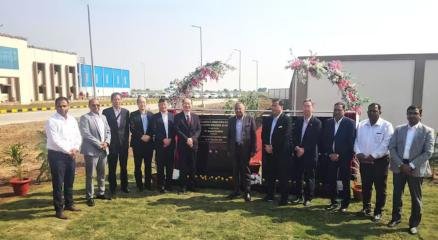
TRL Krosaki Refractories Limited has commissioned a ₹140-crore greenfield manufacturing facility at Juna Katariya, Gujarat, adding a new production base to its manufacturing network and strengthening its ability to serve industrial customers across western and southern India, as well as overseas markets. Commissioned on 22 November 2026, the facility will manufacture high-alumina refractory bricks and castables used by cement, steel, aluminium and glass manufacturers. The investment is also expected to support the company's regional distribution and export operations, with access to raw materials, proximity to industrial customers and connectivity to seaports influencing the location decision. The Odisha-based company, part of Japan's Krosaki Harima Corporation group, has listed the Gujarat facility's annual production capacity at 66,000 tonnes, covering alumina bricks and alumina castables. New capacity for industrial material supply The plant will produce high-alumina refractory bricks and various grades of castables, including trough, low-cement, conventional and insulation castables. These materials are used in high-temperature industrial processes across several manufacturing sectors. Its production infrastructure includes grinding and mixing units, automated batching systems, electric screw presses, tunnel and high-temperature kilns, and driers. A dedicated mould shop and quality-control laboratory will support manufacturing and product testing. The additional capacity strengthens TRL Krosaki's production footprint and gives the company another manufacturing location to serve industrial demand in western and southern India. Location connects raw material sourcing with customer markets The company laid the foundation stone for the Gujarat project near Samakhiyali on 21 January 2025. At the time, it cited demand from cement and steel manufacturers in western and southern India, along with overseas markets, as key drivers behind the investment. The location also brings inbound raw material sourcing and outbound product distribution into focus. Access to refractory-grade raw materials and proximity to customers can support material movement through the manufacturing supply chain, while seaport connectivity offers an additional advantage for overseas shipments. However, the company has not disclosed the ports that will handle exports from the facility or provided plant-specific export volumes and shipment targets. Managing Director Prasanta Kumar Naik highlighted Gujarat's access to suitable raw materials and important customer locations. Chairman Hemant M Nerurkar noted that the project had progressed despite geopolitical uncertainty and supply chain disruptions. Kazuhiro Egawa, President of Krosaki Harima Corporation, attended the commissioning. Part of a phased manufacturing expansion TRL Krosaki's FY2025–26 annual report described the Gujarat project as a phased development. The monolithics unit had already been commissioned, while production at the high-alumina brick facility was scheduled to begin in November 2026. The latest commissioning marks a further step in bringing the planned manufacturing capacity into operation. The company has also been investing in automation, process monitoring and quality improvements across its wider operations. These initiatives include a new coking furnace that increased monthly slide-plate production capacity from 168 tonnes to 220 tonnes, along with digital monitoring at its tap-hole clay plant. Expanding the manufacturing footprint TRL Krosaki's manufacturing network includes facilities at Belpahar in Odisha, Salem, Jamshedpur and Madhya Pradesh, alongside its Gujarat operations and manufacturing presence in China. Its Belpahar facility has a listed annual production capacity of 225,210 tonnes across several refractory product categories. The Gujarat plant adds another manufacturing location closer to key industrial markets in western India. Its contribution to the company's export supply chain will depend on production utilisation and customer demand. For the logistics sector, the investment highlights the role of manufacturing location decisions in connecting raw material availability, industrial consumption centres and export gateways. The extent to which the new facility translates into additional cargo movement will become clearer as production and overseas orders scale up. Follow CARGOCONNECT for more such updates
India has announced access to Deendayal Port at Kandla in Gujarat for Nepal’s international transit trade, marking a significant step towards expanding the landlocked country's maritime connectivity. Access to Paradip Port in Odisha will also be extended once the necessary infrastructure is in place, creating additional maritime gateways for Nepal's overseas cargo movement. The announcements were made by Prime Minister Narendra Modi during the two-day state visit of Nepalese Prime Minister Balendra Shah to India on 22-23 November 2026. The expanded port access forms part of a broader bilateral agenda aimed at strengthening trade facilitation, cross-border infrastructure and economic cooperation between the neighbouring countries. For Nepal, which relies on neighbouring countries for access to international maritime trade routes, the inclusion of Kandla and Paradip is expected to widen its options for moving export and import cargo. The country's existing transit arrangements through India include Kolkata, Haldia and Visakhapatnam ports, supported by road and railway networks connecting Indian gateways with Nepalese trade centres. The addition of Kandla will provide Nepal with access to a western Indian port, while Paradip is expected to strengthen its access to the eastern maritime corridor. However, Paradip's inclusion remains subject to the development of the required infrastructure. Detailed operational arrangements and timelines for the new gateways are yet to be specified. Cross-Border Rail and Road Connectivity to Receive a Boost The port access announcement was accompanied by several initiatives to improve the movement of goods and people across the India–Nepal border. The two prime ministers announced the completion of the field location survey for the proposed Raxaul–Kathmandu electrified broad-gauge railway line and agreed to collaborate on the development of Nepal’s East–West Railway. They also laid the foundation stone for a new Integrated Check Post (ICP) at Banbasa and inaugurated a motorable bridge connecting Dharchula in India with Darchula in western Nepal. These projects are expected to improve border infrastructure, streamline cross-border movement and strengthen trade connectivity. The developments build on progress in bilateral rail freight operations. In July 2026, Indian Railways operated the first direct commercial container freight train from Kolkata Port to Biratnagar Customs Yard. The 40-wagon train carried canola cargo and enabled containerised freight to reach Biratnagar without transshipment at the border, demonstrating the potential of improved rail-based trade connectivity. The revised India–Nepal Treaty of Transit, signed on 1 June 2023, provides the framework for the movement of merchandise through India's roadways, railways, inland waterways and ports. According to the Indian Embassy in Kathmandu, bilateral merchandise trade reached approximately US$9.38 billion in financial year 2025–26, underlining the importance of efficient and diversified logistics corridors. The port access initiative is part of a wider ₹15,000-crore development assistance package announced by India. It comprises ₹3,500 crore in grant assistance for post-disaster reconstruction and infrastructure projects, alongside an ₹11,500-crore rupee-denominated Line of Credit for energy-sector projects. With additional port gateways, railway development and improved border infrastructure on the agenda, India and Nepal are seeking to build a more integrated regional transport and logistics network. The effective implementation of these initiatives could offer Nepal greater flexibility in accessing international markets while strengthening India's role as a key transit partner for its landlocked neighbour. 𝐒𝐭𝐚𝐲 𝐭𝐮𝐧𝐞𝐝 𝐭𝐨 CARGOCONNECT 𝐟𝐨𝐫 𝐥𝐚𝐭𝐞𝐬𝐭 𝐮𝐩𝐝𝐚𝐭𝐞𝐬!
Global airfreight rates continued their upward trajectory for the seventh consecutive week, with the worldwide average rate climbing 2% week on week (WoW) to US$3.49 per kg during Week 46 (November 9-15, 2026). The latest figures from WorldACD Market Data indicate sustained pricing pressure in the international air cargo market, driven largely by tightening capacity and seasonal demand dynamics. The average global rate has increased from US$3.04 per kg in mid-September, reflecting a steady strengthening of air cargo pricing ahead of the peak holiday shipping season. The latest increase came even as global chargeable weight declined 4% WoW, while available air cargo capacity contracted by 2%. Regional trends presented a mixed picture. Rates originating from Central and South America recorded the strongest weekly growth, rising 6%, followed by Africa at 4%. Asia Pacific and Europe each registered a 2% increase. In contrast, rates from the Middle East and South Asia (MESA) declined 1%, while North American rates fell 2%. On a year-on-year (YoY) basis, global airfreight rates were 32% higher than during the corresponding week in 2025. The steepest increase was recorded in the MESA region, where rates surged 62%, while Central and South America reported the lowest annual increase at 13%. Capacity Constraints and Seasonal Disruptions The decline in global capacity was primarily attributed to reduced bellyhold availability, which fell for the third consecutive week. North America experienced the sharpest contraction, with capacity declining 8%, while Europe and Africa registered reductions of 2% and 3%, respectively. Asia Pacific capacity remained unchanged. Cargo volumes were also affected by seasonal and operational disruptions. The Diwali festival slowed export activity from South Asia, while an air traffic control outage in the United States on November 13 disrupted commercial aviation operations. The incident also prompted aviation authorities in Canada, Mexico and the European Union to temporarily suspend US-bound flights. The impact was particularly visible across Middle East and South Asia trade lanes. Chargeable weight from the region declined 25% to Europe and 23% to the United States. India's outbound cargo tonnage to Europe dropped 27% WoW, while shipments to the US fell 22%. Peak Season Demand to Influence Rate Trends Looking ahead, the global air cargo market is expected to experience further activity as retailers and businesses prepare for the Christmas shopping season. The National Retail Federation has revised its US holiday sales growth forecast upwards to 4.2%, indicating the potential for stronger demand in the coming weeks. However, airlines' ability to rapidly reposition capacity in response to changing demand, particularly across transpacific routes, could moderate further rate increases. With peak-season shipments approaching, the balance between available capacity and cargo demand will remain a key factor influencing global airfreight pricing. 𝐒𝐭𝐚𝐲 𝐭𝐮𝐧𝐞𝐝 𝐭𝐨 CARGOCONNECT 𝐟𝐨𝐫 𝐥𝐚𝐭𝐞𝐬𝐭 𝐮𝐩𝐝𝐚𝐭𝐞𝐬!
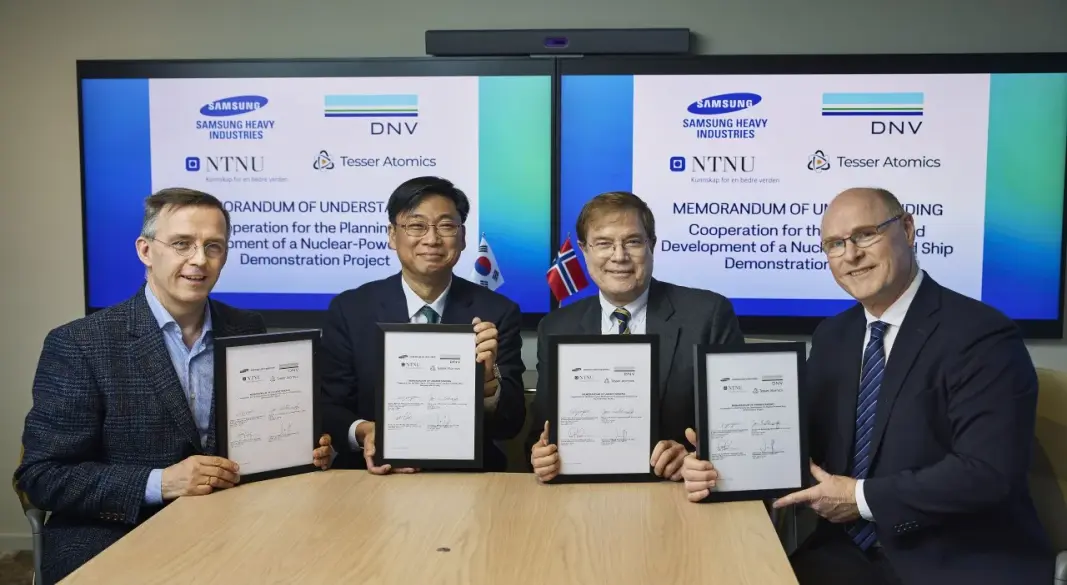
Samsung Heavy Industries (SHI), Norwegian classification society DNV, US-based nuclear technology developer Tesser Atomics and the Norwegian University of Science and Technology (NTNU) have joined forces to advance the development of a nuclear-powered liquefied natural gas (LNG) carrier designed for commercial operations between the United States and Europe. The collaboration marks a significant step towards exploring nuclear propulsion for commercial maritime transportation. The four organisations have signed an agreement to develop a demonstration vessel concept incorporating Tesser Atomics' fluoride-salt-cooled nuclear reactor technology. The initiative will focus on establishing a comprehensive development roadmap covering vessel design, reactor integration, maritime safety, regulatory approvals and the commercial feasibility of nuclear-powered shipping. Under the proposed arrangement, Samsung Heavy Industries will lead vessel design, marine integration and shipbuilding feasibility assessments. Tesser Atomics will be responsible for developing the nuclear reactor system and addressing nuclear-specific safety and licensing requirements. DNV will contribute its maritime classification and technical expertise, including developing the safety assessment framework and evaluating potential operational risks. Meanwhile, NTNU will coordinate research activities, feasibility studies, modelling, simulations, testing and funding proposals. The project will form part of the activities of SFI SAINT, a Norwegian research centre led by NTNU that focuses on advancing nuclear propulsion technologies for commercial shipping. The consortium aims to bridge the gap between established nuclear propulsion applications in naval vessels and their potential adoption in merchant shipping. For Samsung Heavy Industries, the collaboration builds on its ongoing investments in next-generation marine propulsion technologies. In September 2025, the shipbuilder secured Approval in Principle (AiP) from the American Bureau of Shipping (ABS) and the Liberian Registry for a 174,000-cubic-metre LNG carrier concept powered by a molten salt small modular reactor (SMR). The latest initiative also reflects growing industry interest in alternative propulsion technologies that could support maritime decarbonisation and improve long-term energy efficiency. The partners are additionally exploring the possibility of adapting nuclear propulsion technology for container ships and other commercial vessel categories. However, significant challenges remain before nuclear-powered commercial vessels can become operational. Nuclear licensing, maritime safety standards, insurance arrangements, regulatory compliance and commercial viability will require extensive assessment. The partners have not announced a construction schedule, delivery timeline or final investment commitment for the demonstration vessel. The International Maritime Organization (IMO) is also working towards updated safety provisions for nuclear-powered ships, with a revised Code of Safety for Nuclear Ships targeted for adoption in 2030. The proposed LNG carrier could therefore become an important demonstration project in determining whether nuclear propulsion can be safely and commercially integrated into the future of global shipping. 𝐒𝐭𝐚𝐲 𝐭𝐮𝐧𝐞𝐝 𝐭𝐨 CARGOCONNECT 𝐟𝐨𝐫 𝐥𝐚𝐭𝐞𝐬𝐭 𝐮𝐩𝐝𝐚𝐭𝐞𝐬!

MSN Air Service LLC (MSN), a New York-based aviation and cargo handling company operating at John F Kennedy International Airport (JFK), has signed a memorandum of understanding (MoU) with Kalé Info Solutions to deploy its GALAXY cargo handling platform as the standard technology system across all new stations established as part of its international expansion. Announced at The International Air Cargo Association (TIACA) Air Cargo Forum in Miami, the agreement comes as MSN expands beyond its JFK base, with a new operational station at Cheddi Jagan International Airport in Guyana. Under the MoU, GALAXY will continue to be used at JFK and will be deployed at every new MSN station, providing a common digital platform to support operational consistency, visibility and scalability across its expanding network. GALAXY integrates import, export and transfer operations within a single cargo handling system, enabling handlers to monitor terminal activities while reducing manual processes and reliance on disconnected systems. Manoj Singh, Group Chief Executive Officer, MSN Air Service, said the company’s international growth strategy is centred on building a future-ready business through technology investments and stronger operational capabilities. He added that adopting GALAXY across its network would help establish a common technology foundation as MSN enters new markets. Amar More, Chief Executive Officer and Co-Founder, Kalé Info Solutions, said a standardised technology platform could help manage the operational complexity associated with international expansion. He noted that consistent workflows, real-time visibility and comparable performance data across locations would allow handlers to scale operations without rebuilding processes at each new station. The partnership reflects MSN’s approach of integrating technology into its expansion plans from the outset, with GALAXY intended to provide a consistent digital foundation for its international cargo handling operations.

Qatar Airways Cargo is expanding its global freight network for the Winter 2026 season, introducing dedicated freighter services from Copenhagen, New York’s John F. Kennedy International Airport (JFK) and Dallas, while establishing a direct Warsaw–Chicago connection. The additions are set to increase cargo capacity, strengthen transatlantic trade links and provide customers with improved access to global markets through the carrier’s Doha hub. The network expansion, commencing from late October and early November 2026, targets key export markets across Northern and Central Europe and the United States. By combining dedicated Boeing 777 freighters with capacity on Qatar Airways’ passenger services, the carrier aims to provide greater flexibility for a broad range of freight, including pharmaceuticals, healthcare products, aerospace components, technology, energy shipments, perishables, vehicles and oversized cargo. Strengthening Nordic and Central European Connectivity Effective 25 October, Qatar Airways Cargo will introduce a weekly Boeing 777 freighter service from Copenhagen, operating Doha–Budapest–Copenhagen–Doha. The service will provide 100 tonnes of dedicated export capacity, strengthening the carrier’s reach across Denmark and Southern Sweden. The new freighter operation will complement Qatar Airways’ 10 weekly Boeing 787 passenger services to Copenhagen, which collectively provide more than 100 tonnes of belly-hold cargo capacity in each direction per week. Through Doha, customers will gain onward connections to markets across Asia, the Middle East, the Indian Subcontinent, Africa and beyond. In Central Europe, the carrier will relaunch freighter operations to Warsaw from 26 October, adding a weekly direct connection from Warsaw to Chicago. The Boeing 777 service will operate Doha–Warsaw–Chicago–Brussels–Doha, offering Polish exporters and manufacturers additional dedicated capacity to the US market. Combined with twice-weekly freighter services to Katowice and 10 weekly wide-body passenger flights to Warsaw, the new operation will increase Qatar Airways Cargo’s total weekly capacity to and from Poland to more than 435 tonnes in each direction. Expanding Transatlantic Freight Capacity In North America, a new weekly Boeing 777 freighter service to New York JFK will commence on 1 November, operating Doha–Liège–New York–Atlanta–Liège–Doha. The service will supplement 14 weekly passenger flights to and from New York, taking the carrier’s total weekly cargo capacity on the market to more than 226 tonnes in each direction. Dallas is also gaining additional dedicated freighter capacity. Qatar Airways Cargo has recently introduced two weekly Boeing 777 freighter services operating Doha–Liège–Dallas–Doha, providing 200 tonnes of main-deck capacity into Dallas and 100 tonnes outbound. Together with 14 weekly wide-body passenger flights, the new operation will raise total weekly cargo capacity to more than 250 tonnes into Dallas and over 150 tonnes out of the city. The expanded offering is intended to strengthen trade links between Texas and markets served across the airline’s international network. Capacity for Diverse and Time-Sensitive Cargo The additional services will cater to a wide spectrum of industries, including pharmaceuticals and healthcare, aerospace, technology, energy, perishables, high-value and time-sensitive shipments, vehicles, oversized freight, and general and industrial cargo. Customers will also benefit from increased belly-hold capacity across Qatar Airways’ Winter 2026 passenger network, further broadening the options available for moving shipments across international markets. With the new routes, expanded frequencies and connectivity through Doha, Qatar Airways Cargo is strengthening its capacity offering across Europe and North America while linking customers to a global network spanning more than 160 destinations. Shipments can be booked through the carrier’s Digital Lounge portal or its omnichannel partner network.


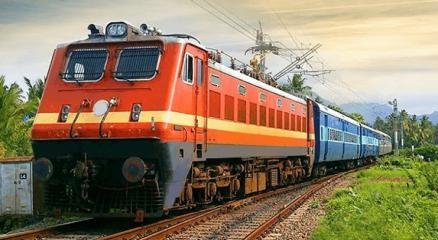
Indore: Indian Railways is preparing to operate the country’s first hydrogen-powered train at speeds of up to 110 kmph, following successful trials at speeds of 120 kmph, Railway Board Chairman and CEO Satish Kumar said on Sunday. Prime Minister Narendra Modi had flagged off India’s first hydrogen-powered train on July 17, marking a significant step in the Railways’ efforts to introduce cleaner propulsion technologies. The train operates on the 89-km Jind–Sonipat route in Haryana. Unlike conventional electric trains that rely on overhead power lines, the hydrogen fuel-cell trainset generates electricity onboard through an electrochemical reaction between hydrogen and oxygen. The process produces water vapour and heat as by-products, eliminating combustion, smoke and tailpipe carbon emissions. The hydrogen train is part of Indian Railways’ broader efforts to explore alternative propulsion technologies and reduce emissions from rail operations. Its deployment could also offer a pathway for cleaner rail connectivity on routes where conventional electrification may be less practical. Follow CARGOCONNECT for more such updates
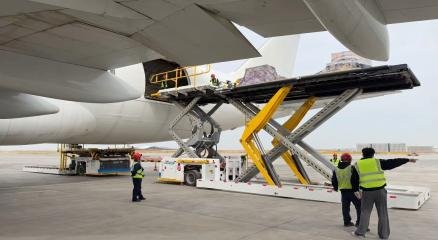
Chapman Freeborn has successfully completed a time-sensitive cargo charter operation transporting oversized oilfield equipment from China to Saudi Arabia, supporting urgent replenishment requirements for a client in the oil and gas sector amid ongoing global shipping disruptions and airfreight congestion. The operation involved the movement of nearly 90 tonnes of cargo, including industrial pumps, precision spare parts and oversized equipment measuring up to eight metres in length. The shipment was transported aboard a Boeing 747 Freighter, selected for its main-deck capacity and ability to handle heavy and outsized freight. The project required complex logistical coordination after fuelling constraints at the original departure airport necessitated the cargo’s relocation inland to an alternative airport. Chapman Freeborn’s China team arranged overnight trucking and managed the freight forwarding process to maintain delivery timelines. The charter operation was further challenged by limited aircraft availability, routing restrictions and slot coordination requirements at destination. Despite the operational complexities, the cargo arrived on schedule, enabling uninterrupted onward movement and preventing disruptions to the client’s ongoing field operations. The project highlights the growing role of specialised air charter solutions in supporting critical industrial supply chains where speed, flexibility and operational coordination remain essential.

India is preparing to operationalise its trade agreement with Oman from June 1, as New Delhi accelerates efforts to secure alternative trade corridors and strengthen supply chain resilience amid continuing geopolitical and energy market uncertainty. Commerce and Industry Minister Piyush Goyal said discussions with Omani officials have progressed positively, with both sides moving toward implementation of the Comprehensive Economic Partnership Agreement (CEPA). The agreement, signed in December 2025, is expected to provide duty-free access for a large share of Indian exports to Oman, including engineering goods, textiles, food products and chemicals. In return, India will lower tariffs on several Omani exports, including petrochemical products and minerals. Trade and logistics stakeholders view the pact as strategically important for India’s westbound cargo movement and regional connectivity ambitions. Oman’s geographic position along major maritime routes in the Arabian Sea and Gulf region gives Indian exporters an additional gateway into West Asia and parts of Africa. The agreement is also expected to support warehousing, port-led trade and multimodal logistics integration between the two countries. Government officials indicated that the CEPA would cover more than 98% of Indian export tariff lines entering Oman, while India would gradually liberalise access across a significant portion of imports from Oman. Certain sectors, particularly petrochemicals, may see phased tariff reductions rather than immediate elimination. The push to activate the Oman pact comes as India expands its broader trade strategy through multiple bilateral agreements aimed at reducing dependence on concentrated supply chains and improving market access for domestic manufacturers. Recent discussions involving trade arrangements with the UK, EU and other partners have reinforced New Delhi’s emphasis on export diversification and trade-led industrial growth. Industry analysts expect the Oman agreement to particularly benefit Indian sectors linked to containerised exports, chemicals, automotive components, processed foods and MSME manufacturing clusters. Shipping and logistics companies are also likely to see increased cargo flows through western Indian ports as bilateral trade volumes rise under preferential tariff treatment. Follow CARGOCONNECT for more such updates.
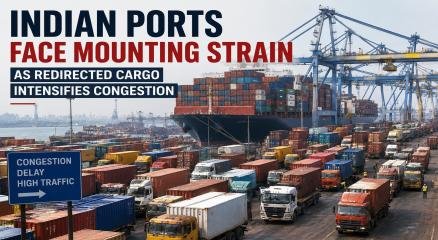


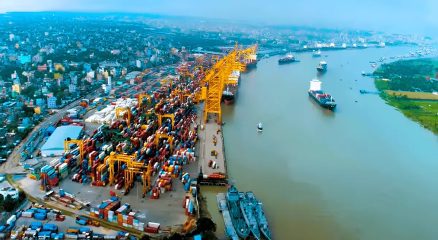
India’s two largest container gateways, Mundra and Nhava Sheva, are facing mounting congestion as rising cargo volumes, truck driver shortages and rerouted shipments from the Middle East strain operations across the country’s logistics network. Shipping lines and logistics operators are reporting worsening turnaround times at both ports, with vessel delays averaging nearly two and a half days and some unscheduled ships waiting up to five days for berthing. The disruptions are slowing cargo movement, tightening yard space and forcing carriers to make last-minute operational changes. According to industry reports, a shortage of truck drivers has become a major bottleneck for container transfers between terminals and inland transport hubs. The issue has reduced the pace of cargo evacuation from ports, adding pressure on already crowded container yards. Terminal operators have intermittently restricted gate access to control container inflow, while export gate schedules continue to shift frequently. These changes are complicating truck planning and increasing uncertainty for exporters and freight forwarders. The congestion is being intensified by cargo diversions linked to disruptions in the Middle East, particularly around Gulf trade routes. Shipping lines have increasingly redirected transshipment cargo to Indian ports as alternatives to facilities in the Persian Gulf, sharply increasing container volumes in recent weeks. The pressure has begun affecting carrier schedules. Some shipping companies are rerouting vessels between terminals at short notice to avoid yard congestion. Danish shipping giant Maersk recently shifted several sailings from its regular terminal at Nhava Sheva to PSA Mumbai after facing space constraints and a growing container backlog. Industry stakeholders say these sudden terminal changes are creating operational and financial challenges for shippers, including higher handling costs and difficulties coordinating customs clearance and inland transportation. The latest disruption comes at a time when India has been positioning itself as a major global manufacturing and logistics hub. Over the past decade, the country has expanded port capacity, improved freight corridors and modernised customs processes to strengthen supply chain efficiency. However, the current congestion highlights the vulnerability of port infrastructure during periods of sudden trade realignment and geopolitical disruption. Logistics experts warn that prolonged delays could increase freight costs, extend delivery timelines and place additional pressure on exporters already dealing with volatile global shipping conditions. Follow CARGOCONNECT for more such updates.
The diversification process by Apple continues to progress as India becomes one of the centers for manufacturing operations. Based on an analysis by Smart Analytics Global (SAG), the percentage share of Indian manufacturing of iPhones has increased from 14% in 2024 to 23% in 2025 and further to 28% by 2026, whereas China’s share has decreased from 83% to 74% within the same timeframe. As Apple continues to lower its reliance on China, India is all set to emerge as the major assembly hub for 28 percent of all iPhones exported around the world by 2026, compared to just 23 percent in the prior year. This change is due to the company's overall strategy of spreading its manufacturing operations in order to mitigate potential tariff risks and geopolitical risks, in addition to creating a more flexible manufacturing network beyond China. Based on the estimates of Smart Analytics Global (SAG), China's share in global iPhone production dropped from 83% in 2024 to 74% in 2025, while India's share increased from 14% in 2024 to 23% in 2025. Estimates provided by another market research firm, Counterpoint Research, indicate that India's share in global iPhone manufacturing could increase to approximately 26% in 2026 from 23% in 2025. As per SAG, “India will account for the manufacture of 28 percent of iPhones shipped globally in 2026, rising from 23 percent in 2025. This growth will be fueled by the ongoing diversification of Apple outside China and capacity build-up at existing manufacturers in India like Tata Electronics,” said Abhilash Kumar, an analyst at Smart Analytics Global. According to Tarun Pathak, research director at Counterpoint Research, “Apple's manufacturing partners have substantially increased their manufacturing capacities and assembly lines in India. They have also diversified their product portfolio made in India.” He further stated that the increase in manufacturing capacity of Tata Electronics is another factor aiding the growth. Apple has managed to localize production substantially in India through manufacturers like Foxconn and Tata Electronics. The recent takeover of Wistron and Pegatron in India by the Tata Group represents a huge step forward in Apple’s localization efforts in India. At present, India is assembling a larger number of iPhones, even the latest versions, and has become an important source of exports, targeting countries like the US and European nations. Over the past five years, Apple has manufactured iPhones worth almost $70 billion in India using its PLI scheme, where around $51 billion, or almost 73% of all iPhones manufactured, were exported from India. Moreover, iPhones have become the most exported goods from India during the previous financial year. India has become the biggest beneficiary of Apple’s changing supply chain. From initially assembling iPhones on a smaller scale, it has grown to become a manufacturing cluster for iPhones through government incentives, increased manufacturing capabilities, and the growing presence of suppliers. Several of the most important suppliers and manufacturers for Apple are still highly entrenched within China, allowing the country to enjoy an unrivaled capacity and adaptability when it comes to managing mass-scale productions and product shifts. For more such news and updates, visit CARGOCONNECT.
Shadowfax is significantly expanding its quick commerce infrastructure, announcing plans to scale its dark store network from 15 facilities to 100 by FY27. The move underscores the company’s growing focus on hyperlocal deliveries, same-day fulfilment, and direct-to-consumer (D2C) logistics as competition intensifies in India’s fast-evolving quick commerce ecosystem. The Bengaluru-based company plans to add 85 new dark stores over the next fiscal year, targeting metro cities with delivery radiuses of approximately seven kilometres and fulfilment timelines of around 30 minutes. The expansion is expected to support rising demand from vertical quick commerce platforms and D2C brands that increasingly rely on third-party logistics (3PL) partners for rapid deliveries. According to company executives, vertical marketplaces are emerging as a profitable segment because of their dependence on outsourced logistics infrastructure rather than captive fulfilment networks. Shadowfax believes this trend creates a strong opportunity for scalable 3PL-led quick commerce models. The dark store expansion will account for nearly 10% of Shadowfax’s planned capital expenditure of ₹180–190 crore in FY27. The company is simultaneously strengthening its automation and artificial intelligence capabilities to improve operational efficiency. AI-led demand forecasting, automated slotting, and smarter sorting centre operations are expected to reduce overhead costs while accelerating breakeven timelines for new facilities. Shadowfax’s aggressive expansion comes on the back of strong financial performance. The company reported a consolidated net profit of ₹55.8 crore in Q4 FY26, compared to a net loss of ₹9.9 crore during the same period last year. Revenue from operations surged 73.6% year-on-year to ₹1,237 crore, reflecting growing order volumes and increased adoption of quick commerce delivery services. Founded in 2015, Shadowfax has evolved into one of India’s largest logistics and last-mile delivery networks, serving over 2,500 cities and more than 15,000 pincodes. The company currently handles millions of shipments daily through a technology-driven delivery ecosystem that supports e-commerce, grocery, hyperlocal, and D2C brands. Industry analysts believe the dark store expansion reflects a broader shift within India’s logistics sector, where speed, proximity-based fulfilment, and automated operations are becoming central to supply chain competitiveness. As quick commerce adoption accelerates beyond groceries into categories such as fashion, electronics, and personal care, logistics providers like Shadowfax are positioning themselves as critical enablers of ultra-fast retail fulfilment. 𝐒𝐭𝐚𝐲 𝐓𝐮𝐧𝐞𝐝 𝐭𝐨 https://cargoconnect.co.in/ 𝐟𝐨𝐫 𝐥𝐚𝐭𝐞𝐬𝐭 𝐮𝐩𝐝𝐚𝐭𝐞𝐬!
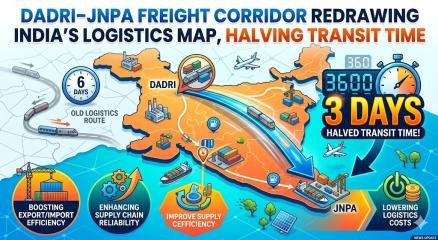
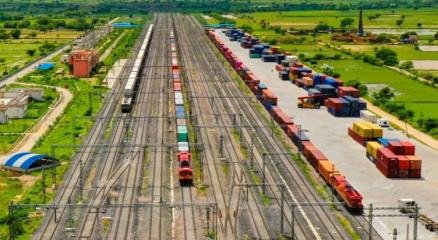
India’s Dedicated Freight Corridors (DFCs) are rapidly reshaping the country’s logistics landscape, with the Western Dedicated Freight Corridor (WDFC) between Dadri and Jawaharlal Nehru Port Authority (JNPA) emerging as a game-changing infrastructure project for supply chains and multimodal freight movement. Designed exclusively for cargo operations, the corridor is significantly reducing transit times, improving reliability, and easing congestion on conventional rail routes. Stretching nearly 1,500 km from Dadri in Uttar Pradesh to JNPA near Mumbai, the corridor forms the backbone of India’s western logistics artery, connecting manufacturing centres, inland container depots, industrial clusters, and ports. With dedicated tracks for freight trains, the network allows uninterrupted cargo movement at higher average speeds, eliminating delays caused by mixed passenger and freight operations. One of the biggest outcomes has been a sharp reduction in transit time. Freight movement between Dadri and JNPA that traditionally took close to 72 hours on congested rail routes is now being completed in nearly half the time, improving turnaround efficiency for exporters, importers, and logistics operators. Industry stakeholders believe the reduction in transit duration will strengthen India’s competitiveness in global trade and support the government’s target of lowering logistics costs as a percentage of GDP. The DFC network has also enabled the operation of longer and heavier freight trains, including double-stack container services on electrified routes. This has increased carrying capacity while lowering per-unit transportation costs. According to sector estimates, rail freight on dedicated corridors is considerably more energy-efficient and environmentally sustainable than road transport, aligning with India’s broader decarbonisation goals. Beyond operational efficiency, the corridors are catalysing the growth of integrated logistics ecosystems. Regions such as Dadri, Greater Noida, and Jewar are witnessing accelerated development of multimodal logistics parks, warehousing zones, and industrial hubs due to their strategic connectivity with both the Eastern and Western DFCs. The emerging “rail-road-air” logistics triangle around the National Capital Region is expected to attract substantial investments in manufacturing and distribution infrastructure. The Dedicated Freight Corridor Corporation of India (DFCCIL) has reported rising freight train volumes on the operational stretches, indicating growing industry adoption. The completion of key links on the western corridor is expected to further enhance throughput and reduce dependency on road transport for long-haul cargo. Analysts say the dedicated rail network could become central to India’s ambition of creating faster, greener, and more resilient supply chains. As India continues investing in additional freight corridors across the country, the success of the Dadri-JNPA route demonstrates how infrastructure modernisation can directly influence trade efficiency, logistics performance, and industrial growth. 𝐒𝐭𝐚𝐲 𝐓𝐮𝐧𝐞𝐝 𝐭𝐨 https://cargoconnect.co.in/ 𝐟𝐨𝐫 𝐥𝐚𝐭𝐞𝐬𝐭 𝐮𝐩𝐝𝐚𝐭𝐞𝐬
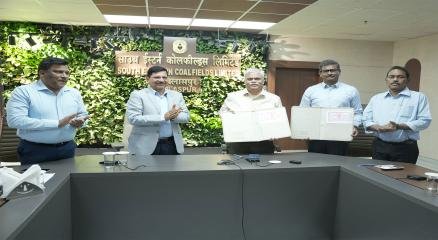
In a strategic warehousing move, the South Eastern Coalfields Limited (SECL), the second largest coal-producing subsidiary of Coal India Limited, has signed a Memorandum of Understanding (MoU) with Central Warehousing Corporation (CWC) for collaboration in coal logistics, railway rake provisioning under GPWIS and similar schemes, and integrated transportation services. Guided by the Union Ministry of Coal, SECL is rapidly working to improve India’s energy security and coal logistics infrastructure. The company is taking steps to boost coal evacuation efficiency and ensure a steady fuel supply to essential sectors. This partnership with CWC is a significant move in that direction. The goal of the partnership with CWC is to strengthen SECL’s coal evacuation capabilities by providing reliable and efficient rail logistics solutions to meet the rising demand from the power, steel, cement, and other sectors. The MoU outlines collaboration in various areas, including dedicated railway rake operations, integrated coal transportation solutions, multimodal logistics, first-mile and last-mile connectivity, and the deployment of digital systems for logistics monitoring and operational efficiency. Under the agreed framework, both organizations will explore provisioning and operation of GPWIS and equivalent racks, integrated rail logistics services, and long-term transportation solutions aimed at improving dispatch efficiency and reducing logistical obstacles. The MoU was signed in the presence of Harish Duhan, Chairman-cum-Managing Director of SECL, and Santosh Sinha, Managing Director of CWC. Functional Directors and senior officials from SECL, as well as representatives from CWC, attended the signing ceremony. SECL plays a vital role in meeting the country's growing coal demand. In the current financial year 2026-27, Coal India Limited has already surpassed the 100 million tonne production mark, with SECL contributing more than 26.8 million tonnes. Central Warehousing Corporation (CWC), a Navaratna Central Public Sector Enterprise under the Government of India, is a leader in integrated logistics and warehousing services. It has extensive experience in rail-linked cargo movement and multimodal transportation solutions. For more such news and updates, visit CARGOCONNECT.

Air Cargo
Warehousing
Buzz

Events

E-Commerce
Logistics
India’s two largest container gateways, Mundra and Nhava Sheva, are facing mounting congestion as rising cargo volumes, truck driver shortages and rerouted shipments from the Middle East strain operations across the country’s logistics network. Shipping lines and logistics operators are reporting worsening turnaround times at both ports, with vessel delays averaging nearly two and a half days and some unscheduled ships waiting up to five days for berthing. The disruptions are slowing cargo movement, tightening yard space and forcing carriers to make last-minute operational changes. According to industry reports, a shortage of truck drivers has become a major bottleneck for container transfers between terminals and inland transport hubs. The issue has reduced the pace of cargo evacuation from ports, adding pressure on already crowded container yards. Terminal operators have intermittently restricted gate access to control container inflow, while export gate schedules continue to shift frequently. These changes are complicating truck planning and increasing uncertainty for exporters and freight forwarders. The congestion is being intensified by cargo diversions linked to disruptions in the Middle East, particularly around Gulf trade routes. Shipping lines have increasingly redirected transshipment cargo to Indian ports as alternatives to facilities in the Persian Gulf, sharply increasing container volumes in recent weeks. The pressure has begun affecting carrier schedules. Some shipping companies are rerouting vessels between terminals at short notice to avoid yard congestion. Danish shipping giant Maersk recently shifted several sailings from its regular terminal at Nhava Sheva to PSA Mumbai after facing space constraints and a growing container backlog. Industry stakeholders say these sudden terminal changes are creating operational and financial challenges for shippers, including higher handling costs and difficulties coordinating customs clearance and inland transportation. The latest disruption comes at a time when India has been positioning itself as a major global manufacturing and logistics hub. Over the past decade, the country has expanded port capacity, improved freight corridors and modernised customs processes to strengthen supply chain efficiency. However, the current congestion highlights the vulnerability of port infrastructure during periods of sudden trade realignment and geopolitical disruption. Logistics experts warn that prolonged delays could increase freight costs, extend delivery timelines and place additional pressure on exporters already dealing with volatile global shipping conditions. Follow CARGOCONNECT for more such updates.
The diversification process by Apple continues to progress as India becomes one of the centers for manufacturing operations. Based on an analysis by Smart Analytics Global (SAG), the percentage share of Indian manufacturing of iPhones has increased from 14% in 2024 to 23% in 2025 and further to 28% by 2026, whereas China’s share has decreased from 83% to 74% within the same timeframe. As Apple continues to lower its reliance on China, India is all set to emerge as the major assembly hub for 28 percent of all iPhones exported around the world by 2026, compared to just 23 percent in the prior year. This change is due to the company's overall strategy of spreading its manufacturing operations in order to mitigate potential tariff risks and geopolitical risks, in addition to creating a more flexible manufacturing network beyond China. Based on the estimates of Smart Analytics Global (SAG), China's share in global iPhone production dropped from 83% in 2024 to 74% in 2025, while India's share increased from 14% in 2024 to 23% in 2025. Estimates provided by another market research firm, Counterpoint Research, indicate that India's share in global iPhone manufacturing could increase to approximately 26% in 2026 from 23% in 2025. As per SAG, “India will account for the manufacture of 28 percent of iPhones shipped globally in 2026, rising from 23 percent in 2025. This growth will be fueled by the ongoing diversification of Apple outside China and capacity build-up at existing manufacturers in India like Tata Electronics,” said Abhilash Kumar, an analyst at Smart Analytics Global. According to Tarun Pathak, research director at Counterpoint Research, “Apple's manufacturing partners have substantially increased their manufacturing capacities and assembly lines in India. They have also diversified their product portfolio made in India.” He further stated that the increase in manufacturing capacity of Tata Electronics is another factor aiding the growth. Apple has managed to localize production substantially in India through manufacturers like Foxconn and Tata Electronics. The recent takeover of Wistron and Pegatron in India by the Tata Group represents a huge step forward in Apple’s localization efforts in India. At present, India is assembling a larger number of iPhones, even the latest versions, and has become an important source of exports, targeting countries like the US and European nations. Over the past five years, Apple has manufactured iPhones worth almost $70 billion in India using its PLI scheme, where around $51 billion, or almost 73% of all iPhones manufactured, were exported from India. Moreover, iPhones have become the most exported goods from India during the previous financial year. India has become the biggest beneficiary of Apple’s changing supply chain. From initially assembling iPhones on a smaller scale, it has grown to become a manufacturing cluster for iPhones through government incentives, increased manufacturing capabilities, and the growing presence of suppliers. Several of the most important suppliers and manufacturers for Apple are still highly entrenched within China, allowing the country to enjoy an unrivaled capacity and adaptability when it comes to managing mass-scale productions and product shifts. For more such news and updates, visit CARGOCONNECT.
Shadowfax is significantly expanding its quick commerce infrastructure, announcing plans to scale its dark store network from 15 facilities to 100 by FY27. The move underscores the company’s growing focus on hyperlocal deliveries, same-day fulfilment, and direct-to-consumer (D2C) logistics as competition intensifies in India’s fast-evolving quick commerce ecosystem. The Bengaluru-based company plans to add 85 new dark stores over the next fiscal year, targeting metro cities with delivery radiuses of approximately seven kilometres and fulfilment timelines of around 30 minutes. The expansion is expected to support rising demand from vertical quick commerce platforms and D2C brands that increasingly rely on third-party logistics (3PL) partners for rapid deliveries. According to company executives, vertical marketplaces are emerging as a profitable segment because of their dependence on outsourced logistics infrastructure rather than captive fulfilment networks. Shadowfax believes this trend creates a strong opportunity for scalable 3PL-led quick commerce models. The dark store expansion will account for nearly 10% of Shadowfax’s planned capital expenditure of ₹180–190 crore in FY27. The company is simultaneously strengthening its automation and artificial intelligence capabilities to improve operational efficiency. AI-led demand forecasting, automated slotting, and smarter sorting centre operations are expected to reduce overhead costs while accelerating breakeven timelines for new facilities. Shadowfax’s aggressive expansion comes on the back of strong financial performance. The company reported a consolidated net profit of ₹55.8 crore in Q4 FY26, compared to a net loss of ₹9.9 crore during the same period last year. Revenue from operations surged 73.6% year-on-year to ₹1,237 crore, reflecting growing order volumes and increased adoption of quick commerce delivery services. Founded in 2015, Shadowfax has evolved into one of India’s largest logistics and last-mile delivery networks, serving over 2,500 cities and more than 15,000 pincodes. The company currently handles millions of shipments daily through a technology-driven delivery ecosystem that supports e-commerce, grocery, hyperlocal, and D2C brands. Industry analysts believe the dark store expansion reflects a broader shift within India’s logistics sector, where speed, proximity-based fulfilment, and automated operations are becoming central to supply chain competitiveness. As quick commerce adoption accelerates beyond groceries into categories such as fashion, electronics, and personal care, logistics providers like Shadowfax are positioning themselves as critical enablers of ultra-fast retail fulfilment. 𝐒𝐭𝐚𝐲 𝐓𝐮𝐧𝐞𝐝 𝐭𝐨 https://cargoconnect.co.in/ 𝐟𝐨𝐫 𝐥𝐚𝐭𝐞𝐬𝐭 𝐮𝐩𝐝𝐚𝐭𝐞𝐬!
India’s Dedicated Freight Corridors (DFCs) are rapidly reshaping the country’s logistics landscape, with the Western Dedicated Freight Corridor (WDFC) between Dadri and Jawaharlal Nehru Port Authority (JNPA) emerging as a game-changing infrastructure project for supply chains and multimodal freight movement. Designed exclusively for cargo operations, the corridor is significantly reducing transit times, improving reliability, and easing congestion on conventional rail routes. Stretching nearly 1,500 km from Dadri in Uttar Pradesh to JNPA near Mumbai, the corridor forms the backbone of India’s western logistics artery, connecting manufacturing centres, inland container depots, industrial clusters, and ports. With dedicated tracks for freight trains, the network allows uninterrupted cargo movement at higher average speeds, eliminating delays caused by mixed passenger and freight operations. One of the biggest outcomes has been a sharp reduction in transit time. Freight movement between Dadri and JNPA that traditionally took close to 72 hours on congested rail routes is now being completed in nearly half the time, improving turnaround efficiency for exporters, importers, and logistics operators. Industry stakeholders believe the reduction in transit duration will strengthen India’s competitiveness in global trade and support the government’s target of lowering logistics costs as a percentage of GDP. The DFC network has also enabled the operation of longer and heavier freight trains, including double-stack container services on electrified routes. This has increased carrying capacity while lowering per-unit transportation costs. According to sector estimates, rail freight on dedicated corridors is considerably more energy-efficient and environmentally sustainable than road transport, aligning with India’s broader decarbonisation goals. Beyond operational efficiency, the corridors are catalysing the growth of integrated logistics ecosystems. Regions such as Dadri, Greater Noida, and Jewar are witnessing accelerated development of multimodal logistics parks, warehousing zones, and industrial hubs due to their strategic connectivity with both the Eastern and Western DFCs. The emerging “rail-road-air” logistics triangle around the National Capital Region is expected to attract substantial investments in manufacturing and distribution infrastructure. The Dedicated Freight Corridor Corporation of India (DFCCIL) has reported rising freight train volumes on the operational stretches, indicating growing industry adoption. The completion of key links on the western corridor is expected to further enhance throughput and reduce dependency on road transport for long-haul cargo. Analysts say the dedicated rail network could become central to India’s ambition of creating faster, greener, and more resilient supply chains. As India continues investing in additional freight corridors across the country, the success of the Dadri-JNPA route demonstrates how infrastructure modernisation can directly influence trade efficiency, logistics performance, and industrial growth. 𝐒𝐭𝐚𝐲 𝐓𝐮𝐧𝐞𝐝 𝐭𝐨 https://cargoconnect.co.in/ 𝐟𝐨𝐫 𝐥𝐚𝐭𝐞𝐬𝐭 𝐮𝐩𝐝𝐚𝐭𝐞𝐬
In a strategic warehousing move, the South Eastern Coalfields Limited (SECL), the second largest coal-producing subsidiary of Coal India Limited, has signed a Memorandum of Understanding (MoU) with Central Warehousing Corporation (CWC) for collaboration in coal logistics, railway rake provisioning under GPWIS and similar schemes, and integrated transportation services. Guided by the Union Ministry of Coal, SECL is rapidly working to improve India’s energy security and coal logistics infrastructure. The company is taking steps to boost coal evacuation efficiency and ensure a steady fuel supply to essential sectors. This partnership with CWC is a significant move in that direction. The goal of the partnership with CWC is to strengthen SECL’s coal evacuation capabilities by providing reliable and efficient rail logistics solutions to meet the rising demand from the power, steel, cement, and other sectors. The MoU outlines collaboration in various areas, including dedicated railway rake operations, integrated coal transportation solutions, multimodal logistics, first-mile and last-mile connectivity, and the deployment of digital systems for logistics monitoring and operational efficiency. Under the agreed framework, both organizations will explore provisioning and operation of GPWIS and equivalent racks, integrated rail logistics services, and long-term transportation solutions aimed at improving dispatch efficiency and reducing logistical obstacles. The MoU was signed in the presence of Harish Duhan, Chairman-cum-Managing Director of SECL, and Santosh Sinha, Managing Director of CWC. Functional Directors and senior officials from SECL, as well as representatives from CWC, attended the signing ceremony. SECL plays a vital role in meeting the country's growing coal demand. In the current financial year 2026-27, Coal India Limited has already surpassed the 100 million tonne production mark, with SECL contributing more than 26.8 million tonnes. Central Warehousing Corporation (CWC), a Navaratna Central Public Sector Enterprise under the Government of India, is a leader in integrated logistics and warehousing services. It has extensive experience in rail-linked cargo movement and multimodal transportation solutions. For more such news and updates, visit CARGOCONNECT.

Admin • November 18, 2026
Admin • October 9, 2026
Admin 1.61K August 12, 2026
Admin 1.14K August 11, 2026
Admin 1.26K August 5, 2026
Admin 1.41K August 1, 2026
Admin 1.32K July 30, 2026
Admin 1.51K July 28, 2026

Poonawalla Group invests in woman-led trackNOW to boost R&D, expand operations in Indian logistics market

Poonawalla Group invests in woman-led trackNOW to boost R&D, expand operations in Indian logistics market
Poonawalla Group invests in woman-led trackNOW to boost R&D, expand operations in Indian logistics market
Poonawalla Group invests in woman-led trackNOW to boost R&D, expand operations in Indian logistics market
Admin 1.61K August 12, 2026
Admin 1.14K August 11, 2026
Admin 1.26K August 5, 2026
Admin 1.41K August 1, 2026
Admin 1.32K July 30, 2026
Admin 1.51K July 28, 2026


Admin • November 5, 2026
Admin • October 28, 2026
Admin • October 16, 2026
Admin • October 16, 2026
Admin • November 23, 2026
Admin • November 5, 2026
Admin • November 4, 2026
Admin • October 26, 2026
Admin • October 24, 2026

Admin • May 14, 2026

Admin • May 15, 2026
Admin • October 23, 2026
Admin • October 21, 2026

Admin • November 19, 2026

Admin • November 5, 2026


Admin • October 23, 2026

Admin • October 21, 2026
Admin • November 24, 2026

Admin • November 24, 2026
Admin • November 23, 2026
Admin • November 23, 2026
Admin • November 23, 2026

Admin • October 23, 2026

Admin • July 2, 2026
Admin • June 30, 2026
Admin • October 26, 2026
Admin • October 26, 2026

Admin • October 21, 2026
Admin • October 21, 2026
Admin • November 3, 2026

Admin • October 28, 2026
Admin • October 27, 2026
Admin • October 23, 2026

Admin • October 16, 2026
Admin • November 23, 2026
Admin • November 23, 2026
Admin • November 21, 2026

Admin • November 3, 2026
Admin • October 29, 2026
Admin • November 13, 2026
Admin • October 26, 2026

Admin • September 7, 2026

Admin • August 24, 2026

Admin • November 23, 2026

Admin • November 5, 2026

Admin • November 5, 2026

Admin • November 3, 2026

Admin • November 3, 2026

Admin • October 28, 2026
Admin • November 24, 2026

Admin • November 23, 2026

Admin • November 3, 2026

Admin • August 31, 2026
Admin • August 31, 2026
Admin • November 23, 2026
Admin • November 5, 2026

Admin • November 3, 2026
Admin • October 28, 2026
Admin • October 16, 2026
Admin • November 24, 2026

Admin • November 24, 2026

Admin • November 23, 2026

Admin • November 23, 2026
Admin • November 20, 2026

Admin • October 23, 2026
Admin • July 27, 2026