
Loading...
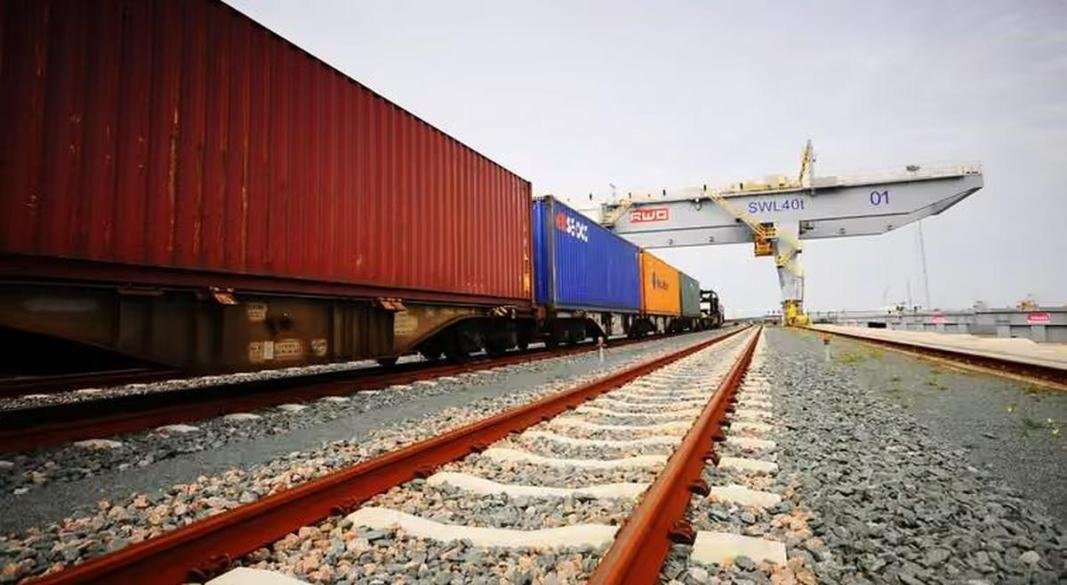
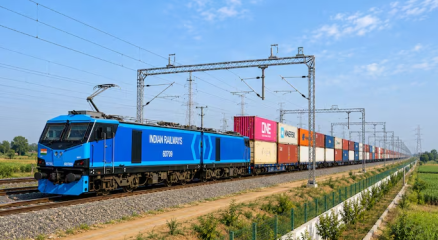
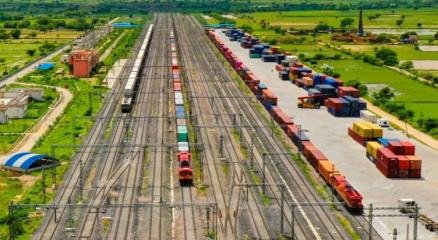
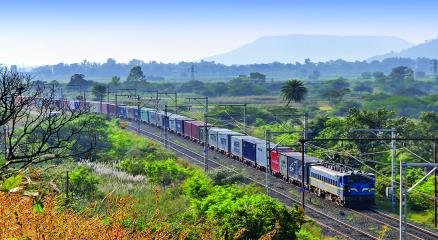
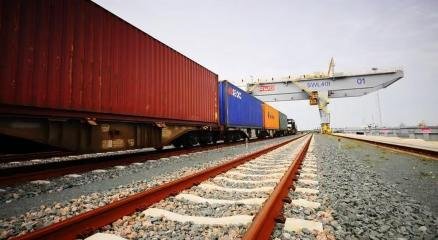
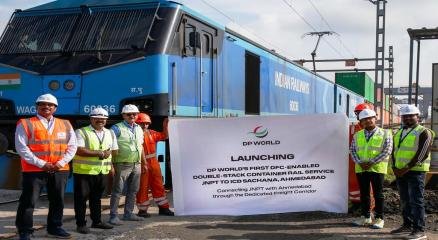
DFC-enabled services link Jawaharlal Nehru Port Authority with inland container depots across North India and Gujarat, aiming to expand rail freight capacity and improve cargo movement. DP World has launched two Dedicated Freight Corridor (DFC)-enabled double-stack rail services connecting Jawaharlal Nehru Port Authority (JNPA) with inland container depots (ICDs) across the National Capital Region (NCR) and Gujarat, strengthening rail connectivity between the maritime gateway and major inland markets.
The first service, operational since September 2026, connects JNPA with DP World's inland container depot network at Pali/Rewari, Jhattipur–Panipat and Modinagar in the NCR. The second service links the port with ICD Sachana in Gujarat, extending double-stack rail connectivity to industrial and commercial centres around Ahmedabad. The new services are designed to increase rail freight capacity, support faster transit and improve the predictability of cargo movements for exporters, importers and domestic businesses.
DFC infrastructure supports higher-capacity rail freight
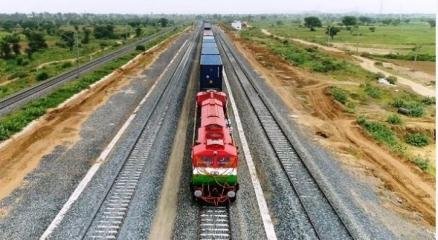
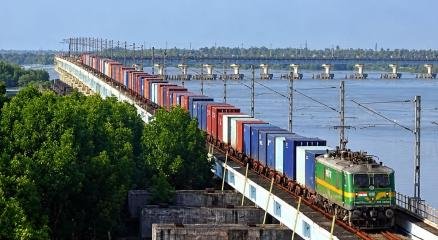
The services use Dedicated Freight Corridor infrastructure to facilitate higher-capacity double-stack container operations between JNPA and the inland terminals. By integrating port connectivity with inland rail infrastructure, DP World aims to improve cargo movement between India's maritime gateway and its major production and consumption centres.
Hemant Kumar Ruia, Country Manager, Subcontinent (India), DP World, said the expansion of double-stack rail connectivity through the DFC was an important step towards improving logistics efficiency. He noted that connecting JNPA with key markets across the NCR and Gujarat could help businesses move cargo faster, reduce logistics costs and develop more resilient supply chains.
Adhendru Jain, Vice President – Rail and Inland Terminals, SCO, DP World, said the expansion aligned with the government's National Logistics Policy and PM GatiShakti initiatives, which focus on strengthening multimodal connectivity across ports, rail networks and inland markets. He added that combining dedicated freight infrastructure, higher-capacity rail operations and DP World's inland network was intended to provide customers with more efficient and predictable cargo movement while supporting a cost-efficient freight system.
Connectivity extends to major industrial clusters
The new rail connections are expected to support a range of industries across Gujarat and North India, including automotive, engineering, manufacturing, pharmaceuticals, chemicals, textiles and home furnishings. For businesses serving these markets, additional rail freight options could improve the movement of containerised cargo between manufacturing centres, inland logistics facilities and the port. The availability of higher-capacity rail services may also help operators plan cargo flows more effectively.
By providing an alternative to road-based long-haul freight, the services are intended to strengthen gateway-to-hinterland connectivity and support multimodal logistics planning. Actual gains in transit time and logistics costs will depend on route operations, cargo volumes, handling arrangements and coordination between port and inland facilities.
Multimodal logistics remains a strategic priority
The expansion reflects the growing emphasis on connecting maritime gateways with inland logistics infrastructure to improve the movement of goods across India's supply chains. The National Logistics Policy and PM GatiShakti initiatives seek to improve coordination among transport modes and infrastructure networks. Rail services that integrate port operations with inland container depots can contribute to these objectives by providing businesses with more transport choices.
For DP World, the new connections add to its inland logistics network and extend double-stack rail services from JNPA to important commercial markets in North India and Gujarat. The next measure of success will be the extent to which the services attract regular cargo volumes, improve operational reliability and deliver competitive end-to-end logistics costs for customers.
Follow CARGOCONNECT for more such updates
DFC-enabled services link Jawaharlal Nehru Port Authority with inland container depots across North India and Gujarat, aiming to expand rail freight capacity and improve cargo movement. DP World has launched two Dedicated Freight Corridor (DFC)-enabled double-stack rail services connecting Jawaharlal Nehru Port Authority (JNPA) with inland container depots (ICDs) across the National Capital Region (NCR) and Gujarat, strengthening rail connectivity between the maritime gateway and major inland markets. The first service, operational since September 2026, connects JNPA with DP World's inland container depot network at Pali/Rewari, Jhattipur–Panipat and Modinagar in the NCR. The second service links the port with ICD Sachana in Gujarat, extending double-stack rail connectivity to industrial and commercial centres around Ahmedabad. The new services are designed to increase rail freight capacity, support faster transit and improve the predictability of cargo movements for exporters, importers and domestic businesses. DFC infrastructure supports higher-capacity rail freight The services use Dedicated Freight Corridor infrastructure to facilitate higher-capacity double-stack container operations between JNPA and the inland terminals. By integrating port connectivity with inland rail infrastructure, DP World aims to improve cargo movement between India's maritime gateway and its major production and consumption centres. Hemant Kumar Ruia, Country Manager, Subcontinent (India), DP World, said the expansion of double-stack rail connectivity through the DFC was an important step towards improving logistics efficiency. He noted that connecting JNPA with key markets across the NCR and Gujarat could help businesses move cargo faster, reduce logistics costs and develop more resilient supply chains. Adhendru Jain, Vice President – Rail and Inland Terminals, SCO, DP World, said the expansion aligned with the government's National Logistics Policy and PM GatiShakti initiatives, which focus on strengthening multimodal connectivity across ports, rail networks and inland markets. He added that combining dedicated freight infrastructure, higher-capacity rail operations and DP World's inland network was intended to provide customers with more efficient and predictable cargo movement while supporting a cost-efficient freight system. Connectivity extends to major industrial clusters The new rail connections are expected to support a range of industries across Gujarat and North India, including automotive, engineering, manufacturing, pharmaceuticals, chemicals, textiles and home furnishings. For businesses serving these markets, additional rail freight options could improve the movement of containerised cargo between manufacturing centres, inland logistics facilities and the port. The availability of higher-capacity rail services may also help operators plan cargo flows more effectively. By providing an alternative to road-based long-haul freight, the services are intended to strengthen gateway-to-hinterland connectivity and support multimodal logistics planning. Actual gains in transit time and logistics costs will depend on route operations, cargo volumes, handling arrangements and coordination between port and inland facilities. Multimodal logistics remains a strategic priority The expansion reflects the growing emphasis on connecting maritime gateways with inland logistics infrastructure to improve the movement of goods across India's supply chains. The National Logistics Policy and PM GatiShakti initiatives seek to improve coordination among transport modes and infrastructure networks. Rail services that integrate port operations with inland container depots can contribute to these objectives by providing businesses with more transport choices. For DP World, the new connections add to its inland logistics network and extend double-stack rail services from JNPA to important commercial markets in North India and Gujarat. The next measure of success will be the extent to which the services attract regular cargo volumes, improve operational reliability and deliver competitive end-to-end logistics costs for customers. Follow CARGOCONNECT for more such updates
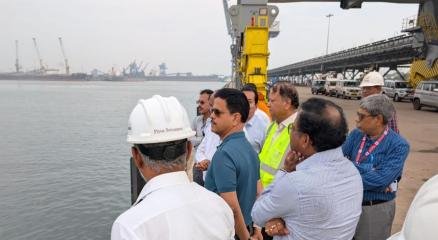
PPA Chairperson Susanta Kumar Purohit reviews Phase I development, focusing on mechanisation, cargo handling efficiency and improved rail-road connectivity at JPPL berth. Paradip Port Authority (PPA) Chairperson Susanta Kumar Purohit, IRSEE, reviewed the development and operational readiness of the Western Dock terminal at the Jindal Paradip Port Limited (JPPL) berth, with a focus on commissioning Phase I and strengthening cargo-handling infrastructure. The review covered berth operations, infrastructure development and measures to improve terminal productivity. Discussions with senior PPA officials and JPPL representatives, including Deputy CEO Sandeep Jaiswal, focused on achieving full berth mechanisation, improving cargo handling efficiency and strengthening rail and road connectivity for cargo evacuation. Phase I Designed for 12.5 Million Tonnes Annually: Phase I of the Western Dock project is designed to handle 12.5 million tonnes per annum (MTPA). The wider project envisages a total dry bulk cargo handling capacity of 25 MTPA and is being developed under the Build-Operate-Transfer (BOT) model. The review assessed progress towards commissioning and operationalising the facility. The planned capacity is intended to expand Paradip Port’s ability to handle dry bulk commodities and support cargo demand from industrial and trade sectors. The successful berthing of deep-draft Capesize vessels was also highlighted during the visit, demonstrating the terminal’s role in accommodating large vessels for bulk cargo operations. Mechanisation and Cargo Evacuation in Focus: Achieving 100% berth mechanisation was a key priority during the review. Mechanised handling systems can support cargo movement and terminal productivity, while efficient evacuation arrangements are essential to managing volumes at the planned capacity. PPA and JPPL representatives also discussed improving rail and road connectivity to facilitate the movement of cargo from the terminal to inland destinations. The effectiveness of these connections will be important in limiting logistics bottlenecks and ensuring that cargo can be moved efficiently beyond the port. Terminal handling capacity and landside evacuation capability will need to work together as operations develop. Safety, Sustainability and Technology: The review also addressed sustainable port operations, compliance with safety standards, technology-driven logistics solutions and the integration of multimodal cargo evacuation systems. These measures form part of the broader operational requirements for developing the Western Dock terminal. Coordination between berth operations, cargo-handling systems and inland transport links will be important to supporting reliable service delivery. Western Dock to Expand Paradip’s Bulk Cargo Capabilities: The Western Dock project is part of the ongoing development of Paradip Port’s infrastructure and cargo-handling capabilities on India’s eastern coast. With Phase I designed for 12.5 MTPA and the wider project targeting 25 MTPA, the development is intended to increase dry bulk handling capacity and support maritime trade. The next milestones will centre on commissioning Phase I, progressing mechanisation and ensuring effective rail and road connectivity. The extent to which the terminal achieves its planned throughput will depend on operational readiness, cargo demand and the efficiency of its wider logistics connections. Follow CARGOCONNECT for more such updates
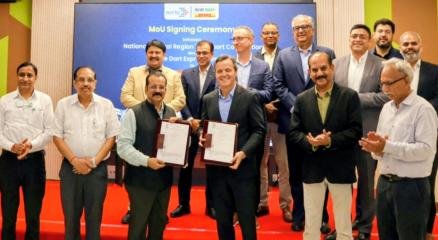
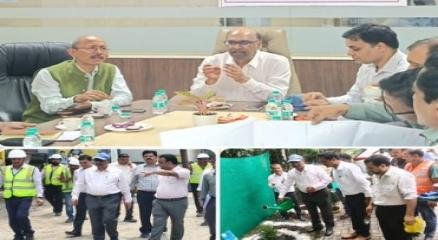


Prime Minister Narendra Modi has marked a major milestone in India’s logistics and rail freight infrastructure by flagging off freight trains from four strategic stations of the Western Dedicated Freight Corridor (WDFC) and dedicating three newly completed sections to the nation. The development completes India’s approximately 2,843-km Dedicated Freight Corridor (DFC) network, strengthening the country’s freight transportation backbone. Freight trains were flagged off from New Sanand (North), New Makarpura, New Umbergaon and New JNPT. The three newly commissioned WDFC sections—New Sanand (North)-New Makarpura, New Umbergaon-New Saphale and New Saphale-New JNPT, cover around 326 route km and have been developed at an investment of more than ₹20,700 crore. The commissioning establishes direct dedicated freight connectivity between northern and western industrial centres and Jawaharlal Nehru Port (JNPT), improving the movement of export-import cargo between production hubs, logistics centres and India’s western maritime gateways. The direct rail link is expected to accelerate container evacuation, improve supply-chain predictability and ease congestion on conventional railway routes. India’s DFC network comprises the 1,337-km Eastern Dedicated Freight Corridor (EDFC) between Ludhiana and Sonnagar and the 1,506-km WDFC between Dadri and JNPT. The corridors enable freight trains to operate on dedicated tracks, including double-stack container and higher axle-load trains, increasing cargo-carrying capacity and improving operational efficiency. The completed WDFC is also reducing transit times. Freight movement between Dadri and JNPT has fallen from around 66 hours to about 58 hours, according to DFCCIL, enhancing the competitiveness of rail freight and enabling faster access to ports. The two DFCs currently handle an average of around 443 freight trains daily, while Indian Railways’ freight loading reached 1,670 million tonnes in 2025-26, up from 1,098 million tonnes in 2014-15. The shift of freight traffic to dedicated corridors is also releasing capacity on conventional routes for additional passenger and freight services. The government is already planning the next phase of freight infrastructure. The Union Budget 2026 announced a proposed Dankuni-Surat Dedicated Freight Corridor, with work on its Detailed Project Report underway. The expansion is expected to further strengthen east-west connectivity and India's multimodal logistics ecosystem. 𝐒𝐭𝐚𝐲 𝐓𝐮𝐧𝐞𝐝 𝐭𝐨 CARGOCONNECT 𝐟𝐨𝐫 𝐥𝐚𝐭𝐞𝐬𝐭 𝐮𝐩𝐝𝐚𝐭𝐞𝐬!