Loading...

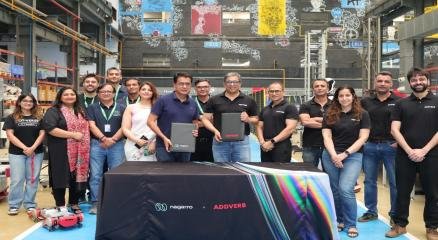
Miami International Airport (MIA) has launched an AI-powered Airport Cargo Community System (ACCS) developed by Kalé Logistics (Kalé), introducing a shared digital platform to improve coordination across its extensive air cargo ecosystem. Announced at the International Air Cargo Association’s (TIACA) Air Cargo Forum in Miami on 27 October, the initiative is designed to streamline logistics, reduce truck congestion and support lower carbon emissions.
The platform creates a common online portal for freight forwarders, cargo handlers, truckers, carriers and ground handlers, reducing reliance on fragmented and manual information exchange. By improving information sharing, advance planning and truck scheduling, the system aims to reduce waiting times and enhance productivity across MIA’s cargo operations.
Currently, cargo trucks arriving at the airport have limited information about arrival times and cargo types, contributing to congestion, operational inefficiencies and additional emissions. The ACCS is intended to address these challenges through better coordination among supply chain stakeholders. It will also provide the digital foundation for MIA to connect with international partner airports, supporting smoother cargo flows along specific global trade lanes.
Miami-Dade County Mayor Daniella Levine Cava said the technology would help make MIA more future-ready by simplifying and expediting goods movement, supporting businesses and jobs linked to international trade, and strengthening the airport’s focus on efficiency and sustainability.
MIA handled a record 3.4 million tons of freight in 2025, making it the busiest freight airport in the US and the third busiest globally, behind Hong Kong and Shanghai. The airport’s cargo operations require an average of 190 all-cargo flights and more than 1,600 truck trips daily, underscoring the scale of coordination involved.
According to estimates cited in the announcement, implementing the ACCS across MIA’s entire cargo operation could generate substantial environmental and financial benefits. Based on an estimated 15% reduction in paper handling and an average saving of two hours in truck turnaround time, the system has the potential to save approximately 5,900 US tons of carbon dioxide emissions and 3,000 trees annually, while generating up to $250 million in annual operational cost savings across the air cargo supply chain.
Amar More, Co-founder and Chief Executive Officer of Kalé Logistics, said cargo community systems were already improving collaboration and visibility across the industry, with MIA offering an opportunity to apply these benefits at a major global cargo gateway. He noted that even small operational inefficiencies can accumulate at an airport handling 3.4 million tons of freight annually, adding that a common digital platform could make a meaningful difference and help connect MIA digitally with the wider world.
The launch marks a step towards greater digital coordination in airport cargo operations, with the potential to improve efficiency, strengthen international connectivity and support more sustainable freight movement as cargo volumes and stakeholder networks grow.
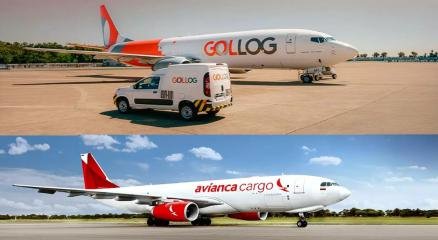
Avianca Cargo has renewed its five-year agreement with IBS Software for its iCargo platform, while GOLLOG will adopt the technology to support its international cargo operations, bringing the two Abra Group airlines onto a common digital platform. Avianca Cargo and GOLLOG are strengthening their digital cargo operations through an expanded partnership with IBS Software, aimed at standardising processes, improving operational efficiency and enhancing connectivity with business partners. Avianca Cargo, which has been using IBS Software's iCargo platform since 2021, has renewed its agreement for another five years. Under the renewed arrangement, the airline will expand its use of iCargo capabilities, including iCargo Enterprise API and iPartner Airline, to strengthen integration with customers, business partners and interline carriers. Meanwhile, GOLLOG, the cargo and logistics division of Brazilian airline GOL, will implement the same capabilities to support its international operations. The adoption of a common technology platform is expected to enable both airlines to standardise key processes, including cargo booking and handling, while delivering a more consistent customer experience across their international networks. The agreement will also provide access to a suite of APIs designed to facilitate integration with customers, suppliers, cargo agents, ground handling companies and other airlines. This is expected to strengthen connectivity across the wider air cargo technology ecosystem and support more coordinated operations. Diogo Elias, chief executive of Avianca Cargo, said the shared platform would improve visibility across the group's international cargo operations. "Working on a common platform allows us to bring greater visibility across the group's international cargo operations. It is another step in our digital transformation journey and in building the tools we need to offer a more consistent and efficient experience to our customers," Elias said. Patricia Bello, director of GOLLOG, said the adoption of iCargo marks an important milestone in the company's digital transformation strategy. She added that strengthening its technology capabilities would help streamline processes, improve connectivity with partners and deliver more agile and consistent services as its international cargo operations grow. Erica Quiroz, AVP, Latin America at IBS Software, said Avianca Cargo's five years of growth on the platform had led to the renewal, while GOLLOG's adoption would extend the partnership. By integrating GOLLOG's international operations with iCargo, IBS Software aims to establish a unified operational system and customer engagement approach across both airlines. The platform provides greater operational visibility and access to real-time data, supporting better-informed decision-making and improved efficiency. The development reflects the growing role of digital integration in air cargo, as airlines increasingly invest in connected technology platforms to streamline operations, improve partner collaboration and enhance the customer experience. Follow CARGOCONNECT for more such updates




Kenstar has partnered with Unicommerce to strengthen the technology infrastructure underpinning its expanding e-commerce business, integrating order and warehouse management capabilities to improve inventory visibility, operational efficiency and fulfilment across sales channels. The partnership comes as the Indian home appliance brand accelerates its digital commerce growth and expands its reach across India, including emerging consumer markets. Kenstar serves customers through leading e-commerce and quick-commerce platforms, its own brand website, more than 30,000 retail touchpoints and dealers, modern trade and regional retail outlets. Its network also includes over 18 warehouses and fulfilment centres nationwide. To support the growing scale and complexity of its operations, Kenstar has deployed Unicommerce’s flagship Uniware platform, incorporating its Order Management System (OMS) and Warehouse Management System (WMS). The integrated platform will enable the company to manage orders across multiple sales channels through a single system, supported by real-time inventory visibility and improved coordination of warehouse operations. The deployment is expected to streamline order processing, optimise stock utilisation and support more efficient fulfilment as Kenstar expands its online footprint. By bringing order, inventory and warehouse processes together, the partnership aims to establish a scalable operational foundation for higher order volumes and a more consistent customer experience. With a 30-year presence in the Indian market, Kenstar continues to strengthen its portfolio across air coolers, water heaters, small home appliances and washing machines, with a focus on innovative and energy-efficient products. As digital channels become increasingly important to its growth strategy, technology-led integration is expected to help the brand manage operational complexity while maintaining service standards across its expanding customer base. Sunil Jain, CEO of Kenstar, said the partnership would help the company strengthen inventory visibility and fulfilment efficiency as it expands its online presence and reach across India. He emphasised the need for technology infrastructure that can scale alongside the business and support a seamless shopping experience across customer channels. Kapil Makhija, MD & CEO of Unicommerce, said technology would play a critical role in ensuring that operational capabilities keep pace with Kenstar’s growth, particularly as the brand advances its Direct-to-Consumer (D2C) business. Unicommerce will provide the digital infrastructure to support the company’s next phase of expansion. The collaboration reflects a broader operational priority for omnichannel retailers: connecting order management, inventory control and warehouse execution to support growth without compromising fulfilment efficiency or customer experience.


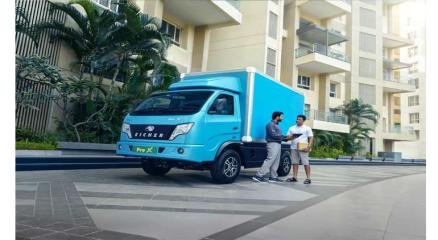
Amazon India is set to introduce up to 1,000 electric trucks from Eicher into its logistics network over the next five years as the e-commerce company accelerates efforts to reduce emissions across its middle-mile and last-mile operations. The deployment will be carried out in partnership with VE Commercial Vehicles (VECV), the joint venture between Eicher Motors and Volvo Group. The companies said the electric trucks will support cargo movement between fulfilment centres, sortation hubs and delivery stations, as well as customer-facing delivery operations. As part of the initial rollout, Amazon plans to induct 50 electric trucks in logistics hubs including Delhi, Manesar and Gurugram. The vehicles will be introduced progressively through Amazon’s transport service partners. The trucks will be available in configurations ranging from 8-foot to 24-foot deck lengths, allowing Amazon to deploy them across varying payload requirements. According to the companies, the vehicles will include customised cargo layouts and support both fast and slow charging options depending on route and operational needs. The move comes as India’s e-commerce and logistics sectors face increasing pressure to adopt lower-emission freight solutions amid tightening sustainability targets and rising fuel costs. Electrification of commercial fleets has gained momentum in urban delivery operations, though adoption in medium-duty and heavy-duty trucking remains at an early stage due to infrastructure and financing challenges. Amazon has been steadily expanding its electric delivery fleet in India as part of its broader climate commitments. The company previously stated that it aimed to deploy 10,000 electric vehicles in the country by 2025 and had already crossed 6,000 EVs across more than 400 cities by 2023. In 2024, Amazon said it had surpassed the 10,000-EV milestone in India ahead of schedule, while also testing long-haul electric freight corridors for intercity transportation. Industry observers view the Eicher partnership as a significant step toward electrifying commercial freight movement in India, particularly in the growing e-commerce logistics segment where fleet utilisation levels are high and predictable delivery routes improve the feasibility of EV deployment. Follow CARGOCONNECT for more such updates.