Loading...
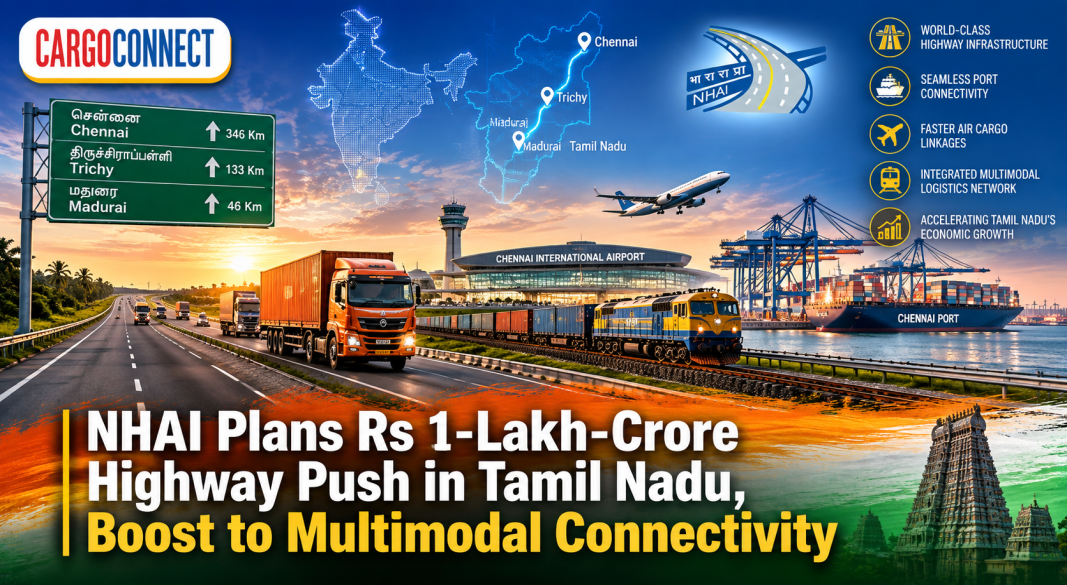
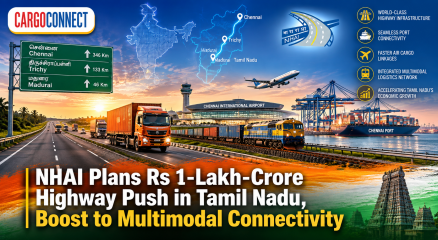
The National Highways Authority of India (NHAI) is preparing to roll out an ambitious highway development programme worth nearly ₹1 lakh crore in Tamil Nadu, with approximately 2,500 km of national highway projects currently in various stages of planning and execution. The large-scale infrastructure initiative is expected to significantly improve freight mobility, reduce logistics costs, and strengthen multimodal connectivity across one of India’s most industrialised states.
The proposed projects include greenfield expressways, bypasses, ring roads, elevated corridors, and highway widening works designed to ease congestion and improve connectivity between manufacturing hubs, ports, airports, and logistics parks. Once completed, the network is expected to provide faster and more efficient transportation for cargo movement while supporting growing industrial activity in sectors such as automobiles, electronics, textiles, engineering goods, and renewable energy.
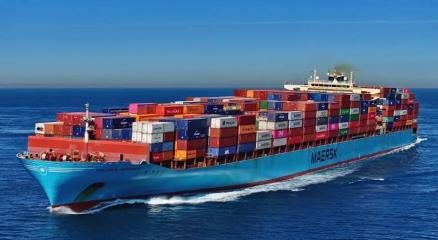
Tamil Nadu plays a pivotal role in India's export economy, with major maritime gateways including Chennai, Kamarajar (Ennore), VOC Port at Thoothukudi, and Cuddalore serving domestic and international trade. Improved highway infrastructure is expected to enhance hinterland connectivity to these ports, enabling smoother movement of containers and bulk cargo while reducing transit times for exporters and logistics service providers.
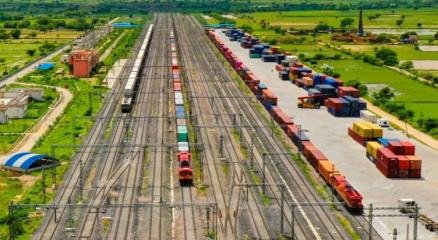
The proposed investments also align with the Centre’s broader infrastructure vision under the PM Gati Shakti National Master Plan, which seeks to integrate road, rail, port and air infrastructure into a seamless multimodal transport network. By improving last-mile connectivity and eliminating bottlenecks on key freight corridors, the projects are expected to increase supply chain efficiency and support India's ambition of lowering overall logistics costs.
Several strategic highway stretches are expected to improve connectivity between industrial clusters in Chennai, Coimbatore, Hosur, Tiruppur, Salem, Madurai and Tiruchirappalli. Enhanced road infrastructure will also facilitate faster access to warehousing hubs, inland container depots and dedicated freight corridors, benefiting manufacturers, transport operators and third-party logistics companies.
According to industry experts, the investment will generate long-term economic gains by attracting fresh industrial investments, improving regional connectivity and creating employment during both construction and operational phases. Better road infrastructure is also expected to support the rapid growth of e-commerce, cold chain logistics and time-sensitive cargo movement across southern India.
As India continues to prioritise infrastructure-led growth, Tamil Nadu's proposed highway expansion is poised to become a critical enabler of integrated logistics, reinforcing the state's position as a leading manufacturing and export hub while strengthening multimodal connectivity across the southern region.
𝐒𝐭𝐚𝐲 𝐓𝐮𝐧𝐞𝐝 𝐭𝐨 CARGOCONNECT 𝐟𝐨𝐫 𝐥𝐚𝐭𝐞𝐬𝐭 𝐮𝐩𝐝𝐚𝐭𝐞𝐬!
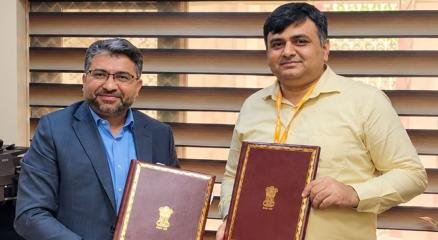
Blue Energy Motors (BEM) has signed a Memorandum of Understanding (MoU) with the Ministry of Road Transport and Highways (MoRTH) under the Government of India’s PARIVARTAN Scheme, supporting efforts to replace ageing commercial vehicles with cleaner alternatives across the Delhi-National Capital Region (NCR). The initiative seeks to reduce transport-related emissions and improve regional air quality by encouraging the replacement of older, high-emission trucks and buses. Blue Energy Motors’ participation is expected to support the wider adoption of electric heavy-duty trucks, offering freight and logistics operators a pathway towards zero-emission road transport. Commenting on the development, Anirudh Bhuwalka, Founder and Managing Director, Blue Energy Motors, said the scheme represents an important step towards cleaner freight mobility. He emphasised that policy support, advanced vehicle technology and a strong domestic manufacturing ecosystem can collectively accelerate India’s transition to zero-emission freight transportation. Scaling Green Freight Operations Blue Energy Motors is advancing cleaner heavy-duty transport through its electric and liquefied natural gas (LNG)-powered truck solutions. According to the company, more than 1,400 of its green heavy-duty trucks are operating across key freight routes in India, collectively covering over 150 million green kilometres. The company reports that these operations have helped avoid more than 44,000 tonnes of carbon dioxide (CO₂) emissions, equivalent to the carbon absorption of approximately 1.8 million trees. The MoU adds a policy-led dimension to the company’s efforts to expand cleaner freight mobility. By connecting government support with available vehicle technologies and industry participation, the PARIVARTAN Scheme aims to encourage fleet operators to consider replacing older commercial vehicles with cleaner options. Policy Support for Cleaner Roads The transition to cleaner commercial transportation remains an important consideration for India’s freight and logistics sector, particularly in the Delhi-NCR region, where vehicle emissions contribute to air-quality challenges. Schemes that facilitate fleet renewal can help create opportunities for the adoption of cleaner technologies, while supporting operators in evaluating their transition to lower-emission vehicles. Blue Energy Motors said it looks forward to contributing to the initiative through its electric heavy-duty truck technology and continued focus on sustainable freight mobility. The partnership underscores the role of coordinated action between policymakers, vehicle manufacturers and fleet operators in advancing cleaner road freight. As India pursues more sustainable transport solutions, initiatives such as PARIVARTAN could help connect vehicle replacement efforts with the technologies needed to reduce the environmental footprint of commercial transportation.