Loading...
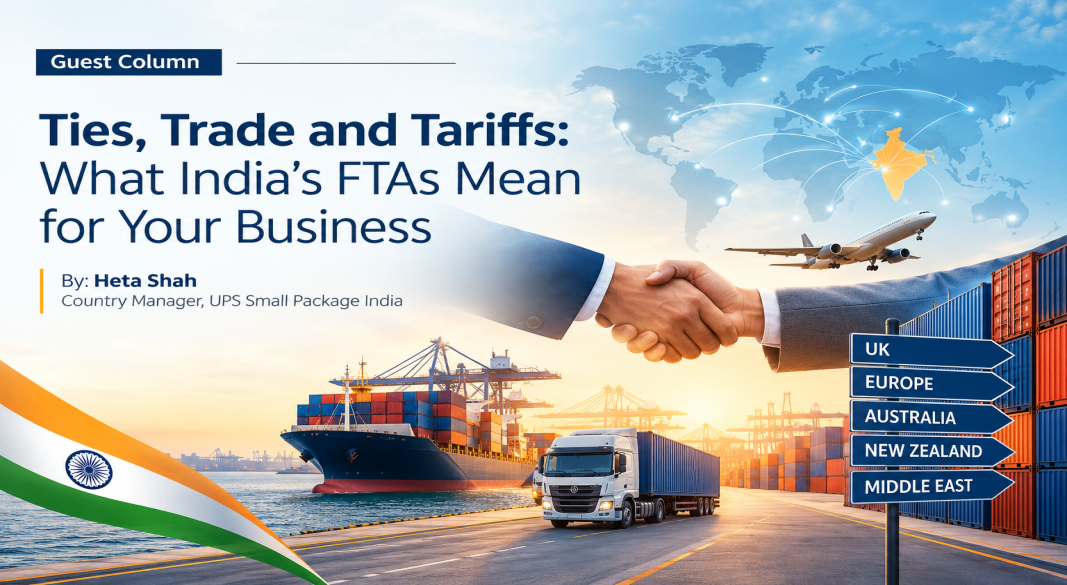
India’s trade map is changing. During FY2025–26 alone, India concluded trade agreements with the UK, Oman and New Zealand, adding to a growing network of trade partnerships. From the India-UK Comprehensive Economic and Trade Agreement and the India-EU agreement to its growing trade relationships across markets such as Australia, India is building stronger trade ties with markets around the world.
For an Indian small or medium-sized business (SMB), this is more than about trade policy. It’s a question of opportunity: Can my business use these new trade relationships to find customers, enter new markets and grow?
Businesses that can answer those questions with confidence will be better placed to turn new trade agreements into new economic opportunities.
A business does not become an exporter simply because a market exists. It becomes one when that market can be accessed simply, predictably and viably. Trade agreements open markets; logistics makes them accessible.
So, while tariffs are the cornerstone of the agreements, part of the answer also lies in looking beyond them.
Let me tell you why.
For a SMB looking to take advantage of these opportunities, the questions are practical.
TIES: Where can I find new customers?
An FTA can make it more attractive to sell into a market, but the first consideration for a SMB should be where real customer demand exists and how easily can the customer be reached.
India's growing trade relationships are creating possibilities beyond traditional markets. Europe, the UK, the UAE and Australia are becoming increasingly important corridors, with the conversation also moving towards Latin American markets such as Chile.
These opportunities are not limited to businesses in India's established export hubs. As Tier 2 and Tier 3 cities continue to expand their manufacturing and export capabilities, a growing number of SMBs are finding pathways to reach global customers for the first time.
Government initiatives to support e-commerce exports are also making it easier for SMBs to reach international customers. As digital platforms make it simpler to find and serve customers globally, more small businesses can participate in cross-border commerce.
Success, however, depends on more than market access alone. Businesses need reliable connectivity, the ability to move goods quickly and predictably, and the confidence that supply chains can support international customer requirements.
TRADE: What do I need to do to serve them?
This is where the reality of an FTA meets the realities of running a business.
Getting a product market ready is only half the job done. Imagine a SMB wins a new order in the UK because its product is now more competitive under the new trade agreement. The opportunity does not end with the sale. The business still needs to understand the applicable rules of origin, documentation and customs requirements and make sure the shipment reaches the customer on time and with the quality intact.
For smaller businesses, these requirements can be daunting. Unlike a large multinational, a SMB may not have a team dedicated to navigating international trade regulations.
That is why simplicity is extremely valuable when you cross trade borders. The objective is not simply to get a package from one country to another. It is to make international trade easier to manage as a business grows.
The right logistics approach can help businesses navigate the complexity of cross-border trade, bringing together the information, customs expertise, technology and connectivity needed to move goods across markets.
This becomes even more important in sectors such as healthcare and pharmaceuticals. India is already a major pharmaceutical manufacturing and export hub. According to the Press Information Bureau, in FY2024–25, pharmaceutical exports reached US$30.5 billion, with Indian medicines reaching 191 countries. Half of these exports were directed to highly regulated markets such as the US and Europe.
For businesses shipping medicines, medical devices or other patient-critical products, entering a new market can involve requirements around temperature, precision, visibility and compliance. The opportunity created by an FTA only matters if the supply chain can meet those requirements. FTAs connect businesses to the world; logistics brings the world closer to businesses.
TARIFFS: What will it really cost?
Often, businesses focus on the tariff reduction because it is the most visible benefit of an FTA. But tariffs are only part of the equation.
For a SMB, transportation costs, customs clearance, duties and taxes often have an equally significant impact on profitability. That's where many opportunities are won or lost, and where certainty becomes a business advantage.
Knowing the total delivery cost upfront can help a SMB price its product more confidently, decide whether an order makes commercial sense and avoid unexpected costs later.
But visibility matters not only for the business. For customers, unexpected duties, taxes or fees at delivery can create a poor buying experience and become a barrier to completing a purchase.
As trade rules continue to evolve, technology is making it easier for businesses to provide greater transparency around these costs before a shipment moves. Business can make more informed decisions when entering new markets; customers get greater certainty about what they will pay.
When deciding whether to enter a new market, businesses need to look beyond the headline tariff and understand the full cost of serving a market. The right logistics partner should help simplify that complexity, providing the visibility and expertise needed to support international growth.
India's global trade opportunity is no longer about existing businesses exporting more. It’s about enabling more local businesses to participate in global commerce, diversify their markets and scale beyond their traditional boundaries.
For SMBs, success will not be determined simply by which markets offer preferential tariffs. It will depend on their ability to find customers, navigate complexity and serve customers reliably and profitably. Bringing all these elements together is what turns market access into a real business opportunity.
India’s trade map is changing. During FY2025–26 alone, India concluded trade agreements with the UK, Oman and New Zealand, adding to a growing network of trade partnerships. From the India-UK Comprehensive Economic and Trade Agreement and the India-EU agreement to its growing trade relationships across markets such as Australia, India is building stronger trade ties with markets around the world. For an Indian small or medium-sized business (SMB), this is more than about trade policy. It’s a question of opportunity: Can my business use these new trade relationships to find customers, enter new markets and grow? Businesses that can answer those questions with confidence will be better placed to turn new trade agreements into new economic opportunities. A business does not become an exporter simply because a market exists. It becomes one when that market can be accessed simply, predictably and viably. Trade agreements open markets; logistics makes them accessible. So, while tariffs are the cornerstone of the agreements, part of the answer also lies in looking beyond them. Let me tell you why. For a SMB looking to take advantage of these opportunities, the questions are practical. TIES: Where can I find new customers? An FTA can make it more attractive to sell into a market, but the first consideration for a SMB should be where real customer demand exists and how easily can the customer be reached. India's growing trade relationships are creating possibilities beyond traditional markets. Europe, the UK, the UAE and Australia are becoming increasingly important corridors, with the conversation also moving towards Latin American markets such as Chile. These opportunities are not limited to businesses in India's established export hubs. As Tier 2 and Tier 3 cities continue to expand their manufacturing and export capabilities, a growing number of SMBs are finding pathways to reach global customers for the first time. Government initiatives to support e-commerce exports are also making it easier for SMBs to reach international customers. As digital platforms make it simpler to find and serve customers globally, more small businesses can participate in cross-border commerce. Success, however, depends on more than market access alone. Businesses need reliable connectivity, the ability to move goods quickly and predictably, and the confidence that supply chains can support international customer requirements. TRADE: What do I need to do to serve them? This is where the reality of an FTA meets the realities of running a business. Getting a product market ready is only half the job done. Imagine a SMB wins a new order in the UK because its product is now more competitive under the new trade agreement. The opportunity does not end with the sale. The business still needs to understand the applicable rules of origin, documentation and customs requirements and make sure the shipment reaches the customer on time and with the quality intact. For smaller businesses, these requirements can be daunting. Unlike a large multinational, a SMB may not have a team dedicated to navigating international trade regulations. That is why simplicity is extremely valuable when you cross trade borders. The objective is not simply to get a package from one country to another. It is to make international trade easier to manage as a business grows. The right logistics approach can help businesses navigate the complexity of cross-border trade, bringing together the information, customs expertise, technology and connectivity needed to move goods across markets. This becomes even more important in sectors such as healthcare and pharmaceuticals. India is already a major pharmaceutical manufacturing and export hub. According to the Press Information Bureau, in FY2024–25, pharmaceutical exports reached US$30.5 billion, with Indian medicines reaching 191 countries. Half of these exports were directed to highly regulated markets such as the US and Europe. For businesses shipping medicines, medical devices or other patient-critical products, entering a new market can involve requirements around temperature, precision, visibility and compliance. The opportunity created by an FTA only matters if the supply chain can meet those requirements. FTAs connect businesses to the world; logistics brings the world closer to businesses. TARIFFS: What will it really cost? Often, businesses focus on the tariff reduction because it is the most visible benefit of an FTA. But tariffs are only part of the equation. For a SMB, transportation costs, customs clearance, duties and taxes often have an equally significant impact on profitability. That's where many opportunities are won or lost, and where certainty becomes a business advantage. Knowing the total delivery cost upfront can help a SMB price its product more confidently, decide whether an order makes commercial sense and avoid unexpected costs later. But visibility matters not only for the business. For customers, unexpected duties, taxes or fees at delivery can create a poor buying experience and become a barrier to completing a purchase. As trade rules continue to evolve, technology is making it easier for businesses to provide greater transparency around these costs before a shipment moves. Business can make more informed decisions when entering new markets; customers get greater certainty about what they will pay. When deciding whether to enter a new market, businesses need to look beyond the headline tariff and understand the full cost of serving a market. The right logistics partner should help simplify that complexity, providing the visibility and expertise needed to support international growth. India's global trade opportunity is no longer about existing businesses exporting more. It’s about enabling more local businesses to participate in global commerce, diversify their markets and scale beyond their traditional boundaries. For SMBs, success will not be determined simply by which markets offer preferential tariffs. It will depend on their ability to find customers, navigate complexity and serve customers reliably and profitably. Bringing all these elements together is what turns market access into a real business opportunity.