
Loading...
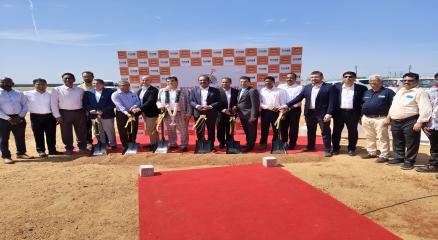
Kirby Building Systems & Structures India, a subsidiary of Alghanim Industries and a leading provider of pre-engineered steel buildings (PEB) and structural steel solutions, has commenced construction of its fourth manufacturing facility in India at Manapparai, near Trichy, Tamil Nadu. The new state-of-the-art facility will have an annual manufacturing capacity of 100,000 metric tonnes and will be developed across approximately 33.2 acres. Commercial operations are expected to commence by mid-2027. Once operational, the plant will raise Kirby India’s total annual manufacturing capacity from 300,000 metric tonnes to 400,000 metric tonnes, strengthening its ability to serve customers across Southern India and other key markets. Commenting on the investment, Sir Kutayba Y. Alghanim, Executive Chairman of Alghanim Industries, said: “Over the past 50 years, Kirby has grown under Alghanim Industries from an ambitious steel-building business into a trusted global partner. India has played an pivotal role in that journey for more than 26 years. This new investment reflects our continued confidence in the country’s long-term industrial development and our commitment to contributing meaningfully to its growth.” The groundbreaking ceremony was attended by Waleed K. Alghanim, Chief Executive Officer of Kirby International; Nizar Shawwa, Chief Operating Officer of Kirby International; James Minato, Vice President, Middle East and Africa; and P. V. Mohan, Managing Director of Kirby India. Senior leaders from Alghanim Industries and Kirby India, project consultants, civil contractors, government representatives and members of Kirby’s Southern Region team also attended the event. Waleed K. Alghanim, Chief Executive Officer of Kirby International, said: “As Kirby marks 50 years as part of Alghanim Industries, we are looking ahead to ‘The Next 50’ with confidence and ambition. This investment is an important part of that future, expanding our capacity, strengthening our presence in Southern India and bringing us closer to customers in one of the country’s most dynamic industrial regions.” P. V. Mohan, Managing Director of Kirby India, said: “Building on more than 26 years of operations in India, the new Tamil Nadu facility marks an important step in Kirby India’s growth. It will allow us to serve customers across Southern India with greater speed and flexibility while bringing advanced manufacturing capabilities closer to the markets we serve.” Kirby India said it continues to invest in advanced engineering, automation, digital technologies and manufacturing capabilities to meet the evolving requirements of India’s industrial and infrastructure sectors. The Tamil Nadu facility will complement its existing manufacturing network and enhance its ability to deliver engineered and scalable steel-building solutions with greater speed, reliability and consistency. The new facility will become Kirby India’s fourth manufacturing plant, complementing existing facilities in Hyderabad, Haridwar and Halol, Gujarat. The company has operated in India for more than 26 years and is supported by over 25 sales offices and more than 150 certified builders. It provides engineered building solutions across industrial, manufacturing, commercial, warehousing, logistics and heavy structural applications. Kirby India has completed more than 45,000 buildings in India, representing a total built-up area of approximately 50 million square metres. 𝐒𝐭𝐚𝐲 𝐓𝐮𝐧𝐞𝐝 𝐭𝐨 CARGOCONNECT 𝐟𝐨𝐫 𝐥𝐚𝐭𝐞𝐬𝐭 𝐮𝐩𝐝𝐚𝐭𝐞𝐬!

Singapore-based SATS is looking to deepen its presence in India’s logistics infrastructure by developing integrated multimodal facilities aimed at supporting manufacturing and strengthening the country’s freight network. The company has expressed confidence in India’s economic growth and sees opportunities to connect key production centres with airports, ports and other transport networks. Bob Chi, CEO of SATS Ltd’s Gateway Services for Asia Pacific, said the company is “bullish on India” while speaking at the India-Singapore Business Forum following the India-Singapore Ministerial Roundtable. He said SATS is interested in building world-class logistics and multimodal facilities that can serve manufacturing as well as other sectors of the economy. SATS already operates businesses across 14 Indian cities and has committed up to ₹4,500 crore towards its logistics infrastructure at Noida International Airport in Uttar Pradesh. The investment forms part of a broader strategy that includes developing multimodal transhipment centres across major metropolitan markets. At Noida, SATS has established a 37-year concession-based logistics hub at the newly inaugurated Jewar International Airport. Through its joint venture AISATS with Air India, the group is also involved in developing an integrated multimodal cargo hub designed to serve the National Capital Region and surrounding industrial clusters. The company is also seeking a role in India’s emerging transhipment network, with plans to strengthen connectivity between airports and major ports. Chi specifically highlighted opportunities around ports in Kolkata and Chennai, where significant infrastructure development is underway. Overall, SATS’s expansion comes as India seeks to improve freight efficiency and build integrated logistics infrastructure capable of supporting manufacturing, exports and domestic supply chains. The company has also indicated that stronger public-private partnerships will be important for developing globally competitive logistics infrastructure. 𝐒𝐭𝐚𝐲 𝐓𝐮𝐧𝐞𝐝 𝐭𝐨 CARGOCONNECT 𝐟𝐨𝐫 𝐥𝐚𝐭𝐞𝐬𝐭 𝐮𝐩𝐝𝐚𝐭𝐞𝐬!
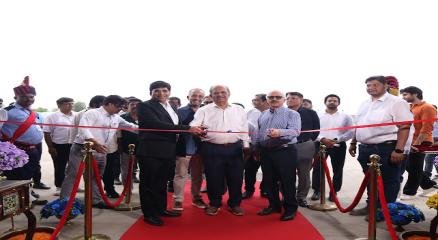
Interarch Building Solutions Limited has inaugurated a new state-of-the-art manufacturing facility in Kheda, Gujarat, marking a significant expansion of its manufacturing capabilities and reinforcing its commitment to India's growing industrial and infrastructure sectors. The new plant strengthens the company's pan-India production network while enhancing its ability to serve customers across Western and Central India as well as key export markets. Spread across nearly 12 acres, the Kheda facility has been developed with complete infrastructure to support an installed manufacturing capacity of 40,000 metric tonnes (MT) per annum. The first phase of the project, inaugurated on 9 July 2026, adds 20,000 MT of annual capacity through an investment of ₹60 crore, while the second phase will take the total investment to approximately ₹70 crore and double the plant's capacity to 40,000 MT annually. The new manufacturing unit is equipped with advanced automation and precision engineering technologies designed to improve production efficiency, product quality and turnaround times. Strategically located in Gujarat, the facility is expected to strengthen Interarch's service capabilities across Western India while improving export readiness through its proximity to major ports. The project is also expected to generate more than 400 direct and indirect employment opportunities, contributing to the state's industrial and economic development. Interarch already has a strong presence in Gujarat, having executed projects for leading organisations including Adani, Reliance, Aditya Birla Group, Asian Paints, BKT Tires, MG Motors, Torrent Power and Hitachi, among others. The new facility further strengthens the company's long-term commitment to supporting Gujarat's expanding industrial ecosystem. Commenting on the inauguration, Arvind Nanda, Managing Director, Interarch Building Solutions Limited, said: "India is witnessing a significant transformation in industrial infrastructure, supported by rising public investment, manufacturing expansion and the rapid development of logistics, warehousing, renewable energy and advanced manufacturing ecosystems. The inauguration of our Kheda facility comes at a pivotal time, enabling Interarch to meet the growing demand for high-quality, sustainable and time-efficient steel construction solutions. This investment reflects our long-term confidence in India's manufacturing story and our commitment to creating world-class infrastructure that supports the nation's industrial ambitions." Gautam Suri, Whole-Time Director, Interarch Building Solutions Limited, said: "With the commissioning of our Gujarat facility, we have successfully expanded our manufacturing network to better serve customers across the country while enhancing our export readiness. The plant has been designed with advanced manufacturing technologies that will improve productivity, quality and delivery capabilities. As demand continues to grow from sectors such as renewable energy, semiconductors, data centres, logistics, EVs and advanced manufacturing, this facility positions Interarch to deliver faster, smarter and more sustainable steel construction solutions." The commissioning of the Kheda plant completes Interarch's strategic manufacturing footprint across India and supports the company's long-term expansion strategy in the pre-engineered steel construction segment. The investment is expected to strengthen its ability to deliver sustainable, high-performance steel construction solutions for industrial, commercial and infrastructure projects across domestic and international markets. 𝐒𝐭𝐚𝐲 𝐓𝐮𝐧𝐞𝐝 𝐭𝐨 CARGOCONNECT 𝐟𝐨𝐫 𝐥𝐚𝐭𝐞𝐬𝐭 𝐮𝐩𝐝𝐚𝐭𝐞𝐬!
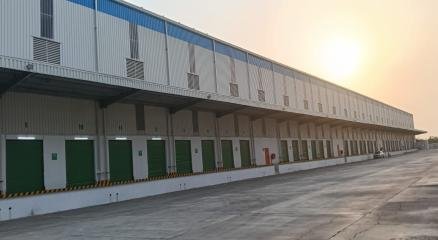
Safexpress has strengthened its logistics footprint in North India with the inauguration of a new integrated logistics park in Rajpura, Punjab. Strategically located on NH-44 at Gandian, Madanpur, the facility is designed to enhance supply chain efficiency while supporting the growing warehousing and distribution requirements of businesses across Punjab and neighbouring markets. Spread across 2.4 lakh square feet, the logistics park combines advanced transshipment capabilities with third-party logistics (3PL) services, enabling faster movement of goods and improved inventory management. The facility is expected to cater to manufacturers, distributors, and retailers operating across multiple industry sectors, reinforcing Rajpura's position as an emerging logistics destination. The newly commissioned logistics park features a modern cross-dock design that allows simultaneous loading and unloading of more than 41 vehicles, improving operational turnaround times. A column-free span exceeding 105 feet provides unobstructed movement of cargo and material handling equipment, while 16-foot-wide cantilever sheds facilitate uninterrupted loading and unloading operations regardless of weather conditions. Rajpura has witnessed rapid industrial growth in recent years due to its strategic location between Delhi and Chandigarh. The region is home to a diverse manufacturing base comprising agro and food processing, pharmaceuticals, textiles, engineering, automotive components, packaging, plastics, chemicals and construction materials. Strong road and rail connectivity, coupled with established industrial estates, has made the city an attractive logistics and distribution hub for businesses serving North India. The company expects the new logistics park to address the increasing demand for modern logistics infrastructure while improving supply chain reliability for industries operating in the region. Faster cargo movement and enhanced warehousing capabilities are likely to help businesses optimise distribution networks, reduce transit times and improve service levels across domestic markets. The Rajpura facility also incorporates several sustainability and safety initiatives. It is equipped with modern firefighting systems and trained emergency response personnel to ensure operational safety. Environmental features include an integrated rainwater harvesting system, dedicated green areas and extensive use of natural daylight, helping reduce energy consumption and promote sustainable operations. The inauguration marks another step in Safexpress' ongoing investment in expanding its pan-India logistics network. By strengthening infrastructure in a key industrial corridor, the company aims to improve nationwide connectivity while supporting regional economic development and enabling businesses to access faster, more efficient and dependable supply chain solutions across India. 𝐒𝐭𝐚𝐲 𝐓𝐮𝐧𝐞𝐝 𝐭𝐨 CARGOCONNECT 𝐟𝐨𝐫 𝐥𝐚𝐭𝐞𝐬𝐭 𝐮𝐩𝐝𝐚𝐭𝐞𝐬!

Andhra Pradesh government has inaugurated its first overseas investment facilitation centre in Busan, South Korea in a strategic move to strengthen global investment outreach and position itself as a preferred manufacturing and maritime hub. Named APEX Korea (Andhra Pradesh External Engagement – Korea), the centre has been established by the Andhra Pradesh Economic Development Board (APEDB) to serve as a dedicated platform for attracting Korean investments and supporting existing investors. The initiative marks a significant milestone in the state's international engagement strategy, creating a permanent institutional presence in one of Asia's leading industrial economies. Located in Busan, South Korea's maritime and commercial capital, APEX Korea will provide end-to-end support to Korean companies exploring investment opportunities in Andhra Pradesh, facilitate project implementation, and offer investor aftercare services to ensure long-term business partnerships. The launch coincided with Andhra Pradesh Minister for Education, IT and Electronics Nara Lokesh's investment outreach visit to South Korea, where he invited leading Korean maritime equipment manufacturers to participate in the proposed ₹30,000-crore Dugarajapatnam Shipbuilding Cluster. Speaking at a maritime investment roundtable organised by the Korea Marine Equipment Association (KOMEA), Lokesh highlighted Andhra Pradesh's strategic advantages, including its 1,053-km coastline, expanding port infrastructure, industrial ecosystem and investor-friendly policies. The state also proposed deeper collaboration between KOMEA and the Andhra Pradesh Maritime Board through initiatives such as a Korea Marine Equipment Desk, an India Ship Technology Centre, joint skill development programmes and collaborative research and innovation projects. These initiatives aim to strengthen technology transfer and build a globally competitive maritime manufacturing ecosystem. Beyond maritime manufacturing, Andhra Pradesh expanded its engagement with South Korean companies in the footwear and financial services sectors. During discussions with the Hwaseung Group, the government encouraged the company to expand its proposed ₹900-crore footwear manufacturing project in Kuppam by establishing component manufacturing facilities, an advanced R&D centre and an integrated footwear cluster. The Boo Young Group also expressed interest in exploring manufacturing opportunities in the state. The delegation also met representatives of BNK Financial Group, inviting the institution to explore financing opportunities across infrastructure, innovation and industrial development while connecting global investors with projects in Andhra Pradesh. With dedicated support for foreign investors and targeted outreach to globally competitive industries, the initiative is expected to strengthen foreign direct investment inflows while supporting the state's ambitions of becoming a leading hub for maritime manufacturing, shipbuilding, logistics and export-oriented industries. 𝐒𝐭𝐚𝐲 𝐓𝐮𝐧𝐞𝐝 𝐭𝐨 CARGOCONNECT 𝐟𝐨𝐫 𝐥𝐚𝐭𝐞𝐬𝐭 𝐮𝐩𝐝𝐚𝐭𝐞𝐬!
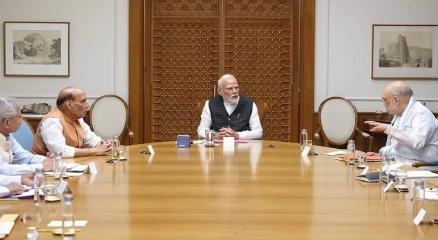
Union Cabinet has approved an additional investment of ₹30,000 crore in the National Investment and Infrastructure Fund (NIIF) to accelerate infrastructure development across the country. The fresh capital infusion is expected to enhance long-term financing for critical infrastructure projects while supporting India's expanding logistics and supply chain ecosystem. The approval will enable NIIF to establish new investment platforms and funds focused on strategic sectors such as transportation, logistics, energy transition, urban infrastructure and digital connectivity. The initiative aligns with the government's broader vision of attracting institutional and private capital into commercially viable infrastructure projects. Since its inception, NIIF has played a pivotal role in mobilising domestic and global investments for India's infrastructure ambitions. Structured as a collaborative investment platform, the fund has attracted participation from sovereign wealth funds, pension funds, insurance companies and multilateral institutions, thereby reducing the financing burden on public resources. The newly approved investment is expected to significantly expand NIIF's investment capacity, allowing it to leverage additional private capital and multiply the overall funding available for infrastructure development. Government officials indicated that the enhanced corpus would support the creation of new sector-focused funds while reinforcing ongoing investments in high-impact projects. For the supply chain and logistics sector, the announcement comes at a crucial time. India continues to invest heavily in multimodal connectivity, industrial corridors, logistics parks, ports, airports and warehousing infrastructure under initiatives such as PM Gati Shakti and the National Logistics Policy. Improved access to patient capital through NIIF is expected to accelerate project execution, strengthen logistics efficiency and reduce supply chain costs. However, expanding infrastructure financing mechanisms is essential to sustaining India's economic growth and improving its global competitiveness. Increased investments in transport networks, urban mobility and digital infrastructure are likely to facilitate smoother cargo movement, enhance last-mile connectivity and support manufacturing expansion. The additional funding is also expected to encourage greater participation from international investors by demonstrating the government's long-term commitment to infrastructure-led growth. NIIF's blended investment approach has consistently attracted global capital while maintaining high governance standards and commercial discipline. As India targets becoming a developed economy over the coming decades, strengthening institutional financing through NIIF is expected to play a vital role in delivering modern, resilient and sustainable infrastructure. The latest Cabinet approval reinforces the government's strategy of leveraging public investment to unlock larger private sector participation, ultimately creating a stronger foundation for economic development, supply chain resilience and logistics excellence. 𝐒𝐭𝐚𝐲 𝐓𝐮𝐧𝐞𝐝 𝐭𝐨 CARGOCONNECT 𝐟𝐨𝐫 𝐥𝐚𝐭𝐞𝐬𝐭 𝐮𝐩𝐝𝐚𝐭𝐞𝐬!

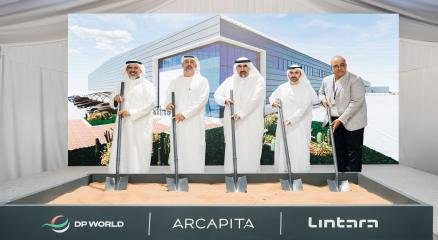
DP World has partnered with Lintara Properties, the real estate development arm of Arcapita Group Holdings, to begin construction of a new 20,000-square-metre build-to-suit logistics facility at Jebel Ali Free Zone (Jafza). The project is expected to further strengthen Dubai's position as a leading logistics and supply chain gateway for regional and international trade. The upcoming Grade A warehouse, being developed by Lintara Properties, will be integrated into DP World's end-to-end logistics network across the GCC. Construction is scheduled for completion in the first quarter of 2027, after which the facility will be operated by DP World. Designed to cater to rising demand for premium logistics infrastructure, the warehouse will feature nearly 12-metre clear-height storage, temperature-controlled zones, dedicated hazardous goods storage, modern office spaces and other operational support facilities. The infrastructure is intended to help businesses manage increasingly complex supply chains while improving efficiency and scalability. Commenting on the development, Ahmad Yousef Al-Hassan, CEO and Managing Director of DP World GCC, said the project reflects the growing need for purpose-built logistics infrastructure capable of supporting integrated supply chain operations. He noted that the facility would enhance Jafza's warehousing capabilities while reinforcing Dubai's role as a preferred trade and logistics destination. Isa Al Khalifa, Managing Director and Head of MENA Real Estate at Arcapita and CEO of Lintara Properties, said the project underscores the company's commitment to developing institutional-grade logistics assets tailored to customer requirements. He added that Jafza continues to witness strong demand for strategically located, high-quality warehousing facilities that support efficient distribution and long-term operational performance. Once construction is complete, Lintara Properties will transition from development manager to asset manager for the project. The investment also aligns with Arcapita's broader strategy of expanding its portfolio of tenant-focused industrial and logistics real estate across key regional markets, where demand for modern warehousing continues to rise.

In a move aimed at supporting India's expanding logistics sector, Container Corporation of India Ltd. (CONCOR) and RITES Limited have entered into a strategic Memorandum of Understanding (MoU) to jointly develop modern logistics infrastructure across the country. The partnership will focus on delivering comprehensive Project Management Consultancy (PMC) services for future infrastructure projects. The collaboration brings together CONCOR's long-standing expertise in multimodal transportation, inland container terminals, containerized cargo handling and supply chain management with RITES' strengths in engineering consultancy, infrastructure planning, project execution and technical advisory services. By combining their capabilities, both public sector enterprises intend to create efficient and sustainable logistics solutions that cater to the country's growing industrial and trade demands. As part of the agreement, CONCOR and RITES will identify and pursue opportunities related to the planning, design, construction and implementation of logistics infrastructure. The objective is to adopt advanced engineering techniques, streamlined project management practices and innovative logistics planning to ensure timely execution while improving operational efficiency. The initiative also complements the Government of India's broader agenda to strengthen multimodal connectivity through flagship programmes such as the PM Gati Shakti National Master Plan and the National Logistics Policy. By working together, the two organisations expect to contribute towards lowering logistics costs, improving freight movement and enhancing the nation's overall supply chain competitiveness. Officials associated with the partnership believe the collaboration will pave the way for the development of logistics parks, multimodal cargo terminals, freight corridors and other key infrastructure projects. They added that the alliance represents another step towards building an integrated logistics ecosystem capable of supporting India's ambition to emerge as a global logistics hub through technology-driven and future-ready infrastructure.
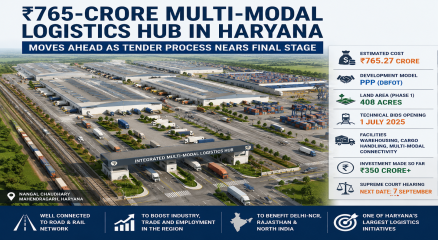
Technical bids for the Mahendragarh logistics project are scheduled to be opened on July 1, bringing one of Haryana’s largest infrastructure initiatives closer to execution. The proposed Integrated Multi-Modal Logistics Hub (IMLH) at Nangal Chaudhary in Mahendragarh district has reached an important milestone, with technical bids for its global tender set to be opened on July 1 in Chandigarh. Estimated at ₹765.27 crore, the project is expected to significantly strengthen logistics and freight infrastructure across northern India. The tender, floated in August 2025 by Haryana Multi-Modal Logistics Hub Project Limited, seeks a private developer under the Public-Private Partnership (PPP) framework using the Design, Build, Finance, Operate and Transfer (DBFOT) model. Interested firms have until 5 pm on June 30 to submit their online bids before the technical evaluation begins. The first phase of the project will be developed over around 408 acres, where modern cargo handling, warehousing and freight distribution facilities will be established. Once operational, the hub is expected to improve supply chain efficiency by integrating road and rail connectivity, reducing logistics costs and enabling faster movement of goods. Preparatory infrastructure for the project has already seen substantial progress. Rail connectivity through the New Dabla Railway Station, a 220 kV dedicated power line, a canal-based water supply from Narnaul, and road access from the National Highway have already been created. Construction of the internal railway track and cargo platform is also nearing completion. The rail infrastructure developed during the first phase has involved an investment of nearly ₹200 crore, laying the groundwork for large-scale freight operations. Authorities expect the logistics hub to attract fresh industrial investment and strengthen manufacturing activity across the region. Besides enhancing freight movement, the project is anticipated to generate considerable direct and indirect employment opportunities. It is also expected to benefit industries located in Delhi-NCR, Rajasthan, Haryana, and other parts of North India by offering modern logistics and warehousing infrastructure. Despite steady progress, a portion of the project remains subject to legal proceedings. The Supreme Court, while hearing a petition filed by 91 farmers, recently ordered a temporary stay on construction activities across 129 acres of the project land until September 7. At the same time, the court clarified that the order does not restrict the Haryana government from continuing statutory procedures under the Right to Fair Compensation and Transparency in Land Acquisition, Rehabilitation and Resettlement Act, 2013. The next hearing in the matter is scheduled for September 7. The logistics hub is being implemented through a special purpose vehicle (SPV), NICDC Haryana Multi-Modal Logistics Hub Project Limited. Since the project's inception in 2018, nearly 1,000 acres have been acquired. Around ₹150 crore has been spent on land acquisition, while another ₹200 crore has gone into developing enabling infrastructure. With the global tender process now entering its concluding phase, the project is moving closer to construction and is expected to become a major logistics gateway supporting industrial growth and multimodal transportation across the region.
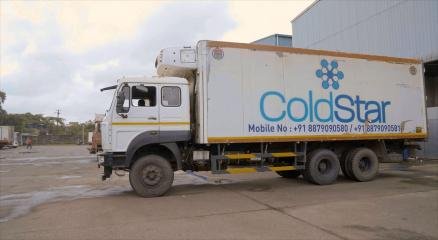
ColdStar Logistics has expanded its temperature-controlled distribution footprint with the launch of three new facilities in Patna, Guwahati and Lucknow, marking another step in the company's efforts to deepen its presence in India's rapidly growing regional markets. The move comes amid rising demand for reliable cold-chain services from sectors such as food processing, pharmaceuticals, dairy, retail and quick commerce. The newly commissioned facilities form part of ColdStar's broader growth strategy aimed at bringing modern logistics infrastructure closer to emerging consumption centres. As businesses increasingly shift their focus beyond metropolitan regions, the need for efficient storage and distribution networks in Tier-II and Tier-III cities has become more critical than ever. With these additions, ColdStar's nationwide network now comprises 45 distribution centres, extending service coverage to more than 109,000 pin codes across the country. The company currently manages over one million square feet of warehousing space and has indicated plans to further expand capacity during the ongoing financial year in response to growing customer demand. Speaking on the development, Sameer Varma, Executive Director of ColdStar Logistics, highlighted the changing dynamics of India's consumption landscape. According to him, companies today require supply-chain infrastructure that is located closer to regional demand centres in order to improve responsiveness, reduce replenishment timelines and maintain product availability. He added that the latest facilities have been developed with a focus on helping customers scale efficiently while ensuring dependable distribution capabilities. Among the three projects, the Guwahati facility has emerged as a strategically significant addition. Located in Kamrup and spread across approximately 20,000 square feet, the warehouse is expected to strengthen distribution networks across the Northeast, serving markets in Assam, Tripura, Mizoram, Manipur and neighbouring states. The facility is designed to support growing demand from businesses seeking improved access to the region. In Uttar Pradesh, ColdStar has established a 10,500-square-foot warehouse in Unnao, positioned along the Lucknow-Kanpur industrial corridor. The location offers direct access to one of North India's most active consumption and manufacturing belts, enabling faster movement of temperature-sensitive products across the state and adjoining regions. Meanwhile, the company's new facility in Anisabad, Patna, covers around 5,000 square feet and has been developed to enhance distribution efficiency across Bihar. The site benefits from connectivity through the Grand Trunk Road corridor while also leveraging access to the Gaighat river route, creating additional logistics advantages for regional deliveries. The three facilities have been built to cater to a diverse customer base spanning FMCG, processed foods, confectionery, healthcare, dairy products, retail and quick-commerce operations. Each warehouse is equipped with dedicated Ambient, Tropical, Chiller and Frozen storage zones, allowing multiple product categories with different temperature requirements to be managed under a single roof. ColdStar has also integrated the new sites into its technology-enabled operating ecosystem. Through real-time visibility tools, standardized operating procedures and centralized monitoring systems, the company aims to deliver uniform service quality across its entire network while helping customers maintain inventory accuracy and product integrity. Industry observers note that the expansion reflects a broader trend within India's logistics sector, where companies are investing heavily in regional infrastructure to support the next wave of consumption growth. By strengthening its presence in key emerging markets, ColdStar is positioning itself to provide faster, more reliable cold-chain services while addressing inventory challenges and reducing stock-out risks for businesses. The latest rollout further reinforces ColdStar Logistics' commitment to building a resilient and technology-driven temperature-controlled supply-chain network, ensuring that customers in smaller cities receive the same level of service efficiency and operational reliability traditionally associated with major metropolitan centres.

UPS has announced a major expansion of its healthcare logistics network with a $48 million investment in 27 temperature-controlled freight cross-dock facilities across key markets in the Americas, Europe and Asia. The move is aimed at strengthening the company’s capabilities in handling temperature-sensitive pharmaceuticals, biologics, advanced therapies and other critical healthcare products. The new facilities are designed to accelerate the movement of healthcare shipments between air and ground transportation networks while maintaining strict temperature integrity throughout the transfer process. By reducing dwell times and enhancing operational efficiency, UPS aims to provide faster, more reliable logistics solutions for an increasingly complex healthcare sector. According to UPS, the facilities support multiple temperature ranges, including controlled room temperature (15°C to 25°C), refrigerated conditions (2°C to 8°C), and frozen environments. All locations are certified under IATA’s CEIV Pharma standards, reinforcing compliance with global pharmaceutical handling requirements and ensuring high levels of quality assurance across the network. The investment comes amid growing demand for specialized healthcare logistics driven by the rapid expansion of biologics, cell and gene therapies, and precision medicines. These products require highly controlled transportation environments and complete visibility throughout the supply chain to preserve efficacy and regulatory compliance. UPS stated that the enhanced cross-dock network will improve speed, chain-of-custody visibility and end-to-end monitoring capabilities, enabling healthcare manufacturers to better manage complex global distribution requirements. The company continues to position healthcare logistics as a key growth area, supported by recent investments and acquisitions that have expanded its cold-chain capabilities across major pharmaceutical markets. The announcement reflects a broader industry trend toward investing in temperature-controlled infrastructure. Similar developments are visible across the air cargo sector, where logistics providers are increasingly prioritizing pharmaceutical handling capabilities. Recent examples include the expansion of freight-forwarder handling services at Brussels Airport, where access to GDP-certified facilities and dedicated temperature-controlled storage has become a critical differentiator for logistics operators serving healthcare customers. As pharmaceutical supply chains become more global and specialized, investments in cold-chain infrastructure are expected to play a pivotal role in ensuring product integrity, regulatory compliance and patient safety. Such initiative underscores the growing importance of resilient, temperature-controlled logistics networks in supporting the next generation of healthcare products worldwide. 𝐒𝐭𝐚𝐲 𝐓𝐮𝐧𝐞𝐝 𝐭𝐨 CARGOCONNECT 𝐟𝐨𝐫 𝐥𝐚𝐭𝐞𝐬𝐭 𝐮𝐩𝐝𝐚𝐭𝐞𝐬!
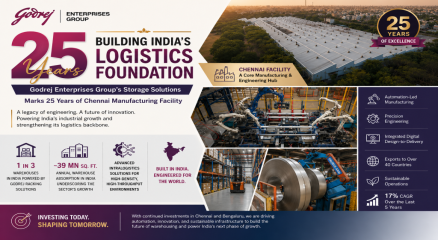
India’s warehousing and intralogistics sector is entering a new phase of growth, driven by the rapid expansion of e-commerce, quick commerce, manufacturing, and third-party logistics. Against this backdrop, Godrej Enterprises Group (GEG) has marked the 25th anniversary of its Chennai manufacturing facility, reaffirming its commitment to advancing India’s logistics infrastructure through continued investments in automation, engineering excellence, and next-generation warehousing solutions. A cornerstone of the company’s Storage Solutions business, the Chennai facility has evolved into one of the region’s largest and most advanced intralogistics manufacturing hubs. Backed by over seven decades of expertise in intralogistics, the business has announced further investments across its Chennai and Bengaluru operations to strengthen production capabilities, accelerate innovation, and support the growing demand for intelligent warehousing infrastructure. The milestone comes at a time when warehousing is becoming increasingly critical to supply chain resilience and operational efficiency. With annual warehousing absorption in India crossing approximately 39 million sq. ft., demand for automated, high-density storage systems continues to rise as businesses seek greater speed, scalability, and cost efficiency across their supply chains. Over the past 25 years, the Chennai facility has expanded its manufacturing and engineering capabilities to deliver complex intralogistics projects with greater precision and faster execution. Today, it produces advanced systems that support automated warehouses, high-density storage environments, and large-scale distribution operations, reinforcing its role as a strategic enabler of India’s industrial growth. Commenting on the milestone, Vikas Choudaha, Business Head – Storage Solutions, Godrej Enterprises Group stated, “As we mark 25 years of our Chennai manufacturing facility, it reflects how we have steadily scaled our capabilities to support India’s rapidly evolving logistics and warehousing ecosystem. As supply chains become faster and more complex, the need for intelligent, technology-led and future-ready infrastructure is intensifying, and at Godrej Enterprises Group, we are actively shaping this transformation through investments in advanced engineering, innovation, and automation-led capabilities.” The company has strengthened its market position through automation-led manufacturing, precision engineering, and integrated digital design-to-delivery systems. Its portfolio includes automated racking solutions and rack-clad warehouses designed to maximise storage density, improve throughput, and optimise land utilisation. Notably, the company states that one in every three warehouses in India is powered by Godrej racking solutions. Sustainability remains a key focus area, with manufacturing operations incorporating real-time monitoring and optimisation of energy and water consumption. These initiatives align with the company’s broader vision of delivering environmentally responsible infrastructure while enhancing operational efficiency. Beyond India, Godrej Enterprises Group has established a strong global footprint, exporting engineering-led intralogistics solutions to more than 40 countries across the Americas, Europe, the Middle East, ASEAN, and Australia. As India advances towards becoming a globally competitive manufacturing and logistics hub, Godrej Enterprises Group’s continued investments in automation, digital transformation, and sustainable infrastructure position it to play an increasingly important role in shaping the future of warehousing and supply chain excellence.

RSA Global has signed a Memorandum of Understanding with the Government of Maharashtra to develop India's largest automated empty container yard, a 62-acre facility worth ₹2,580 crore at Uran, Raigad, built within the heart of the Jawaharlal Nehru Port (JN Port) ecoystem, reinforcing the nation’s efforts to modernise port-led logistics and improve container management efficiency. The project is expected to set new benchmarks in automation, sustainability, and operational productivity. The facility will be developed on a 62-acre land parcel near JN Port under a long-term concession agreement. Designed as a state-of-the-art automated storage and retrieval system (ASRS)-based yard, the project aims to address one of the most persistent challenges in container logistics—the efficient handling, storage, maintenance, and repositioning of empty containers. JN Port currently handles around one million TEUs of empty containers annually, making the development strategically important for optimising container flows, and reducing congestion across the port ecosystem. The automated yard will leverage advanced technologies, including mechanised container stacking systems, gate automation, terminal operating systems, and real-time container tracking capabilities. These features are expected to significantly improve yard productivity, minimize turnaround times, and enhance visibility across the container supply chain. The project will also incorporate a truck appointment system to streamline vehicle movement and reduce traffic bottlenecks in and around the port area. RSA Global, a Dubai-headquartered logistics and supply chain solutions provider, plans to transform the facility into a future-ready logistics asset capable of supporting India’s rapidly growing export-import trade. The company has indicated that the project aligns with its broader strategy of deploying technology-driven logistics infrastructure that enhances supply chain resilience and efficiency. Ajay I. Shah, Chairman & Co-Founder, RSA Global, said, "India's trade ambitions are written in its ports, and empty container handling as long been the unglamorous bottleneck holding them back. We're investing to fix exactly that bringing automation, transparency and world-class infrastructure to the JNPA ecosystem, in partnership with the Government of Maharashtra.” For JN Port, India’s largest container gateway, the development represents another milestone in its ongoing infrastructure expansion and digital transformation agenda. The port has been actively investing in capacity augmentation, multimodal connectivity, and technology adoption to strengthen its position as a leading trade hub in South Asia. The automated empty container yard is expected to complement these initiatives by creating a centralised, high-capacity facility for managing empty containers more effectively. Industry stakeholders believe the project could significantly reduce logistics costs, improve equipment availability for exporters, and support the government’s broader objective of enhancing ease of doing business through world-class logistics infrastructure. Once operational, the facility is expected to emerge as a critical node in India’s container logistics network, setting a new standard for automated container yard operations in the country. 𝐒𝐭𝐚𝐲 𝐓𝐮𝐧𝐞𝐝 𝐭𝐨 CARGOCONNECT 𝐟𝐨𝐫 𝐥𝐚𝐭𝐞𝐬𝐭 𝐮𝐩𝐝𝐚𝐭𝐞𝐬!

XSIO Logistics Parks, backed by global asset manager Blackstone, has finalized plans to invest upwards of Rs 600 crore to construct a state-of-the-art integrated logistics hub near Indore. The ambitious development comes after the MP Industrial Development Corporation (MPIDC) formally approved the allotment of 23.33 hectares of land in Machal village. Funded primarily through international foreign investment, the mega-facility is projected to generate more than 4,000 direct and indirect employment opportunities across the state. Commenting on the industrial significance of the allotment, Himanshu Prajapati, Executive Director of MPIDC Indore, emphasized that the project will significantly elevate the Indore-Pithampur corridor’s status among India’s top-tier logistics zones. He noted that the state government is fully committed to providing seamless regulatory support to fast-track execution. Officials expect that the finished hub will effectively service industrial manufacturing plants in Pithampur Sector-7, the Mohana industrial area, and adjacent manufacturing clusters. The new industrial park is designed to synergize with Western Indore's existing freight infrastructure, heavily complementing the ongoing Rs 1,110-crore Multi Modal Logistics Park (MMLP) in Pithampur as well as CONCOR’s active Inland Container Depot (ICD). Local authorities point out that the convergence of these major hubs will create a highly optimized supply chain network, significantly driving down overall operational and freight costs for regional businesses. This capital injection reflects a broader trend of institutional real estate investment pouring into India's central warehousing corridors to meet rising supply chain demands. By setting up a robust, institutional-grade logistics footprint in Madhya Pradesh, XSIO and Blackstone are positioning the region as a primary distribution node, ensuring it has the capacity and infrastructure to handle high-volume domestic and EXIM cargo movements for years to come. For more such news and updates, visit CARGOCONNECT.
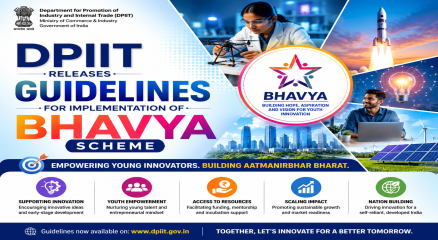
The Department for Promotion of Industry and Internal Trade (DPIIT) has released detailed operational guidelines for implementing the Bharat Audyogik Vikas Yojna (BHAVYA), a flagship initiative aimed at developing world-class industrial infrastructure across India. The move is expected to significantly strengthen the country’s manufacturing ecosystem while creating new opportunities for the logistics and supply chain sector. Announced earlier this year by the Union Cabinet, the BHAVYA scheme carries a financial outlay of approximately ₹33,660 crore and targets the development of 100 plug-and-play industrial parks between FY2026-27 and FY2031-32. In the first phase, up to 50 industrial parks will be selected through a challenge-based competitive process involving states and industrial development agencies. The newly released guidelines outline the eligibility criteria, financing structure, implementation framework, and evaluation parameters for participating projects. The scheme is designed to provide pre-approved land, trunk infrastructure, multimodal connectivity, and integrated utilities, allowing manufacturers to establish operations with minimal delays. This approach is expected to reduce project gestation periods and improve India’s competitiveness in global supply chains. A major focus of BHAVYA is the creation of investment-ready industrial ecosystems aligned with the PM GatiShakti National Master Plan. By integrating road, rail, port, and logistics connectivity into industrial development, the programme seeks to address long-standing infrastructure bottlenecks that have impacted manufacturing efficiency and freight movement in the country. The National Industrial Corridor Development Corporation (NICDC) will anchor the implementation of the scheme under the National Industrial Corridor Development Programme (NICDP). According to DPIIT, industrial parks developed under BHAVYA will feature streamlined approval mechanisms, including single-window clearances and investor facilitation systems, aimed at improving ease of doing business. Industry observers believe the scheme could emerge as a catalyst for large-scale manufacturing investments, particularly in sectors such as electronics, automotive, textiles, chemicals, and renewable energy. The development of integrated industrial clusters is also expected to generate significant demand for warehousing, multimodal logistics, cold chain infrastructure, and last-mile connectivity solutions. From a supply chain perspective, BHAVYA is likely to support the decentralisation of manufacturing activity beyond traditional industrial hubs. With industrial parks proposed across multiple states, logistics providers may witness increased opportunities in regional freight movement, inland container operations, and value-added warehousing services. The guidelines further emphasise sustainability, digital infrastructure, and future-ready industrial planning. Parks will be encouraged to adopt green infrastructure standards, smart utility management systems, and resilient logistics planning to attract both domestic and global investors. As India intensifies efforts to position itself as a global manufacturing and export hub, the BHAVYA scheme is being viewed as a strategic step toward building integrated industrial and logistics ecosystems capable of supporting long-term economic growth. 𝐒𝐭𝐚𝐲 𝐓𝐮𝐧𝐞𝐝 𝐭𝐨 https://cargoconnect.co.in/ 𝐟𝐨𝐫 𝐥𝐚𝐭𝐞𝐬𝐭 𝐮𝐩𝐝𝐚𝐭𝐞𝐬!Top of Form

DHL Supply Chain has begun construction on a new European Battery Logistics Hub in Holtum, Limburg, to enhance battery and energy storage logistics across Europe. The facility will provide 17,000 square meters of dedicated space for the storage and handling of high-voltage batteries and will be adjacent to DHL Supply Chain’s existing automotive logistics site in Holtum. Together, these facilities will create an integrated logistics campus that supports electric mobility and energy systems throughout Europe. The hub is set to open in early 2027. This new facility will manage batteries for electric vehicles as well as battery energy storage systems, including applications for home energy storage and solar solutions. With increasing demand for electric mobility and decentralized energy systems in Europe, DHL Supply Chain is seeing heightened interest from automotive, industrial, and energy customers seeking safe and scalable battery logistics solutions. Located in the Netherlands, Holtum is expected to become a key gateway for EV and energy storage logistics, serving markets in the Netherlands, Germany, Belgium, and neighboring areas. Rainer Haag, CEO of DHL Supply Chain Europe, said, “By expanding our battery logistics in Holtum and closely linking it with our existing automotive expertise, we’re creating a one-stop shop solution for the EV sector. This investment supports DHL Group Strategy 2030, where New Energy is a major growth driver for our business across Europe.” The Holtum campus is well-located with easy access to major European transport routes, including direct connections to key motorways linking the Benelux region and Germany. The site is also near a container and barge terminal on the Juliana Canal, offering more transport options that enhance supply chain efficiency, resilience, and sustainability for customers in Europe. This initiative is part of DHL Group’s Strategy 2030, aimed at supporting customers in rapidly growing sectors, including electric mobility, renewable energy, and circular supply chains. As New Energy emerges as a key growth area, DHL Supply Chain continues to invest in specialized infrastructure and services to help customers grow sustainably across Europe. John Scherders, CEO of DHL Supply Chain Benelux, commented, “By connecting the new battery operation with our existing automotive and spare parts facility, we are establishing a center of excellence that allows us to provide seamless logistics and technical services for electric mobility and energy storage customers throughout Europe.” The Holtum campus benefits from excellent connectivity to European transport corridors, with direct access to major motorways linking the Benelux and Germany, as well as proximity to a nearby container and barge terminal on the Juliana Canal. This waterborne connection further enhances the site's ability to support efficient and resilient supply chains, offering customers additional options for sustainable European distribution. The project forms part of DHL Group Strategy 2030, which focuses on supporting customers in growth sectors such as electric mobility, renewable energy and circular supply chains. With New Energy identified as a key driver of future growth, DHL Supply Chain continues to invest in specialized infrastructure and services that enable customers to scale sustainably across Europe. For more such news and updates, visit:- CARGOCONNECT.

N Chandrababu Naidu has directed officials to accelerate the integration of major industrial parks and economic regions across Andhra Pradesh with robust logistics infrastructure, as the state intensifies efforts to strengthen its industrial and manufacturing ecosystem. During a high-level review meeting in Amaravati, the Chief Minister assessed the progress of Product Perfection Clusters across the Visakhapatnam, Amaravati and Tirupati economic regions while reviewing plans for industrial and chemical parks under the Government of India’s BHAVYA (Bharat Audyogik Vikas Yojana) scheme. Naidu also instructed officials to formulate plans for a Rare Earth Mineral Park in 2026–27, accelerate development of the East Coast Industrial Corridor, establish a container manufacturing cluster, and develop nearly 175 MSME parks across the state. Emphasising the importance of logistics-led industrial growth, the Chief Minister called for integrated infrastructure planning encompassing warehousing, cold storage, power and water facilities to improve operational efficiency and strengthen market access for regional industries. The state government is also focussing on improving global competitiveness by encouraging MSMEs to align with international quality standards, while promoting Farmer Producer Organisations (FPOs) within industrial clusters to extend economic benefits to the agricultural community.
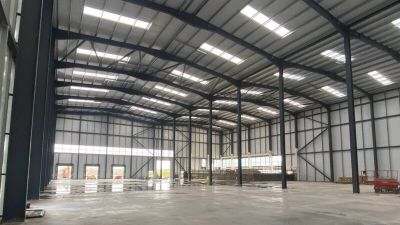
Leasing in the industrial and logistics (I&L) sector reached an all-time high of 39.5 million square feet in CY 2024 across the top eight cities, a remarkable milestone driven by a substantial supply addition of 38.6 million square feet, according to the latest report by CBRE South Asia Pvt Ltd, titled ‘CBRE Industrial & Logistics Figures H2 2024.’ The report emphasises the continued momentum in leasing, with strong activity across various regions. Notably, Delhi-NCR, Bengaluru, and Kolkata were the leading contributors, together accounting for almost 60 per cent of the total leasing activity during the year. Mumbai, Chennai, and Bengaluru stood out in terms of supply addition, collectively contributing to over half of the new space in CY 2024. The report identifies third-party logistics (3PL) players as the dominant force in space take-up, with these firms accounting for 41 per cent of the leasing activity. Additionally, engineering and manufacturing companies maintained a strong presence, with an 18 per cent share in the overall space absorption. Interestingly, the space uptake was predominantly driven by smaller transactions, with those under 50,000 square feet representing 43 per cent of the total leasing volume. Medium-sized transactions (ranging from 50,000 to 100,000 square feet) and larger transactions (exceeding 100,000 square feet) each comprised 28 per cent of the total activity. Anshuman Magazine, Chairman and CEO of CBRE for India, Southeast Asia, Middle East & Africa, highlighted the resilience of the I&L sector amidst global economic uncertainties, predicting further growth in 2025. He anticipates that in-city warehousing and the quick-commerce model will play an increasingly significant role, with Delhi-NCR, Kolkata, and Bengaluru expected to lead the absorption trends in the coming year.
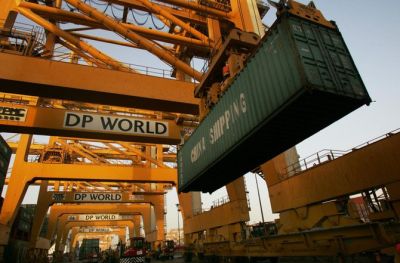
DP World, a leading UAE-based port and logistics firm, is considering investing over $1 billion to enhance port infrastructure in Peru, according to the Peruvian government. The announcement followed discussions between Peru's President Dina Boluarte and DP World CEO Sultan Ahmed bin Sulayem. The proposed investment aims to create jobs and boost the nation's agricultural exports, the Peruvian government shared on social platform X. DP World currently operates the Callao port terminal, the largest port in Peru, situated along the central coast. In a statement, DP World's Peru office confirmed it is "evaluating opportunities to deploy more investments" in its local operations, though specific figures have not been disclosed. The expansion would further solidify the firm's presence in the region and support Peru's economic growth.
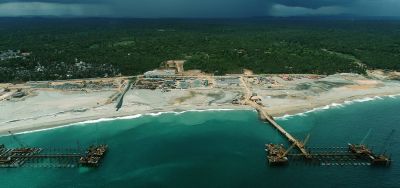
India’s maritime trade is poised for a significant boost as roadway cargo traffic from the Vizhinjam International Seaport is set to commence in January. According to project officials, trial runs involving 40-foot equivalent container trailers carrying dummy cargo have already started, aiming to evaluate the interim road network connecting the port site to NH 66. The temporary route employs a service road and a vehicular underpass, facilitating the movement of cargo until the primary approach road is fully constructed. Round-the-clock construction efforts are on track to complete the necessary infrastructure by December. Global Shipping Giant MSC Elevates Port's Status Vizhinjam port has gained considerable attention from manufacturers and traders, particularly in Tamil Nadu, Karnataka, and Andhra Pradesh, following its inclusion in MSC's Jade and Dragon services. This makes Vizhinjam India’s only port with direct trade links to Europe and Southeast Asia, significantly enhancing the country’s maritime connectivity. “There is massive demand from regional manufacturers to use Vizhinjam for import and export operations,” stated an official from Vizhinjam International Seaport Limited (VISL). “We are working closely with the Adani Group to ensure roadway cargo traffic and customs facilities are operational by next month.” Industry Concerns Over Infrastructure Despite these developments, stakeholders have raised concerns about the sufficiency of road connectivity for large-scale logistics. Calls are mounting for a temporary container rail terminal at Nemom or Balaramapuram. In response, the state government has allocated ₹206 crore for the construction of a permanent container yard near Balaramapuram railway station. Meetings with the Railways and NHAI are planned to address these infrastructure demands, including a cloverleaf intersection at Thalakode for seamless highway connectivity. Inaugural Preparations Underway Currently handling transshipment operations, Vizhinjam International Seaport is gearing up for its official inauguration. The state government has asked VISL to prepare a draft invitation for Prime Minister Narendra Modi to grace the event early next year. The developments at Vizhinjam underline Kerala's growing role in India's maritime trade and the strategic importance of aligning infrastructure and policy to meet the rising demands of global logistics. Source: The Times of India (TOI)

Welspun One, in collaboration with the Jawaharlal Nehru Port Authority (JNPA), has unveiled a state-of-the-art logistics facility with an annual throughput capacity of 36,000 TEUs. Spanning 55 acres, the project includes over 400,000 pallet positions, parking for 600 trucks, and aims to create over 5,000 direct and indirect jobs, boosting the local economy. Initially planned as a 1.2 million sq ft development with an investment of ₹700 crore, the project has been scaled up to 4.45 million sq ft, comprising 3.95 million sq ft of warehousing, 0.25 million sq ft of Grade A office space, and 0.25 million sq ft of industrial space, catering to rising export-import demands at JNPA. Located within 5 km of port terminals and with access to major transport networks like National Highways, the Dedicated Freight Corridor (West), and the upcoming Navi Mumbai Airport, the facility offers unparalleled logistical advantages. As part of a notified SEZ, it provides additional benefits, including GST exemptions, customs duty deferments, expedited customs clearance, and reduced detention risks, enabling cost savings of up to 15%. This makes it a strategic hub for industries like chemicals, automotive, FMCG, pharmaceuticals, and electronics. The facility is positioned to address long-standing gaps in India’s logistics sector, offering integrated solutions that enhance operational efficiency and supply chain optimisation. With a recent ₹2,275 crore equity fundraising for Fund 2, Welspun One is executing this ambitious project at scale and speed, reflecting investor confidence. According to Balkrishan Goenka, Chairman of Welspun World, the JNPA SEZ project is pivotal to aligning with India’s growth story and reshaping its logistics infrastructure. Anshul Singhal, Managing Director of Welspun One, highlighted the transformative impact of the facility, positioning it as a game-changer for India’s logistics and supply chain operations, elevating the country’s global trade competitiveness. Welspun One is a prominent integrated platform specialising in industrial and warehousing real estate, offering innovative and customised infrastructure solutions to meet the needs of businesses across various sectors. As part of the Welspun Group, the company leverages its parent organisation’s expertise and legacy to deliver high-quality, sustainable, and strategically located facilities across India.
India’s two largest container gateways, Mundra and Nhava Sheva, are facing mounting congestion as rising cargo volumes, truck driver shortages and rerouted shipments from the Middle East strain operations across the country’s logistics network. Shipping lines and logistics operators are reporting worsening turnaround times at both ports, with vessel delays averaging nearly two and a half days and some unscheduled ships waiting up to five days for berthing. The disruptions are slowing cargo movement, tightening yard space and forcing carriers to make last-minute operational changes. According to industry reports, a shortage of truck drivers has become a major bottleneck for container transfers between terminals and inland transport hubs. The issue has reduced the pace of cargo evacuation from ports, adding pressure on already crowded container yards. Terminal operators have intermittently restricted gate access to control container inflow, while export gate schedules continue to shift frequently. These changes are complicating truck planning and increasing uncertainty for exporters and freight forwarders. The congestion is being intensified by cargo diversions linked to disruptions in the Middle East, particularly around Gulf trade routes. Shipping lines have increasingly redirected transshipment cargo to Indian ports as alternatives to facilities in the Persian Gulf, sharply increasing container volumes in recent weeks. The pressure has begun affecting carrier schedules. Some shipping companies are rerouting vessels between terminals at short notice to avoid yard congestion. Danish shipping giant Maersk recently shifted several sailings from its regular terminal at Nhava Sheva to PSA Mumbai after facing space constraints and a growing container backlog. Industry stakeholders say these sudden terminal changes are creating operational and financial challenges for shippers, including higher handling costs and difficulties coordinating customs clearance and inland transportation. The latest disruption comes at a time when India has been positioning itself as a major global manufacturing and logistics hub. Over the past decade, the country has expanded port capacity, improved freight corridors and modernised customs processes to strengthen supply chain efficiency. However, the current congestion highlights the vulnerability of port infrastructure during periods of sudden trade realignment and geopolitical disruption. Logistics experts warn that prolonged delays could increase freight costs, extend delivery timelines and place additional pressure on exporters already dealing with volatile global shipping conditions. Follow CARGOCONNECT for more such updates.
The diversification process by Apple continues to progress as India becomes one of the centers for manufacturing operations. Based on an analysis by Smart Analytics Global (SAG), the percentage share of Indian manufacturing of iPhones has increased from 14% in 2024 to 23% in 2025 and further to 28% by 2026, whereas China’s share has decreased from 83% to 74% within the same timeframe. As Apple continues to lower its reliance on China, India is all set to emerge as the major assembly hub for 28 percent of all iPhones exported around the world by 2026, compared to just 23 percent in the prior year. This change is due to the company's overall strategy of spreading its manufacturing operations in order to mitigate potential tariff risks and geopolitical risks, in addition to creating a more flexible manufacturing network beyond China. Based on the estimates of Smart Analytics Global (SAG), China's share in global iPhone production dropped from 83% in 2024 to 74% in 2025, while India's share increased from 14% in 2024 to 23% in 2025. Estimates provided by another market research firm, Counterpoint Research, indicate that India's share in global iPhone manufacturing could increase to approximately 26% in 2026 from 23% in 2025. As per SAG, “India will account for the manufacture of 28 percent of iPhones shipped globally in 2026, rising from 23 percent in 2025. This growth will be fueled by the ongoing diversification of Apple outside China and capacity build-up at existing manufacturers in India like Tata Electronics,” said Abhilash Kumar, an analyst at Smart Analytics Global. According to Tarun Pathak, research director at Counterpoint Research, “Apple's manufacturing partners have substantially increased their manufacturing capacities and assembly lines in India. They have also diversified their product portfolio made in India.” He further stated that the increase in manufacturing capacity of Tata Electronics is another factor aiding the growth. Apple has managed to localize production substantially in India through manufacturers like Foxconn and Tata Electronics. The recent takeover of Wistron and Pegatron in India by the Tata Group represents a huge step forward in Apple’s localization efforts in India. At present, India is assembling a larger number of iPhones, even the latest versions, and has become an important source of exports, targeting countries like the US and European nations. Over the past five years, Apple has manufactured iPhones worth almost $70 billion in India using its PLI scheme, where around $51 billion, or almost 73% of all iPhones manufactured, were exported from India. Moreover, iPhones have become the most exported goods from India during the previous financial year. India has become the biggest beneficiary of Apple’s changing supply chain. From initially assembling iPhones on a smaller scale, it has grown to become a manufacturing cluster for iPhones through government incentives, increased manufacturing capabilities, and the growing presence of suppliers. Several of the most important suppliers and manufacturers for Apple are still highly entrenched within China, allowing the country to enjoy an unrivaled capacity and adaptability when it comes to managing mass-scale productions and product shifts. For more such news and updates, visit CARGOCONNECT.
Shadowfax is significantly expanding its quick commerce infrastructure, announcing plans to scale its dark store network from 15 facilities to 100 by FY27. The move underscores the company’s growing focus on hyperlocal deliveries, same-day fulfilment, and direct-to-consumer (D2C) logistics as competition intensifies in India’s fast-evolving quick commerce ecosystem. The Bengaluru-based company plans to add 85 new dark stores over the next fiscal year, targeting metro cities with delivery radiuses of approximately seven kilometres and fulfilment timelines of around 30 minutes. The expansion is expected to support rising demand from vertical quick commerce platforms and D2C brands that increasingly rely on third-party logistics (3PL) partners for rapid deliveries. According to company executives, vertical marketplaces are emerging as a profitable segment because of their dependence on outsourced logistics infrastructure rather than captive fulfilment networks. Shadowfax believes this trend creates a strong opportunity for scalable 3PL-led quick commerce models. The dark store expansion will account for nearly 10% of Shadowfax’s planned capital expenditure of ₹180–190 crore in FY27. The company is simultaneously strengthening its automation and artificial intelligence capabilities to improve operational efficiency. AI-led demand forecasting, automated slotting, and smarter sorting centre operations are expected to reduce overhead costs while accelerating breakeven timelines for new facilities. Shadowfax’s aggressive expansion comes on the back of strong financial performance. The company reported a consolidated net profit of ₹55.8 crore in Q4 FY26, compared to a net loss of ₹9.9 crore during the same period last year. Revenue from operations surged 73.6% year-on-year to ₹1,237 crore, reflecting growing order volumes and increased adoption of quick commerce delivery services. Founded in 2015, Shadowfax has evolved into one of India’s largest logistics and last-mile delivery networks, serving over 2,500 cities and more than 15,000 pincodes. The company currently handles millions of shipments daily through a technology-driven delivery ecosystem that supports e-commerce, grocery, hyperlocal, and D2C brands. Industry analysts believe the dark store expansion reflects a broader shift within India’s logistics sector, where speed, proximity-based fulfilment, and automated operations are becoming central to supply chain competitiveness. As quick commerce adoption accelerates beyond groceries into categories such as fashion, electronics, and personal care, logistics providers like Shadowfax are positioning themselves as critical enablers of ultra-fast retail fulfilment. 𝐒𝐭𝐚𝐲 𝐓𝐮𝐧𝐞𝐝 𝐭𝐨 https://cargoconnect.co.in/ 𝐟𝐨𝐫 𝐥𝐚𝐭𝐞𝐬𝐭 𝐮𝐩𝐝𝐚𝐭𝐞𝐬!
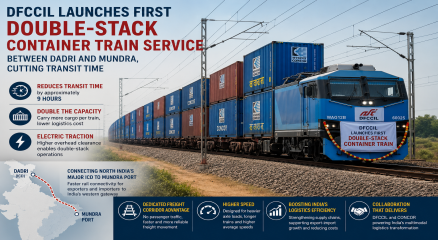
India’s Dedicated Freight Corridors (DFCs) are rapidly reshaping the country’s logistics landscape, with the Western Dedicated Freight Corridor (WDFC) between Dadri and Jawaharlal Nehru Port Authority (JNPA) emerging as a game-changing infrastructure project for supply chains and multimodal freight movement. Designed exclusively for cargo operations, the corridor is significantly reducing transit times, improving reliability, and easing congestion on conventional rail routes. Stretching nearly 1,500 km from Dadri in Uttar Pradesh to JNPA near Mumbai, the corridor forms the backbone of India’s western logistics artery, connecting manufacturing centres, inland container depots, industrial clusters, and ports. With dedicated tracks for freight trains, the network allows uninterrupted cargo movement at higher average speeds, eliminating delays caused by mixed passenger and freight operations. One of the biggest outcomes has been a sharp reduction in transit time. Freight movement between Dadri and JNPA that traditionally took close to 72 hours on congested rail routes is now being completed in nearly half the time, improving turnaround efficiency for exporters, importers, and logistics operators. Industry stakeholders believe the reduction in transit duration will strengthen India’s competitiveness in global trade and support the government’s target of lowering logistics costs as a percentage of GDP. The DFC network has also enabled the operation of longer and heavier freight trains, including double-stack container services on electrified routes. This has increased carrying capacity while lowering per-unit transportation costs. According to sector estimates, rail freight on dedicated corridors is considerably more energy-efficient and environmentally sustainable than road transport, aligning with India’s broader decarbonisation goals. Beyond operational efficiency, the corridors are catalysing the growth of integrated logistics ecosystems. Regions such as Dadri, Greater Noida, and Jewar are witnessing accelerated development of multimodal logistics parks, warehousing zones, and industrial hubs due to their strategic connectivity with both the Eastern and Western DFCs. The emerging “rail-road-air” logistics triangle around the National Capital Region is expected to attract substantial investments in manufacturing and distribution infrastructure. The Dedicated Freight Corridor Corporation of India (DFCCIL) has reported rising freight train volumes on the operational stretches, indicating growing industry adoption. The completion of key links on the western corridor is expected to further enhance throughput and reduce dependency on road transport for long-haul cargo. Analysts say the dedicated rail network could become central to India’s ambition of creating faster, greener, and more resilient supply chains. As India continues investing in additional freight corridors across the country, the success of the Dadri-JNPA route demonstrates how infrastructure modernisation can directly influence trade efficiency, logistics performance, and industrial growth. 𝐒𝐭𝐚𝐲 𝐓𝐮𝐧𝐞𝐝 𝐭𝐨 https://cargoconnect.co.in/ 𝐟𝐨𝐫 𝐥𝐚𝐭𝐞𝐬𝐭 𝐮𝐩𝐝𝐚𝐭𝐞𝐬
In a strategic warehousing move, the South Eastern Coalfields Limited (SECL), the second largest coal-producing subsidiary of Coal India Limited, has signed a Memorandum of Understanding (MoU) with Central Warehousing Corporation (CWC) for collaboration in coal logistics, railway rake provisioning under GPWIS and similar schemes, and integrated transportation services. Guided by the Union Ministry of Coal, SECL is rapidly working to improve India’s energy security and coal logistics infrastructure. The company is taking steps to boost coal evacuation efficiency and ensure a steady fuel supply to essential sectors. This partnership with CWC is a significant move in that direction. The goal of the partnership with CWC is to strengthen SECL’s coal evacuation capabilities by providing reliable and efficient rail logistics solutions to meet the rising demand from the power, steel, cement, and other sectors. The MoU outlines collaboration in various areas, including dedicated railway rake operations, integrated coal transportation solutions, multimodal logistics, first-mile and last-mile connectivity, and the deployment of digital systems for logistics monitoring and operational efficiency. Under the agreed framework, both organizations will explore provisioning and operation of GPWIS and equivalent racks, integrated rail logistics services, and long-term transportation solutions aimed at improving dispatch efficiency and reducing logistical obstacles. The MoU was signed in the presence of Harish Duhan, Chairman-cum-Managing Director of SECL, and Santosh Sinha, Managing Director of CWC. Functional Directors and senior officials from SECL, as well as representatives from CWC, attended the signing ceremony. SECL plays a vital role in meeting the country's growing coal demand. In the current financial year 2026-27, Coal India Limited has already surpassed the 100 million tonne production mark, with SECL contributing more than 26.8 million tonnes. Central Warehousing Corporation (CWC), a Navaratna Central Public Sector Enterprise under the Government of India, is a leader in integrated logistics and warehousing services. It has extensive experience in rail-linked cargo movement and multimodal transportation solutions. For more such news and updates, visit CARGOCONNECT.