
Loading...

The Uttar Pradesh government is set to develop a multi-modal logistics hub (MMLH) in Greater Noida’s Dadri, investing Rs 7,064 crore to support its $1 trillion economy goal. This hub will cover 823 acres, with a core development area spanning 455 acres.
Key developments include commercial and administrative facilities over 17.5 acres, a rail yard, and other projects across 350 acres. Under Chief Minister Yogi Adityanath’s directives, a detailed action plan has been designed to expedite these initiatives.
The Dadri MMLH aims to become a world-class freight handling facility, functioning as a dry port to ensure the swift transit of goods and raw materials. This project is poised to be India's largest logistics hub. Located on the eastern and western dedicated freight corridors, it will serve as a central hub for container handling, warehousing, cold storage, processing, de-stuffing, stuffing, and value-added packing.
Providing seamless rail connectivity, the hub will feature rail platforms, customs clearance facilities, cargo segregation areas, truck parking zones, and extensive green spaces. The project is being developed under the Public-Private Partnership (PPP) model, supervised by the Greater Noida Industrial Development Authority and adhering to the guidelines of the National Industrial Corridor Development and Implementation Trust (NICDIT).
The Greater Noida Industrial Development Authority has prepared the Master Detailed Project Report (DPR) for constructing the approach track and Rail Over Rail (ROR) bridge from New Dadri station to the MMLH boundary. The Dedicated Freight Corridor Corporation of India (DFCCIL) has approved the DPR for railway tracks and terminal stations within the MMLH. Additionally, the tender documentation for land acquisition and signaling processes for the approach track has been finalized. Concurrently, the development of trunk infrastructure, including boundary work, roads, canals, bridges, utility relocation, and water and power supply, is progressing through various phases.
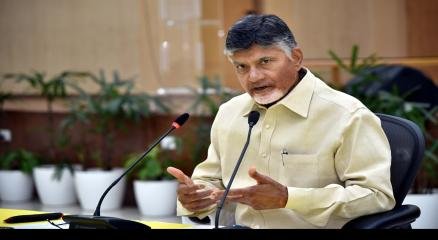
N Chandrababu Naidu has directed officials to accelerate the integration of major industrial parks and economic regions across Andhra Pradesh with robust logistics infrastructure, as the state intensifies efforts to strengthen its industrial and manufacturing ecosystem. During a high-level review meeting in Amaravati, the Chief Minister assessed the progress of Product Perfection Clusters across the Visakhapatnam, Amaravati and Tirupati economic regions while reviewing plans for industrial and chemical parks under the Government of India’s BHAVYA (Bharat Audyogik Vikas Yojana) scheme. Naidu also instructed officials to formulate plans for a Rare Earth Mineral Park in 2026–27, accelerate development of the East Coast Industrial Corridor, establish a container manufacturing cluster, and develop nearly 175 MSME parks across the state. Emphasising the importance of logistics-led industrial growth, the Chief Minister called for integrated infrastructure planning encompassing warehousing, cold storage, power and water facilities to improve operational efficiency and strengthen market access for regional industries. The state government is also focussing on improving global competitiveness by encouraging MSMEs to align with international quality standards, while promoting Farmer Producer Organisations (FPOs) within industrial clusters to extend economic benefits to the agricultural community.
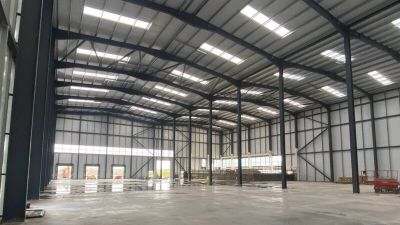
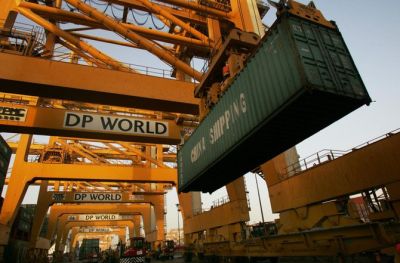
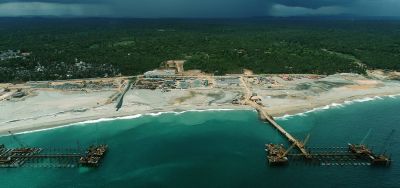
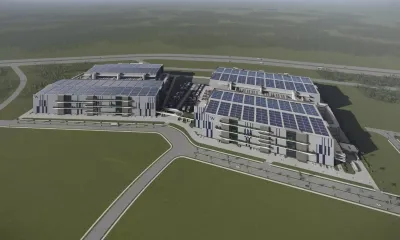
Welspun One, in collaboration with the Jawaharlal Nehru Port Authority (JNPA), has unveiled a state-of-the-art logistics facility with an annual throughput capacity of 36,000 TEUs. Spanning 55 acres, the project includes over 400,000 pallet positions, parking for 600 trucks, and aims to create over 5,000 direct and indirect jobs, boosting the local economy. Initially planned as a 1.2 million sq ft development with an investment of ₹700 crore, the project has been scaled up to 4.45 million sq ft, comprising 3.95 million sq ft of warehousing, 0.25 million sq ft of Grade A office space, and 0.25 million sq ft of industrial space, catering to rising export-import demands at JNPA. Located within 5 km of port terminals and with access to major transport networks like National Highways, the Dedicated Freight Corridor (West), and the upcoming Navi Mumbai Airport, the facility offers unparalleled logistical advantages. As part of a notified SEZ, it provides additional benefits, including GST exemptions, customs duty deferments, expedited customs clearance, and reduced detention risks, enabling cost savings of up to 15%. This makes it a strategic hub for industries like chemicals, automotive, FMCG, pharmaceuticals, and electronics. The facility is positioned to address long-standing gaps in India’s logistics sector, offering integrated solutions that enhance operational efficiency and supply chain optimisation. With a recent ₹2,275 crore equity fundraising for Fund 2, Welspun One is executing this ambitious project at scale and speed, reflecting investor confidence. According to Balkrishan Goenka, Chairman of Welspun World, the JNPA SEZ project is pivotal to aligning with India’s growth story and reshaping its logistics infrastructure. Anshul Singhal, Managing Director of Welspun One, highlighted the transformative impact of the facility, positioning it as a game-changer for India’s logistics and supply chain operations, elevating the country’s global trade competitiveness. Welspun One is a prominent integrated platform specialising in industrial and warehousing real estate, offering innovative and customised infrastructure solutions to meet the needs of businesses across various sectors. As part of the Welspun Group, the company leverages its parent organisation’s expertise and legacy to deliver high-quality, sustainable, and strategically located facilities across India.


The Government of India and the World Bank have signed an agreement to construct the Green National Highway Corridors Project (GNHCP), spanning 781 km across Himachal Pradesh, Rajasthan, Uttar Pradesh, and Andhra Pradesh. This ambitious project, with a total cost of $1,288.24 million (Rs. 7,662.47 crore), will receive $500 million in loan assistance from the World Bank. The final package of the GNHCP is scheduled for completion by May 2026. The GNHCP aims to demonstrate safe and green highway development, emphasising climate resilience and green technologies. Key aspects of the project include: 1. Conservation of Natural Resources: Utilising cement-treated sub-base and reclaimed asphalt pavement. 2. Promoting Local and Marginal Materials: Incorporating lime, fly ash, and waste plastic in construction. 3. Bio-Engineering Measures for Slope Protection: Implementing techniques such as coco fibre and jute erosion control blankets with shrub and grass plantations, hydroseeding, Shotcrete crib walls with vegetation, bamboo plantations, hedge brush layers, interlink chain mesh with grass strips, and geocells with hydroseeding. These green technologies and bio-engineering solutions, particularly in hilly areas, are expected to reduce carbon emissions and conserve natural resources throughout the project's lifecycle, from construction to operation. The project aims to provide smooth, motorable roads with all-weather connectivity, fostering socio-economic development and enhancing trade and connectivity within the region. Improved connectivity to inner regions will boost employment opportunities and promote inclusive growth by integrating these areas more closely with mainstream economic activities. This significant development was announced by the Union Minister for Road Transport and Highways, Shri Nitin Gadkari, in a written reply to the Lok Sabha today.