Loading...
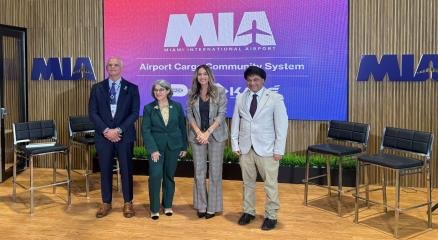
Miami International Airport (MIA) has launched an AI-powered Airport Cargo Community System (ACCS) developed by Kalé Logistics (Kalé), introducing a shared digital platform to improve coordination across its extensive air cargo ecosystem. Announced at the International Air Cargo Association’s (TIACA) Air Cargo Forum in Miami on 27 October, the initiative is designed to streamline logistics, reduce truck congestion and support lower carbon emissions. The platform creates a common online portal for freight forwarders, cargo handlers, truckers, carriers and ground handlers, reducing reliance on fragmented and manual information exchange. By improving information sharing, advance planning and truck scheduling, the system aims to reduce waiting times and enhance productivity across MIA’s cargo operations. Currently, cargo trucks arriving at the airport have limited information about arrival times and cargo types, contributing to congestion, operational inefficiencies and additional emissions. The ACCS is intended to address these challenges through better coordination among supply chain stakeholders. It will also provide the digital foundation for MIA to connect with international partner airports, supporting smoother cargo flows along specific global trade lanes. Miami-Dade County Mayor Daniella Levine Cava said the technology would help make MIA more future-ready by simplifying and expediting goods movement, supporting businesses and jobs linked to international trade, and strengthening the airport’s focus on efficiency and sustainability. MIA handled a record 3.4 million tons of freight in 2025, making it the busiest freight airport in the US and the third busiest globally, behind Hong Kong and Shanghai. The airport’s cargo operations require an average of 190 all-cargo flights and more than 1,600 truck trips daily, underscoring the scale of coordination involved. According to estimates cited in the announcement, implementing the ACCS across MIA’s entire cargo operation could generate substantial environmental and financial benefits. Based on an estimated 15% reduction in paper handling and an average saving of two hours in truck turnaround time, the system has the potential to save approximately 5,900 US tons of carbon dioxide emissions and 3,000 trees annually, while generating up to $250 million in annual operational cost savings across the air cargo supply chain. Amar More, Co-founder and Chief Executive Officer of Kalé Logistics, said cargo community systems were already improving collaboration and visibility across the industry, with MIA offering an opportunity to apply these benefits at a major global cargo gateway. He noted that even small operational inefficiencies can accumulate at an airport handling 3.4 million tons of freight annually, adding that a common digital platform could make a meaningful difference and help connect MIA digitally with the wider world. The launch marks a step towards greater digital coordination in airport cargo operations, with the potential to improve efficiency, strengthen international connectivity and support more sustainable freight movement as cargo volumes and stakeholder networks grow.

Allcargo Logistics is strengthening its digital operating framework with Oracle Fusion Cloud Applications, standardising finance and procurement processes across its distributed operations while improving governance, automation and financial visibility. The implementation has reduced month-end closing time by 30%, marking a measurable gain in financial process efficiency. Founded in 1993, Allcargo Logistics operates more than 700 facilities across India, serving customers in sectors including e-commerce, automotive and pharmaceuticals. As its operations expanded, the company sought to move beyond legacy on-premises systems towards a scalable cloud platform capable of automating routine tasks, strengthening controls and providing greater visibility across its business. Following its evaluation, Allcargo Logistics adopted Oracle Fusion Applications for finance, bringing more than 4,000 users and over 700 operating units onto a single integrated platform. The move has helped standardise core business processes, reduce manual intervention and improve operational oversight. Through Oracle Fusion Cloud Enterprise Resource Planning (ERP), the company has automated and harmonised finance workflows across its operations, enabling teams to focus less on routine processing while strengthening controls and financial reporting. Oracle Fusion Cloud Procurement has also supported the automation of end-to-end purchasing processes, providing a more consistent view of procurement activity across its geographically distributed network. Sanjay Khiyani, Chief Information Officer, Allcargo Logistics, said digital transformation remains central to the company’s long-term growth strategy and commitment to operational excellence. He apprised the integrated platform as a foundation for using artificial intelligence to simplify workflows, improve visibility and support continued business expansion. Shailesh Singla, Vice President, Cloud Applications, Oracle India, highlighted how rising customer expectations and increasingly dynamic supply chains are driving logistics providers to adopt applications that can take on more routine operational work. He noted that Oracle’s AI capabilities and Fusion Agentic Applications are designed to automate tasks and help teams devote greater attention to decisions and priorities that influence business outcomes. The implementation was managed by Grant Thornton Bharat, an Oracle PartnerNetwork (OPN) partner. For Allcargo Logistics, the deployment represents a step towards a more standardised, digitally enabled and well-governed operating model, with automation and integrated data supporting efficiency across its growing logistics network.
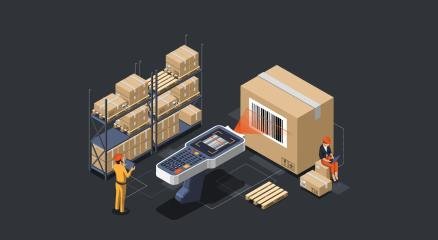
Kenstar has partnered with Unicommerce to strengthen the technology infrastructure underpinning its expanding e-commerce business, integrating order and warehouse management capabilities to improve inventory visibility, operational efficiency and fulfilment across sales channels. The partnership comes as the Indian home appliance brand accelerates its digital commerce growth and expands its reach across India, including emerging consumer markets. Kenstar serves customers through leading e-commerce and quick-commerce platforms, its own brand website, more than 30,000 retail touchpoints and dealers, modern trade and regional retail outlets. Its network also includes over 18 warehouses and fulfilment centres nationwide. To support the growing scale and complexity of its operations, Kenstar has deployed Unicommerce’s flagship Uniware platform, incorporating its Order Management System (OMS) and Warehouse Management System (WMS). The integrated platform will enable the company to manage orders across multiple sales channels through a single system, supported by real-time inventory visibility and improved coordination of warehouse operations. The deployment is expected to streamline order processing, optimise stock utilisation and support more efficient fulfilment as Kenstar expands its online footprint. By bringing order, inventory and warehouse processes together, the partnership aims to establish a scalable operational foundation for higher order volumes and a more consistent customer experience. With a 30-year presence in the Indian market, Kenstar continues to strengthen its portfolio across air coolers, water heaters, small home appliances and washing machines, with a focus on innovative and energy-efficient products. As digital channels become increasingly important to its growth strategy, technology-led integration is expected to help the brand manage operational complexity while maintaining service standards across its expanding customer base. Sunil Jain, CEO of Kenstar, said the partnership would help the company strengthen inventory visibility and fulfilment efficiency as it expands its online presence and reach across India. He emphasised the need for technology infrastructure that can scale alongside the business and support a seamless shopping experience across customer channels. Kapil Makhija, MD & CEO of Unicommerce, said technology would play a critical role in ensuring that operational capabilities keep pace with Kenstar’s growth, particularly as the brand advances its Direct-to-Consumer (D2C) business. Unicommerce will provide the digital infrastructure to support the company’s next phase of expansion. The collaboration reflects a broader operational priority for omnichannel retailers: connecting order management, inventory control and warehouse execution to support growth without compromising fulfilment efficiency or customer experience.
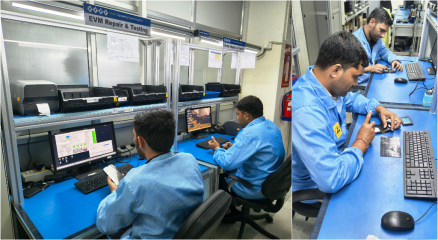
Zebra Technologies Corporation has expanded its repair services footprint in India with the launch of two new service centres in Mumbai and Gurgaon, strengthening regional technical support and aiming to reduce repair turnaround times for customers across the country. The new centres complement the company’s existing centralised repair hub in Bengaluru, extending service coverage across India’s Western and Northern business corridors. The expansion is designed to bring technical support closer to customer operations, minimise device downtime and support businesses increasingly relying on digitised and automated workflows. Operated by Zebra’s authorised service partner, Communications Test Design Inc. (CTDI), the Mumbai and Gurgaon facilities are staffed by trained technicians specialising in the repair of Zebra printers and mobile computers. “India is a key growth market for Zebra, with businesses across manufacturing, retail, transport and logistics, healthcare and other sectors increasingly digitising and automating their workflows,” said Subramaniam Tiruppathi, Country Lead, India and Subcontinent, Zebra Technologies. He added that expanding local service capabilities alongside the Bengaluru hub is vital to supporting the company’s growing customer base throughout the technology lifecycle. Under the expanded service model, the Mumbai and Gurgaon centres will exclusively handle Zebra printers and mobile computers. The Bengaluru hub will continue to operate as the company’s comprehensive repair facility, covering its full product portfolio, including printers, scanners, tablets, mobile computers, radio-frequency identification (RFID) solutions, fixed industrial scanning and machine vision systems. Customers can continue routing all eligible device types to Bengaluru, while qualifying printers and mobile computers can now be directed to the new regional centres. Repair orders can be initiated through Zebra’s Repair Order Portal using existing Zebra single sign-on credentials. The expansion reinforces Zebra’s focus on strengthening local service infrastructure as organisations across India scale their use of connected devices and automation. By bringing repair capabilities closer to key business corridors, the company aims to improve service responsiveness and help customers maintain operational continuity across increasingly technology-dependent environments.
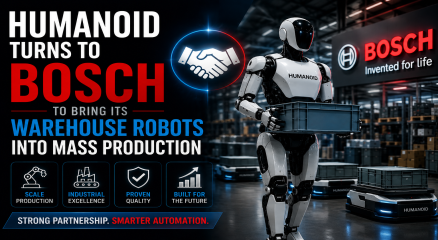
Humanoid’s warehouse robots now have a clearer path from pilot project to production line. UK robotics startup Humanoid has partnered with Bosch to scale production of its HMND 01 humanoid robots for the European market. This follows a successful proof of concept earlier this year. The agreement focuses on Humanoid’s effort to commercialize its robots for logistics and manufacturing. Bosch will serve as the company’s contract manufacturer. They will also assist with production planning, hardware design, supply chain operations, and cost optimization through what the companies call a Design for Excellence approach. This partnership follows testing in March at Bosch’s logistics facility in Bühl, Germany. There, Humanoid’s robots moved boxes autonomously from conveyor systems onto trolleys in a live workflow. Humanoid reports that the robots handled five different box sizes with varied weights and dimensions while adjusting to changing conditions. They also tested advanced scanning systems, multi-conveyor coordination, and flexible handling capabilities. Humanoid’s KinetIQ AI framework coordinated the warehouse operation and demonstrated that the robots could scale beyond experimental use. “For Humanoid, this agreement is a critical step in our roadmap, connecting the gap between proof of concept validation and large-scale deployment,” said Artem Sokolov, Founder and CEO of Humanoid. “Our goal has always been to shorten the path between innovation and real-world integration, and this agreement reflects that approach. Together with Bosch, a strong manufacturing partner, we aim to bring humanoid robots into industrial settings, expand their deployment, and speed up adoption in logistics, manufacturing, and beyond,” Sokolov added. Bosch views the partnership as part of its move into industrial robotics manufacturing. “This partnership is based on a shared belief in the great potential of robotics in industry,” said Peter Svejkovsky, Head of Corporate Intellectual Property. “Bosch’s goal is to advance humanoid robotics and further develop this field. With our global production network and deep expertise in industrialization, we are the ideal partner to transition from prototype to large-scale production.” Humanoid currently offers the HMND 01 in two versions: a bipedal humanoid and a larger wheeled mobile manipulator. The bipedal version stands 5 feet 10 inches tall, weighs 198 pounds, and can move at nearly 5 feet per second with a three-hour battery life. The wheeled model is larger at 7 feet 3 inches and weighs 661 pounds, with faster speeds and up to four hours of runtime. Both systems can carry payloads of up to 33 pounds while working in spaces designed for people. Humanoid states that the robots use KinetIQ, its four-layer AI platform for managing fleets of robots in industrial environments. This system oversees everything from fleet coordination and reasoning to movement control and handling tasks. The Bosch agreement comes shortly after Humanoid announced another major partnership with Schaeffler, which plans to use thousands of Humanoid’s wheeled robots in factories over the coming years. For more such news and updates, visit CARGOCONNECT.
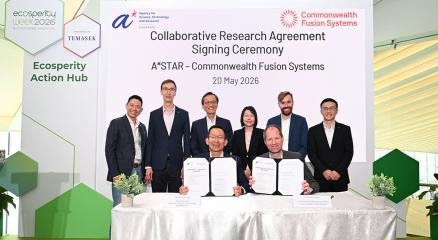
Singapore is strengthening its role in the emerging fusion energy sector through a strategic research agreement between the Agency for Science, Technology and Research (A*STAR) and Commonwealth Fusion Systems (CFS), a private fusion energy company backed by approximately S$3.85 billion ($3 billion) from leading investors like Temasek and Google. The five-year partnership will focus on developing technologies for commercial fusion power plants, including CFS’ ARC power plants, and aims to support Singapore in becoming an early player in the global fusion energy supply chain, the two parties announced last Thursday. This agreement builds on a previous partnership among A*STAR, CFS, and ST Engineering, a technology and engineering group, to produce components for CFS’s SPARC fusion demonstration machine, leveraging Singapore’s advanced manufacturing capabilities. “Fusion energy is at a critical juncture, with the global industry nearing the commercial rollout of clean, reliable power. This partnership with CFS brings A*STAR’s strengths in applied research into real-world fusion systems, utilizing capabilities in advanced materials, precision manufacturing, and materials testing,” said Professor Lim Keng Hui, Assistant Chief Executive, Science & Engineering Research Council (SERC), A*STAR. Such partnerships position Singapore to play a role in the growing fusion supply chain, while allowing local industries to develop capabilities in high-value, next-generation manufacturing, he added. Fusion energy operates by fusing light atomic nuclei to release significant energy, providing potential for a reliable, carbon-free power source at scale. With global investments in fusion exceeding S$19.1 billion ($14.96 billion), private firms like CFS are speeding up the commercial deployment of fusion energy. CFS aims to produce carbon-free electricity at a commercial level by the early 2030s, and this agreement allows A*STAR to participate in that commercialization process. Temasek, a global investment company valued at S$434 billion ($340 billion) as of March 31, 2025, has been an early investor in CFS, leading one of the company’s Series A funding rounds. Temasek also collaborates with A*STAR in various research and innovation initiatives. For more such news and updates, follow CARGOCONNECT.

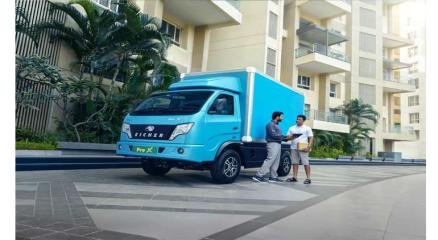
Amazon India is set to introduce up to 1,000 electric trucks from Eicher into its logistics network over the next five years as the e-commerce company accelerates efforts to reduce emissions across its middle-mile and last-mile operations. The deployment will be carried out in partnership with VE Commercial Vehicles (VECV), the joint venture between Eicher Motors and Volvo Group. The companies said the electric trucks will support cargo movement between fulfilment centres, sortation hubs and delivery stations, as well as customer-facing delivery operations. As part of the initial rollout, Amazon plans to induct 50 electric trucks in logistics hubs including Delhi, Manesar and Gurugram. The vehicles will be introduced progressively through Amazon’s transport service partners. The trucks will be available in configurations ranging from 8-foot to 24-foot deck lengths, allowing Amazon to deploy them across varying payload requirements. According to the companies, the vehicles will include customised cargo layouts and support both fast and slow charging options depending on route and operational needs. The move comes as India’s e-commerce and logistics sectors face increasing pressure to adopt lower-emission freight solutions amid tightening sustainability targets and rising fuel costs. Electrification of commercial fleets has gained momentum in urban delivery operations, though adoption in medium-duty and heavy-duty trucking remains at an early stage due to infrastructure and financing challenges. Amazon has been steadily expanding its electric delivery fleet in India as part of its broader climate commitments. The company previously stated that it aimed to deploy 10,000 electric vehicles in the country by 2025 and had already crossed 6,000 EVs across more than 400 cities by 2023. In 2024, Amazon said it had surpassed the 10,000-EV milestone in India ahead of schedule, while also testing long-haul electric freight corridors for intercity transportation. Industry observers view the Eicher partnership as a significant step toward electrifying commercial freight movement in India, particularly in the growing e-commerce logistics segment where fleet utilisation levels are high and predictable delivery routes improve the feasibility of EV deployment. Follow CARGOCONNECT for more such updates.
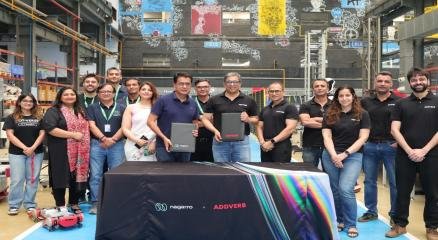
Nagarro and Addverb have entered into a strategic partnership to jointly develop advanced robotics automation and digital twin solutions for global customers across warehousing, manufacturing and supply chain operations. The collaboration combines Nagarro’s expertise in digital engineering, software integration and AI-led transformation with Addverb’s capabilities in robotics hardware and warehouse automation technologies. The two companies will focus on co-developing integrated automation solutions, including intellectual property creation, knowledge-sharing initiatives and innovation-driven engineering programmes. As part of the alliance, both firms will also explore the establishment of robotic experience centres and makerspaces aimed at accelerating experimentation and next-generation automation deployment. Commenting on the partnership, Sangeet Kumar Co-founder and CEO, Addverb Technologies said, "The future of automation lies in unified ecosystems where robotics and software function seamlessly together, enabling scalable and intelligent supply chain operations." The partnership will additionally target joint market opportunities through coordinated go-to-market strategies and mutual business referrals. Under the engagement model, Nagarro will lead software integration and digital platform capabilities, while Addverb will manage robotics deployment, automation systems and lifecycle support services. "By partnering with Addverb robotics, we can deliver transformational systems end-to-end, which translates directly into faster execution, better optimization, and more predictable outcomes," noted Manas Human, Co-founder and CEO, Nagarro. The collaboration reflects growing industry momentum toward AI-driven, connected industrial ecosystems that integrate physical operations with digital intelligence to enhance efficiency, scalability and operational reliability.
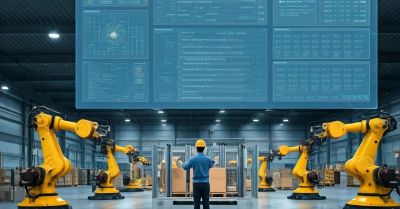
Accio Robotics, a leader in warehouse fulfilment solutions, has partnered with US-based SCM Champs, specialists in SAP and supply chain consulting, to transform warehouse management through advanced robotics and seamless SAP integration. This strategic collaboration aims to optimise efficiency and productivity in warehouse operations globally. The partnership centres around Accio's AccioOS operating system, designed to integrate with mobile robots (AMRs), Automated Guided Vehicles (AGVs), and SAP warehouse management systems. By enabling real-time communication between these systems, the collaboration enhances order fulfilment, robot deployment, and picking efficiency, offering businesses an automated and streamlined warehouse solution. Pranav Srinivasan, Co-founder of Accio Robotics, expressed confidence in the partnership, saying, “The integration of AccioOS with SAP warehouse systems positions us as a global leader in warehouse automation.” SCM Champs' CEO, Prabhjot Singh, added, "Our expertise in SAP supply chain execution, coupled with Accio's robotics solutions, provides an unmatched level of automation and efficiency for clients." This partnership underscores the shared vision of Accio Robotics and SCM Champs to push the boundaries of warehouse automation and reshape supply chain management on a global scale.
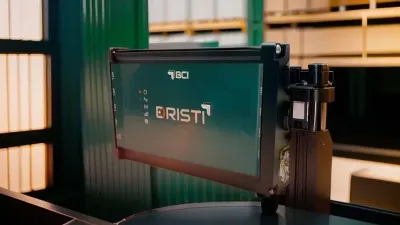
Bar Code India (BCI) recently announced the launch of ‘Dristi,’ an innovative IoT-based RFID reader set to revolutionise the supply chain industry. Designed with best-in-class performance and advanced RFID capabilities, Dristi is engineered for diverse applications across manufacturing, distribution, transportation, and retail sectors. Equipped with a powerful processor, expansive memory capacity, and options for 4G-LTE/Wi-Fi, Dristi’s state-of-the-art design boasts a superior IP rating, making it suitable for the most demanding environments. Its standout feature, the inbuilt ‘read-to-cloud’ capability, allows organisations to access real-time data, enhancing precision and efficiency in supply chain management. The robust diecast aluminium housing with weatherproof sealing ensures Dristi’s durability and high uptime, even in challenging indoor and outdoor environments, including extreme heat, subzero temperatures, and dusty or damp conditions. Ajay Bhutani, Co-founder and CEO of BCI, expressed his enthusiasm, stating, “As its name suggests, Dristi represents a leap forward in asset tracking, process control, industrial automation, and inventory management, offering businesses unparalleled efficiency and accuracy. This ‘Made in India’ innovation provides real-time visibility, faster read rates, and precise data capture, setting new standards for excellence in supply chain management.” Vikas Wadhwa, Chief Operating Officer at BCI, added, “Dristi is a personal and professional dream come true, a product of years of dedicated effort. BCI has consistently led the way in delivering innovative solutions that empower businesses with complete asset visibility and intelligence in their supply chain operations. In an era where efficiency, accuracy, and real-time insights are paramount, Dristi is poised to change the game.”
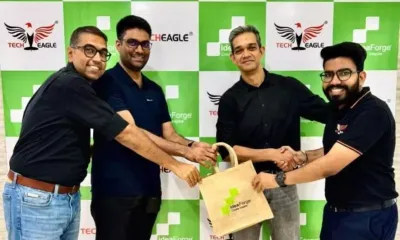
TechEagle, India’s leading drone delivery startup, has announced a strategic alliance with ideaForge Technology, a global leader in unmanned aerial vehicle (UAV) technology. This partnership aims to merge their respective strengths to advance UAV technology and drive innovation within the drone industry. ideaForge has also joined TechEagle’s recent bridge financing round as a strategic investor. The collaboration will focus on developing small, tactical, and middle-mile logistics platforms designed for dual use. These platforms will feature advanced payload capacities, high-altitude operations, and next-level autonomy, setting new benchmarks in drone logistics. Vikram Singh Meena, Founder & CEO of TechEagle, stated, “This partnership showcases the power of synergistic innovation. By combining TechEagle’s drone technology advancements with ideaForge’s UAV expertise and manufacturing capabilities, we are poised to redefine the UAV landscape. ideaForge's investment highlights their confidence in our vision. Together, we aim to enhance safety, performance, and reliability, ushering in a new era of global aerial logistics.” Ankit Mehta, CEO of ideaForge, remarked, “Our alliance with TechEagle represents a significant step forward in our commitment to UAV technology. TechEagle’s drones surpass global benchmarks, and this collaboration will deepen our UAV innovation efforts. By leveraging each other’s strengths, we strive to secure a leading position on the global stage.” TechEagle has already delivered hundreds of SKUs, including parcels, groceries, medicines, and diagnostic samples, across 30+ cities, covering over 500,000 aerial kilometers and saving more than 2,500 metric tonnes in carbon emissions. Meanwhile, ideaForge ranks fifth globally in dual-use drone manufacturing, with over 500,000 completed flights using their UAVs.
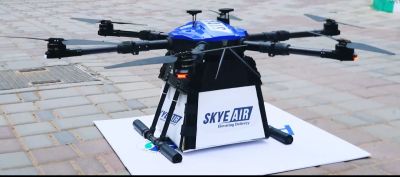
Skye Air, a leading drone logistics solution provider, has raised $4 million (approximately Rs 34 crore) in Series A funding. This round was backed by Mount Judi Ventures, Chiratae Ventures, Venture Catalyst, Windrose Capital, and Tremis Capital, alongside Faad Capital, Misfits Capital, Hyderabad Angels, Soonicorn Ventures, and other investors. The funds will be used to expand Skye Air's operations across Gurugram and other cities, focusing on healthcare and quick-commerce deliveries. "The fresh capital will help the company expand its last-mile network across Gurugram and other cities for healthcare, e-commerce, and quick-commerce deliveries," said Ankit Kumar, Founder and CEO of Skye Air. He highlighted the potential growth of the Indian drone sector under the Modi 3.0 government, envisioning India as a global drone hub by 2030. Maple Capital Advisors acted as exclusive financial advisors, while LexStart Partners provided legal counsel for the transaction. Skye Air, headquartered in Delhi-NCR, offers SaaS-based autonomous logistics solutions, integrating drone deliveries into mainstream logistics for healthcare, e-commerce, quick-commerce, and agri-commodities. The company also developed Skye UTM, an advanced Unmanned Traffic Management system ensuring safe and efficient drone operations. With this new funding, Skye Air aims to revolutionise logistics in India and set a global benchmark for drone delivery solutions.

Bar Code India (BCI) recently announced the launch of ‘Dristi,’ an innovative IoT-based RFID reader set to revolutionise the supply chain industry. Designed with best-in-class performance and advanced RFID capabilities, Dristi is engineered for diverse applications across manufacturing, distribution, transportation, and retail sectors. Equipped with a powerful processor, expansive memory capacity, and options for 4G-LTE/Wi-Fi, Dristi’s state-of-the-art design boasts a superior IP rating, making it suitable for the most demanding environments. Its standout feature, the inbuilt ‘read-to-cloud’ capability, allows organisations to access real-time data, enhancing precision and efficiency in supply chain management. The robust diecast aluminium housing with weatherproof sealing ensures Dristi’s durability and high uptime, even in challenging indoor and outdoor environments, including extreme heat, subzero temperatures, and dusty or damp conditions. Ajay Bhutani, Co-founder and CEO of BCI, expressed his enthusiasm, stating, “As its name suggests, Dristi represents a leap forward in asset tracking, process control, industrial automation, and inventory management, offering businesses unparalleled efficiency and accuracy. This ‘Made in India’ innovation provides real-time visibility, faster read rates, and precise data capture, setting new standards for excellence in supply chain management.” Vikas Wadhwa, Chief Operating Officer at BCI, added, “Dristi is a personal and professional dream come true, a product of years of dedicated effort. BCI has consistently led the way in delivering innovative solutions that empower businesses with complete asset visibility and intelligence in their supply chain operations. In an era where efficiency, accuracy, and real-time insights are paramount, Dristi is poised to change the game.”

TechEagle, India’s leading drone delivery startup, has announced a strategic alliance with ideaForge Technology, a global leader in unmanned aerial vehicle (UAV) technology. This partnership aims to merge their respective strengths to advance UAV technology and drive innovation within the drone industry. ideaForge has also joined TechEagle’s recent bridge financing round as a strategic investor. The collaboration will focus on developing small, tactical, and middle-mile logistics platforms designed for dual use. These platforms will feature advanced payload capacities, high-altitude operations, and next-level autonomy, setting new benchmarks in drone logistics. Vikram Singh Meena, Founder & CEO of TechEagle, stated, “This partnership showcases the power of synergistic innovation. By combining TechEagle’s drone technology advancements with ideaForge’s UAV expertise and manufacturing capabilities, we are poised to redefine the UAV landscape. ideaForge's investment highlights their confidence in our vision. Together, we aim to enhance safety, performance, and reliability, ushering in a new era of global aerial logistics.” Ankit Mehta, CEO of ideaForge, remarked, “Our alliance with TechEagle represents a significant step forward in our commitment to UAV technology. TechEagle’s drones surpass global benchmarks, and this collaboration will deepen our UAV innovation efforts. By leveraging each other’s strengths, we strive to secure a leading position on the global stage.” TechEagle has already delivered hundreds of SKUs, including parcels, groceries, medicines, and diagnostic samples, across 30+ cities, covering over 500,000 aerial kilometers and saving more than 2,500 metric tonnes in carbon emissions. Meanwhile, ideaForge ranks fifth globally in dual-use drone manufacturing, with over 500,000 completed flights using their UAVs.

Skye Air, a leading drone logistics solution provider, has raised $4 million (approximately Rs 34 crore) in Series A funding. This round was backed by Mount Judi Ventures, Chiratae Ventures, Venture Catalyst, Windrose Capital, and Tremis Capital, alongside Faad Capital, Misfits Capital, Hyderabad Angels, Soonicorn Ventures, and other investors. The funds will be used to expand Skye Air's operations across Gurugram and other cities, focusing on healthcare and quick-commerce deliveries. "The fresh capital will help the company expand its last-mile network across Gurugram and other cities for healthcare, e-commerce, and quick-commerce deliveries," said Ankit Kumar, Founder and CEO of Skye Air. He highlighted the potential growth of the Indian drone sector under the Modi 3.0 government, envisioning India as a global drone hub by 2030. Maple Capital Advisors acted as exclusive financial advisors, while LexStart Partners provided legal counsel for the transaction. Skye Air, headquartered in Delhi-NCR, offers SaaS-based autonomous logistics solutions, integrating drone deliveries into mainstream logistics for healthcare, e-commerce, quick-commerce, and agri-commodities. The company also developed Skye UTM, an advanced Unmanned Traffic Management system ensuring safe and efficient drone operations. With this new funding, Skye Air aims to revolutionise logistics in India and set a global benchmark for drone delivery solutions.

Ecom Express has turned ten years old! And as part of the ongoing celebrations, the country's leading technology-enabled full-stack logistics service provider has launched its OMS and WMS suite "Ecom Magnum". The new SaaS offering will further establish Ecom Express' position as one-partner logistics solution provider to the e-commerce industry. Ecom Magnum is suitable for online sellers seeking order and warehouse management solutions to integrate with e-marketplaces. The scalable, cloud-based WMS system is designed to plug-and-play with integration channels, tracking orders and handling large SKUs and tech-led inbound and outbound processes, resulting in high accuracy and cost efficiencies for sellers. The feature-rich WMS platform complements and integrates into warehousing and shipping stacks of Ecom Express or can be utilised as a stand-alone solution. Online businesses that utilise the platform can access Ecom Express’ robust network of 60+ fulfilment centres located in proximity to urban areas and beyond, as well as shipping services across 27000+ PIN codes in India. K Satyanarayana, Co-founder and Director, Ecom Express said, “As an industry leader, we are constantly working to bring more value to small and medium sellers in a cost-effective manner, and are proud to bring state-of-the-art WMS and OMS system built on usage experience and learnings from 100K+ sellers who engage with us. With this new platform, we are trying to remove the pain points for small sellers in the standard OMS and WMS available in the market by offering a feature-rich ecosystem. In order to fulfil the orders seamlessly, we provide sellers with a one-stop order-to-deliver set-up resulting in scale, efficiency, and control over both their inventory and customer experience.” Ecom Express has been actively catalysing towards simplifying the SMB e-commerce companies’ journey. The company recently launched ExpressPlus as air dominant multi-modal logistics solution for faster transit time users in D2C and SMB space. Last year, the company announced that it is in an advanced stage of integration with the Open Network for Digital Commerce (ONDC) and had launched its easy sign up portal E-zippie, making seller's journey easy and convenient, with just a 30-minutes onboarding process.

Rezo.ai, one of the fastest evolving AI-powered startups, is enabling some of India’s largest logistics companies to create a smart workforce and reduce operational costs by 20-30% this festive season. For these companies, Rezo.ai has efficiently brought down customer query resolution time by 4X - resulting in repeat customer orders and retention along with significantly increasing agent efficiency. This ground-breaking solution assists businesses in identifying the causes of slow sales as well as elements that would help them accelerate sales by assisting them ineffective customer interactions. Investments in digital technologies such as AI for customer-facing business functions are on the rise in the logistics sector. Rezo.ai has been seeing immense traction and interest from domestic as well as global logistics companies. Rezo.ai enhances the customer experience (CX) with in-built Robotic Process Automation (RPA) and also analyzes customer–agent interactions whilst training the agents accordingly. Companies in Logistics and several other industries rely on contact centers for handling customer service requests, queries, and escalations. By partnering with Rezo.ai, clients could see drastic improvements in customer satisfaction. The solution can assist agents and can also run in a fully automated manner. The agents can handle 2.5x the volume and with an automated system, exponential volumes can be handled with ease. Speaking about the feat, Dr. Rashi Gupta, Chief Data Scientist & Co-founder, Rezo.ai said, “Rezo.ai adds a strategic value to the business when it comes to engaging with customers and creating a distinct experience for them. We leverage proprietary algorithms built using next-generation technology – AI, NLP, NLU to train models from unstructured voice and text data. These models once trained for an enterprise get deployed as virtual agents with the ability to talk and revert to customer queries just like the enterprise’s “best agent”. These models are designed to scale without a ramp-up period, provide a fast and consistent response to customer queries and save significantly on operational costs.”

Singapore-based Ascendas India Trust, which develops IT and logistics parks in India, on Monday said it will invest an estimated Rs 1,200 crore to develop the first phase of its first data centre project in the country. The project is located at Airoli, a growing data centre hub in Navi Mumbai, according to a statement posted on the company’s website. Ascendas Property Fund Trustee Pte Ltd, the trustee-manager of Ascendas India Trust (a-iTrust), said that “it will invest an estimated Rs 12 billion (Singapore dollar 216.6 million) to develop and operate phase one of its first data centre campus on a prime site in India”. The 6.6-acre greenfield site will be developed in phases into a fully-fitted data centre campus with a total potential built-up area of up to 5,75,000 square feet and 90 megawatts (MW) of power. The company will target customers such as global technology giants and cloud service providers, as well as large domestic enterprise clients.

Geek+ has announced the successful deployment and of 100 autonomous mobile robots (AMRs) in the distribution centre of Circle K Hong Kong. The deployment represents the commitment of the global AMR leader and Circle K Hong Kong to build supply chain resilience using technology and supporting customers with a wide selection of products and excellent services. The of 140,000 sq ft distribution center handles the deliveries of more than 300 Circle K convenience stores in Hong Kong, serving over 600,000 customers daily. With large volumes bound for different destinations and a wide selection of products ranging from small everyday items to food and cold goods, Circle K Hong Kong wanted to automate its warehouse and streamline large-scale logistics processes. In January 2021, the company decided to transform its operations with deployment of 100 Geek+ AMRs and ensure the effective daily handling of over 10,00,000 products. With ever-changing markets and difficulties predicting future demand, flexibility through digitalisation and real-time visibility is the key to building an agile supply chain. Moving forward, Geek+ and Circle K Hong Kong will work closely to secure the smooth operations of the largest automated warehouse within Asia’s grocery industry and ensure the timely and accurate allocation of millions of quality products to Circle K’s wide network of convenience stores. Bruce Ma, Senior Supply Chain Manager of Circle K Hong Kong says, “With substantial challenges facing our team, we aim to improve customers’ and employees’ experiences by reinventing our supply chain using automation technologies.” Lit Fung, VP, and Managing Director of Geek+ APAC, UK and Americas said, “We are excited to see our system support Circle K with the accuracy, efficiency, and flexibility needed to serve its wide network of convenience stores. Our AI-driven robotics system enables digitalisation for streamlining warehouse operations, which helps our customers improve competitiveness in an ever-changing environment.” Driven by intelligent software and QR-code technology, the network of Geek+ robots flexibly move racks of ordered goods from a designated area for inventory to employees positioned at workstations, where they finalise the picking process guided by the user-friendly interface. It improves the overall picking accuracy and efficiency. The flexibility of movable robot-compatible racking, combined with the ability to choose the optimal route and organise inventory densely according to real-time demand, improves space utilisation and offers more flexible supply chain operations. Additionally, Geek+ AMRs can operate 24x7 to better support periods of high throughput demand.

Hong Kong-based U-Freight Logistics (UFL) has completed work to turn one of the five freight hubs operated by them in into a smart warehouse. The company’s 21,000 sq ft e-commerce fulfilment centre (EFC) in Kwai Chung has been equipped with an automatic guided vehicle (AGV) and Intelligent Racking system, and associated operating software, to improve the efficiency of operations and reduce costs. For inbound consignments, the system, which was supplied by award-winning RV Automation Technology Company Limited will analyse the weight and dimensions of each Stock-Keeping Unit (SKU) in order to bring the most suitable storage rack to the EFC operations staff, enhancing the utilisation of storage capacity and shortening processing time. Furthermore, this shortens the time period to the outbound order processing stage, which means consumers get their goods sooner. When there are no operations staff at the EFC, the non-sleeping AGVs still execute instructions and pre-arrange the required goods to be ready for pick/pack when the operations staff return to work. “The deployment of autonomous mobile robots in warehouses around the globe is transforming the future of the e-commerce sector and its ability to meet rising business and consumer demand,” says Simon Wong, Chief Executive Officer of the international freight forwarding and logistics group. “The latest development is part of U-Freight’s ongoing investment to meet the ever-increasing challenges of providing logistics services to this rapidly expanding sector of global trade. In our EFCs, picking operations account for an increasing proportion of costs, accounting for more than 50% of warehouse operation costs.” “Traditional warehouses mostly adopt the “person-to-goods” selection mode, which can mean high labour cost and low selection efficiency. By implementing an automatic guided vehicle (AGV) and Intelligent Racking System, we will be adopting the ‘goods-to-person’ picking mode, and believe this will improve production efficiency,” Wong says. “It should also enhance workplace safety and improve ergonomic conditions for operations staff in our EFCs.”

Geek+ and Universal Logic has announced a joint commitment to support the manufacturing and logistics industry with a paradigm-shifting goods-to-robot solution, for automating supply chain operations and elevating industry 4.0. Geek+ is a global leader in autonomous mobile robots (AMRs) and warehouse automation, and Universal Logic are known to be the pioneers of an AI/sensor/machine-control software ‘brain’ for robots. With large parts of the supply chain dependent on fixed automation and manual materials handling, the rise in demand for customisation and made-to-stock capabilities have resulted in strained processes. In turn, it has generated a need for technologies that can automate the flexibility and precision of skilled labour and combine it with the throughput capacity of dynamic inventory control. The partnership will give Universal Logic access to Geek+’s wide range of robotics hardware for intelligent sorting and picking. Built on autonomous mobile robot technology and AI-driven software, Geek+ will provide Universal Logic with the flexibility to automate the entire chain from dynamic inventory control to pick & pack, expanding from goods-to-man to goods-to-robot solutions. Correspondingly, Geek+ will have access to Neocortex, Universal Logic’s AI platform featuring real-time and modular robot control for extended perception, direct grasping, and advanced robot guidance, enabling human-like flexible picking capabilities, to unleash the true potential of intelligent robotics for logistics. Randy Randolph, Senior Sales Manager of Geek+ US said, “We are very glad to partner with Universal Logic and look forward to leveraging their extensive experience in automating dynamic robot behaviour to realise the full potential of our intelligent mobile robotics solutions. By combining our advanced robotics hardware with Universal Logic’s unparalleled experience, we believe that this collaboration has the potential to transform the global supply chain and shape the future.” Universal Logic CEO, David Peters stated, “The Geek+ mobile robot platform dovetails perfectly with Universal’s dynamic robot control for picking and packing, providing our customers seamless automation capabilities, creating an end-to-end solution to meet current and future supply chain needs.” Today, Geek+ and Universal Logic respectively serve a broad customer range including Fortune 500 Companies and regional businesses. The collaboration will enable them to strengthen their industry leadership and provide clients with flexible, adaptable, and efficient operations that can meet challenges associated with high mix/high volume applications in manufacturing, wholesale, and retail. By combining the efficiency and speed of robots with human-like precision and flexibility, it will allow businesses to realize stable and reliable supply chain operations and meet the challenges of tomorrow.
India’s two largest container gateways, Mundra and Nhava Sheva, are facing mounting congestion as rising cargo volumes, truck driver shortages and rerouted shipments from the Middle East strain operations across the country’s logistics network. Shipping lines and logistics operators are reporting worsening turnaround times at both ports, with vessel delays averaging nearly two and a half days and some unscheduled ships waiting up to five days for berthing. The disruptions are slowing cargo movement, tightening yard space and forcing carriers to make last-minute operational changes. According to industry reports, a shortage of truck drivers has become a major bottleneck for container transfers between terminals and inland transport hubs. The issue has reduced the pace of cargo evacuation from ports, adding pressure on already crowded container yards. Terminal operators have intermittently restricted gate access to control container inflow, while export gate schedules continue to shift frequently. These changes are complicating truck planning and increasing uncertainty for exporters and freight forwarders. The congestion is being intensified by cargo diversions linked to disruptions in the Middle East, particularly around Gulf trade routes. Shipping lines have increasingly redirected transshipment cargo to Indian ports as alternatives to facilities in the Persian Gulf, sharply increasing container volumes in recent weeks. The pressure has begun affecting carrier schedules. Some shipping companies are rerouting vessels between terminals at short notice to avoid yard congestion. Danish shipping giant Maersk recently shifted several sailings from its regular terminal at Nhava Sheva to PSA Mumbai after facing space constraints and a growing container backlog. Industry stakeholders say these sudden terminal changes are creating operational and financial challenges for shippers, including higher handling costs and difficulties coordinating customs clearance and inland transportation. The latest disruption comes at a time when India has been positioning itself as a major global manufacturing and logistics hub. Over the past decade, the country has expanded port capacity, improved freight corridors and modernised customs processes to strengthen supply chain efficiency. However, the current congestion highlights the vulnerability of port infrastructure during periods of sudden trade realignment and geopolitical disruption. Logistics experts warn that prolonged delays could increase freight costs, extend delivery timelines and place additional pressure on exporters already dealing with volatile global shipping conditions. Follow CARGOCONNECT for more such updates.
The diversification process by Apple continues to progress as India becomes one of the centers for manufacturing operations. Based on an analysis by Smart Analytics Global (SAG), the percentage share of Indian manufacturing of iPhones has increased from 14% in 2024 to 23% in 2025 and further to 28% by 2026, whereas China’s share has decreased from 83% to 74% within the same timeframe. As Apple continues to lower its reliance on China, India is all set to emerge as the major assembly hub for 28 percent of all iPhones exported around the world by 2026, compared to just 23 percent in the prior year. This change is due to the company's overall strategy of spreading its manufacturing operations in order to mitigate potential tariff risks and geopolitical risks, in addition to creating a more flexible manufacturing network beyond China. Based on the estimates of Smart Analytics Global (SAG), China's share in global iPhone production dropped from 83% in 2024 to 74% in 2025, while India's share increased from 14% in 2024 to 23% in 2025. Estimates provided by another market research firm, Counterpoint Research, indicate that India's share in global iPhone manufacturing could increase to approximately 26% in 2026 from 23% in 2025. As per SAG, “India will account for the manufacture of 28 percent of iPhones shipped globally in 2026, rising from 23 percent in 2025. This growth will be fueled by the ongoing diversification of Apple outside China and capacity build-up at existing manufacturers in India like Tata Electronics,” said Abhilash Kumar, an analyst at Smart Analytics Global. According to Tarun Pathak, research director at Counterpoint Research, “Apple's manufacturing partners have substantially increased their manufacturing capacities and assembly lines in India. They have also diversified their product portfolio made in India.” He further stated that the increase in manufacturing capacity of Tata Electronics is another factor aiding the growth. Apple has managed to localize production substantially in India through manufacturers like Foxconn and Tata Electronics. The recent takeover of Wistron and Pegatron in India by the Tata Group represents a huge step forward in Apple’s localization efforts in India. At present, India is assembling a larger number of iPhones, even the latest versions, and has become an important source of exports, targeting countries like the US and European nations. Over the past five years, Apple has manufactured iPhones worth almost $70 billion in India using its PLI scheme, where around $51 billion, or almost 73% of all iPhones manufactured, were exported from India. Moreover, iPhones have become the most exported goods from India during the previous financial year. India has become the biggest beneficiary of Apple’s changing supply chain. From initially assembling iPhones on a smaller scale, it has grown to become a manufacturing cluster for iPhones through government incentives, increased manufacturing capabilities, and the growing presence of suppliers. Several of the most important suppliers and manufacturers for Apple are still highly entrenched within China, allowing the country to enjoy an unrivaled capacity and adaptability when it comes to managing mass-scale productions and product shifts. For more such news and updates, visit CARGOCONNECT.
Shadowfax is significantly expanding its quick commerce infrastructure, announcing plans to scale its dark store network from 15 facilities to 100 by FY27. The move underscores the company’s growing focus on hyperlocal deliveries, same-day fulfilment, and direct-to-consumer (D2C) logistics as competition intensifies in India’s fast-evolving quick commerce ecosystem. The Bengaluru-based company plans to add 85 new dark stores over the next fiscal year, targeting metro cities with delivery radiuses of approximately seven kilometres and fulfilment timelines of around 30 minutes. The expansion is expected to support rising demand from vertical quick commerce platforms and D2C brands that increasingly rely on third-party logistics (3PL) partners for rapid deliveries. According to company executives, vertical marketplaces are emerging as a profitable segment because of their dependence on outsourced logistics infrastructure rather than captive fulfilment networks. Shadowfax believes this trend creates a strong opportunity for scalable 3PL-led quick commerce models. The dark store expansion will account for nearly 10% of Shadowfax’s planned capital expenditure of ₹180–190 crore in FY27. The company is simultaneously strengthening its automation and artificial intelligence capabilities to improve operational efficiency. AI-led demand forecasting, automated slotting, and smarter sorting centre operations are expected to reduce overhead costs while accelerating breakeven timelines for new facilities. Shadowfax’s aggressive expansion comes on the back of strong financial performance. The company reported a consolidated net profit of ₹55.8 crore in Q4 FY26, compared to a net loss of ₹9.9 crore during the same period last year. Revenue from operations surged 73.6% year-on-year to ₹1,237 crore, reflecting growing order volumes and increased adoption of quick commerce delivery services. Founded in 2015, Shadowfax has evolved into one of India’s largest logistics and last-mile delivery networks, serving over 2,500 cities and more than 15,000 pincodes. The company currently handles millions of shipments daily through a technology-driven delivery ecosystem that supports e-commerce, grocery, hyperlocal, and D2C brands. Industry analysts believe the dark store expansion reflects a broader shift within India’s logistics sector, where speed, proximity-based fulfilment, and automated operations are becoming central to supply chain competitiveness. As quick commerce adoption accelerates beyond groceries into categories such as fashion, electronics, and personal care, logistics providers like Shadowfax are positioning themselves as critical enablers of ultra-fast retail fulfilment. 𝐒𝐭𝐚𝐲 𝐓𝐮𝐧𝐞𝐝 𝐭𝐨 https://cargoconnect.co.in/ 𝐟𝐨𝐫 𝐥𝐚𝐭𝐞𝐬𝐭 𝐮𝐩𝐝𝐚𝐭𝐞𝐬!
India’s Dedicated Freight Corridors (DFCs) are rapidly reshaping the country’s logistics landscape, with the Western Dedicated Freight Corridor (WDFC) between Dadri and Jawaharlal Nehru Port Authority (JNPA) emerging as a game-changing infrastructure project for supply chains and multimodal freight movement. Designed exclusively for cargo operations, the corridor is significantly reducing transit times, improving reliability, and easing congestion on conventional rail routes. Stretching nearly 1,500 km from Dadri in Uttar Pradesh to JNPA near Mumbai, the corridor forms the backbone of India’s western logistics artery, connecting manufacturing centres, inland container depots, industrial clusters, and ports. With dedicated tracks for freight trains, the network allows uninterrupted cargo movement at higher average speeds, eliminating delays caused by mixed passenger and freight operations. One of the biggest outcomes has been a sharp reduction in transit time. Freight movement between Dadri and JNPA that traditionally took close to 72 hours on congested rail routes is now being completed in nearly half the time, improving turnaround efficiency for exporters, importers, and logistics operators. Industry stakeholders believe the reduction in transit duration will strengthen India’s competitiveness in global trade and support the government’s target of lowering logistics costs as a percentage of GDP. The DFC network has also enabled the operation of longer and heavier freight trains, including double-stack container services on electrified routes. This has increased carrying capacity while lowering per-unit transportation costs. According to sector estimates, rail freight on dedicated corridors is considerably more energy-efficient and environmentally sustainable than road transport, aligning with India’s broader decarbonisation goals. Beyond operational efficiency, the corridors are catalysing the growth of integrated logistics ecosystems. Regions such as Dadri, Greater Noida, and Jewar are witnessing accelerated development of multimodal logistics parks, warehousing zones, and industrial hubs due to their strategic connectivity with both the Eastern and Western DFCs. The emerging “rail-road-air” logistics triangle around the National Capital Region is expected to attract substantial investments in manufacturing and distribution infrastructure. The Dedicated Freight Corridor Corporation of India (DFCCIL) has reported rising freight train volumes on the operational stretches, indicating growing industry adoption. The completion of key links on the western corridor is expected to further enhance throughput and reduce dependency on road transport for long-haul cargo. Analysts say the dedicated rail network could become central to India’s ambition of creating faster, greener, and more resilient supply chains. As India continues investing in additional freight corridors across the country, the success of the Dadri-JNPA route demonstrates how infrastructure modernisation can directly influence trade efficiency, logistics performance, and industrial growth. 𝐒𝐭𝐚𝐲 𝐓𝐮𝐧𝐞𝐝 𝐭𝐨 https://cargoconnect.co.in/ 𝐟𝐨𝐫 𝐥𝐚𝐭𝐞𝐬𝐭 𝐮𝐩𝐝𝐚𝐭𝐞𝐬
In a strategic warehousing move, the South Eastern Coalfields Limited (SECL), the second largest coal-producing subsidiary of Coal India Limited, has signed a Memorandum of Understanding (MoU) with Central Warehousing Corporation (CWC) for collaboration in coal logistics, railway rake provisioning under GPWIS and similar schemes, and integrated transportation services. Guided by the Union Ministry of Coal, SECL is rapidly working to improve India’s energy security and coal logistics infrastructure. The company is taking steps to boost coal evacuation efficiency and ensure a steady fuel supply to essential sectors. This partnership with CWC is a significant move in that direction. The goal of the partnership with CWC is to strengthen SECL’s coal evacuation capabilities by providing reliable and efficient rail logistics solutions to meet the rising demand from the power, steel, cement, and other sectors. The MoU outlines collaboration in various areas, including dedicated railway rake operations, integrated coal transportation solutions, multimodal logistics, first-mile and last-mile connectivity, and the deployment of digital systems for logistics monitoring and operational efficiency. Under the agreed framework, both organizations will explore provisioning and operation of GPWIS and equivalent racks, integrated rail logistics services, and long-term transportation solutions aimed at improving dispatch efficiency and reducing logistical obstacles. The MoU was signed in the presence of Harish Duhan, Chairman-cum-Managing Director of SECL, and Santosh Sinha, Managing Director of CWC. Functional Directors and senior officials from SECL, as well as representatives from CWC, attended the signing ceremony. SECL plays a vital role in meeting the country's growing coal demand. In the current financial year 2026-27, Coal India Limited has already surpassed the 100 million tonne production mark, with SECL contributing more than 26.8 million tonnes. Central Warehousing Corporation (CWC), a Navaratna Central Public Sector Enterprise under the Government of India, is a leader in integrated logistics and warehousing services. It has extensive experience in rail-linked cargo movement and multimodal transportation solutions. For more such news and updates, visit CARGOCONNECT.