
Loading...
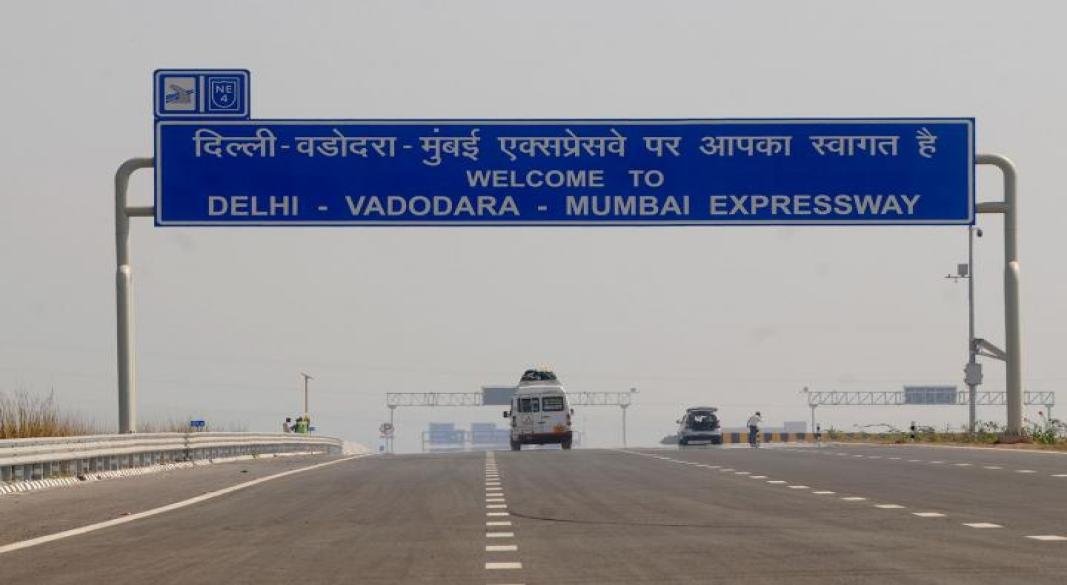
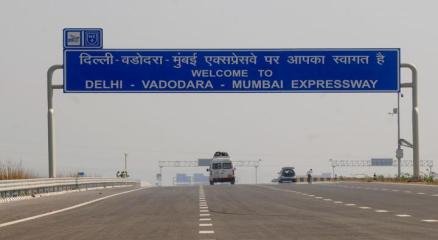
The Maharashtra government is set to operationalise the 157-km stretch of the Mumbai-Vadodara Expressway by the end of August, marking a significant milestone in India's rapidly expanding highway infrastructure. The announcement, made by Chief Minister Devendra Fadnavis, is expected to provide a major boost to passenger mobility, freight transportation and regional economic development across western India.
The new corridor forms part of the ambitious Delhi-Mumbai Expressway project and will connect Mumbai with the Gujarat border through Palghar district. Once commissioned, the operational stretch is expected to reduce travel time between Mumbai and Vadodara from nearly eight hours to around four hours, substantially improving connectivity between two of western India's key commercial centres.
For the supply chain and logistics sector, the expressway is poised to deliver significant operational advantages. Faster transit times will help logistics companies reduce fuel consumption, improve fleet utilisation and enable quicker turnaround of commercial vehicles. The improved road infrastructure is also expected to lower transportation costs, enhance delivery reliability and support the movement of high-value and time-sensitive cargo.
The expressway has been developed as an access-controlled, high-speed corridor designed to facilitate seamless movement of both passenger and commercial traffic. It is expected to ease congestion on the existing Mumbai-Ahmedabad highway while providing a safer and more efficient alternative for long-distance travel.
Industry experts believe the project will strengthen multimodal logistics by improving connectivity between manufacturing clusters, industrial parks, ports and distribution centres across Maharashtra and Gujarat. Better road infrastructure is also likely to support the growth of warehousing, e-commerce logistics and industrial investments along the corridor.
The Mumbai-Vadodara section is a crucial component of the 1,350-km Delhi-Mumbai Expressway, one of India's largest greenfield infrastructure projects. Once fully completed, the corridor will significantly enhance freight movement between the National Capital Region and the country's financial capital while reducing logistics costs and supporting the government's vision of developing world-class transport infrastructure.
The opening of the Maharashtra stretch comes at a time when India continues to invest heavily in road connectivity to strengthen supply chains and improve ease of doing business. By enabling faster movement of goods and people, the expressway is expected to enhance regional competitiveness, stimulate economic activity and reinforce the country's logistics network.
With the August-end commissioning on track, the Mumbai-Vadodara Expressway is set to become a vital transportation artery, delivering long-term benefits for logistics operators, businesses and commuters alike.
𝐒𝐭𝐚𝐲 𝐓𝐮𝐧𝐞𝐝 𝐭𝐨 CARGOCONNECT 𝐟𝐨𝐫 𝐥𝐚𝐭𝐞𝐬𝐭 𝐮𝐩𝐝𝐚𝐭𝐞𝐬!
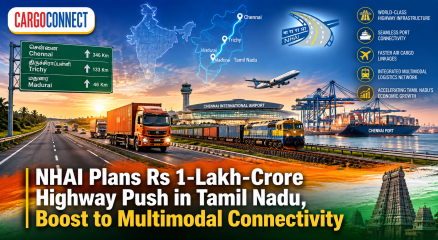
The National Highways Authority of India (NHAI) is preparing to roll out an ambitious highway development programme worth nearly ₹1 lakh crore in Tamil Nadu, with approximately 2,500 km of national highway projects currently in various stages of planning and execution. The large-scale infrastructure initiative is expected to significantly improve freight mobility, reduce logistics costs, and strengthen multimodal connectivity across one of India’s most industrialised states. The proposed projects include greenfield expressways, bypasses, ring roads, elevated corridors, and highway widening works designed to ease congestion and improve connectivity between manufacturing hubs, ports, airports, and logistics parks. Once completed, the network is expected to provide faster and more efficient transportation for cargo movement while supporting growing industrial activity in sectors such as automobiles, electronics, textiles, engineering goods, and renewable energy. Tamil Nadu plays a pivotal role in India's export economy, with major maritime gateways including Chennai, Kamarajar (Ennore), VOC Port at Thoothukudi, and Cuddalore serving domestic and international trade. Improved highway infrastructure is expected to enhance hinterland connectivity to these ports, enabling smoother movement of containers and bulk cargo while reducing transit times for exporters and logistics service providers. The proposed investments also align with the Centre’s broader infrastructure vision under the PM Gati Shakti National Master Plan, which seeks to integrate road, rail, port and air infrastructure into a seamless multimodal transport network. By improving last-mile connectivity and eliminating bottlenecks on key freight corridors, the projects are expected to increase supply chain efficiency and support India's ambition of lowering overall logistics costs. Several strategic highway stretches are expected to improve connectivity between industrial clusters in Chennai, Coimbatore, Hosur, Tiruppur, Salem, Madurai and Tiruchirappalli. Enhanced road infrastructure will also facilitate faster access to warehousing hubs, inland container depots and dedicated freight corridors, benefiting manufacturers, transport operators and third-party logistics companies. According to industry experts, the investment will generate long-term economic gains by attracting fresh industrial investments, improving regional connectivity and creating employment during both construction and operational phases. Better road infrastructure is also expected to support the rapid growth of e-commerce, cold chain logistics and time-sensitive cargo movement across southern India. As India continues to prioritise infrastructure-led growth, Tamil Nadu's proposed highway expansion is poised to become a critical enabler of integrated logistics, reinforcing the state's position as a leading manufacturing and export hub while strengthening multimodal connectivity across the southern region. 𝐒𝐭𝐚𝐲 𝐓𝐮𝐧𝐞𝐝 𝐭𝐨 CARGOCONNECT 𝐟𝐨𝐫 𝐥𝐚𝐭𝐞𝐬𝐭 𝐮𝐩𝐝𝐚𝐭𝐞𝐬!