Loading...
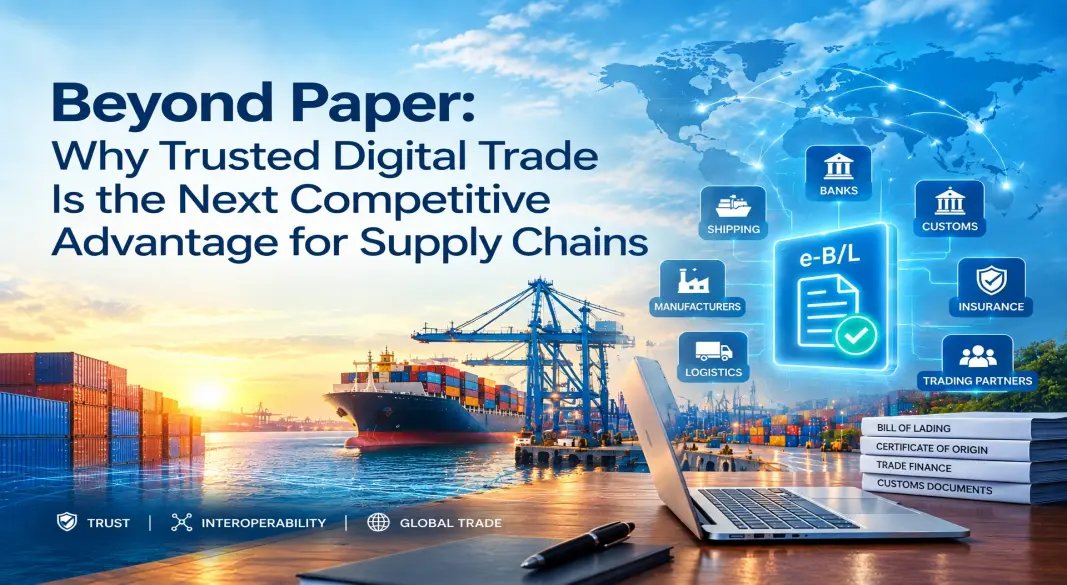
As trade documentation moves deeper into digital systems, the greater challenge is no longer digitisation itself. It is ensuring that a document can cross platforms, institutions and borders without compromising its authenticity, provenance or control.
Ports and terminals generate real-time operational data; manufacturers and logistics operators run integrated enterprise systems; and banks are digitising trade-finance workflows. Yet some of the most consequential records in a cross-border transaction still do not move at the speed of the cargo.
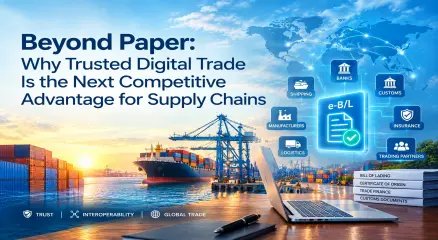
Bills of Lading, Certificates of Origin, insurance records, trade-finance documents and customs paperwork remain scattered across platforms, jurisdictions and institutional workflows. An electronic document may exist, but that does not necessarily mean the next participant can authenticate it, establish who controls it or transfer it through its own system.
As global trade continues to grow, greater demands are being placed on the connections between manufacturers, exporters, carriers, banks, logistics providers, ports and government agencies. Converting a document into digital form is one step; making it portable and verifiable across that chain is another.
Singapore’s Infocomm Media Development Authority (IMDA) built TradeTrust to address this challenge. It is an open-source framework for trusted, interoperable electronic trade documents. (IMDA)
TradeTrust is offered as a neutral digital utility rather than a closed commercial platform. The framework can be integrated into existing solutions, allowing governments, businesses and technology providers to participate without rebuilding their technology estates around a single vendor. TradeTrust is listed in the Digital Public Goods Registry and aligned with UNCITRAL’s Model Law on Electronic Transferable Records (MLETR) and W3C Verifiable Credentials. (TradeTrust)
That architecture addresses a practical feature of international commerce: there is no single technology stack.
The Electronic Bill Of Lading (eBL) is the Harder Test
The Bill of Lading shows why digitisation alone is not enough.
An eBL is not simply a PDF substitute for paper. Depending on the applicable legal regime and transaction structure, a Bill of Lading can serve as a receipt for cargo, evidence of the contract of carriage and a document of title.
A 2023 India–Singapore transaction tested the model in a live trade workflow. Participants included Maersk, Maptrasco, DBS, ICICI Bank and Jindal Stainless. The shipment involved scrap metal moving from Miami to Gujarat. Maersk issued an electronic Bill of Lading, which Maptrasco transferred to DBS. After conducting documentary checks, DBS transferred the eBL through SGTraDex to ICICI Bank. ICICI then transferred it through its TradeChain platform to Jindal Stainless, which surrendered the document to Maersk for cargo release. (IMDA)
What mattered was the sequence of hand-offs between different platforms and jurisdictions. The eBL moved among trading and financial institutions operating different systems without reverting to a physical original. The exercise demonstrated that a transferable digital record could retain its status throughout a trade-finance chain.
Another China–Singapore use case applies the same proposition to Documents against Payment. TradeTrust enabled an electronic Bill of Lading to move across borders between trading parties and banks. The reported business benefits included less reliance on couriered documents, faster transfers and digital verification. (IMDA)
A later TradeTrust network demonstration captures the interoperability challenge in a single transaction: five platforms, four countries, different technology providers and different organisations.
Interoperability must reach The Enterprise Stack
In March 2026, an SAP proof of concept explored a electronic Bill of Lading architecture on the SAP Business Technology Platform, using TradeTrust to issue and transfer eBLs. The design integrates SAP Cloud ERP with TradeTrust through event-driven processing and services, implementing the eBL as a side-by-side extension rather than replacing the existing enterprise environment.
The PoC models the eBL lifecycle from issuance and departure to transfer of ownership, arrival and surrender. Its wider significance is architectural: trusted-document capabilities can sit within an existing enterprise workflow rather than requiring a parallel system.
The digital trade problem is not a shortage of software. It is the difficulties of making software recognise and trust a record originating elsewhere.
An interoperability layer therefore targets the boundary between systems rather than asking companies to discard systems they already depend on.
The Documentary Chain Extends Well Beyond Shipping
Bills of Lading are only one category of trade record.
TradeTrust identifies Certificates of Origin, warehouse receipts, insurance certificates, trade-finance documents, Delivery Orders, Letters of Credit, Verifiable Credentials, sustainability certificates and customs documentation as potential applications. (TradeTrust)
A cross-border transaction rarely hinges on a single record. The documentary chain establishes what was shipped, who controls it, how the transaction is financed, whether the goods meet regulatory requirements and when the consignee can take possession.
For these records to become genuinely digital, technical interoperability and legal recognition have to develop together.
Singapore incorporated MLETR into its Electronic Transactions Act in 2021.
A technically interoperable document without legal recognition remains exposed to questions of enforceability and control. Conversely, a legally recognised electronic record that cannot move beyond a closed platform remains commercially constrained.
The Ecosystem Is the Infrastructure
Governments shape the legal environment, while carriers manage transport documents. Banks review documentation and provide trade finance. Exporters and importers depend on timely record transfers, logistics providers connect documentation with cargo movements, and technology firms operate the platforms that support these transactions.
The question is not whether trade documentation will become digital; it already is across significant parts of the ecosystem. The real question is whether the resulting digital records can move between institutions without losing the attributes that give them commercial and legal value.
Paper imposed a physical constraint: the document had to travel.
Digitalisation removes the physical journey but replaces it with a more complex challenge: trust must travel with the record.
That is where interoperability becomes infrastructure rather than merely an IT feature: it enables existing systems to share trusted documents across organisational and national boundaries without requiring the entire trading ecosystem to converge on a single platform.
As trade documentation moves deeper into digital systems, the greater challenge is no longer digitisation itself. It is ensuring that a document can cross platforms, institutions and borders without compromising its authenticity, provenance or control. Ports and terminals generate real-time operational data; manufacturers and logistics operators run integrated enterprise systems; and banks are digitising trade-finance workflows. Yet some of the most consequential records in a cross-border transaction still do not move at the speed of the cargo. Bills of Lading, Certificates of Origin, insurance records, trade-finance documents and customs paperwork remain scattered across platforms, jurisdictions and institutional workflows. An electronic document may exist, but that does not necessarily mean the next participant can authenticate it, establish who controls it or transfer it through its own system. As global trade continues to grow, greater demands are being placed on the connections between manufacturers, exporters, carriers, banks, logistics providers, ports and government agencies. Converting a document into digital form is one step; making it portable and verifiable across that chain is another. Singapore’s Infocomm Media Development Authority (IMDA) built TradeTrust to address this challenge. It is an open-source framework for trusted, interoperable electronic trade documents. (IMDA) TradeTrust is offered as a neutral digital utility rather than a closed commercial platform. The framework can be integrated into existing solutions, allowing governments, businesses and technology providers to participate without rebuilding their technology estates around a single vendor. TradeTrust is listed in the Digital Public Goods Registry and aligned with UNCITRAL’s Model Law on Electronic Transferable Records (MLETR) and W3C Verifiable Credentials. (TradeTrust) That architecture addresses a practical feature of international commerce: there is no single technology stack. The Electronic Bill Of Lading (eBL) is the Harder Test The Bill of Lading shows why digitisation alone is not enough. An eBL is not simply a PDF substitute for paper. Depending on the applicable legal regime and transaction structure, a Bill of Lading can serve as a receipt for cargo, evidence of the contract of carriage and a document of title. A 2023 India–Singapore transaction tested the model in a live trade workflow. Participants included Maersk, Maptrasco, DBS, ICICI Bank and Jindal Stainless. The shipment involved scrap metal moving from Miami to Gujarat. Maersk issued an electronic Bill of Lading, which Maptrasco transferred to DBS. After conducting documentary checks, DBS transferred the eBL through SGTraDex to ICICI Bank. ICICI then transferred it through its TradeChain platform to Jindal Stainless, which surrendered the document to Maersk for cargo release. (IMDA) What mattered was the sequence of hand-offs between different platforms and jurisdictions. The eBL moved among trading and financial institutions operating different systems without reverting to a physical original. The exercise demonstrated that a transferable digital record could retain its status throughout a trade-finance chain. Another China–Singapore use case applies the same proposition to Documents against Payment. TradeTrust enabled an electronic Bill of Lading to move across borders between trading parties and banks. The reported business benefits included less reliance on couriered documents, faster transfers and digital verification. (IMDA) A later TradeTrust network demonstration captures the interoperability challenge in a single transaction: five platforms, four countries, different technology providers and different organisations. Interoperability must reach The Enterprise Stack In March 2026, an SAP proof of concept explored a electronic Bill of Lading architecture on the SAP Business Technology Platform, using TradeTrust to issue and transfer eBLs. The design integrates SAP Cloud ERP with TradeTrust through event-driven processing and services, implementing the eBL as a side-by-side extension rather than replacing the existing enterprise environment. The PoC models the eBL lifecycle from issuance and departure to transfer of ownership, arrival and surrender. Its wider significance is architectural: trusted-document capabilities can sit within an existing enterprise workflow rather than requiring a parallel system. The digital trade problem is not a shortage of software. It is the difficulties of making software recognise and trust a record originating elsewhere. An interoperability layer therefore targets the boundary between systems rather than asking companies to discard systems they already depend on. The Documentary Chain Extends Well Beyond Shipping Bills of Lading are only one category of trade record. TradeTrust identifies Certificates of Origin, warehouse receipts, insurance certificates, trade-finance documents, Delivery Orders, Letters of Credit, Verifiable Credentials, sustainability certificates and customs documentation as potential applications. (TradeTrust) A cross-border transaction rarely hinges on a single record. The documentary chain establishes what was shipped, who controls it, how the transaction is financed, whether the goods meet regulatory requirements and when the consignee can take possession. For these records to become genuinely digital, technical interoperability and legal recognition have to develop together. Singapore incorporated MLETR into its Electronic Transactions Act in 2021. A technically interoperable document without legal recognition remains exposed to questions of enforceability and control. Conversely, a legally recognised electronic record that cannot move beyond a closed platform remains commercially constrained. The Ecosystem Is the Infrastructure Governments shape the legal environment, while carriers manage transport documents. Banks review documentation and provide trade finance. Exporters and importers depend on timely record transfers, logistics providers connect documentation with cargo movements, and technology firms operate the platforms that support these transactions. The question is not whether trade documentation will become digital; it already is across significant parts of the ecosystem. The real question is whether the resulting digital records can move between institutions without losing the attributes that give them commercial and legal value. Paper imposed a physical constraint: the document had to travel. Digitalisation removes the physical journey but replaces it with a more complex challenge: trust must travel with the record. That is where interoperability becomes infrastructure rather than merely an IT feature: it enables existing systems to share trusted documents across organisational and national boundaries without requiring the entire trading ecosystem to converge on a single platform.