
Loading...
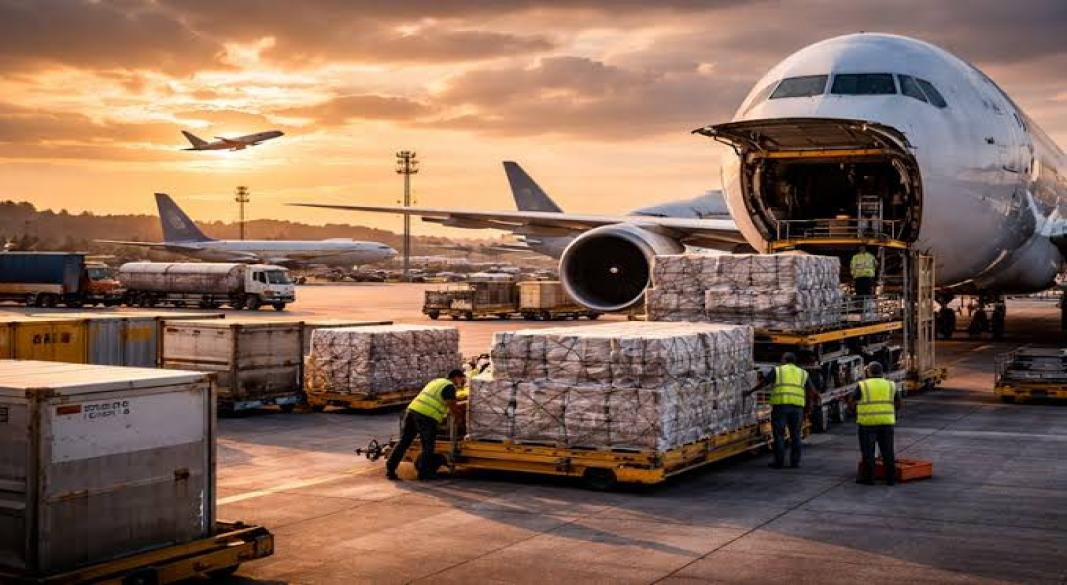
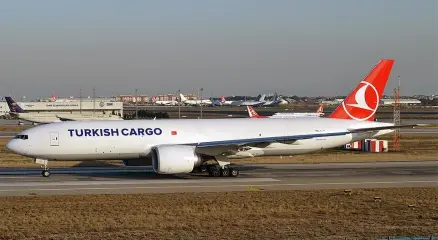
The introduction of new European Union (EU) charges on low-value e-commerce imports is reshaping global air cargo capacity, prompting freighter operators to redirect aircraft from the Asia-Europe trade lane towards the transpacific market. The shift reflects a sharp decline in e-commerce shipments entering Europe and highlights how regulatory changes are influencing international air freight demand and capacity deployment.
According to data from aviation consultancy Rotate, e-commerce imports into Europe fell 48% in August compared with June, before the EU's new import charge came into effect. The decline continued, with volumes remaining 44% lower in September and 39% lower in October. The figures indicate a sustained reduction in shipments rather than a short-lived adjustment following the regulatory change.
The impact is particularly visible in freighter capacity departing China and Hong Kong. In October, outbound freighter capacity from these markets to Europe declined by 46%, equivalent to approximately 43,700 tonnes, compared with June levels. In contrast, capacity on routes from China and Hong Kong to North America increased by 19%, adding around 27,400 tonnes over the same period.
The additional capacity deployed towards North America includes approximately 5,000 tonnes for Miami and 4,000 tonnes for Los Angeles. These destinations also serve as important gateways for onward cargo movements into Latin America. Meanwhile, smaller increases in freighter capacity have been recorded towards Africa and the Middle East.
EU Charges Reshape E-Commerce Logistics
The capacity realignment follows the EU's introduction of a €3 charge in July 2026 on imported items valued below €150. The measure aims to address the growing influx of low-value e-commerce consignments into the European market. An additional €2 handling charge introduced in November is expected to further increase the cost of shipping individual parcels into the bloc.
The higher charges are influencing the economics of cross-border e-commerce, particularly business-to-consumer shipments that traditionally rely on air freight for fast delivery. With additional costs affecting the movement of individual parcels, logistics providers and retailers may increasingly explore consolidated business-to-business import models. Such arrangements could involve larger shipments transported through ocean freight or alternative logistics channels before distribution within Europe.
Beyond e-commerce, overall, China and Hong Kong cargo volumes to Europe were down by 52,700 tonnes in September compared with June. Fashion shipments also recorded a 6.7% decline. However, automotive, technology, chemicals and industrial cargo segments reported stronger demand, offering some support to the wider air freight market.
European Cargo Hubs Face Capacity Pressure
The reduction in freighter operations is also affecting major European cargo gateways, which have traditionally benefited from strong volumes of direct shipments from Asian e-commerce markets. Lower parcel volumes are changing the demand profile for cargo handling, aircraft operations and associated logistics services at European airports.
The development also reflects a broader realignment of global air cargo networks, with North America attracting a greater share of available freighter capacity. Stronger demand across transpacific routes is encouraging operators to deploy aircraft where cargo opportunities are more favourable, rather than maintaining capacity on weaker trade lanes.
Despite the slowdown in Europe-bound e-commerce, the global air cargo sector continues to demonstrate growth potential. Overall e-commerce air cargo volumes increased 4% year-on-year during January-October 2026, indicating that demand is being redistributed across markets rather than disappearing altogether.
The changing trade dynamics could have longer-term implications for airlines, freight forwarders, e-commerce companies and airport operators. Greater reliance on consolidated imports, alternative transport modes and shifting aircraft deployment strategies may redefine how cross-border e-commerce shipments are moved into Europe. For the air cargo industry, the key challenge will be to align freighter capacity with evolving trade flows while maintaining operational efficiency and competitive service levels.
As the additional EU handling charge takes effect, the coming months will offer a clearer indication of whether the decline in Asia-Europe e-commerce traffic represents a temporary market adjustment or a more fundamental restructuring of international air cargo networks.
𝐒𝐭𝐚𝐲 𝐭𝐮𝐧𝐞𝐝 𝐭𝐨 CARGOCONNECT 𝐟𝐨𝐫 𝐥𝐚𝐭𝐞𝐬𝐭 𝐮𝐩𝐝𝐚𝐭𝐞𝐬!

Korean Air has completed the modernisation of its cargo terminal at Incheon International Airport, South Korea, transforming the 25-year-old facility into an integrated Smart Terminal equipped with advanced automated handling systems. The upgrade is expected to strengthen cargo handling efficiency and increase the terminal's overall capacity by more than 25%. Completed in September 2026 in collaboration with logistics automation specialist Lödige Industries, the project has increased the terminal's Unit Load Device (ULD) processing capacity from 18 to 30 units per hour, representing a 66.7% improvement. The modernisation was undertaken in phases to ensure uninterrupted cargo operations throughout the implementation period. The upgraded facility incorporates three automated Elevating Transfer Vehicles (ETVs) supplied by Lödige Industries and two Automated Guided Vehicles (AGVs). While the ETVs facilitate faster ULD handling, the AGVs enable automated movement of cargo between import and export zones, build-up and breakdown areas, and storage locations. These systems are designed to streamline cargo movements, reduce manual handling and improve operational productivity. The project also involved installing a bypass lane and additional conveyor systems in the cool storage area to establish alternative cargo routes during the renovation. Further infrastructure improvements include upgraded truck docks, decks and extensive conveyor networks. The terminal has also integrated Lödige's Cargo Professional Suite, a centralised terminal management system designed to coordinate cargo handling activities and optimise operational workflows. Beyond capacity enhancement, the modernisation incorporates improved workplace safety standards and aims to provide better working conditions for employees by reducing manual intervention in cargo handling operations. JD Eum, Executive Vice President and Head of Cargo Business Division at Korean Air, said the investment reflects the airline's commitment to advancing automation and modern infrastructure to accommodate growing cargo volumes while maintaining service quality. He also highlighted the importance of the partnership with Lödige Industries in completing the upgrade without disrupting terminal operations. Following the successful handover in September, Korean Air formally marked the project's completion at a ceremony held on 20 October 2026, presenting Lödige Industries with a Plaque of Appreciation for its contribution. The Incheon upgrade forms part of Korean Air's broader focus on strengthening its air cargo infrastructure and operational capabilities. With the successful completion of this project, the airline is now advancing modernisation work at its cargo terminal at New York's John F. Kennedy International Airport, with completion targeted for 2027. 𝐒𝐭𝐚𝐲 𝐭𝐮𝐧𝐞𝐝 𝐭𝐨 CARGOCONNECT 𝐟𝐨𝐫 𝐥𝐚𝐭𝐞𝐬𝐭 𝐮𝐩𝐝𝐚𝐭𝐞𝐬!
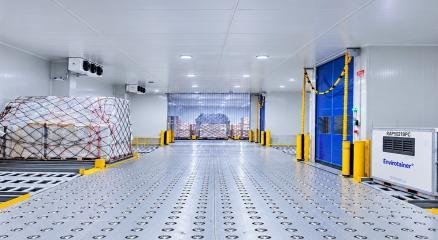
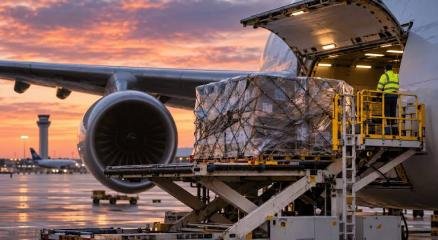
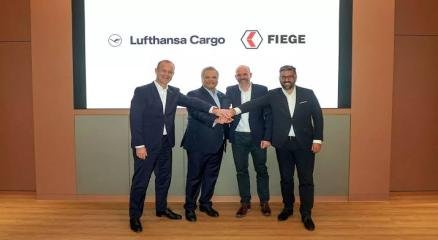
Lufthansa Cargo has signed an agreement to acquire Fiege Air Cargo Logistics GmbH & Co. KG (FACL) in Frankfurt, marking another strategic move towards strengthening its operational control, improving cargo handling efficiency and accelerating warehouse automation at its largest air cargo hub. The agreement was signed on 20 November 2026 with Fiege Logistik Stiftung & Co. KG, the current owner of FACL. The proposed acquisition remains subject to the necessary antitrust and regulatory approvals. Upon completion, Lufthansa Cargo will bring cargo handling operations at its Lufthansa Cargo Center in Frankfurt under its direct management. The move is aimed at consolidating operational activities within the Lufthansa Cargo network while enabling the company to introduce new technologies, streamline processes and improve service reliability. Frankfurt serves as the airline's most important hub, making operational efficiency at the facility critical to its wider air freight network. Lufthansa Cargo had entrusted Fiege Air Cargo Logistics with part of its physical cargo handling operations at Frankfurt in 2020. However, with changing market dynamics and increasing requirements for efficient and resilient supply chains, the company has decided to assume greater responsibility for managing its cargo infrastructure. Frank Bauer, Chief Operations Officer, Lufthansa Cargo, said that bringing handling operations under direct management would allow the company to implement new technologies and accelerate warehouse automation through leaner operational structures. He added that the move would support improvements in service quality and efficiency while strengthening the company's long-term competitiveness. Despite the ownership transition, the partnership between the two companies will continue. Fiege, headquartered in Greven, Germany, will retain a strategic role in recruiting, training and providing specialised personnel for cargo handling operations. The arrangement will also help Lufthansa Cargo maintain workforce flexibility during periods of higher cargo volumes. Existing employee employment conditions will remain unchanged during the transition. The acquisition is part of Lufthansa Cargo's broader growth strategy, which includes strengthening infrastructure, expanding capacity and increasing automation. The company has earmarked €600 million for modernising its Lufthansa Cargo Center in Frankfurt, with investments focused on upgrading warehouse infrastructure and handling systems. The planned acquisition also follows Lufthansa Cargo's recent completion of the acquisition of LUG aircargo handling GmbH, which operates at Frankfurt, Munich and Hamburg airports. Together, these investments underline the company's focus on strengthening its cargo handling capabilities and consolidating its operational footprint in Germany. With these strategic initiatives, Lufthansa Cargo is targeting a return to the world's top three global air cargo providers by 2030, positioning operational efficiency, infrastructure development and technological advancement as key drivers of its future growth. 𝐒𝐭𝐚𝐲 𝐭𝐮𝐧𝐞𝐝 𝐭𝐨 CARGOCONNECT 𝐟𝐨𝐫 𝐥𝐚𝐭𝐞𝐬𝐭 𝐮𝐩𝐝𝐚𝐭𝐞𝐬!

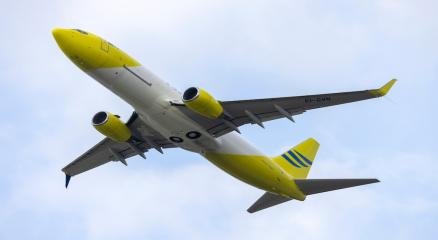
Lufthansa Cargo has partnered with Italy's Poste Air Cargo to introduce additional freighter capacity between Rome Fiumicino and Tel Aviv, marking its return to narrowbody freighter operations. The twice-weekly charter flights will be operated by Poste Air Cargo using Boeing 737-800 Converted Freighters (BCFs), with a cargo capacity of approximately 22 tonnes per flight. Services will operate every Monday and Thursday. The move comes amid persistently high demand for air cargo capacity to and from Tel Aviv. Previously, Lufthansa Cargo offered capacity on the route through sister airline ITA Airways, utilising the bellyhold space of its A321neo passenger aircraft, which can typically accommodate around 2.8 tonnes of cargo. The partnership represents a significant increase in available capacity on the route and a return to narrowbody freighter services for Lufthansa Cargo. The airline had previously offered narrowbody freighter capacity through four Airbus A321 freighters operated by Lufthansa CityLine. However, the aircraft were grounded in mid-April as part of the group's cost-cutting measures. Lufthansa Cargo has since been exploring options to find a new operator for the fleet. Lufthansa Cargo launched its A321 freighter network in 2022 to serve intra-European markets and routes between Europe and North Africa, with Rome and Tel Aviv among the destinations covered. The latest partnership also strengthens Rome's position as a Southern European cargo hub. ITA Airways, headquartered in Rome, officially became part of the Lufthansa Group in January 2025, with Lufthansa Cargo subsequently beginning to market cargo capacity across ITA Airways' network in June 2025. Commenting on the development, Ashwin Bhat, chief executive of Lufthansa Cargo, said the additional services would provide customers with more capacity and flexibility on a high-demand route. “With the additional cargo routes from Poste Air Cargo out of Rome, we are creating more capacity on a highly sought-after route and greater flexibility for shipment planning,” Bhat said. He added that the freighter services would strategically complement ITA Airways' existing cargo capacity and further develop Rome as a hub in Southern Europe. The enhanced offering is currently planned to operate for at least the remainder of the winter flight schedule. Follow CARGOCONNECT for more such updates