
Loading...

Global airfreight rates continued their upward trajectory for the seventh consecutive week, with the worldwide average rate climbing 2% week on week (WoW) to US$3.49 per kg during Week 46 (November 9-15, 2026). The latest figures from WorldACD Market Data indicate sustained pricing pressure in the international air cargo market, driven largely by tightening capacity and seasonal demand dynamics.
The average global rate has increased from US$3.04 per kg in mid-September, reflecting a steady strengthening of air cargo pricing ahead of the peak holiday shipping season. The latest increase came even as global chargeable weight declined 4% WoW, while available air cargo capacity contracted by 2%.
Regional trends presented a mixed picture. Rates originating from Central and South America recorded the strongest weekly growth, rising 6%, followed by Africa at 4%. Asia Pacific and Europe each registered a 2% increase. In contrast, rates from the Middle East and South Asia (MESA) declined 1%, while North American rates fell 2%.
On a year-on-year (YoY) basis, global airfreight rates were 32% higher than during the corresponding week in 2025. The steepest increase was recorded in the MESA region, where rates surged 62%, while Central and South America reported the lowest annual increase at 13%.
Capacity Constraints and Seasonal Disruptions
The decline in global capacity was primarily attributed to reduced bellyhold availability, which fell for the third consecutive week. North America experienced the sharpest contraction, with capacity declining 8%, while Europe and Africa registered reductions of 2% and 3%, respectively. Asia Pacific capacity remained unchanged.
Cargo volumes were also affected by seasonal and operational disruptions. The Diwali festival slowed export activity from South Asia, while an air traffic control outage in the United States on November 13 disrupted commercial aviation operations. The incident also prompted aviation authorities in Canada, Mexico and the European Union to temporarily suspend US-bound flights.
The impact was particularly visible across Middle East and South Asia trade lanes. Chargeable weight from the region declined 25% to Europe and 23% to the United States. India's outbound cargo tonnage to Europe dropped 27% WoW, while shipments to the US fell 22%.
Peak Season Demand to Influence Rate Trends
Looking ahead, the global air cargo market is expected to experience further activity as retailers and businesses prepare for the Christmas shopping season. The National Retail Federation has revised its US holiday sales growth forecast upwards to 4.2%, indicating the potential for stronger demand in the coming weeks.
However, airlines' ability to rapidly reposition capacity in response to changing demand, particularly across transpacific routes, could moderate further rate increases. With peak-season shipments approaching, the balance between available capacity and cargo demand will remain a key factor influencing global airfreight pricing.
𝐒𝐭𝐚𝐲 𝐭𝐮𝐧𝐞𝐝 𝐭𝐨 CARGOCONNECT 𝐟𝐨𝐫 𝐥𝐚𝐭𝐞𝐬𝐭 𝐮𝐩𝐝𝐚𝐭𝐞𝐬!

Global airfreight rates continued their upward trajectory for the seventh consecutive week, with the worldwide average rate climbing 2% week on week (WoW) to US$3.49 per kg during Week 46 (November 9-15, 2026). The latest figures from WorldACD Market Data indicate sustained pricing pressure in the international air cargo market, driven largely by tightening capacity and seasonal demand dynamics. The average global rate has increased from US$3.04 per kg in mid-September, reflecting a steady strengthening of air cargo pricing ahead of the peak holiday shipping season. The latest increase came even as global chargeable weight declined 4% WoW, while available air cargo capacity contracted by 2%. Regional trends presented a mixed picture. Rates originating from Central and South America recorded the strongest weekly growth, rising 6%, followed by Africa at 4%. Asia Pacific and Europe each registered a 2% increase. In contrast, rates from the Middle East and South Asia (MESA) declined 1%, while North American rates fell 2%. On a year-on-year (YoY) basis, global airfreight rates were 32% higher than during the corresponding week in 2025. The steepest increase was recorded in the MESA region, where rates surged 62%, while Central and South America reported the lowest annual increase at 13%. Capacity Constraints and Seasonal Disruptions The decline in global capacity was primarily attributed to reduced bellyhold availability, which fell for the third consecutive week. North America experienced the sharpest contraction, with capacity declining 8%, while Europe and Africa registered reductions of 2% and 3%, respectively. Asia Pacific capacity remained unchanged. Cargo volumes were also affected by seasonal and operational disruptions. The Diwali festival slowed export activity from South Asia, while an air traffic control outage in the United States on November 13 disrupted commercial aviation operations. The incident also prompted aviation authorities in Canada, Mexico and the European Union to temporarily suspend US-bound flights. The impact was particularly visible across Middle East and South Asia trade lanes. Chargeable weight from the region declined 25% to Europe and 23% to the United States. India's outbound cargo tonnage to Europe dropped 27% WoW, while shipments to the US fell 22%. Peak Season Demand to Influence Rate Trends Looking ahead, the global air cargo market is expected to experience further activity as retailers and businesses prepare for the Christmas shopping season. The National Retail Federation has revised its US holiday sales growth forecast upwards to 4.2%, indicating the potential for stronger demand in the coming weeks. However, airlines' ability to rapidly reposition capacity in response to changing demand, particularly across transpacific routes, could moderate further rate increases. With peak-season shipments approaching, the balance between available capacity and cargo demand will remain a key factor influencing global airfreight pricing. 𝐒𝐭𝐚𝐲 𝐭𝐮𝐧𝐞𝐝 𝐭𝐨 CARGOCONNECT 𝐟𝐨𝐫 𝐥𝐚𝐭𝐞𝐬𝐭 𝐮𝐩𝐝𝐚𝐭𝐞𝐬!



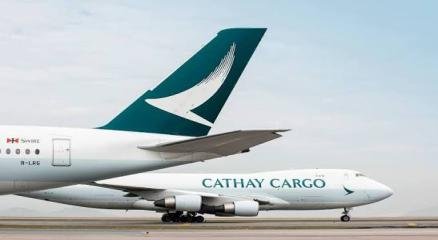
Cathay Cargo has become the first airline to join Hong Kong’s Port Community System (PCS), marking a landmark step towards integrating air freight operations with the city’s maritime and land-based logistics networks. The initiative aims to improve shipment visibility, streamline information exchange and strengthen multimodal connectivity through digital integration. The development follows a Memorandum of Understanding (MoU) signed on 17 November 2026 between Cathay Cargo, the Transport and Logistics Bureau (TLB) of the Hong Kong Special Administrative Region Government, the Logistics and Supply Chain MultiTech R&D Centre (LSCM) and air cargo technology provider Global Logistic System (HK) Co. Ltd (GLS). The agreement was signed during the Asian Logistics, Maritime and Aviation Conference (ALMAC), held as part of Hong Kong Maritime Week. The collaboration will extend the capabilities of Hong Kong’s PCS, which was initially developed around sea and land transport, to include air cargo operations. By connecting different transport modes through a common digital platform, the initiative seeks to address information gaps between air and land logistics and improve coordination across the supply chain. A key component of the partnership is the adoption of the International Air Transport Association’s (IATA) ONE Record data standard. The open global standard enables airlines, freight forwarders and other logistics stakeholders to exchange shipment information in a common digital format, supported by secure data access controls. The partners will explore its implementation, develop data-sharing services within the PCS and conduct pilot trials involving other logistics stakeholders. The initial implementation will focus on making key shipment milestones associated with Cathay Cargo Air Waybills (AWBs) carried on Cathay-operated flights accessible through the PCS. This will allow freight forwarders and other logistics partners to obtain a more consolidated view of shipment movements across different transport modes. GLS will oversee the technical integration and implementation, with technical testing scheduled for November 2026, followed by a focused pilot in December. The transition to full production is targeted for 2027. As additional logistics partners and use cases are incorporated, the platform is expected to facilitate more comprehensive data sharing, improve shipment tracking and enable earlier identification of operational exceptions. These capabilities could also help stakeholders coordinate corrective measures more effectively when disruptions or changes occur during transportation. Cathay General Manager Cargo Service Delivery Tim Wong highlighted that connecting the airline with the PCS would strengthen shipment visibility and enable faster responses to exceptions, supporting more reliable and transparent customer services. The initiative also aligns with Hong Kong’s broader ambition to strengthen its position as an international maritime and aviation hub through smart port infrastructure and digital transformation. Integrating air cargo information with existing maritime and land transport data is expected to improve intermodal transshipment efficiency and facilitate smoother cargo movement through the region. The partnership further builds on Cathay Cargo’s ongoing digitalisation initiatives in mainland China, where the airline has been working with the Civil Aviation Administration of China Information Centre and China Unidata to advance ONE Record-compatible data exchange with airports. By extending digital connectivity across air, sea and land transportation, Cathay Cargo’s integration with the PCS represents an important development in Hong Kong’s multimodal logistics ecosystem. The initiative is expected to create opportunities for wider industry participation, strengthen supply chain transparency and support more efficient end-to-end cargo operations as the platform expands. 𝐒𝐭𝐚𝐲 𝐭𝐮𝐧𝐞𝐝 𝐭𝐨 CARGOCONNECT 𝐟𝐨𝐫 𝐥𝐚𝐭𝐞𝐬𝐭 𝐮𝐩𝐝𝐚𝐭𝐞𝐬!

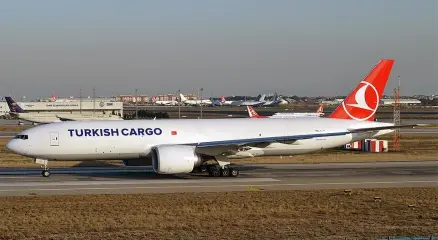


Thai Airways and ECS Group have strengthened their long-standing partnership by introducing a unified General Sales and Service Agent (GSSA) structure across Europe, aimed at improving air cargo capacity management, enhancing customer service and strengthening the airline’s commercial presence across key European markets. Under the revised arrangement, ECS Group’s subsidiaries in France, Italy, Belgium, Switzerland, Denmark and Sweden, along with its offline stations in Finland and Central and Eastern Europe (CEE), will operate under a common Thai Cargo Service Level Agreement and a coordinated commercial strategy. The integrated framework is expected to streamline sales operations, improve capacity utilisation and ensure consistent service standards for freight forwarders across the region. The partnership will also enable both companies to manage cargo capacity and revenue more effectively across European markets, with particular attention to shipments of pharmaceuticals, food products and luxury goods. By bringing regional operations under a single commercial framework, the companies aim to improve transparency in sales performance, strengthen coordination between individual markets and minimise cross-border sales competition. The collaboration builds on a relationship that dates back to 2004, when ECS Group’s French subsidiary, Aerocargo, began representing Thai Airways. The partnership expanded to Italy through Globe Air Cargo in 2006 and Central and Eastern Europe in 2010. Belgium and Switzerland joined the network in 2025, while HWF took over representation in Denmark and Sweden during the same year. Nordics GSA has represented Thai Airways in Finland since 2012. The expanded arrangement also extends Thai Airways’ commercial reach to six additional Central and Eastern European markets: the Czech Republic, Slovakia, Poland, Bulgaria, Hungary and Romania, alongside Finland. Regular weekly, quarterly and annual meetings between the companies will support coordinated market strategies and enable them to respond more effectively to changing customer requirements and market conditions. Commenting on the development, Jean Ceccaldi, Chief Executive Officer, ECS Group, said that AVS GSA in Bangkok had worked closely with Thai Airways’ Cargo Team and European subsidiaries to develop a streamlined commercial cargo concept and strategy for Europe. He highlighted capacity optimisation, revenue management and consistent service standards as the key priorities underpinning the initiative. Meanwhile, Thai Airways is preparing to expand its European flight frequencies, creating additional opportunities for air cargo customers. The airline currently operates daily direct services connecting Paris Charles de Gaulle, Milan, Brussels, Stockholm Arlanda, Copenhagen and Zurich with its Bangkok hub. Its fleet of Boeing 787-800, Boeing 787-900, Boeing 777-300 and Airbus A350-900 aircraft offers cargo capacity ranging from five to 20 tonnes per flight. From December 2026, Thai Airways will double its Paris services by introducing a daily Boeing 787-900 flight alongside its existing daily Boeing 777-300 operation. This will increase available cargo capacity from Paris to up to 20 tonnes per day. Services to Zurich will also increase to 11 flights per week from January 2027, with Boeing 777-300 aircraft offering 20 tonnes of cargo capacity per flight. Through the unified European GSSA framework and increased flight frequencies, Thai Airways and ECS Group are looking to strengthen their competitive positioning in the European air freight market while providing freight forwarders with more coordinated cargo solutions and improved access to capacity. 𝐒𝐭𝐚𝐲 𝐭𝐮𝐧𝐞𝐝 𝐭𝐨 CARGOCONNECT 𝐟𝐨𝐫 𝐥𝐚𝐭𝐞𝐬𝐭 𝐮𝐩𝐝𝐚𝐭𝐞𝐬!