Loading...

Power reliability, Artificial Intelligence (AI), geopolitical uncertainty and rising consumer expectations around delivery speed are reshaping supply chain priorities, with businesses increasingly focusing on resilient infrastructure, regionalised networks and technology-led operations, according to the Prologis 2027 Supply Chain Outlook Report.
The third annual study, commissioned by Prologis and conducted by The Harris Poll, surveyed 1,821 business leaders with supply chain decision-making responsibilities across the US, UK, Germany, India, China and Mexico. The respondents included 265 Indian executives, alongside leaders from organisations employing more than 250 people.
The report identifies four converging forces likely to influence supply chain strategies in 2027 and beyond: energy availability and reliability, geopolitical and trade-related disruptions, AI adoption, and the growing pressure to deliver goods faster.
Energy Reliability moves to the Forefront of Logistics Decisions
Reliable power has emerged as the leading consideration in logistics location decisions, ranking ahead of transportation access, automation readiness and rent. The report finds that two-thirds of business leaders say energy costs are significantly affecting their supply chain operating expenses, with higher energy bills and transportation fuel costs each cited by 39% of respondents.
Businesses are responding with increased investment in energy resilience. Over the past year, 43% have made or accelerated investments in battery energy storage, while 41% have focused on demand flexibility and load management. On-site backup generation and long-term renewable energy agreements each accounted for 40%.
Although 58% of organisations now have comprehensive backup power systems, a 12-percentage-point increase year on year, only 23% have achieved on-site energy independence. Furthermore, 95% of respondents now factor reliable energy infrastructure into their lease decisions, highlighting the growing importance of power-ready logistics facilities.
Geopolitical Uncertainty Accelerates Supply Chain Regionalisation
Trade policy and geopolitical disruptions are also prompting businesses to rethink their global operating footprints. Rising tariff rates were identified as the leading disruptor, cited by 55% of respondents, followed by conflicts affecting shipping corridors at 53%.
The report finds that 76% of leaders rate their supply chain agility as high when responding to geopolitical disruption. Meanwhile, 34% describe their supply chain planning approach as one of “aggressive transformation”, up 10 percentage points year on year.
Regionalisation is increasingly accompanied by diversification, nearshoring and reshoring strategies. Only 36% of organisations now intend to maintain their existing global footprint, down 15 percentage points from the previous year. The findings point to a shift towards more flexible networks designed to provide alternative sourcing and operating options amid changing trade conditions.
The strategic importance of agility is expected to increase further, with 93% of respondents agreeing that by 2030 it will matter more than scale or cost efficiency as a source of competitive advantage.
AI Adoption emerges as a Competitive Differentiator
AI is moving beyond its role as an operational efficiency tool to become a differentiator in supply chain performance. According to the report, 67% of business leaders say AI adoption is already helping their organisations differentiate themselves competitively.
AI-driven demand forecasting, cited by 43%, and agentic execution systems, at 39%, are identified as the two most transformative technologies for supply chain operations over the next three years. Investment intentions are also substantial, with 75% planning significant investment in AI-driven forecasting and 71% in agentic systems.
Current applications span operational efficiency (58%), workforce augmentation (49%) and customer experience improvement (49%). However, scaling adoption remains challenging, with legacy system integration (27%), cybersecurity concerns (26%) and upfront costs (23%) emerging as key barriers.
Over the next five years, respondents expect AI investments to improve speed and throughput across logistics and fulfilment (49%), strengthen the ability to anticipate and respond to disruptions (47%), and enhance end-to-end supply chain visibility (45%).
Delivery Speed reshapes Fulfilment and Logistics Networks
Consumer expectations are placing further pressure on supply chain execution. Same-day or next-day delivery has expanded from 24% to 58% of organisations over the past seven years, while delivery speed and reliability now rank as the leading competitive differentiator, cited by 39% of respondents. This is more than double the 18% who identify competitive pricing as the top differentiator.
The gap between consumer expectations and operational capabilities remains significant. While 91% of respondents say same-day or next-day delivery is becoming the baseline expectation in their sectors, 84% acknowledge a gap between what retailers promise and what warehouses can deliver.
To address this, 92% of organisations are investing in last-mile innovation, while 91% say the industry needs more decentralised fulfilment networks. The report also notes that 88% believe early drone adopters will gain a meaningful advantage in select markets.
Modern Logistics Real-Estate faces Growing Infrastructure Demands
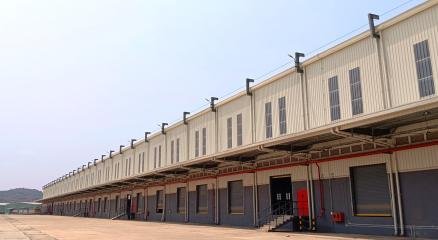
The convergence of energy requirements, AI adoption, trade policy shifts and faster fulfilment expectations is raising the bar for logistics infrastructure. The report points to growing demand for modern facilities that combine reliable power, automation capabilities, proximity to consumers and resilient supporting infrastructure.
As businesses regionalise their supply chains and seek to compress fulfilment timelines, logistics networks are expected to become more distributed, energy-intensive and technologically demanding. In this environment, access to land, power and modern facilities in key markets could increasingly determine which organisations are best positioned to execute their supply chain strategies.
The findings are based on an online survey conducted by The Harris Poll on behalf of Prologis between August 3 and 20, 2026. Respondents were director-level or above and held supply chain decision-making roles across organisations with at least 250 employees. The report notes that the survey was not based on a probability sample, and therefore no estimate of theoretical sampling error can be calculated.

Power reliability, Artificial Intelligence (AI), geopolitical uncertainty and rising consumer expectations around delivery speed are reshaping supply chain priorities, with businesses increasingly focusing on resilient infrastructure, regionalised networks and technology-led operations, according to the Prologis 2027 Supply Chain Outlook Report. The third annual study, commissioned by Prologis and conducted by The Harris Poll, surveyed 1,821 business leaders with supply chain decision-making responsibilities across the US, UK, Germany, India, China and Mexico. The respondents included 265 Indian executives, alongside leaders from organisations employing more than 250 people. The report identifies four converging forces likely to influence supply chain strategies in 2027 and beyond: energy availability and reliability, geopolitical and trade-related disruptions, AI adoption, and the growing pressure to deliver goods faster. Energy Reliability moves to the Forefront of Logistics Decisions Reliable power has emerged as the leading consideration in logistics location decisions, ranking ahead of transportation access, automation readiness and rent. The report finds that two-thirds of business leaders say energy costs are significantly affecting their supply chain operating expenses, with higher energy bills and transportation fuel costs each cited by 39% of respondents. Businesses are responding with increased investment in energy resilience. Over the past year, 43% have made or accelerated investments in battery energy storage, while 41% have focused on demand flexibility and load management. On-site backup generation and long-term renewable energy agreements each accounted for 40%. Although 58% of organisations now have comprehensive backup power systems, a 12-percentage-point increase year on year, only 23% have achieved on-site energy independence. Furthermore, 95% of respondents now factor reliable energy infrastructure into their lease decisions, highlighting the growing importance of power-ready logistics facilities. Geopolitical Uncertainty Accelerates Supply Chain Regionalisation Trade policy and geopolitical disruptions are also prompting businesses to rethink their global operating footprints. Rising tariff rates were identified as the leading disruptor, cited by 55% of respondents, followed by conflicts affecting shipping corridors at 53%. The report finds that 76% of leaders rate their supply chain agility as high when responding to geopolitical disruption. Meanwhile, 34% describe their supply chain planning approach as one of “aggressive transformation”, up 10 percentage points year on year. Regionalisation is increasingly accompanied by diversification, nearshoring and reshoring strategies. Only 36% of organisations now intend to maintain their existing global footprint, down 15 percentage points from the previous year. The findings point to a shift towards more flexible networks designed to provide alternative sourcing and operating options amid changing trade conditions. The strategic importance of agility is expected to increase further, with 93% of respondents agreeing that by 2030 it will matter more than scale or cost efficiency as a source of competitive advantage. AI Adoption emerges as a Competitive Differentiator AI is moving beyond its role as an operational efficiency tool to become a differentiator in supply chain performance. According to the report, 67% of business leaders say AI adoption is already helping their organisations differentiate themselves competitively. AI-driven demand forecasting, cited by 43%, and agentic execution systems, at 39%, are identified as the two most transformative technologies for supply chain operations over the next three years. Investment intentions are also substantial, with 75% planning significant investment in AI-driven forecasting and 71% in agentic systems. Current applications span operational efficiency (58%), workforce augmentation (49%) and customer experience improvement (49%). However, scaling adoption remains challenging, with legacy system integration (27%), cybersecurity concerns (26%) and upfront costs (23%) emerging as key barriers. Over the next five years, respondents expect AI investments to improve speed and throughput across logistics and fulfilment (49%), strengthen the ability to anticipate and respond to disruptions (47%), and enhance end-to-end supply chain visibility (45%). Delivery Speed reshapes Fulfilment and Logistics Networks Consumer expectations are placing further pressure on supply chain execution. Same-day or next-day delivery has expanded from 24% to 58% of organisations over the past seven years, while delivery speed and reliability now rank as the leading competitive differentiator, cited by 39% of respondents. This is more than double the 18% who identify competitive pricing as the top differentiator. The gap between consumer expectations and operational capabilities remains significant. While 91% of respondents say same-day or next-day delivery is becoming the baseline expectation in their sectors, 84% acknowledge a gap between what retailers promise and what warehouses can deliver. To address this, 92% of organisations are investing in last-mile innovation, while 91% say the industry needs more decentralised fulfilment networks. The report also notes that 88% believe early drone adopters will gain a meaningful advantage in select markets. Modern Logistics Real-Estate faces Growing Infrastructure Demands The convergence of energy requirements, AI adoption, trade policy shifts and faster fulfilment expectations is raising the bar for logistics infrastructure. The report points to growing demand for modern facilities that combine reliable power, automation capabilities, proximity to consumers and resilient supporting infrastructure. As businesses regionalise their supply chains and seek to compress fulfilment timelines, logistics networks are expected to become more distributed, energy-intensive and technologically demanding. In this environment, access to land, power and modern facilities in key markets could increasingly determine which organisations are best positioned to execute their supply chain strategies. The findings are based on an online survey conducted by The Harris Poll on behalf of Prologis between August 3 and 20, 2026. Respondents were director-level or above and held supply chain decision-making roles across organisations with at least 250 employees. The report notes that the survey was not based on a probability sample, and therefore no estimate of theoretical sampling error can be calculated.


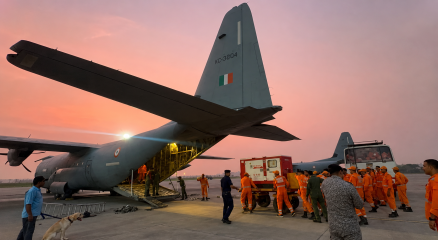
India has airlifted 47.5 tonnes of humanitarian assistance and emergency supplies to Nepal as the neighbouring country continues rescue and relief operations following severe flash floods. The Indian Air Force deployed two transport aircraft over August 26 and 27 to move the consignments to Kathmandu. The first consignment, transported by a C-130J aircraft, weighed 10 tonnes and comprised relief materials including shelters, blankets, hygiene kits and medicines. A second IAF aircraft, a C-17, subsequently delivered 37.5 tonnes. The consignment consisted of 28.5 tonnes of humanitarian relief material, eight tonnes of medicines and one tonne of food packets, taking India's total assistance to 47.5 tonnes. The rapid deployment highlights the role of how military airlift supports emergency supply chain in delivering essential supplies when conventional road links are disrupted by natural disasters. The flooding has damaged roads, bridges and other infrastructure in affected parts of Nepal, creating additional challenges for moving relief material into impacted areas. The air shipments allowed essential supplies to reach Kathmandu while ground-based access remains constrained. India's External Affairs Minister S. Jaishankar said the relief material and medical supplies had reached Kathmandu and that Indian authorities remained in close contact with Nepalese officials over the response. Nepal has been coordinating the disaster response through its own security agencies, while foreign governments and international organisations have offered humanitarian and financial support. The relief operation comes after major flash flooding in Nepal's Bhote Koshi river system and surrounding areas caused extensive damage and significant loss of life. The scale of infrastructure disruption has made the movement of emergency supplies and restoration of transport connectivity key priorities for the ongoing response. Follow CARGOCONNECT for more such updates.

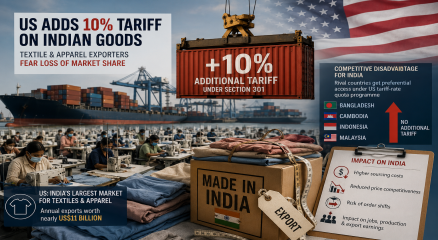
Indian textile and apparel exporters could lose market share in the United States after Washington imposed an additional 10% tariff on a broad range of Indian goods, according to the Confederation of Indian Textile Industry (CITI). The industry body has warned that the measure places Indian suppliers at a competitive disadvantage against several Asian manufacturing hubs that have secured preferential treatment under the new US trade framework. The tariff, introduced under Section 301 of the US Trade Act of 1974, comes on top of existing most-favoured-nation import duties and applies to a significant portion of India's manufactured exports, including textiles and apparel. Industry representatives say the additional levy is likely to increase sourcing costs for US buyers and reduce the price competitiveness of Indian products. CITI said the competitive imbalance has been intensified by the exclusion of India from a new tariff-rate quota programme that allows eligible textile and apparel shipments from countries such as Bangladesh, Cambodia, Indonesia and Malaysia to enter the US market without the additional Section 301 duty, provided they use US-origin cotton and fibre. The industry body believes this could encourage global retailers and brands to shift sourcing away from India. The United States remains India's largest overseas market for textile and apparel exports, with annual shipments valued at nearly US$11 billion. Any decline in demand from US buyers could have implications for manufacturing activity, employment and export earnings across India's textile supply chain, industry participants said. Trade analysts also expect the tariff's impact to extend beyond textiles. According to estimates by the Global Trade Research Initiative, around 70% of India's exports to the US—including garments, machinery, chemicals, plastics, leather products, gems and jewellery, and furniture—are expected to face the additional levy alongside existing import duties. The US tariff measures were introduced as part of a broader trade action targeting imports from multiple countries over concerns related to the enforcement of forced-labour import restrictions. While several product categories remain exempt, the new duties cover the majority of manufactured goods entering the US market. As of the latest reports, India's Ministry of Commerce and Industry had not issued an official response to the industry's concerns. Exporters are expected to closely monitor the implementation of the new tariff regime and assess its impact on order flows and sourcing decisions in the coming months. Follow CARGOCONNECT for more such updates.