
Loading...

Logistics solutions provider UPS has announced the launch of its specialised healthcare-focused cross-docking facility in Hyderabad, aimed at revolutionising the logistics of the Indian pharmaceutical sector. Designed with a strong emphasis on the unique needs of pharma customers, this state-of-the-art facility integrates global freight forwarding capabilities, underscoring UPS's commitment to the healthcare industry.
The facility boasts advanced temperature control systems, ensuring sensitive pharmaceutical products are stored and transported within their specified temperature ranges to maintain efficacy and safety. According to UPS, the facility can securely handle and sort 15 pallets at +15°C to +25°C, 7 pallets at +2°C to +8°C, and 50 pallets under uncontrolled ambient conditions. This capability significantly enhances the efficiency of pharma companies by minimising the need for prolonged warehouse storage.
Moreover, the facility acts as a safety net for critical shipments, ensuring that vital products remain protected even during contingency situations. Grégory Goba-Blé, Head of UPS India and Director of MOVIN Express, emphasised the importance of innovative logistics in the rapidly evolving healthcare landscape, stating, “With India at the forefront of the healthcare industry, we’re committed to simplifying logistics for our customers.”
UPS Healthcare operates with a robust team of over 10,000 healthcare logistics experts across 216 facilities, totaling 17 million square feet of cGMP and GDP-compliant healthcare distribution space. Recently, the company also launched UPS Premier in India, a cutting-edge service that prioritizes and tracks critical shipments within 3 meters globally.
Arnab Bhattacharya, Country Manager for UPS Healthcare in India, expressed enthusiasm about the new facility, highlighting its unparalleled security and efficiency: “We are really the only solution out there that can take care of the full, end-to-end supply chain.”

Singapore-based SATS is looking to deepen its presence in India’s logistics infrastructure by developing integrated multimodal facilities aimed at supporting manufacturing and strengthening the country’s freight network. The company has expressed confidence in India’s economic growth and sees opportunities to connect key production centres with airports, ports and other transport networks. Bob Chi, CEO of SATS Ltd’s Gateway Services for Asia Pacific, said the company is “bullish on India” while speaking at the India-Singapore Business Forum following the India-Singapore Ministerial Roundtable. He said SATS is interested in building world-class logistics and multimodal facilities that can serve manufacturing as well as other sectors of the economy. SATS already operates businesses across 14 Indian cities and has committed up to ₹4,500 crore towards its logistics infrastructure at Noida International Airport in Uttar Pradesh. The investment forms part of a broader strategy that includes developing multimodal transhipment centres across major metropolitan markets. At Noida, SATS has established a 37-year concession-based logistics hub at the newly inaugurated Jewar International Airport. Through its joint venture AISATS with Air India, the group is also involved in developing an integrated multimodal cargo hub designed to serve the National Capital Region and surrounding industrial clusters. The company is also seeking a role in India’s emerging transhipment network, with plans to strengthen connectivity between airports and major ports. Chi specifically highlighted opportunities around ports in Kolkata and Chennai, where significant infrastructure development is underway. Overall, SATS’s expansion comes as India seeks to improve freight efficiency and build integrated logistics infrastructure capable of supporting manufacturing, exports and domestic supply chains. The company has also indicated that stronger public-private partnerships will be important for developing globally competitive logistics infrastructure. 𝐒𝐭𝐚𝐲 𝐓𝐮𝐧𝐞𝐝 𝐭𝐨 CARGOCONNECT 𝐟𝐨𝐫 𝐥𝐚𝐭𝐞𝐬𝐭 𝐮𝐩𝐝𝐚𝐭𝐞𝐬!


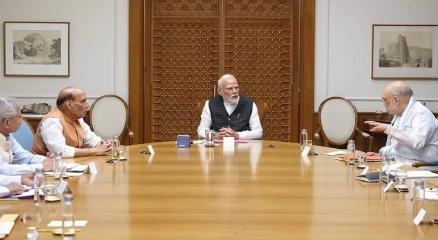
Union Cabinet has approved an additional investment of ₹30,000 crore in the National Investment and Infrastructure Fund (NIIF) to accelerate infrastructure development across the country. The fresh capital infusion is expected to enhance long-term financing for critical infrastructure projects while supporting India's expanding logistics and supply chain ecosystem. The approval will enable NIIF to establish new investment platforms and funds focused on strategic sectors such as transportation, logistics, energy transition, urban infrastructure and digital connectivity. The initiative aligns with the government's broader vision of attracting institutional and private capital into commercially viable infrastructure projects. Since its inception, NIIF has played a pivotal role in mobilising domestic and global investments for India's infrastructure ambitions. Structured as a collaborative investment platform, the fund has attracted participation from sovereign wealth funds, pension funds, insurance companies and multilateral institutions, thereby reducing the financing burden on public resources. The newly approved investment is expected to significantly expand NIIF's investment capacity, allowing it to leverage additional private capital and multiply the overall funding available for infrastructure development. Government officials indicated that the enhanced corpus would support the creation of new sector-focused funds while reinforcing ongoing investments in high-impact projects. For the supply chain and logistics sector, the announcement comes at a crucial time. India continues to invest heavily in multimodal connectivity, industrial corridors, logistics parks, ports, airports and warehousing infrastructure under initiatives such as PM Gati Shakti and the National Logistics Policy. Improved access to patient capital through NIIF is expected to accelerate project execution, strengthen logistics efficiency and reduce supply chain costs. However, expanding infrastructure financing mechanisms is essential to sustaining India's economic growth and improving its global competitiveness. Increased investments in transport networks, urban mobility and digital infrastructure are likely to facilitate smoother cargo movement, enhance last-mile connectivity and support manufacturing expansion. The additional funding is also expected to encourage greater participation from international investors by demonstrating the government's long-term commitment to infrastructure-led growth. NIIF's blended investment approach has consistently attracted global capital while maintaining high governance standards and commercial discipline. As India targets becoming a developed economy over the coming decades, strengthening institutional financing through NIIF is expected to play a vital role in delivering modern, resilient and sustainable infrastructure. The latest Cabinet approval reinforces the government's strategy of leveraging public investment to unlock larger private sector participation, ultimately creating a stronger foundation for economic development, supply chain resilience and logistics excellence. 𝐒𝐭𝐚𝐲 𝐓𝐮𝐧𝐞𝐝 𝐭𝐨 CARGOCONNECT 𝐟𝐨𝐫 𝐥𝐚𝐭𝐞𝐬𝐭 𝐮𝐩𝐝𝐚𝐭𝐞𝐬!




ColdStar Logistics has expanded its temperature-controlled distribution footprint with the launch of three new facilities in Patna, Guwahati and Lucknow, marking another step in the company's efforts to deepen its presence in India's rapidly growing regional markets. The move comes amid rising demand for reliable cold-chain services from sectors such as food processing, pharmaceuticals, dairy, retail and quick commerce. The newly commissioned facilities form part of ColdStar's broader growth strategy aimed at bringing modern logistics infrastructure closer to emerging consumption centres. As businesses increasingly shift their focus beyond metropolitan regions, the need for efficient storage and distribution networks in Tier-II and Tier-III cities has become more critical than ever. With these additions, ColdStar's nationwide network now comprises 45 distribution centres, extending service coverage to more than 109,000 pin codes across the country. The company currently manages over one million square feet of warehousing space and has indicated plans to further expand capacity during the ongoing financial year in response to growing customer demand. Speaking on the development, Sameer Varma, Executive Director of ColdStar Logistics, highlighted the changing dynamics of India's consumption landscape. According to him, companies today require supply-chain infrastructure that is located closer to regional demand centres in order to improve responsiveness, reduce replenishment timelines and maintain product availability. He added that the latest facilities have been developed with a focus on helping customers scale efficiently while ensuring dependable distribution capabilities. Among the three projects, the Guwahati facility has emerged as a strategically significant addition. Located in Kamrup and spread across approximately 20,000 square feet, the warehouse is expected to strengthen distribution networks across the Northeast, serving markets in Assam, Tripura, Mizoram, Manipur and neighbouring states. The facility is designed to support growing demand from businesses seeking improved access to the region. In Uttar Pradesh, ColdStar has established a 10,500-square-foot warehouse in Unnao, positioned along the Lucknow-Kanpur industrial corridor. The location offers direct access to one of North India's most active consumption and manufacturing belts, enabling faster movement of temperature-sensitive products across the state and adjoining regions. Meanwhile, the company's new facility in Anisabad, Patna, covers around 5,000 square feet and has been developed to enhance distribution efficiency across Bihar. The site benefits from connectivity through the Grand Trunk Road corridor while also leveraging access to the Gaighat river route, creating additional logistics advantages for regional deliveries. The three facilities have been built to cater to a diverse customer base spanning FMCG, processed foods, confectionery, healthcare, dairy products, retail and quick-commerce operations. Each warehouse is equipped with dedicated Ambient, Tropical, Chiller and Frozen storage zones, allowing multiple product categories with different temperature requirements to be managed under a single roof. ColdStar has also integrated the new sites into its technology-enabled operating ecosystem. Through real-time visibility tools, standardized operating procedures and centralized monitoring systems, the company aims to deliver uniform service quality across its entire network while helping customers maintain inventory accuracy and product integrity. Industry observers note that the expansion reflects a broader trend within India's logistics sector, where companies are investing heavily in regional infrastructure to support the next wave of consumption growth. By strengthening its presence in key emerging markets, ColdStar is positioning itself to provide faster, more reliable cold-chain services while addressing inventory challenges and reducing stock-out risks for businesses. The latest rollout further reinforces ColdStar Logistics' commitment to building a resilient and technology-driven temperature-controlled supply-chain network, ensuring that customers in smaller cities receive the same level of service efficiency and operational reliability traditionally associated with major metropolitan centres.