
Loading...
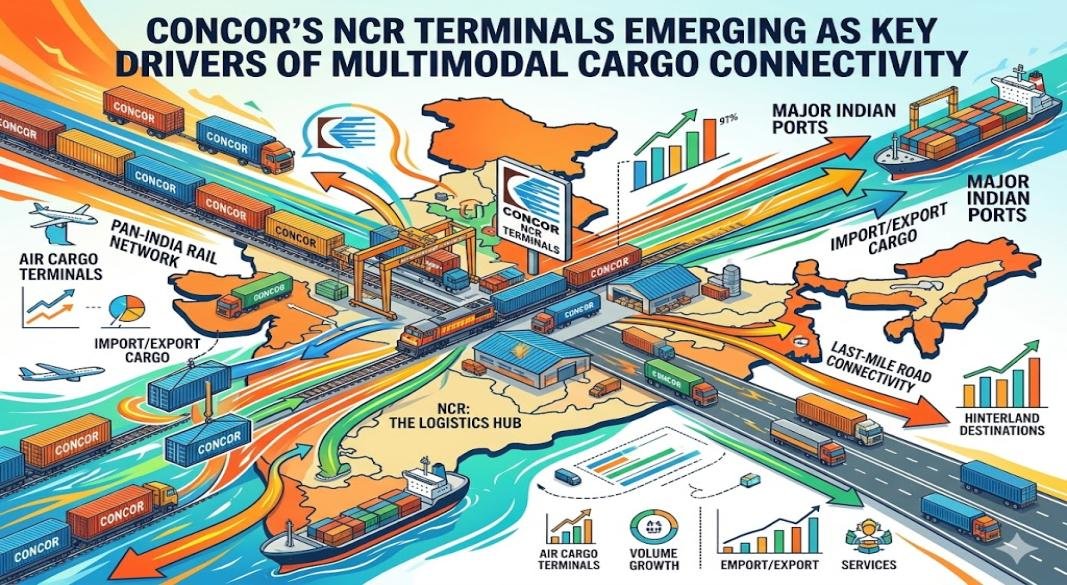
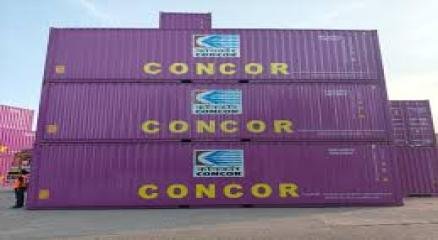
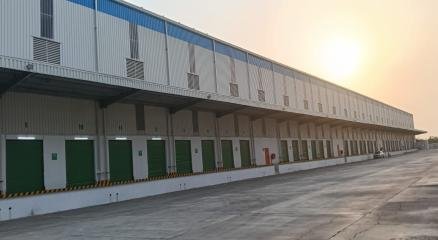
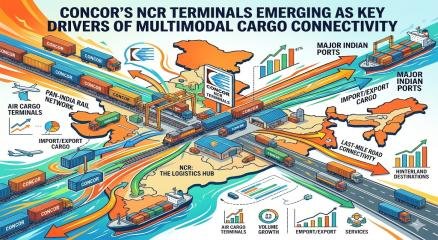
Container Corporation of India Ltd. (CONCOR) is strengthening North India’s logistics backbone through its strategically located terminals across the National Capital Region (NCR), enabling faster cargo movement, improved multimodal connectivity, and greater supply chain efficiency across the country.
From the high-volume EXIM gateway of ICD Tughlakabad to the multimodal connectivity advantage of MMLP Dadri and the future-ready logistics ecosystem at MMLP Khatuwas, CONCOR’s NCR facilities are playing a pivotal role in powering India’s growing logistics and trade ecosystem. These terminals are emerging as critical cargo gateways that support businesses with reliable, cost-effective, and integrated freight solutions.
ICD Tughlakabad, one of CONCOR’s flagship inland container depots, continues to serve as a major hub for export-import cargo movement in North India. Strategically connected to ports and industrial centres, the terminal handles significant container traffic and supports industries ranging from manufacturing and automotive to retail and consumer goods. Its extensive rail connectivity and efficient cargo handling infrastructure help reduce transit time and improve supply chain reliability for exporters and importers.
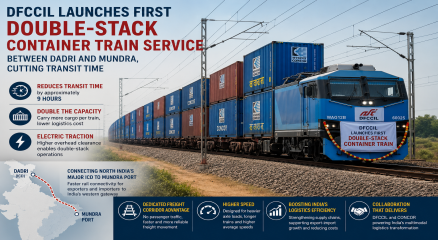
Meanwhile, CONCOR’s Multimodal Logistics Park (MMLP) at Dadri has become a key logistics node linked to the Dedicated Freight Corridor (DFC). The facility enables faster and more efficient movement of domestic and EXIM cargo through double-stack container train operations and integrated rail-road logistics services. Dadri’s strategic location near major industrial clusters and consumption markets enhances cargo flow between northern India and key western ports, making it a crucial part of the country’s multimodal transport network.
Adding to this expanding infrastructure is MMLP Khatuwas, which is being positioned as a future-ready logistics ecosystem designed to support evolving supply chain requirements. The terminal is expected to strengthen regional connectivity, facilitate cargo aggregation, and improve logistics efficiency for businesses operating across northern and western India.
CONCOR’s NCR infrastructure aligns closely with the government’s focus on logistics modernization under initiatives such as PM Gati Shakti and the National Logistics Policy. By promoting rail-led freight movement and integrated multimodal operations, the company is contributing to India’s goal of reducing logistics costs and building a more sustainable transport ecosystem.
The company continues to expand its nationwide footprint with advanced logistics parks, inland terminals, and technology-driven cargo solutions. According to industry reports, CONCOR operates across more than 190 locations with a network of 68 terminals, supporting extensive cargo connectivity throughout India.
Industry experts believe NCR-based logistics hubs will become even more critical as freight volumes rise and businesses increasingly demand faster, more reliable, and integrated supply chain solutions. CONCOR’s continued investments in infrastructure modernization, green logistics initiatives, and customer-focused services position the company at the centre of India’s evolving logistics landscape.
As India accelerates toward a more connected and multimodal freight ecosystem, CONCOR’s NCR terminals are expected to remain instrumental in driving seamless cargo movement, strengthening trade connectivity, and supporting long-term economic growth.
𝐒𝐭𝐚𝐲 𝐓𝐮𝐧𝐞𝐝 𝐭𝐨 https://cargoconnect.co.in/ 𝐟𝐨𝐫 𝐥𝐚𝐭𝐞𝐬𝐭 𝐮𝐩𝐝𝐚𝐭𝐞𝐬!
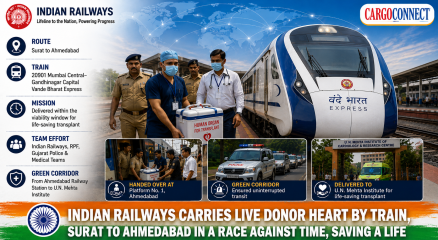
Indian Railways has carried a live donor heart by train for the first time, successfully transporting the organ from Surat to Ahmedabad aboard the Mumbai Central–Gandhinagar Capital Vande Bharat Express, in a significant development for India's emergency healthcare logistics network. The time-critical operation enabled the donor heart to reach the U.N. Mehta Institute of Cardiology and Research Centre in Ahmedabad within the required viability window for transplantation. The transport was carried out through coordinated efforts involving Indian Railways, the Railway Protection Force (RPF), Gujarat Police and medical teams. Officials said the mission required detailed planning to ensure uninterrupted movement of the organ from the hospital in Surat to its destination in Ahmedabad. A dedicated green corridor was created from Platform No. 1 at Ahmedabad railway station to the U.N. Mehta Institute, allowing the organ to be transferred quickly to the transplant facility without traffic-related delays. The donor heart was transported on Train No. 20901 Mumbai Central–Gandhinagar Capital Vande Bharat Express, with the train's speed, punctuality and scheduled connectivity contributing to the success of the operation. The case highlights the potential role of India's rail network in supporting time-sensitive medical logistics alongside its conventional passenger and freight services. Ved Prakash, Divisional Railway Manager, Ahmedabad Division, said the operation demonstrated effective coordination between railway authorities, law enforcement agencies and healthcare professionals. He added that supporting life-saving medical missions is an important public service responsibility for the railway system. The successful mission establishes a new use case for Indian Railways in organ transportation, complementing existing emergency logistics infrastructure and expanding options for the movement of critical medical consignments where every minute is crucial. Follow CARGOCONNECT for more such updates.
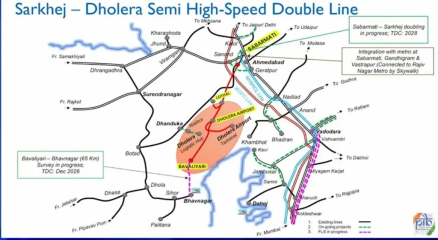
In a major move to bolster the country’s logistics and industrial landscape, the Cabinet Committee on Economic Affairs, chaired by PM Narendra Modi, gave the green signal to the Ahmedabad (Sarkhej) – Dholera semi high-speed double line project by the Ministry of Railways, with a cumulative estimated cost of ₹20,667 crore. The double-line project is set to be the Indian Railway’s first semi-high-speed project planned with indigenously developed technology. The project aligns with Prime Minister Modi’s vision of transforming India into a manufacturing, innovation, and logistics hub. Union Home Minister and Cooperation Minister Amit Shah, taking it to X, posted, “It is a matter of great joy for me as well that this project will pass through my parliamentary constituency. This 134 km long rail line will connect Ahmedabad to the Dholera Special Investment Region (SIR) and Greenfield Industrial Smart City and will ensure connectivity for Namo Bharat trains.” (English translation of his post in Hindi). As per the reports, the double line is projected to be completed by 2030-31 and is designed to facilitate faster connectivity between Ahmedabad, Dholera SIR, the upcoming Dholera Airport, and the Lothal National Maritime Heritage Complex. Connecting a major city like Ahmedabad with Dholera will certainly cut the passenger travel time as well as improve the overall mobility and service reliability for the Indian Railways. As the nation’s first semi-high-speed rail project, it will act as a reference model for the phased expansion of similar services across India. The mega project has been planned under the PM-Gati Shakti National Master Plan, with a focus on multi-modal connectivity and integrated planning with stakeholders. The approval by the cabinet is expected to be a game-changer for Dholera as the city is rapidly transforming and projecting itself as one of India’s most strategically important industrial hubs. Dholera International Airport, which is currently under construction, is expected to be completed by late 2026, and once operational, it will further strengthen cargo movement, exports, and global connectivity. Rail connectivity through the Bhimnath–Dholera rail corridor and future metro integration are also being planned as part of the broader smart city ecosystem. For more such news and updates, visit CARGOCONNECT.