Loading...
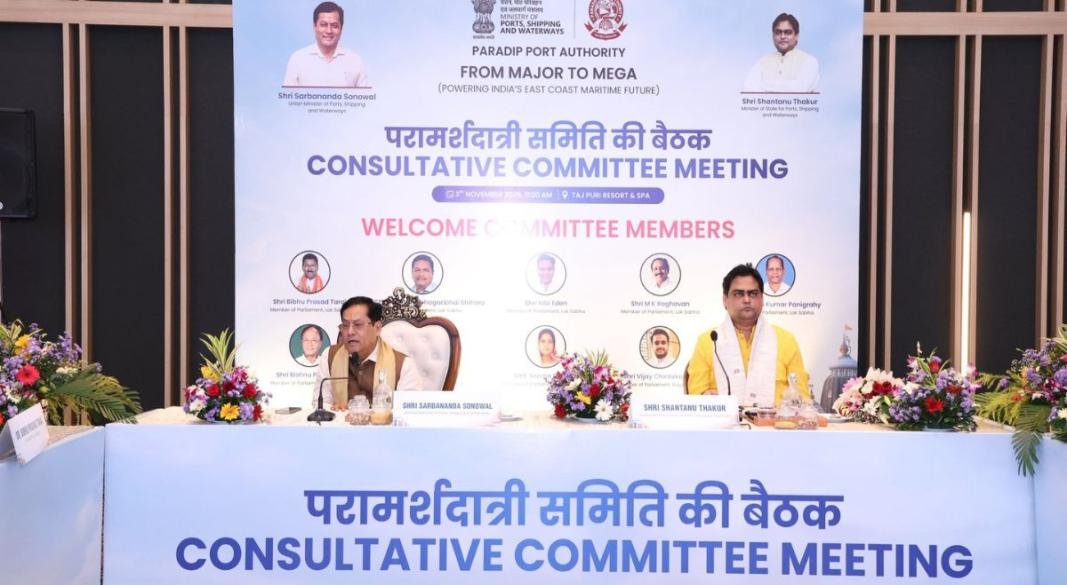
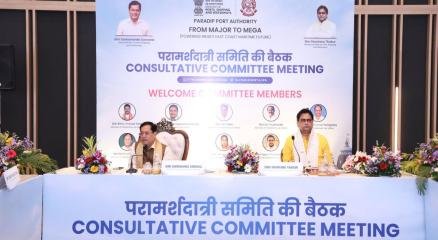
India is looking to strengthen coastal shipping and inland waterways as key components of its multimodal logistics network, with the Centre setting an ambitious target of doubling their combined share in freight transportation to 12% by 2047. Union Minister for Ports, Shipping and Waterways Sarbananda Sonowal outlined the roadmap during a Consultative Committee meeting in Puri, Odisha, on 3 November 2026.
The proposed expansion is aimed at shifting a greater volume of cargo from road and rail networks to waterways, improving logistics efficiency, reducing transportation costs and supporting more sustainable freight movement. Alongside the freight target, the government has announced a series of infrastructure and policy initiatives, including a proposed ₹1,500-crore international cruise terminal in Puri.
India's maritime strategy is also gaining momentum, with coastal cargo volumes witnessing substantial growth over the past decade. According to Sonowal, cargo handled through coastal shipping at Indian ports has increased from 74 million tonnes to 177 million tonnes in the last 12 years, registering growth of approximately 140%. The country’s coastline of more than 11,000 km offers considerable potential to expand maritime freight movement and improve connectivity between industrial centres, ports and consumption markets.
Coastal Cargo Promotion Scheme to Drive Modal Shift
A key component of the government's strategy is the Coastal Cargo Promotion Scheme, announced in the Union Budget 2026–27. The scheme will provide incentives to cargo owners, coastal vessel operators and multimodal transport operators to encourage greater utilisation of coastal shipping and inland waterways.
By promoting the movement of goods through a combination of waterways, rail and road, the initiative seeks to strengthen multimodal connectivity and make freight transportation more efficient. The broader objective is to reduce dependence on conventional road-based transportation, ease pressure on highways and improve the environmental sustainability of India's logistics network.
The government is also planning to operationalise 20 additional National Waterways over the next five years, further expanding the country's inland water transport infrastructure.
National Waterway-5 to Strengthen Odisha's Industrial Connectivity
Sonowal also highlighted the development of National Waterway-5 (NW-5) in Odisha, an infrastructure project estimated to cost more than ₹13,000 crore. The proposed waterway will connect important mineral-producing and industrial centres, including Talcher, Angul and Kalinganagar, with the eastern coast's major ports, particularly Paradip and Dhamra.
Integrating the Brahmani and Mahanadi river systems, the waterway is expected to create additional cargo transportation options for the state's mining, manufacturing and industrial sectors. Improved river-sea connectivity could also help reduce the logistical burden on existing road and rail corridors.
To support the expansion of inland water transportation, the government is working towards developing Regional Centres of Excellence along National Waterway-5 and establishing dedicated inland vessel repair facilities in Varanasi and Patna.
₹1,500-Crore Puri International Cruise Terminal Announced
Alongside freight infrastructure, the government is looking to strengthen India's cruise tourism ecosystem. Sonowal announced that the proposed Puri International Cruise Terminal will be developed by Paradip Port Authority (PPA) in partnership with the Government of Odisha, with an estimated investment of ₹1,500 crore.
The project is expected to support the expansion of cruise tourism in Odisha and strengthen the state's position on India's emerging maritime tourism map.
The development aligns with the Cruise Bharat Mission, launched in September 2024, which aims to attract one million sea cruise passengers and generate 400,000 jobs by March 2029.
India recorded 462,661 ocean cruise passengers and 212 vessel calls during FY2025–26. On the inland waterways front, 20 river cruise circuits across 16 National Waterways are already operational, while another 51 circuits have been identified for phased development. Additionally, 143 river cruise terminals and landing points are currently operational.
Focus on Employment and Sustainable Maritime Growth
The Coastal Cargo Promotion Scheme and Cruise Bharat Mission are expected to collectively generate more than 560,000 employment opportunities and help avoid approximately 16 million tonnes of carbon dioxide emissions, according to the government.
The twin initiatives reflect India's broader ambition to develop a competitive and sustainable maritime ecosystem by strengthening cargo transportation, expanding port infrastructure and promoting cruise tourism.
With the 2047 freight target, additional National Waterway development and investments in cruise infrastructure, the government is seeking to unlock the economic potential of India's coastline and river networks. The success of these initiatives will depend on effective infrastructure development, multimodal integration and sustained participation from cargo owners and logistics operators.
𝐒𝐭𝐚𝐲 𝐓𝐮𝐧𝐞𝐝 𝐭𝐨 CARGOCONNECT 𝐟𝐨𝐫 𝐥𝐚𝐭𝐞𝐬𝐭 𝐮𝐩𝐝𝐚𝐭𝐞𝐬!
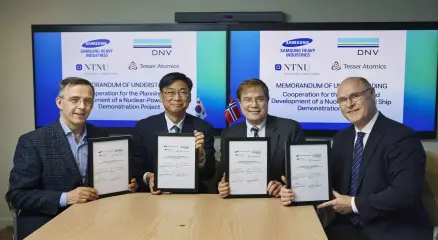
Samsung Heavy Industries (SHI), Norwegian classification society DNV, US-based nuclear technology developer Tesser Atomics and the Norwegian University of Science and Technology (NTNU) have joined forces to advance the development of a nuclear-powered liquefied natural gas (LNG) carrier designed for commercial operations between the United States and Europe. The collaboration marks a significant step towards exploring nuclear propulsion for commercial maritime transportation. The four organisations have signed an agreement to develop a demonstration vessel concept incorporating Tesser Atomics' fluoride-salt-cooled nuclear reactor technology. The initiative will focus on establishing a comprehensive development roadmap covering vessel design, reactor integration, maritime safety, regulatory approvals and the commercial feasibility of nuclear-powered shipping. Under the proposed arrangement, Samsung Heavy Industries will lead vessel design, marine integration and shipbuilding feasibility assessments. Tesser Atomics will be responsible for developing the nuclear reactor system and addressing nuclear-specific safety and licensing requirements. DNV will contribute its maritime classification and technical expertise, including developing the safety assessment framework and evaluating potential operational risks. Meanwhile, NTNU will coordinate research activities, feasibility studies, modelling, simulations, testing and funding proposals. The project will form part of the activities of SFI SAINT, a Norwegian research centre led by NTNU that focuses on advancing nuclear propulsion technologies for commercial shipping. The consortium aims to bridge the gap between established nuclear propulsion applications in naval vessels and their potential adoption in merchant shipping. For Samsung Heavy Industries, the collaboration builds on its ongoing investments in next-generation marine propulsion technologies. In September 2025, the shipbuilder secured Approval in Principle (AiP) from the American Bureau of Shipping (ABS) and the Liberian Registry for a 174,000-cubic-metre LNG carrier concept powered by a molten salt small modular reactor (SMR). The latest initiative also reflects growing industry interest in alternative propulsion technologies that could support maritime decarbonisation and improve long-term energy efficiency. The partners are additionally exploring the possibility of adapting nuclear propulsion technology for container ships and other commercial vessel categories. However, significant challenges remain before nuclear-powered commercial vessels can become operational. Nuclear licensing, maritime safety standards, insurance arrangements, regulatory compliance and commercial viability will require extensive assessment. The partners have not announced a construction schedule, delivery timeline or final investment commitment for the demonstration vessel. The International Maritime Organization (IMO) is also working towards updated safety provisions for nuclear-powered ships, with a revised Code of Safety for Nuclear Ships targeted for adoption in 2030. The proposed LNG carrier could therefore become an important demonstration project in determining whether nuclear propulsion can be safely and commercially integrated into the future of global shipping. 𝐒𝐭𝐚𝐲 𝐭𝐮𝐧𝐞𝐝 𝐭𝐨 CARGOCONNECT 𝐟𝐨𝐫 𝐥𝐚𝐭𝐞𝐬𝐭 𝐮𝐩𝐝𝐚𝐭𝐞𝐬!
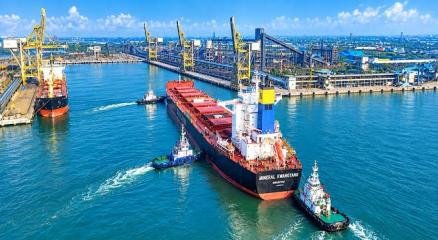
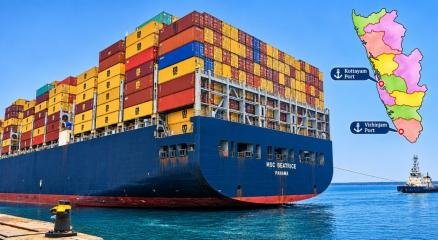
Vizhinjam International Seaport is facilitating the movement of a major import consignment for tyre manufacturer MRF, comprising 60 containers carrying approximately 1,500 tonnes of natural rubber imported from Africa. The shipment, announced by Vizhinjam International Seaport Limited (VISL) on 21 November 2026, marks the first major import consignment linking the port with Kottayam ICD. The consignment is covered under three Bills of Lading, each accounting for 20 containers. The containers have been discharged at Vizhinjam and were scheduled to reach Kottayam by road on 23 November. MRF shifts its import route to Vizhinjam MRF has designated Vizhinjam as the Port of Destination, avoiding the existing transhipment arrangement through Mumbai. According to VISL, the Mumbai routing can take up to a month. Under the new arrangement, the containers will be discharged at Vizhinjam and transported by road to Kottayam ICD for customs clearance before proceeding to MRF's centralised warehouse in Kochi. The route is expected to reduce transit time and logistics costs, although VISL has not quantified the anticipated savings or specified the revised end-to-end delivery time. The movement establishes a connected logistics arrangement between the seaport and an inland customs facility, providing the importer with an alternative route for bringing its cargo into Kerala. Customs clearance and onward delivery At Kottayam ICD, the containers grouped under each Bill of Lading will undergo customs verification, examination and other mandatory procedures. Following the grant of Out of Charge (OOC) clearance by Customs, the containers will continue on the same trucks to MRF's centralised warehouse in Kochi. The process brings port discharge, inland customs clearance and final warehouse delivery into a coordinated road movement. Empty-container reuse could support export logistics The arrangement also proposes the reuse of empty containers after the rubber is unloaded at MRF's warehouse. Under the proposed process, the empty containers could be returned to Kottayam ICD's yard and made available for export cargo. Exporters often arrange to transport empty containers from Kochi to Kottayam before loading their shipments. Making equipment available locally through the import movement could reduce this repositioning requirement and improve container utilisation. The extent of the benefit will depend on the availability of suitable containers and their alignment with exporters' requirements. The proposed reuse is an intended operational benefit, with actual savings yet to be established. Kottayam ICD's role in Kerala's inland cargo network Kottayam Port and Container Terminal Services began full operations as a customs station in 2012. Kerala's Economic Review 2025 identifies it as the state's only ICD and records cargo handling of 60,575 tonnes during 2024–25. Located on the Kodoor River, National Waterway 9, the facility has inland-waterway access towards Cochin through Vembanad Lake and National Waterways 3 and 9. It serves importers and exporters across the central Travancore region. Its infrastructure includes a 40,000-square-foot warehouse, container yards, reach stackers and container-stuffing equipment. The facility also provides electronic data interchange connectivity for cargo-related processes. Strengthening Vizhinjam's port-led logistics network Vizhinjam began commercial operations in 2024 and direct export-import operations in August 2026, according to VISL. The MRF consignment adds an inland cargo connection to the port's role in international transhipment. The initiative forms part of Mission Samudra's objectives to strengthen Kerala's maritime trade and cargo transportation. Beyond the immediate import movement, its significance lies in connecting the seaport with an inland customs facility and creating a potential equipment-reuse link between importers and exporters. As the arrangement progresses, its operational value will depend on how effectively the port-to-ICD connection supports cargo movement and whether the proposed empty-container reuse can be translated into practical benefits for exporters.
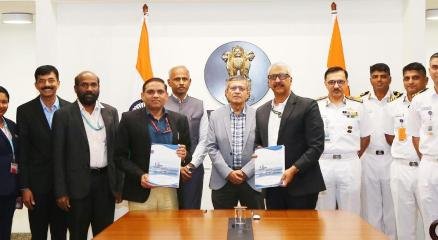
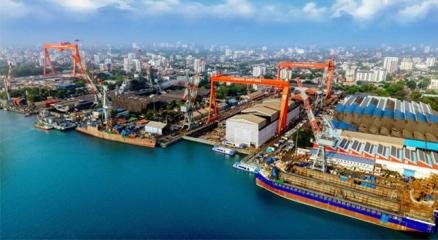
The Ministry of Defence has signed a ₹498-crore contract with Cochin Shipyard Limited (CSL) for the refit and re-powering of INS Betwa, a Brahmaputra-class guided missile frigate of the Indian Navy. The project will focus on upgrading the warship's propulsion system and combat capabilities, while strengthening India's indigenous naval ship repair and maintenance ecosystem. The contract was signed in New Delhi on November 11, 2026, in the presence of Defence Secretary and DRDO Chairman Rajesh Kumar Singh. The project involves replacing INS Betwa's existing steam-based propulsion system with a modern diesel-engine-based arrangement, marking a significant technological transformation for the 3,850-tonne warship. The propulsion upgrade will require extensive engineering and modifications to the vessel's existing machinery infrastructure. The replacement of steam-based machinery with diesel engines is expected to enhance the ship's operational effectiveness and support its continued service in the Indian Navy. In addition to the propulsion overhaul, the frigate will receive an upgraded weapon suite to strengthen its combat capabilities. Commissioned in July 2004, INS Betwa is one of three Brahmaputra-class frigates operated by the Indian Navy. The vessel has undergone significant restoration work following a major accident in December 2016, when it toppled onto its port side during undocking at Mumbai Naval Dockyard. The incident resulted in casualties and extensive damage to the warship. Following salvage and subsequent repairs, the frigate returned to operational service. The latest contract also represents another important project for CSL in India's naval modernisation programme. The shipyard has previously undertaken the re-powering and mid-life upgrade of INS Beas, another Brahmaputra-class frigate. With INS Betwa, CSL will undertake the second such steam-to-diesel propulsion conversion for the class. Strengthening Domestic Shipbuilding and MSME Participation Beyond the naval modernisation objectives, the ₹498-crore project is expected to involve more than 50 micro, small and medium enterprises (MSMEs), generating employment opportunities across India's shipbuilding and ancillary industries. The initiative is aligned with the government's Aatmanirbhar Bharat and Make in India programmes, supporting the development of domestic capabilities in complex naval engineering, ship repair, maintenance and propulsion system modernisation. The contract reinforces Cochin Shipyard's growing role in India's defence manufacturing and maritime engineering sectors. It also highlights the importance of indigenous shipyards and their supporting industrial networks in meeting the Indian Navy's long-term fleet modernisation and maintenance requirements. 𝐒𝐭𝐚𝐲 𝐭𝐮𝐧𝐞𝐝 𝐭𝐨 CARGOCONNECT 𝐟𝐨𝐫 𝐥𝐚𝐭𝐞𝐬𝐭 𝐮𝐩𝐝𝐚𝐭𝐞𝐬!