
Loading...

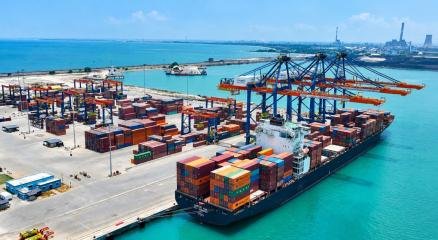
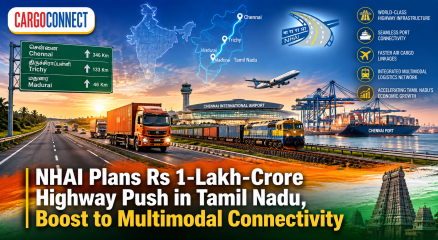
Prime Minister Narendra Modi has inaugurated development projects and laid foundation stones for infrastructure initiatives worth more than ₹13,000 crore across Tamil Nadu, highlighting the state’s strategic role in strengthening India’s maritime logistics, transport connectivity and industrial growth. The announcements, made in Chennai on October 11, 2026, include port infrastructure upgrades, road and railway projects, and urban transport development. A key highlight was the proposed transformation of V O Chidambaranar (VOC) Port in Thoothukudi into a world-class mega container and green energy hub, backed by an investment of approximately ₹17,000 crore. The planned development is intended to enhance the port’s capacity to handle ultra-large container vessels, strengthen maritime connectivity and position Tamil Nadu as a more competitive gateway for international trade. VOC Port Expansion to Strengthen Maritime Logistics The proposed mega container hub at VOC Port is expected to support India’s ambitions to expand its container-handling capabilities and improve integration with global shipping networks. Greater capacity for large vessels could help strengthen trade connectivity, improve operational efficiency and support cargo movement through southern India. The Prime Minister emphasised the importance of modernising port infrastructure to enable the shipping sector to grow. He also highlighted improvements in port efficiency, noting that reduced vessel turnaround times have helped Indian goods reach international markets faster. Alongside the long-term expansion plan, projects worth ₹517.19 crore were included for a container terminal at VOC Port. The terminal forms part of eight projects at the port with a combined investment of ₹753.68 crore. Separately, port infrastructure works worth ₹640 crore at Chennai and Kamarajar ports are aimed at expanding cargo-handling capacity and strengthening logistics infrastructure. The proposed ₹17,000-crore VOC Port transformation is a strategic development distinct from the projects worth over ₹13,000 crore launched during the Chennai visit. Connectivity and Infrastructure Development The wider investment programme spans ports, highways, railways, petroleum infrastructure, urban transport and scientific research. Among the major initiatives, Modi inaugurated the Poonamallee–Vadapalani stretch of Chennai Metro Phase II, developed at a cost of approximately ₹4,900 crore. The new section is expected to improve connectivity across western Chennai and support smoother urban mobility. Road and railway infrastructure projects are also intended to strengthen regional connectivity, facilitate passenger and freight movement, and support industrial activity across Tamil Nadu. Supporting Trade, Jobs and Economic Growth The infrastructure push reflects the importance of coordinated investment across transport modes to improve logistics efficiency and economic competitiveness. Modern ports, supported by efficient road and rail links, can help reduce bottlenecks, improve cargo evacuation and connect manufacturing centres with domestic and international markets. The VOC Port mega container and green energy hub proposal also aligns with the broader ambition to strengthen India’s maritime capabilities while advancing cleaner energy infrastructure. Its long-term impact will depend on project execution, capacity creation and effective integration with inland logistics networks. Together, the announced initiatives are expected to support employment generation, improve connectivity and reinforce Tamil Nadu’s position as an important industrial and logistics centre. For India’s supply chain sector, the port investments are particularly significant as the country seeks to expand trade capacity and build more efficient links with global markets. 𝐒𝐭𝐚𝐲 𝐓𝐮𝐧𝐞𝐝 𝐭𝐨 CARGOCONNECT 𝐟𝐨𝐫 𝐥𝐚𝐭𝐞𝐬𝐭 𝐮𝐩𝐝𝐚𝐭𝐞𝐬!
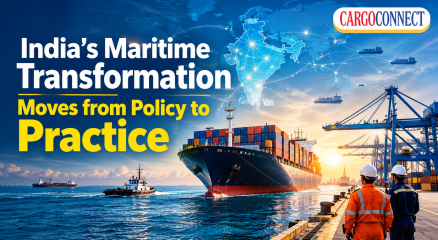
India’s maritime sector is entering a new phase of transformation, with the focus shifting from policy formulation to effective implementation, technology adoption and measurable outcomes. The message emerged prominently during discussions around the country’s evolving maritime strategy, highlighting the need to translate long-term policy objectives into operational capabilities. The transition reflects a broader effort to strengthen India’s maritime ecosystem through coordinated action across infrastructure, institutions, technology, skills and processes. With a comprehensive policy framework and long-term maritime vision already in place, the emphasis is increasingly on execution supported by clearly defined targets and measurable key performance indicators (KPIs). Technology is emerging as a critical enabler of this shift. Digital systems, data-driven decision-making, research, innovation and entrepreneurship are expected to connect policy intent with implementation and ultimately deliver tangible improvements across maritime operations. The approach also underscores the importance of developing skilled human capital capable of supporting a technology-led and increasingly sustainable maritime industry. India’s maritime transformation is also being reflected at the operational level. Ports are increasingly adopting artificial intelligence and digital technologies to improve efficiency, resilience, safety and competitiveness. Recent industry discussions have highlighted the potential of AI-enabled systems to support predictive operations, integrated data management and smarter decision-making across ports. The shift from policy to practice is therefore becoming a defining feature of India’s maritime development agenda. Rather than measuring progress solely through policies and infrastructure creation, the sector is moving towards evaluating outcomes through operational performance, technology deployment, institutional coordination and workforce capability. As India pursues its ambition of becoming a globally competitive maritime power, effective implementation will remain central to translating strategic objectives into real-world outcomes. The emerging approach positions technology, innovation and execution as key pillars of India’s maritime transformation. 𝐒𝐭𝐚𝐲 𝐓𝐮𝐧𝐞𝐝 𝐭𝐨 CARGOCONNECT 𝐟𝐨𝐫 𝐥𝐚𝐭𝐞𝐬𝐭 𝐮𝐩𝐝𝐚𝐭𝐞𝐬!
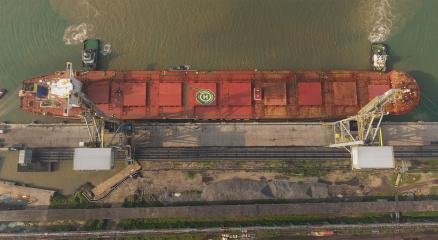
Paradip Port Authority (PPA) has achieved a significant operational milestone with the successful berthing of MV Mineral Kwangyang, its first-ever Capesize vessel with a 16.5-metre draft, at Western Dock-1 (WD-1). The development marks a major step forward in the port’s deep-draft vessel handling capabilities and reinforces its position as a key maritime gateway for bulk cargo in eastern India. The 292-metre-long and 45-metre-wide vessel arrived carrying 152,702 metric tonnes of coking coal from Hay Point, Australia. Its successful berthing demonstrates Paradip Port’s growing ability to accommodate larger bulk carriers and handle substantial cargo volumes through a single vessel call. The milestone is particularly significant for the port’s logistics and cargo-handling operations, as deeper-draft capabilities allow larger vessels to carry higher volumes, potentially improving economies of scale, cargo evacuation and overall supply chain efficiency. The development also strengthens Paradip’s role in supporting India’s bulk cargo and industrial supply chains, particularly across the eastern region. Susanta Kumar Purohit, IRSEE, Chairperson, Paradip Port Authority, congratulated Team PPA and Team JPPL for their coordinated efforts in executing the landmark operation. The successful berthing underscores the port’s operational preparedness, infrastructure capabilities and focus on safely handling larger vessels. The achievement comes amid a broader infrastructure expansion programme at Paradip. Union Minister for Ports, Shipping and Waterways Sarbananda Sonowal earlier inaugurated seven major infrastructure projects worth ₹427.80 crore at PPA, marking the port’s 18.5-metre deep-draft capability and its one-millionth tree milestone. He also witnessed the signing of concession agreements for three mechanisation projects worth ₹1,580.36 crore, aimed at strengthening cargo-handling capacity, operational efficiency and reducing vessel turnaround time. Sonowal said: "The expansion of Paradip Port's capacity is not only about strengthening one port; it is about creating a growth multiplier for eastern India. With deeper drafts, modern cargo-handling infrastructure, improved connectivity and greater mechanisation, Paradip is well positioned to drive trade, logistics, industry and employment across the region and contribute to India's emergence as a globally competitive maritime economy," With deeper berthing capability, infrastructure modernisation and increased mechanisation, Paradip Port is positioning itself to handle the next generation of large vessels while supporting higher cargo throughput and more efficient maritime logistics. The latest Capesize berthing therefore represents not only an operational achievement but also another step in strengthening India’s maritime infrastructure and eastern trade gateway. 𝐒𝐭𝐚𝐲 𝐓𝐮𝐧𝐞𝐝 𝐭𝐨 CARGOCONNECT 𝐟𝐨𝐫 𝐥𝐚𝐭𝐞𝐬𝐭 𝐮𝐩𝐝𝐚𝐭𝐞𝐬!

Susanta Kumar Purohit, IRSEE (1996 batch) and Chairperson of V.O. Chidambaranar Port Authority, has assumed the additional charge of Chairperson of Paradip Port Authority (PPA), effective September 1, 2026. The additional responsibility has been entrusted to him by the Ministry of Ports, Shipping and Waterways, Government of India. Purohit brings extensive experience across port administration, infrastructure development, engineering, public policy and public-sector management. Before taking charge at Paradip, he served as Joint Secretary in the Department of Chemicals & Petrochemicals, where he was involved in policy development and sectoral initiatives. His career has also included important assignments with Indian Railways, the Ministry of Power and the Government of Odisha. His appointment comes at an important stage in Paradip Port’s development as the port continues to expand capacity, strengthen connectivity and modernise its operations. According to PPA, the immediate focus under his additional charge will include infrastructure and connectivity enhancement, improved operational efficiency, modernisation of cargo-handling systems and greater emphasis on green and sustainable port development. In his Chairperson’s message, Purohit highlighted Paradip Port’s evolution as a major gateway for international and coastal trade serving the hinterland of Odisha and the eastern and central regions of India. He pointed to projects such as the Western Dock Expansion, berth mechanisation, deep-draft facilities and integrated traffic and cargo management systems as key elements of the port’s modernisation programme. He also underlined the importance of digital transformation, automation and technology-led solutions in improving cargo movement and transparency. “These advancements strengthen Paradip Port’s competitiveness and position it as a future-ready logistics hub,” Purohit said. Purohit will continue to serve as Chairperson of V.O. Chidambaranar Port Authority alongside his additional responsibility at Paradip. His leadership is expected to support PPA’s efforts to strengthen its role in India’s maritime and logistics ecosystem while advancing the broader objectives of Maritime Vision 2030 and a globally competitive maritime sector. 𝐒𝐭𝐚𝐲 𝐓𝐮𝐧𝐞𝐝 𝐭𝐨 CARGOCONNECT 𝐟𝐨𝐫 𝐥𝐚𝐭𝐞𝐬𝐭 𝐮𝐩𝐝𝐚𝐭𝐞𝐬!
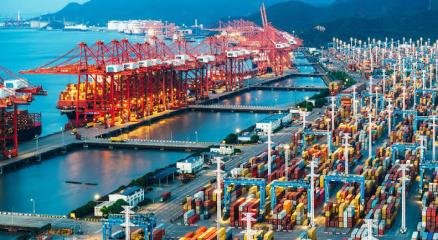
China’s Ningbo-Zhoushan Port has overtaken Singapore to become the world’s second-busiest container port during the first half of 2026, according to the latest container throughput rankings compiled by shipping analyst Alphaliner. The shift marks a notable change in the global port hierarchy, although the margin between the two gateways remains narrow. Ningbo-Zhoushan handled 22.90 million twenty-foot equivalent units (TEUs) between January and June 2026, registering an 8.8% year-on-year increase. Singapore, meanwhile, processed 22.74 million TEUs, up 4.7% from the corresponding period last year. The difference of roughly 160,000 TEUs highlights the increasingly competitive race for the second position. Shanghai retained its position as the world’s busiest container port, handling approximately 28.74 million TEUs in the first half of 2026, an increase of 6.2% year on year. The latest ranking therefore places two Chinese ports at the top, with Ningbo-Zhoushan moving ahead of Singapore for the first time over a complete six-month reporting period. Jintang Expansion Strengthens Ningbo-Zhoushan Ningbo-Zhoushan’s stronger growth has been supported by capacity expansion and improved international connectivity. The second phase of the Jintang container hub was completed in July 2026, bringing all five operational container berths within the expanded development. During the first half of the year, Jintang added 17 international shipping routes, while its container volumes increased by 23.4%. The expansion is expected to strengthen the port complex’s ability to accommodate rising cargo demand and serve an expanding network of global trade lanes. The port has experienced significant growth over the past two decades, crossing 20 million TEUs in 2015 and 30 million TEUs in 2021. In 2025, it exceeded 40 million TEUs for the first time, handling 43.87 million TEUs for the full year. Singapore remained ahead in the annual ranking, recording 44.66 million TEUs. Competition Expected to Remain Close Despite Ningbo-Zhoushan’s first-half lead, Singapore remains a formidable competitor. Alphaliner has indicated that Ningbo-Zhoushan’s growth could moderate during the second half of 2026, leaving open the possibility of Singapore reclaiming the second position. For global supply chains, the development underscores how port investments, shipping connectivity, cargo generation and changing trade patterns are reshaping the competitive landscape. With only a small volume separating the two ports, the battle for the world’s second-busiest container gateway is likely to remain closely watched through the remainder of 2026. 𝐒𝐭𝐚𝐲 𝐓𝐮𝐧𝐞𝐝 𝐭𝐨 CARGOCONNECT 𝐟𝐨𝐫 𝐥𝐚𝐭𝐞𝐬𝐭 𝐮𝐩𝐝𝐚𝐭𝐞𝐬!
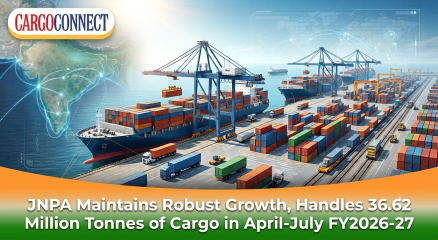
Jawaharlal Nehru Port Authority (JNPA) has continued its strong growth trajectory by recording double-digit growth in both container traffic and overall cargo handling during the first four months of FY2026-27. The port handled 29,94,859 twenty-foot equivalent units (TEUs) of container traffic and 36.62 million tonnes of total cargo between April and July 2026, reaffirming its position as a key gateway for the country’s maritime trade. The latest operational data shows that container throughput grew by 14.37% year-on-year, while overall cargo volumes increased by 11.95% compared with the corresponding period of the previous financial year. The sustained performance reflects JNPA’s continued focus on operational efficiency, infrastructure development and seamless cargo movement across the logistics value chain. According to JNPA, the growth has been driven by improved vessel turnaround time, enhanced cargo handling efficiency, higher terminal productivity and better multimodal connectivity. The collaborative efforts of terminal operators, shipping lines, logistics service providers, customs authorities and other stakeholders have also played a crucial role in sustaining the port’s momentum. The port’s investments in modern infrastructure, digital initiatives and capacity augmentation have enabled it to efficiently manage rising cargo volumes while maintaining reliable and efficient operations. Its integrated road and rail connectivity, supported by ongoing modernisation programmes, continues to strengthen JNPA’s position as one of India’s leading logistics and container handling hubs. Performance highlights released by the authority indicate that JNPA handled 7,45,059 TEUs of containers and 8.78 million tonnes of cargo in July 2026 alone, registering year-on-year growth of 11.48% and 3.18%, respectively. During the April–July period, the port also handled 2,317 container rakes, with rail movement accounting for 391,563 TEUs, underlining the importance of multimodal transport in facilitating efficient cargo evacuation. The encouraging results underscore the resilience of India’s maritime sector and the growing confidence of global shipping lines and trade partners in JNPA’s capabilities. As international trade volumes continue to expand, the port remains focused on enhancing customer experience through faster cargo evacuation, improved logistics efficiency and sustainable port operations. With continued investments in infrastructure and technology, JNPA is well-positioned to support India’s expanding trade ambitions while contributing to the Government’s vision of developing the country into a globally competitive maritime and logistics hub. 𝐒𝐭𝐚𝐲 𝐓𝐮𝐧𝐞𝐝 𝐭𝐨 CARGOCONNECT 𝐟𝐨𝐫 𝐥𝐚𝐭𝐞𝐬𝐭 𝐮𝐩𝐝𝐚𝐭𝐞𝐬!

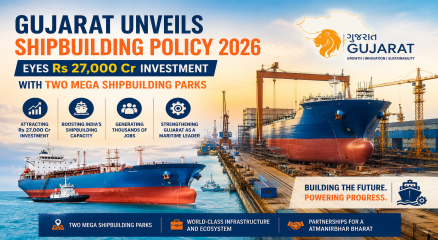
The Gujarat Government has launched the Shipbuilding Policy 2026, a strategic initiative aimed at transforming the state into India's premier shipbuilding and ship repair hub. The policy seeks to attract investments exceeding Rs 27,000 crore, create a shipbuilding capacity of 50 lakh Deadweight Tonnage (DWT), and establish two world-class shipbuilding parks, reinforcing Gujarat's position in the country's maritime and logistics ecosystem. The new policy comes at a time when India is intensifying efforts to strengthen domestic shipbuilding capabilities under the broader vision of developing a self-reliant maritime sector. With Gujarat already accounting for a significant share of India's ship recycling, ports and maritime trade, the state aims to leverage its extensive coastline, robust port infrastructure and industrial ecosystem to emerge as a global destination for shipbuilding. A key highlight of the policy is the development of two integrated mega shipbuilding parks equipped with modern infrastructure and common facilities. These parks are expected to support the construction of commercial vessels, specialised ships and offshore structures while also promoting ancillary industries involved in marine equipment, engineering and component manufacturing. To attract investors, the policy offers a range of financial incentives, including capital assistance, interest subsidies, skill development support and infrastructure incentives. The state government expects these measures to encourage both domestic and international companies to establish manufacturing facilities and expand operations in Gujarat. Besides increasing industrial investment, the initiative is projected to generate substantial employment opportunities across shipbuilding, ship repair, marine engineering, logistics and allied sectors. The policy also places emphasis on developing a skilled workforce through dedicated training programmes, ensuring the availability of specialised talent required by the industry. Industry experts believe the policy could significantly strengthen India's maritime manufacturing capabilities while reducing dependence on imported vessels. The expansion of shipbuilding infrastructure is also expected to improve coastal shipping, facilitate exports and enhance the efficiency of the country's logistics network. The Shipbuilding Policy 2026 aligns with the Centre's vision of making India a global maritime powerhouse and complements ongoing investments in ports, coastal infrastructure and multimodal logistics. By creating an enabling ecosystem for shipbuilding and marine manufacturing, Gujarat is positioning itself to play a pivotal role in supporting India's long-term ambitions in global trade and supply chain development. With substantial investments, infrastructure development and industry-friendly incentives, Gujarat's latest policy is expected to provide fresh momentum to the country's maritime economy while strengthening the state's leadership in the logistics and shipping sector. 𝐒𝐭𝐚𝐲 𝐓𝐮𝐧𝐞𝐝 𝐭𝐨 CARGOCONNECT 𝐟𝐨𝐫 𝐥𝐚𝐭𝐞𝐬𝐭 𝐮𝐩𝐝𝐚𝐭𝐞𝐬!
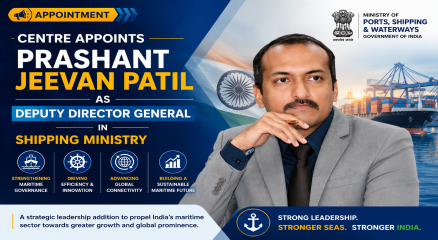
The Central Government has appointed Prashant Jeevan Patil, a 2011-batch Indian Administrative Service (IAS) officer of the Telangana cadre, as Deputy Director General (Director level) in the Directorate General of Shipping (DG Shipping), Mumbai, under the Ministry of Ports, Shipping and Waterways. The appointment has been made under the Central Staffing Scheme for a tenure of five years or until further orders, marking a significant addition to the country's maritime administration. The appointment was approved by the competent authority and formalised through an order issued by the Department of Personnel and Training (DoPT). Patil, who has served in several key administrative roles in Telangana, is expected to bring extensive governance and policy implementation experience to India's maritime sector. The Directorate General of Shipping is the apex maritime regulatory authority in the country. It is responsible for implementing the provisions of the Merchant Shipping Act, enforcing international maritime conventions, promoting maritime safety, regulating shipping operations, and facilitating the growth of India's merchant shipping industry. As Deputy Director General, Patil will play an important role in policy execution, regulatory oversight, stakeholder coordination, and strengthening the operational efficiency of India's maritime ecosystem. His appointment comes at a time when the government is accelerating investments in ports, coastal shipping, multimodal logistics and maritime infrastructure under flagship initiatives such as the Maritime India Vision 2030 and the broader logistics modernisation agenda. With India aiming to enhance port efficiency, improve ease of doing business, and expand its global shipping footprint, experienced administrative leadership is expected to support the implementation of critical reforms. Industry observers believe Patil's administrative background will contribute to improving coordination between central and state agencies while supporting regulatory initiatives that encourage sustainable growth in the shipping sector. His experience in public administration is also expected to aid the ministry in driving digital transformation, policy compliance and capacity building across maritime institutions. As India's maritime and logistics landscape undergoes rapid transformation, the Directorate General of Shipping is expected to play a central role in ensuring safe, efficient and globally competitive shipping operations. 𝐒𝐭𝐚𝐲 𝐓𝐮𝐧𝐞𝐝 𝐭𝐨 CARGOCONNECT 𝐟𝐨𝐫 𝐥𝐚𝐭𝐞𝐬𝐭 𝐮𝐩𝐝𝐚𝐭𝐞𝐬!
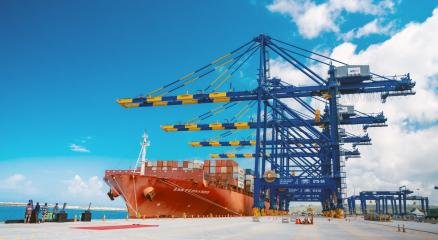
Kerala’s Vizhinjam International Seaport is set to commence full export-import (EXIM) operations from August 18. The transition marks the port’s evolution from a dedicated transshipment hub into a comprehensive international cargo gateway capable of handling both transshipment and gateway cargo, strengthening India’s position in global shipping and supply chains. Since commercial operations began, Vizhinjam has primarily focused on transshipment cargo, enabling containers to be transferred between mother vessels and feeder services. The introduction of full EXIM operations will now allow exporters and importers to move cargo directly through the port, reducing dependence on overseas hubs such as Colombo, Singapore and Dubai for gateway shipments. This is expected to improve transit efficiency, lower logistics costs and shorten cargo movement timelines for businesses across southern India. The commencement of EXIM services is expected to provide a major boost to Kerala’s export ecosystem, while also benefiting neighbouring manufacturing and industrial centres. Direct handling of import and export cargo is likely to enhance supply chain reliability, create new business opportunities for logistics service providers, freight forwarders, customs brokers and transport operators, and improve multimodal connectivity in the region. Developed under a public-private partnership between the Government of Kerala and Adani Ports and Special Economic Zone (APSEZ), Vizhinjam is India’s first dedicated deep-water transshipment port. Its strategic location, just a short distance from one of the world’s busiest east-west international shipping routes, enables ultra-large container vessels to berth without significant deviation from their sailing path. The port’s natural deep draft and modern automated infrastructure further strengthen its competitiveness as a global maritime gateway. The launch of full EXIM operations will coincide with the state government’s ‘Mission Samudra’ initiative, aimed at attracting investments across shipping, logistics, warehousing, port-led industries and allied infrastructure. Industry stakeholders expect the initiative to accelerate industrial growth, generate employment and reinforce Kerala’s role as an emerging logistics hub on India’s western coast. For India’s logistics sector, the development represents another step towards enhancing domestic port infrastructure, reducing cargo diversion to foreign ports and strengthening the country’s ambition of becoming a leading maritime and global supply chain hub. As gateway cargo operations commence, Vizhinjam is expected to play a pivotal role in improving trade competitiveness and supporting India’s long-term vision of expanding its maritime economy. 𝐒𝐭𝐚𝐲 𝐓𝐮𝐧𝐞𝐝 𝐭𝐨 CARGOCONNECT 𝐟𝐨𝐫 𝐥𝐚𝐭𝐞𝐬𝐭 𝐮𝐩𝐝𝐚𝐭𝐞𝐬!
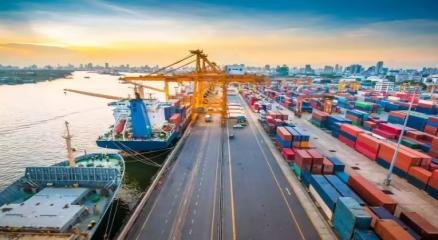
Deendayal Port Authority (DPA), Kandla has crossed the 50 million metric tonnes (MMT) cargo handling milestone significantly ahead of last year's schedule, reinforcing its position as one of India's fastest-growing and most efficient major ports. The port achieved the landmark on 15 July 2026, reaching the 50 MMT mark 19 days earlier than it did in the previous financial year. The achievement places Kandla at the forefront among India's major ports in terms of cargo growth and operational efficiency during the current fiscal year. The accelerated cargo handling reflects the port's sustained focus on infrastructure expansion, process optimisation and improved logistics connectivity. According to DPA, the milestone is the outcome of coordinated efforts by port officials, terminal operators, shipping lines, trade partners and other stakeholders who have collectively contributed to maintaining high cargo volumes despite evolving global trade dynamics. The port has consistently strengthened its operational capabilities by enhancing berth productivity, streamlining vessel turnaround times and leveraging digital technologies to improve cargo movement. Continued investments in mechanisation, multimodal connectivity and customer-centric services have also played a key role in supporting higher throughput. Officials noted that the early achievement underscores growing confidence among exporters, importers and logistics service providers in Kandla's ability to offer efficient, reliable and cost-effective port operations. The steady increase in cargo volumes also reflects robust demand across key commodities handled at the port, including petroleum products, fertilizers, coal, containers, edible oils and other bulk cargo. As one of India's largest cargo-handling ports, Deendayal Port has been pursuing capacity augmentation projects and infrastructure upgrades to accommodate rising trade volumes. Improved rail and road connectivity, coupled with operational reforms, have further strengthened the port's position as a vital gateway for the country's western hinterland. The latest milestone aligns with the Government of India's broader vision of enhancing port-led development under the Maritime India agenda and improving the efficiency of the national logistics ecosystem. Industry observers believe Kandla's sustained performance will further boost trade competitiveness and strengthen India's maritime infrastructure. With the 50 MMT benchmark achieved well ahead of last year's timeline, Deendayal Port Authority is expected to maintain its growth momentum through the remainder of FY 2026-27, supported by expanding cargo volumes, strategic infrastructure investments and continued collaboration with the maritime and logistics community. 𝐒𝐭𝐚𝐲 𝐓𝐮𝐧𝐞𝐝 𝐭𝐨 CARGOCONNECT 𝐟𝐨𝐫 𝐥𝐚𝐭𝐞𝐬𝐭 𝐮𝐩𝐝𝐚𝐭𝐞𝐬!
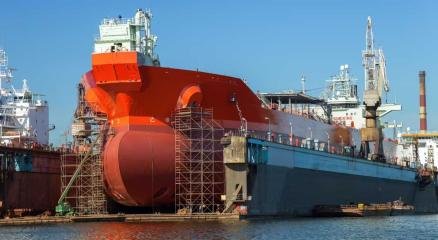
The Ministry of Ports, Shipping and Waterways (MoPSW) has granted in-principal approval for the development of a Greenfield Shipbuilding Cluster in Porbandar, Gujarat. The project, approved under the Shipbuilding Development Scheme is expected to enhance domestic shipbuilding capabilities, improve supply chain resilience and position India as a competitive global maritime manufacturing hub. The integrated shipbuilding cluster will be developed at Kuchhadi in Porbandar through the National Shipbuilding and Heavy Industries Park, Gujarat (NSHIP-Gujarat), jointly promoted by the Ministry of Ports, Shipping and Waterways and the Gujarat Maritime Board. Spread across nearly 2,000 acres, the facility will house modern shipyards, ancillary manufacturing units, common infrastructure and capability development centres to support large-scale vessel production. With an estimated annual shipbuilding capacity of 1.2 to 1.5 million gross tonnage (GT), the cluster is expected to significantly expand India’s indigenous manufacturing capabilities while creating a robust ecosystem for marine engineering, heavy fabrication, equipment manufacturing and logistics services. The project is also expected to generate substantial employment opportunities and attract investments across the maritime value chain. Alongside the Porbandar project, the ministry has also approved a state-of-the-art ship repair facility at Vadinar in the Gulf of Kutch. The ₹1,570-crore project, to be jointly developed by Cochin Shipyard Limited and Deendayal Port Authority, will receive financial assistance under the Shipbuilding Development Scheme for eligible infrastructure. The facility is expected to reduce dependence on overseas ship repair yards, improve vessel turnaround times and strengthen India’s maritime service capabilities. The twin projects form a key part of the government’s Maritime Amrit Kaal Vision 2047, which aims to transform India into a leading global maritime nation by developing world-class infrastructure, promoting indigenous manufacturing and enhancing competitiveness across the shipping sector. According to the ministry, these initiatives will support the growth of domestic shipbuilding and repair industries while improving integration with global supply chains. For the logistics and supply chain industry, the development is expected to create new opportunities for steel manufacturers, component suppliers, heavy engineering companies, port operators and multimodal logistics providers. By strengthening backward linkages and encouraging localisation of marine equipment manufacturing, the projects are likely to reduce import dependence and improve the efficiency of India’s maritime logistics ecosystem, supporting the country’s long-term ambitions of becoming a global shipping and manufacturing powerhouse. 𝐒𝐭𝐚𝐲 𝐓𝐮𝐧𝐞𝐝 𝐭𝐨 CARGOCONNECT 𝐟𝐨𝐫 𝐥𝐚𝐭𝐞𝐬𝐭 𝐮𝐩𝐝𝐚𝐭𝐞𝐬!
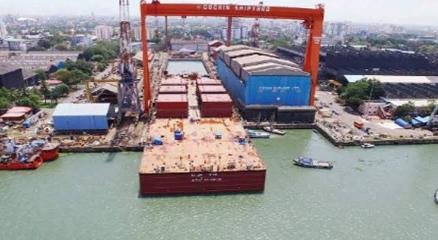
Cochin Shipyard Limited (CSL) is positioning itself to play a pivotal role in India’s maritime transformation by bidding for vessel construction contracts under the proposed Bharat Container Shipping Line (BCSL), a government-backed initiative aimed at strengthening the country’s shipping capabilities while reducing dependence on foreign carriers. The move reflects a broader shift in India’s maritime strategy, with domestic shipbuilding expected to witness unprecedented growth over the coming decade. According to company officials, CSL has submitted bids through a consortium to build multiple categories of vessels that are likely to be ordered under the BCSL programme. The initiative is expected to generate significant opportunities for Indian shipyards as the government pushes for greater self-reliance in maritime infrastructure and logistics. India currently spends billions of dollars annually on freight payments to foreign shipping companies due to limited domestic container shipping capacity. The proposed Bharat Container Shipping Line seeks to address this gap by creating an Indian-owned container fleet capable of serving both domestic and international trade routes. The initiative is also expected to improve supply chain resilience, reduce freight costs and enhance the country's strategic maritime presence. CSL believes the programme could unlock substantial business opportunities for the domestic shipbuilding industry. Industry estimates indicate that India may require around 430 new vessels over the next decade to support growing trade volumes and fleet modernisation, creating a sizeable order pipeline for Indian shipyards. The expected investments could significantly boost indigenous manufacturing, technology development and employment across the maritime ecosystem. The shipbuilder has already strengthened its credentials by securing international orders, including contracts to construct LNG-powered container vessels, demonstrating its ability to compete globally in advanced shipbuilding. Such projects are expected to enhance its competitiveness for future government and commercial orders while reinforcing India's ambition to emerge as a global shipbuilding hub. The BCSL initiative aligns with the Government of India’s broader vision of promoting 'Make in India' and building a robust maritime economy. Alongside expanding domestic shipping capacity, the programme is expected to stimulate ancillary industries including marine equipment manufacturing, ship design, engineering services and logistics. For the supply chain and logistics sector, increased domestic shipping capacity could translate into more reliable cargo movement, reduced dependence on overseas carriers and improved competitiveness for Indian exporters. As vessel procurement gathers pace, Cochin Shipyard’s participation places it among the frontrunners in what could become one of the largest shipbuilding opportunities for the country in recent years. With policy support, rising cargo volumes and growing emphasis on maritime self-reliance, the domestic shipbuilding industry appears poised for a new phase of expansion, with Cochin Shipyard seeking to anchor that transformation. 𝐒𝐭𝐚𝐲 𝐓𝐮𝐧𝐞𝐝 𝐭𝐨 CARGOCONNECT 𝐟𝐨𝐫 𝐥𝐚𝐭𝐞𝐬𝐭 𝐮𝐩𝐝𝐚𝐭𝐞𝐬!
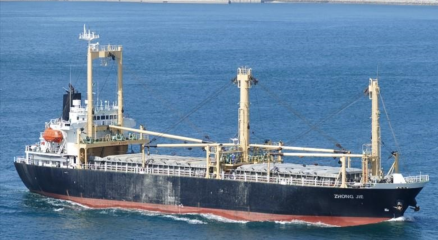
New Mangalore Port Authority (NMPA) welcomed the newly built vessel MV MINI ATLAS 2 on its maiden call, marking another milestone in the port's efforts to strengthen its position as a preferred maritime gateway on India's west coast. The vessel, built in Indonesia, received a traditional ceremonial welcome upon its arrival, reflecting the maritime industry's long-standing practice of honouring a ship's inaugural visit to a port. The maiden call underscores the growing confidence of international shipping lines in New Mangalore Port's operational capabilities and efficient cargo-handling infrastructure. Such first-time vessel calls are considered significant as they often pave the way for long-term commercial engagements and regular shipping services, enhancing trade connectivity and port competitiveness. Officials from the New Mangalore Port Authority extended a warm reception to the vessel's master and crew, commemorating the occasion with the exchange of plaques and mementoes. The event highlighted the port's commitment to fostering strong relationships with global shipping stakeholders while promoting seamless vessel operations. Strategically located on Karnataka's coastline, New Mangalore Port has emerged as a key gateway for handling a diverse range of cargo, including petroleum products, coal, fertilizers, containers, edible oils, timber, iron ore pellets and project cargo. The addition of new international vessel calls further reinforces the port's role in supporting India's expanding maritime trade and supply chain ecosystem. The arrival of MV MINI ATLAS 2 also reflects the increasing integration of regional shipping networks across Asia. As trade volumes continue to grow, ports that offer efficient turnaround times, modern infrastructure and customer-focused services are becoming increasingly attractive to shipping companies seeking reliable logistics hubs. Over the past few years, New Mangalore Port has been investing in capacity enhancement, digitalisation and sustainability initiatives aimed at improving operational efficiency. These efforts have helped the port strengthen its standing among India's major ports while supporting the objectives of the Ministry of Ports, Shipping and Waterways to modernise the country's maritime infrastructure. Industry observers note that maiden vessel calls are more than ceremonial occasions—they signal new commercial opportunities, expand shipping connectivity and contribute to stronger regional trade links. For exporters, importers and logistics service providers, increased vessel traffic translates into greater flexibility, improved shipping options and enhanced supply chain resilience. As global shipping networks continue to evolve, the successful maiden call of MV MINI ATLAS 2 reinforces New Mangalore Port's growing importance as a strategic maritime hub capable of facilitating international trade while supporting India's ambition of becoming a global logistics powerhouse. 𝐒𝐭𝐚𝐲 𝐓𝐮𝐧𝐞𝐝 𝐭𝐨 CARGOCONNECT 𝐟𝐨𝐫 𝐥𝐚𝐭𝐞𝐬𝐭 𝐮𝐩𝐝𝐚𝐭𝐞𝐬!
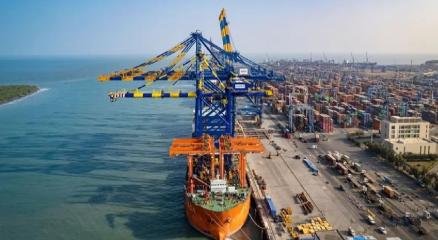
Kerala’s Vizhinjam International Seaport has achieved a significant milestone by handling its 1,000th commercial vessel in less than two years since commencing operations, reinforcing its emergence as one of the world’s fastest-growing container transshipment hubs. The landmark was marked with the arrival of the container vessel MSC Luciana, highlighting the port’s rapid operational growth and increasing relevance in global shipping networks. Developed as India’s first deep-water automated transshipment port, Vizhinjam has witnessed remarkable progress since receiving its first commercial vessel. Its strategic location, just 10 nautical miles from one of the world’s busiest east-west international shipping routes, has enabled the port to attract major container lines and large mother vessels that traditionally relied on foreign transshipment hubs. Industry experts believe the achievement reflects growing confidence among global shipping companies in the port’s infrastructure and operational capabilities. Featuring a natural deep draft of around 20 metres, advanced cargo-handling equipment and modern terminal systems, Vizhinjam is capable of handling some of the world’s largest container ships with minimal turnaround time. The 1,000-vessel milestone also underscores India’s broader ambition to strengthen domestic transshipment capacity and reduce dependence on overseas ports for container movement. By offering direct access to international shipping routes, the port is expected to improve supply chain efficiency, lower logistics costs and enhance India's competitiveness in maritime trade. Since commercial operations began, vessel traffic at Vizhinjam has steadily increased, supported by growing cargo volumes and regular calls from leading global shipping lines. The port’s ability to accommodate ultra-large container vessels has positioned it as a preferred gateway for regional and international cargo movement. The milestone is expected to further accelerate investments in port-led infrastructure, logistics parks, warehousing and multimodal connectivity across Kerala and southern India. As additional phases of development progress, Vizhinjam is projected to significantly expand its container handling capacity and strengthen its role as a strategic logistics gateway for the Indian subcontinent. For India's supply chain ecosystem, the port's rapid rise signals the growing importance of world-class maritime infrastructure in supporting international trade. With its strategic advantages and continued expansion, Vizhinjam is poised to play a pivotal role in reshaping regional cargo flows and establishing India as a stronger player in global maritime logistics. 𝐒𝐭𝐚𝐲 𝐓𝐮𝐧𝐞𝐝 𝐭𝐨 CARGOCONNECT 𝐟𝐨𝐫 𝐥𝐚𝐭𝐞𝐬𝐭 𝐮𝐩𝐝𝐚𝐭𝐞𝐬!
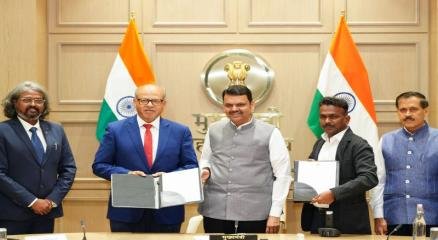
RSA Global has signed a Memorandum of Understanding with the Government of Maharashtra to develop India's largest automated empty container yard, a 62-acre facility worth ₹2,580 crore at Uran, Raigad, built within the heart of the Jawaharlal Nehru Port (JN Port) ecoystem, reinforcing the nation’s efforts to modernise port-led logistics and improve container management efficiency. The project is expected to set new benchmarks in automation, sustainability, and operational productivity. The facility will be developed on a 62-acre land parcel near JN Port under a long-term concession agreement. Designed as a state-of-the-art automated storage and retrieval system (ASRS)-based yard, the project aims to address one of the most persistent challenges in container logistics—the efficient handling, storage, maintenance, and repositioning of empty containers. JN Port currently handles around one million TEUs of empty containers annually, making the development strategically important for optimising container flows, and reducing congestion across the port ecosystem. The automated yard will leverage advanced technologies, including mechanised container stacking systems, gate automation, terminal operating systems, and real-time container tracking capabilities. These features are expected to significantly improve yard productivity, minimize turnaround times, and enhance visibility across the container supply chain. The project will also incorporate a truck appointment system to streamline vehicle movement and reduce traffic bottlenecks in and around the port area. RSA Global, a Dubai-headquartered logistics and supply chain solutions provider, plans to transform the facility into a future-ready logistics asset capable of supporting India’s rapidly growing export-import trade. The company has indicated that the project aligns with its broader strategy of deploying technology-driven logistics infrastructure that enhances supply chain resilience and efficiency. Ajay I. Shah, Chairman & Co-Founder, RSA Global, said, "India's trade ambitions are written in its ports, and empty container handling as long been the unglamorous bottleneck holding them back. We're investing to fix exactly that bringing automation, transparency and world-class infrastructure to the JNPA ecosystem, in partnership with the Government of Maharashtra.” For JN Port, India’s largest container gateway, the development represents another milestone in its ongoing infrastructure expansion and digital transformation agenda. The port has been actively investing in capacity augmentation, multimodal connectivity, and technology adoption to strengthen its position as a leading trade hub in South Asia. The automated empty container yard is expected to complement these initiatives by creating a centralised, high-capacity facility for managing empty containers more effectively. Industry stakeholders believe the project could significantly reduce logistics costs, improve equipment availability for exporters, and support the government’s broader objective of enhancing ease of doing business through world-class logistics infrastructure. Once operational, the facility is expected to emerge as a critical node in India’s container logistics network, setting a new standard for automated container yard operations in the country. 𝐒𝐭𝐚𝐲 𝐓𝐮𝐧𝐞𝐝 𝐭𝐨 CARGOCONNECT 𝐟𝐨𝐫 𝐥𝐚𝐭𝐞𝐬𝐭 𝐮𝐩𝐝𝐚𝐭𝐞𝐬!
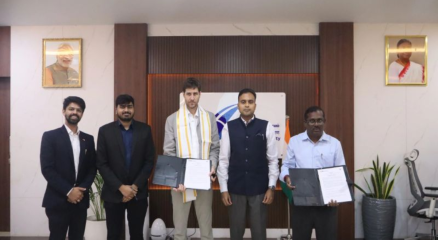
V.O. Chidambaranar Port Authority (VOCPA) in Thoothukudi, Tamil Nadu, has become the first Indian port to partner with H2Global to facilitate green hydrogen export corridors between India and Europe. The strategic Memorandum of Understanding (MoU), marks a major step toward integrating India into the global green hydrogen supply chain and strengthening maritime trade links with European energy markets. The collaboration between VOCPA and H2Global, represented by the H2Global Foundation and Hintco GmbH, aims to establish the infrastructure, logistics frameworks and commercial mechanisms required for large-scale exports of green hydrogen and its derivatives, including green ammonia and e-methanol. The partnership will also explore long-term offtake arrangements and the development of sustainable maritime fuel ecosystems that support global decarbonisation goals. For the logistics and shipping sector, the agreement signals the emergence of a new clean-energy trade corridor connecting India’s southern coastline with Germany and broader European markets. As demand for renewable fuels accelerates across Europe, ports are increasingly being viewed as critical nodes in the hydrogen value chain, requiring specialised storage, handling and transportation infrastructure. The partnership is expected to catalyse investments in dedicated hydrogen and ammonia terminals, storage facilities and associated maritime logistics capabilities at the port. The development aligns with India’s National Green Hydrogen Mission, which targets the creation of a robust domestic hydrogen ecosystem and positions the country as a major exporter of green fuels. VOCPA has already emerged as a key player in this transition. The port was recognised as a Green Hydrogen Hub under the mission and commissioned a port-based green hydrogen pilot project in 2025, making it one of India’s pioneering maritime facilities in renewable hydrogen production and application. Industry observers believe the agreement could strengthen India’s competitiveness in the global green hydrogen market by leveraging Tamil Nadu’s abundant wind and solar resources, strategic maritime location and growing industrial base. For supply chain stakeholders, the initiative underscores the increasing convergence of clean energy, port infrastructure and international trade. As global energy supply chains undergo rapid transformation, the VOCPA-H2Global partnership positions India not only as a producer of green hydrogen but also as a critical logistics hub in the emerging international clean fuel economy. 𝐒𝐭𝐚𝐲 𝐓𝐮𝐧𝐞𝐝 𝐭𝐨 CARGOCONNECT 𝐟𝐨𝐫 𝐥𝐚𝐭𝐞𝐬𝐭 𝐮𝐩𝐝𝐚𝐭𝐞𝐬!
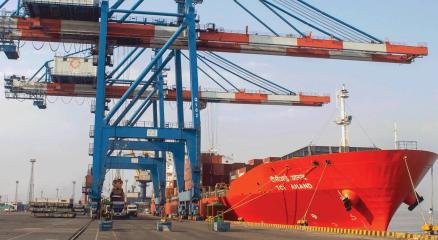
Transport Corporation of India (TCI) is accelerating its presence in India’s coastal shipping sector through a strategic fleet expansion plan aimed at strengthening multimodal logistics capabilities and capturing growing demand for domestic seaborne cargo movement. The integrated logistics and supply chain company has initiated the acquisition of new cargo vessels to enhance its coastal seaway operations; a segment increasingly viewed as a cost-effective and sustainable alternative to road transportation. The move aligns with the broader industry trend of leveraging India’s extensive coastline to improve freight efficiency and reduce logistics costs. According to company executives, TCI has placed orders for two cellular container vessels with a capacity of approximately 7,300 deadweight tonnes (DWT) each. The vessels are expected to be deployed along key routes connecting ports on India’s eastern and western coasts. The company is also exploring opportunities to acquire a second-hand vessel to boost capacity in the near term while awaiting delivery of the new ships. Industry observers note that coastal shipping in India remains significantly underutilized despite the country’s 7,500-kilometre coastline. A relatively small share of domestic cargo currently moves through coastal waterways, creating substantial room for growth as businesses seek more economical and environmentally friendly transportation solutions. The fleet expansion comes at a time when demand for coastal cargo movement is gaining momentum, supported by government initiatives promoting multimodal logistics and port-led development. Rising road congestion, increasing fuel costs and the need for lower carbon emissions are encouraging shippers to consider sea transport for long-haul domestic freight. For TCI, the investment represents a long-term commitment to expanding its marine logistics portfolio. The company already operates a fleet serving coastal container transportation and expects additional vessel capacity to strengthen service reliability and network reach. The new ships are expected to enhance cargo movement between major industrial and consumption centres, supporting sectors such as manufacturing, engineering, consumer goods and automotive logistics. The company’s seaways business has emerged as an important component of its multimodal strategy, complementing its road, rail and warehousing operations. By increasing fleet capacity, TCI aims to capitalize on the growing shift toward integrated logistics solutions while improving operational efficiencies for customers. As India pursues its goal of lowering logistics costs and enhancing supply chain resilience, investments in coastal shipping infrastructure and fleet modernization are expected to play a crucial role. TCI’s latest vessel acquisition plan reflects growing confidence in the sector’s long-term potential and underscores the increasing importance of maritime transport in the country’s evolving logistics landscape. 𝐒𝐭𝐚𝐲 𝐓𝐮𝐧𝐞𝐝 𝐭𝐨 https://cargoconnect.co.in/ 𝐟𝐨𝐫 𝐥𝐚𝐭𝐞𝐬𝐭 𝐮𝐩𝐝𝐚𝐭𝐞𝐬!
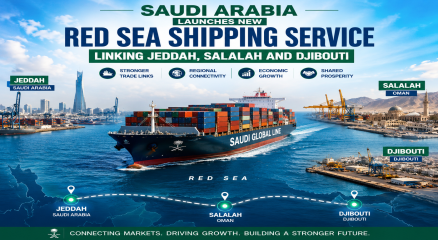
Saudi Arabia has introduced a new maritime shipping service connecting Jeddah Islamic Port with the Port of Salalah in Oman and the Port of Djibouti, marking another significant step in the Kingdom’s strategy to strengthen regional logistics integration and reinforce its role as a global trade hub. The service, launched by the Saudi Ports Authority (Mawani), is designed to improve cargo movement across the Red Sea corridor while enhancing connectivity between Asia, Africa and the Middle East. The newly launched route is expected to support faster cargo transit, improve supply chain resilience and create more efficient trade flows for regional importers and exporters. According to reports, the service has a carrying capacity of approximately 1,730 TEUs and is part of broader initiatives aligned with Saudi Arabia’s Vision 2030 economic diversification agenda. Industry observers view the development as strategically important amid ongoing geopolitical and maritime security concerns in the region, particularly disruptions affecting commercial traffic through the Strait of Hormuz. As shipping lines and cargo owners seek alternative and more secure trade corridors, Saudi Arabia has accelerated investment in Red Sea infrastructure and port connectivity. Jeddah Islamic Port remains one of the Kingdom’s most critical maritime gateways, handling a substantial share of Saudi Arabia’s imports and transshipment cargo. The addition of direct links to Salalah and Djibouti strengthens Saudi Arabia’s access to East African markets while also improving feeder connectivity to major international shipping networks operating through Oman’s Port of Salalah, a key regional transshipment hub. The launch also reflects Mawani’s broader push to enhance operational efficiency across Saudi ports and attract additional global shipping services. In recent months, the authority has announced several new regional and international shipping routes, including the “Red Sea Express” service linking Yanbu with ports in Egypt and Jordan. These initiatives are intended to reduce transit times, improve port competitiveness and support non-oil exports. Saudi Arabia continues to position its western coastline and Red Sea ports as strategic alternatives for global trade movement, particularly as supply chains increasingly prioritize diversification and resilience. The Kingdom’s investments in logistics infrastructure, customs modernization and multimodal connectivity are central to its ambition of becoming a leading logistics hub connecting three continents. For the regional shipping and logistics sector, the Jeddah–Salalah–Djibouti service signals growing momentum toward stronger intra-regional maritime integration. Analysts believe the corridor could help facilitate higher trade volumes, improve supply chain flexibility and create new opportunities for cargo operators serving Red Sea and East African markets. 𝐒𝐭𝐚𝐲 𝐓𝐮𝐧𝐞𝐝 𝐭𝐨 https://cargoconnect.co.in/ 𝐟𝐨𝐫 𝐥𝐚𝐭𝐞𝐬𝐭 𝐮𝐩𝐝𝐚𝐭𝐞𝐬
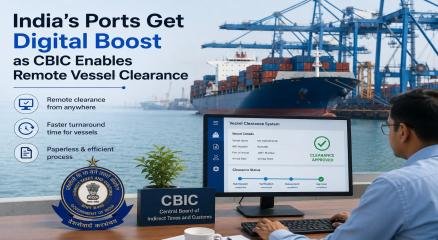
The Central Board of Indirect Taxes and Customs (CBIC) has introduced remote customs clearance for sea cargo operations, eliminating the longstanding requirement for customs officers to physically board vessels for routine clearances. The reform is expected to reduce vessel turnaround time, streamline cargo movement, and improve operational efficiency at Indian ports. The initiative, implemented through Circular No. 26/2026-Customs, standardises procedures for “Entry Inward” and “Vessel Sail-out Clearance” processes across ports. Under the revised framework, customs approvals will now be granted based on electronic filings and digital verification systems rather than mandatory physical inspections. The move aligns with the government’s broader push for faceless and paperless trade facilitation. Shipping lines and vessel operators will now be able to submit mandatory declarations digitally under the Sea Cargo Manifest and Transshipment Regulations (SCMTR). These include cargo manifests, crew declarations, and ship store details through online platforms such as e-Sanchit. Industry stakeholders believe the reform could significantly ease congestion at major ports by reducing procedural delays linked to vessel boarding schedules. Traditionally, customs officials physically boarded ships to verify documents before granting entry or departure clearance, a process that often resulted in operational bottlenecks, especially during high traffic periods. Under the new risk-based approach, physical boarding will be limited to vessels flagged through risk profiling and intelligence assessments. This selective inspection mechanism is expected to help customs authorities maintain regulatory oversight while enabling faster cargo processing for compliant operators. The reform is also expected to strengthen India’s ease-of-doing-business credentials and improve the competitiveness of its ports in global trade networks. Faster clearances can lower logistics costs, improve shipping schedules, and support exporters and importers dealing with time-sensitive cargo. The policy complements other digital customs initiatives introduced in recent years, including automated export clearances and electronic documentation systems. Experts note that digitisation of customs processes has become increasingly critical as cargo volumes rise and supply chains demand greater speed and predictability. By integrating remote clearances with SCMTR-based electronic filings, the CBIC aims to create a more transparent and technology-driven cargo management ecosystem. The latest reform underscores India’s intent to align its maritime trade procedures with international best practices while supporting port-led economic growth. For the logistics and shipping sector, the shift towards remote customs operations could mark a crucial step in reducing inefficiencies and enhancing end-to-end supply chain performance. 𝐒𝐭𝐚𝐲 𝐓𝐮𝐧𝐞𝐝 𝐭𝐨 https://cargoconnect.co.in/ 𝐟𝐨𝐫 𝐥𝐚𝐭𝐞𝐬𝐭 𝐮𝐩𝐝𝐚𝐭𝐞𝐬!

India and Italy have elevated their bilateral relationship to a “Special Strategic Partnership,” marking a significant step toward stronger maritime cooperation, trade connectivity, and resilient global supply chains. The announcement followed high-level talks between Prime Minister Narendra Modi and Italian Prime Minister Giorgia Meloni in Rome, where both leaders reaffirmed their commitment to advancing the India-Middle East-Europe Economic Corridor (IMEC) and deepening collaboration across strategic sectors. For the logistics and shipping industry, the development signals growing alignment between two major economies seeking to diversify trade routes and build more secure maritime supply chains amid geopolitical uncertainty. IMEC, first announced during the G20 Summit in 2023, is envisioned as a transformative trade corridor connecting India with Europe through the Middle East via integrated rail and maritime networks. Italy’s geographic position in the Mediterranean is expected to make it a critical European gateway for the initiative. The two countries reviewed progress under the India-Italy Joint Strategic Action Plan 2025-2029 and agreed to intensify cooperation in ports, shipping, logistics infrastructure, advanced manufacturing, and maritime technologies. Both governments emphasized the importance of resilient and sustainable connectivity corridors to support global commerce and reduce vulnerabilities in traditional supply chain routes. A major outcome of the Rome meeting was the announcement of a target to increase bilateral trade to €20 billion by 2029. Industry observers believe this could create new opportunities for freight movement, warehousing, multimodal logistics, and industrial collaboration between Indian and European companies. Discussions also covered defence manufacturing, critical minerals, clean energy, innovation, and digital technologies — all sectors closely linked to modern supply chain ecosystems. The maritime dimension of the partnership is particularly noteworthy. Both nations stressed the need for secure sea lanes and stronger cooperation in the Indo-Mediterranean region, reflecting the growing strategic importance of maritime trade networks. Analysts view the India-Italy partnership as part of a broader effort by India and European nations to strengthen economic resilience and reduce dependence on concentrated trade corridors. Italy’s expertise in shipbuilding, maritime engineering, and port management could complement India’s expanding logistics and port modernisation initiatives under programmes such as Sagarmala and PM Gati Shakti. The collaboration may also accelerate investments in smart ports, green shipping technologies, and digital freight systems. With IMEC gaining traction and India-EU trade negotiations progressing, the India-Italy strategic partnership is increasingly being viewed as a long-term framework that could reshape trade flows between Asia and Europe. For the global shipping and logistics industry, the partnership represents more than diplomacy — the emergence of a new connectivity architecture designed to support faster, diversified, and future-ready supply chains. 𝐒𝐭𝐚𝐲 𝐓𝐮𝐧𝐞𝐝 𝐭𝐨 https://cargoconnect.co.in/ 𝐟𝐨𝐫 𝐥𝐚𝐭𝐞𝐬𝐭 𝐮𝐩𝐝𝐚𝐭𝐞𝐬!
India’s two largest container gateways, Mundra and Nhava Sheva, are facing mounting congestion as rising cargo volumes, truck driver shortages and rerouted shipments from the Middle East strain operations across the country’s logistics network. Shipping lines and logistics operators are reporting worsening turnaround times at both ports, with vessel delays averaging nearly two and a half days and some unscheduled ships waiting up to five days for berthing. The disruptions are slowing cargo movement, tightening yard space and forcing carriers to make last-minute operational changes. According to industry reports, a shortage of truck drivers has become a major bottleneck for container transfers between terminals and inland transport hubs. The issue has reduced the pace of cargo evacuation from ports, adding pressure on already crowded container yards. Terminal operators have intermittently restricted gate access to control container inflow, while export gate schedules continue to shift frequently. These changes are complicating truck planning and increasing uncertainty for exporters and freight forwarders. The congestion is being intensified by cargo diversions linked to disruptions in the Middle East, particularly around Gulf trade routes. Shipping lines have increasingly redirected transshipment cargo to Indian ports as alternatives to facilities in the Persian Gulf, sharply increasing container volumes in recent weeks. The pressure has begun affecting carrier schedules. Some shipping companies are rerouting vessels between terminals at short notice to avoid yard congestion. Danish shipping giant Maersk recently shifted several sailings from its regular terminal at Nhava Sheva to PSA Mumbai after facing space constraints and a growing container backlog. Industry stakeholders say these sudden terminal changes are creating operational and financial challenges for shippers, including higher handling costs and difficulties coordinating customs clearance and inland transportation. The latest disruption comes at a time when India has been positioning itself as a major global manufacturing and logistics hub. Over the past decade, the country has expanded port capacity, improved freight corridors and modernised customs processes to strengthen supply chain efficiency. However, the current congestion highlights the vulnerability of port infrastructure during periods of sudden trade realignment and geopolitical disruption. Logistics experts warn that prolonged delays could increase freight costs, extend delivery timelines and place additional pressure on exporters already dealing with volatile global shipping conditions. Follow CARGOCONNECT for more such updates.
The diversification process by Apple continues to progress as India becomes one of the centers for manufacturing operations. Based on an analysis by Smart Analytics Global (SAG), the percentage share of Indian manufacturing of iPhones has increased from 14% in 2024 to 23% in 2025 and further to 28% by 2026, whereas China’s share has decreased from 83% to 74% within the same timeframe. As Apple continues to lower its reliance on China, India is all set to emerge as the major assembly hub for 28 percent of all iPhones exported around the world by 2026, compared to just 23 percent in the prior year. This change is due to the company's overall strategy of spreading its manufacturing operations in order to mitigate potential tariff risks and geopolitical risks, in addition to creating a more flexible manufacturing network beyond China. Based on the estimates of Smart Analytics Global (SAG), China's share in global iPhone production dropped from 83% in 2024 to 74% in 2025, while India's share increased from 14% in 2024 to 23% in 2025. Estimates provided by another market research firm, Counterpoint Research, indicate that India's share in global iPhone manufacturing could increase to approximately 26% in 2026 from 23% in 2025. As per SAG, “India will account for the manufacture of 28 percent of iPhones shipped globally in 2026, rising from 23 percent in 2025. This growth will be fueled by the ongoing diversification of Apple outside China and capacity build-up at existing manufacturers in India like Tata Electronics,” said Abhilash Kumar, an analyst at Smart Analytics Global. According to Tarun Pathak, research director at Counterpoint Research, “Apple's manufacturing partners have substantially increased their manufacturing capacities and assembly lines in India. They have also diversified their product portfolio made in India.” He further stated that the increase in manufacturing capacity of Tata Electronics is another factor aiding the growth. Apple has managed to localize production substantially in India through manufacturers like Foxconn and Tata Electronics. The recent takeover of Wistron and Pegatron in India by the Tata Group represents a huge step forward in Apple’s localization efforts in India. At present, India is assembling a larger number of iPhones, even the latest versions, and has become an important source of exports, targeting countries like the US and European nations. Over the past five years, Apple has manufactured iPhones worth almost $70 billion in India using its PLI scheme, where around $51 billion, or almost 73% of all iPhones manufactured, were exported from India. Moreover, iPhones have become the most exported goods from India during the previous financial year. India has become the biggest beneficiary of Apple’s changing supply chain. From initially assembling iPhones on a smaller scale, it has grown to become a manufacturing cluster for iPhones through government incentives, increased manufacturing capabilities, and the growing presence of suppliers. Several of the most important suppliers and manufacturers for Apple are still highly entrenched within China, allowing the country to enjoy an unrivaled capacity and adaptability when it comes to managing mass-scale productions and product shifts. For more such news and updates, visit CARGOCONNECT.
Shadowfax is significantly expanding its quick commerce infrastructure, announcing plans to scale its dark store network from 15 facilities to 100 by FY27. The move underscores the company’s growing focus on hyperlocal deliveries, same-day fulfilment, and direct-to-consumer (D2C) logistics as competition intensifies in India’s fast-evolving quick commerce ecosystem. The Bengaluru-based company plans to add 85 new dark stores over the next fiscal year, targeting metro cities with delivery radiuses of approximately seven kilometres and fulfilment timelines of around 30 minutes. The expansion is expected to support rising demand from vertical quick commerce platforms and D2C brands that increasingly rely on third-party logistics (3PL) partners for rapid deliveries. According to company executives, vertical marketplaces are emerging as a profitable segment because of their dependence on outsourced logistics infrastructure rather than captive fulfilment networks. Shadowfax believes this trend creates a strong opportunity for scalable 3PL-led quick commerce models. The dark store expansion will account for nearly 10% of Shadowfax’s planned capital expenditure of ₹180–190 crore in FY27. The company is simultaneously strengthening its automation and artificial intelligence capabilities to improve operational efficiency. AI-led demand forecasting, automated slotting, and smarter sorting centre operations are expected to reduce overhead costs while accelerating breakeven timelines for new facilities. Shadowfax’s aggressive expansion comes on the back of strong financial performance. The company reported a consolidated net profit of ₹55.8 crore in Q4 FY26, compared to a net loss of ₹9.9 crore during the same period last year. Revenue from operations surged 73.6% year-on-year to ₹1,237 crore, reflecting growing order volumes and increased adoption of quick commerce delivery services. Founded in 2015, Shadowfax has evolved into one of India’s largest logistics and last-mile delivery networks, serving over 2,500 cities and more than 15,000 pincodes. The company currently handles millions of shipments daily through a technology-driven delivery ecosystem that supports e-commerce, grocery, hyperlocal, and D2C brands. Industry analysts believe the dark store expansion reflects a broader shift within India’s logistics sector, where speed, proximity-based fulfilment, and automated operations are becoming central to supply chain competitiveness. As quick commerce adoption accelerates beyond groceries into categories such as fashion, electronics, and personal care, logistics providers like Shadowfax are positioning themselves as critical enablers of ultra-fast retail fulfilment. 𝐒𝐭𝐚𝐲 𝐓𝐮𝐧𝐞𝐝 𝐭𝐨 https://cargoconnect.co.in/ 𝐟𝐨𝐫 𝐥𝐚𝐭𝐞𝐬𝐭 𝐮𝐩𝐝𝐚𝐭𝐞𝐬!
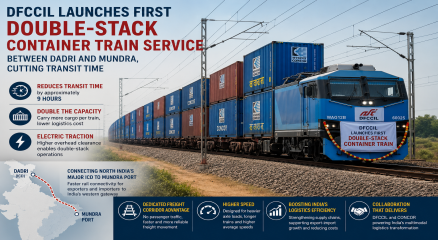
India’s Dedicated Freight Corridors (DFCs) are rapidly reshaping the country’s logistics landscape, with the Western Dedicated Freight Corridor (WDFC) between Dadri and Jawaharlal Nehru Port Authority (JNPA) emerging as a game-changing infrastructure project for supply chains and multimodal freight movement. Designed exclusively for cargo operations, the corridor is significantly reducing transit times, improving reliability, and easing congestion on conventional rail routes. Stretching nearly 1,500 km from Dadri in Uttar Pradesh to JNPA near Mumbai, the corridor forms the backbone of India’s western logistics artery, connecting manufacturing centres, inland container depots, industrial clusters, and ports. With dedicated tracks for freight trains, the network allows uninterrupted cargo movement at higher average speeds, eliminating delays caused by mixed passenger and freight operations. One of the biggest outcomes has been a sharp reduction in transit time. Freight movement between Dadri and JNPA that traditionally took close to 72 hours on congested rail routes is now being completed in nearly half the time, improving turnaround efficiency for exporters, importers, and logistics operators. Industry stakeholders believe the reduction in transit duration will strengthen India’s competitiveness in global trade and support the government’s target of lowering logistics costs as a percentage of GDP. The DFC network has also enabled the operation of longer and heavier freight trains, including double-stack container services on electrified routes. This has increased carrying capacity while lowering per-unit transportation costs. According to sector estimates, rail freight on dedicated corridors is considerably more energy-efficient and environmentally sustainable than road transport, aligning with India’s broader decarbonisation goals. Beyond operational efficiency, the corridors are catalysing the growth of integrated logistics ecosystems. Regions such as Dadri, Greater Noida, and Jewar are witnessing accelerated development of multimodal logistics parks, warehousing zones, and industrial hubs due to their strategic connectivity with both the Eastern and Western DFCs. The emerging “rail-road-air” logistics triangle around the National Capital Region is expected to attract substantial investments in manufacturing and distribution infrastructure. The Dedicated Freight Corridor Corporation of India (DFCCIL) has reported rising freight train volumes on the operational stretches, indicating growing industry adoption. The completion of key links on the western corridor is expected to further enhance throughput and reduce dependency on road transport for long-haul cargo. Analysts say the dedicated rail network could become central to India’s ambition of creating faster, greener, and more resilient supply chains. As India continues investing in additional freight corridors across the country, the success of the Dadri-JNPA route demonstrates how infrastructure modernisation can directly influence trade efficiency, logistics performance, and industrial growth. 𝐒𝐭𝐚𝐲 𝐓𝐮𝐧𝐞𝐝 𝐭𝐨 https://cargoconnect.co.in/ 𝐟𝐨𝐫 𝐥𝐚𝐭𝐞𝐬𝐭 𝐮𝐩𝐝𝐚𝐭𝐞𝐬
In a strategic warehousing move, the South Eastern Coalfields Limited (SECL), the second largest coal-producing subsidiary of Coal India Limited, has signed a Memorandum of Understanding (MoU) with Central Warehousing Corporation (CWC) for collaboration in coal logistics, railway rake provisioning under GPWIS and similar schemes, and integrated transportation services. Guided by the Union Ministry of Coal, SECL is rapidly working to improve India’s energy security and coal logistics infrastructure. The company is taking steps to boost coal evacuation efficiency and ensure a steady fuel supply to essential sectors. This partnership with CWC is a significant move in that direction. The goal of the partnership with CWC is to strengthen SECL’s coal evacuation capabilities by providing reliable and efficient rail logistics solutions to meet the rising demand from the power, steel, cement, and other sectors. The MoU outlines collaboration in various areas, including dedicated railway rake operations, integrated coal transportation solutions, multimodal logistics, first-mile and last-mile connectivity, and the deployment of digital systems for logistics monitoring and operational efficiency. Under the agreed framework, both organizations will explore provisioning and operation of GPWIS and equivalent racks, integrated rail logistics services, and long-term transportation solutions aimed at improving dispatch efficiency and reducing logistical obstacles. The MoU was signed in the presence of Harish Duhan, Chairman-cum-Managing Director of SECL, and Santosh Sinha, Managing Director of CWC. Functional Directors and senior officials from SECL, as well as representatives from CWC, attended the signing ceremony. SECL plays a vital role in meeting the country's growing coal demand. In the current financial year 2026-27, Coal India Limited has already surpassed the 100 million tonne production mark, with SECL contributing more than 26.8 million tonnes. Central Warehousing Corporation (CWC), a Navaratna Central Public Sector Enterprise under the Government of India, is a leader in integrated logistics and warehousing services. It has extensive experience in rail-linked cargo movement and multimodal transportation solutions. For more such news and updates, visit CARGOCONNECT.