
Loading...
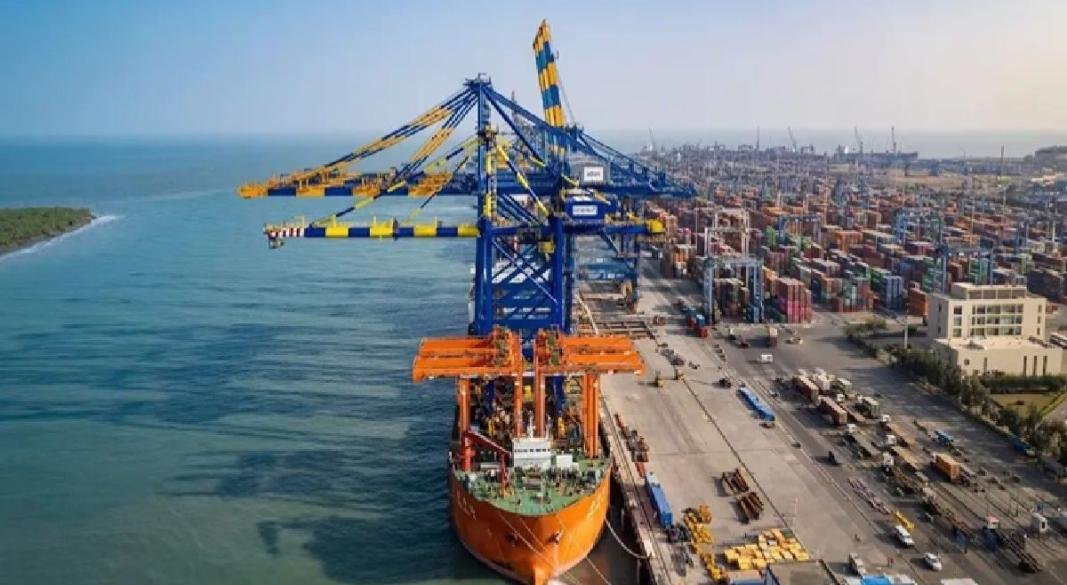
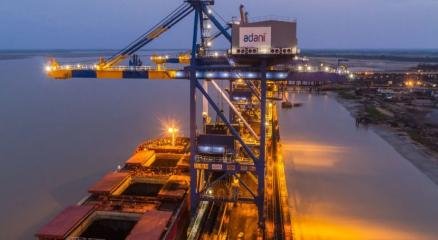
Kerala’s Vizhinjam International Seaport has achieved a significant milestone by handling its 1,000th commercial vessel in less than two years since commencing operations, reinforcing its emergence as one of the world’s fastest-growing container transshipment hubs. The landmark was marked with the arrival of the container vessel MSC Luciana, highlighting the port’s rapid operational growth and increasing relevance in global shipping networks.
Developed as India’s first deep-water automated transshipment port, Vizhinjam has witnessed remarkable progress since receiving its first commercial vessel. Its strategic location, just 10 nautical miles from one of the world’s busiest east-west international shipping routes, has enabled the port to attract major container lines and large mother vessels that traditionally relied on foreign transshipment hubs.
Industry experts believe the achievement reflects growing confidence among global shipping companies in the port’s infrastructure and operational capabilities. Featuring a natural deep draft of around 20 metres, advanced cargo-handling equipment and modern terminal systems, Vizhinjam is capable of handling some of the world’s largest container ships with minimal turnaround time.
The 1,000-vessel milestone also underscores India’s broader ambition to strengthen domestic transshipment capacity and reduce dependence on overseas ports for container movement. By offering direct access to international shipping routes, the port is expected to improve supply chain efficiency, lower logistics costs and enhance India's competitiveness in maritime trade.
Since commercial operations began, vessel traffic at Vizhinjam has steadily increased, supported by growing cargo volumes and regular calls from leading global shipping lines. The port’s ability to accommodate ultra-large container vessels has positioned it as a preferred gateway for regional and international cargo movement.
The milestone is expected to further accelerate investments in port-led infrastructure, logistics parks, warehousing and multimodal connectivity across Kerala and southern India. As additional phases of development progress, Vizhinjam is projected to significantly expand its container handling capacity and strengthen its role as a strategic logistics gateway for the Indian subcontinent.
For India's supply chain ecosystem, the port's rapid rise signals the growing importance of world-class maritime infrastructure in supporting international trade. With its strategic advantages and continued expansion, Vizhinjam is poised to play a pivotal role in reshaping regional cargo flows and establishing India as a stronger player in global maritime logistics.
𝐒𝐭𝐚𝐲 𝐓𝐮𝐧𝐞𝐝 𝐭𝐨 CARGOCONNECT 𝐟𝐨𝐫 𝐥𝐚𝐭𝐞𝐬𝐭 𝐮𝐩𝐝𝐚𝐭𝐞𝐬!
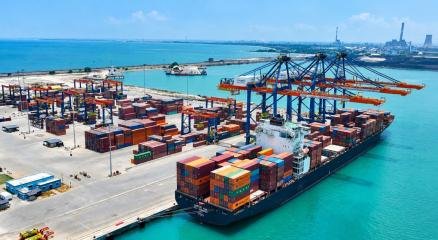
Tuticorin Container Terminal handled a record 33,771 twenty-foot equivalent units (TEUs) in September 2026, marking a significant milestone in its operational performance and reinforcing its focus on efficiency, reliability and service quality. The achievement reflects the collective efforts of the terminal’s workforce across operational, technical and support functions. Their dedication, resilience and coordination have played a key role in ensuring smooth cargo movement and maintaining operational continuity. The terminal also highlighted the contributions of women across its operational, technical and support teams, underscoring the growing importance of gender diversity and inclusive workforce practices in the maritime sector. Tuticorin Container Terminal expressed its gratitude to vessel operators, container lines and other stakeholders for their continued trust and partnership. It also acknowledged the support and cooperation of the V.O. Chidambaranar Port Authority in facilitating efficient terminal operations. The record monthly throughput marks another step in the terminal’s efforts to strengthen operational excellence and stakeholder collaboration. With a continued focus on dependable services, workforce engagement, and operational efficiency, the terminal aims to support growing cargo movement and enhance regional container logistics capabilities. The handling of 33,771 TEUs in a single month highlights the role of coordinated teamwork and industry partnerships in strengthening Tuticorin’s position in India’s container logistics network. Follow CARGOCONNECT for more such updates


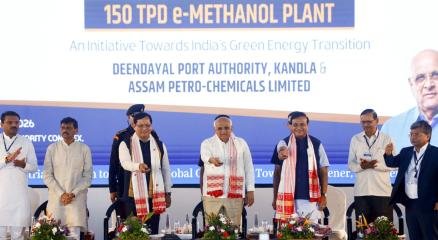
India has taken a landmark step towards establishing itself as a global supplier of green maritime fuel with the foundation stone laid for the country’s first port-based e-methanol production facility at Deendayal Port Authority (DPA) in Kandla, Gujarat. The ₹2,300-crore project is being jointly developed by DPA and Namrup-based Assam Petro-Chemicals Ltd (APCL) and is designed to support the decarbonisation of international shipping. The foundation stone was laid on September 26 by Union Minister for Ports, Shipping and Waterways Sarbananda Sonowal, Gujarat Chief Minister Bhupendra Patel and Assam Chief Minister Himanta Biswa Sarma. The facility will have a total production capacity of 150 tonnes of e-methanol per day. It will use renewable power, water and biogenic carbon dioxide (CO₂) to produce e-methanol, which is intended to be supplied to vessels operating along the Asia-Europe International Trade Corridor, one of the world’s busiest maritime routes. The e-methanol plant will be established through scalable modules in two phases. Phase I will add 50 tonnes per day of production capacity at an investment of ₹1,200 crore and is targeted for completion by January 2027. Phase II, involving a further 100 tonnes per day, will require an investment of ₹1,100 crore and is scheduled for completion by March 2027. Together, the two phases will take the project’s total investment to ₹2,300 crore. The capital contribution between DPA and APCL will be in a 76:24 ratio. DPA’s contribution includes ₹567.32 crore in equity capital, 75 acres of land, desalinated water and renewable energy in the form of green hydrogen. The facility is expected to rank among India’s largest e-methanol production plants and generate more than 3,500 direct and indirect jobs. According to the Ministry of Ports, Shipping and Waterways, the plant is expected to produce green methanol at around US$750 per tonne, compared with a global rate of about US$1,300 per tonne. This cost advantage could strengthen India’s position as a competitive producer and supplier of green fuel for international shipping. Beyond fuel production, the project is expected to stimulate a wider green-energy value chain around Kandla, covering transportation, storage, supply and other ancillary activities associated with green molecule production. It also aligns with India’s broader maritime decarbonisation objectives and its Net Zero emissions target for 2070. The government aims to add 100 ships to the Indian merchant fleet over the next five years and make India one of the world’s top five ship-owning nations by 2047. Therefore, the Kandla facility represents more than a new green-fuel production asset; it marks an effort to integrate port infrastructure, renewable energy and maritime fuel supply into a single ecosystem, potentially positioning Kandla as an emerging green-fuel hub for global shipping. 𝐒𝐭𝐚𝐲 𝐓𝐮𝐧𝐞𝐝 𝐭𝐨 CARGOCONNECT 𝐟𝐨𝐫 𝐥𝐚𝐭𝐞𝐬𝐭 𝐮𝐩𝐝𝐚𝐭𝐞𝐬!

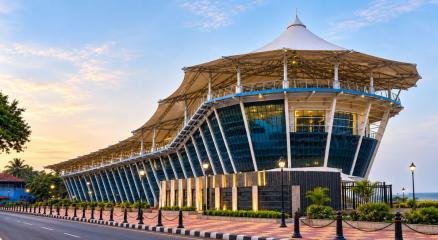
The Captain of Ports (CoP) Department, Government of Goa, has invited bids under a public-private partnership (PPP) model for the operation and maintenance of the Captain of Ports Terminal at Panaji, along with associated jetty facilities and the development of a new yacht docking station. The project, estimated at ₹27.04 crore, is aimed at strengthening Goa’s passenger and maritime infrastructure while creating a more integrated waterfront facility. Under the proposed PPP arrangement, the selected private operator will be responsible for operating and maintaining the newly developed Captain of Ports Terminal and six existing jetties located across Panaji, Old Goa and Betim. The project also envisages the integration of three additional floating jetties near Kala Academy, Mahaveer Garden and the Parshuram statue. According to the tender details, bids for the project can be submitted until October 23, 2026. A key component of the project is the proposed yacht docking station near Divja Circle, adjacent to the Santa Monica Tourism Jetty. The facility is planned as a floating concrete jetty with an associated mini-terminal building and yacht docking infrastructure. The proposed docking station will measure approximately 200 metres by six metres and is designed to accommodate at least 40 vessels, including three berths earmarked for government use. The private concessionaire will be permitted to generate revenues through passenger and user charges, as well as commercial activities at the terminal. For the yacht docking facility, the operator can charge up to ₹30,000 per vessel per month. Where Central Government financial assistance is utilised, the permitted monthly charge would be capped at ₹15,000 per vessel. The concession period is proposed at 30 years, with a possible extension of another 10 years. The model is expected to bring private-sector operational capabilities into the management of Goa’s maritime passenger infrastructure while supporting investment in allied waterfront facilities. The tender also provides an opportunity to develop commercial services around the terminal and associated jetties. Located along Dayanand Bandodkar Marg on the Mandovi River, the Captain of Ports Terminal has been developed as an integrated administrative, passenger and maritime services facility. The proposed PPP structure is intended to consolidate its operations while expanding the network of passenger and recreational maritime facilities around Panaji. The initiative comes as Goa continues to strengthen its maritime and tourism infrastructure. By combining terminal operations, existing and proposed jetties and yacht berthing facilities under a single concession, the project could improve coordination across passenger movement, vessel berthing and waterfront services. 𝐒𝐭𝐚𝐲 𝐓𝐮𝐧𝐞𝐝 𝐭𝐨 CARGOCONNECT 𝐟𝐨𝐫 𝐥𝐚𝐭𝐞𝐬𝐭 𝐮𝐩𝐝𝐚𝐭𝐞𝐬!