Loading...
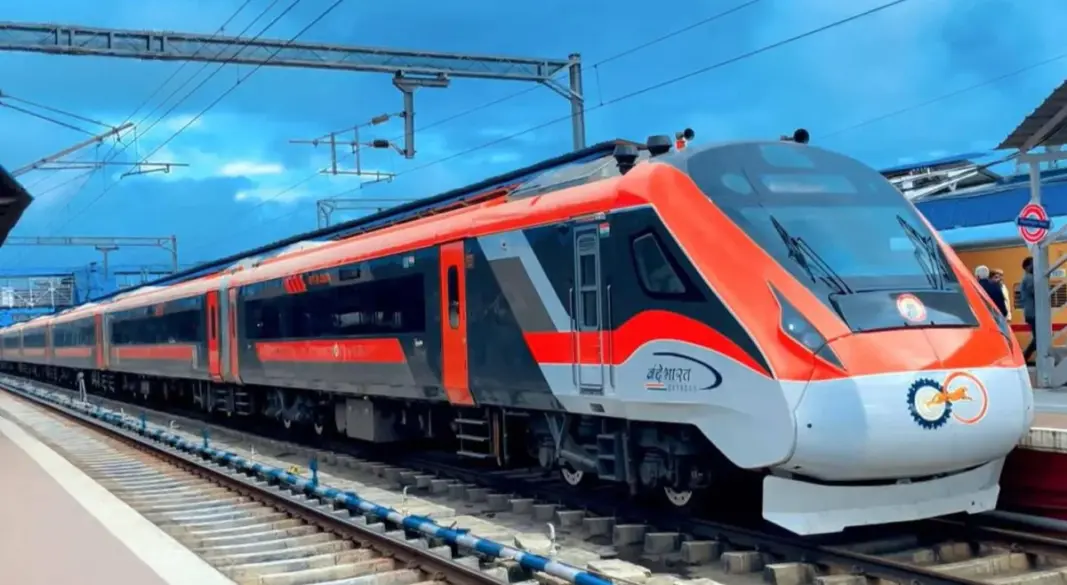
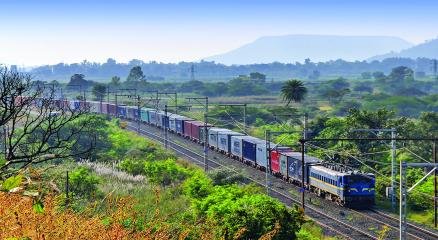
India has taken a landmark step towards modernising rail-based cargo transportation with the commencement of technical trials for its first-ever Vande Bharat Freight EMU (Electric Multiple Unit) in Rajasthan’s Kota Division. Developed by the Integral Coach Factory (ICF), Chennai, the 16-coach prototype is expected to redefine time-sensitive freight movement by combining higher speeds, advanced technology and improved operational efficiency.
The trial programme began on July 29 on the Nagda–Kota–Sawai Madhopur section of the West Central Railway and is scheduled to continue for nearly a month. During the initial trial, the freight train achieved speeds of up to 145 kmph, making it one of the fastest cargo train prototypes developed by Indian Railways. Officials are conducting multiple test runs daily under varying operational conditions to evaluate the train’s performance before commercial deployment.
Unlike conventional freight trains, the Vande Bharat Freight EMU has been designed specifically for transporting parcels, e-commerce consignments, perishable goods and other high-value, time-critical cargo. The self-propelled train eliminates the need for a separate locomotive, enabling quicker acceleration, reduced transit times and enhanced energy efficiency. This makes it particularly suitable for supporting India's rapidly expanding e-commerce, cold-chain and express logistics sectors.
The comprehensive testing programme includes oscillation trials at speeds ranging from 120 kmph to 145 kmph, emergency braking distance assessments, coupler force measurements, curve negotiation tests, traction and braking performance evaluations, regenerative energy testing, signalling compatibility checks, telecommunications interference analysis and safety validation of onboard systems such as CCTV, lighting and automatic doors. These trials are intended to ensure the train meets stringent safety and operational standards before entering commercial service.
The Kota Division has emerged as Indian Railways’ preferred testing corridor for advanced rolling stock due to its robust track infrastructure, modern signalling systems and high-speed testing capability. Over the past few years, the division has successfully hosted trials for several next-generation trainsets, reinforcing its reputation as a key centre for railway innovation.
For the logistics industry, the Vande Bharat Freight EMU represents a major advancement in multimodal cargo transportation. Faster parcel trains can help reduce delivery lead times, improve network reliability and encourage a shift from road to rail for express freight. This aligns with the government's broader objective of enhancing logistics efficiency, lowering transportation costs and increasing rail’s share in the national freight market.
If the trials are completed successfully, the Vande Bharat Freight EMU could pave the way for a new generation of high-speed cargo services, strengthening India's supply chain infrastructure while supporting sustainable and technology-driven freight mobility.
𝐒𝐭𝐚𝐲 𝐓𝐮𝐧𝐞𝐝 𝐭𝐨 CARGOCONNECT 𝐟𝐨𝐫 𝐥𝐚𝐭𝐞𝐬𝐭 𝐮𝐩𝐝𝐚𝐭𝐞𝐬!
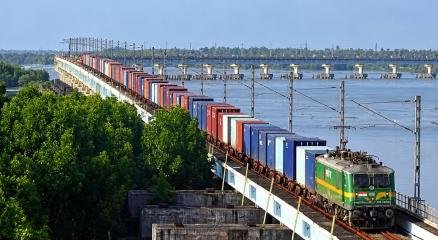
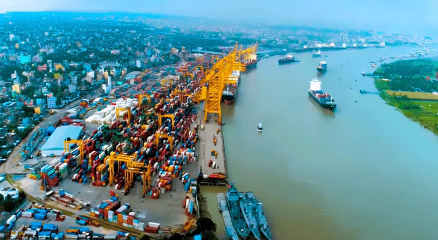
Rail freight activity at the International Container Transshipment Terminal (ICTT) at Vallarpadam is showing signs of recovery, with the commencement of outward cargo loading adding a new dimension to operations that have remained underutilised for years. Bharat Petroleum Corporation Limited (BPCL) has loaded four full rakes of bitumen consignments, creating an opportunity to improve cargo utilisation on the rail corridor. Previously, operations were largely limited to inward container movement, with containers returning empty. Container Corporation of India (CONCOR) has resumed freight services, with at least two rakes a month operating since May. Officials have also reported the receipt of car units by rail for export, while discussions are continuing on establishing regular cargo movements through Cochin. The developments mark an early step towards improving rail freight activity at Vallarpadam, although sustained growth will depend on securing regular cargo commitments and making rail transport commercially competitive. Outward loading opens up return-cargo opportunities The movement of bitumen in four full rakes is significant because it expands the range of cargo that can be carried through the rail link. Outward loading could help operators utilise capacity more effectively and improve the economics of freight services. However, the extent of potential savings or the impact on overall rail volumes has not been quantified. Regular movements will be necessary to establish whether the initial activity can translate into a sustained increase in rail's share of cargo transport. Rail infrastructure awaits fuller utilisation The 8.86-kilometre railway connection links Edappally with Vallarpadam's container terminal, including a 4.62-kilometre bridge across Kochi's backwaters. Rail Vikas Nigam Limited (RVNL) implemented the project, with central funding provided through the Ministry of Shipping. A trial locomotive movement took place in March 2010, ahead of the terminal's inauguration in February 2011. Designed specifically for goods traffic, the line provides a direct connection between the terminal and the wider railway network. Despite this dedicated infrastructure, the corridor has struggled to attract consistent freight volumes. Earlier assessments in 2025 highlighted its underutilisation, with road transport continuing to appeal to shippers because of its flexibility, speed and last-mile delivery capabilities. Domestic freight could widen the cargo base Freight operators are also looking to attract cargo from Kerala's manufacturing clusters, including plywood and furniture businesses around Perumbavoor. Domestic rail services are being offered to several inland markets as operators seek to expand the corridor's commercial reach. For manufacturers, the choice between road and rail depends on the total logistics cost, including factory collection, terminal handling, onward delivery and transit time. Reliable schedules and predictable departures will be important in encouraging businesses to commit cargo to rail. Industry representatives have also pointed to dependable international vessel connectivity as a factor influencing port selection, particularly for exporters seeking an efficient end-to-end logistics solution. MGR IFR service adds to Cochin's connectivity Cochin's maritime connectivity received another boost in September, when DP World's terminal began receiving the MGR IFR service. The fortnightly rotation links Cochin and Nhava Sheva with Fujairah in the UAE, Sohar in Oman and Aden in Yemen. The service operates with MV Marsa Virgo and MV Marsa Zenith, each with a capacity exceeding 500 TEUs. The inaugural call by MV Marsa Virgo involved handling more than 1,000 TEUs. The service adds to the range of shipping connections available through Cochin. Combined with improved inland rail utilisation, dependable maritime services could strengthen the terminal's proposition for exporters and importers. Regular cargo flows will be key The commencement of outward loading is an encouraging operational development for Vallarpadam's rail corridor. It demonstrates the potential to move cargo beyond inward container traffic and opens up opportunities to make better use of return capacity. The next challenge is to turn initial movements into repeat business. Competitive total logistics costs, reliable schedules, straightforward handling arrangements and balanced cargo flows will be critical to improving utilisation of the existing infrastructure. For Vallarpadam, the long-term opportunity lies not simply in having a dedicated rail connection, but in building a dependable freight service that businesses can incorporate into their regular supply chains. Follow CARGOCONNECT for more such updates
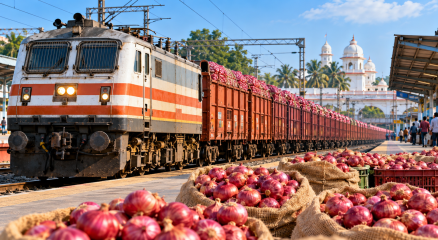
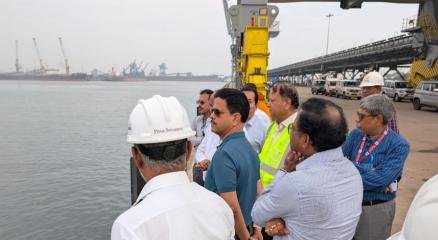
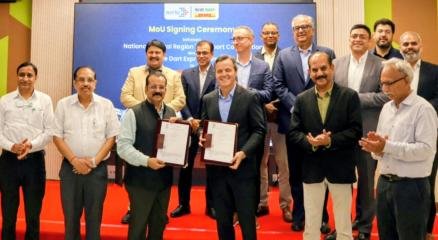
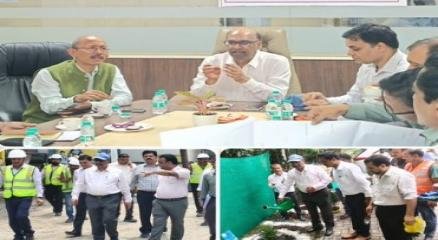
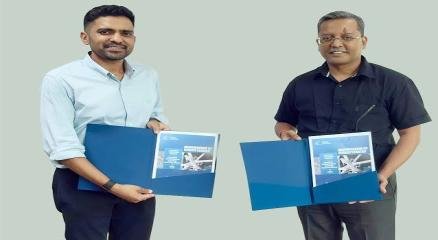
Container Corporation of India (CONCOR) Chairman and Managing Director (CMD) Ajit Kumar Panda visited the Container Freight Station, Dronagiri Rail Terminal (CFS-DRT) in the Mumbai Cluster, as part of the company’s focus on strengthening terminal operations and enhancing rail-linked logistics services. The Dronagiri facility is an important cargo-handling node supporting EXIM and domestic containerised cargo flows in the Mumbai region. CONCOR’s Dronagiri Node, commissioned in March 2003, spans around 59 acres and has an annual handling capacity of approximately 200,000 TEUs. Its catchment extends across Mumbai, Pune, Aurangabad, Vapi, Gujarat and Madhya Pradesh. During the visit, Panda reviewed the terminal’s operations and interacted with the Mumbai Cluster team, with the engagement highlighting the importance of efficient terminal management, customer-focused services and stronger integration of rail-based freight movement within the wider logistics network. The Dronagiri facility also supports warehousing and a broad range of EXIM cargo. Its infrastructure includes dedicated EXIM, domestic and bonded warehousing capacity. CONCOR has also developed capabilities at Dronagiri for handling out-of-gauge (ODC) export and import flat-rack containers, supported by first- and last-mile transportation services connecting the CFS with Jawaharlal Nehru Port terminals. Panda’s visit comes amid CONCOR’s continued emphasis on operational excellence, multimodal connectivity and strengthening logistics infrastructure across key trade gateways. The company has been working to improve rail connectivity, terminal efficiency and customer-centric logistics solutions, supporting more seamless cargo movement across India’s supply chain. The visit underscores the strategic importance of the Mumbai Cluster and Dronagiri Rail Terminal in facilitating efficient containerised trade and reinforcing CONCOR’s role in India’s rail-based logistics ecosystem. 𝐒𝐭𝐚𝐲 𝐓𝐮𝐧𝐞𝐝 𝐭𝐨 CARGOCONNECT 𝐟𝐨𝐫 𝐥𝐚𝐭𝐞𝐬𝐭 𝐮𝐩𝐝𝐚𝐭𝐞𝐬!

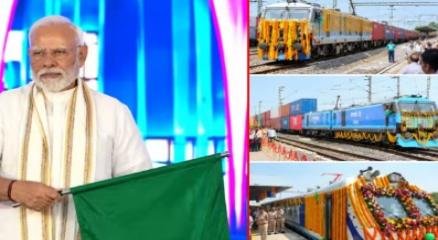
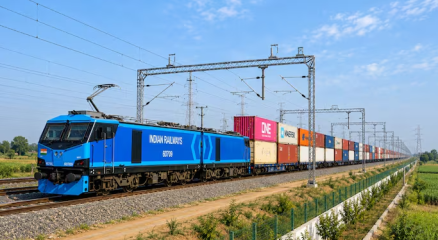
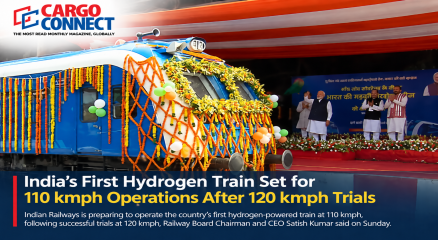
Indore: Indian Railways is preparing to operate the country’s first hydrogen-powered train at speeds of up to 110 kmph, following successful trials at speeds of 120 kmph, Railway Board Chairman and CEO Satish Kumar said on Sunday. Prime Minister Narendra Modi had flagged off India’s first hydrogen-powered train on July 17, marking a significant step in the Railways’ efforts to introduce cleaner propulsion technologies. The train operates on the 89-km Jind–Sonipat route in Haryana. Unlike conventional electric trains that rely on overhead power lines, the hydrogen fuel-cell trainset generates electricity onboard through an electrochemical reaction between hydrogen and oxygen. The process produces water vapour and heat as by-products, eliminating combustion, smoke and tailpipe carbon emissions. The hydrogen train is part of Indian Railways’ broader efforts to explore alternative propulsion technologies and reduce emissions from rail operations. Its deployment could also offer a pathway for cleaner rail connectivity on routes where conventional electrification may be less practical. Follow CARGOCONNECT for more such updates