
Loading...
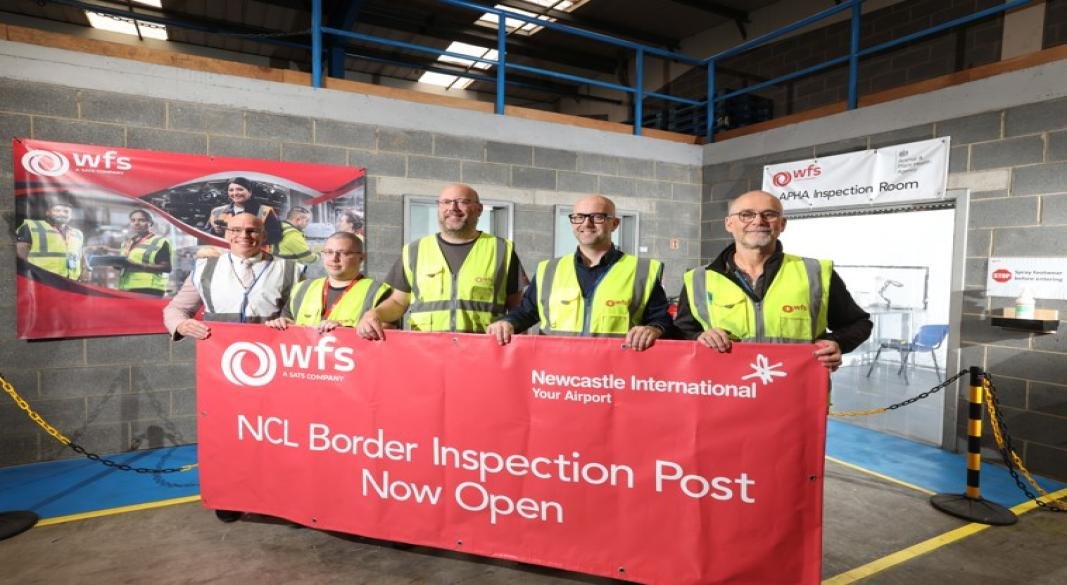
Newcastle Airport has strengthened its air cargo infrastructure with the opening of a new government-approved Border Control Post (BCP), enhancing its ability to handle regulated imports and expand its role as an international trade gateway in North East England.
Worldwide Flight Services (WFS), a global air cargo logistics and ground handling provider, has opened the facility at its operational hub within the airport’s freight village. The new Border Control Post will enable regulated goods, including flowers, plants and plant products, fruits and vegetables, to undergo mandatory inspections and clearance directly at the airport.
The facility is expected to improve the movement of time-sensitive and perishable consignments by allowing goods to be cleared closer to their final destinations. This will help importers and businesses reduce transit times, minimise logistics costs and improve supply chain efficiency. It also broadens the range of products that can enter the UK directly through Newcastle Airport, offering businesses across the region an additional route for international imports.
The development forms part of Newcastle Airport’s wider strategy to strengthen its cargo handling capabilities. The airport currently handles more than 5,000 tonnes of freight annually and continues to invest in infrastructure and operational capacity to support growing demand.
Earlier in 2026, Samson Aviation, the airport’s executive jet centre and handling partner, expanded its equipment fleet with the addition of a main deck loader and supporting ground service equipment. The investment has enhanced the airport’s ability to accommodate a wider range of narrowbody and widebody passenger, charter and cargo aircraft, while supporting specialised and oversized shipments, including heavy machinery and luxury vehicles.
With 24-hour operations, on-site refuelling facilities, professional cargo handling services and direct access to the region’s strategic road network, Newcastle Airport is strengthening its proposition for cargo operators and freight forwarders.
Commenting on the development, Leon McQuaid, Director of Aviation Development at Newcastle Airport, said: "The new Border Control Post marks another important milestone in the growth of Newcastle Airport's cargo services, strengthening our position as a gateway for international trade."
He added that the investment by WFS would help businesses move goods more efficiently, provide faster market access and support economic growth across North East England and beyond.
The latest development reinforces Newcastle Airport’s ambition to expand its cargo operations and attract further aviation and logistics businesses, positioning it as an increasingly important gateway for regional and international trade.
𝐒𝐭𝐚𝐲 𝐓𝐮𝐧𝐞𝐝 𝐭𝐨 CARGOCONNECT 𝐟𝐨𝐫 𝐥𝐚𝐭𝐞𝐬𝐭 𝐮𝐩𝐝𝐚𝐭𝐞𝐬!
Newcastle Airport has strengthened its air cargo infrastructure with the opening of a new government-approved Border Control Post (BCP), enhancing its ability to handle regulated imports and expand its role as an international trade gateway in North East England. Worldwide Flight Services (WFS), a global air cargo logistics and ground handling provider, has opened the facility at its operational hub within the airport’s freight village. The new Border Control Post will enable regulated goods, including flowers, plants and plant products, fruits and vegetables, to undergo mandatory inspections and clearance directly at the airport. The facility is expected to improve the movement of time-sensitive and perishable consignments by allowing goods to be cleared closer to their final destinations. This will help importers and businesses reduce transit times, minimise logistics costs and improve supply chain efficiency. It also broadens the range of products that can enter the UK directly through Newcastle Airport, offering businesses across the region an additional route for international imports. The development forms part of Newcastle Airport’s wider strategy to strengthen its cargo handling capabilities. The airport currently handles more than 5,000 tonnes of freight annually and continues to invest in infrastructure and operational capacity to support growing demand. Earlier in 2026, Samson Aviation, the airport’s executive jet centre and handling partner, expanded its equipment fleet with the addition of a main deck loader and supporting ground service equipment. The investment has enhanced the airport’s ability to accommodate a wider range of narrowbody and widebody passenger, charter and cargo aircraft, while supporting specialised and oversized shipments, including heavy machinery and luxury vehicles. With 24-hour operations, on-site refuelling facilities, professional cargo handling services and direct access to the region’s strategic road network, Newcastle Airport is strengthening its proposition for cargo operators and freight forwarders. Commenting on the development, Leon McQuaid, Director of Aviation Development at Newcastle Airport, said: "The new Border Control Post marks another important milestone in the growth of Newcastle Airport's cargo services, strengthening our position as a gateway for international trade." He added that the investment by WFS would help businesses move goods more efficiently, provide faster market access and support economic growth across North East England and beyond. The latest development reinforces Newcastle Airport’s ambition to expand its cargo operations and attract further aviation and logistics businesses, positioning it as an increasingly important gateway for regional and international trade. 𝐒𝐭𝐚𝐲 𝐓𝐮𝐧𝐞𝐝 𝐭𝐨 CARGOCONNECT 𝐟𝐨𝐫 𝐥𝐚𝐭𝐞𝐬𝐭 𝐮𝐩𝐝𝐚𝐭𝐞𝐬!
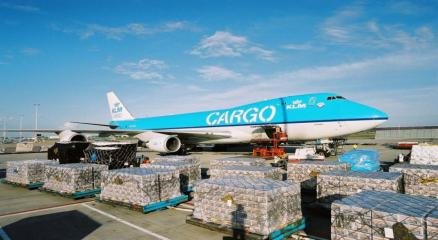



Glasgow Prestwick Airport (PIK) is in discussions to establish a new cargo route with Nanjing Lukou International Airport (NKG) in China in 2027, as it looks to expand its direct connections with East Asia. The proposed link was discussed during a meeting in Nanjing involving PIK Chief Executive Officer Jules Matteoni, Regional Director Colin Dai, Ma Shiguang, Vice Governor of the People’s Government of Jiangsu Province, and local officials. The provincial government confirmed its backing for the proposed route. “China is an increasingly important part of our cargo network, and a direct link with Nanjing would strengthen the options available to businesses moving goods between the United Kingdom and one of China’s largest provincial economies,” said Matteoni. He added that PIK is working with partners in Jiangsu to develop a route capable of supporting long-term demand, strengthening trade links and creating economic opportunities at both ends. Discussions will now focus on the commercial and operational requirements of the proposed service. Details on the operator and launch schedule are expected to be announced in the coming months. Dai said the connection could provide businesses in Scotland and across the United Kingdom with greater access to the Chinese market, while supporting cargo flows in both directions. He also highlighted Jiangsu’s substantial manufacturing base as an opportunity to deepen trade and supply-chain links. PIK currently hosts more than 20 weekly scheduled services to China, with direct links to Ürümqi (URC), Guangzhou (CAN), Chengdu (CTU) and Shanghai (PVG). The proposed Nanjing connection would further strengthen the airport’s cargo links with China and build on its role as a freight and e-commerce gateway serving the United Kingdom and northwest Europe.
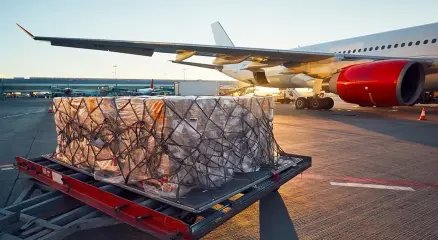

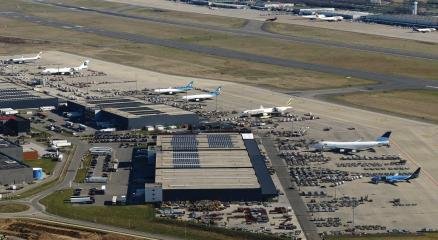
CargoLand by LGG has handled more than 10,000 tonnes of pharmaceutical cargo on its scheduled corridor to Chicago O’Hare International Airport (ORD) since the launch of a fixed, regular schedule in early 2026, as demand grows for reliable temperature-controlled air freight services. Frederic Brun, Vice President Sales & Marketing at LGG, attributed the growth to the stability of the service and its operations. He said the pharmaceutical traffic consists largely of shipments transferred to CargoLand by LGG from other airports, rather than newly generated business—reflecting freight forwarders’ confidence in the corridor’s reliability. According to Brun, all outbound and return flights on the three weekly LGG–Chicago–Dubai rotations are operating full. The airport’s pharmaceutical service is supported by handling agreements designed to minimise cargo exposure. Under its standard service-level agreements, transfer times are approximately 20 minutes from truck to refrigerated storage and another 20 minutes from refrigerated storage to aircraft loading. The airport’s proximity between truck access and the ramp is intended to streamline transfers and reduce handling time. Cargo volumes include insulin, vaccines and other medicines, each requiring specific temperature conditions and handling procedures. CargoLand by LGG’s operation is designed to accommodate these requirements through suitable storage, careful handling and consistent cold-chain management. CEVA’s Pharmaceutical Cargo Flows CEVA provides an example of how the airport’s location supports pharmaceutical logistics. Liege has helped streamline collections from a major pharmaceutical group’s sites in France and Germany, with cargo consolidated and prepared for flight at CargoLand by LGG. The airport’s 24/7 operations provide flexibility for freight forwarders and pharmaceutical shippers, helping reduce potential bottlenecks and support urgent shipments or operations during disruption. Brun said LGG has refined its pharmaceutical handling around its established capabilities and expertise, with an emphasis on reducing exposure time, simplifying processes and limiting the number of parties involved. He added that practices developed over several years are now becoming standard across the airport’s operations. Diversification and Network Expansion LGG said pharmaceutical cargo has grown by more than 120% through the airport, supporting its diversification strategy, which it has pursued over the past four years. Looking ahead, CargoLand by LGG plans to develop its freighter network around customer requirements, linking pharmaceutical production centres with markets that need reliable access to essential medicines. Existing African connections, established through flower imports, could provide opportunities for pharmaceutical exports on return flights, improving the use of available capacity. The airport is also considering additional origins and destinations, including India, as it looks to align freighter capacity with pharmaceutical demand in markets that may be more challenging to serve. All cargo handlers at LGG hold CEIV Pharma certification, providing a foundation for further development. The airport also sees opportunities for other businesses in its surrounding ecosystem to contribute their expertise to pharmaceutical logistics.