
Loading...
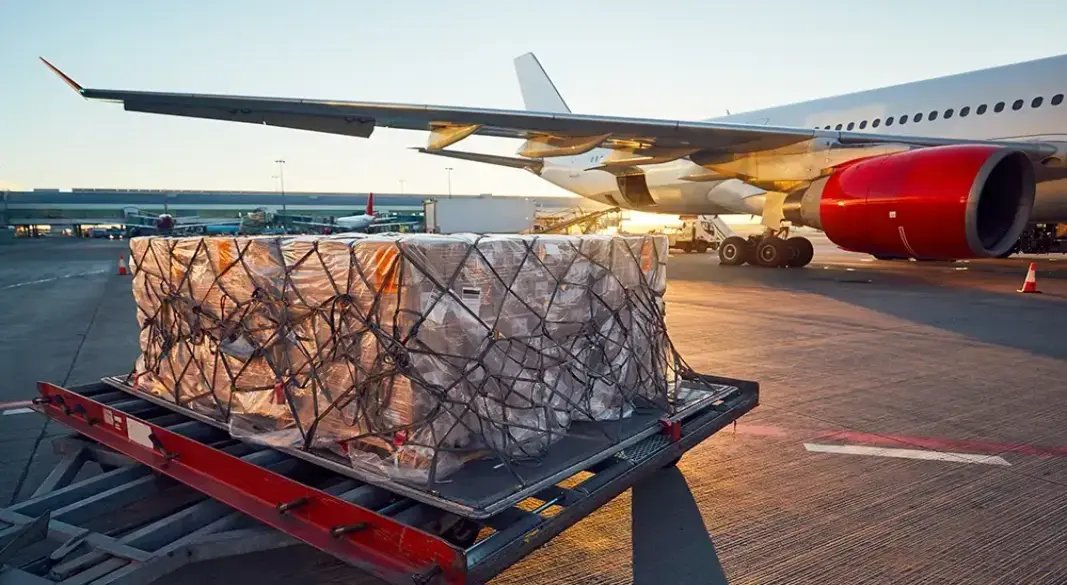
Global air freight rates recorded a marginal decline in the week ending November 2, 2026, even as demand remained resilient and pricing levels continued to stay significantly above those of the previous year. According to the latest data from TAC Index, worldwide air freight rates fell 1.1% week on week but remained 22.8% higher year on year, reflecting sustained demand, elevated jet fuel costs and ongoing capacity constraints during the traditional fourth-quarter peak season.
The global Baltic Air Freight Index (BAI00) registered the weekly decline, although rates remained above the highest levels recorded during the previous two peak seasons. With several weeks of the year-end peak period still remaining, the market continues to experience firm pricing conditions.
Asia-Pacific Markets Show Mixed Performance
Air freight rates across major Asian markets displayed varied trends. Outbound rates from Hong Kong increased 0.7% during the week, taking the index 28% above its year-ago level. Shanghai recorded a stronger weekly increase of 2.8%, with rates standing 14.4% higher year on year.
Rates from India also firmed slightly on both Europe- and US-bound routes, with year-on-year increases reaching approximately 80%. This highlights the continued strength of demand for Indian air cargo capacity.
In contrast, rates from China to Europe experienced a slight decline, partly reflecting weaker shipment volumes following the European Union's removal of the de minimis exemption for low-value parcels in July 2026. Transpacific routes to the US, however, continued to register strong rate increases.
European outbound markets also experienced mixed movements. Frankfurt's outbound index declined 6.5% week on week, while London's Heathrow index dropped 23.2%. Despite these corrections, both remained substantially higher than their levels a year earlier.
Spot Rates Reflect Tight Capacity Conditions
A separate assessment by WorldACD Market Data highlighted the continued upward pressure on spot prices. Global air cargo spot rates increased 5% in the week ending October 25, reaching US$3.80 per kg, representing a 38% year-on-year increase. Full-market rates, combining spot and contract prices, rose 3% to US$3.33 per kg, up 31% annually. Global cargo tonnages declined 2% week on week, while capacity slipped 1%.
The contrasting weekly movements reflect different reporting periods and pricing indices rather than a reversal in the broader market trend.
Peak Season Outlook
With Diwali, Thanksgiving, Black Friday and Christmas driving seasonal shipment activity, air cargo operators and freight forwarders face continued pressure to secure capacity. Elevated fuel costs, geopolitical uncertainties and shifting trade flows are further influencing pricing across major international corridors.
Despite the modest weekly correction reported by TAC Index, strong year-on-year rate increases indicate that the global air freight market remains firm. Capacity availability and demand patterns over the coming weeks will be crucial in determining how rates evolve through the remainder of the peak season.
𝐒𝐭𝐚𝐲 𝐓𝐮𝐧𝐞𝐝 𝐭𝐨 CARGOCONNECT 𝐟𝐨𝐫 𝐥𝐚𝐭𝐞𝐬𝐭 𝐮𝐩𝐝𝐚𝐭𝐞𝐬!

Global air freight rates recorded a marginal decline in the week ending November 2, 2026, even as demand remained resilient and pricing levels continued to stay significantly above those of the previous year. According to the latest data from TAC Index, worldwide air freight rates fell 1.1% week on week but remained 22.8% higher year on year, reflecting sustained demand, elevated jet fuel costs and ongoing capacity constraints during the traditional fourth-quarter peak season. The global Baltic Air Freight Index (BAI00) registered the weekly decline, although rates remained above the highest levels recorded during the previous two peak seasons. With several weeks of the year-end peak period still remaining, the market continues to experience firm pricing conditions. Asia-Pacific Markets Show Mixed Performance Air freight rates across major Asian markets displayed varied trends. Outbound rates from Hong Kong increased 0.7% during the week, taking the index 28% above its year-ago level. Shanghai recorded a stronger weekly increase of 2.8%, with rates standing 14.4% higher year on year. Rates from India also firmed slightly on both Europe- and US-bound routes, with year-on-year increases reaching approximately 80%. This highlights the continued strength of demand for Indian air cargo capacity. In contrast, rates from China to Europe experienced a slight decline, partly reflecting weaker shipment volumes following the European Union's removal of the de minimis exemption for low-value parcels in July 2026. Transpacific routes to the US, however, continued to register strong rate increases. European outbound markets also experienced mixed movements. Frankfurt's outbound index declined 6.5% week on week, while London's Heathrow index dropped 23.2%. Despite these corrections, both remained substantially higher than their levels a year earlier. Spot Rates Reflect Tight Capacity Conditions A separate assessment by WorldACD Market Data highlighted the continued upward pressure on spot prices. Global air cargo spot rates increased 5% in the week ending October 25, reaching US$3.80 per kg, representing a 38% year-on-year increase. Full-market rates, combining spot and contract prices, rose 3% to US$3.33 per kg, up 31% annually. Global cargo tonnages declined 2% week on week, while capacity slipped 1%. The contrasting weekly movements reflect different reporting periods and pricing indices rather than a reversal in the broader market trend. Peak Season Outlook With Diwali, Thanksgiving, Black Friday and Christmas driving seasonal shipment activity, air cargo operators and freight forwarders face continued pressure to secure capacity. Elevated fuel costs, geopolitical uncertainties and shifting trade flows are further influencing pricing across major international corridors. Despite the modest weekly correction reported by TAC Index, strong year-on-year rate increases indicate that the global air freight market remains firm. Capacity availability and demand patterns over the coming weeks will be crucial in determining how rates evolve through the remainder of the peak season. 𝐒𝐭𝐚𝐲 𝐓𝐮𝐧𝐞𝐝 𝐭𝐨 CARGOCONNECT 𝐟𝐨𝐫 𝐥𝐚𝐭𝐞𝐬𝐭 𝐮𝐩𝐝𝐚𝐭𝐞𝐬!




Lufthansa Cargo has completed its acquisition of LUG aircargo handling GmbH, strengthening its cargo handling infrastructure in Germany and adding capacity to support future growth. The transaction was finalised after receiving all required antitrust approvals, making LUG a wholly owned subsidiary of Lufthansa Cargo. The agreement to acquire LUG from the Dettmer Group was signed on 7 September 2026. The completion marks a strategic step in Lufthansa Cargo’s efforts to expand its operational capacity, improve flexibility and strengthen its competitiveness in the German air freight market. LUG To Retain Its Brand and Customer Relationships Despite the change in ownership, LUG will continue to operate as a separate company under its existing brand within the Lufthansa Cargo group. Its current customer contracts and business relationships will remain unchanged, and the company will continue providing cargo handling services to other airlines. Maintaining its third-party customer base is an important part of LUG’s business model. The integration into Lufthansa Cargo is also expected to create new growth opportunities, allowing the handler to build on its established expertise, strengthen its service capabilities and explore additional business prospects. Frank Bauer, Chief Operations Officer of Lufthansa Cargo, said the acquisition would provide greater flexibility and support further growth in the company’s home market. He also highlighted the experience and technical knowledge of LUG’s employees as valuable assets for the continued development of both businesses. Strengthening Cargo Handling Infrastructure in Germany LUG brings more than 60 years of experience in air cargo handling and employs approximately 400 people. Its expertise spans multiple cargo categories and the operational requirements of international airlines, supported by long-standing customer relationships. The company’s existing infrastructure includes around 50,000 sq m of covered warehouse space in Germany, along with approximately 18,000 sq m of office and other infrastructure space. These facilities and capabilities will complement Lufthansa Cargo’s existing handling network, providing additional capacity to accommodate future demand. The acquisition also aligns with Lufthansa Cargo’s ongoing infrastructure modernisation programme at Frankfurt Airport. Under its LCCevo initiative, the company is investing approximately €600 million to modernise its cargo facilities and strengthen operational capabilities. By combining the additional handling capacity from LUG with investments in its own infrastructure, Lufthansa Cargo aims to build a stronger foundation for reliable cargo operations and profitable growth. The move is expected to enhance operational flexibility while supporting the needs of customers across its air freight network. As demand for efficient air freight services continues to shape the logistics industry, the acquisition strengthens Lufthansa Cargo’s control over its handling infrastructure while preserving LUG’s established position as a service provider to multiple airlines. 𝐒𝐭𝐚𝐲 𝐓𝐮𝐧𝐞𝐝 𝐭𝐨 CARGOCONNECT 𝐟𝐨𝐫 𝐥𝐚𝐭𝐞𝐬𝐭 𝐮𝐩𝐝𝐚𝐭𝐞𝐬
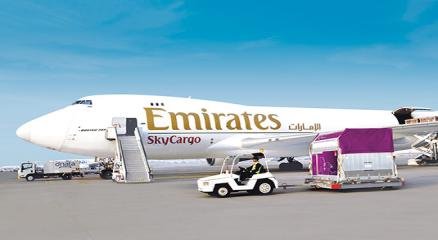


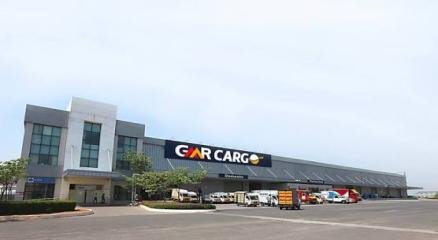
GMR Airports Limited (GAL) has reported record air cargo volumes at Delhi and Hyderabad airports during the second quarter and first half of FY2026–27, supported by infrastructure expansion, stronger international partnerships and a strategic focus on cargo logistics. The company is strengthening its cargo business across its airport portfolio, with dedicated facilities and improved connectivity aimed at capturing growing freight demand. Delhi Airport Drives Cargo Growth Delhi International Airport recorded a 12% year-on-year increase in cargo throughput during the first half of FY2026–27, handling approximately 630,000 metric tonnes. Cargo revenue rose 15% to ₹2.8 billion during the six-month period, highlighting the segment’s growing contribution to airport earnings. Cargo operations accounted for around 14% of Delhi Airport’s non-aeronautical revenue in H1 FY27. The Delhi cargo business reported total income of ₹4,707 million, EBITDA of ₹1,364 million after revenue share, and profit before tax of ₹1,319 million during the first half. To expand its express freight capabilities, GMR Cargo and Logistics Limited has entered into a licence agreement with FedEx Express Transportation and Supply Chain Services (India) to operate a dedicated express cargo terminal at Cargo City within Delhi Airport. The development is expected to strengthen specialised handling capabilities and support time-sensitive shipments. Hyderabad Strengthens International Connectivity Hyderabad Airport also achieved its highest-ever cargo volumes, handling 52,000 metric tonnes in Q2 FY27 and approximately 102,000 metric tonnes during H1 FY27. Its cargo subsidiary reported first-half income of ₹1,679 million, EBITDA of ₹708 million and profit after tax of ₹445 million. The airport has signed a memorandum of understanding with Brussels Airport to strengthen air cargo connectivity between Hyderabad and Europe. The partnership is intended to facilitate more efficient trade lanes and expand international logistics opportunities for exporters and freight stakeholders. Hyderabad’s cargo business also received a favourable ruling from the Telecom Disputes Settlement and Appellate Tribunal, allowing cargo, ground handling and fuel farm revenues to be treated as non-aeronautical revenues, according to the reported results. New Airports Expand Cargo Footprint Beyond its established hubs, GMR Airports is developing cargo operations at newer airports to broaden its logistics network. Bhogapuram Airport in Visakhapatnam, which commenced commercial operations on 17 August 2026, has been designed with an annual cargo handling capacity of 25,000 metric tonnes. Its cargo facilities were operationalised alongside the airport’s other commercial services. Cargo operations at Mopa Airport in Goa are also scaling up. While these newer facilities remain in the early stages of development, they provide scope for GMR to extend its cargo presence across additional regional markets. The company’s historical cargo growth rates stand at 4.1% at Hyderabad Airport, 3% at Delhi Airport and 2.8% at Nagpur Airport, reflecting the longer-term development of its cargo network. Cargo Emerges as a Strategic Growth Driver GMR Airports is positioning cargo as a key business segment alongside its core airport operations. Investments in specialised infrastructure, express freight handling and international partnerships are intended to improve operational efficiency, expand customer reach and strengthen revenue generation. With Delhi continuing to anchor cargo volumes and Hyderabad expanding its international reach, the company’s strategy combines capacity development at established gateways with the gradual operationalisation of newer facilities. The success of these initiatives will depend on sustained freight demand, efficient cargo handling and stronger connections with global trade networks. As air freight becomes increasingly important to time-sensitive supply chains, GMR Airports’ investments could help strengthen India’s airport cargo infrastructure and support the movement of goods across domestic and international markets. 𝐒𝐭𝐚𝐲 𝐓𝐮𝐧𝐞𝐝 𝐭𝐨 CARGOCONNECT 𝐟𝐨𝐫 𝐥𝐚𝐭𝐞𝐬𝐭 𝐮𝐩𝐝𝐚𝐭𝐞𝐬