
Loading...
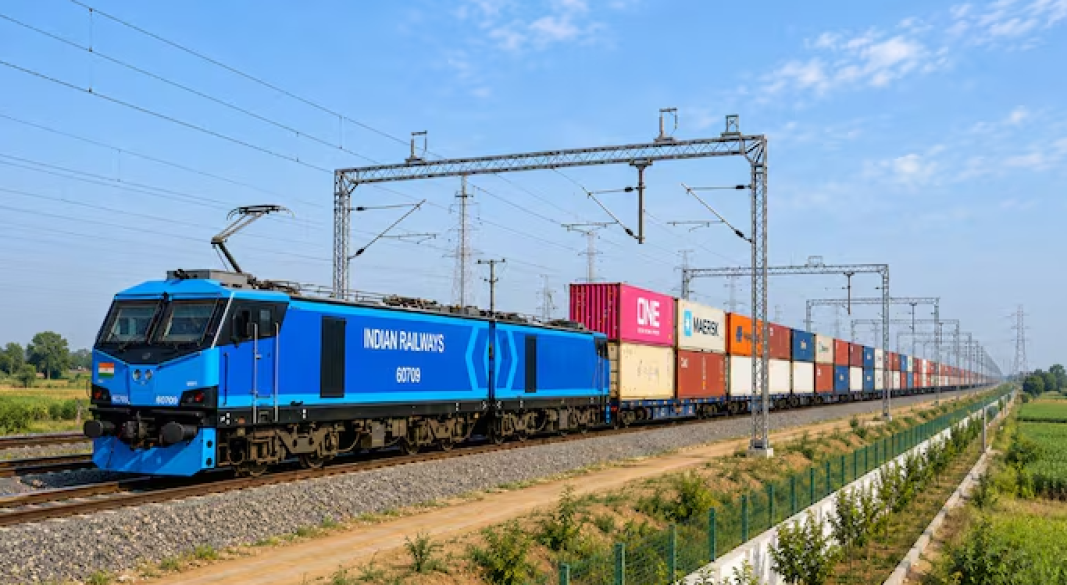
Prime Minister Narendra Modi has dedicated the final three sections of the Western Dedicated Freight Corridor (WDFC) to the nation, completing the entire freight rail connection between Jawaharlal Nehru Port (JNPT/JNPA) in Maharashtra and Dadri in Uttar Pradesh. The milestone marks a major step in strengthening India’s dedicated freight rail network and improving the movement of export-import cargo between ports and key industrial and consumption centres.
The three newly completed sections—Sanand (North)-Makarpura, New Umbergaon-New Saphale and New Saphale-JNPA, span a combined 326 route kilometres and have been developed at an investment of more than ₹20,700 crore. Their commissioning completes the previously missing port-end link of the WDFC, enabling seamless freight movement between JNPA and the northern hinterland.
The WDFC connects JNPA with Dadri, where it intersects with the Eastern Dedicated Freight Corridor (EDFC). The EDFC, stretching from Sonnagar in Bihar to Ludhiana in Punjab, is already operational. Together, the two corridors establish a dedicated freight rail backbone across India’s western, northern and eastern regions. According to the Times of India, the combined operational DFC network covers around 2,843 km.
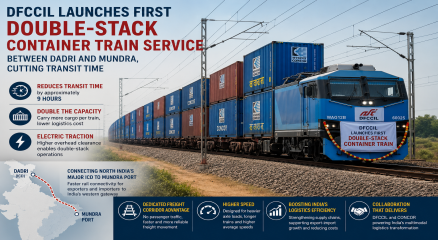
The completion of the WDFC is expected to have a direct impact on India’s logistics efficiency. The corridor allows the deployment of double-stack container trains, facilitating higher cargo volumes per train while improving rail capacity and reliability. Direct rail connectivity to JNPA is also expected to accelerate the evacuation of export-import containers, strengthen links between manufacturing centres and ports, and ease pressure on Mumbai’s conventional railway network.
The development is particularly significant for exporters, importers, container train operators, logistics parks, inland container depots and manufacturing clusters across western and northern India. It is also expected to support a greater shift of long-haul freight from road to rail, potentially lowering transportation costs and reducing road congestion.
The scale of utilisation of the dedicated freight network underscores its growing importance. Railway data cited by the Times of India shows that operational DFC stretches had handled approximately 5.2 lakh freight train trips as of August, averaging about 435 trains a day. The network had generated around 658 billion gross tonne-km and 360 billion net tonne-km.
With the WDFC now fully connected from JNPA to Dadri, India’s freight infrastructure enters a new phase in which capacity, operational efficiency and greater rail-based cargo penetration will become key measures of the corridors’ impact on the country’s logistics and supply-chain ecosystem.
𝐒𝐭𝐚𝐲 𝐓𝐮𝐧𝐞𝐝 𝐭𝐨 CARGOCONNECT 𝐟𝐨𝐫 𝐥𝐚𝐭𝐞𝐬𝐭 𝐮𝐩𝐝𝐚𝐭𝐞𝐬!
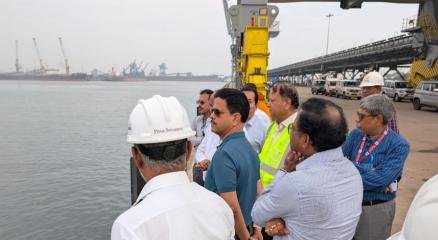
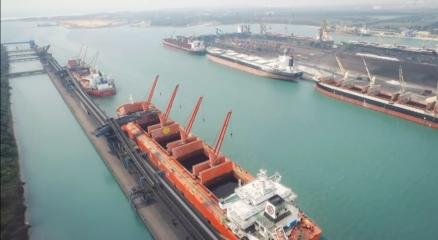
PPA Chairperson Susanta Kumar Purohit reviews Phase I development, focusing on mechanisation, cargo handling efficiency and improved rail-road connectivity at JPPL berth. Paradip Port Authority (PPA) Chairperson Susanta Kumar Purohit, IRSEE, reviewed the development and operational readiness of the Western Dock terminal at the Jindal Paradip Port Limited (JPPL) berth, with a focus on commissioning Phase I and strengthening cargo-handling infrastructure. The review covered berth operations, infrastructure development and measures to improve terminal productivity. Discussions with senior PPA officials and JPPL representatives, including Deputy CEO Sandeep Jaiswal, focused on achieving full berth mechanisation, improving cargo handling efficiency and strengthening rail and road connectivity for cargo evacuation. Phase I Designed for 12.5 Million Tonnes Annually: Phase I of the Western Dock project is designed to handle 12.5 million tonnes per annum (MTPA). The wider project envisages a total dry bulk cargo handling capacity of 25 MTPA and is being developed under the Build-Operate-Transfer (BOT) model. The review assessed progress towards commissioning and operationalising the facility. The planned capacity is intended to expand Paradip Port’s ability to handle dry bulk commodities and support cargo demand from industrial and trade sectors. The successful berthing of deep-draft Capesize vessels was also highlighted during the visit, demonstrating the terminal’s role in accommodating large vessels for bulk cargo operations. Mechanisation and Cargo Evacuation in Focus: Achieving 100% berth mechanisation was a key priority during the review. Mechanised handling systems can support cargo movement and terminal productivity, while efficient evacuation arrangements are essential to managing volumes at the planned capacity. PPA and JPPL representatives also discussed improving rail and road connectivity to facilitate the movement of cargo from the terminal to inland destinations. The effectiveness of these connections will be important in limiting logistics bottlenecks and ensuring that cargo can be moved efficiently beyond the port. Terminal handling capacity and landside evacuation capability will need to work together as operations develop. Safety, Sustainability and Technology: The review also addressed sustainable port operations, compliance with safety standards, technology-driven logistics solutions and the integration of multimodal cargo evacuation systems. These measures form part of the broader operational requirements for developing the Western Dock terminal. Coordination between berth operations, cargo-handling systems and inland transport links will be important to supporting reliable service delivery. Western Dock to Expand Paradip’s Bulk Cargo Capabilities: The Western Dock project is part of the ongoing development of Paradip Port’s infrastructure and cargo-handling capabilities on India’s eastern coast. With Phase I designed for 12.5 MTPA and the wider project targeting 25 MTPA, the development is intended to increase dry bulk handling capacity and support maritime trade. The next milestones will centre on commissioning Phase I, progressing mechanisation and ensuring effective rail and road connectivity. The extent to which the terminal achieves its planned throughput will depend on operational readiness, cargo demand and the efficiency of its wider logistics connections. Follow CARGOCONNECT for more such updates
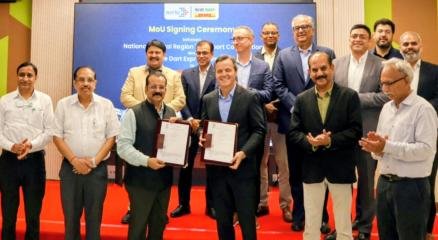
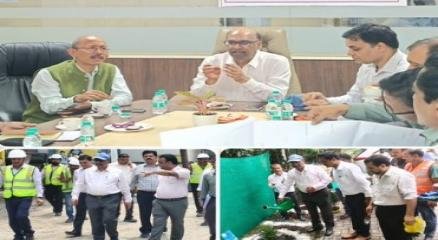


Prime Minister Narendra Modi has marked a major milestone in India’s logistics and rail freight infrastructure by flagging off freight trains from four strategic stations of the Western Dedicated Freight Corridor (WDFC) and dedicating three newly completed sections to the nation. The development completes India’s approximately 2,843-km Dedicated Freight Corridor (DFC) network, strengthening the country’s freight transportation backbone. Freight trains were flagged off from New Sanand (North), New Makarpura, New Umbergaon and New JNPT. The three newly commissioned WDFC sections—New Sanand (North)-New Makarpura, New Umbergaon-New Saphale and New Saphale-New JNPT, cover around 326 route km and have been developed at an investment of more than ₹20,700 crore. The commissioning establishes direct dedicated freight connectivity between northern and western industrial centres and Jawaharlal Nehru Port (JNPT), improving the movement of export-import cargo between production hubs, logistics centres and India’s western maritime gateways. The direct rail link is expected to accelerate container evacuation, improve supply-chain predictability and ease congestion on conventional railway routes. India’s DFC network comprises the 1,337-km Eastern Dedicated Freight Corridor (EDFC) between Ludhiana and Sonnagar and the 1,506-km WDFC between Dadri and JNPT. The corridors enable freight trains to operate on dedicated tracks, including double-stack container and higher axle-load trains, increasing cargo-carrying capacity and improving operational efficiency. The completed WDFC is also reducing transit times. Freight movement between Dadri and JNPT has fallen from around 66 hours to about 58 hours, according to DFCCIL, enhancing the competitiveness of rail freight and enabling faster access to ports. The two DFCs currently handle an average of around 443 freight trains daily, while Indian Railways’ freight loading reached 1,670 million tonnes in 2025-26, up from 1,098 million tonnes in 2014-15. The shift of freight traffic to dedicated corridors is also releasing capacity on conventional routes for additional passenger and freight services. The government is already planning the next phase of freight infrastructure. The Union Budget 2026 announced a proposed Dankuni-Surat Dedicated Freight Corridor, with work on its Detailed Project Report underway. The expansion is expected to further strengthen east-west connectivity and India's multimodal logistics ecosystem. 𝐒𝐭𝐚𝐲 𝐓𝐮𝐧𝐞𝐝 𝐭𝐨 CARGOCONNECT 𝐟𝐨𝐫 𝐥𝐚𝐭𝐞𝐬𝐭 𝐮𝐩𝐝𝐚𝐭𝐞𝐬!
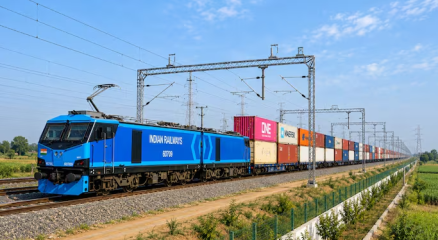
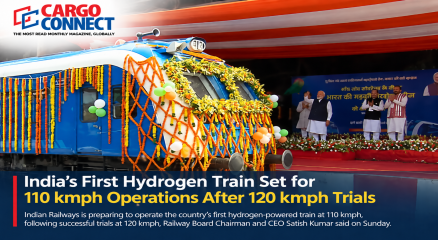
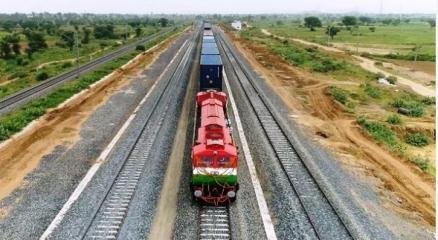
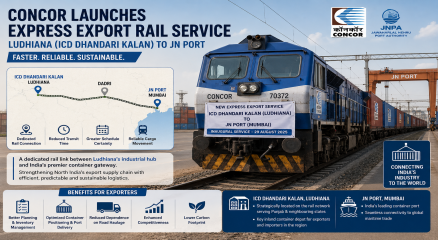
Container Corporation of India Ltd. (CONCOR) has started a scheduled express export rail service linking Inland Container Depot (ICD) Dhandari Kalan in Ludhiana with Jawaharlal Nehru Port (JN Port) near Mumbai, with the route passing through Dadri. The first service operated on August 29, creating a dedicated rail connection between one of Punjab’s major industrial centres and India’s principal container gateways. The service is intended to provide exporters with more predictable cargo movement and reduce transit delays associated with moving containers from northern manufacturing clusters to the western coast. The new service strengthens the inland-to-port supply chain for exporters based in Ludhiana and surrounding industrial areas. The city has a significant manufacturing base covering engineering products, textiles and garments, bicycles and components, machinery and other manufactured goods. Routing the express service through Dadri is expected to improve transit efficiency and provide greater schedule certainty for export consignments. This can allow shippers to better coordinate factory dispatches, inland container movements, customs processes and vessel cut-off requirements at JN Port. The development also builds on efforts by JNPA and CONCOR to improve rail connectivity between northern India and JN Port through the Western Dedicated Freight Corridor. Earlier this year, the two organisations held a trade interaction in Ludhiana with exporters, importers, shipping lines, container train operators and logistics companies to discuss the expanded rail connection. For cargo owners, a scheduled rail service can improve planning beyond simply reducing transit time. More consistent movement between an inland container depot and the port can help exporters manage inventory, container positioning and port delivery windows while reducing exposure to delays on long-distance road movements. ICD Dhandari Kalan is strategically positioned on the rail network serving Punjab and neighbouring states. JNPA identifies the Ludhiana facility as an important inland container location serving exporters and importers across Punjab as well as nearby regions. The shift toward scheduled rail services also supports greater use of multimodal transport for export cargo. Moving containers by rail over long distances can reduce reliance on road haulage for the inland leg, while giving exporters another option for connecting production centres with maritime services. The Ludhiana–JN Port link is particularly relevant for North India's export supply chain because cargo from manufacturing clusters must travel considerable distances before reaching a maritime gateway. Improving the reliability of that inland leg can have a direct bearing on overall shipment planning, port connectivity and logistics costs. Follow CARGOCONNECT for more such updates.