
Loading...
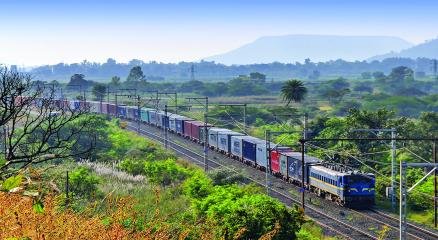
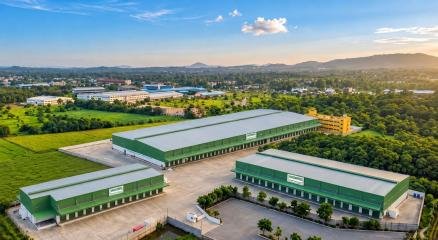
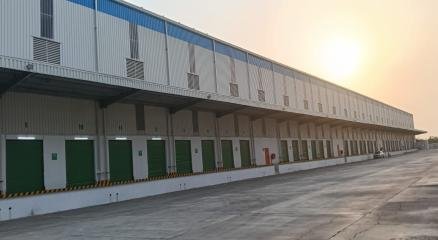
Southern Railway has invited Expressions of Interest (EoIs) from private developers to establish rail-linked cargo facilities at Angamali and Karukutty in Kerala’s Ernakulam district, aiming to strengthen freight connectivity, expand logistics infrastructure and encourage greater use of rail transport. The proposed facilities will focus on warehousing, cold storage, e-commerce logistics and cargo consolidation. The initiative, led by Southern Railway’s commercial branch, falls under Indian Railways’ Gati Shakti Multi-Modal Cargo Terminals and Cargo-Related Facilities policy. It seeks to improve first- and last-mile connectivity by linking production centres with railway freight terminals and connecting them to markets through rail, road and other transport modes. Southern Railway has earmarked 4,400 square metres of railway land at Angamali and 3,240 square metres at Karukutty for the proposed facilities. Developers can indicate their specific land requirements rather than taking up the entire available area. Final land allocations and site suitability will be determined at the tender stage. The EoI process will help the railway assess market demand, potential investments and expected cargo volumes. Interested developers are expected to outline their proposed infrastructure and the types and quantities of freight they anticipate handling. Depending on demand and commercial viability, the facilities could accommodate warehouses, cold storage units for perishable goods, and storage and order-processing centres for e-commerce shipments. Additional services may include sorting, grading, packaging and labelling. Cold chain infrastructure could help preserve agricultural produce and other temperature-sensitive goods while reducing spoilage. Cargo consolidation would also enable smaller consignments to be grouped for onward rail transportation, potentially improving distribution efficiency for businesses and producers. Under the proposed framework, selected private developers will finance, develop and operate the facilities at their own cost and risk. The proposed licence period is 25 years, with applicable land charges and minimum railway freight commitments forming part of the contractual terms. The proposed facilities could strengthen Kerala’s multimodal logistics network by bringing storage, cargo handling and rail transportation closer together. Their eventual impact will depend on private-sector participation, cargo demand and the ability to integrate the sites with existing freight terminals and road networks. 𝐒𝐭𝐚𝐲 𝐓𝐮𝐧𝐞𝐝 𝐭𝐨 CARGOCONNECT 𝐟𝐨𝐫 𝐥𝐚𝐭𝐞𝐬𝐭 𝐮𝐩𝐝𝐚𝐭𝐞𝐬!
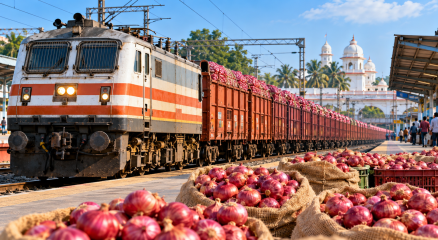
The Government of India has expanded its rail-based onion distribution network in the Northeast, with the first-ever Kanda Express consignment carrying approximately 440 metric tonnes (MT) of buffer-stock onions to Agartala, Tripura. The initiative aims to strengthen market availability, improve regional supply chains and help stabilise prices ahead of the festive season. The Department of Consumer Affairs arranged the movement under the Price Stabilisation Fund (PSF), extending the special rail service to Tripura after earlier consignments were transported to Assam. The consignment was scheduled to reach Agartala by 18 October 2026, providing additional supplies to meet seasonal demand for the essential commodity. Strengthening Last-Mile Distribution Across Tripura The initiative is expected to improve onion availability across seven of Tripura’s eight districts: Dhalai, South Tripura, Khowai, Unakoti, West Tripura, Gomati and Sepahijala. By combining rail-based transportation with road distribution, the government aims to improve the movement of buffer stocks into key consumption centres and strengthen last-mile access. The extension to Agartala forms part of a broader strategy to address regional supply imbalances, particularly in the Northeast, where reliable transportation links are important for ensuring the timely movement of essential commodities. The Kanda Express initiative is designed to supplement existing market supplies and help moderate price fluctuations during periods of increased demand. According to the Department of Consumer Affairs, two Kanda Express rail consignments carrying 840 MT and 452 MT of onions, respectively, along with 44 truck consignments transporting a combined 1,513.46 MT, have supplied buffer onions across the Northeast. The distribution network has covered locations in Assam, Tripura and Nagaland, including Guwahati, Kamrup, Gomati, Dimapur, Kohima, Niuland, Sepahijala and Chumoukedima. Buffer Stocks Support Price Stabilisation The latest rail movement comes as fresh Kharif onion arrivals have contributed to a moderation in wholesale prices. The all-India average mandi price declined from approximately ₹3,600 per quintal in September to around ₹3,300 per quintal in October 2026. Government data also indicated that retail onion prices had fallen by ₹1-₹13 per kg across 211 cities over the preceding two weeks. Calibrated releases from buffer stocks are intended to supplement market supplies, improve availability and reduce undue price volatility. The Department of Consumer Affairs continues to monitor onion prices, market arrivals and supply conditions to determine further releases from the PSF buffer. Additional consignments will be dispatched as required, based on prevailing market conditions and regional demand. The first Kanda Express movement to Tripura highlights the role of rail-led freight distribution in improving access to essential commodities. By expanding the reach of buffer stocks and integrating rail and road transportation, the initiative seeks to strengthen supply resilience and support more stable consumer prices during the festive season. 𝐒𝐭𝐚𝐲 𝐓𝐮𝐧𝐞𝐝 𝐭𝐨 CARGOCONNECT 𝐟𝐨𝐫 𝐥𝐚𝐭𝐞𝐬𝐭 𝐮𝐩𝐝𝐚𝐭𝐞𝐬!
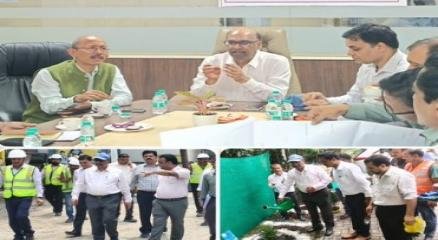
Container Corporation of India (CONCOR) Chairman and Managing Director (CMD) Ajit Kumar Panda visited the Container Freight Station, Dronagiri Rail Terminal (CFS-DRT) in the Mumbai Cluster, as part of the company’s focus on strengthening terminal operations and enhancing rail-linked logistics services. The Dronagiri facility is an important cargo-handling node supporting EXIM and domestic containerised cargo flows in the Mumbai region. CONCOR’s Dronagiri Node, commissioned in March 2003, spans around 59 acres and has an annual handling capacity of approximately 200,000 TEUs. Its catchment extends across Mumbai, Pune, Aurangabad, Vapi, Gujarat and Madhya Pradesh. During the visit, Panda reviewed the terminal’s operations and interacted with the Mumbai Cluster team, with the engagement highlighting the importance of efficient terminal management, customer-focused services and stronger integration of rail-based freight movement within the wider logistics network. The Dronagiri facility also supports warehousing and a broad range of EXIM cargo. Its infrastructure includes dedicated EXIM, domestic and bonded warehousing capacity. CONCOR has also developed capabilities at Dronagiri for handling out-of-gauge (ODC) export and import flat-rack containers, supported by first- and last-mile transportation services connecting the CFS with Jawaharlal Nehru Port terminals. Panda’s visit comes amid CONCOR’s continued emphasis on operational excellence, multimodal connectivity and strengthening logistics infrastructure across key trade gateways. The company has been working to improve rail connectivity, terminal efficiency and customer-centric logistics solutions, supporting more seamless cargo movement across India’s supply chain. The visit underscores the strategic importance of the Mumbai Cluster and Dronagiri Rail Terminal in facilitating efficient containerised trade and reinforcing CONCOR’s role in India’s rail-based logistics ecosystem. 𝐒𝐭𝐚𝐲 𝐓𝐮𝐧𝐞𝐝 𝐭𝐨 CARGOCONNECT 𝐟𝐨𝐫 𝐥𝐚𝐭𝐞𝐬𝐭 𝐮𝐩𝐝𝐚𝐭𝐞𝐬!

The Union Cabinet has approved eight railway multitracking projects worth ₹20,804 crore across nine states, marking a major push to expand rail capacity, improve freight movement and decongest high-density railway corridors. The projects, cleared by the Cabinet Committee on Economic Affairs (CCEA) chaired by Prime Minister Narendra Modi, will add around 1,196 km to the Indian Railways network and are targeted for completion by 2029-30. The projects span Tamil Nadu, Andhra Pradesh, Karnataka, Telangana, West Bengal, Jharkhand, Odisha, Madhya Pradesh and Chhattisgarh, covering 31 districts and improving connectivity to around 6,911 villages with a combined population of nearly 1.08 crore. The capacity expansion is expected to ease congestion, enhance operational efficiency and improve the reliability of passenger and freight services. Five projects, with an estimated investment of ₹10,021 crore, will add approximately 540 km across Tamil Nadu, Andhra Pradesh, Karnataka and Telangana. These include the third and fourth lines between Arakkonam-Renigunta and Whitefield-Bangarapet, doubling of the Hosur-Omalur and Salem-Karur-Dindigul sections, and multitracking between Secunderabad (Ghatkesar)-Kazipet. The remaining three projects, costing around ₹10,783 crore, will add about 656 km across West Bengal, Jharkhand, Odisha, Madhya Pradesh and Chhattisgarh. They comprise the fourth line between Kharagpur-Jharsuguda (Bagdehi), the fourth line between Katni-Pendra Road, and the third line between Bilaspur (Uslapur)-Pendra Road. Importantly for India’s logistics sector, the projects are expected to generate additional freight capacity of around 74 million tonnes per annum (MTPA). The upgraded corridors will support movement of coal, cement, iron and steel, containers, automobiles, foodgrains, petroleum products and fertilisers. Planned under the PM Gati Shakti National Master Plan, the projects are intended to strengthen multimodal connectivity, improve logistics efficiency and support a greater shift towards rail freight, helping reduce logistics costs, fuel consumption and emissions. 𝐒𝐭𝐚𝐲 𝐓𝐮𝐧𝐞𝐝 𝐭𝐨 CARGOCONNECT 𝐟𝐨𝐫 𝐥𝐚𝐭𝐞𝐬𝐭 𝐮𝐩𝐝𝐚𝐭𝐞𝐬!

Prime Minister Narendra Modi has marked a major milestone in India’s logistics and rail freight infrastructure by flagging off freight trains from four strategic stations of the Western Dedicated Freight Corridor (WDFC) and dedicating three newly completed sections to the nation. The development completes India’s approximately 2,843-km Dedicated Freight Corridor (DFC) network, strengthening the country’s freight transportation backbone. Freight trains were flagged off from New Sanand (North), New Makarpura, New Umbergaon and New JNPT. The three newly commissioned WDFC sections—New Sanand (North)-New Makarpura, New Umbergaon-New Saphale and New Saphale-New JNPT, cover around 326 route km and have been developed at an investment of more than ₹20,700 crore. The commissioning establishes direct dedicated freight connectivity between northern and western industrial centres and Jawaharlal Nehru Port (JNPT), improving the movement of export-import cargo between production hubs, logistics centres and India’s western maritime gateways. The direct rail link is expected to accelerate container evacuation, improve supply-chain predictability and ease congestion on conventional railway routes. India’s DFC network comprises the 1,337-km Eastern Dedicated Freight Corridor (EDFC) between Ludhiana and Sonnagar and the 1,506-km WDFC between Dadri and JNPT. The corridors enable freight trains to operate on dedicated tracks, including double-stack container and higher axle-load trains, increasing cargo-carrying capacity and improving operational efficiency. The completed WDFC is also reducing transit times. Freight movement between Dadri and JNPT has fallen from around 66 hours to about 58 hours, according to DFCCIL, enhancing the competitiveness of rail freight and enabling faster access to ports. The two DFCs currently handle an average of around 443 freight trains daily, while Indian Railways’ freight loading reached 1,670 million tonnes in 2025-26, up from 1,098 million tonnes in 2014-15. The shift of freight traffic to dedicated corridors is also releasing capacity on conventional routes for additional passenger and freight services. The government is already planning the next phase of freight infrastructure. The Union Budget 2026 announced a proposed Dankuni-Surat Dedicated Freight Corridor, with work on its Detailed Project Report underway. The expansion is expected to further strengthen east-west connectivity and India's multimodal logistics ecosystem. 𝐒𝐭𝐚𝐲 𝐓𝐮𝐧𝐞𝐝 𝐭𝐨 CARGOCONNECT 𝐟𝐨𝐫 𝐥𝐚𝐭𝐞𝐬𝐭 𝐮𝐩𝐝𝐚𝐭𝐞𝐬!
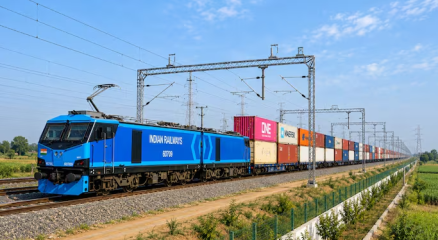
Prime Minister Narendra Modi has dedicated the final three sections of the Western Dedicated Freight Corridor (WDFC) to the nation, completing the entire freight rail connection between Jawaharlal Nehru Port (JNPT/JNPA) in Maharashtra and Dadri in Uttar Pradesh. The milestone marks a major step in strengthening India’s dedicated freight rail network and improving the movement of export-import cargo between ports and key industrial and consumption centres. The three newly completed sections—Sanand (North)-Makarpura, New Umbergaon-New Saphale and New Saphale-JNPA, span a combined 326 route kilometres and have been developed at an investment of more than ₹20,700 crore. Their commissioning completes the previously missing port-end link of the WDFC, enabling seamless freight movement between JNPA and the northern hinterland. The WDFC connects JNPA with Dadri, where it intersects with the Eastern Dedicated Freight Corridor (EDFC). The EDFC, stretching from Sonnagar in Bihar to Ludhiana in Punjab, is already operational. Together, the two corridors establish a dedicated freight rail backbone across India’s western, northern and eastern regions. According to the Times of India, the combined operational DFC network covers around 2,843 km. The completion of the WDFC is expected to have a direct impact on India’s logistics efficiency. The corridor allows the deployment of double-stack container trains, facilitating higher cargo volumes per train while improving rail capacity and reliability. Direct rail connectivity to JNPA is also expected to accelerate the evacuation of export-import containers, strengthen links between manufacturing centres and ports, and ease pressure on Mumbai’s conventional railway network. The development is particularly significant for exporters, importers, container train operators, logistics parks, inland container depots and manufacturing clusters across western and northern India. It is also expected to support a greater shift of long-haul freight from road to rail, potentially lowering transportation costs and reducing road congestion. The scale of utilisation of the dedicated freight network underscores its growing importance. Railway data cited by the Times of India shows that operational DFC stretches had handled approximately 5.2 lakh freight train trips as of August, averaging about 435 trains a day. The network had generated around 658 billion gross tonne-km and 360 billion net tonne-km. With the WDFC now fully connected from JNPA to Dadri, India’s freight infrastructure enters a new phase in which capacity, operational efficiency and greater rail-based cargo penetration will become key measures of the corridors’ impact on the country’s logistics and supply-chain ecosystem. 𝐒𝐭𝐚𝐲 𝐓𝐮𝐧𝐞𝐝 𝐭𝐨 CARGOCONNECT 𝐟𝐨𝐫 𝐥𝐚𝐭𝐞𝐬𝐭 𝐮𝐩𝐝𝐚𝐭𝐞𝐬!

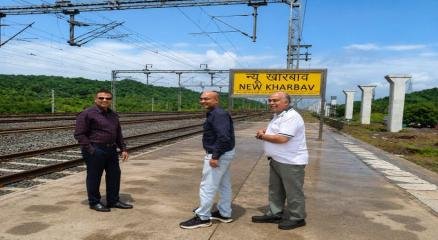
The Jawaharlal Nehru Port Authority (JNPA) has stepped up efforts to strengthen rail-based container evacuation and multimodal connectivity between the port and major consumption and distribution centres in the Mumbai region. JNPA Chairman Gaurav Dayal, IAS, accompanied by Deputy Chairman Ravish Singh, IRTS, and senior port officials, conducted a field inspection of key railway infrastructure along the Dedicated Freight Corridor (DFC) route. The inspection focused on infrastructure that could support faster and more efficient movement of containerised cargo from JNPA towards Bhiwandi, one of the region’s prominent warehousing and distribution hubs. Improved rail connectivity to the logistics cluster is expected to help reduce transit times, enhance supply-chain efficiency and ease pressure on road networks handling container traffic. During the visit, the JNPA delegation inspected Kharbhav Railway Station to assess its strategic integration with the DFC and its potential role in facilitating container movement. The location is being evaluated in the context of improving rail connectivity between the port and inland consumption and distribution centres. The team also visited the Bhiwandi Warehousing Hub, where officials reviewed warehousing capacity, last-mile logistics infrastructure and storage readiness. With Bhiwandi serving as a major logistics and fulfilment cluster for the Mumbai Metropolitan Region, efficient links between the port, rail network and warehousing facilities are increasingly important for supporting growing cargo volumes. Another key stop was New Nilanje Railway Station, which was inspected for its potential to serve as an additional freight node. The assessment forms part of broader efforts to identify infrastructure opportunities that can improve cargo evacuation and provide greater flexibility within the regional freight network. The DFC is designed to facilitate faster and more reliable freight transportation by providing dedicated rail infrastructure for goods movement. For ports such as JNPA, stronger integration with the freight corridor can support a shift towards rail-based cargo evacuation, potentially improving turnaround times while reducing dependence on road transport for longer-haul container movements. The latest field review highlights JNPA’s focus on developing an integrated logistics ecosystem linking port infrastructure with rail freight, warehousing and last-mile distribution. As cargo flows and supply-chain requirements continue to evolve, enhanced multimodal connectivity will remain critical to improving the efficiency, resilience and competitiveness of India’s logistics network. 𝐒𝐭𝐚𝐲 𝐓𝐮𝐧𝐞𝐝 𝐭𝐨 CARGOCONNECT 𝐟𝐨𝐫 𝐥𝐚𝐭𝐞𝐬𝐭 𝐮𝐩𝐝𝐚𝐭𝐞𝐬!
Indian Railways has approved a single all-India licence for container train operators (CTOs) to improve the ease of doing business in rail freight sector. The move replaces the existing zone-specific licensing framework and is expected to simplify operations, reduce compliance requirements, and encourage greater private sector participation in rail-based container logistics. The decision was approved by the Cabinet Committee on Economic Affairs (CCEA) as part of amendments to the Liberalised Special Freight Train Operator (LSFTO) and Container Train Operator (CTO) policies. Under the revised framework, operators will now be able to obtain a single licence permitting container train operations across the entire Indian Railways network, instead of securing separate permissions for multiple railway zones. A one-time licence fee of ₹25 crore will be applicable for the all-India permit. Existing operators holding licences for individual railway zones will have the flexibility to migrate to the new regime by paying only the differential amount between the fee already paid and the new all-India licence fee. This provision ensures a smooth transition while protecting previous investments made by operators. According to the government, the reform is designed to remove procedural complexities, create a more predictable regulatory environment, and improve operational flexibility for container train companies. A unified licensing system is expected to reduce administrative burdens, eliminate duplication of approvals, and enable operators to expand services seamlessly across different regions. The initiative aligns with the government's broader objective of increasing the modal share of rail in freight transportation. By making rail freight operations more efficient and business-friendly, Indian Railways aims to strengthen multimodal logistics, reduce transportation costs, and improve cargo movement across the country. Industry stakeholders are expected to benefit from faster network expansion, improved asset utilisation, and simplified business planning. The policy is also likely to support logistics parks, inland container depots, ports, and industrial clusters by facilitating uninterrupted rail connectivity across state boundaries. The reforms are in line with the government's vision under the National Logistics Policy and PM Gati Shakti initiative, both of which focus on improving logistics efficiency, lowering supply chain costs, and enhancing India's competitiveness in global trade. By streamlining licensing procedures and encouraging greater private participation, Indian Railways expects the new framework to accelerate containerised cargo movement while contributing to a more integrated and efficient national logistics ecosystem. 𝐒𝐭𝐚𝐲 𝐓𝐮𝐧𝐞𝐝 𝐭𝐨 CARGOCONNECT 𝐟𝐨𝐫 𝐥𝐚𝐭𝐞𝐬𝐭 𝐮𝐩𝐝𝐚𝐭𝐞𝐬!
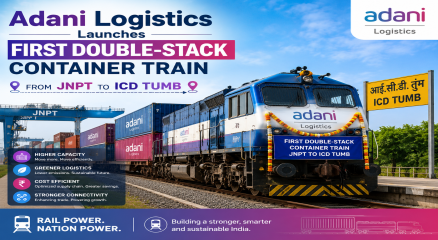
Adani Logistics achieves a new milestone in India's multimodal logistics landscape with the launch of its first double-stack container train service connecting Jawaharlal Nehru Port (JNPT) and Inland Container Depot (ICD) Tumb. The new service is expected to enhance rail freight efficiency, reduce transit costs, and strengthen connectivity between the country's largest container port and key hinterland markets. The introduction of the double-stack container train underscores the growing adoption of rail-based logistics solutions aimed at improving cargo movement while reducing road congestion and carbon emissions. Double-stack operations enable the transportation of a higher volume of containers per train, resulting in better asset utilization and improved supply chain economics. The JNPT–ICD Tumb corridor serves as an important gateway for import-export cargo, linking manufacturing and consumption centres with international trade routes. By leveraging double-stack rail capabilities, Adani Logistics aims to provide customers with faster, more reliable, and cost-effective transportation solutions while supporting India's logistics modernization agenda. The initiative aligns with the broader industry trend of shifting freight movement from road to rail, a transition that enhances sustainability and operational efficiency. As container volumes continue to grow, integrated rail services are expected to play a critical role in strengthening India's supply chain infrastructure and improving port-hinterland connectivity. With this launch, Adani Logistics further expands its multimodal logistics offerings, reinforcing its commitment to developing efficient freight transportation networks and supporting the evolving needs of India's trade and logistics sector. 𝐒𝐭𝐚𝐲 𝐓𝐮𝐧𝐞𝐝 𝐭𝐨 CARGOCONNECT 𝐟𝐨𝐫 𝐥𝐚𝐭𝐞𝐬𝐭 𝐮𝐩𝐝𝐚𝐭𝐞𝐬!
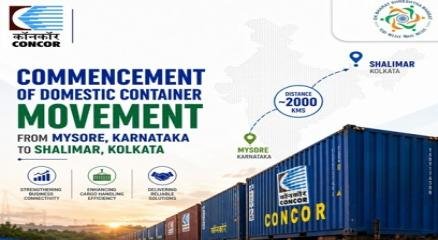
Container Corporation of India Ltd. (CONCOR) has marked a significant milestone in India’s logistics landscape with the launch of its first domestic container movement from Mysuru, Karnataka, to Kolkata, West Bengal. The initiative establishes a new rail-based freight corridor aimed at enhancing multimodal connectivity between southern and eastern India while offering businesses a more efficient and cost-effective transportation alternative. The inaugural movement was flagged off from CONCOR’s Multi Modal Logistics Park (MMLP) at Kadakola, Mysuru, during the first week of June. The maiden service comprised 80 domestic 20-foot containers destined for Shalimar in Kolkata, creating a direct logistics link between two important economic regions of the country. The launch underscores CONCOR’s continued focus on expanding its integrated logistics network and strengthening rail-led cargo transportation. By introducing this service, the company aims to provide manufacturers, traders, and exporters in and around Mysuru with improved access to markets in eastern India while reducing dependence on long-haul road transport. Industry stakeholders believe the new corridor will play a pivotal role in streamlining cargo movement for a wide range of commodities, including agricultural products, processed foods, engineering goods, and other manufactured items originating from Karnataka’s industrial and agricultural hinterland. The service is expected to offer greater reliability, lower transportation costs, and enhanced operational efficiency for shippers. The development also aligns with India’s broader objective of increasing the share of rail in freight transportation and promoting multimodal logistics solutions. Rail-based container movement not only supports cost optimization but also contributes to sustainability goals by reducing road congestion and lowering carbon emissions associated with long-distance cargo movement. For Mysuru, the service further strengthens the strategic importance of the Kadakola MMLP, which has emerged as a growing logistics hub in southern India. Improved connectivity to eastern markets is expected to create new opportunities for regional industries, facilitate smoother supply chain operations, and support economic growth across the region. The new service represents another step in CONCOR’s efforts to build an integrated nationwide logistics ecosystem. As supply chains become increasingly focused on efficiency, resilience, and sustainability, the Mysuru–Kolkata corridor is expected to provide businesses with a dependable freight solution while reinforcing India’s evolving multimodal logistics infrastructure. With the successful commencement of this service, CONCOR continues to expand its domestic container network, supporting seamless cargo movement and strengthening the country’s supply chain connectivity from production centers to consumption markets. 𝐒𝐭𝐚𝐲 𝐓𝐮𝐧𝐞𝐝 𝐭𝐨 CARGOCONNECT 𝐟𝐨𝐫 𝐥𝐚𝐭𝐞𝐬𝐭 𝐮𝐩𝐝𝐚𝐭𝐞𝐬!
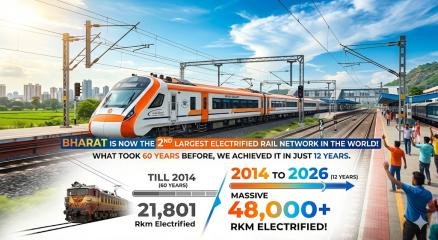
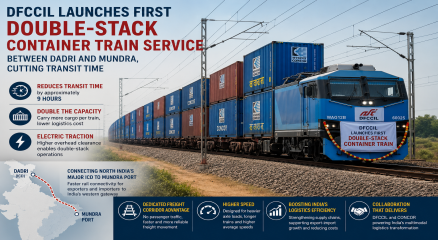
Indian Railways has successfully commenced the operation of electric double-stack container trains, marking a significant step toward greener, faster, and more efficient freight movement. The development reinforces India's growing stature as a global leader in rail infrastructure modernisation and sustainable logistics. The milestone has been made possible through the completion of high-rise overhead electrification infrastructure on key freight corridors, enabling double-stack container trains to operate entirely on electric traction. This breakthrough is expected to significantly reduce logistics costs, improve energy efficiency, and lower carbon emissions while enhancing freight carrying capacity across major industrial and trade routes. The introduction of electric double-stack container trains aligns with India's broader vision of transforming its logistics ecosystem and reducing dependence on fossil fuels. Freight trains powered by electricity not only offer lower operating costs but also contribute to cleaner transportation, supporting national sustainability goals and the government's commitment to achieving net-zero emissions targets. The achievement comes amid the rapid expansion of railway electrification across the country. According to Railway Minister Ashwini Vaishnaw, India has emerged as the world's second-largest electrified rail network. While the country electrified approximately 21,801 route kilometres over six decades up to 2014, more than 48,000 route kilometres have been electrified between 2014 and 2026, reflecting an unprecedented pace of infrastructure development. Industry experts believe that electric double-stack operations will play a crucial role in strengthening multimodal logistics and enhancing the competitiveness of rail freight. The ability to transport a larger volume of containers in a single journey improves asset utilization and reduces congestion on highways, delivering both economic and environmental benefits. The Dedicated Freight Corridor (DFC) network has been instrumental in enabling this transformation. Designed to support higher axle loads, longer trains, and greater operational efficiency, the DFC provides the ideal infrastructure for running double-stack container services at scale. The initiative is expected to further boost containerized cargo movement, benefiting sectors such as manufacturing, e-commerce, retail, automotive, and export-import trade. As India continues investing in modern rail infrastructure, digital technologies, and sustainable freight solutions, the successful deployment of electric double-stack container trains underscores the country's commitment to building a world-class logistics network. The achievement not only strengthens India's supply chain capabilities but also sets a new benchmark for environmentally responsible freight transportation on a global scale. 𝐒𝐭𝐚𝐲 𝐓𝐮𝐧𝐞𝐝 𝐭𝐨 CARGOCONNECT 𝐟𝐨𝐫 𝐥𝐚𝐭𝐞𝐬𝐭 𝐮𝐩𝐝𝐚𝐭𝐞𝐬!
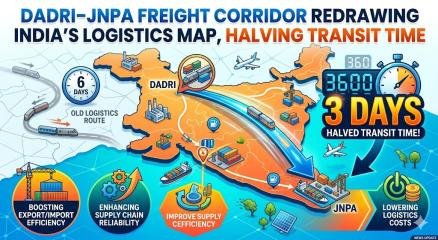
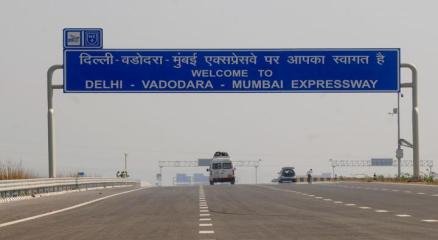
India’s Dedicated Freight Corridors (DFCs) are rapidly reshaping the country’s logistics landscape, with the Western Dedicated Freight Corridor (WDFC) between Dadri and Jawaharlal Nehru Port Authority (JNPA) emerging as a game-changing infrastructure project for supply chains and multimodal freight movement. Designed exclusively for cargo operations, the corridor is significantly reducing transit times, improving reliability, and easing congestion on conventional rail routes. Stretching nearly 1,500 km from Dadri in Uttar Pradesh to JNPA near Mumbai, the corridor forms the backbone of India’s western logistics artery, connecting manufacturing centres, inland container depots, industrial clusters, and ports. With dedicated tracks for freight trains, the network allows uninterrupted cargo movement at higher average speeds, eliminating delays caused by mixed passenger and freight operations. One of the biggest outcomes has been a sharp reduction in transit time. Freight movement between Dadri and JNPA that traditionally took close to 72 hours on congested rail routes is now being completed in nearly half the time, improving turnaround efficiency for exporters, importers, and logistics operators. Industry stakeholders believe the reduction in transit duration will strengthen India’s competitiveness in global trade and support the government’s target of lowering logistics costs as a percentage of GDP. The DFC network has also enabled the operation of longer and heavier freight trains, including double-stack container services on electrified routes. This has increased carrying capacity while lowering per-unit transportation costs. According to sector estimates, rail freight on dedicated corridors is considerably more energy-efficient and environmentally sustainable than road transport, aligning with India’s broader decarbonisation goals. Beyond operational efficiency, the corridors are catalysing the growth of integrated logistics ecosystems. Regions such as Dadri, Greater Noida, and Jewar are witnessing accelerated development of multimodal logistics parks, warehousing zones, and industrial hubs due to their strategic connectivity with both the Eastern and Western DFCs. The emerging “rail-road-air” logistics triangle around the National Capital Region is expected to attract substantial investments in manufacturing and distribution infrastructure. The Dedicated Freight Corridor Corporation of India (DFCCIL) has reported rising freight train volumes on the operational stretches, indicating growing industry adoption. The completion of key links on the western corridor is expected to further enhance throughput and reduce dependency on road transport for long-haul cargo. Analysts say the dedicated rail network could become central to India’s ambition of creating faster, greener, and more resilient supply chains. As India continues investing in additional freight corridors across the country, the success of the Dadri-JNPA route demonstrates how infrastructure modernisation can directly influence trade efficiency, logistics performance, and industrial growth. 𝐒𝐭𝐚𝐲 𝐓𝐮𝐧𝐞𝐝 𝐭𝐨 https://cargoconnect.co.in/ 𝐟𝐨𝐫 𝐥𝐚𝐭𝐞𝐬𝐭 𝐮𝐩𝐝𝐚𝐭𝐞𝐬
India’s two largest container gateways, Mundra and Nhava Sheva, are facing mounting congestion as rising cargo volumes, truck driver shortages and rerouted shipments from the Middle East strain operations across the country’s logistics network. Shipping lines and logistics operators are reporting worsening turnaround times at both ports, with vessel delays averaging nearly two and a half days and some unscheduled ships waiting up to five days for berthing. The disruptions are slowing cargo movement, tightening yard space and forcing carriers to make last-minute operational changes. According to industry reports, a shortage of truck drivers has become a major bottleneck for container transfers between terminals and inland transport hubs. The issue has reduced the pace of cargo evacuation from ports, adding pressure on already crowded container yards. Terminal operators have intermittently restricted gate access to control container inflow, while export gate schedules continue to shift frequently. These changes are complicating truck planning and increasing uncertainty for exporters and freight forwarders. The congestion is being intensified by cargo diversions linked to disruptions in the Middle East, particularly around Gulf trade routes. Shipping lines have increasingly redirected transshipment cargo to Indian ports as alternatives to facilities in the Persian Gulf, sharply increasing container volumes in recent weeks. The pressure has begun affecting carrier schedules. Some shipping companies are rerouting vessels between terminals at short notice to avoid yard congestion. Danish shipping giant Maersk recently shifted several sailings from its regular terminal at Nhava Sheva to PSA Mumbai after facing space constraints and a growing container backlog. Industry stakeholders say these sudden terminal changes are creating operational and financial challenges for shippers, including higher handling costs and difficulties coordinating customs clearance and inland transportation. The latest disruption comes at a time when India has been positioning itself as a major global manufacturing and logistics hub. Over the past decade, the country has expanded port capacity, improved freight corridors and modernised customs processes to strengthen supply chain efficiency. However, the current congestion highlights the vulnerability of port infrastructure during periods of sudden trade realignment and geopolitical disruption. Logistics experts warn that prolonged delays could increase freight costs, extend delivery timelines and place additional pressure on exporters already dealing with volatile global shipping conditions. Follow CARGOCONNECT for more such updates.
The diversification process by Apple continues to progress as India becomes one of the centers for manufacturing operations. Based on an analysis by Smart Analytics Global (SAG), the percentage share of Indian manufacturing of iPhones has increased from 14% in 2024 to 23% in 2025 and further to 28% by 2026, whereas China’s share has decreased from 83% to 74% within the same timeframe. As Apple continues to lower its reliance on China, India is all set to emerge as the major assembly hub for 28 percent of all iPhones exported around the world by 2026, compared to just 23 percent in the prior year. This change is due to the company's overall strategy of spreading its manufacturing operations in order to mitigate potential tariff risks and geopolitical risks, in addition to creating a more flexible manufacturing network beyond China. Based on the estimates of Smart Analytics Global (SAG), China's share in global iPhone production dropped from 83% in 2024 to 74% in 2025, while India's share increased from 14% in 2024 to 23% in 2025. Estimates provided by another market research firm, Counterpoint Research, indicate that India's share in global iPhone manufacturing could increase to approximately 26% in 2026 from 23% in 2025. As per SAG, “India will account for the manufacture of 28 percent of iPhones shipped globally in 2026, rising from 23 percent in 2025. This growth will be fueled by the ongoing diversification of Apple outside China and capacity build-up at existing manufacturers in India like Tata Electronics,” said Abhilash Kumar, an analyst at Smart Analytics Global. According to Tarun Pathak, research director at Counterpoint Research, “Apple's manufacturing partners have substantially increased their manufacturing capacities and assembly lines in India. They have also diversified their product portfolio made in India.” He further stated that the increase in manufacturing capacity of Tata Electronics is another factor aiding the growth. Apple has managed to localize production substantially in India through manufacturers like Foxconn and Tata Electronics. The recent takeover of Wistron and Pegatron in India by the Tata Group represents a huge step forward in Apple’s localization efforts in India. At present, India is assembling a larger number of iPhones, even the latest versions, and has become an important source of exports, targeting countries like the US and European nations. Over the past five years, Apple has manufactured iPhones worth almost $70 billion in India using its PLI scheme, where around $51 billion, or almost 73% of all iPhones manufactured, were exported from India. Moreover, iPhones have become the most exported goods from India during the previous financial year. India has become the biggest beneficiary of Apple’s changing supply chain. From initially assembling iPhones on a smaller scale, it has grown to become a manufacturing cluster for iPhones through government incentives, increased manufacturing capabilities, and the growing presence of suppliers. Several of the most important suppliers and manufacturers for Apple are still highly entrenched within China, allowing the country to enjoy an unrivaled capacity and adaptability when it comes to managing mass-scale productions and product shifts. For more such news and updates, visit CARGOCONNECT.
Shadowfax is significantly expanding its quick commerce infrastructure, announcing plans to scale its dark store network from 15 facilities to 100 by FY27. The move underscores the company’s growing focus on hyperlocal deliveries, same-day fulfilment, and direct-to-consumer (D2C) logistics as competition intensifies in India’s fast-evolving quick commerce ecosystem. The Bengaluru-based company plans to add 85 new dark stores over the next fiscal year, targeting metro cities with delivery radiuses of approximately seven kilometres and fulfilment timelines of around 30 minutes. The expansion is expected to support rising demand from vertical quick commerce platforms and D2C brands that increasingly rely on third-party logistics (3PL) partners for rapid deliveries. According to company executives, vertical marketplaces are emerging as a profitable segment because of their dependence on outsourced logistics infrastructure rather than captive fulfilment networks. Shadowfax believes this trend creates a strong opportunity for scalable 3PL-led quick commerce models. The dark store expansion will account for nearly 10% of Shadowfax’s planned capital expenditure of ₹180–190 crore in FY27. The company is simultaneously strengthening its automation and artificial intelligence capabilities to improve operational efficiency. AI-led demand forecasting, automated slotting, and smarter sorting centre operations are expected to reduce overhead costs while accelerating breakeven timelines for new facilities. Shadowfax’s aggressive expansion comes on the back of strong financial performance. The company reported a consolidated net profit of ₹55.8 crore in Q4 FY26, compared to a net loss of ₹9.9 crore during the same period last year. Revenue from operations surged 73.6% year-on-year to ₹1,237 crore, reflecting growing order volumes and increased adoption of quick commerce delivery services. Founded in 2015, Shadowfax has evolved into one of India’s largest logistics and last-mile delivery networks, serving over 2,500 cities and more than 15,000 pincodes. The company currently handles millions of shipments daily through a technology-driven delivery ecosystem that supports e-commerce, grocery, hyperlocal, and D2C brands. Industry analysts believe the dark store expansion reflects a broader shift within India’s logistics sector, where speed, proximity-based fulfilment, and automated operations are becoming central to supply chain competitiveness. As quick commerce adoption accelerates beyond groceries into categories such as fashion, electronics, and personal care, logistics providers like Shadowfax are positioning themselves as critical enablers of ultra-fast retail fulfilment. 𝐒𝐭𝐚𝐲 𝐓𝐮𝐧𝐞𝐝 𝐭𝐨 https://cargoconnect.co.in/ 𝐟𝐨𝐫 𝐥𝐚𝐭𝐞𝐬𝐭 𝐮𝐩𝐝𝐚𝐭𝐞𝐬!
India’s Dedicated Freight Corridors (DFCs) are rapidly reshaping the country’s logistics landscape, with the Western Dedicated Freight Corridor (WDFC) between Dadri and Jawaharlal Nehru Port Authority (JNPA) emerging as a game-changing infrastructure project for supply chains and multimodal freight movement. Designed exclusively for cargo operations, the corridor is significantly reducing transit times, improving reliability, and easing congestion on conventional rail routes. Stretching nearly 1,500 km from Dadri in Uttar Pradesh to JNPA near Mumbai, the corridor forms the backbone of India’s western logistics artery, connecting manufacturing centres, inland container depots, industrial clusters, and ports. With dedicated tracks for freight trains, the network allows uninterrupted cargo movement at higher average speeds, eliminating delays caused by mixed passenger and freight operations. One of the biggest outcomes has been a sharp reduction in transit time. Freight movement between Dadri and JNPA that traditionally took close to 72 hours on congested rail routes is now being completed in nearly half the time, improving turnaround efficiency for exporters, importers, and logistics operators. Industry stakeholders believe the reduction in transit duration will strengthen India’s competitiveness in global trade and support the government’s target of lowering logistics costs as a percentage of GDP. The DFC network has also enabled the operation of longer and heavier freight trains, including double-stack container services on electrified routes. This has increased carrying capacity while lowering per-unit transportation costs. According to sector estimates, rail freight on dedicated corridors is considerably more energy-efficient and environmentally sustainable than road transport, aligning with India’s broader decarbonisation goals. Beyond operational efficiency, the corridors are catalysing the growth of integrated logistics ecosystems. Regions such as Dadri, Greater Noida, and Jewar are witnessing accelerated development of multimodal logistics parks, warehousing zones, and industrial hubs due to their strategic connectivity with both the Eastern and Western DFCs. The emerging “rail-road-air” logistics triangle around the National Capital Region is expected to attract substantial investments in manufacturing and distribution infrastructure. The Dedicated Freight Corridor Corporation of India (DFCCIL) has reported rising freight train volumes on the operational stretches, indicating growing industry adoption. The completion of key links on the western corridor is expected to further enhance throughput and reduce dependency on road transport for long-haul cargo. Analysts say the dedicated rail network could become central to India’s ambition of creating faster, greener, and more resilient supply chains. As India continues investing in additional freight corridors across the country, the success of the Dadri-JNPA route demonstrates how infrastructure modernisation can directly influence trade efficiency, logistics performance, and industrial growth. 𝐒𝐭𝐚𝐲 𝐓𝐮𝐧𝐞𝐝 𝐭𝐨 https://cargoconnect.co.in/ 𝐟𝐨𝐫 𝐥𝐚𝐭𝐞𝐬𝐭 𝐮𝐩𝐝𝐚𝐭𝐞𝐬
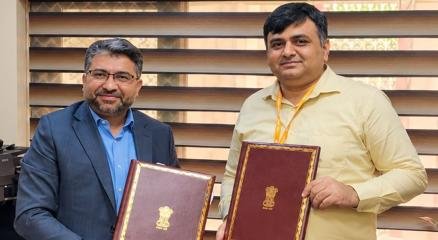
In a strategic warehousing move, the South Eastern Coalfields Limited (SECL), the second largest coal-producing subsidiary of Coal India Limited, has signed a Memorandum of Understanding (MoU) with Central Warehousing Corporation (CWC) for collaboration in coal logistics, railway rake provisioning under GPWIS and similar schemes, and integrated transportation services. Guided by the Union Ministry of Coal, SECL is rapidly working to improve India’s energy security and coal logistics infrastructure. The company is taking steps to boost coal evacuation efficiency and ensure a steady fuel supply to essential sectors. This partnership with CWC is a significant move in that direction. The goal of the partnership with CWC is to strengthen SECL’s coal evacuation capabilities by providing reliable and efficient rail logistics solutions to meet the rising demand from the power, steel, cement, and other sectors. The MoU outlines collaboration in various areas, including dedicated railway rake operations, integrated coal transportation solutions, multimodal logistics, first-mile and last-mile connectivity, and the deployment of digital systems for logistics monitoring and operational efficiency. Under the agreed framework, both organizations will explore provisioning and operation of GPWIS and equivalent racks, integrated rail logistics services, and long-term transportation solutions aimed at improving dispatch efficiency and reducing logistical obstacles. The MoU was signed in the presence of Harish Duhan, Chairman-cum-Managing Director of SECL, and Santosh Sinha, Managing Director of CWC. Functional Directors and senior officials from SECL, as well as representatives from CWC, attended the signing ceremony. SECL plays a vital role in meeting the country's growing coal demand. In the current financial year 2026-27, Coal India Limited has already surpassed the 100 million tonne production mark, with SECL contributing more than 26.8 million tonnes. Central Warehousing Corporation (CWC), a Navaratna Central Public Sector Enterprise under the Government of India, is a leader in integrated logistics and warehousing services. It has extensive experience in rail-linked cargo movement and multimodal transportation solutions. For more such news and updates, visit CARGOCONNECT.