
Loading...
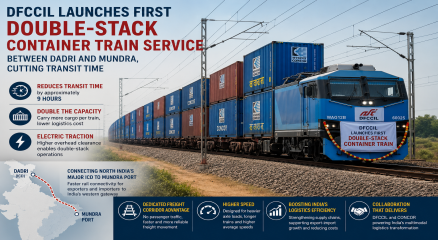
Indian Railways has successfully commenced the operation of electric double-stack container trains, marking a significant step toward greener, faster, and more efficient freight movement. The development reinforces India's growing stature as a global leader in rail infrastructure modernisation and sustainable logistics.
The milestone has been made possible through the completion of high-rise overhead electrification infrastructure on key freight corridors, enabling double-stack container trains to operate entirely on electric traction. This breakthrough is expected to significantly reduce logistics costs, improve energy efficiency, and lower carbon emissions while enhancing freight carrying capacity across major industrial and trade routes.
The introduction of electric double-stack container trains aligns with India's broader vision of transforming its logistics ecosystem and reducing dependence on fossil fuels. Freight trains powered by electricity not only offer lower operating costs but also contribute to cleaner transportation, supporting national sustainability goals and the government's commitment to achieving net-zero emissions targets.
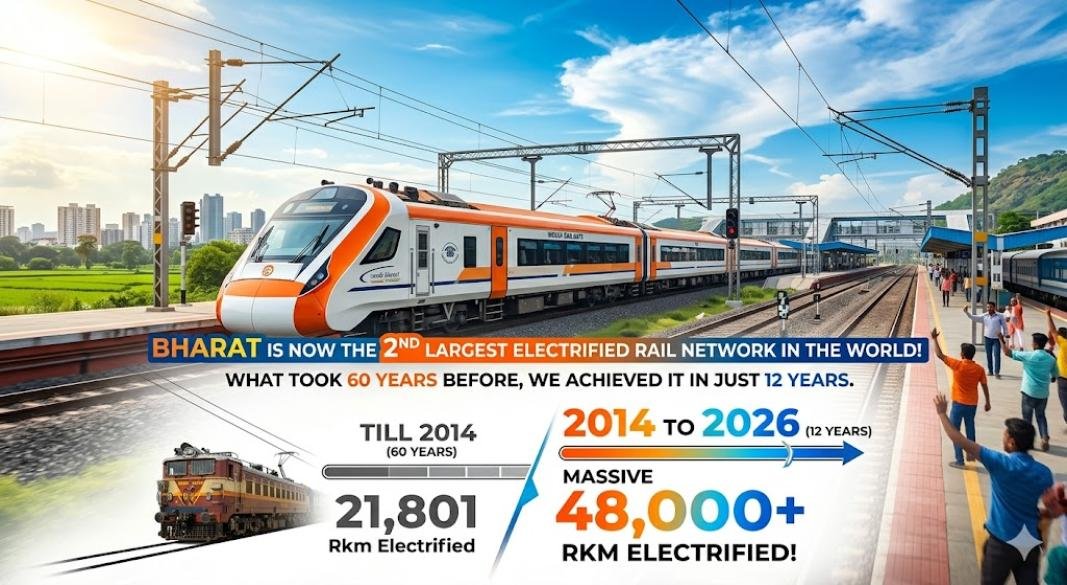
The achievement comes amid the rapid expansion of railway electrification across the country. According to Railway Minister Ashwini Vaishnaw, India has emerged as the world's second-largest electrified rail network. While the country electrified approximately 21,801 route kilometres over six decades up to 2014, more than 48,000 route kilometres have been electrified between 2014 and 2026, reflecting an unprecedented pace of infrastructure development.
Industry experts believe that electric double-stack operations will play a crucial role in strengthening multimodal logistics and enhancing the competitiveness of rail freight. The ability to transport a larger volume of containers in a single journey improves asset utilization and reduces congestion on highways, delivering both economic and environmental benefits.
The Dedicated Freight Corridor (DFC) network has been instrumental in enabling this transformation. Designed to support higher axle loads, longer trains, and greater operational efficiency, the DFC provides the ideal infrastructure for running double-stack container services at scale. The initiative is expected to further boost containerized cargo movement, benefiting sectors such as manufacturing, e-commerce, retail, automotive, and export-import trade.
As India continues investing in modern rail infrastructure, digital technologies, and sustainable freight solutions, the successful deployment of electric double-stack container trains underscores the country's commitment to building a world-class logistics network. The achievement not only strengthens India's supply chain capabilities but also sets a new benchmark for environmentally responsible freight transportation on a global scale.
𝐒𝐭𝐚𝐲 𝐓𝐮𝐧𝐞𝐝 𝐭𝐨 CARGOCONNECT 𝐟𝐨𝐫 𝐥𝐚𝐭𝐞𝐬𝐭 𝐮𝐩𝐝𝐚𝐭𝐞𝐬!
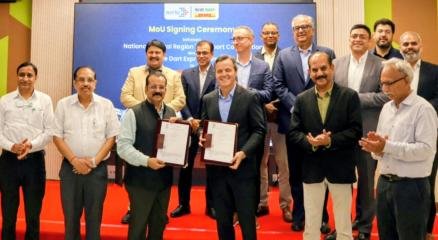
Blue Dart Express has signed a Memorandum of Understanding (MoU) with the National Capital Region Transport Corporation (NCRTC) to explore the movement of express parcels on the Delhi–Ghaziabad–Meerut Namo Bharat corridor. The collaboration will examine how Blue Dart’s pickup and delivery network can move express parcels utilizing the transformational regional rail connectivity to serve businesses and customers across the National Capital Region. As part of the MoU, the two organisations will assess operational requirements, parcel volumes, station facilities, service standards and commercial arrangements to arrive at a feasible solution. The 82 km Namo Bharat corridor connects Delhi, Ghaziabad and Meerut. Its Sarai Kale Khan station is seamlessly connected to Hazrat Nizamuddin railway station and the inter-state bus terminal, while the Anand Vihar station also has been connected to the Anand Vihar railway station and two inter-state bus terminals. On the partnership, Shalabh Goel, Managing Director, NCRTC, stated, “Namo Bharat is a strategic intervention to transform the regional connectivity across the National Capital Region and help reduce vehicular congestion and air pollution. In a short span of time, this service has gained popularity among the people and is enabling easy access to jobs, education, healthcare and affordable housing. Our collaboration with Blue Dart gives us an opportunity to explore how this new-age infrastructure could also serve the freight ecosystem with the convenience and benefit of the people at the centre.” Pablo Ciano, CEO, DHL eCommerce Division, said, “India is a significant growth market for DHL eCommerce, and Blue Dart’s service quality and network are central to how we serve its customers. As businesses grow and supply chains evolve, we need to keep looking at how new-age infrastructure can strengthen that network. This collaboration with NCRTC is an opportunity to explore how the transformational regional rail connectivity could add value for customers in the National Capital Region.” Balfour Manuel, Managing Director, Blue Dart Express, said, “For our customers, reliability depends on how well every part of a shipment’s journey works together. This MoU gives us the opportunity to examine how Namo Bharat’s semi-high-speed regional connectivity could be integrated with Blue Dart’s pickup and delivery capabilities. We will work with NCRTC to identify where this approach could add value for businesses while supporting our efforts to develop more sustainable logistics solutions.” Such multi-modal connectivity makes the corridor relevant to the movement of shipments between established transport hubs and the businesses they serve. The proposed approach would set-up an optimal link between the semi-high-speed regional rail movement with Blue Dart’s existing pickup and delivery services, subject to operational feasibility and arrangements agreed by both organisations. Therefore, the collaboration forms part of Blue Dart’s continued work to strengthen its integrated transportation network and explore solutions that respond to evolving customer needs. 𝐒𝐭𝐚𝐲 𝐓𝐮𝐧𝐞𝐝 𝐭𝐨 CARGOCONNECT 𝐟𝐨𝐫 𝐥𝐚𝐭𝐞𝐬𝐭 𝐮𝐩𝐝𝐚𝐭𝐞𝐬!

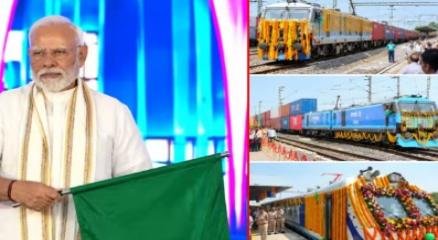
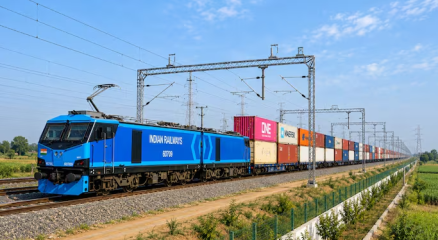
Prime Minister Narendra Modi has dedicated the final three sections of the Western Dedicated Freight Corridor (WDFC) to the nation, completing the entire freight rail connection between Jawaharlal Nehru Port (JNPT/JNPA) in Maharashtra and Dadri in Uttar Pradesh. The milestone marks a major step in strengthening India’s dedicated freight rail network and improving the movement of export-import cargo between ports and key industrial and consumption centres. The three newly completed sections—Sanand (North)-Makarpura, New Umbergaon-New Saphale and New Saphale-JNPA, span a combined 326 route kilometres and have been developed at an investment of more than ₹20,700 crore. Their commissioning completes the previously missing port-end link of the WDFC, enabling seamless freight movement between JNPA and the northern hinterland. The WDFC connects JNPA with Dadri, where it intersects with the Eastern Dedicated Freight Corridor (EDFC). The EDFC, stretching from Sonnagar in Bihar to Ludhiana in Punjab, is already operational. Together, the two corridors establish a dedicated freight rail backbone across India’s western, northern and eastern regions. According to the Times of India, the combined operational DFC network covers around 2,843 km. The completion of the WDFC is expected to have a direct impact on India’s logistics efficiency. The corridor allows the deployment of double-stack container trains, facilitating higher cargo volumes per train while improving rail capacity and reliability. Direct rail connectivity to JNPA is also expected to accelerate the evacuation of export-import containers, strengthen links between manufacturing centres and ports, and ease pressure on Mumbai’s conventional railway network. The development is particularly significant for exporters, importers, container train operators, logistics parks, inland container depots and manufacturing clusters across western and northern India. It is also expected to support a greater shift of long-haul freight from road to rail, potentially lowering transportation costs and reducing road congestion. The scale of utilisation of the dedicated freight network underscores its growing importance. Railway data cited by the Times of India shows that operational DFC stretches had handled approximately 5.2 lakh freight train trips as of August, averaging about 435 trains a day. The network had generated around 658 billion gross tonne-km and 360 billion net tonne-km. With the WDFC now fully connected from JNPA to Dadri, India’s freight infrastructure enters a new phase in which capacity, operational efficiency and greater rail-based cargo penetration will become key measures of the corridors’ impact on the country’s logistics and supply-chain ecosystem. 𝐒𝐭𝐚𝐲 𝐓𝐮𝐧𝐞𝐝 𝐭𝐨 CARGOCONNECT 𝐟𝐨𝐫 𝐥𝐚𝐭𝐞𝐬𝐭 𝐮𝐩𝐝𝐚𝐭𝐞𝐬!
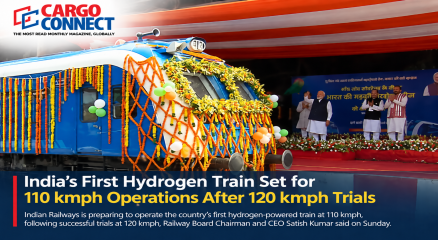
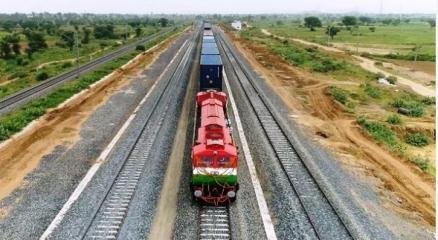
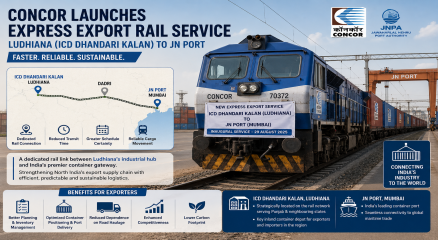
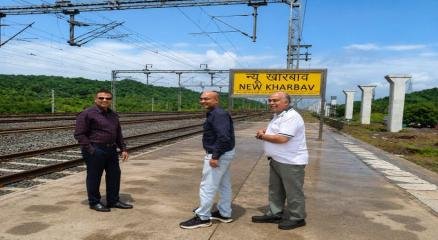
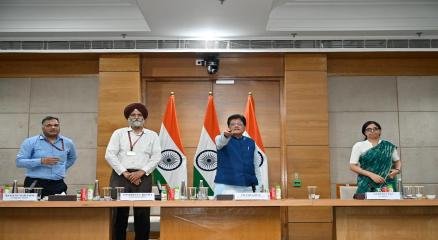
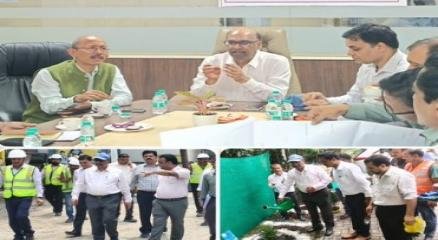
The Jawaharlal Nehru Port Authority (JNPA) has stepped up efforts to strengthen rail-based container evacuation and multimodal connectivity between the port and major consumption and distribution centres in the Mumbai region. JNPA Chairman Gaurav Dayal, IAS, accompanied by Deputy Chairman Ravish Singh, IRTS, and senior port officials, conducted a field inspection of key railway infrastructure along the Dedicated Freight Corridor (DFC) route. The inspection focused on infrastructure that could support faster and more efficient movement of containerised cargo from JNPA towards Bhiwandi, one of the region’s prominent warehousing and distribution hubs. Improved rail connectivity to the logistics cluster is expected to help reduce transit times, enhance supply-chain efficiency and ease pressure on road networks handling container traffic. During the visit, the JNPA delegation inspected Kharbhav Railway Station to assess its strategic integration with the DFC and its potential role in facilitating container movement. The location is being evaluated in the context of improving rail connectivity between the port and inland consumption and distribution centres. The team also visited the Bhiwandi Warehousing Hub, where officials reviewed warehousing capacity, last-mile logistics infrastructure and storage readiness. With Bhiwandi serving as a major logistics and fulfilment cluster for the Mumbai Metropolitan Region, efficient links between the port, rail network and warehousing facilities are increasingly important for supporting growing cargo volumes. Another key stop was New Nilanje Railway Station, which was inspected for its potential to serve as an additional freight node. The assessment forms part of broader efforts to identify infrastructure opportunities that can improve cargo evacuation and provide greater flexibility within the regional freight network. The DFC is designed to facilitate faster and more reliable freight transportation by providing dedicated rail infrastructure for goods movement. For ports such as JNPA, stronger integration with the freight corridor can support a shift towards rail-based cargo evacuation, potentially improving turnaround times while reducing dependence on road transport for longer-haul container movements. The latest field review highlights JNPA’s focus on developing an integrated logistics ecosystem linking port infrastructure with rail freight, warehousing and last-mile distribution. As cargo flows and supply-chain requirements continue to evolve, enhanced multimodal connectivity will remain critical to improving the efficiency, resilience and competitiveness of India’s logistics network. 𝐒𝐭𝐚𝐲 𝐓𝐮𝐧𝐞𝐝 𝐭𝐨 CARGOCONNECT 𝐟𝐨𝐫 𝐥𝐚𝐭𝐞𝐬𝐭 𝐮𝐩𝐝𝐚𝐭𝐞𝐬!