Loading...
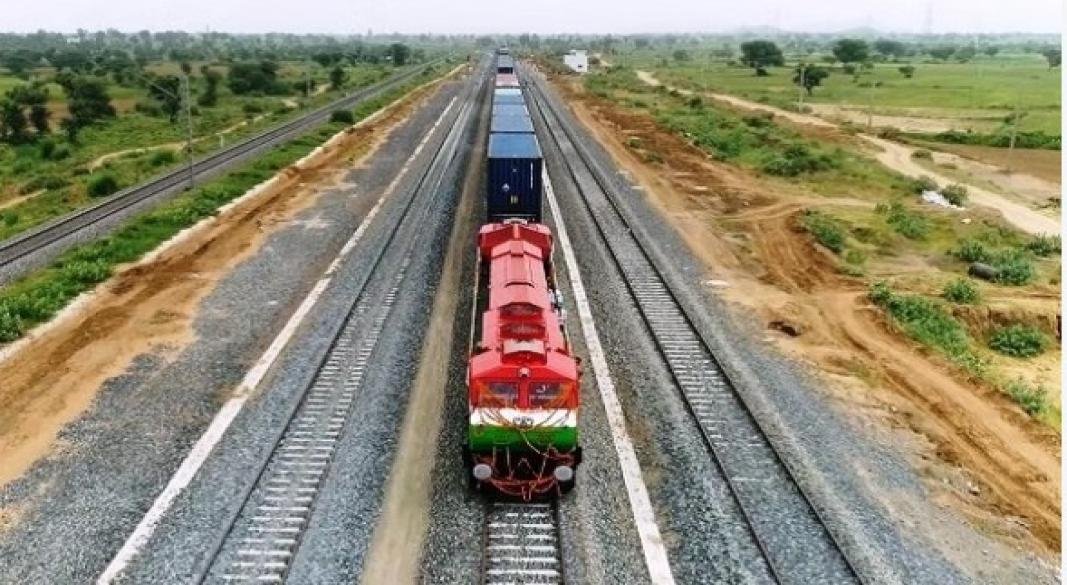
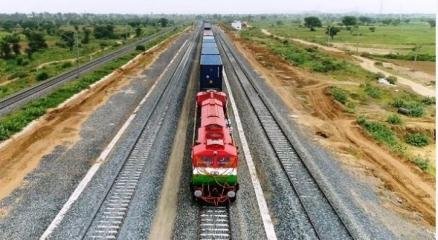
Indian Railways has approved an 11-km bypass line between Adra and Joychandipahar in South Eastern Railway at an estimated cost of ₹272 crore, in a move aimed at expanding freight-handling capacity, reducing operational bottlenecks and supporting rising industrial traffic.
The Adra–Joychandipahar–Sanka bypass will provide dedicated path segregation and a bi-directional connection with the upcoming third line. The infrastructure is projected to facilitate the movement of around 6.065 freight rakes per day, while creating additional capacity for growing mineral and industrial cargo flows.
The project assumes significance against the backdrop of rising freight requirements from major industrial consumers. According to the Ministry of Railways, the bypass will support freight movement linked to SAIL’s projected iron ore requirement of 23.40 million tonnes per annum (MTPA) and BCCL’s projection of 45 rakes per day.
The bypass is expected to address operational constraints on the Adra–Joychandipahar section, including delays caused by surface-crossing conflicts. The existing network is operating at around 71% utilisation, with such conflicts affecting freight speeds and creating the potential for further congestion as traffic increases.
Once completed, the project is expected to facilitate additional traffic of 8.88 MTPA. The line capacity of the Joychandipahar–Adra section is projected to rise from 47.50% currently to 56.45% by 2028-29, strengthening the corridor’s ability to accommodate future freight demand.
The bypass forms part of Indian Railways’ identified Energy, Mineral and Cement Corridor, reinforcing its role in improving the movement of key industrial commodities. By separating freight operations, reducing crossing-related detentions and adding network capacity, the project is expected to improve the reliability and efficiency of rail-based logistics in the region.
The investment highlights Indian Railways’ broader focus on augmenting freight infrastructure to accommodate industrial growth while improving network fluidity and reducing congestion across strategically important corridors.
𝐒𝐭𝐚𝐲 𝐓𝐮𝐧𝐞𝐝 𝐭𝐨 CARGOCONNECT 𝐟𝐨𝐫 𝐥𝐚𝐭𝐞𝐬𝐭 𝐮𝐩𝐝𝐚𝐭𝐞𝐬!
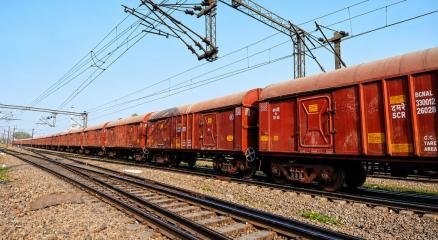
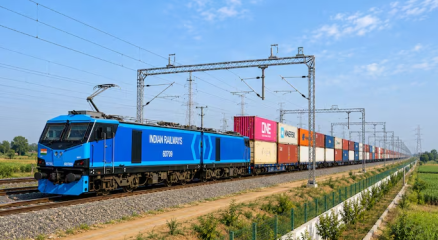
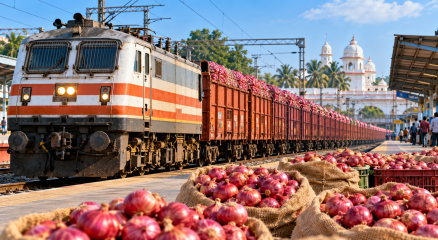
Indian Railways has strengthened its freight transportation capacity by placing additional orders for 9,638 wagons worth approximately ₹3,925.41 crore across five manufacturers. The latest procurement expands the existing wagon supply contracts by 24.57%, reflecting the national transporter’s efforts to improve freight-handling capabilities and accommodate rising demand for bulk commodity transportation. The Railway Board has exercised the 30% option clause included in the existing procurement agreements to increase the contracted quantities. With this addition, the total number of wagons covered under seven contracts has increased to 48,864 units, according to reports. The additional orders have been distributed among five wagon manufacturers, with Titagarh Wagons receiving the largest share. Under the expanded procurement programme, Titagarh Wagons will manufacture and supply 4,955 additional wagons valued at ₹2,025.95 crore, taking its total contracted quantity to 21,804 units. Jupiter Wagons has received an additional order for 2,583 wagons worth ₹1,050.55 crore across two contracts, increasing its total contracted quantity to 13,005 wagons. Texmaco Rail & Engineering will supply 1,020 additional wagons valued at ₹412.32 crore, taking its cumulative order quantity to 4,420 units. The remaining orders have been allocated to Besco and Oriental Foundry. Besco will supply 720 additional wagons worth ₹291.05 crore across two divisional contracts, taking its total contracted quantity to 3,120 wagons. Oriental Foundry has secured an order for 360 wagons valued at ₹145.53 crore, increasing its contracted quantity to 1,560 units. The additional procurement comprises exclusively open wagons designed for transporting bulk commodities. These wagons play an important role in supporting large-volume freight movement across the railway network, particularly for industries dependent on reliable and cost-efficient transportation. The expanded orders are scheduled for delivery by June 2027. The procurement comes as Indian Railways prepares for another year of record freight loading and seeks to strengthen its ability to accommodate growing cargo volumes. Increasing wagon availability is an important component of improving freight operations. A larger fleet can provide greater flexibility in managing cargo requirements, support the movement of higher volumes and help address capacity constraints across busy freight corridors. The addition of wagons is also expected to support more efficient utilisation of railway infrastructure and strengthen the overall freight transportation ecosystem. The latest ₹3,925-crore procurement expansion underlines Indian Railways' continued focus on enhancing freight capacity and strengthening its partnership with domestic railway equipment manufacturers. This move also provides additional business opportunities for the wagon manufacturing industry, with five suppliers receiving increased orders under existing contracts. For manufacturers, the expanded requirements offer greater production visibility, while the scheduled deliveries provide a defined timeline for executing the additional orders. As India continues to prioritise rail-based freight transportation, investments in rolling stock will remain important for supporting industrial supply chains. Therefore, the additional 9,638 wagons represent another step towards building a more capable freight network, aligned with Indian Railways' broader ambition of increasing rail's role in the country's transportation landscape. 𝐒𝐭𝐚𝐲 𝐓𝐮𝐧𝐞𝐝 𝐭𝐨 CARGOCONNECT 𝐟𝐨𝐫 𝐥𝐚𝐭𝐞𝐬𝐭 𝐮𝐩𝐝𝐚𝐭𝐞𝐬!
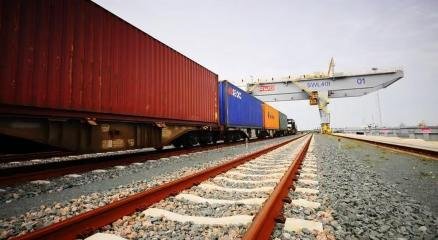
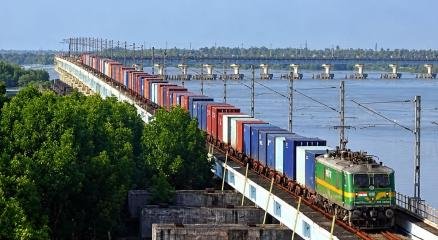
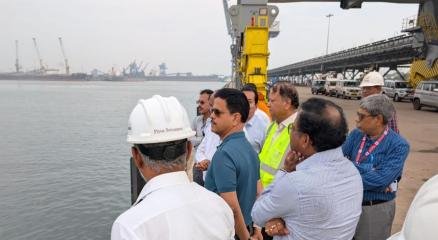
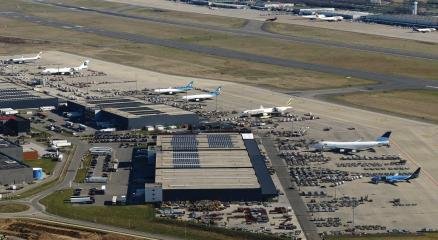
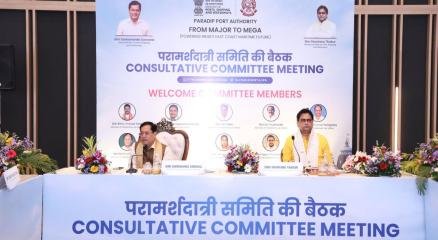
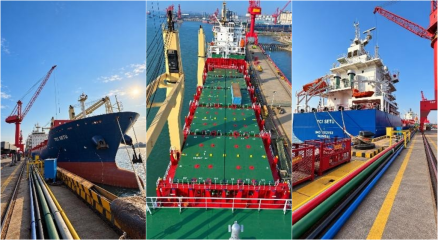
PPA Chairperson Susanta Kumar Purohit reviews Phase I development, focusing on mechanisation, cargo handling efficiency and improved rail-road connectivity at JPPL berth. Paradip Port Authority (PPA) Chairperson Susanta Kumar Purohit, IRSEE, reviewed the development and operational readiness of the Western Dock terminal at the Jindal Paradip Port Limited (JPPL) berth, with a focus on commissioning Phase I and strengthening cargo-handling infrastructure. The review covered berth operations, infrastructure development and measures to improve terminal productivity. Discussions with senior PPA officials and JPPL representatives, including Deputy CEO Sandeep Jaiswal, focused on achieving full berth mechanisation, improving cargo handling efficiency and strengthening rail and road connectivity for cargo evacuation. Phase I Designed for 12.5 Million Tonnes Annually: Phase I of the Western Dock project is designed to handle 12.5 million tonnes per annum (MTPA). The wider project envisages a total dry bulk cargo handling capacity of 25 MTPA and is being developed under the Build-Operate-Transfer (BOT) model. The review assessed progress towards commissioning and operationalising the facility. The planned capacity is intended to expand Paradip Port’s ability to handle dry bulk commodities and support cargo demand from industrial and trade sectors. The successful berthing of deep-draft Capesize vessels was also highlighted during the visit, demonstrating the terminal’s role in accommodating large vessels for bulk cargo operations. Mechanisation and Cargo Evacuation in Focus: Achieving 100% berth mechanisation was a key priority during the review. Mechanised handling systems can support cargo movement and terminal productivity, while efficient evacuation arrangements are essential to managing volumes at the planned capacity. PPA and JPPL representatives also discussed improving rail and road connectivity to facilitate the movement of cargo from the terminal to inland destinations. The effectiveness of these connections will be important in limiting logistics bottlenecks and ensuring that cargo can be moved efficiently beyond the port. Terminal handling capacity and landside evacuation capability will need to work together as operations develop. Safety, Sustainability and Technology: The review also addressed sustainable port operations, compliance with safety standards, technology-driven logistics solutions and the integration of multimodal cargo evacuation systems. These measures form part of the broader operational requirements for developing the Western Dock terminal. Coordination between berth operations, cargo-handling systems and inland transport links will be important to supporting reliable service delivery. Western Dock to Expand Paradip’s Bulk Cargo Capabilities: The Western Dock project is part of the ongoing development of Paradip Port’s infrastructure and cargo-handling capabilities on India’s eastern coast. With Phase I designed for 12.5 MTPA and the wider project targeting 25 MTPA, the development is intended to increase dry bulk handling capacity and support maritime trade. The next milestones will centre on commissioning Phase I, progressing mechanisation and ensuring effective rail and road connectivity. The extent to which the terminal achieves its planned throughput will depend on operational readiness, cargo demand and the efficiency of its wider logistics connections. Follow CARGOCONNECT for more such updates


Prime Minister Narendra Modi has marked a major milestone in India’s logistics and rail freight infrastructure by flagging off freight trains from four strategic stations of the Western Dedicated Freight Corridor (WDFC) and dedicating three newly completed sections to the nation. The development completes India’s approximately 2,843-km Dedicated Freight Corridor (DFC) network, strengthening the country’s freight transportation backbone. Freight trains were flagged off from New Sanand (North), New Makarpura, New Umbergaon and New JNPT. The three newly commissioned WDFC sections—New Sanand (North)-New Makarpura, New Umbergaon-New Saphale and New Saphale-New JNPT, cover around 326 route km and have been developed at an investment of more than ₹20,700 crore. The commissioning establishes direct dedicated freight connectivity between northern and western industrial centres and Jawaharlal Nehru Port (JNPT), improving the movement of export-import cargo between production hubs, logistics centres and India’s western maritime gateways. The direct rail link is expected to accelerate container evacuation, improve supply-chain predictability and ease congestion on conventional railway routes. India’s DFC network comprises the 1,337-km Eastern Dedicated Freight Corridor (EDFC) between Ludhiana and Sonnagar and the 1,506-km WDFC between Dadri and JNPT. The corridors enable freight trains to operate on dedicated tracks, including double-stack container and higher axle-load trains, increasing cargo-carrying capacity and improving operational efficiency. The completed WDFC is also reducing transit times. Freight movement between Dadri and JNPT has fallen from around 66 hours to about 58 hours, according to DFCCIL, enhancing the competitiveness of rail freight and enabling faster access to ports. The two DFCs currently handle an average of around 443 freight trains daily, while Indian Railways’ freight loading reached 1,670 million tonnes in 2025-26, up from 1,098 million tonnes in 2014-15. The shift of freight traffic to dedicated corridors is also releasing capacity on conventional routes for additional passenger and freight services. The government is already planning the next phase of freight infrastructure. The Union Budget 2026 announced a proposed Dankuni-Surat Dedicated Freight Corridor, with work on its Detailed Project Report underway. The expansion is expected to further strengthen east-west connectivity and India's multimodal logistics ecosystem. 𝐒𝐭𝐚𝐲 𝐓𝐮𝐧𝐞𝐝 𝐭𝐨 CARGOCONNECT 𝐟𝐨𝐫 𝐥𝐚𝐭𝐞𝐬𝐭 𝐮𝐩𝐝𝐚𝐭𝐞𝐬!