
Loading...
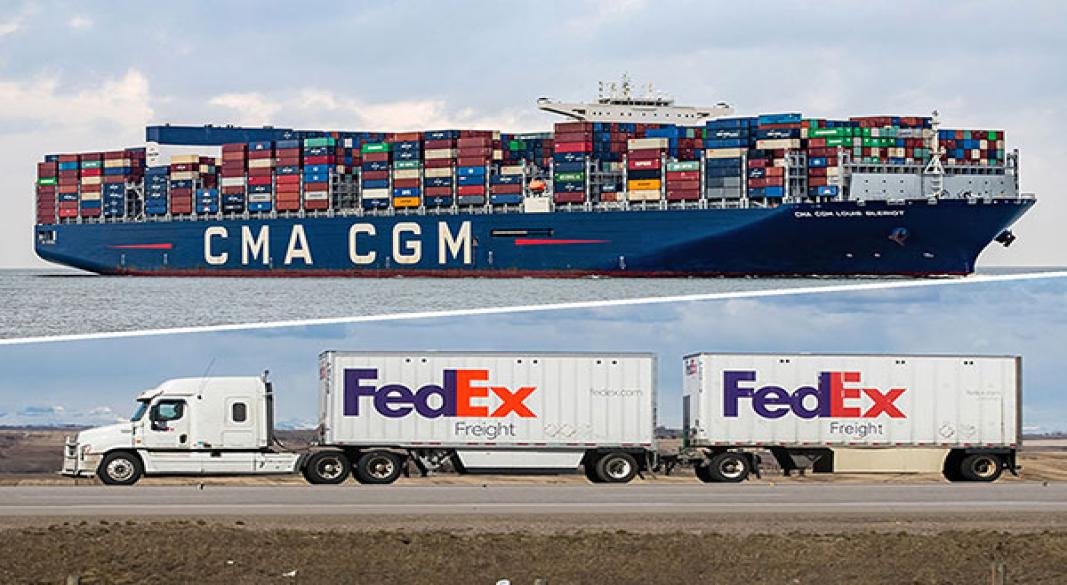
FedEx has completed the sale of its FedEx Supply Chain business to the CMA CGM Group for an enterprise value of US$1.4 billion, marking another major step in the logistics group’s strategy to expand its integrated supply chain capabilities while enabling FedEx to sharpen its focus on core transportation operations.
The transaction, completed on October 1, 2026, significantly strengthens CEVA Logistics, CMA CGM’s logistics subsidiary, by nearly tripling its North American contract logistics footprint. FedEx Supply Chain’s operations and workforce will be integrated into CEVA, expanding its capabilities across warehousing, distribution and contract logistics in the region.
The acquisition forms part of CMA CGM’s broader strategy to build an integrated, end-to-end logistics platform spanning ocean, air, land and contract logistics. The company has also entered into multi-year commercial agreements with FedEx covering ocean and air freight. Under the arrangement, CMA CGM will become a preferred ocean carrier for FedEx on a non-exclusive basis, while the companies will collaborate on selected air cargo capacity solutions.
The air freight partnership is expected to support key strategic routes, including Asia-Europe, with the objective of improving aircraft utilisation and providing greater flexibility for long-haul capacity. The collaboration further strengthens CMA CGM’s position across the air cargo value chain while allowing both companies to leverage complementary global networks.
For CMA CGM, the acquisition reinforces its long-term investment in the US market and expands CEVA’s ability to offer customers more comprehensive supply chain solutions. The combined operations are expected to strengthen the company’s presence in North American contract logistics while supporting its ambitions to provide integrated logistics services to global customers.
For FedEx, the divestment is aligned with its ongoing portfolio simplification and transformation strategy. FedEx President and CEO Raj Subramaniam said the transaction enables the company to concentrate resources on differentiated capabilities and strengthen its core transportation network and high-value verticals.
The transaction was originally announced on July 1, 2026. Its completion represents a significant reshaping of the companies’ logistics strategies, combining CMA CGM’s expanding multimodal logistics platform with FedEx’s global transportation network through long-term commercial cooperation.
𝐒𝐭𝐚𝐲 𝐓𝐮𝐧𝐞𝐝 𝐭𝐨 CARGOCONNECT 𝐟𝐨𝐫 𝐥𝐚𝐭𝐞𝐬𝐭 𝐮𝐩𝐝𝐚𝐭𝐞𝐬!
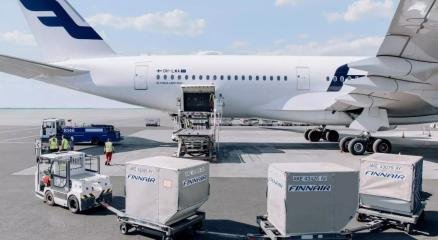
Finnair Cargo has launched its first Australian service on 25 October 2026, introducing a daily, year-round connection between Helsinki and Melbourne via Bangkok. The new route expands the airline’s international cargo network, creating additional opportunities for freight movements between Europe, Australia and North America. However, the airline has imposed initial restrictions on temperature-sensitive shipments travelling across the complete route. Daily Connectivity Via Bangkok The new service operates using an Airbus A350 passenger aircraft, with cargo carried in the aircraft’s belly hold. Flight AY145 departs Helsinki shortly after midnight and reaches Melbourne the following morning, with a technical stop in Bangkok. The return service, AY146, departs Melbourne in the afternoon and travels via Bangkok before arriving in Helsinki the next morning. The aircraft offers approximately 23 tonnes of belly-hold cargo capacity, equivalent to around 95 cubic metres, although the actual capacity available on individual flights depends on operational requirements. The schedule is designed to facilitate connections with Finnair’s wider European network through Helsinki, including onward air and road freight services. Anna-Maria Kirchner, Head of Global Sales at Finnair Cargo, said the airline had received strong interest in the new connection. She highlighted its potential to strengthen trade between Australia and Europe while supporting businesses dependent on reliable, time-sensitive logistics. Temperature-Sensitive Cargo Restrictions At launch, Finnair Cargo will not accept pharmaceuticals, perishables and other temperature-sensitive shipments as through cargo between Helsinki and Melbourne in either direction. Such consignments may be accepted separately on the Helsinki–Bangkok and Bangkok–Melbourne sectors, subject to applicable handling requirements and acceptance conditions. The restrictions are part of the airline’s initial operational approach while it conducts temperature mapping across the new route. The assessment is intended to establish the temperature conditions experienced throughout the journey, including during the Bangkok stopover. Finnair Cargo will review the restrictions after completing the exercise. The limitations are particularly relevant to pharmaceutical logistics, temperature-controlled supply chains and Australian seasonal exports, including cherries, which the airline has identified as potential cargo opportunities. Broader Cargo Market Opportunities Beyond temperature-sensitive shipments, the service is expected to support a range of commodities, including general cargo, high-tech products, industrial components, automotive parts, fashion and design goods. Seafood and other perishables may also be considered, subject to the airline’s applicable acceptance conditions and handling requirements. The Melbourne route forms part of Finnair Cargo’s winter 2026–27 network expansion, connecting the Australian market with the carrier’s Helsinki hub and its established European destinations. The addition also provides freight forwarders and logistics providers with another routing option for shipments moving between the two regions. As the service develops, the outcome of the temperature-mapping exercise will be important in determining whether the airline can expand its acceptance of sensitive cargo across the entire journey. For now, the daily connection establishes a new air freight link between Europe and Australia, with cargo capacity and commodity acceptance governed by operational requirements and the restrictions in place at launch. 𝐒𝐭𝐚𝐲 𝐓𝐮𝐧𝐞𝐝 𝐭𝐨 CARGOCONNECT 𝐟𝐨𝐫 𝐥𝐚𝐭𝐞𝐬𝐭 𝐮𝐩𝐝𝐚𝐭𝐞𝐬!

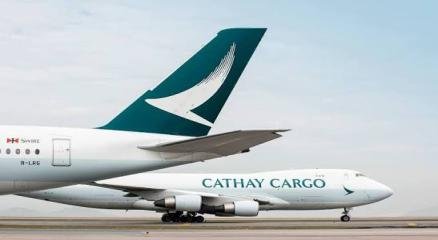
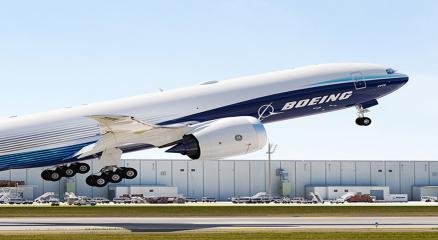

Qatar Airways Cargo is expanding its global freight network for the Winter 2026 season, introducing dedicated freighter services from Copenhagen, New York’s John F. Kennedy International Airport (JFK) and Dallas, while establishing a direct Warsaw–Chicago connection. The additions are set to increase cargo capacity, strengthen transatlantic trade links and provide customers with improved access to global markets through the carrier’s Doha hub. The network expansion, commencing from late October and early November 2026, targets key export markets across Northern and Central Europe and the United States. By combining dedicated Boeing 777 freighters with capacity on Qatar Airways’ passenger services, the carrier aims to provide greater flexibility for a broad range of freight, including pharmaceuticals, healthcare products, aerospace components, technology, energy shipments, perishables, vehicles and oversized cargo. Strengthening Nordic and Central European Connectivity Effective 25 October, Qatar Airways Cargo will introduce a weekly Boeing 777 freighter service from Copenhagen, operating Doha–Budapest–Copenhagen–Doha. The service will provide 100 tonnes of dedicated export capacity, strengthening the carrier’s reach across Denmark and Southern Sweden. The new freighter operation will complement Qatar Airways’ 10 weekly Boeing 787 passenger services to Copenhagen, which collectively provide more than 100 tonnes of belly-hold cargo capacity in each direction per week. Through Doha, customers will gain onward connections to markets across Asia, the Middle East, the Indian Subcontinent, Africa and beyond. In Central Europe, the carrier will relaunch freighter operations to Warsaw from 26 October, adding a weekly direct connection from Warsaw to Chicago. The Boeing 777 service will operate Doha–Warsaw–Chicago–Brussels–Doha, offering Polish exporters and manufacturers additional dedicated capacity to the US market. Combined with twice-weekly freighter services to Katowice and 10 weekly wide-body passenger flights to Warsaw, the new operation will increase Qatar Airways Cargo’s total weekly capacity to and from Poland to more than 435 tonnes in each direction. Expanding Transatlantic Freight Capacity In North America, a new weekly Boeing 777 freighter service to New York JFK will commence on 1 November, operating Doha–Liège–New York–Atlanta–Liège–Doha. The service will supplement 14 weekly passenger flights to and from New York, taking the carrier’s total weekly cargo capacity on the market to more than 226 tonnes in each direction. Dallas is also gaining additional dedicated freighter capacity. Qatar Airways Cargo has recently introduced two weekly Boeing 777 freighter services operating Doha–Liège–Dallas–Doha, providing 200 tonnes of main-deck capacity into Dallas and 100 tonnes outbound. Together with 14 weekly wide-body passenger flights, the new operation will raise total weekly cargo capacity to more than 250 tonnes into Dallas and over 150 tonnes out of the city. The expanded offering is intended to strengthen trade links between Texas and markets served across the airline’s international network. Capacity for Diverse and Time-Sensitive Cargo The additional services will cater to a wide spectrum of industries, including pharmaceuticals and healthcare, aerospace, technology, energy, perishables, high-value and time-sensitive shipments, vehicles, oversized freight, and general and industrial cargo. Customers will also benefit from increased belly-hold capacity across Qatar Airways’ Winter 2026 passenger network, further broadening the options available for moving shipments across international markets. With the new routes, expanded frequencies and connectivity through Doha, Qatar Airways Cargo is strengthening its capacity offering across Europe and North America while linking customers to a global network spanning more than 160 destinations. Shipments can be booked through the carrier’s Digital Lounge portal or its omnichannel partner network.
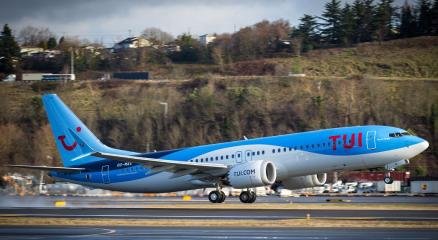


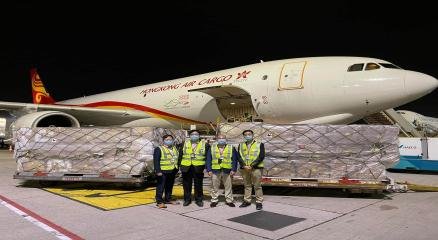
Hong Kong International Airport (HKIA) recorded a 6.3% year-on-year increase in cargo throughput in September 2026, handling approximately 433,000 tonnes of freight as a sharp rise in transshipments and stronger import volumes supported its recovery. The growth followed year-on-year declines in July and August, highlighting renewed momentum at one of the world’s major air cargo hubs. According to provisional traffic statistics released by Airport Authority Hong Kong (AAHK), transshipment volumes surged 26.9% year-on-year, while imports increased 9.2%. Southeast Asia and the Chinese mainland were the principal contributors to the expansion, offsetting weaker cargo flows on European trade lanes. Inbound freight recorded stronger growth than outbound shipments during the month. Unloaded cargo rose 14.6% year-on-year to approximately 126,000 tonnes, while loaded cargo increased 3.2% to around 306,000 tonnes. Cargo-related flight movements also climbed 3.9% to 6,515, compared with 6,270 in September 2025. The decline in European cargo volumes was attributed partly to the European Union’s removal of the customs duty exemption for low-value consignments in July 2026. The policy change has affected the movement of low-value e-commerce shipments into Europe, creating additional pressure on relevant trade flows. Despite fluctuations in monthly performance, HKIA maintained positive growth over the longer term. During January–September 2026, the airport handled approximately 3.78 million tonnes of cargo, marking a 3.1% increase compared with the corresponding period last year. For the financial year beginning in April, throughput reached 2.576 million tonnes, up 3% year-on-year. On a rolling 12-month basis, cargo volumes increased 3.3% to 5.18 million tonnes, while cargo flight movements rose 2.1% to 79,715. The September performance underscores the importance of intra-Asian trade and transshipment activity in sustaining Hong Kong’s air freight network. With stronger cargo flows from mainland China and Southeast Asia compensating for softness in Europe, HKIA’s latest figures reflect shifting trade patterns across the global air cargo market. 𝐒𝐭𝐚𝐲 𝐓𝐮𝐧𝐞𝐝 𝐭𝐨 CARGOCONNECT 𝐟𝐨𝐫 𝐥𝐚𝐭𝐞𝐬𝐭 𝐮𝐩𝐝𝐚𝐭𝐞𝐬!