
Loading...

India Post is set to undergo a major logistics transformation as the government plans a nationwide infrastructure to support India’s rapidly expanding e-commerce market across the country. The move reflects the changing role of India Post from a traditional postal service into a modern logistics and last-mile delivery network. As online shopping continues to grow across metros, small towns, and rural areas, the demand for faster, more reliable delivery networks has become more important than ever. To address this demand, the government aims to modernize parcel handling systems, improve delivery efficiency through modern infrastructure. The modernization efforts are expected to include improved parcel processing centers, real-time tracking systems, digital payment integration, automated logistics operations and faster delivery services. With a vast network across India, the organization is positioned to connect businesses with customers in areas where private logistics companies may have limited access. Recent technology initiatives introduced by India Post have already started improving operational transparency and customer experience through mobile-ready services and digital systems. Minister of State for Communications Chandra Sekhar Pemmasani said the government has invested nearly INR 5,800 crore towards post office modernisation initiatives. These upgrades include OTP-based deliveries, real-time SMS tracking systems and operational digitisation aimed at improving transparency and customer convenience. Industry experts believe that a stronger India Post network could play an important role in improving supply chain connectivity across India while supporting the long-term growth of the e-commerce sector. As the Indian market continues to grow rapidly, the modernization of India Post signals the government’s intention to build a more inclusive and future-ready logistics system capable of supporting the fast-changing digital economy.
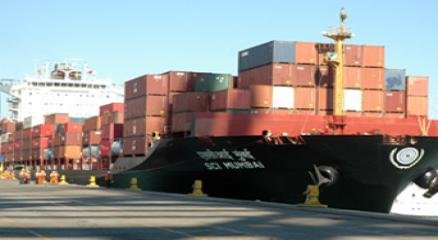
India’s maritime sector received a major boost as the Shipping Corporation of India (SCI) announced a record-breaking financial performance for FY 2025-26, underlining the company’s growing operational strength and strategic resilience in a volatile global shipping market. The state-owned shipping major reported its highest consolidated Profit After Tax (PAT) in nearly two decades, driven by stronger fleet utilisation, disciplined cost management, and improved freight market conditions across key shipping segments. The company’s stellar performance highlights the increasing importance of India’s maritime and logistics ecosystem in supporting global trade flows and national supply chain efficiency. SCI’s strong financial showing was supported by robust earnings from its tanker operations, alongside improved contributions from liner and offshore segments. During the third quarter of FY 2025-26 alone, the company posted a record quarterly PAT exceeding ₹400 crore, marking one of its best quarterly performances in the last decade. Revenue growth was also aided by strategic deployment of vessels and operational optimisation initiatives. Industry observers believe SCI’s financial turnaround reflects improving market fundamentals in the shipping sector, particularly amid rising energy transportation demand and India’s growing focus on maritime infrastructure development under initiatives such as Sagarmala and port-led logistics expansion. SCI has also continued strengthening its balance sheet through prudent financial management and enhanced asset utilisation. The company’s consistent emphasis on operational efficiency has helped it navigate fluctuating freight cycles while maintaining profitability across business verticals. Analysts note that SCI’s performance positions the company favourably to capitalise on future opportunities in coastal shipping, global energy transportation, and integrated logistics solutions. The company reaffirmed its commitment to fleet modernisation and service reliability, aligning with India’s broader ambition of becoming a leading maritime nation. SCI stated that its growth strategy remains focused on supporting trade facilitation, energy security, and maritime self-reliance while creating long-term stakeholder value. With India’s shipping and logistics sector witnessing increasing policy support and cargo movement growth, SCI’s record FY 2025-26 performance is expected to further strengthen investor confidence and accelerate momentum in the country’s maritime supply chain ecosystem. As global shipping markets continue evolving, SCI’s strong financial foundation and operational agility are likely to play a critical role in shaping India’s future maritime competitiveness.
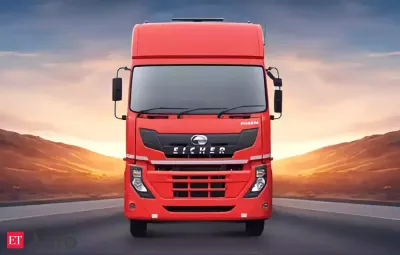
VE Commercial Vehicles (VECV) has secured a significant order from the Uttar Pradesh State Road Transport Corporation (UPSRTC) for 1,621 buses and 42 heavy-duty trucks. The order includes 1,344 non-air-conditioned buses, 197 air-conditioned buses, 80 CNG bus chassis, and 42 logistics trucks, reinforcing the corporation's commitment to modernizing its transportation fleet. Vinod Aggarwal, MD & CEO of VE Commercial Vehicles Limited, highlighted that the order reflects UPSRTC’s confidence in VECV’s range of transportation solutions across light, medium, and heavy-duty segments. The non-air-conditioned buses, including the Skyline Pro 3011 L and Skyline Pro 3010 L models, are built on the company's 3000 series platform and are powered by E494 and E474 BSVI engines, designed to deliver improved fuel efficiency and lower emissions. The order also includes Eicher Pro 6016 CNG buses, equipped with E694 CNG engines producing 150 kW of power. These buses feature high-capacity CNG tanks and Domex chassis, ensuring durability and operational efficiency. Additionally, the Eicher Pro 3019 trucks, powered by E494 engines, will be deployed for logistics and parts movement, further enhancing UPSRTC’s supply chain capabilities. Established in 2008 as a joint venture between Volvo Group and Eicher Motors, VECV has been at the forefront of technological innovation in commercial vehicles. The company offers connected vehicle technology and operates an Uptime Centre for real-time diagnostics and fleet management. Its service network, comprising certified workshops and extended warranty programs, ensures comprehensive after-sales support. This procurement aligns with the Uttar Pradesh government’s infrastructure development agenda and will play a crucial role in modernising public transportation in the state. Eicher’s vehicles come equipped with advanced telematics systems, and with a strong network of service centres across India, the company aims to enhance fleet reliability and operational efficiency. As one of the larger orders in India’s commercial vehicle sector, this deal marks a milestone for VECV and UPSRTC’s fleet expansion strategy, emphasising sustainability and improved passenger and cargo transport solutions.
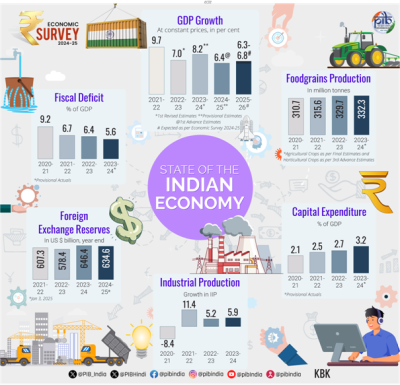
The Economic Survey 2024-25, released by the Government of India, projects a steady GDP growth between 6.3% and 6.8% in FY26, driven by robust industrial and services sectors. The survey emphasises the crucial role of infrastructure development in sustaining this economic momentum. With industrial output set to grow by 6.2% in FY25, there is an increasing need for enhanced transport and distribution networks to support the expanding economy. Key to achieving these goals is the ₹50,000 crore Self-Reliant India Fund, launched to provide equity funding to MSMEs, which are expected to drive both domestic growth and exports. As the government continues to prioritise infrastructure, particularly in the transport and supply chain sectors, the development of smoother, more efficient connections across regions becomes even more vital. India’s export performance remains strong, with overall exports growing 6% year-on-year during April-December 2024. Services exports surged by 12.8% during April-November FY25, highlighting the increasing importance of efficient distribution systems for international trade. The report also underscores the need for continued investments in solar and wind power, which grew by 15.8% year-on-year as of December 2024. The growing demand for renewable energy infrastructure further reinforces the government’s commitment to sustainable development across sectors. With India’s economic trajectory pointing toward sustained growth, the focus on infrastructure development, including transport, warehousing, and distribution, is expected to play a pivotal role in shaping the country’s long-term economic landscape.
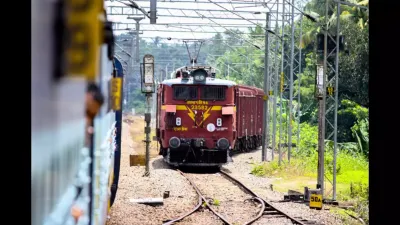
The Chennai division of Southern Railway has introduced a dedicated Parcel Cargo Express Train (PCET) to enhance rail-based logistics, providing a faster and more reliable mode of transportation for parcel cargo. The inaugural service was flagged off on Wednesday by Chennai Divisional Railway Manager Vishwanath Eerya, marking a significant step in streamlining freight movement between the southern and northern regions of India. The PCET will operate between Royapuram in Chennai and Patel Nagar in Delhi under a six-year contract awarded to the Rail Transport Corporation of India. The initiative is expected to generate substantial revenue, with the railway set to earn a minimum of Rs 25 lakh per trip. Operations are scheduled to continue from January 29, 2024, to January 1, 2031. Initially, the train will complete two round trips per month, but the leaseholder has proposed to increase the frequency to two round trips per week on Wednesdays and Sundays. This expansion is expected to generate an estimated revenue of Rs 208 crore over six years. The cargo express will transport a diverse range of goods, including auto parts, leather, handloom products, tyres, and courier shipments. The carrying capacity of the train is set at 353 tonnes per trip for the first six months, with a planned increase to 468 tonnes. Covering a total distance of 2,195 km, the service will play a crucial role in improving trade connectivity between the southern and northern regions, fostering economic growth and supply chain efficiency.
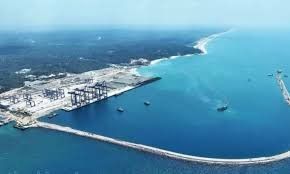
The second and third phases of the Vizhinjam Port, scheduled for completion by 2028, are set to establish the port as a key driver of Kerala’s economic progress, according to Minister V.N. Vasavan. Speaking at the closing session of the Vizhinjam Conclave 2025, Vasavan emphasised that the expansion, along with the introduction of passenger cargo facilities, will position Kerala’s maritime sector as a leader in South Asia. The Vizhinjam Integrated Logistics Hub, along with the Vallarpadam Container Terminal and 17 other smaller ports in Kerala, is expected to play a crucial role in global supply chain operations. Since the arrival of the first cargo ship in July, the port has handled 144 ships and processed 2,90,000 containers within just six months, underscoring its growing operational efficiency. With a natural depth of 20 metres, Vizhinjam offers direct access to mother vessels, further enhancing its strategic significance. To strengthen the port’s connectivity, the state government has committed to major infrastructure improvements. A 10-km rail tunnel from Balaramapuram to Vizhinjam Port is planned for completion within four years, while road connectivity to National Highway 66 is set to be finalised in two years. These developments will significantly enhance access to the port, supporting its integration into global trade networks. Industries Minister P. Rajeeve outlined an ambitious vision for transforming Vizhinjam into a global industrial hub. He encouraged industrialists to capitalise on the opportunities emerging from the port’s expansion and reaffirmed the Kerala government’s commitment to fostering industrial growth in the region. Education Minister V. Sivankutty highlighted the port’s potential to generate substantial employment and attract international investors. With over 300 delegates and 50 investors participating in the conclave, confidence in Vizhinjam’s future as a maritime powerhouse continues to grow.

In a significant step to enhance Inland Water Transport (IWT) operations on National Waterway-1 (NW-1), River Ganga, the Inland Waterways Authority of India (IWAI), under the Union Ministry of Ports, Shipping and Waterways, inaugurated a full-fledged Regional Office in Varanasi on January 23, 2025. This marks IWAI’s sixth regional office, complementing existing locations in Guwahati, Patna, Kochi, Bhubaneswar, and Kolkata. The new office, with a sub-office at Prayagraj, will oversee a 487-kilometer stretch from Majhua to Prayagraj, including the Multi-Modal Terminal (MMT) at Varanasi. The key focus will be the World-Bank-funded Jal Marg Vikas Project (JMVP), aimed at upgrading the River Ganga’s capacity through river conservancy works such as dredging and constructing critical infrastructure like terminals and locks. Infrastructure under JMVP includes MMTs in Varanasi, Sahibganj, and Haldia, an inter-modal terminal at Kalughat, and a new navigational lock at Farakka. Sixty community jetties across Uttar Pradesh, Bihar, Jharkhand, and West Bengal will further empower local farmers, artisans, and fishermen. The Varanasi office will also coordinate with Uttar Pradesh's State IWT Authority, focusing on tributaries such as the Yamuna, Gomti, and Betwa, alongside other National Waterways in the state. Aligned with Prime Minister Narendra Modi’s vision and Minister Sarbananda Sonowal’s leadership, IWAI continues its nationwide expansion, fostering waterways as a vital engine of growth and connectivity.
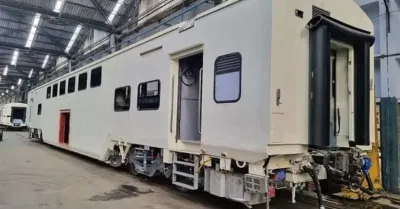
The Ministry of Railways is gearing up to launch innovative freight-cum-passenger trains, aiming to capture a significant share of the time-sensitive parcel and small cargo shipment market. This unique double-decker train design will feature freight on the ground level and passenger seating on the upper deck, according to senior government sources cited by Business Standard. The project, presented to Prime Minister Narendra Modi during a late-2024 sectoral review, received support from the Prime Minister’s Office (PMO) to move forward. Aligned with Indian Railways’ strategy to diversify its freight portfolio, the trains aim to compete directly with road transport for parcels and e-commerce shipments. Currently, coal and iron ore constitute 60% of Indian Railways’ freight revenue. With plans to transport 3,000 million tonnes of cargo by 2030, the ministry is focusing on boosting miscellaneous goods transport, including parcels. In 2023-24, the ministry revised its revenue target for miscellaneous goods to ₹13,227 crore, though it still fell short by 6.8% from initial budget estimates. The Rail Coach Factory in Kapurthala is developing the prototypes, with 10 coaches already built at an estimated cost of ₹4 crore each. A complete rake is being assembled to operate on select routes, targeting areas with high cargo demand. Potential collaborations with India Post are under consideration to enhance courier market penetration. While the initiative marks Indian Railways’ first entry into cargo liners, logistical challenges remain. Experts highlight concerns about timely parcel unloading potentially delaying passenger train schedules. As rail freight grew by 5% to 1,591 million tonnes in 2023-24, achieving a 10% CAGR through 2030 will be essential to meet freight targets and reduce reliance on raw materials for revenue. This innovative freight-cum-passenger model could pave the way for Indian Railways’ growth in untapped markets.
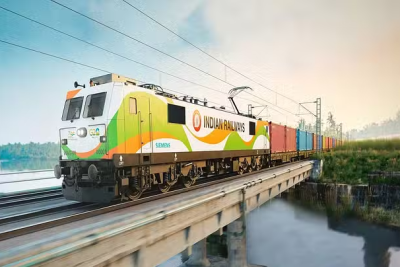
Indian Railways is accelerating the deployment of the advanced Kavach 4.0 automatic train protection system across its key routes to enhance operational safety and efficiency. Kavach 4.0, developed in-house, is an upgraded, technology-driven solution designed to prevent accidents and ensure smooth train operations by minimising human errors. According to officials, all locomotives equipped with older versions of Kavach will be upgraded to the latest system. The North Frontier Railway has identified 1,966 route kilometres (RKM) between Malda Town and Dibrugarh for Kavach 4.0 implementation. The advanced system incorporates features such as Station Kavach, which integrates loco safety with signalling systems, and RFID tags positioned along tracks to monitor train locations and directions. This initiative is part of Indian Railways’ broader strategy to modernise its infrastructure and enhance safety standards, ensuring a smoother and safer travel experience for passengers. The adoption of Kavach 4.0 reinforces the organisation’s commitment to preventing accidents while supporting the government’s vision of a technologically advanced railway network.
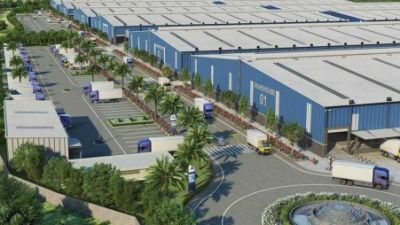
The much-anticipated Sindi Multimodal Logistics Park, spearheaded by Union Minister Nitin Gadkari, is slated to commence operations in the New Year, with plans to facilitate exports to Bangladesh using cost-efficient riverine routes. DeltaCorp, the project developer in partnership with Maharashtra Multimodal Logistics Park Limited (MMLPM), has reportedly sought approval to begin operations ahead of the scheduled commercial operation date (COD), leveraging existing infrastructure. The facility, commonly known as the Sindi dry port, aims to transform logistics by utilising a rail-to-river transport model. Goods will be transported by rail to Haldia, West Bengal, and subsequently shipped to Bangladesh via river vessels, reducing transit times and costs. Key exports include cotton from Vidarbha, along with items like transmission towers, automobile parts, tractors, and perishable goods such as oranges and onions. Plans are also underway to use the Sindi facility as a domestic logistics hub, with a focus on deploying car carriers for automobile transport. The park’s central location makes it ideal for streamlined distribution across the country. Industry stakeholders like Shiv Kumar Rao, former president of the Vidarbha Economic Development (VED) Council, and logistics businessman Pyare Khan highlight the transformative potential of the facility for both regional and international trade. The inauguration of the dry port in December last year marked the culmination of efforts to position Vidarbha as a pivotal logistics node. With trade with Bangladesh resuming, the Sindi Multimodal Logistics Park is poised to play a vital role in enhancing exports, streamlining domestic logistics, and bolstering the regional economy. Source: TOI
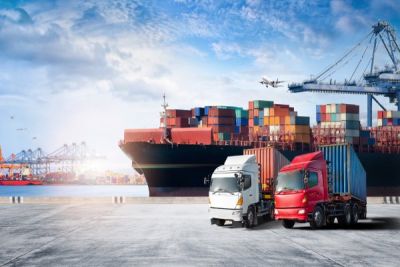
The Central Government and the Asian Development Bank have agreed upon a policy-based loan, which is in the amount of $350 million. Such an initiative will be available under the second subprogram of the SMILE. It intends to boost Indian manufacturing by building up their supply chains. An agreement that the Department of Economic Affairs, Ministry of Finance, the Department for Promotion of Industry and Internal Trade, Ministry of Commerce and Industry, and ADB have jointly signed will represent the commitment of the government to transforming the logistics landscape. The SMILE program's programmatic approach consists of two subprograms that focus on broad-based policy reforms to enhance logistics efficiency. The initiative establishes a comprehensive framework for developing multimodal logistics infrastructure at national, state, and city levels. It also aims to standardise warehousing and logistics assets, incentivise private sector participation, and adopt smart systems for low-emission, efficient operations. The Ministry of Commerce & Industry pointed out that these measures are necessary to improve the competitiveness of the manufacturing sector in India. The program is likely to create employment, ensure gender inclusion, and bring sustainable economic growth through cost reductions in logistics and improving efficiency in external trade. This reflects the mutual commitment of both the Indian Government and ADB to utilising logistics as a foundation for economic development. By driving digital integration, infrastructure advancement, and strategic reforms, this partnership promises to transform the logistics ecosystem in India-boosting growth, innovation, and global competitiveness. Source: ANI
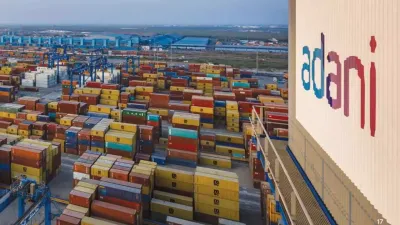
The Indian government extended Adani Group's Krishnapatnam Port permit for petroleum imports until March 1, 2026, citing "public interest" and its strategic regional importance. The Ministry of Ports, Shipping, and Waterways announces the extension for Krishnapatnam Port (Adani Krishnapatnam Port Ltd) to import petrol by sea from 25.08.2024 to 01.03.2026 based upon public interest and on considerations by Navigational Safety at Ports Committee. Adani Ports' shares gained more than 1% intraday on the Bombay Stock Exchange after the declaration. It has augmented its operations with an advanced cargo handling system since August 2024. The port says it enhances container and bulk cargo management with automated tracking, real-time analysis, and improved logistics, thereby enhancing efficiency, accuracy, and cost-effectiveness, besides making the system safer. Krishnapatnam Port, one of India’s largest private ports, has a capacity of 64 million tonnes annually. Adani Ports and Special Economic Zone Limited (APSEZ) first acquired a 75% stake in Krishnapatnam Port Company Limited (KPCL) in 2020 and later secured full ownership in 2021 by purchasing the remaining 25% stake for ₹2,800 crore. This extension and technological upgrade further solidify the port’s pivotal role in India’s maritime infrastructure.
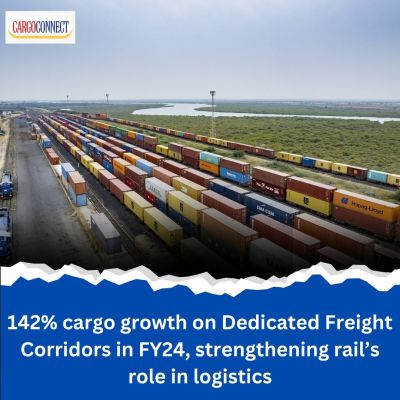
India’s Dedicated Freight Corridors (DFCs) achieved a significant milestone in FY24, witnessing a 142% surge in cargo movement compared to the previous year. According to the Dedicated Freight Corridor Corporation of India (DFCCIL), the network handled 119,129 Gross Ton Kilometres (GTKMs) in FY24, facilitated by the commissioning of 1,272 km of new tracks. Daily train operations increased by 42%, from 170 trains in FY23 to 241 trains in FY24. The Eastern and Western DFCs, spanning 2,843 km across 56 districts in seven states, are nearing completion, with 96.4% of the network operational. DFCCIL also achieved over 1,000 "Truck on Train" trips on the Western Corridor, emphasizing its role in reducing road transport dependency. Capital expenditure for DFCs totaled ₹10,576 crore in FY24, with cumulative project investments reaching ₹94,091 crore. DFCCIL's revenue from operations rose to ₹4,484 crore in FY24, up from ₹3,141 crore in FY23, though it recorded a net loss of ₹29.59 crore. The growing reliance on rail freight has moderated road toll revenue growth. Toll revenue growth is projected to slow to 5.5%-6% in FY25, compared to 12% in FY24 and 21.2% in FY23. In H1 FY25, toll revenue growth was muted at 4.8%, reflecting the ongoing inter-modal shift. While monsoon effects impacted Q2 traffic growth, the latter half of FY25 may show improvement. However, the growing preference for freight corridors is reshaping India’s logistics landscape.

Paradip Port plans to develop three new berths, mechanise four existing ones, and one berth it has proposed exclusively for green hydrogen under its strategy to become fully mechanised by 2030, Paradip Port Authority officials said. The port is administered directly by central governments, like most other ports in India, with the objective of increasing its handling capacity from its current handle of 289 MTPA to over 400 MTPA by 2030, and a target of reaching 500 MTPA by 2047. The mechanisation of berths would require a huge investment of Rs 25 billion, which would significantly improve the operational efficiency while reducing handling time, thus improving productivity at the port as an aggregate. The port also plans to create a dedicated berth for export and bunkering of green hydrogen and green ammonia at 5 MTPA. According to the official, this project is expected to be awarded by 2026. Estimated investment of Rs 3.25 billion would go into the project. A total of four agreements have already been signed with investors who will come to the nearby area to set up green hydrogen and green ammonia plants that require a total investment of Rs 508 billion. Source: India Shipping News
CBIC has issued several recent announcements to ease and make the logistics operations more efficient. The insurance cover that would accompany the stored customs cargo is reduced from the present ten days to five days. This cuts down costs and improves the cash cycle of CCSPs. It has also streamlined licensing for CCSPs by phasing in alignment of their licenses with AEO status. CCSPs will be able to handle exempted cargo if they meet international standards for operations, meaning they will have easier operations and may not renew licenses for handling goods. These are expected to facilitate businesses, reduce overheads and contribute positively to the logistics and supply chain industry efficiency in India, with more smooth and rapid cargo movement. In general, these are the government's efforts towards easy facilitation of business processes in India.

Science is an enterprise that should be cherished as an activity of the free human mind. Because it transforms who we are, how we live, and it gives us an understanding of our place in the universe. Ever since the Industrial Revolution, investments in science and technology have proved to be reliable engines of economic growth. If homegrown interest in those fields is not regenerated soon, the comfortable lifestyle to which Americans have become accustomed will draw to a rapid close. The only service a friend can really render is to keep up your courage by holding up to you a mirror in which you can see a noble image of yourself. George Bernard Shaw Where there's water on Earth, you find life as we know it. So if you find water somewhere else, it becomes a remarkable draw to look closer to see if life of any kind is there, even if it's bacterial, which would be extraordinary for the field of biology.We don't want tradition. We want to livein the present and the only history that is worth a tinker's dam is the history we make today. Keep Your Face to the Sunshine and You Cannot See a Shadow I think the greatest of people in society carved niches that represented the unique expression of their combinations of talents, and if everyone had the luxury of expressing the unique combinations of talents in this world, our society would be transformed overnight. Big ideas, big ambitious projects need to be embedded within culture at a level deeper than the political winds. It needs to be deeper than the economic fluctuations that could turn people against an expensive project because they're on an unemployment line and can't feed their families. However difficult life may seem, there is always something you can do and succeed at. Stephen Hawking Half of my library are old books because I like seeing how people thought about their world at their time. So that I don't get bigheaded about something we just discovered and I can be humble about where we might go next. Because you can see who got stuff right and most of the people who got stuff wrong. If we find life out there, and it's not us, we will deem it not intelligent. But what may be equally as likely is that we find life that's vastly more intelligent than we are. If that's the case, we are putty in their hands. With regard to robots, in the early days of robots people said, 'Oh, let's build a robot' and what's the first thought? You make a robot look like a human and do human things. That's so 1950s. We are so past that. The one thing that can solve most of our problems is dancing. The caricature of science is that we hold tight to the theories we have, and shun challenges to them. That's just not true. In fact, we hold our highest rewards for those scientists who can prove others wrong. And by the way, they are famous in their own lifetimes. We don't wait until they're dead. People May Hear Your Words, but They Feel Your Attitude Every account of a higher power that I've seen described, of all religions that I've seen, include many statements with regard to the benevolence of that power. When I look at the universe and all the ways the universe wants to kill us, I find it hard to reconcile that with statements of beneficence. We aren't addicted to oil, but our cars are. I have a personal philosophy in life: If somebody else can do something that I'm doing, they should do it. And what I want to do is find things that would represent a unique contribution to the world - the contribution that only I, and my portfolio of talents, can make happen. Those are my priorities in life. We didn't build the interstate system to connect New York to Los Angeles because the West Coast was a priority. No, we webbed the highways so people can go to multiple places and invent ways of doing things not thought of by the persons building the roads. When you innovate, you create new industries that then boost your economy. And when you create new industries and that becomes part of your culture, your jobs can't go overseas because no one else has figured out how to do it yet. The history of exploration across nations and across time is not one where nations said, 'Let's explore because it's fun.' It was, 'Let's explore so that we can claim lands for our country, so that we can open up new trade routes; let's explore so we can become more powerful.'
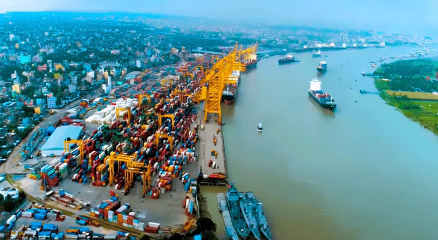
India’s two largest container gateways, Mundra and Nhava Sheva, are facing mounting congestion as rising cargo volumes, truck driver shortages and rerouted shipments from the Middle East strain operations across the country’s logistics network. Shipping lines and logistics operators are reporting worsening turnaround times at both ports, with vessel delays averaging nearly two and a half days and some unscheduled ships waiting up to five days for berthing. The disruptions are slowing cargo movement, tightening yard space and forcing carriers to make last-minute operational changes. According to industry reports, a shortage of truck drivers has become a major bottleneck for container transfers between terminals and inland transport hubs. The issue has reduced the pace of cargo evacuation from ports, adding pressure on already crowded container yards. Terminal operators have intermittently restricted gate access to control container inflow, while export gate schedules continue to shift frequently. These changes are complicating truck planning and increasing uncertainty for exporters and freight forwarders. The congestion is being intensified by cargo diversions linked to disruptions in the Middle East, particularly around Gulf trade routes. Shipping lines have increasingly redirected transshipment cargo to Indian ports as alternatives to facilities in the Persian Gulf, sharply increasing container volumes in recent weeks. The pressure has begun affecting carrier schedules. Some shipping companies are rerouting vessels between terminals at short notice to avoid yard congestion. Danish shipping giant Maersk recently shifted several sailings from its regular terminal at Nhava Sheva to PSA Mumbai after facing space constraints and a growing container backlog. Industry stakeholders say these sudden terminal changes are creating operational and financial challenges for shippers, including higher handling costs and difficulties coordinating customs clearance and inland transportation. The latest disruption comes at a time when India has been positioning itself as a major global manufacturing and logistics hub. Over the past decade, the country has expanded port capacity, improved freight corridors and modernised customs processes to strengthen supply chain efficiency. However, the current congestion highlights the vulnerability of port infrastructure during periods of sudden trade realignment and geopolitical disruption. Logistics experts warn that prolonged delays could increase freight costs, extend delivery timelines and place additional pressure on exporters already dealing with volatile global shipping conditions. Follow CARGOCONNECT for more such updates.
The diversification process by Apple continues to progress as India becomes one of the centers for manufacturing operations. Based on an analysis by Smart Analytics Global (SAG), the percentage share of Indian manufacturing of iPhones has increased from 14% in 2024 to 23% in 2025 and further to 28% by 2026, whereas China’s share has decreased from 83% to 74% within the same timeframe. As Apple continues to lower its reliance on China, India is all set to emerge as the major assembly hub for 28 percent of all iPhones exported around the world by 2026, compared to just 23 percent in the prior year. This change is due to the company's overall strategy of spreading its manufacturing operations in order to mitigate potential tariff risks and geopolitical risks, in addition to creating a more flexible manufacturing network beyond China. Based on the estimates of Smart Analytics Global (SAG), China's share in global iPhone production dropped from 83% in 2024 to 74% in 2025, while India's share increased from 14% in 2024 to 23% in 2025. Estimates provided by another market research firm, Counterpoint Research, indicate that India's share in global iPhone manufacturing could increase to approximately 26% in 2026 from 23% in 2025. As per SAG, “India will account for the manufacture of 28 percent of iPhones shipped globally in 2026, rising from 23 percent in 2025. This growth will be fueled by the ongoing diversification of Apple outside China and capacity build-up at existing manufacturers in India like Tata Electronics,” said Abhilash Kumar, an analyst at Smart Analytics Global. According to Tarun Pathak, research director at Counterpoint Research, “Apple's manufacturing partners have substantially increased their manufacturing capacities and assembly lines in India. They have also diversified their product portfolio made in India.” He further stated that the increase in manufacturing capacity of Tata Electronics is another factor aiding the growth. Apple has managed to localize production substantially in India through manufacturers like Foxconn and Tata Electronics. The recent takeover of Wistron and Pegatron in India by the Tata Group represents a huge step forward in Apple’s localization efforts in India. At present, India is assembling a larger number of iPhones, even the latest versions, and has become an important source of exports, targeting countries like the US and European nations. Over the past five years, Apple has manufactured iPhones worth almost $70 billion in India using its PLI scheme, where around $51 billion, or almost 73% of all iPhones manufactured, were exported from India. Moreover, iPhones have become the most exported goods from India during the previous financial year. India has become the biggest beneficiary of Apple’s changing supply chain. From initially assembling iPhones on a smaller scale, it has grown to become a manufacturing cluster for iPhones through government incentives, increased manufacturing capabilities, and the growing presence of suppliers. Several of the most important suppliers and manufacturers for Apple are still highly entrenched within China, allowing the country to enjoy an unrivaled capacity and adaptability when it comes to managing mass-scale productions and product shifts. For more such news and updates, visit CARGOCONNECT.
Shadowfax is significantly expanding its quick commerce infrastructure, announcing plans to scale its dark store network from 15 facilities to 100 by FY27. The move underscores the company’s growing focus on hyperlocal deliveries, same-day fulfilment, and direct-to-consumer (D2C) logistics as competition intensifies in India’s fast-evolving quick commerce ecosystem. The Bengaluru-based company plans to add 85 new dark stores over the next fiscal year, targeting metro cities with delivery radiuses of approximately seven kilometres and fulfilment timelines of around 30 minutes. The expansion is expected to support rising demand from vertical quick commerce platforms and D2C brands that increasingly rely on third-party logistics (3PL) partners for rapid deliveries. According to company executives, vertical marketplaces are emerging as a profitable segment because of their dependence on outsourced logistics infrastructure rather than captive fulfilment networks. Shadowfax believes this trend creates a strong opportunity for scalable 3PL-led quick commerce models. The dark store expansion will account for nearly 10% of Shadowfax’s planned capital expenditure of ₹180–190 crore in FY27. The company is simultaneously strengthening its automation and artificial intelligence capabilities to improve operational efficiency. AI-led demand forecasting, automated slotting, and smarter sorting centre operations are expected to reduce overhead costs while accelerating breakeven timelines for new facilities. Shadowfax’s aggressive expansion comes on the back of strong financial performance. The company reported a consolidated net profit of ₹55.8 crore in Q4 FY26, compared to a net loss of ₹9.9 crore during the same period last year. Revenue from operations surged 73.6% year-on-year to ₹1,237 crore, reflecting growing order volumes and increased adoption of quick commerce delivery services. Founded in 2015, Shadowfax has evolved into one of India’s largest logistics and last-mile delivery networks, serving over 2,500 cities and more than 15,000 pincodes. The company currently handles millions of shipments daily through a technology-driven delivery ecosystem that supports e-commerce, grocery, hyperlocal, and D2C brands. Industry analysts believe the dark store expansion reflects a broader shift within India’s logistics sector, where speed, proximity-based fulfilment, and automated operations are becoming central to supply chain competitiveness. As quick commerce adoption accelerates beyond groceries into categories such as fashion, electronics, and personal care, logistics providers like Shadowfax are positioning themselves as critical enablers of ultra-fast retail fulfilment. 𝐒𝐭𝐚𝐲 𝐓𝐮𝐧𝐞𝐝 𝐭𝐨 https://cargoconnect.co.in/ 𝐟𝐨𝐫 𝐥𝐚𝐭𝐞𝐬𝐭 𝐮𝐩𝐝𝐚𝐭𝐞𝐬!
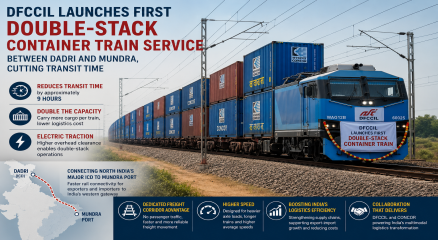
India’s Dedicated Freight Corridors (DFCs) are rapidly reshaping the country’s logistics landscape, with the Western Dedicated Freight Corridor (WDFC) between Dadri and Jawaharlal Nehru Port Authority (JNPA) emerging as a game-changing infrastructure project for supply chains and multimodal freight movement. Designed exclusively for cargo operations, the corridor is significantly reducing transit times, improving reliability, and easing congestion on conventional rail routes. Stretching nearly 1,500 km from Dadri in Uttar Pradesh to JNPA near Mumbai, the corridor forms the backbone of India’s western logistics artery, connecting manufacturing centres, inland container depots, industrial clusters, and ports. With dedicated tracks for freight trains, the network allows uninterrupted cargo movement at higher average speeds, eliminating delays caused by mixed passenger and freight operations. One of the biggest outcomes has been a sharp reduction in transit time. Freight movement between Dadri and JNPA that traditionally took close to 72 hours on congested rail routes is now being completed in nearly half the time, improving turnaround efficiency for exporters, importers, and logistics operators. Industry stakeholders believe the reduction in transit duration will strengthen India’s competitiveness in global trade and support the government’s target of lowering logistics costs as a percentage of GDP. The DFC network has also enabled the operation of longer and heavier freight trains, including double-stack container services on electrified routes. This has increased carrying capacity while lowering per-unit transportation costs. According to sector estimates, rail freight on dedicated corridors is considerably more energy-efficient and environmentally sustainable than road transport, aligning with India’s broader decarbonisation goals. Beyond operational efficiency, the corridors are catalysing the growth of integrated logistics ecosystems. Regions such as Dadri, Greater Noida, and Jewar are witnessing accelerated development of multimodal logistics parks, warehousing zones, and industrial hubs due to their strategic connectivity with both the Eastern and Western DFCs. The emerging “rail-road-air” logistics triangle around the National Capital Region is expected to attract substantial investments in manufacturing and distribution infrastructure. The Dedicated Freight Corridor Corporation of India (DFCCIL) has reported rising freight train volumes on the operational stretches, indicating growing industry adoption. The completion of key links on the western corridor is expected to further enhance throughput and reduce dependency on road transport for long-haul cargo. Analysts say the dedicated rail network could become central to India’s ambition of creating faster, greener, and more resilient supply chains. As India continues investing in additional freight corridors across the country, the success of the Dadri-JNPA route demonstrates how infrastructure modernisation can directly influence trade efficiency, logistics performance, and industrial growth. 𝐒𝐭𝐚𝐲 𝐓𝐮𝐧𝐞𝐝 𝐭𝐨 https://cargoconnect.co.in/ 𝐟𝐨𝐫 𝐥𝐚𝐭𝐞𝐬𝐭 𝐮𝐩𝐝𝐚𝐭𝐞𝐬
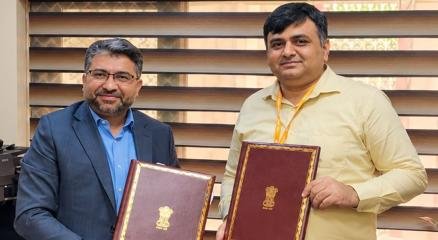
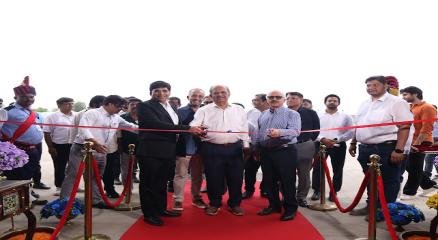
In a strategic warehousing move, the South Eastern Coalfields Limited (SECL), the second largest coal-producing subsidiary of Coal India Limited, has signed a Memorandum of Understanding (MoU) with Central Warehousing Corporation (CWC) for collaboration in coal logistics, railway rake provisioning under GPWIS and similar schemes, and integrated transportation services. Guided by the Union Ministry of Coal, SECL is rapidly working to improve India’s energy security and coal logistics infrastructure. The company is taking steps to boost coal evacuation efficiency and ensure a steady fuel supply to essential sectors. This partnership with CWC is a significant move in that direction. The goal of the partnership with CWC is to strengthen SECL’s coal evacuation capabilities by providing reliable and efficient rail logistics solutions to meet the rising demand from the power, steel, cement, and other sectors. The MoU outlines collaboration in various areas, including dedicated railway rake operations, integrated coal transportation solutions, multimodal logistics, first-mile and last-mile connectivity, and the deployment of digital systems for logistics monitoring and operational efficiency. Under the agreed framework, both organizations will explore provisioning and operation of GPWIS and equivalent racks, integrated rail logistics services, and long-term transportation solutions aimed at improving dispatch efficiency and reducing logistical obstacles. The MoU was signed in the presence of Harish Duhan, Chairman-cum-Managing Director of SECL, and Santosh Sinha, Managing Director of CWC. Functional Directors and senior officials from SECL, as well as representatives from CWC, attended the signing ceremony. SECL plays a vital role in meeting the country's growing coal demand. In the current financial year 2026-27, Coal India Limited has already surpassed the 100 million tonne production mark, with SECL contributing more than 26.8 million tonnes. Central Warehousing Corporation (CWC), a Navaratna Central Public Sector Enterprise under the Government of India, is a leader in integrated logistics and warehousing services. It has extensive experience in rail-linked cargo movement and multimodal transportation solutions. For more such news and updates, visit CARGOCONNECT.