
Loading...
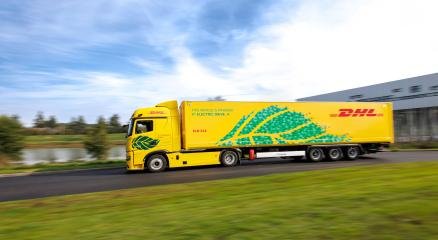
DHL Freight has moved the SuperPanther eTopas 600 battery-electric heavy-duty truck from real-world trials into regular commercial operations, deploying the vehicle across its Dutch transport network for domestic services and cross-border routes to Belgium. Produced in Europe for DHL Freight by Chinese manufacturer SuperPanther, the truck has been in regular operation since September 2026. Its deployment marks a step towards integrating battery-electric heavy-duty vehicles into established road freight networks, with operational experience expected to inform wider adoption. With a range of up to 500 kilometres per charge, the eTopas 600 is designed for medium-haul transport. Rather than being restricted to a fixed shuttle or single terminal, it is deployed flexibly across different routes and currently covers around 2,000 kilometres per week. This provides DHL Freight with practical insights into the vehicle’s performance within day-to-day network operations, including cross-border transport. Arjan van Weelden, Carrier & Sustainability Manager at DHL Freight, said the vehicle had performed positively in daily operations, meeting the requirements of its intended deployment profiles and achieving high productivity within the network. He also noted positive feedback from drivers and growing customer interest in transport solutions that reduce greenhouse gas emissions. For DHL Freight Netherlands & Belgium, the deployment forms part of a broader effort to expand lower-emission road transport. Heidi van Eldik, CEO of DHL Freight Netherlands & Belgium, said the technology needed to demonstrate its effectiveness in commercial operations, adding that the company plans to introduce around 40 electric trucks over the coming months. From Trials To Commercial Deployment The move follows a phased collaboration between DHL Freight and SuperPanther that began with a memorandum of understanding in September 2024. The eTopas 600 subsequently underwent real-world testing in Austria. During a two-week trial in spring 2026, the vehicle covered approximately 1,900 kilometres before the first Europe-produced unit for DHL Freight rolled off the production line in July 2026. The transition to regular operations allows both companies to draw on data and practical experience to refine deployment profiles and assess the operational and economic viability of battery-electric heavy-duty vehicles in road freight transport. The companies have also signed a separate memorandum of understanding on autonomous driving, with plans to test how the technology can be advanced under real-world operating conditions. Scaling Lower-Emission Road Freight DHL Freight currently operates around 1,700 emissions-reduced vehicles and is testing different vehicle types and powertrain technologies. The eTopas 600 deployment adds to these efforts as DHL Group works towards its goal of achieving net-zero emissions in logistics by 2050. The experience gathered in the Netherlands will help inform decisions on how battery-electric heavy-duty trucks can be incorporated more broadly into existing transport networks, balancing route flexibility, productivity and emissions-reduction objectives.
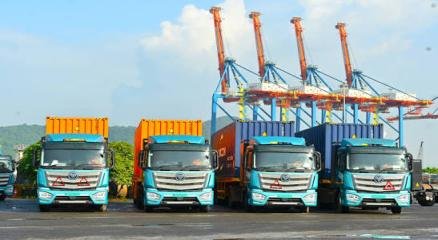
Energy In Motion Ltd (EIM) has inaugurated a ₹500-crore electric heavy commercial vehicle manufacturing complex in Talegaon, Pune to expand electric freight mobility in India. The facility integrates vehicle assembly, lithium-ion battery-pack manufacturing and battery testing, with an initial annual assembly capacity of 5,000 vehicles per shift. Inaugurated by Maharashtra Chief Minister Devendra Fadnavis, the complex forms part of EIM’s planned ₹1,000-crore investment in the state. The project is expected to generate more than 2,000 direct and indirect jobs, while supporting the development of capabilities in engineering, research and development, and information technology. Located at Ambi near Talegaon, the facility brings key stages of electric commercial vehicle production under one roof. The company aims to strengthen domestic assembly capabilities and develop a local supplier network as it expands its presence in the heavy-duty electric vehicle segment. The complex also houses a dedicated lithium-ion battery-pack assembly unit and an independent battery-testing laboratory. EIM has allocated ₹60 crore for the first phase of its battery-testing facility, which is being developed in collaboration with Automotive Test Systems. The laboratory will support testing across electrical performance, thermal management, mechanical durability, environmental conditions and battery safety. EIM plans to introduce two additional electric heavy commercial vehicles over the next 15 months: an electric tipper for mining and road construction, and a rigid-body truck designed for freight transportation. These models will expand the company’s portfolio beyond its existing Ashwa 4x2 electric tractor, which targets heavy freight applications, including container movement and port logistics. The company has a technology licensing and supply agreement with BAIC Foton Motor for electric commercial vehicles above 18 tonnes in India. Its battery technology partnership with Contemporary Amperex Technology Co. Ltd (CATL) will support the development of higher-capacity battery packs for heavy-duty applications. EIM is preparing to assemble its 400.5-kWh Luna lithium iron phosphate (LFP) battery system locally. The company estimates that the battery could deliver a driving range of more than 200 km, compared with approximately 150 km for its existing 282-kWh battery configuration. CATL has agreed to supply 500 MWh of LFP battery cells and pack kits. Beyond manufacturing, EIM is developing a nationwide network of megawatt-scale charging and battery-swapping stations along major highways, ports and industrial clusters. Its battery-swapping technology is designed to replace batteries in compatible vehicles in less than seven minutes, while charging infrastructure will support vehicles using the CCS-2 direct-current fast-charging standard. Therefore, the integrated approach aims to address key operational considerations for freight operators, including vehicle utilisation, charging downtime and energy infrastructure availability. By combining vehicle assembly, battery systems and supporting infrastructure, EIM is positioning itself to serve logistics fleets seeking alternatives to diesel-powered heavy transport as India’s logistics sector explores electric trucks to improve freight efficiency and reduce transport-related emissions. 𝐒𝐭𝐚𝐲 𝐓𝐮𝐧𝐞𝐝 𝐭𝐨 CARGOCONNECT 𝐟𝐨𝐫 𝐥𝐚𝐭𝐞𝐬𝐭 𝐮𝐩𝐝𝐚𝐭𝐞𝐬!
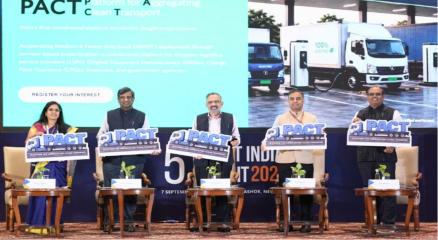
New Delhi: NITI Aayog-led e-FAST India has launched the Platform for Aggregating Clean Transport (PACT) to accelerate the deployment of zero-emission trucks and strengthen the commercial case for electric freight in India. Rajiv Gauba, Member, NITI Aayog, launched the platform at the 5th e-FAST India Summit 2026. PACT is designed to aggregate freight demand from shippers, logistics service providers (LSPs) and other stakeholders and translate that demand into electric-truck deployment opportunities across identified freight corridors. The initiative brings together key participants across the electric freight ecosystem, including shippers, LSPs, vehicle manufacturers, financiers, charge point operators and technology providers. By creating greater visibility around freight demand, PACT aims to help stakeholders plan charging infrastructure, improve access to financing and support larger-scale deployment of electric medium- and heavy-duty vehicles (e-MHDVs). The platform comes as India's electric freight market moves beyond small-scale pilots. E-freight vehicle deployments increased more than fourfold, from 201 vehicles in FY2024-25 to 826 in FY2025-26, while more than 3,000 electric medium- and heavy-duty trucks are now operating across the country. NITI Aayog said sustaining this growth will require greater coordination across the ecosystem, particularly in aggregating freight demand, developing charging infrastructure, improving financing access and providing greater certainty to fleet operators and investors. Speaking at the summit, Gauba said the next phase of India's electric freight transition would depend on collaboration across the ecosystem. He highlighted innovative financing models, corridor-based charging infrastructure and market-driven partnerships as important levers for accelerating the commercial adoption of electric trucks. Alongside PACT, the summit also introduced the ZET Marketplace, an interactive business platform intended to connect e-truck manufacturers, LSPs, charge point operators, financiers and technology companies. The marketplace will allow participating companies to showcase products, identify commercial opportunities and develop partnerships for zero-emission freight projects. Discussions at the summit focused on financing and de-risking mechanisms, charging infrastructure, policy priorities and lessons from early electric-freight deployments. A central theme was the need to move beyond individual demonstration projects towards coordinated, commercially viable deployments at scale. Follow CARGOCONNECT for more such updates.
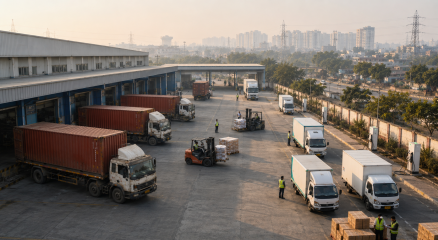
The Centre is working on a freight interchange system around the National Capital Region (NCR) to prevent long-haul diesel trucks from entering Delhi during the winter pollution season. Under the proposed model, cargo would be transferred to electric trucks at logistics hubs on the city’s outskirts before being transported to warehouses and distribution centres within the capital. The initiative aims to reduce freight-related emissions without disrupting the movement of essential and commercial goods when air-quality restrictions are imposed. It also aligns with India’s wider efforts to promote electric mobility and cleaner urban logistics. Five freight interchange hubs proposed Around five multimodal logistics hubs are proposed at strategic NCR locations, including Sonipat, Faridabad, Ghaziabad, Greater Noida and Gurugram. These facilities would serve as interchange points for cargo arriving on long-distance routes. Medium and heavy diesel trucks would halt at the designated hubs to unload consignments or exchange trailers. Electric trucks would then undertake the final leg of the journey into Delhi, transporting goods to warehouses, distribution centres and customers. The hubs are expected to form part of the National Highways for EV initiative, being developed through a public-private partnership model to strengthen electric vehicle and charging infrastructure across major transport corridors. Redesigning freight entry into Delhi The proposed system seeks to keep diesel-powered freight vehicles outside Delhi’s borders while allowing electric and other low-emission vehicles to manage urban deliveries. Although initially linked to the winter pollution season, the interchange model could eventually support a more permanent transition towards cleaner city logistics. The initiative could also help reduce the operational disruptions caused by diesel-truck restrictions under the Graded Response Action Plan (GRAP). When Stage IV measures are enforced, the entry of medium and heavy diesel goods vehicles is restricted, except for trucks carrying essential commodities or covered by specific exemptions. These restrictions frequently result in vehicles queuing at Delhi’s borders, delaying deliveries and affecting supply-chain schedules. Freight interchange hubs could provide an alternative by enabling cargo to continue moving even when diesel trucks are prevented from entering the city. Freight emissions under scrutiny Heavy trucks account for a relatively small proportion of vehicles operating on Delhi’s roads but are estimated to contribute around 23 percent of transport-related PM2.5 emissions. Their impact is particularly significant at night, when a large share of freight movement takes place. The interchange proposal is intended to complement Delhi’s Winter Pollution Action Plan, which remains in effect from November 1 to February 28 unless stricter GRAP measures are introduced. The seasonal plan includes checks on Pollution Under Control certificates, restrictions on certain non-BS VI vehicles, staggered office timings, work-from-home advisories, construction controls and measures against open burning. If implemented, the EV-based freight interchange system could allow cargo movement to continue during severe pollution episodes while reducing the presence of diesel trucks within Delhi. It would also mark a significant step towards integrating clean mobility with urban freight planning.
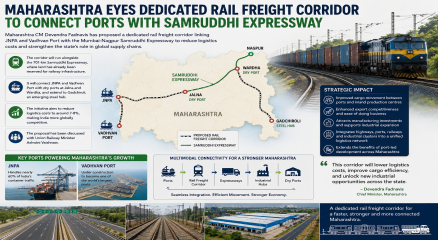
Maharashtra Chief Minister Devendra Fadnavis has proposed the development of a dedicated rail freight corridor linking the Jawaharlal Nehru Port Authority (JNPA) and the upcoming Vadhvan Port with the Mumbai-Nagpur Samruddhi Expressway, a move aimed at reducing logistics costs and strengthening the state's role in global supply chains. Speaking at the inauguration of electronics manufacturer Jabil's new facility in Pune, Fadnavis said the proposed corridor would integrate key ports, inland dry ports and industrial hubs through a multimodal transport network. The rail line is planned to run alongside the 701-km Samruddhi Expressway, where land has already been reserved for railway infrastructure. According to the proposal, the freight corridor will connect JNPA and Vadhvan Port with the dry ports at Jalna and Wardha before extending to Gadchiroli, which the state government is positioning as an emerging steel manufacturing hub. The network is expected to improve cargo movement between ports and inland production centres while supporting industrial expansion across Maharashtra. Fadnavis said the initiative could help lower logistics costs to around 7-8%, bringing India closer to globally competitive freight costs. He added that the proposal has already been discussed with Union Railway Minister Ashwini Vaishnaw, who attended the event. Highlighting Maharashtra's strategic logistics infrastructure, the Chief Minister noted that JNPA currently handles nearly 60% of India's container traffic, while the under-construction Vadhvan Port is expected to become one of the world's largest ports upon completion. Improved rail connectivity between these gateways and inland logistics hubs is expected to enhance cargo efficiency, support exports and attract manufacturing investments. Fadnavis also said that expanding multimodal connectivity would allow the benefits of port-led development to reach a larger share of the state, increasing industrial activity beyond the coastal belt. The proposed freight corridor is expected to complement Maharashtra's broader infrastructure strategy by integrating highways, ports, railways and industrial clusters into a unified logistics network. Follow CARGOCONNECT for more such updates.
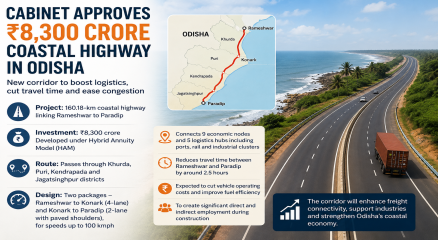
The Union Cabinet has approved the construction of a new coastal highway linking Rameshwar and Paradip in Odisha, a project expected to improve freight movement, reduce transit times and strengthen connectivity across key economic centres along the state's coastline. The project carries an estimated investment of ₹8,300 crore and will be developed under the Hybrid Annuity Model (HAM). Approved by the Cabinet Committee on Economic Affairs (CCEA), the 160.18-km corridor will pass through the districts of Khurda, Puri, Kendrapada and Jagatsinghpur. The new route is designed to address capacity and operational constraints on existing road links that currently handle a mix of local and long-distance traffic. The project will be executed in two phases. The first package includes a four-lane access-controlled highway between Rameshwar and Konark, while the second package involves the development of a two-lane road with paved shoulders from Konark to Paradip. Both sections have been designed for vehicle speeds of up to 100 kmph. From a logistics perspective, the highway is expected to improve access to major economic and transport assets across the region. Government estimates indicate that the corridor will connect nine economic nodes and five logistics hubs, including ports, rail infrastructure and industrial clusters. The project aligns with the PM GatiShakti framework, which focuses on integrated multimodal infrastructure development. Officials said the existing road network, particularly stretches connecting Puri, Satapada and Konark, faces operational challenges due to heavy local traffic and roadside development. The new corridor is intended to provide a more efficient route for both passenger and cargo transportation while reducing congestion on existing highways. Upon completion, travel time between Rameshwar and Paradip is expected to be reduced by approximately two and a half hours. The government also expects the project to lower vehicle operating costs, improve fuel efficiency and support more reliable freight movement along Odisha's coast. The corridor is expected to support industries including fisheries, food processing, manufacturing and export-oriented businesses by providing improved access to ports and logistics infrastructure. It is also projected to generate substantial employment during the construction phase through both direct and indirect jobs. Follow CARGOCONNECT for more such updates.

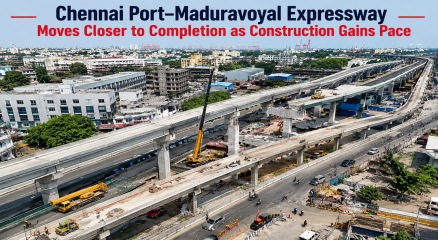
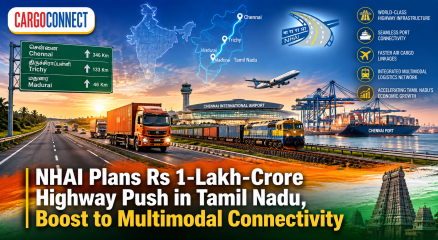
Construction of the long-delayed Chennai Port–Maduravoyal elevated corridor has entered an accelerated phase, with authorities targeting completion by November 2027 to improve cargo evacuation from Chennai Port and ease freight congestion across the city. The 20.5-km four-lane elevated expressway, being developed by the National Highways Authority of India (NHAI), is designed primarily to facilitate seamless movement of container traffic between Chennai Port and the city’s outer road network. The project is expected to significantly reduce transit delays for trucks transporting export-import cargo. The expressway project, originally conceived more than a decade ago, has faced repeated interruptions due to legal disputes, environmental concerns and changes in design alignment. Construction activity had remained stalled for years before being revived with revised plans and fresh clearances. Once operational, the dedicated freight corridor is expected to reduce heavy vehicle movement on congested arterial roads within Chennai, particularly in areas surrounding the port. Industry stakeholders believe the infrastructure will improve turnaround time for container trucks and strengthen the efficiency of cargo movement linked to one of India’s busiest ports. The elevated corridor will connect Chennai Port directly to Maduravoyal on National Highway 48, creating faster access to industrial clusters and hinterland markets in Tamil Nadu and neighbouring states. Logistics operators have long argued that the absence of a dedicated evacuation corridor has contributed to delays, higher fuel consumption and operational inefficiencies for cargo transporters serving the port. According to project authorities, the revised execution strategy includes parallel construction packages and tighter monitoring mechanisms aimed at avoiding further delays. Several supporting activities, including drainage works and relocation of utilities, are also being carried out alongside the main structural construction. The project is considered strategically important for Chennai Port’s long-term cargo handling competitiveness, particularly as container volumes continue to grow and pressure on urban transport infrastructure increases. Analysts say the dedicated elevated link could help improve supply chain reliability for exporters and importers dependent on the port. The Chennai Port–Maduravoyal corridor is among the major port connectivity infrastructure projects being pursued to strengthen multimodal logistics efficiency and reduce urban freight congestion in key maritime gateways across India. Follow CARGOCONNECT for more such updates.

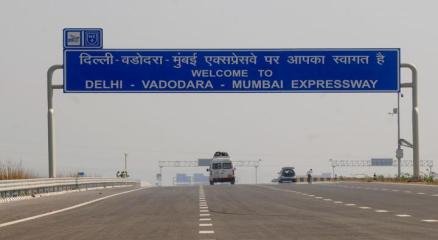
The newly operational Ganga Expressway is expected to sharply reduce freight transit time across Uttar Pradesh and generate annual logistics savings of as much as ₹30,000 crore, according to state government estimates and logistics industry executives. The corridor is also likely to accelerate industrial and warehousing activity along one of north India’s largest freight routes. Stretching 594 kilometres between Meerut and Prayagraj, the six-lane expressway, which is designed for future expansion to eight lanes, passes through 12 districts and creates a direct high-speed road link between western Uttar Pradesh and the eastern part of the state. The improved corridor is expected to have a significant impact on freight movement in a state that handles hundreds of millions of tonnes of cargo annually, including agricultural produce, construction materials, retail goods, electronics and leather products. Industry observers believe the expressway could ease congestion on existing routes and improve delivery predictability for transport operators. Uttar Pradesh Industrial Development Minister Nand Gopal Gupta said the project was being positioned not only as a transport network but also as a logistics and manufacturing corridor. According to the state government, nearly 987 investment proposals worth around ₹46,660 crore have already been linked to the expressway region. Authorities are also planning 12 industrial nodes spread across more than 6,500 acres. Sectors expected to benefit include manufacturing, food processing, pharmaceuticals, textiles, warehousing, electronics and e-commerce. Faster movement of goods is also expected to support supply chain efficiency in Tier-2 and Tier-3 cities across Uttar Pradesh, where logistics infrastructure has historically lagged behind larger urban centres. Logistics companies say the expressway could reduce dependence on older freight routes connecting the National Capital Region with eastern Uttar Pradesh. Industry executives also expect lower fuel consumption, shorter turnaround times and reduced inventory holding costs for businesses operating across the corridor. The expressway, inaugurated in April this year, forms part of Uttar Pradesh’s broader infrastructure expansion strategy aimed at strengthening industrial connectivity and attracting private investment into logistics and manufacturing clusters. Follow CARGOCONNECT for more such updates.
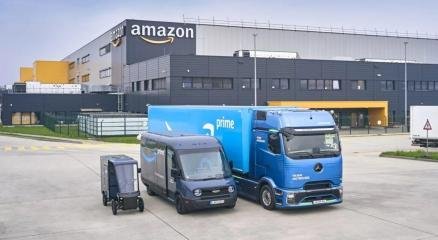
A key step for India's logistics and sustainable transportation sector is a collaboration between Amazon India and VE Commercial Vehicles (VECV) to introduce nearly 1,000 Eicher Pro-X electric small trucks by 2028. It becomes one of the biggest introductions of electric commercial vehicles in India's e-commerce industry. It is expected to help boost Amazon's middle-mile logistics operation for its rapid delivery system, Amazon Now, in several cities. The adoption of these custom electric trucks is likely to enhance the intra-city cargo transportation and help Amazon India move forward towards its sustainability goals. Recent studies in the industry have emphasized that electric commercial vehicles are playing a crucial role in reducing emissions from urban transportation and enhancing efficiency in last-mile/middle-mile distribution networks. As per the joint official statements, the essential electric fleet deployment will implement two significant industry directives:- • Quick Commerce Infrastructure Scaling: To dominate India’s intensifying quick commerce race, the electric trucks will support Amazon Now’s rollout across 100 Indian cities. The platform is scaling its network to more than 1,000 technology-enabled MFCs to deliver groceries, personal care items, and electronic accessories within minutes, ensuring seamless, real-time inventory replenishment across high-demand urban nodes. • The Green Shipping Transition: Operating with an operational range of 100 to 180 kilometers per day, the Eicher Pro-X trucks feature advanced fast-charging capabilities that top up batteries in roughly 50 minutes. This technology establishes a strong foundation for zero-emission transit across high-frequency daily turnaround trips, directly targeting the reduction of Scope 3 logistics emissions. The commercial and industrial aspects of this partnership are progressing rapidly. Alongside urban transport, the strategy prioritizes strengthening the logistics supply chain through advanced, co-created technology. The Eicher Pro-X electric truck was co-developed in close collaboration between VECV and Amazon since 2022, specifically optimized to meet the rigorous uptime and high-payload demands of rapid e-commerce fulfillment. The live deployment of these first 50 units across major metropolitan hubs signals that heavy-payload electric commercial vehicles (e-CVs) have moved past the pilot phase and into full commercial viability. For original equipment manufacturers (OEMs), corporate shippers, and freight forwarders, this partnership changes the conversation around middle-mile infrastructure. It proves that co-created, vehicle-to-grid tech can seamlessly absorb the heavy workload of modern just-in-time supply chains. For more such news and updates, visit CARGOCONNECT.
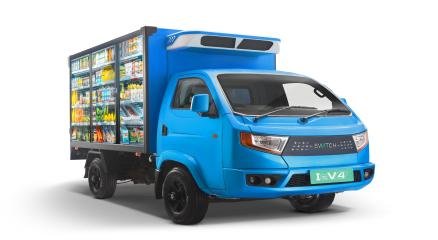
India’s cold chain logistics sector is witnessing a major shift toward sustainable transportation as electric commercial vehicles gain momentum across the country. In response to rising demand for energy-efficient and temperature-controlled delivery solutions, SWITCH Mobility has launched the SWITCH IeV4 Reefer, an electric refrigerated vehicle designed for cold chain operations across urban and regional markets. The launch comes at a time when logistics companies are increasingly looking for solutions that reduce operational costs, improve fleet efficiency, and support environmental goals. With industries such as pharmaceuticals, dairy, frozen foods, and FMCG relying heavily on temperature-sensitive transportation, the need for reliable electric refrigerated vehicles has become more significant. Built on the company’s next-generation IeV electric vehicle platform, the IeV4 Reefer combines electric mobility technology with advanced refrigeration capabilities. The vehicle operates on a 300V EV architecture and is equipped with a 32.2 kWh lithium-ion battery. It is powered by a permanent magnet synchronous motor capable of producing 60 kW peak power and 230 Nm torque, enabling efficient performance across varied logistics conditions. The refrigerated vehicle supports temperature ranges between -25°C and +25°C, allowing it to cater to frozen, chilled, and fresh cargo transportation requirements. The vehicle is expected to support applications including pharmaceutical distribution, milk and dairy transportation, bakery logistics, frozen foods, fresh produce, and meat delivery. To ensure consistent temperature retention, the reefer body uses insulated sandwich panel construction with 100 mm thick insulation across all panels. The vehicle also includes standby and pre-cooling functionality, enabling the refrigeration unit to operate using external grid power while the vehicle is charging or during loading and unloading operations. This feature helps reduce battery consumption and improve driving efficiency during delivery cycles. The IeV4 Reefer offers a gross vehicle weight of 3,490 kg and a payload capacity of 1,200 kg, making it suitable for mid-mile and last-mile cold chain operations. SWITCH Mobility stated that the vehicle has already seen adoption across western, northern, and southern regions of India for various refrigerated transport applications. The electric refrigerated vehicle is equipped with CCS2 AC and DC charging capability, with fast charging technology allowing the battery to charge from 10% to 80% in nearly 55 minutes. Additional features such as 22% gradeability and a top speed of 80 kmph are aimed at supporting dependable performance across diverse operating conditions. Driver comfort and ease of operation have also been prioritised in the vehicle’s design. The IeV4 Reefer comes with electric power steering, D+2 seating configuration, and suspension systems designed to improve stability and manoeuvrability during daily logistics operations. With the introduction of the IeV4 Reefer, SWITCH Mobility is strengthening its position in India’s growing electric commercial vehicle market while contributing to the expansion of sustainable cold chain transportation infrastructure. 𝐒𝐭𝐚𝐲 𝐓𝐮𝐧𝐞𝐝 𝐭𝐨 https://cargoconnect.co.in/ 𝐟𝐨𝐫 𝐥𝐚𝐭𝐞𝐬𝐭 𝐮𝐩𝐝𝐚𝐭𝐞𝐬!

Tata Motors has further deepened its digital logistics capabilities by acquiring an additional stake in Freight Commerce Solutions (Freight Tiger) for ₹95.66 crore, marking a strategic move to strengthen its end-to-end supply chain technology ecosystem in India’s commercial vehicle sector. The acquisition involves the purchase of approximately an 18% equity stake from existing investors, which will take Tata Motors’ total holding in Freight Tiger to around 63.6% on a fully diluted basis. With this transaction, Freight Tiger will become a subsidiary of Tata Motors, further integrating its operations with the automaker’s connected vehicle and logistics platforms. Freight Tiger, founded in 2014 and headquartered in Mumbai, operates a SaaS-enabled logistics marketplace and Transportation Management System (TMS). The platform connects shippers, fleet owners, and logistics service providers through a digital ecosystem designed to improve freight visibility, efficiency, and cost optimisation across India’s fragmented logistics sector. According to regulatory disclosures, the transaction was completed as a cash deal on May 15, 2026, and involved shares acquired from early investors, including venture capital and private equity stakeholders. The deal did not require additional regulatory approvals, streamlining the acquisition process. Tata Motors stated that the integration of Freight Tiger with its connected vehicle platform, Fleet Edge, will enable the creation of a comprehensive digital ecosystem covering both vehicle operations and freight movement. This combined system aims to improve real-time tracking, fleet utilisation, trip planning, and logistics coordination across the value chain. The company has been steadily increasing its exposure to logistics technology in recent years. Earlier investments in Freight Tiger signalled Tata Motors’ intent to move beyond manufacturing into mobility solutions and data-driven logistics services. This latest acquisition strengthens that strategy, positioning the company to play a larger role in India’s rapidly digitising supply chain landscape. Freight Tiger has demonstrated consistent revenue growth, reporting ₹26.7 crore in FY25, compared to ₹17.8 crore in FY24. Industry observers expect the integration to accelerate platform adoption as Tata Motors leverages its extensive commercial vehicle network. The acquisition also aligns with broader industry trends, where automakers are increasingly investing in software-led logistics solutions to improve efficiency and reduce operational costs in freight movement. As India’s logistics sector continues to modernise, Tata Motors’ expanded stake in Freight Tiger signals a clear push toward building a unified, technology-driven freight ecosystem. 𝐒𝐭𝐚𝐲 𝐓𝐮𝐧𝐞𝐝 𝐭𝐨 https://cargoconnect.co.in/ 𝐟𝐨𝐫 𝐥𝐚𝐭𝐞𝐬𝐭 𝐮𝐩𝐝𝐚𝐭𝐞𝐬!
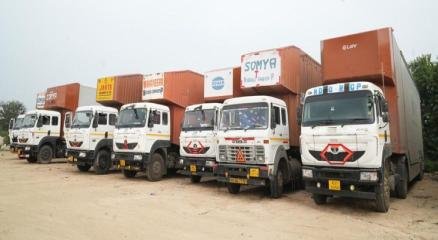
India’s logistics and transportation sector is bracing for higher operating costs after the recent increase in diesel prices, with the All-India Transporters Welfare Association (AITWA) warning that freight rates could rise by 3–3.5% in the coming weeks. The development is expected to impact supply chains across industries, from manufacturing and retail to e-commerce and agriculture. AITWA, which represents a significant share of organized transport and logistics operators in the country, said the road transport industry remains heavily dependent on diesel, making fuel price movements a critical determinant of freight pricing. According to the association, the recent fuel hike comes at a time when logistics companies are already grappling with escalating operational expenses, including toll charges, tyres, lubricants, diesel exhaust fluid (DEF), and vehicle maintenance costs. Ashok Goyal, National President of AITWA, stated that the increase in diesel prices would inevitably translate into higher transportation costs across the supply chain ecosystem. Since road transport handles a majority of India’s domestic cargo movement, any rise in freight charges is likely to have a cascading impact on product pricing and overall inflation. The fuel price hike follows mounting pressure on oil marketing companies amid rising global crude oil prices and geopolitical tensions in West Asia. Petrol and diesel prices were recently increased by around ₹3 per litre, marking the first major upward revision in several years. Industry analysts believe the move could further strain logistics operators working on already thin margins. Transporters have urged the government to consider measures that can cushion the impact on the logistics sector, including rationalization of taxes and support for cleaner, cost-efficient fuel alternatives. AITWA also reiterated its commitment to promoting electric mobility and alternative fuels as part of the sector’s long-term sustainability roadmap. Experts note that the increase in freight rates may particularly affect sectors dependent on high-frequency transportation, such as FMCG, retail distribution, pharmaceuticals, and industrial manufacturing. Logistics firms are now exploring route optimization, multimodal transport solutions, and dynamic pricing strategies to manage the growing cost pressures. With fuel accounting for nearly 40% of trucking operating expenses in India, the latest diesel price hike is expected to intensify inflationary pressures and challenge supply chain efficiency in the months ahead. 𝐒𝐭𝐚𝐲 𝐓𝐮𝐧𝐞𝐝 𝐭𝐨 https://cargoconnect.co.in/ 𝐟𝐨𝐫 𝐥𝐚𝐭𝐞𝐬𝐭 𝐮𝐩𝐝𝐚𝐭𝐞𝐬!

India’s express logistics sector is witnessing a major shift as surface transportation networks continue gaining prominence over air cargo for domestic deliveries. Improved road infrastructure, faster transit times, and cost advantages are encouraging logistics companies to strengthen their road-based operations across the country. According to an Aviral Consulting report, surface transport currently handles nearly 75–80% of domestic express cargo volumes, while air cargo accounts for a much smaller share. The report highlights that improved highways and better connectivity have significantly reduced delivery timelines, allowing road freight to compete more effectively with air transportation. Average truck speeds have increased considerably over the years, enabling faster movement of cargo across major trade corridors. This has made surface logistics more reliable and economically attractive for businesses handling large shipment volumes. The rapid growth of e-commerce and business-to-consumer deliveries is also accelerating demand for efficient road-based logistics. Companies are increasingly focusing on affordability, scale, and network optimisation, leading to higher investments in trucking fleets, automated sorting centres, and hub-and-spoke distribution models. Major logistics players such as Delhivery, TCI Express, Allcargo Gati, and XpressBees are expanding their surface logistics capabilities to handle rising shipment volumes and improve operational efficiency. Investments in automation and digital route planning are also helping companies streamline delivery operations. Despite the growing dominance of road transport, air cargo continues to play an important role in transporting high-value and time-sensitive shipments, including pharmaceuticals, electronics, and urgent industrial cargo. India’s express logistics market, currently valued at around $9–10 billion, is projected to nearly double by 2030, driven by infrastructure development, rising e-commerce activity, and expanding trade volumes. However, challenges such as last-mile delivery costs, urban congestion, and pricing pressures remain key concerns for the industry. Follow CARGOCONNECT for more such updates.
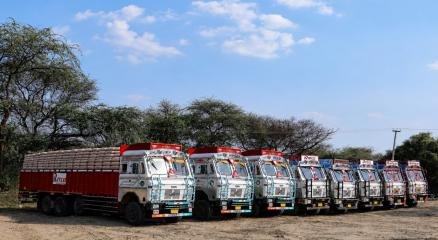
Ritco Logistics Ltd has strengthened its cement and infrastructure logistics capabilities with the induction of 85 newly modernised fleet vehicles aimed at supporting rising construction demand across Western India. The specialised fleet has been designed to enhance load optimisation, operational safety and transportation efficiency, enabling faster and more reliable movement of cement to high-growth infrastructure and industrial markets. Strategically deployed across Gujarat, Rajasthan and Maharashtra, the expansion aligns with India’s National Logistics Policy and the PM Gati Shakti National Master Plan, supporting improved regional connectivity and higher logistics efficiency across key industrial corridors. Commenting on the development, Manmohan Pal Singh Chadha Chairman, Ritco Logistics said, “The induction of this specialized fleet marks a significant step in strengthening our capabilities in the cement logistics segment." "With infrastructure demand rising across the country, especially in key states like Gujarat, it is crucial to ensure timely and efficient transportation. This investment reflects our commitment to providing reliable, safe, and optimized logistics solutions tailored to industry needs,” he added. The move is expected to enhance transportation capacity, reduce transit timelines and support the uninterrupted flow of high-volume cement supplies required for ongoing industrial and infrastructure expansion across the region.
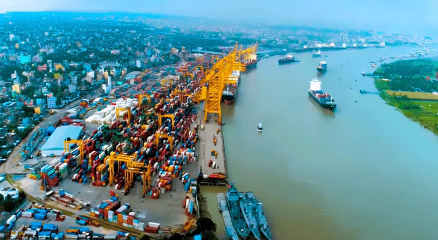
India’s two largest container gateways, Mundra and Nhava Sheva, are facing mounting congestion as rising cargo volumes, truck driver shortages and rerouted shipments from the Middle East strain operations across the country’s logistics network. Shipping lines and logistics operators are reporting worsening turnaround times at both ports, with vessel delays averaging nearly two and a half days and some unscheduled ships waiting up to five days for berthing. The disruptions are slowing cargo movement, tightening yard space and forcing carriers to make last-minute operational changes. According to industry reports, a shortage of truck drivers has become a major bottleneck for container transfers between terminals and inland transport hubs. The issue has reduced the pace of cargo evacuation from ports, adding pressure on already crowded container yards. Terminal operators have intermittently restricted gate access to control container inflow, while export gate schedules continue to shift frequently. These changes are complicating truck planning and increasing uncertainty for exporters and freight forwarders. The congestion is being intensified by cargo diversions linked to disruptions in the Middle East, particularly around Gulf trade routes. Shipping lines have increasingly redirected transshipment cargo to Indian ports as alternatives to facilities in the Persian Gulf, sharply increasing container volumes in recent weeks. The pressure has begun affecting carrier schedules. Some shipping companies are rerouting vessels between terminals at short notice to avoid yard congestion. Danish shipping giant Maersk recently shifted several sailings from its regular terminal at Nhava Sheva to PSA Mumbai after facing space constraints and a growing container backlog. Industry stakeholders say these sudden terminal changes are creating operational and financial challenges for shippers, including higher handling costs and difficulties coordinating customs clearance and inland transportation. The latest disruption comes at a time when India has been positioning itself as a major global manufacturing and logistics hub. Over the past decade, the country has expanded port capacity, improved freight corridors and modernised customs processes to strengthen supply chain efficiency. However, the current congestion highlights the vulnerability of port infrastructure during periods of sudden trade realignment and geopolitical disruption. Logistics experts warn that prolonged delays could increase freight costs, extend delivery timelines and place additional pressure on exporters already dealing with volatile global shipping conditions. Follow CARGOCONNECT for more such updates.
The diversification process by Apple continues to progress as India becomes one of the centers for manufacturing operations. Based on an analysis by Smart Analytics Global (SAG), the percentage share of Indian manufacturing of iPhones has increased from 14% in 2024 to 23% in 2025 and further to 28% by 2026, whereas China’s share has decreased from 83% to 74% within the same timeframe. As Apple continues to lower its reliance on China, India is all set to emerge as the major assembly hub for 28 percent of all iPhones exported around the world by 2026, compared to just 23 percent in the prior year. This change is due to the company's overall strategy of spreading its manufacturing operations in order to mitigate potential tariff risks and geopolitical risks, in addition to creating a more flexible manufacturing network beyond China. Based on the estimates of Smart Analytics Global (SAG), China's share in global iPhone production dropped from 83% in 2024 to 74% in 2025, while India's share increased from 14% in 2024 to 23% in 2025. Estimates provided by another market research firm, Counterpoint Research, indicate that India's share in global iPhone manufacturing could increase to approximately 26% in 2026 from 23% in 2025. As per SAG, “India will account for the manufacture of 28 percent of iPhones shipped globally in 2026, rising from 23 percent in 2025. This growth will be fueled by the ongoing diversification of Apple outside China and capacity build-up at existing manufacturers in India like Tata Electronics,” said Abhilash Kumar, an analyst at Smart Analytics Global. According to Tarun Pathak, research director at Counterpoint Research, “Apple's manufacturing partners have substantially increased their manufacturing capacities and assembly lines in India. They have also diversified their product portfolio made in India.” He further stated that the increase in manufacturing capacity of Tata Electronics is another factor aiding the growth. Apple has managed to localize production substantially in India through manufacturers like Foxconn and Tata Electronics. The recent takeover of Wistron and Pegatron in India by the Tata Group represents a huge step forward in Apple’s localization efforts in India. At present, India is assembling a larger number of iPhones, even the latest versions, and has become an important source of exports, targeting countries like the US and European nations. Over the past five years, Apple has manufactured iPhones worth almost $70 billion in India using its PLI scheme, where around $51 billion, or almost 73% of all iPhones manufactured, were exported from India. Moreover, iPhones have become the most exported goods from India during the previous financial year. India has become the biggest beneficiary of Apple’s changing supply chain. From initially assembling iPhones on a smaller scale, it has grown to become a manufacturing cluster for iPhones through government incentives, increased manufacturing capabilities, and the growing presence of suppliers. Several of the most important suppliers and manufacturers for Apple are still highly entrenched within China, allowing the country to enjoy an unrivaled capacity and adaptability when it comes to managing mass-scale productions and product shifts. For more such news and updates, visit CARGOCONNECT.
Shadowfax is significantly expanding its quick commerce infrastructure, announcing plans to scale its dark store network from 15 facilities to 100 by FY27. The move underscores the company’s growing focus on hyperlocal deliveries, same-day fulfilment, and direct-to-consumer (D2C) logistics as competition intensifies in India’s fast-evolving quick commerce ecosystem. The Bengaluru-based company plans to add 85 new dark stores over the next fiscal year, targeting metro cities with delivery radiuses of approximately seven kilometres and fulfilment timelines of around 30 minutes. The expansion is expected to support rising demand from vertical quick commerce platforms and D2C brands that increasingly rely on third-party logistics (3PL) partners for rapid deliveries. According to company executives, vertical marketplaces are emerging as a profitable segment because of their dependence on outsourced logistics infrastructure rather than captive fulfilment networks. Shadowfax believes this trend creates a strong opportunity for scalable 3PL-led quick commerce models. The dark store expansion will account for nearly 10% of Shadowfax’s planned capital expenditure of ₹180–190 crore in FY27. The company is simultaneously strengthening its automation and artificial intelligence capabilities to improve operational efficiency. AI-led demand forecasting, automated slotting, and smarter sorting centre operations are expected to reduce overhead costs while accelerating breakeven timelines for new facilities. Shadowfax’s aggressive expansion comes on the back of strong financial performance. The company reported a consolidated net profit of ₹55.8 crore in Q4 FY26, compared to a net loss of ₹9.9 crore during the same period last year. Revenue from operations surged 73.6% year-on-year to ₹1,237 crore, reflecting growing order volumes and increased adoption of quick commerce delivery services. Founded in 2015, Shadowfax has evolved into one of India’s largest logistics and last-mile delivery networks, serving over 2,500 cities and more than 15,000 pincodes. The company currently handles millions of shipments daily through a technology-driven delivery ecosystem that supports e-commerce, grocery, hyperlocal, and D2C brands. Industry analysts believe the dark store expansion reflects a broader shift within India’s logistics sector, where speed, proximity-based fulfilment, and automated operations are becoming central to supply chain competitiveness. As quick commerce adoption accelerates beyond groceries into categories such as fashion, electronics, and personal care, logistics providers like Shadowfax are positioning themselves as critical enablers of ultra-fast retail fulfilment. 𝐒𝐭𝐚𝐲 𝐓𝐮𝐧𝐞𝐝 𝐭𝐨 https://cargoconnect.co.in/ 𝐟𝐨𝐫 𝐥𝐚𝐭𝐞𝐬𝐭 𝐮𝐩𝐝𝐚𝐭𝐞𝐬!
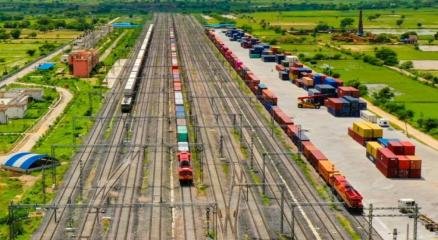
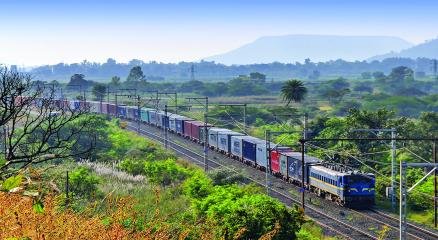
India’s Dedicated Freight Corridors (DFCs) are rapidly reshaping the country’s logistics landscape, with the Western Dedicated Freight Corridor (WDFC) between Dadri and Jawaharlal Nehru Port Authority (JNPA) emerging as a game-changing infrastructure project for supply chains and multimodal freight movement. Designed exclusively for cargo operations, the corridor is significantly reducing transit times, improving reliability, and easing congestion on conventional rail routes. Stretching nearly 1,500 km from Dadri in Uttar Pradesh to JNPA near Mumbai, the corridor forms the backbone of India’s western logistics artery, connecting manufacturing centres, inland container depots, industrial clusters, and ports. With dedicated tracks for freight trains, the network allows uninterrupted cargo movement at higher average speeds, eliminating delays caused by mixed passenger and freight operations. One of the biggest outcomes has been a sharp reduction in transit time. Freight movement between Dadri and JNPA that traditionally took close to 72 hours on congested rail routes is now being completed in nearly half the time, improving turnaround efficiency for exporters, importers, and logistics operators. Industry stakeholders believe the reduction in transit duration will strengthen India’s competitiveness in global trade and support the government’s target of lowering logistics costs as a percentage of GDP. The DFC network has also enabled the operation of longer and heavier freight trains, including double-stack container services on electrified routes. This has increased carrying capacity while lowering per-unit transportation costs. According to sector estimates, rail freight on dedicated corridors is considerably more energy-efficient and environmentally sustainable than road transport, aligning with India’s broader decarbonisation goals. Beyond operational efficiency, the corridors are catalysing the growth of integrated logistics ecosystems. Regions such as Dadri, Greater Noida, and Jewar are witnessing accelerated development of multimodal logistics parks, warehousing zones, and industrial hubs due to their strategic connectivity with both the Eastern and Western DFCs. The emerging “rail-road-air” logistics triangle around the National Capital Region is expected to attract substantial investments in manufacturing and distribution infrastructure. The Dedicated Freight Corridor Corporation of India (DFCCIL) has reported rising freight train volumes on the operational stretches, indicating growing industry adoption. The completion of key links on the western corridor is expected to further enhance throughput and reduce dependency on road transport for long-haul cargo. Analysts say the dedicated rail network could become central to India’s ambition of creating faster, greener, and more resilient supply chains. As India continues investing in additional freight corridors across the country, the success of the Dadri-JNPA route demonstrates how infrastructure modernisation can directly influence trade efficiency, logistics performance, and industrial growth. 𝐒𝐭𝐚𝐲 𝐓𝐮𝐧𝐞𝐝 𝐭𝐨 https://cargoconnect.co.in/ 𝐟𝐨𝐫 𝐥𝐚𝐭𝐞𝐬𝐭 𝐮𝐩𝐝𝐚𝐭𝐞𝐬
In a strategic warehousing move, the South Eastern Coalfields Limited (SECL), the second largest coal-producing subsidiary of Coal India Limited, has signed a Memorandum of Understanding (MoU) with Central Warehousing Corporation (CWC) for collaboration in coal logistics, railway rake provisioning under GPWIS and similar schemes, and integrated transportation services. Guided by the Union Ministry of Coal, SECL is rapidly working to improve India’s energy security and coal logistics infrastructure. The company is taking steps to boost coal evacuation efficiency and ensure a steady fuel supply to essential sectors. This partnership with CWC is a significant move in that direction. The goal of the partnership with CWC is to strengthen SECL’s coal evacuation capabilities by providing reliable and efficient rail logistics solutions to meet the rising demand from the power, steel, cement, and other sectors. The MoU outlines collaboration in various areas, including dedicated railway rake operations, integrated coal transportation solutions, multimodal logistics, first-mile and last-mile connectivity, and the deployment of digital systems for logistics monitoring and operational efficiency. Under the agreed framework, both organizations will explore provisioning and operation of GPWIS and equivalent racks, integrated rail logistics services, and long-term transportation solutions aimed at improving dispatch efficiency and reducing logistical obstacles. The MoU was signed in the presence of Harish Duhan, Chairman-cum-Managing Director of SECL, and Santosh Sinha, Managing Director of CWC. Functional Directors and senior officials from SECL, as well as representatives from CWC, attended the signing ceremony. SECL plays a vital role in meeting the country's growing coal demand. In the current financial year 2026-27, Coal India Limited has already surpassed the 100 million tonne production mark, with SECL contributing more than 26.8 million tonnes. Central Warehousing Corporation (CWC), a Navaratna Central Public Sector Enterprise under the Government of India, is a leader in integrated logistics and warehousing services. It has extensive experience in rail-linked cargo movement and multimodal transportation solutions. For more such news and updates, visit CARGOCONNECT.