
Loading...
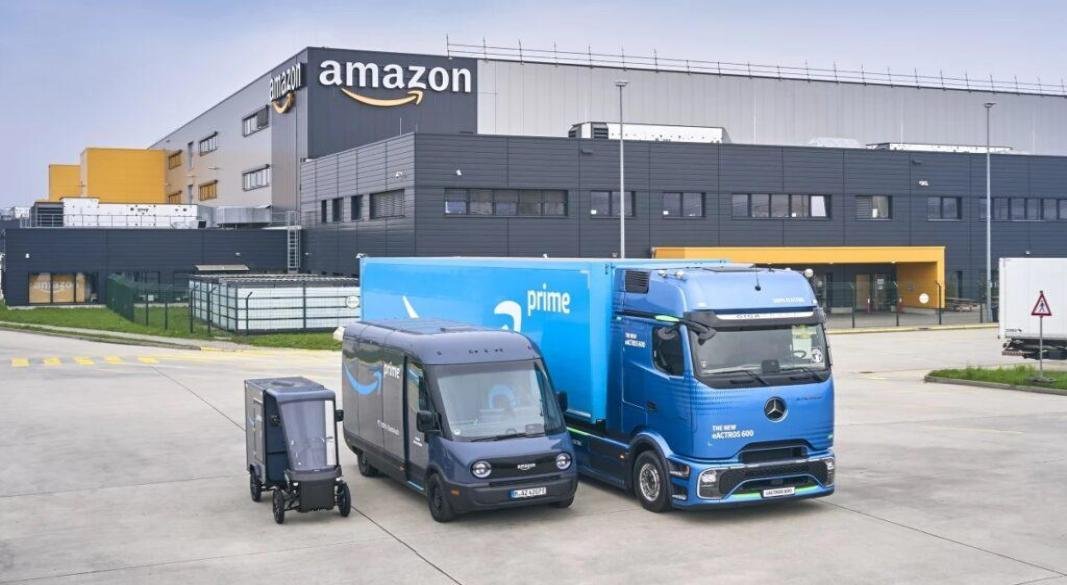
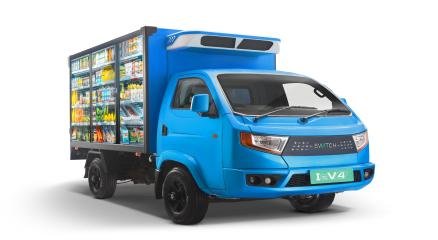
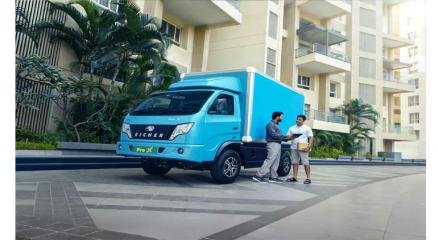
A key step for India's logistics and sustainable transportation sector is a collaboration between Amazon India and VE Commercial Vehicles (VECV) to introduce nearly 1,000 Eicher Pro-X electric small trucks by 2028. It becomes one of the biggest introductions of electric commercial vehicles in India's e-commerce industry. It is expected to help boost Amazon's middle-mile logistics operation for its rapid delivery system, Amazon Now, in several cities.
The adoption of these custom electric trucks is likely to enhance the intra-city cargo transportation and help Amazon India move forward towards its sustainability goals. Recent studies in the industry have emphasized that electric commercial vehicles are playing a crucial role in reducing emissions from urban transportation and enhancing efficiency in last-mile/middle-mile distribution networks.
As per the joint official statements, the essential electric fleet deployment will implement two significant industry directives:-
• Quick Commerce Infrastructure Scaling: To dominate India’s intensifying quick commerce race, the electric trucks will support Amazon Now’s rollout across 100 Indian cities. The platform is scaling its network to more than 1,000 technology-enabled MFCs to deliver groceries, personal care items, and electronic accessories within minutes, ensuring seamless, real-time inventory replenishment across high-demand urban nodes.
• The Green Shipping Transition: Operating with an operational range of 100 to 180 kilometers per day, the Eicher Pro-X trucks feature advanced fast-charging capabilities that top up batteries in roughly 50 minutes. This technology establishes a strong foundation for zero-emission transit across high-frequency daily turnaround trips, directly targeting the reduction of Scope 3 logistics emissions.
The commercial and industrial aspects of this partnership are progressing rapidly. Alongside urban transport, the strategy prioritizes strengthening the logistics supply chain through advanced, co-created technology. The Eicher Pro-X electric truck was co-developed in close collaboration between VECV and Amazon since 2022, specifically optimized to meet the rigorous uptime and high-payload demands of rapid e-commerce fulfillment.
The live deployment of these first 50 units across major metropolitan hubs signals that heavy-payload electric commercial vehicles (e-CVs) have moved past the pilot phase and into full commercial viability. For original equipment manufacturers (OEMs), corporate shippers, and freight forwarders, this partnership changes the conversation around middle-mile infrastructure. It proves that co-created, vehicle-to-grid tech can seamlessly absorb the heavy workload of modern just-in-time supply chains.
For more such news and updates, visit CARGOCONNECT.
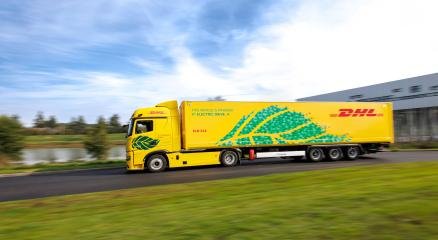
DHL Freight has moved the SuperPanther eTopas 600 battery-electric heavy-duty truck from real-world trials into regular commercial operations, deploying the vehicle across its Dutch transport network for domestic services and cross-border routes to Belgium. Produced in Europe for DHL Freight by Chinese manufacturer SuperPanther, the truck has been in regular operation since September 2026. Its deployment marks a step towards integrating battery-electric heavy-duty vehicles into established road freight networks, with operational experience expected to inform wider adoption. With a range of up to 500 kilometres per charge, the eTopas 600 is designed for medium-haul transport. Rather than being restricted to a fixed shuttle or single terminal, it is deployed flexibly across different routes and currently covers around 2,000 kilometres per week. This provides DHL Freight with practical insights into the vehicle’s performance within day-to-day network operations, including cross-border transport. Arjan van Weelden, Carrier & Sustainability Manager at DHL Freight, said the vehicle had performed positively in daily operations, meeting the requirements of its intended deployment profiles and achieving high productivity within the network. He also noted positive feedback from drivers and growing customer interest in transport solutions that reduce greenhouse gas emissions. For DHL Freight Netherlands & Belgium, the deployment forms part of a broader effort to expand lower-emission road transport. Heidi van Eldik, CEO of DHL Freight Netherlands & Belgium, said the technology needed to demonstrate its effectiveness in commercial operations, adding that the company plans to introduce around 40 electric trucks over the coming months. From Trials To Commercial Deployment The move follows a phased collaboration between DHL Freight and SuperPanther that began with a memorandum of understanding in September 2024. The eTopas 600 subsequently underwent real-world testing in Austria. During a two-week trial in spring 2026, the vehicle covered approximately 1,900 kilometres before the first Europe-produced unit for DHL Freight rolled off the production line in July 2026. The transition to regular operations allows both companies to draw on data and practical experience to refine deployment profiles and assess the operational and economic viability of battery-electric heavy-duty vehicles in road freight transport. The companies have also signed a separate memorandum of understanding on autonomous driving, with plans to test how the technology can be advanced under real-world operating conditions. Scaling Lower-Emission Road Freight DHL Freight currently operates around 1,700 emissions-reduced vehicles and is testing different vehicle types and powertrain technologies. The eTopas 600 deployment adds to these efforts as DHL Group works towards its goal of achieving net-zero emissions in logistics by 2050. The experience gathered in the Netherlands will help inform decisions on how battery-electric heavy-duty trucks can be incorporated more broadly into existing transport networks, balancing route flexibility, productivity and emissions-reduction objectives.
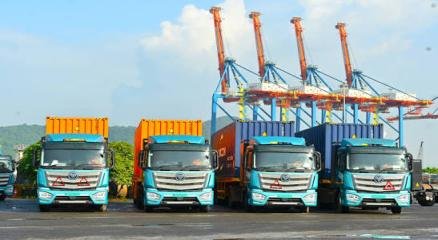

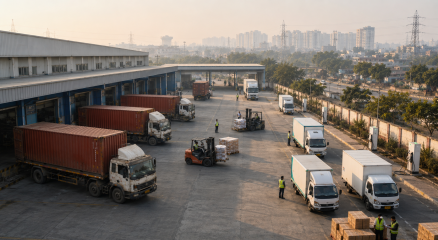
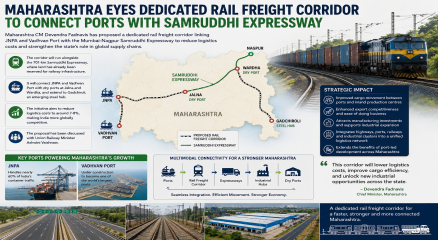
Maharashtra Chief Minister Devendra Fadnavis has proposed the development of a dedicated rail freight corridor linking the Jawaharlal Nehru Port Authority (JNPA) and the upcoming Vadhvan Port with the Mumbai-Nagpur Samruddhi Expressway, a move aimed at reducing logistics costs and strengthening the state's role in global supply chains. Speaking at the inauguration of electronics manufacturer Jabil's new facility in Pune, Fadnavis said the proposed corridor would integrate key ports, inland dry ports and industrial hubs through a multimodal transport network. The rail line is planned to run alongside the 701-km Samruddhi Expressway, where land has already been reserved for railway infrastructure. According to the proposal, the freight corridor will connect JNPA and Vadhvan Port with the dry ports at Jalna and Wardha before extending to Gadchiroli, which the state government is positioning as an emerging steel manufacturing hub. The network is expected to improve cargo movement between ports and inland production centres while supporting industrial expansion across Maharashtra. Fadnavis said the initiative could help lower logistics costs to around 7-8%, bringing India closer to globally competitive freight costs. He added that the proposal has already been discussed with Union Railway Minister Ashwini Vaishnaw, who attended the event. Highlighting Maharashtra's strategic logistics infrastructure, the Chief Minister noted that JNPA currently handles nearly 60% of India's container traffic, while the under-construction Vadhvan Port is expected to become one of the world's largest ports upon completion. Improved rail connectivity between these gateways and inland logistics hubs is expected to enhance cargo efficiency, support exports and attract manufacturing investments. Fadnavis also said that expanding multimodal connectivity would allow the benefits of port-led development to reach a larger share of the state, increasing industrial activity beyond the coastal belt. The proposed freight corridor is expected to complement Maharashtra's broader infrastructure strategy by integrating highways, ports, railways and industrial clusters into a unified logistics network. Follow CARGOCONNECT for more such updates.

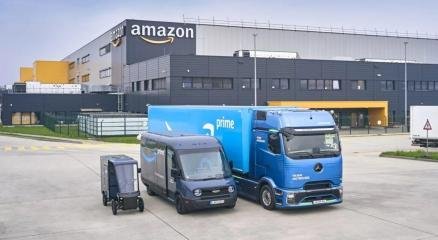
A key step for India's logistics and sustainable transportation sector is a collaboration between Amazon India and VE Commercial Vehicles (VECV) to introduce nearly 1,000 Eicher Pro-X electric small trucks by 2028. It becomes one of the biggest introductions of electric commercial vehicles in India's e-commerce industry. It is expected to help boost Amazon's middle-mile logistics operation for its rapid delivery system, Amazon Now, in several cities. The adoption of these custom electric trucks is likely to enhance the intra-city cargo transportation and help Amazon India move forward towards its sustainability goals. Recent studies in the industry have emphasized that electric commercial vehicles are playing a crucial role in reducing emissions from urban transportation and enhancing efficiency in last-mile/middle-mile distribution networks. As per the joint official statements, the essential electric fleet deployment will implement two significant industry directives:- • Quick Commerce Infrastructure Scaling: To dominate India’s intensifying quick commerce race, the electric trucks will support Amazon Now’s rollout across 100 Indian cities. The platform is scaling its network to more than 1,000 technology-enabled MFCs to deliver groceries, personal care items, and electronic accessories within minutes, ensuring seamless, real-time inventory replenishment across high-demand urban nodes. • The Green Shipping Transition: Operating with an operational range of 100 to 180 kilometers per day, the Eicher Pro-X trucks feature advanced fast-charging capabilities that top up batteries in roughly 50 minutes. This technology establishes a strong foundation for zero-emission transit across high-frequency daily turnaround trips, directly targeting the reduction of Scope 3 logistics emissions. The commercial and industrial aspects of this partnership are progressing rapidly. Alongside urban transport, the strategy prioritizes strengthening the logistics supply chain through advanced, co-created technology. The Eicher Pro-X electric truck was co-developed in close collaboration between VECV and Amazon since 2022, specifically optimized to meet the rigorous uptime and high-payload demands of rapid e-commerce fulfillment. The live deployment of these first 50 units across major metropolitan hubs signals that heavy-payload electric commercial vehicles (e-CVs) have moved past the pilot phase and into full commercial viability. For original equipment manufacturers (OEMs), corporate shippers, and freight forwarders, this partnership changes the conversation around middle-mile infrastructure. It proves that co-created, vehicle-to-grid tech can seamlessly absorb the heavy workload of modern just-in-time supply chains. For more such news and updates, visit CARGOCONNECT.