
Loading...
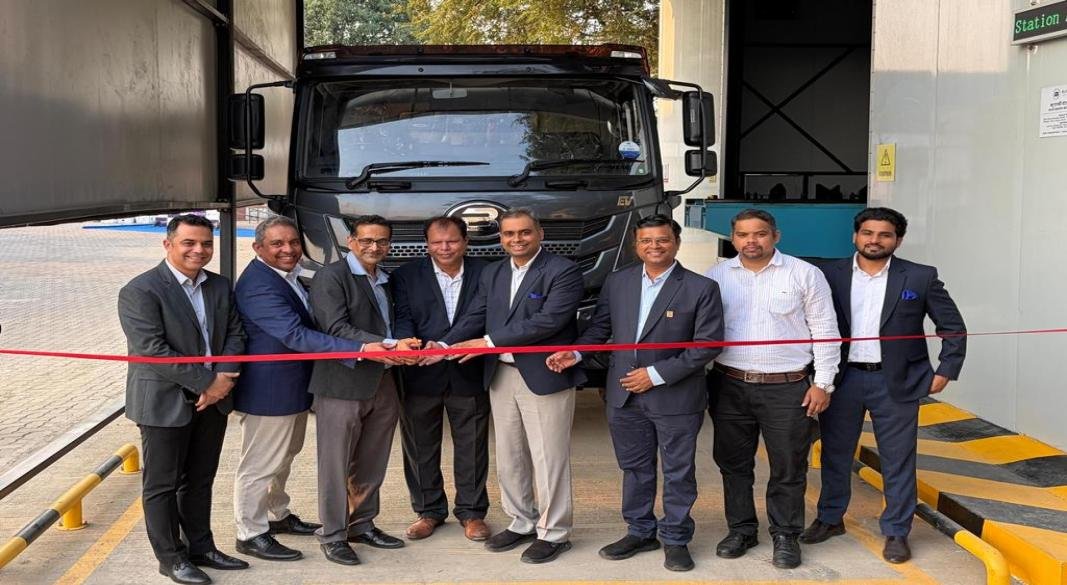
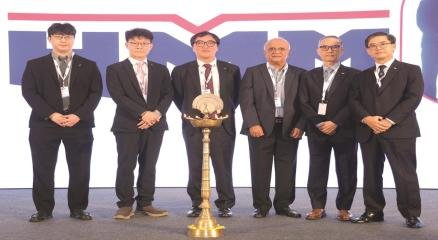
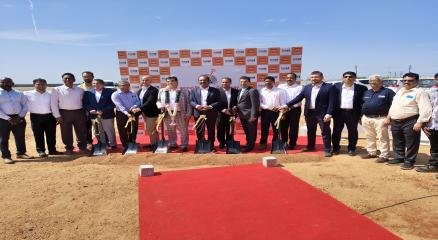
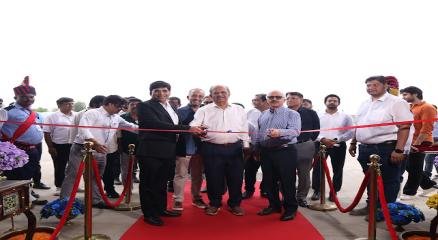
Blue Energy Motors (BEM), in partnership with Hindustan Petroleum Corporation Limited (HPCL), has operationalised Bhiwandi’s first battery-swapping station for electric heavy-duty trucks, strengthening the infrastructure supporting electric freight in one of the Mumbai Metropolitan Region’s key logistics and warehousing hubs.
The facility marks a milestone in the strategic partnership announced in January 2026 and extends the Mumbai–Pune Electric Freight Corridor, launched by BEM in October 2025. Designed to support the operational requirements of electric heavy-duty trucks, the station enables battery swapping in less than five minutes, helping reduce vehicle downtime and improve fleet utilisation.
Beyond freight operations, the facility also integrates a public EV charging station catering to electric two-wheelers, four-wheelers and commercial vehicles. The combination positions the site as a multi-segment EV energy hub within HPCL’s established retail network, extending its utility beyond heavy-duty electric trucking.
Commenting on the development, Anand Mimani, CEO – EV & New Energy Business, Blue Energy Motors, said the company’s focus is on making electric freight a practical and scalable reality in India. He highlighted Bhiwandi’s freight and logistics activity as an important market for the company and said the partnership with HPCL would help build the energy infrastructure required to support the transition. BEM also plans to expand its network of battery-swapping and charging facilities across key markets.
The commissioning reflects BEM’s broader approach to electric freight, integrating vehicle technology, energy infrastructure and operational support. By combining rapid battery swapping for heavy-duty trucks with public charging facilities, the initiative addresses the energy requirements of freight operators as well as other EV users.
The collaboration also highlights the potential of established fuel-retail networks to support India’s electric mobility transition. As freight operators explore fleet electrification, partnerships between vehicle manufacturers, energy providers and existing retail networks could help strengthen the infrastructure needed for wider adoption of electric commercial vehicles.
Blue Energy Motors offers electric and LNG-powered heavy-duty truck solutions. According to the company, more than 1,400 of its green heavy-duty trucks are operating across key freight routes in India. The company has also crossed 150 million green kilometres on Indian roads, which it says has helped reduce CO₂ emissions by more than 44,000 tonnes—equivalent to the carbon absorption of approximately 1.8 million trees.
Blue Energy Motors (BEM), in partnership with Hindustan Petroleum Corporation Limited (HPCL), has operationalised Bhiwandi’s first battery-swapping station for electric heavy-duty trucks, strengthening the infrastructure supporting electric freight in one of the Mumbai Metropolitan Region’s key logistics and warehousing hubs. The facility marks a milestone in the strategic partnership announced in January 2026 and extends the Mumbai–Pune Electric Freight Corridor, launched by BEM in October 2025. Designed to support the operational requirements of electric heavy-duty trucks, the station enables battery swapping in less than five minutes, helping reduce vehicle downtime and improve fleet utilisation. Beyond freight operations, the facility also integrates a public EV charging station catering to electric two-wheelers, four-wheelers and commercial vehicles. The combination positions the site as a multi-segment EV energy hub within HPCL’s established retail network, extending its utility beyond heavy-duty electric trucking. Commenting on the development, Anand Mimani, CEO – EV & New Energy Business, Blue Energy Motors, said the company’s focus is on making electric freight a practical and scalable reality in India. He highlighted Bhiwandi’s freight and logistics activity as an important market for the company and said the partnership with HPCL would help build the energy infrastructure required to support the transition. BEM also plans to expand its network of battery-swapping and charging facilities across key markets. The commissioning reflects BEM’s broader approach to electric freight, integrating vehicle technology, energy infrastructure and operational support. By combining rapid battery swapping for heavy-duty trucks with public charging facilities, the initiative addresses the energy requirements of freight operators as well as other EV users. The collaboration also highlights the potential of established fuel-retail networks to support India’s electric mobility transition. As freight operators explore fleet electrification, partnerships between vehicle manufacturers, energy providers and existing retail networks could help strengthen the infrastructure needed for wider adoption of electric commercial vehicles. Blue Energy Motors offers electric and LNG-powered heavy-duty truck solutions. According to the company, more than 1,400 of its green heavy-duty trucks are operating across key freight routes in India. The company has also crossed 150 million green kilometres on Indian roads, which it says has helped reduce CO₂ emissions by more than 44,000 tonnes—equivalent to the carbon absorption of approximately 1.8 million trees.
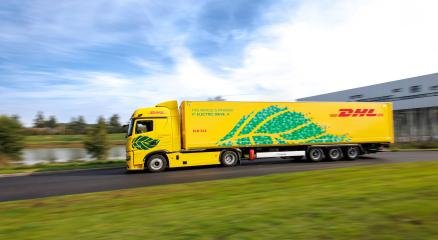
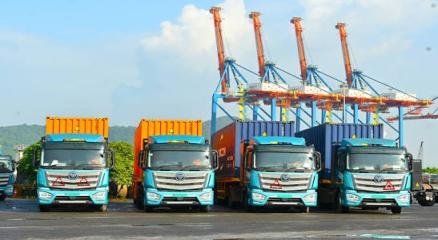
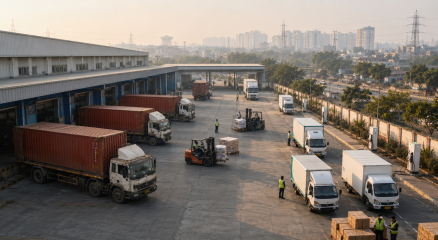
The Centre is working on a freight interchange system around the National Capital Region (NCR) to prevent long-haul diesel trucks from entering Delhi during the winter pollution season. Under the proposed model, cargo would be transferred to electric trucks at logistics hubs on the city’s outskirts before being transported to warehouses and distribution centres within the capital. The initiative aims to reduce freight-related emissions without disrupting the movement of essential and commercial goods when air-quality restrictions are imposed. It also aligns with India’s wider efforts to promote electric mobility and cleaner urban logistics. Five freight interchange hubs proposed Around five multimodal logistics hubs are proposed at strategic NCR locations, including Sonipat, Faridabad, Ghaziabad, Greater Noida and Gurugram. These facilities would serve as interchange points for cargo arriving on long-distance routes. Medium and heavy diesel trucks would halt at the designated hubs to unload consignments or exchange trailers. Electric trucks would then undertake the final leg of the journey into Delhi, transporting goods to warehouses, distribution centres and customers. The hubs are expected to form part of the National Highways for EV initiative, being developed through a public-private partnership model to strengthen electric vehicle and charging infrastructure across major transport corridors. Redesigning freight entry into Delhi The proposed system seeks to keep diesel-powered freight vehicles outside Delhi’s borders while allowing electric and other low-emission vehicles to manage urban deliveries. Although initially linked to the winter pollution season, the interchange model could eventually support a more permanent transition towards cleaner city logistics. The initiative could also help reduce the operational disruptions caused by diesel-truck restrictions under the Graded Response Action Plan (GRAP). When Stage IV measures are enforced, the entry of medium and heavy diesel goods vehicles is restricted, except for trucks carrying essential commodities or covered by specific exemptions. These restrictions frequently result in vehicles queuing at Delhi’s borders, delaying deliveries and affecting supply-chain schedules. Freight interchange hubs could provide an alternative by enabling cargo to continue moving even when diesel trucks are prevented from entering the city. Freight emissions under scrutiny Heavy trucks account for a relatively small proportion of vehicles operating on Delhi’s roads but are estimated to contribute around 23 percent of transport-related PM2.5 emissions. Their impact is particularly significant at night, when a large share of freight movement takes place. The interchange proposal is intended to complement Delhi’s Winter Pollution Action Plan, which remains in effect from November 1 to February 28 unless stricter GRAP measures are introduced. The seasonal plan includes checks on Pollution Under Control certificates, restrictions on certain non-BS VI vehicles, staggered office timings, work-from-home advisories, construction controls and measures against open burning. If implemented, the EV-based freight interchange system could allow cargo movement to continue during severe pollution episodes while reducing the presence of diesel trucks within Delhi. It would also mark a significant step towards integrating clean mobility with urban freight planning.

The newly operational Ganga Expressway is expected to sharply reduce freight transit time across Uttar Pradesh and generate annual logistics savings of as much as ₹30,000 crore, according to state government estimates and logistics industry executives. The corridor is also likely to accelerate industrial and warehousing activity along one of north India’s largest freight routes. Stretching 594 kilometres between Meerut and Prayagraj, the six-lane expressway, which is designed for future expansion to eight lanes, passes through 12 districts and creates a direct high-speed road link between western Uttar Pradesh and the eastern part of the state. The improved corridor is expected to have a significant impact on freight movement in a state that handles hundreds of millions of tonnes of cargo annually, including agricultural produce, construction materials, retail goods, electronics and leather products. Industry observers believe the expressway could ease congestion on existing routes and improve delivery predictability for transport operators. Uttar Pradesh Industrial Development Minister Nand Gopal Gupta said the project was being positioned not only as a transport network but also as a logistics and manufacturing corridor. According to the state government, nearly 987 investment proposals worth around ₹46,660 crore have already been linked to the expressway region. Authorities are also planning 12 industrial nodes spread across more than 6,500 acres. Sectors expected to benefit include manufacturing, food processing, pharmaceuticals, textiles, warehousing, electronics and e-commerce. Faster movement of goods is also expected to support supply chain efficiency in Tier-2 and Tier-3 cities across Uttar Pradesh, where logistics infrastructure has historically lagged behind larger urban centres. Logistics companies say the expressway could reduce dependence on older freight routes connecting the National Capital Region with eastern Uttar Pradesh. Industry executives also expect lower fuel consumption, shorter turnaround times and reduced inventory holding costs for businesses operating across the corridor. The expressway, inaugurated in April this year, forms part of Uttar Pradesh’s broader infrastructure expansion strategy aimed at strengthening industrial connectivity and attracting private investment into logistics and manufacturing clusters. Follow CARGOCONNECT for more such updates.