
Loading...
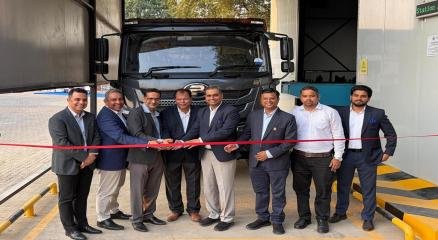
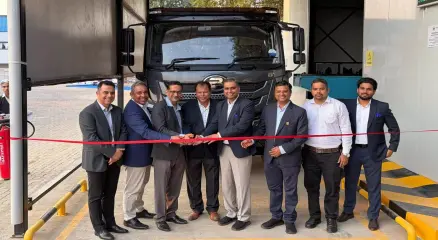
Blue Energy Motors (BEM), in partnership with Hindustan Petroleum Corporation Limited (HPCL), has operationalised Bhiwandi’s first battery-swapping station for electric heavy-duty trucks, strengthening the infrastructure supporting electric freight in one of the Mumbai Metropolitan Region’s key logistics and warehousing hubs. The facility marks a milestone in the strategic partnership announced in January 2026 and extends the Mumbai–Pune Electric Freight Corridor, launched by BEM in October 2025. Designed to support the operational requirements of electric heavy-duty trucks, the station enables battery swapping in less than five minutes, helping reduce vehicle downtime and improve fleet utilisation. Beyond freight operations, the facility also integrates a public EV charging station catering to electric two-wheelers, four-wheelers and commercial vehicles. The combination positions the site as a multi-segment EV energy hub within HPCL’s established retail network, extending its utility beyond heavy-duty electric trucking. Commenting on the development, Anand Mimani, CEO – EV & New Energy Business, Blue Energy Motors, said the company’s focus is on making electric freight a practical and scalable reality in India. He highlighted Bhiwandi’s freight and logistics activity as an important market for the company and said the partnership with HPCL would help build the energy infrastructure required to support the transition. BEM also plans to expand its network of battery-swapping and charging facilities across key markets. The commissioning reflects BEM’s broader approach to electric freight, integrating vehicle technology, energy infrastructure and operational support. By combining rapid battery swapping for heavy-duty trucks with public charging facilities, the initiative addresses the energy requirements of freight operators as well as other EV users. The collaboration also highlights the potential of established fuel-retail networks to support India’s electric mobility transition. As freight operators explore fleet electrification, partnerships between vehicle manufacturers, energy providers and existing retail networks could help strengthen the infrastructure needed for wider adoption of electric commercial vehicles. Blue Energy Motors offers electric and LNG-powered heavy-duty truck solutions. According to the company, more than 1,400 of its green heavy-duty trucks are operating across key freight routes in India. The company has also crossed 150 million green kilometres on Indian roads, which it says has helped reduce CO₂ emissions by more than 44,000 tonnes—equivalent to the carbon absorption of approximately 1.8 million trees.
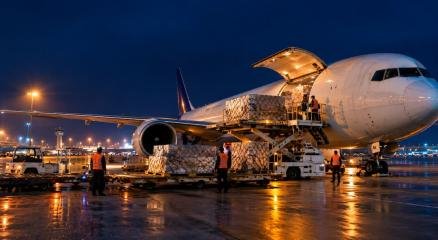
CharterDesk is strengthening its aerospace transport business by combining dedicated aircraft charters, On-Board Courier (OBC) and Next Flight Out (NFO) services to support airlines, aircraft manufacturers and maintenance providers with urgent and planned shipments. The Budapest-based company handles cargo ranging from small, time-critical replacement parts to aircraft engines, tailoring transport arrangements to delivery deadlines, cargo specifications and operational requirements. Aircraft-on-Ground (AOG) movements remain a key part of its business, but the company also supports planned maintenance programmes and production operations, where dependable component deliveries are essential to keeping engineering schedules on track. Its aerospace portfolio spans aircraft engines, landing gear, avionics, spare parts, tooling and structural components. Each movement requires a different combination of aircraft capacity, handling arrangements and delivery coordination. While larger components demand suitable loading equipment and transport capacity, smaller replacement parts may require rapid connections and carefully coordinated last-mile delivery. “Aerospace transport starts with understanding what the customer needs to achieve and how quickly the shipment must arrive,” says Emir Özdabak, Managing Director of CharterDesk. “We assess the cargo and deadline before recommending a dedicated charter, an On-Board Courier or Next Flight Out service. The objective is to minimise downtime or keep production moving.” Ground Coordination Critical to Time-Sensitive Shipments CharterDesk’s approach extends beyond securing aircraft capacity. Its planning process considers packaging, aircraft suitability, loading equipment, customs requirements, collection and final delivery. Coordination among customers, airlines and ground handlers is central to ensuring that the entire movement aligns with the required schedule. The company demonstrated this approach in a shipment involving two CF6 aircraft engines transported from Helsinki to Casablanca aboard an Ethiopian Airlines Boeing 777 freighter. CharterDesk completed the delivery within 48 hours of receiving the confirmed requirement, coordinating the operation with its airline and ground-handling partners. A key challenge was sourcing and positioning the required 20-foot pallets in Helsinki before departure. The operation therefore depended not only on securing aircraft capacity but also on ensuring that the appropriate equipment was available at the departure airport in time for loading. “The Helsinki operation showed how much depends on preparation on the ground,” Özdabak says. “We needed the right pallets in position before departure and worked closely with our partners to make that happen. Delivering the engines within 48 hours required everyone involved to work to the same operational timetable.” In another assignment, CharterDesk arranged an Antonov An-12 operation from Brussels to Istanbul carrying a LEAP-1A engine. The two movements illustrate how aircraft selection, cargo specifications and ground-handling requirements shape the transport solution for individual aerospace shipments. Security and Confidentiality Underpin Operations Given the value and sensitivity of aerospace components, security and information management form part of CharterDesk’s planning process. The company works with airline and ground-handling partners on appropriate handling arrangements, clear handover procedures and shipment monitoring as cargo moves between operational stakeholders. Confidentiality is another consideration, particularly for projects involving commercially sensitive information. CharterDesk limits the circulation of customer and shipment details to those involved in the operation while meeting applicable regulatory disclosure requirements. “Our customers need confidence in how we handle both their equipment and their information,” Özdabak says. “We agree clear handover procedures, monitor shipments and share operational details with the people who need them. Where a project requires confidentiality, we maintain that discipline while fulfilling every required regulatory disclosure.” Flexible Transport Options Support Aerospace Demand CharterDesk receives regular enquiries covering planned production shipments, maintenance support and urgent AOG requirements. Its customers include airlines, maintenance providers, manufacturers and specialist freight forwarders. Established relationships help the company respond to recurring requirements, while each shipment is assessed individually according to its urgency, dimensions and delivery deadline. The company sees opportunities to develop its aerospace business as fleet operations, maintenance needs and production activity generate demand for specialised transport. Dedicated charters can accommodate engines and oversized components, while OBC and NFO services offer alternatives for smaller, urgent shipments, subject to available capacity and operational requirements. “Aerospace fits our team’s experience and the airline relationships we have developed,” Özdabak says. “A quick, coordinated response can directly affect a customer’s operations, whether we are supporting an urgent AOG requirement or a planned movement. Offering charter, courier and scheduled flight solutions allows us to build the response around each shipment.” CharterDesk’s aerospace strategy centres on bringing technical assessment, transport selection and partner coordination together in a single operational process. By aligning the movement of high-value components with the requirements of airlines, manufacturers and maintenance teams, the company aims to support time-critical deliveries as well as planned production and engineering activity.
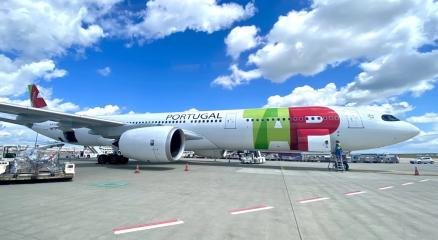
TAP Air Portugal is set to introduce the first-ever nonstop passenger service between Orlando, Florida, and Lisbon, Portugal, from October 29, 2026, creating a new air cargo connection between central Florida and a key European gateway. ECS Group subsidiary America Cargo GSA has already begun marketing cargo capacity on the route, with between 45 and 60 tonnes of weekly uplift available to US freight forwarders. The service will operate three times a week, on Mondays, Thursdays and Saturdays, using an Airbus A330. The new connection is expected to offer a faster alternative to existing two-leg routings, particularly for time-sensitive and high-value shipments moving between the US and Europe. Jean Ceccaldi, Chief Executive Officer of ECS Group, highlighted Orlando’s concentration of aerospace, technology and industrial manufacturers, alongside Lisbon’s position as a European gateway and a connecting point for South America. He identified aerospace components, electronics, medical technology, industrial machinery, seafood and vegetables among the cargo segments that could benefit from the service. According to Ceccaldi, America Cargo GSA is working closely with major freight forwarders and has received strong initial interest in the new routing. Lisbon to Strengthen Connections across Europe and Brazil The new service also supports TAP Air Cargo’s strategy to expand its presence in the North American market and strengthen connectivity between North America, Europe and Brazil. Rúben da Silva Jorge, Head of Sales North America at TAP Air Cargo, said customer feedback had been encouraging, with the airline looking to develop Orlando as both a local cargo market and a gateway within its wider network. He added that the airline would work with America Cargo GSA to serve freight forwarding customers. Under the published schedule, outbound flight TP267 will depart Lisbon at 14:20 and arrive in Orlando at 20:10, with a stated journey time of approximately nine hours and 50 minutes. The return flight, TP268, will leave Orlando at 21:40 and arrive in Lisbon at 10:30 the following morning, with a flight time of around seven hours and 50 minutes. From Lisbon, shipments will have onward connection opportunities to 38 European destinations, as well as TAP Air Portugal’s daily flights to Rio de Janeiro, Brazil. America Cargo GSA to Drive Cargo Sales America Cargo GSA and TAP Air Portugal have worked together in the US market for five years. The GSA promotes TAP Air Cargo’s services and sells cargo capacity through its established US sales and distribution network, while also representing the airline at major industry events. The launch comes as the air cargo industry gathers for the TIACA Air Cargo Forum in Miami from October 26–29, 2026, where ECS Group is inviting interested stakeholders to explore the opportunities presented by the new Orlando–Lisbon connection. With direct connectivity, scheduled weekly capacity and onward access to European and Brazilian markets, the route adds a new option for freight forwarders handling specialised, high-value and time-sensitive cargo between central Florida and international markets.
The Government of India has extended the Resilience & Logistics Intervention for Export Facilitation (RELIEF) scheme until March 31, 2027, to support exporters facing continued geopolitical disruptions in West Asia. The extension aims to provide greater insurance protection and cost certainty for eligible shipments as maritime logistics across the Gulf and neighbouring regions remain under pressure. The Department of Commerce announced the extension under Component II of RELIEF, an initiative operating within the government’s Export Promotion Mission (EPM). The revised timeline was notified through notification, in response to the continuing impact of regional instability on shipping operations and export trade. Enhanced Insurance Cover for Eligible Exporters Under Component II, the Export Credit Guarantee Corporation of India (ECGC) facilitates enhanced risk coverage of up to 95% for eligible losses arising from war-related and associated political risks, subject to policy conditions and verification. The scheme also protects eligible exporters against increases in insurance premiums beyond pre-disruption levels during the specified period. The benefit applies to qualifying standalone and whole-turnover insurance policies obtained on or after March 16, 2026. Eligible cargo categories include Full Container Load (FCL), Less than Container Load (LCL) and refrigerated container shipments, while energy shipments are excluded. Exporters must meet the prescribed policy and shipment requirements to access the benefits. Logistics Disruptions Continue to Challenge Trade The extension comes amid persistent challenges for exporters, including elevated freight rates, port congestion, uncertain transit schedules and higher operating costs. Disruptions to maritime routes have affected cargo movement through key West Asian trade corridors, complicating shipment planning and increasing financial pressure on businesses with limited margins. Exporters dealing in agricultural commodities and other price-sensitive products are particularly vulnerable, as additional freight and insurance expenses can erode profitability. Smaller exporters may also face difficulties managing delayed payments and maintaining reliable delivery schedules. By extending RELIEF, the government aims to strengthen exporters’ ability to manage eligible geopolitical risks and maintain trade continuity with designated markets. The measure is particularly relevant for businesses dependent on containerised maritime shipments to the Gulf and adjoining regions. However, the scheme does not guarantee lower freight charges or eliminate operational disruptions. Its effectiveness will depend on exporters securing eligible insurance cover and complying with documentation and claim requirements. The extension provides a longer window of risk protection as Indian exporters navigate an uncertain trade environment, while the stability of shipping routes and logistics costs will remain critical to export performance in the coming months. 𝐒𝐭𝐚𝐲 𝐓𝐮𝐧𝐞𝐝 𝐭𝐨 CARGOCONNECT 𝐟𝐨𝐫 𝐥𝐚𝐭𝐞𝐬𝐭 𝐮𝐩𝐝𝐚𝐭𝐞𝐬!
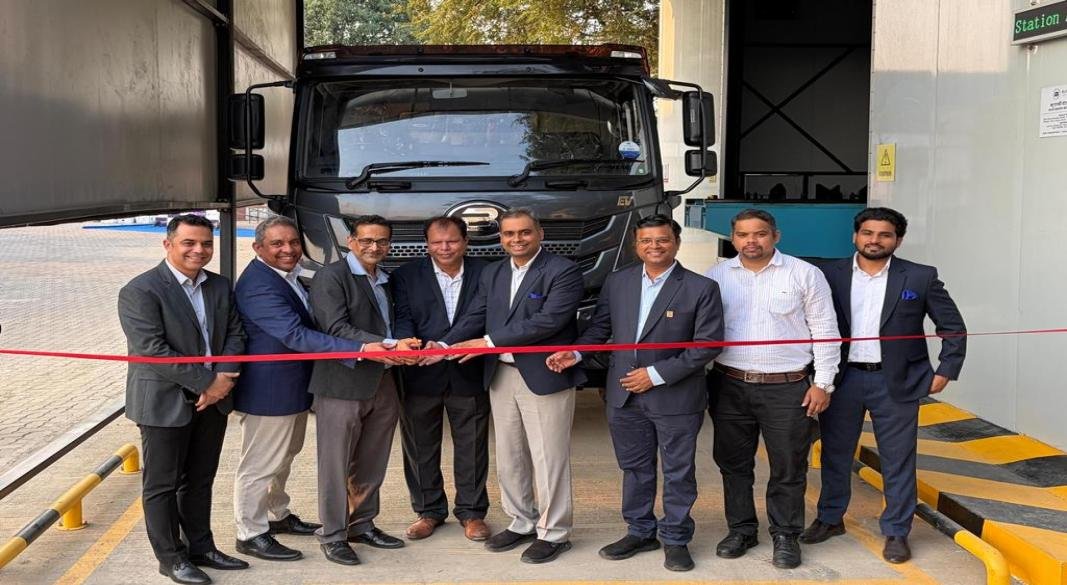
Blue Energy Motors (BEM), in partnership with Hindustan Petroleum Corporation Limited (HPCL), has operationalised Bhiwandi’s first battery-swapping station for electric heavy-duty trucks, strengthening the infrastructure supporting electric freight in one of the Mumbai Metropolitan Region’s key logistics and warehousing hubs. The facility marks a milestone in the strategic partnership announced in January 2026 and extends the Mumbai–Pune Electric Freight Corridor, launched by BEM in October 2025. Designed to support the operational requirements of electric heavy-duty trucks, the station enables battery swapping in less than five minutes, helping reduce vehicle downtime and improve fleet utilisation. Beyond freight operations, the facility also integrates a public EV charging station catering to electric two-wheelers, four-wheelers and commercial vehicles. The combination positions the site as a multi-segment EV energy hub within HPCL’s established retail network, extending its utility beyond heavy-duty electric trucking. Commenting on the development, Anand Mimani, CEO – EV & New Energy Business, Blue Energy Motors, said the company’s focus is on making electric freight a practical and scalable reality in India. He highlighted Bhiwandi’s freight and logistics activity as an important market for the company and said the partnership with HPCL would help build the energy infrastructure required to support the transition. BEM also plans to expand its network of battery-swapping and charging facilities across key markets. The commissioning reflects BEM’s broader approach to electric freight, integrating vehicle technology, energy infrastructure and operational support. By combining rapid battery swapping for heavy-duty trucks with public charging facilities, the initiative addresses the energy requirements of freight operators as well as other EV users. The collaboration also highlights the potential of established fuel-retail networks to support India’s electric mobility transition. As freight operators explore fleet electrification, partnerships between vehicle manufacturers, energy providers and existing retail networks could help strengthen the infrastructure needed for wider adoption of electric commercial vehicles. Blue Energy Motors offers electric and LNG-powered heavy-duty truck solutions. According to the company, more than 1,400 of its green heavy-duty trucks are operating across key freight routes in India. The company has also crossed 150 million green kilometres on Indian roads, which it says has helped reduce CO₂ emissions by more than 44,000 tonnes—equivalent to the carbon absorption of approximately 1.8 million trees.
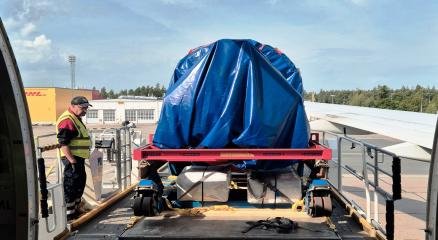
CharterDesk is strengthening its aerospace transport business by combining dedicated aircraft charters, On-Board Courier (OBC) and Next Flight Out (NFO) services to support airlines, aircraft manufacturers and maintenance providers with urgent and planned shipments. The Budapest-based company handles cargo ranging from small, time-critical replacement parts to aircraft engines, tailoring transport arrangements to delivery deadlines, cargo specifications and operational requirements. Aircraft-on-Ground (AOG) movements remain a key part of its business, but the company also supports planned maintenance programmes and production operations, where dependable component deliveries are essential to keeping engineering schedules on track. Its aerospace portfolio spans aircraft engines, landing gear, avionics, spare parts, tooling and structural components. Each movement requires a different combination of aircraft capacity, handling arrangements and delivery coordination. While larger components demand suitable loading equipment and transport capacity, smaller replacement parts may require rapid connections and carefully coordinated last-mile delivery. “Aerospace transport starts with understanding what the customer needs to achieve and how quickly the shipment must arrive,” says Emir Özdabak, Managing Director of CharterDesk. “We assess the cargo and deadline before recommending a dedicated charter, an On-Board Courier or Next Flight Out service. The objective is to minimise downtime or keep production moving.” Ground Coordination Critical to Time-Sensitive Shipments CharterDesk’s approach extends beyond securing aircraft capacity. Its planning process considers packaging, aircraft suitability, loading equipment, customs requirements, collection and final delivery. Coordination among customers, airlines and ground handlers is central to ensuring that the entire movement aligns with the required schedule. The company demonstrated this approach in a shipment involving two CF6 aircraft engines transported from Helsinki to Casablanca aboard an Ethiopian Airlines Boeing 777 freighter. CharterDesk completed the delivery within 48 hours of receiving the confirmed requirement, coordinating the operation with its airline and ground-handling partners. A key challenge was sourcing and positioning the required 20-foot pallets in Helsinki before departure. The operation therefore depended not only on securing aircraft capacity but also on ensuring that the appropriate equipment was available at the departure airport in time for loading. “The Helsinki operation showed how much depends on preparation on the ground,” Özdabak says. “We needed the right pallets in position before departure and worked closely with our partners to make that happen. Delivering the engines within 48 hours required everyone involved to work to the same operational timetable.” In another assignment, CharterDesk arranged an Antonov An-12 operation from Brussels to Istanbul carrying a LEAP-1A engine. The two movements illustrate how aircraft selection, cargo specifications and ground-handling requirements shape the transport solution for individual aerospace shipments. Security and Confidentiality Underpin Operations Given the value and sensitivity of aerospace components, security and information management form part of CharterDesk’s planning process. The company works with airline and ground-handling partners on appropriate handling arrangements, clear handover procedures and shipment monitoring as cargo moves between operational stakeholders. Confidentiality is another consideration, particularly for projects involving commercially sensitive information. CharterDesk limits the circulation of customer and shipment details to those involved in the operation while meeting applicable regulatory disclosure requirements. “Our customers need confidence in how we handle both their equipment and their information,” Özdabak says. “We agree clear handover procedures, monitor shipments and share operational details with the people who need them. Where a project requires confidentiality, we maintain that discipline while fulfilling every required regulatory disclosure.” Flexible Transport Options Support Aerospace Demand CharterDesk receives regular enquiries covering planned production shipments, maintenance support and urgent AOG requirements. Its customers include airlines, maintenance providers, manufacturers and specialist freight forwarders. Established relationships help the company respond to recurring requirements, while each shipment is assessed individually according to its urgency, dimensions and delivery deadline. The company sees opportunities to develop its aerospace business as fleet operations, maintenance needs and production activity generate demand for specialised transport. Dedicated charters can accommodate engines and oversized components, while OBC and NFO services offer alternatives for smaller, urgent shipments, subject to available capacity and operational requirements. “Aerospace fits our team’s experience and the airline relationships we have developed,” Özdabak says. “A quick, coordinated response can directly affect a customer’s operations, whether we are supporting an urgent AOG requirement or a planned movement. Offering charter, courier and scheduled flight solutions allows us to build the response around each shipment.” CharterDesk’s aerospace strategy centres on bringing technical assessment, transport selection and partner coordination together in a single operational process. By aligning the movement of high-value components with the requirements of airlines, manufacturers and maintenance teams, the company aims to support time-critical deliveries as well as planned production and engineering activity.

Qatar Airways Cargo is expanding its global freight network for the Winter 2026 season, introducing dedicated freighter services from Copenhagen, New York’s John F. Kennedy International Airport (JFK) and Dallas, while establishing a direct Warsaw–Chicago connection. The additions are set to increase cargo capacity, strengthen transatlantic trade links and provide customers with improved access to global markets through the carrier’s Doha hub. The network expansion, commencing from late October and early November 2026, targets key export markets across Northern and Central Europe and the United States. By combining dedicated Boeing 777 freighters with capacity on Qatar Airways’ passenger services, the carrier aims to provide greater flexibility for a broad range of freight, including pharmaceuticals, healthcare products, aerospace components, technology, energy shipments, perishables, vehicles and oversized cargo. Strengthening Nordic and Central European Connectivity Effective 25 October, Qatar Airways Cargo will introduce a weekly Boeing 777 freighter service from Copenhagen, operating Doha–Budapest–Copenhagen–Doha. The service will provide 100 tonnes of dedicated export capacity, strengthening the carrier’s reach across Denmark and Southern Sweden. The new freighter operation will complement Qatar Airways’ 10 weekly Boeing 787 passenger services to Copenhagen, which collectively provide more than 100 tonnes of belly-hold cargo capacity in each direction per week. Through Doha, customers will gain onward connections to markets across Asia, the Middle East, the Indian Subcontinent, Africa and beyond. In Central Europe, the carrier will relaunch freighter operations to Warsaw from 26 October, adding a weekly direct connection from Warsaw to Chicago. The Boeing 777 service will operate Doha–Warsaw–Chicago–Brussels–Doha, offering Polish exporters and manufacturers additional dedicated capacity to the US market. Combined with twice-weekly freighter services to Katowice and 10 weekly wide-body passenger flights to Warsaw, the new operation will increase Qatar Airways Cargo’s total weekly capacity to and from Poland to more than 435 tonnes in each direction. Expanding Transatlantic Freight Capacity In North America, a new weekly Boeing 777 freighter service to New York JFK will commence on 1 November, operating Doha–Liège–New York–Atlanta–Liège–Doha. The service will supplement 14 weekly passenger flights to and from New York, taking the carrier’s total weekly cargo capacity on the market to more than 226 tonnes in each direction. Dallas is also gaining additional dedicated freighter capacity. Qatar Airways Cargo has recently introduced two weekly Boeing 777 freighter services operating Doha–Liège–Dallas–Doha, providing 200 tonnes of main-deck capacity into Dallas and 100 tonnes outbound. Together with 14 weekly wide-body passenger flights, the new operation will raise total weekly cargo capacity to more than 250 tonnes into Dallas and over 150 tonnes out of the city. The expanded offering is intended to strengthen trade links between Texas and markets served across the airline’s international network. Capacity for Diverse and Time-Sensitive Cargo The additional services will cater to a wide spectrum of industries, including pharmaceuticals and healthcare, aerospace, technology, energy, perishables, high-value and time-sensitive shipments, vehicles, oversized freight, and general and industrial cargo. Customers will also benefit from increased belly-hold capacity across Qatar Airways’ Winter 2026 passenger network, further broadening the options available for moving shipments across international markets. With the new routes, expanded frequencies and connectivity through Doha, Qatar Airways Cargo is strengthening its capacity offering across Europe and North America while linking customers to a global network spanning more than 160 destinations. Shipments can be booked through the carrier’s Digital Lounge portal or its omnichannel partner network.

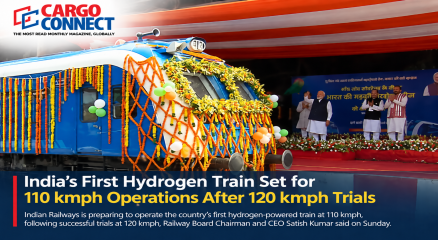
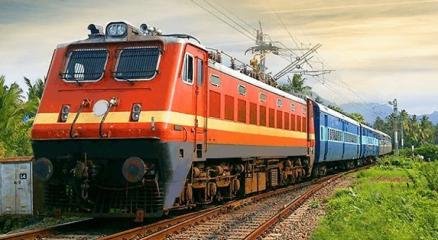
Indore: Indian Railways is preparing to operate the country’s first hydrogen-powered train at speeds of up to 110 kmph, following successful trials at speeds of 120 kmph, Railway Board Chairman and CEO Satish Kumar said on Sunday. Prime Minister Narendra Modi had flagged off India’s first hydrogen-powered train on July 17, marking a significant step in the Railways’ efforts to introduce cleaner propulsion technologies. The train operates on the 89-km Jind–Sonipat route in Haryana. Unlike conventional electric trains that rely on overhead power lines, the hydrogen fuel-cell trainset generates electricity onboard through an electrochemical reaction between hydrogen and oxygen. The process produces water vapour and heat as by-products, eliminating combustion, smoke and tailpipe carbon emissions. The hydrogen train is part of Indian Railways’ broader efforts to explore alternative propulsion technologies and reduce emissions from rail operations. Its deployment could also offer a pathway for cleaner rail connectivity on routes where conventional electrification may be less practical. Follow CARGOCONNECT for more such updates
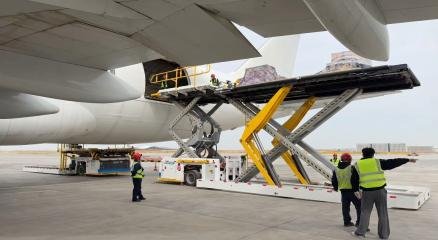
Chapman Freeborn has successfully completed a time-sensitive cargo charter operation transporting oversized oilfield equipment from China to Saudi Arabia, supporting urgent replenishment requirements for a client in the oil and gas sector amid ongoing global shipping disruptions and airfreight congestion. The operation involved the movement of nearly 90 tonnes of cargo, including industrial pumps, precision spare parts and oversized equipment measuring up to eight metres in length. The shipment was transported aboard a Boeing 747 Freighter, selected for its main-deck capacity and ability to handle heavy and outsized freight. The project required complex logistical coordination after fuelling constraints at the original departure airport necessitated the cargo’s relocation inland to an alternative airport. Chapman Freeborn’s China team arranged overnight trucking and managed the freight forwarding process to maintain delivery timelines. The charter operation was further challenged by limited aircraft availability, routing restrictions and slot coordination requirements at destination. Despite the operational complexities, the cargo arrived on schedule, enabling uninterrupted onward movement and preventing disruptions to the client’s ongoing field operations. The project highlights the growing role of specialised air charter solutions in supporting critical industrial supply chains where speed, flexibility and operational coordination remain essential.

India is preparing to operationalise its trade agreement with Oman from June 1, as New Delhi accelerates efforts to secure alternative trade corridors and strengthen supply chain resilience amid continuing geopolitical and energy market uncertainty. Commerce and Industry Minister Piyush Goyal said discussions with Omani officials have progressed positively, with both sides moving toward implementation of the Comprehensive Economic Partnership Agreement (CEPA). The agreement, signed in December 2025, is expected to provide duty-free access for a large share of Indian exports to Oman, including engineering goods, textiles, food products and chemicals. In return, India will lower tariffs on several Omani exports, including petrochemical products and minerals. Trade and logistics stakeholders view the pact as strategically important for India’s westbound cargo movement and regional connectivity ambitions. Oman’s geographic position along major maritime routes in the Arabian Sea and Gulf region gives Indian exporters an additional gateway into West Asia and parts of Africa. The agreement is also expected to support warehousing, port-led trade and multimodal logistics integration between the two countries. Government officials indicated that the CEPA would cover more than 98% of Indian export tariff lines entering Oman, while India would gradually liberalise access across a significant portion of imports from Oman. Certain sectors, particularly petrochemicals, may see phased tariff reductions rather than immediate elimination. The push to activate the Oman pact comes as India expands its broader trade strategy through multiple bilateral agreements aimed at reducing dependence on concentrated supply chains and improving market access for domestic manufacturers. Recent discussions involving trade arrangements with the UK, EU and other partners have reinforced New Delhi’s emphasis on export diversification and trade-led industrial growth. Industry analysts expect the Oman agreement to particularly benefit Indian sectors linked to containerised exports, chemicals, automotive components, processed foods and MSME manufacturing clusters. Shipping and logistics companies are also likely to see increased cargo flows through western Indian ports as bilateral trade volumes rise under preferential tariff treatment. Follow CARGOCONNECT for more such updates.
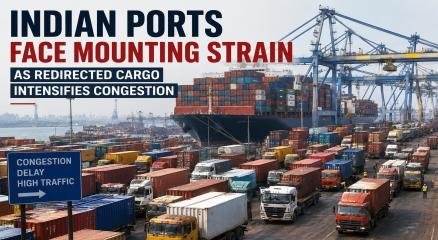


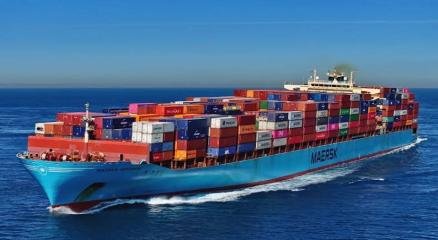
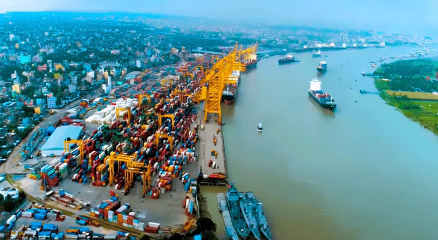
India’s two largest container gateways, Mundra and Nhava Sheva, are facing mounting congestion as rising cargo volumes, truck driver shortages and rerouted shipments from the Middle East strain operations across the country’s logistics network. Shipping lines and logistics operators are reporting worsening turnaround times at both ports, with vessel delays averaging nearly two and a half days and some unscheduled ships waiting up to five days for berthing. The disruptions are slowing cargo movement, tightening yard space and forcing carriers to make last-minute operational changes. According to industry reports, a shortage of truck drivers has become a major bottleneck for container transfers between terminals and inland transport hubs. The issue has reduced the pace of cargo evacuation from ports, adding pressure on already crowded container yards. Terminal operators have intermittently restricted gate access to control container inflow, while export gate schedules continue to shift frequently. These changes are complicating truck planning and increasing uncertainty for exporters and freight forwarders. The congestion is being intensified by cargo diversions linked to disruptions in the Middle East, particularly around Gulf trade routes. Shipping lines have increasingly redirected transshipment cargo to Indian ports as alternatives to facilities in the Persian Gulf, sharply increasing container volumes in recent weeks. The pressure has begun affecting carrier schedules. Some shipping companies are rerouting vessels between terminals at short notice to avoid yard congestion. Danish shipping giant Maersk recently shifted several sailings from its regular terminal at Nhava Sheva to PSA Mumbai after facing space constraints and a growing container backlog. Industry stakeholders say these sudden terminal changes are creating operational and financial challenges for shippers, including higher handling costs and difficulties coordinating customs clearance and inland transportation. The latest disruption comes at a time when India has been positioning itself as a major global manufacturing and logistics hub. Over the past decade, the country has expanded port capacity, improved freight corridors and modernised customs processes to strengthen supply chain efficiency. However, the current congestion highlights the vulnerability of port infrastructure during periods of sudden trade realignment and geopolitical disruption. Logistics experts warn that prolonged delays could increase freight costs, extend delivery timelines and place additional pressure on exporters already dealing with volatile global shipping conditions. Follow CARGOCONNECT for more such updates.
The diversification process by Apple continues to progress as India becomes one of the centers for manufacturing operations. Based on an analysis by Smart Analytics Global (SAG), the percentage share of Indian manufacturing of iPhones has increased from 14% in 2024 to 23% in 2025 and further to 28% by 2026, whereas China’s share has decreased from 83% to 74% within the same timeframe. As Apple continues to lower its reliance on China, India is all set to emerge as the major assembly hub for 28 percent of all iPhones exported around the world by 2026, compared to just 23 percent in the prior year. This change is due to the company's overall strategy of spreading its manufacturing operations in order to mitigate potential tariff risks and geopolitical risks, in addition to creating a more flexible manufacturing network beyond China. Based on the estimates of Smart Analytics Global (SAG), China's share in global iPhone production dropped from 83% in 2024 to 74% in 2025, while India's share increased from 14% in 2024 to 23% in 2025. Estimates provided by another market research firm, Counterpoint Research, indicate that India's share in global iPhone manufacturing could increase to approximately 26% in 2026 from 23% in 2025. As per SAG, “India will account for the manufacture of 28 percent of iPhones shipped globally in 2026, rising from 23 percent in 2025. This growth will be fueled by the ongoing diversification of Apple outside China and capacity build-up at existing manufacturers in India like Tata Electronics,” said Abhilash Kumar, an analyst at Smart Analytics Global. According to Tarun Pathak, research director at Counterpoint Research, “Apple's manufacturing partners have substantially increased their manufacturing capacities and assembly lines in India. They have also diversified their product portfolio made in India.” He further stated that the increase in manufacturing capacity of Tata Electronics is another factor aiding the growth. Apple has managed to localize production substantially in India through manufacturers like Foxconn and Tata Electronics. The recent takeover of Wistron and Pegatron in India by the Tata Group represents a huge step forward in Apple’s localization efforts in India. At present, India is assembling a larger number of iPhones, even the latest versions, and has become an important source of exports, targeting countries like the US and European nations. Over the past five years, Apple has manufactured iPhones worth almost $70 billion in India using its PLI scheme, where around $51 billion, or almost 73% of all iPhones manufactured, were exported from India. Moreover, iPhones have become the most exported goods from India during the previous financial year. India has become the biggest beneficiary of Apple’s changing supply chain. From initially assembling iPhones on a smaller scale, it has grown to become a manufacturing cluster for iPhones through government incentives, increased manufacturing capabilities, and the growing presence of suppliers. Several of the most important suppliers and manufacturers for Apple are still highly entrenched within China, allowing the country to enjoy an unrivaled capacity and adaptability when it comes to managing mass-scale productions and product shifts. For more such news and updates, visit CARGOCONNECT.
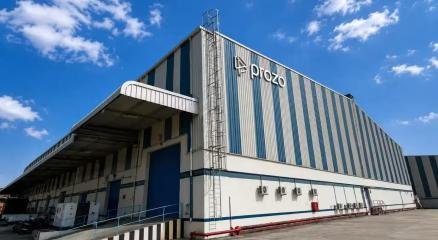
Shadowfax is significantly expanding its quick commerce infrastructure, announcing plans to scale its dark store network from 15 facilities to 100 by FY27. The move underscores the company’s growing focus on hyperlocal deliveries, same-day fulfilment, and direct-to-consumer (D2C) logistics as competition intensifies in India’s fast-evolving quick commerce ecosystem. The Bengaluru-based company plans to add 85 new dark stores over the next fiscal year, targeting metro cities with delivery radiuses of approximately seven kilometres and fulfilment timelines of around 30 minutes. The expansion is expected to support rising demand from vertical quick commerce platforms and D2C brands that increasingly rely on third-party logistics (3PL) partners for rapid deliveries. According to company executives, vertical marketplaces are emerging as a profitable segment because of their dependence on outsourced logistics infrastructure rather than captive fulfilment networks. Shadowfax believes this trend creates a strong opportunity for scalable 3PL-led quick commerce models. The dark store expansion will account for nearly 10% of Shadowfax’s planned capital expenditure of ₹180–190 crore in FY27. The company is simultaneously strengthening its automation and artificial intelligence capabilities to improve operational efficiency. AI-led demand forecasting, automated slotting, and smarter sorting centre operations are expected to reduce overhead costs while accelerating breakeven timelines for new facilities. Shadowfax’s aggressive expansion comes on the back of strong financial performance. The company reported a consolidated net profit of ₹55.8 crore in Q4 FY26, compared to a net loss of ₹9.9 crore during the same period last year. Revenue from operations surged 73.6% year-on-year to ₹1,237 crore, reflecting growing order volumes and increased adoption of quick commerce delivery services. Founded in 2015, Shadowfax has evolved into one of India’s largest logistics and last-mile delivery networks, serving over 2,500 cities and more than 15,000 pincodes. The company currently handles millions of shipments daily through a technology-driven delivery ecosystem that supports e-commerce, grocery, hyperlocal, and D2C brands. Industry analysts believe the dark store expansion reflects a broader shift within India’s logistics sector, where speed, proximity-based fulfilment, and automated operations are becoming central to supply chain competitiveness. As quick commerce adoption accelerates beyond groceries into categories such as fashion, electronics, and personal care, logistics providers like Shadowfax are positioning themselves as critical enablers of ultra-fast retail fulfilment. 𝐒𝐭𝐚𝐲 𝐓𝐮𝐧𝐞𝐝 𝐭𝐨 https://cargoconnect.co.in/ 𝐟𝐨𝐫 𝐥𝐚𝐭𝐞𝐬𝐭 𝐮𝐩𝐝𝐚𝐭𝐞𝐬!
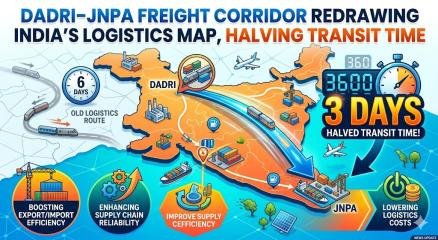
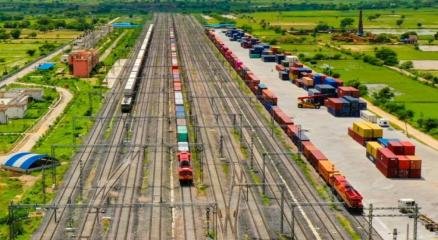
India’s Dedicated Freight Corridors (DFCs) are rapidly reshaping the country’s logistics landscape, with the Western Dedicated Freight Corridor (WDFC) between Dadri and Jawaharlal Nehru Port Authority (JNPA) emerging as a game-changing infrastructure project for supply chains and multimodal freight movement. Designed exclusively for cargo operations, the corridor is significantly reducing transit times, improving reliability, and easing congestion on conventional rail routes. Stretching nearly 1,500 km from Dadri in Uttar Pradesh to JNPA near Mumbai, the corridor forms the backbone of India’s western logistics artery, connecting manufacturing centres, inland container depots, industrial clusters, and ports. With dedicated tracks for freight trains, the network allows uninterrupted cargo movement at higher average speeds, eliminating delays caused by mixed passenger and freight operations. One of the biggest outcomes has been a sharp reduction in transit time. Freight movement between Dadri and JNPA that traditionally took close to 72 hours on congested rail routes is now being completed in nearly half the time, improving turnaround efficiency for exporters, importers, and logistics operators. Industry stakeholders believe the reduction in transit duration will strengthen India’s competitiveness in global trade and support the government’s target of lowering logistics costs as a percentage of GDP. The DFC network has also enabled the operation of longer and heavier freight trains, including double-stack container services on electrified routes. This has increased carrying capacity while lowering per-unit transportation costs. According to sector estimates, rail freight on dedicated corridors is considerably more energy-efficient and environmentally sustainable than road transport, aligning with India’s broader decarbonisation goals. Beyond operational efficiency, the corridors are catalysing the growth of integrated logistics ecosystems. Regions such as Dadri, Greater Noida, and Jewar are witnessing accelerated development of multimodal logistics parks, warehousing zones, and industrial hubs due to their strategic connectivity with both the Eastern and Western DFCs. The emerging “rail-road-air” logistics triangle around the National Capital Region is expected to attract substantial investments in manufacturing and distribution infrastructure. The Dedicated Freight Corridor Corporation of India (DFCCIL) has reported rising freight train volumes on the operational stretches, indicating growing industry adoption. The completion of key links on the western corridor is expected to further enhance throughput and reduce dependency on road transport for long-haul cargo. Analysts say the dedicated rail network could become central to India’s ambition of creating faster, greener, and more resilient supply chains. As India continues investing in additional freight corridors across the country, the success of the Dadri-JNPA route demonstrates how infrastructure modernisation can directly influence trade efficiency, logistics performance, and industrial growth. 𝐒𝐭𝐚𝐲 𝐓𝐮𝐧𝐞𝐝 𝐭𝐨 https://cargoconnect.co.in/ 𝐟𝐨𝐫 𝐥𝐚𝐭𝐞𝐬𝐭 𝐮𝐩𝐝𝐚𝐭𝐞𝐬
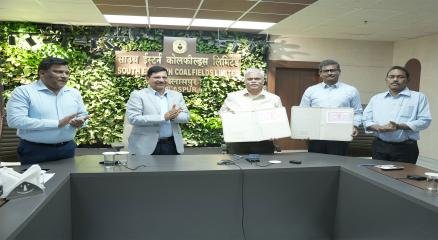
In a strategic warehousing move, the South Eastern Coalfields Limited (SECL), the second largest coal-producing subsidiary of Coal India Limited, has signed a Memorandum of Understanding (MoU) with Central Warehousing Corporation (CWC) for collaboration in coal logistics, railway rake provisioning under GPWIS and similar schemes, and integrated transportation services. Guided by the Union Ministry of Coal, SECL is rapidly working to improve India’s energy security and coal logistics infrastructure. The company is taking steps to boost coal evacuation efficiency and ensure a steady fuel supply to essential sectors. This partnership with CWC is a significant move in that direction. The goal of the partnership with CWC is to strengthen SECL’s coal evacuation capabilities by providing reliable and efficient rail logistics solutions to meet the rising demand from the power, steel, cement, and other sectors. The MoU outlines collaboration in various areas, including dedicated railway rake operations, integrated coal transportation solutions, multimodal logistics, first-mile and last-mile connectivity, and the deployment of digital systems for logistics monitoring and operational efficiency. Under the agreed framework, both organizations will explore provisioning and operation of GPWIS and equivalent racks, integrated rail logistics services, and long-term transportation solutions aimed at improving dispatch efficiency and reducing logistical obstacles. The MoU was signed in the presence of Harish Duhan, Chairman-cum-Managing Director of SECL, and Santosh Sinha, Managing Director of CWC. Functional Directors and senior officials from SECL, as well as representatives from CWC, attended the signing ceremony. SECL plays a vital role in meeting the country's growing coal demand. In the current financial year 2026-27, Coal India Limited has already surpassed the 100 million tonne production mark, with SECL contributing more than 26.8 million tonnes. Central Warehousing Corporation (CWC), a Navaratna Central Public Sector Enterprise under the Government of India, is a leader in integrated logistics and warehousing services. It has extensive experience in rail-linked cargo movement and multimodal transportation solutions. For more such news and updates, visit CARGOCONNECT.

Air Cargo
Warehousing
Buzz

Events

E-Commerce
Logistics
India’s two largest container gateways, Mundra and Nhava Sheva, are facing mounting congestion as rising cargo volumes, truck driver shortages and rerouted shipments from the Middle East strain operations across the country’s logistics network. Shipping lines and logistics operators are reporting worsening turnaround times at both ports, with vessel delays averaging nearly two and a half days and some unscheduled ships waiting up to five days for berthing. The disruptions are slowing cargo movement, tightening yard space and forcing carriers to make last-minute operational changes. According to industry reports, a shortage of truck drivers has become a major bottleneck for container transfers between terminals and inland transport hubs. The issue has reduced the pace of cargo evacuation from ports, adding pressure on already crowded container yards. Terminal operators have intermittently restricted gate access to control container inflow, while export gate schedules continue to shift frequently. These changes are complicating truck planning and increasing uncertainty for exporters and freight forwarders. The congestion is being intensified by cargo diversions linked to disruptions in the Middle East, particularly around Gulf trade routes. Shipping lines have increasingly redirected transshipment cargo to Indian ports as alternatives to facilities in the Persian Gulf, sharply increasing container volumes in recent weeks. The pressure has begun affecting carrier schedules. Some shipping companies are rerouting vessels between terminals at short notice to avoid yard congestion. Danish shipping giant Maersk recently shifted several sailings from its regular terminal at Nhava Sheva to PSA Mumbai after facing space constraints and a growing container backlog. Industry stakeholders say these sudden terminal changes are creating operational and financial challenges for shippers, including higher handling costs and difficulties coordinating customs clearance and inland transportation. The latest disruption comes at a time when India has been positioning itself as a major global manufacturing and logistics hub. Over the past decade, the country has expanded port capacity, improved freight corridors and modernised customs processes to strengthen supply chain efficiency. However, the current congestion highlights the vulnerability of port infrastructure during periods of sudden trade realignment and geopolitical disruption. Logistics experts warn that prolonged delays could increase freight costs, extend delivery timelines and place additional pressure on exporters already dealing with volatile global shipping conditions. Follow CARGOCONNECT for more such updates.
The diversification process by Apple continues to progress as India becomes one of the centers for manufacturing operations. Based on an analysis by Smart Analytics Global (SAG), the percentage share of Indian manufacturing of iPhones has increased from 14% in 2024 to 23% in 2025 and further to 28% by 2026, whereas China’s share has decreased from 83% to 74% within the same timeframe. As Apple continues to lower its reliance on China, India is all set to emerge as the major assembly hub for 28 percent of all iPhones exported around the world by 2026, compared to just 23 percent in the prior year. This change is due to the company's overall strategy of spreading its manufacturing operations in order to mitigate potential tariff risks and geopolitical risks, in addition to creating a more flexible manufacturing network beyond China. Based on the estimates of Smart Analytics Global (SAG), China's share in global iPhone production dropped from 83% in 2024 to 74% in 2025, while India's share increased from 14% in 2024 to 23% in 2025. Estimates provided by another market research firm, Counterpoint Research, indicate that India's share in global iPhone manufacturing could increase to approximately 26% in 2026 from 23% in 2025. As per SAG, “India will account for the manufacture of 28 percent of iPhones shipped globally in 2026, rising from 23 percent in 2025. This growth will be fueled by the ongoing diversification of Apple outside China and capacity build-up at existing manufacturers in India like Tata Electronics,” said Abhilash Kumar, an analyst at Smart Analytics Global. According to Tarun Pathak, research director at Counterpoint Research, “Apple's manufacturing partners have substantially increased their manufacturing capacities and assembly lines in India. They have also diversified their product portfolio made in India.” He further stated that the increase in manufacturing capacity of Tata Electronics is another factor aiding the growth. Apple has managed to localize production substantially in India through manufacturers like Foxconn and Tata Electronics. The recent takeover of Wistron and Pegatron in India by the Tata Group represents a huge step forward in Apple’s localization efforts in India. At present, India is assembling a larger number of iPhones, even the latest versions, and has become an important source of exports, targeting countries like the US and European nations. Over the past five years, Apple has manufactured iPhones worth almost $70 billion in India using its PLI scheme, where around $51 billion, or almost 73% of all iPhones manufactured, were exported from India. Moreover, iPhones have become the most exported goods from India during the previous financial year. India has become the biggest beneficiary of Apple’s changing supply chain. From initially assembling iPhones on a smaller scale, it has grown to become a manufacturing cluster for iPhones through government incentives, increased manufacturing capabilities, and the growing presence of suppliers. Several of the most important suppliers and manufacturers for Apple are still highly entrenched within China, allowing the country to enjoy an unrivaled capacity and adaptability when it comes to managing mass-scale productions and product shifts. For more such news and updates, visit CARGOCONNECT.
Shadowfax is significantly expanding its quick commerce infrastructure, announcing plans to scale its dark store network from 15 facilities to 100 by FY27. The move underscores the company’s growing focus on hyperlocal deliveries, same-day fulfilment, and direct-to-consumer (D2C) logistics as competition intensifies in India’s fast-evolving quick commerce ecosystem. The Bengaluru-based company plans to add 85 new dark stores over the next fiscal year, targeting metro cities with delivery radiuses of approximately seven kilometres and fulfilment timelines of around 30 minutes. The expansion is expected to support rising demand from vertical quick commerce platforms and D2C brands that increasingly rely on third-party logistics (3PL) partners for rapid deliveries. According to company executives, vertical marketplaces are emerging as a profitable segment because of their dependence on outsourced logistics infrastructure rather than captive fulfilment networks. Shadowfax believes this trend creates a strong opportunity for scalable 3PL-led quick commerce models. The dark store expansion will account for nearly 10% of Shadowfax’s planned capital expenditure of ₹180–190 crore in FY27. The company is simultaneously strengthening its automation and artificial intelligence capabilities to improve operational efficiency. AI-led demand forecasting, automated slotting, and smarter sorting centre operations are expected to reduce overhead costs while accelerating breakeven timelines for new facilities. Shadowfax’s aggressive expansion comes on the back of strong financial performance. The company reported a consolidated net profit of ₹55.8 crore in Q4 FY26, compared to a net loss of ₹9.9 crore during the same period last year. Revenue from operations surged 73.6% year-on-year to ₹1,237 crore, reflecting growing order volumes and increased adoption of quick commerce delivery services. Founded in 2015, Shadowfax has evolved into one of India’s largest logistics and last-mile delivery networks, serving over 2,500 cities and more than 15,000 pincodes. The company currently handles millions of shipments daily through a technology-driven delivery ecosystem that supports e-commerce, grocery, hyperlocal, and D2C brands. Industry analysts believe the dark store expansion reflects a broader shift within India’s logistics sector, where speed, proximity-based fulfilment, and automated operations are becoming central to supply chain competitiveness. As quick commerce adoption accelerates beyond groceries into categories such as fashion, electronics, and personal care, logistics providers like Shadowfax are positioning themselves as critical enablers of ultra-fast retail fulfilment. 𝐒𝐭𝐚𝐲 𝐓𝐮𝐧𝐞𝐝 𝐭𝐨 https://cargoconnect.co.in/ 𝐟𝐨𝐫 𝐥𝐚𝐭𝐞𝐬𝐭 𝐮𝐩𝐝𝐚𝐭𝐞𝐬!
India’s Dedicated Freight Corridors (DFCs) are rapidly reshaping the country’s logistics landscape, with the Western Dedicated Freight Corridor (WDFC) between Dadri and Jawaharlal Nehru Port Authority (JNPA) emerging as a game-changing infrastructure project for supply chains and multimodal freight movement. Designed exclusively for cargo operations, the corridor is significantly reducing transit times, improving reliability, and easing congestion on conventional rail routes. Stretching nearly 1,500 km from Dadri in Uttar Pradesh to JNPA near Mumbai, the corridor forms the backbone of India’s western logistics artery, connecting manufacturing centres, inland container depots, industrial clusters, and ports. With dedicated tracks for freight trains, the network allows uninterrupted cargo movement at higher average speeds, eliminating delays caused by mixed passenger and freight operations. One of the biggest outcomes has been a sharp reduction in transit time. Freight movement between Dadri and JNPA that traditionally took close to 72 hours on congested rail routes is now being completed in nearly half the time, improving turnaround efficiency for exporters, importers, and logistics operators. Industry stakeholders believe the reduction in transit duration will strengthen India’s competitiveness in global trade and support the government’s target of lowering logistics costs as a percentage of GDP. The DFC network has also enabled the operation of longer and heavier freight trains, including double-stack container services on electrified routes. This has increased carrying capacity while lowering per-unit transportation costs. According to sector estimates, rail freight on dedicated corridors is considerably more energy-efficient and environmentally sustainable than road transport, aligning with India’s broader decarbonisation goals. Beyond operational efficiency, the corridors are catalysing the growth of integrated logistics ecosystems. Regions such as Dadri, Greater Noida, and Jewar are witnessing accelerated development of multimodal logistics parks, warehousing zones, and industrial hubs due to their strategic connectivity with both the Eastern and Western DFCs. The emerging “rail-road-air” logistics triangle around the National Capital Region is expected to attract substantial investments in manufacturing and distribution infrastructure. The Dedicated Freight Corridor Corporation of India (DFCCIL) has reported rising freight train volumes on the operational stretches, indicating growing industry adoption. The completion of key links on the western corridor is expected to further enhance throughput and reduce dependency on road transport for long-haul cargo. Analysts say the dedicated rail network could become central to India’s ambition of creating faster, greener, and more resilient supply chains. As India continues investing in additional freight corridors across the country, the success of the Dadri-JNPA route demonstrates how infrastructure modernisation can directly influence trade efficiency, logistics performance, and industrial growth. 𝐒𝐭𝐚𝐲 𝐓𝐮𝐧𝐞𝐝 𝐭𝐨 https://cargoconnect.co.in/ 𝐟𝐨𝐫 𝐥𝐚𝐭𝐞𝐬𝐭 𝐮𝐩𝐝𝐚𝐭𝐞𝐬
In a strategic warehousing move, the South Eastern Coalfields Limited (SECL), the second largest coal-producing subsidiary of Coal India Limited, has signed a Memorandum of Understanding (MoU) with Central Warehousing Corporation (CWC) for collaboration in coal logistics, railway rake provisioning under GPWIS and similar schemes, and integrated transportation services. Guided by the Union Ministry of Coal, SECL is rapidly working to improve India’s energy security and coal logistics infrastructure. The company is taking steps to boost coal evacuation efficiency and ensure a steady fuel supply to essential sectors. This partnership with CWC is a significant move in that direction. The goal of the partnership with CWC is to strengthen SECL’s coal evacuation capabilities by providing reliable and efficient rail logistics solutions to meet the rising demand from the power, steel, cement, and other sectors. The MoU outlines collaboration in various areas, including dedicated railway rake operations, integrated coal transportation solutions, multimodal logistics, first-mile and last-mile connectivity, and the deployment of digital systems for logistics monitoring and operational efficiency. Under the agreed framework, both organizations will explore provisioning and operation of GPWIS and equivalent racks, integrated rail logistics services, and long-term transportation solutions aimed at improving dispatch efficiency and reducing logistical obstacles. The MoU was signed in the presence of Harish Duhan, Chairman-cum-Managing Director of SECL, and Santosh Sinha, Managing Director of CWC. Functional Directors and senior officials from SECL, as well as representatives from CWC, attended the signing ceremony. SECL plays a vital role in meeting the country's growing coal demand. In the current financial year 2026-27, Coal India Limited has already surpassed the 100 million tonne production mark, with SECL contributing more than 26.8 million tonnes. Central Warehousing Corporation (CWC), a Navaratna Central Public Sector Enterprise under the Government of India, is a leader in integrated logistics and warehousing services. It has extensive experience in rail-linked cargo movement and multimodal transportation solutions. For more such news and updates, visit CARGOCONNECT.

Admin • October 19, 2026
Admin • October 9, 2026
Admin 1.14K August 12, 2026
Admin 787 August 11, 2026
Admin 904 August 5, 2026
Admin 1.05K August 1, 2026
Admin 1.08K July 28, 2026

Poonawalla Group invests in woman-led trackNOW to boost R&D, expand operations in Indian logistics market

Poonawalla Group invests in woman-led trackNOW to boost R&D, expand operations in Indian logistics market
Poonawalla Group invests in woman-led trackNOW to boost R&D, expand operations in Indian logistics market
Poonawalla Group invests in woman-led trackNOW to boost R&D, expand operations in Indian logistics market
Admin 1.14K August 12, 2026
Admin 787 August 11, 2026
Admin 904 August 5, 2026
Admin 1.05K August 1, 2026
Admin 1.08K July 28, 2026

Admin • October 16, 2026
Admin • October 16, 2026

Admin • September 8, 2026
Admin • July 18, 2026
Admin • October 26, 2026
Admin • October 24, 2026

Admin • October 19, 2026
Admin • October 19, 2026

Admin • May 14, 2026

Admin • May 15, 2026
Admin • October 23, 2026
Admin • October 21, 2026

Admin • October 23, 2026
Admin • October 21, 2026
Admin • October 14, 2026

Admin • May 26, 2026

Admin • October 27, 2026
Admin • October 26, 2026
Admin • October 26, 2026

Admin • October 26, 2026

Admin • October 23, 2026

Admin • July 2, 2026
Admin • June 30, 2026
Admin • October 26, 2026
Admin • October 26, 2026

Admin • October 21, 2026
Admin • October 21, 2026
Admin • October 27, 2026
Admin • October 23, 2026

Admin • October 16, 2026

Admin • September 14, 2026

Admin • September 15, 2026

Admin • October 27, 2026

Admin • October 27, 2026

Admin • October 19, 2026

Admin • October 16, 2026

Admin • October 14, 2026
Admin • October 26, 2026

Admin • September 7, 2026

Admin • August 24, 2026

Admin • July 20, 2026

Admin • October 27, 2026

Admin • October 24, 2026

Admin • October 21, 2026

Admin • September 8, 2026

Admin • September 8, 2026

Admin • August 31, 2026
Admin • August 31, 2026
Admin • August 29, 2026
Admin • August 29, 2026
Admin • August 12, 2026
Admin • October 16, 2026


Admin • October 14, 2026
Admin • July 30, 2026
Admin • June 12, 2026
Admin • October 27, 2026
Admin • October 27, 2026
Admin • October 26, 2026
Admin • October 26, 2026

Admin • October 24, 2026

Admin • October 23, 2026
Admin • July 27, 2026