
Loading...
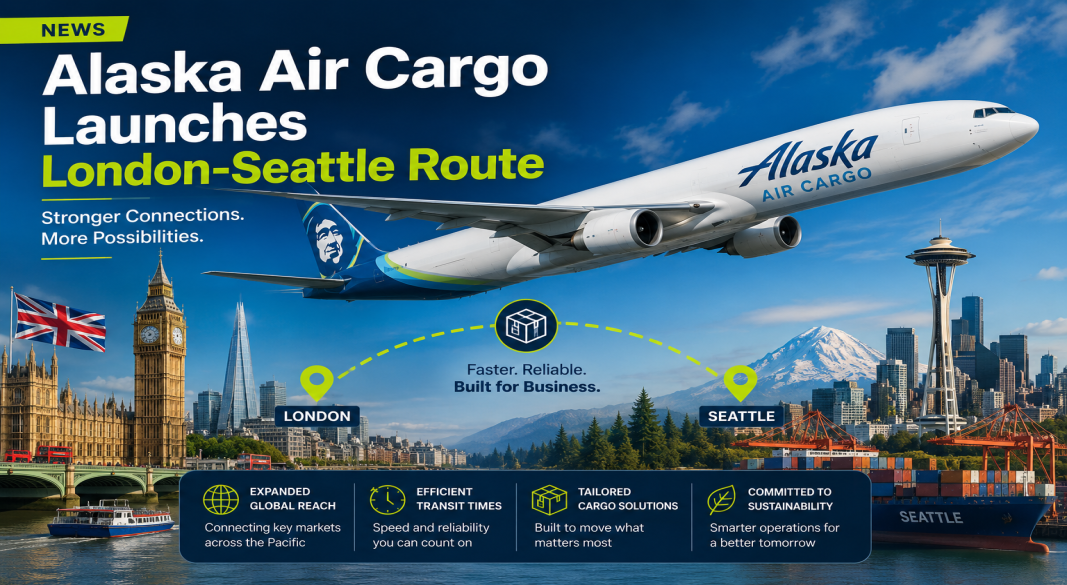
Alaska Air Cargo has strengthened its international logistics footprint with the launch of a new daily freight corridor connecting London Heathrow and Seattle, marking a significant milestone in the carrier’s expanding transatlantic operations. The new route, operated in partnership with Alaska Airlines’ passenger services, is expected to enhance cargo connectivity between Europe and the U.S. Pacific Northwest while creating additional opportunities for shippers moving high-value and time-sensitive goods.
The London-Seattle service officially commenced on May 21, 2026, using Boeing 787-9 Dreamliner aircraft configured for long-haul international operations. The route links Seattle-Tacoma International Airport (SEA), Alaska Airlines’ primary global gateway, with London Heathrow (LHR), one of the world’s busiest cargo and passenger hubs.
For the air cargo industry, the launch represents more than a passenger network expansion. The route is expected to support growing trade volumes between the United Kingdom and the U.S. West Coast, particularly across sectors such as pharmaceuticals, perishables, aerospace components, e-commerce shipments, and technology products. Seattle’s strategic position as a gateway to North America and Asia further strengthens the corridor’s importance for international supply chains.
Alaska Air Cargo stated that the daily service will provide customers with improved freight capacity, faster transit times, and enhanced network reliability. The airline is positioning the new route as part of its broader strategy to build Seattle into a leading intercontinental hub with stronger global cargo connectivity. The move follows Alaska Airlines’ recent international expansion efforts, including new routes to Rome and Reykjavík, as the carrier accelerates long-haul growth after integrating widebody aircraft into its fleet.
Industry analysts view the London-Seattle corridor as a strategic addition amid rising demand for direct transatlantic cargo services. Heathrow remains a critical logistics gateway for European freight forwarding and international trade, while Seattle serves as a major center for technology, manufacturing, retail distribution, and seafood exports. The daily frequency is expected to offer supply chain stakeholders greater scheduling flexibility and more consistent cargo uplift capacity.
The Boeing 787-9 aircraft operating the route also provides improved fuel efficiency and lower emissions compared to older-generation long-haul aircraft, aligning with growing sustainability priorities across the logistics and aviation sectors. Airlines globally are increasingly leveraging modern widebody fleets to balance operational efficiency with environmental targets.
The launch also intensifies competition in the Seattle international aviation market, where carriers are expanding long-haul operations to capture premium passenger and cargo demand. Alaska Airlines has announced plans to further develop its international network from Seattle, targeting at least 12 intercontinental destinations by 2030.
With daily connectivity between London and Seattle now in place, Alaska Air Cargo is expected to strengthen its position in the transatlantic freight market while offering logistics providers and exporters an additional route option for moving goods efficiently between Europe and North America.
𝐒𝐭𝐚𝐲 𝐓𝐮𝐧𝐞𝐝 𝐭𝐨 https://cargoconnect.co.in/ 𝐟𝐨𝐫 𝐥𝐚𝐭𝐞𝐬𝐭 𝐮𝐩𝐝𝐚𝐭𝐞𝐬!
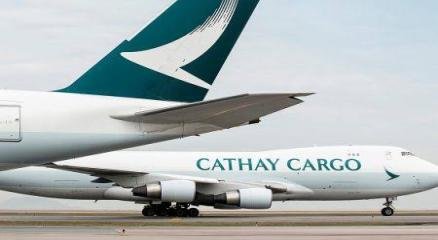
Cathay Cargo has become the first international airline to formally shift its dedicated freighter operations from Mumbai’s Chhatrapati Shivaji Maharaj International Airport (CSMIA) to Navi Mumbai International Airport (NMIA), marking a significant milestone in India’s evolving air cargo landscape. The transition, scheduled to take effect from August 3, is expected to set the stage for other global cargo carriers as Mumbai undergoes major airport infrastructure upgrades. The relocation is a temporary operational measure necessitated by extensive runway rehabilitation, taxiway development and apron reconstruction at CSMIA. The airport has announced the suspension of dedicated freighter operations between August 2026 and May 2027, with cargo flights being redirected to NMIA, which has been developed to accommodate the shift without disrupting cargo connectivity. Cathay Cargo confirmed that its existing three-times-a-week summer freighter service to Mumbai will continue without any change in frequency, with only the operating airport shifting to NMIA. The airline stated that the move is subject to operational requirements and aims to ensure uninterrupted cargo services during the infrastructure enhancement period at Mumbai’s primary airport. The development is being viewed as a landmark moment for NMIA, which is preparing to commence international cargo operations alongside international passenger services. Designed with modern cargo handling infrastructure and future expansion capabilities, the airport is expected to strengthen western India’s position as a key logistics gateway for global trade. Industry observers believe the migration of freighter services will accelerate the creation of a robust cargo ecosystem around NMIA, attracting airlines, freight forwarders, ground handlers and logistics service providers. Cathay Cargo’s decision also reflects its long-term commitment to the Indian market. The Hong Kong-based carrier has consistently expanded its presence in India, recognising the country’s growing importance as a global manufacturing and export hub. With dedicated freighter services connecting major Indian cities to its Hong Kong hub and onward global network, the airline continues to support sectors such as electronics, pharmaceuticals, perishables, engineering goods and e-commerce. As additional international cargo airlines prepare to relocate operations in the coming months, NMIA is expected to emerge as a strategic air cargo gateway capable supporting India's international trade growth. 𝐒𝐭𝐚𝐲 𝐓𝐮𝐧𝐞𝐝 𝐭𝐨 CARGOCONNECT 𝐟𝐨𝐫 𝐥𝐚𝐭𝐞𝐬𝐭 𝐮𝐩𝐝𝐚𝐭𝐞𝐬!

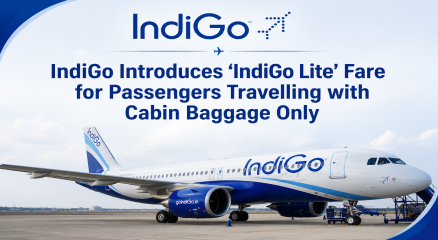
A new, entry-level, cabin bag-only fare for Economy Class across IndiGo's direct domestic and international flights. IndiGo, India’s preferred airline, has announced a new fare option - ‘IndiGo Lite’, for its Economy Class customers, as an addition to its fit-for-purpose product portfolio. This entry level fare allows customers with only cabin-baggage to pay just for the utilized services offering greater flexibility and control over their travel spends. IndiGo Lite fare will be available for booking exclusively on IndiGo’s direct channels including the website, mobile application and contact centre, starting 1 July 2026 for travel effective 15 July 2026. It will be applicable across domestic and international, non-stop routes for one-way, roundtrip, and multicity journeys, for both adult and child passengers. IndiGo Lite builds on IndiGo’s continued focus on delivering tailored offerings to cater to the evolving needs of diverse travellers across India and globally. Customers will enjoy a lower base price with an auto-assigned seat at no additional cost, and a cabin bag allowance of up to 7 kgs. It also offers customers the flexibility to personalize their journey through optional add-ons, enabling them to purchase services such as check-in baggage, preferred seats, meals, or priority services like Fast Forward. These services can be added up to one hour prior to departure through IndiGo’s website or at the airport. IndiGo Lite travellers will continue to earn and redeem IndiGo BluChip points ensuring that the benefits of IndiGo's loyalty programme remain accessible across every fare type. Aloke Singh, Chief Strategy Officer, IndiGo, said, “At IndiGo, we continuously evolve our product offerings to stay aligned with the changing expectations of our diverse customer segments. Designed for customers who travel light and would like to pay only for the services they need, IndiGo Lite is another step towards building a strong, fit-for-purpose product portfolio. This reflects our agility in responding to the market dynamics while reinforcing our commitment to making travel more accessible and affordable for our customers.” With this addition, IndiGo’s 6E Ways to Fly portfolio now offers a wider spectrum of choices along with Saver, Flexi Plus, IndiGo UpFront, IndiGoStretch and Stretch+. This brings greater customization, empowering customers to select the combination that best suits their travel preferences, comfort and budget.


Etihad Cargo, the cargo and logistics division of Etihad Airways, has introduced the Excellence Hub, describing it as the airline industry's first dedicated logistics training academy established by an airline. The initiative has been launched to strengthen knowledge sharing, professional development, and operational excellence across the global air cargo ecosystem. The new platform has been designed to bring greater consistency to operational practices throughout Etihad Cargo's worldwide partner network. By standardising learning and best practices, the Excellence Hub aims to maintain uniform service quality, reinforce safety and regulatory compliance, and improve risk management across every stage of cargo operations. The academy is also expected to strengthen collaboration among partners while supporting the carrier's commitment to reliable and customer-focused services. Developed for Etihad Cargo employees, representatives, partners, customers, and logistics professionals around the world, the academy offers an extensive learning framework covering operational procedures, service standards, product knowledge, safety practices, and compliance requirements aligned with international aviation regulations. The platform also includes industry-recognised certification programmes created in collaboration with accredited educational institutions. The Excellence Hub features a wide range of learning formats, including introductory courses, expert-led masterclasses, educational podcasts, and executive programmes such as a miniMBA. Participants receive accredited certifications after successfully completing their respective learning tracks. To keep users engaged, the academy incorporates interactive elements such as leaderboards, reward points, and LinkedIn achievement badges that recognise individual progress. In addition, university students are being offered complimentary access, enabling aspiring professionals to gain industry exposure and become part of a global learning community. Supporting continuous learning is an AI-powered system that delivers personalised recommendations, monitors learner performance, and provides real-time insights throughout the training journey. With a mobile-friendly interface, the platform ensures that users can access educational content anytime and from virtually anywhere, making professional development more flexible and accessible. Commenting on the launch, Stanislas Brun, Chief Cargo Officer at Etihad Airways, said the Excellence Hub represents a major milestone for the air cargo sector. He noted that bringing operational expertise, accredited education, and industry knowledge together on a single platform will help enhance professional capabilities and elevate service standards across the global logistics network. Dr Nadia Al Bastaki, Chief People and Corporate Affairs Officer at Etihad Airways, emphasised that investing in people remains a core priority for the airline. She said the Excellence Hub reflects that commitment by creating accessible learning opportunities for both newcomers and experienced professionals. According to her, the initiative will contribute to higher operational efficiency, stronger customer service, and the continued development of talent within the global air cargo industry. Additionally, Etihad Cargo has expanded its digital customer platform with five additional languages and a series of new online shipment management tools designed to improve accessibility, visibility and customer self service. The logistics arm of Etihad Airways announced that its website is now available in Japanese, German, Spanish, Chinese and Arabic, enabling customers and partners to access services and manage shipments in their preferred language across key international markets. The latest updates form part of the carrier’s digital strategy to simplify customer interactions and improve the end to end cargo experience through enhanced connectivity and shipment visibility.