
Loading...
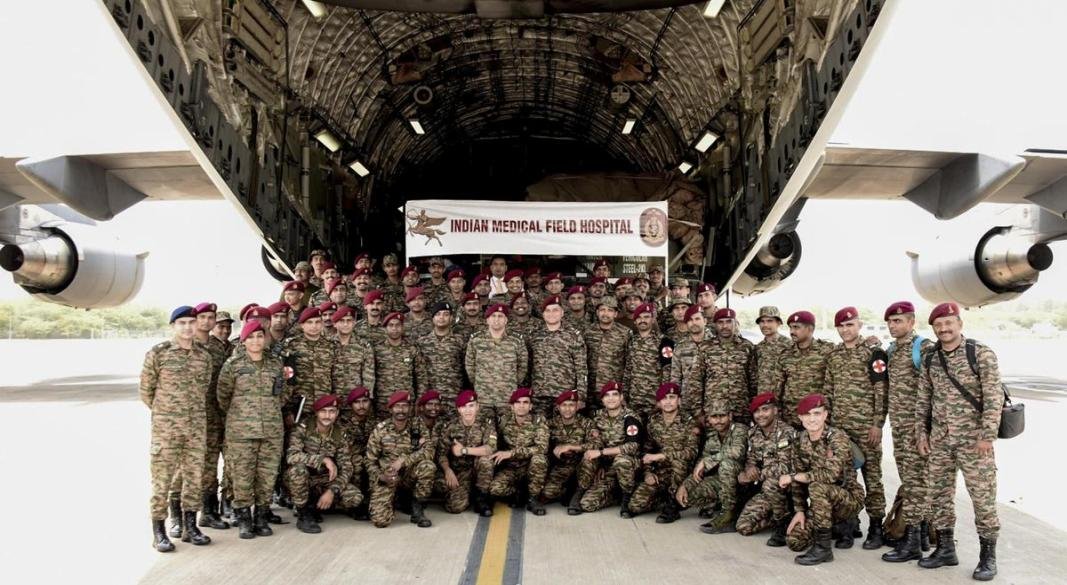
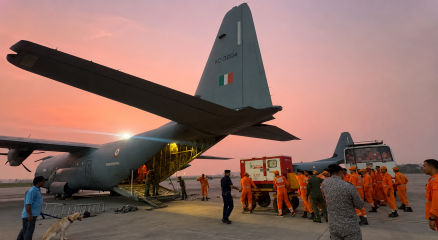
India has launched Operation Amistad, a humanitarian assistance and disaster relief (HADR) mission to support earthquake-affected Venezuela by deploying medical teams, emergency healthcare infrastructure and more than 35 tonnes of relief supplies through the Indian Air Force (IAF).
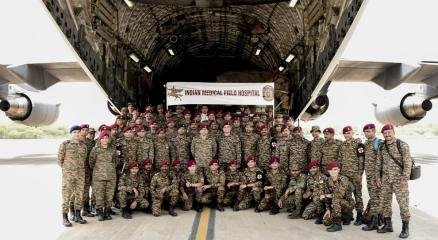
The relief operation includes two IAF C-17 Globemaster aircraft carrying an Indian Army field hospital unit, two portable BHISHM Cube medical facilities, medicines, medical equipment and other essential supplies aimed at strengthening ongoing emergency response efforts in the South American nation.
A 41-member medical contingent from the Indian Army's 60 Para Field Hospital has also been deployed as part of the mission. The team comprises doctors, nursing staff and support personnel who will provide emergency medical care in coordination with Venezuelan authorities. National Disaster Response Force (NDRF) personnel and specialised search-and-rescue equipment have also been dispatched to assist relief operations.
The operation was initiated following a series of powerful earthquakes that caused widespread damage to infrastructure, including healthcare facilities, while resulting in significant casualties and displacement. India said the mission reflects its commitment to supporting Venezuela during the humanitarian crisis through rapid deployment of medical capabilities and critical relief material.
From a logistics perspective, the mission demonstrates India's capability to rapidly mobilise strategic airlift assets for international disaster response. The use of C-17 transport aircraft enabled the movement of heavy medical infrastructure, trained personnel and relief cargo over long distances within a short timeframe, ensuring critical supplies reached affected areas without delay.
Operation Amistad adds to India's growing portfolio of overseas humanitarian missions, highlighting the country's expanding role in delivering time-sensitive disaster relief through coordinated military and civilian logistics networks.
Follow CARGOCONNECT for more such updates.
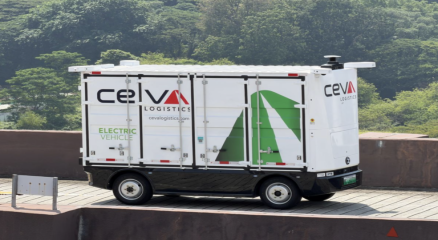
CEVA Logistics has launched a pilot programme deploying autonomous electric vehicles at its Blue Hub facility in Singapore, marking a major milestone in the company’s efforts to advance warehouse automation, operational efficiency and decarbonisation across its contract logistics network. The pilot involves two Zelostech Z10 autonomous vehicles designed to automate intra-hub inventory movements. The electric vehicles are being used to transport pallets, totes and other inventory between different floors of the eight-storey facility. Importantly, the Z10 vehicles operate using the Blue Hub’s existing multi-level ramp infrastructure, allowing CEVA to automate internal transportation without requiring major changes to the facility’s layout. By automating these movements, CEVA aims to improve operational agility, make better use of staging areas and enable inventory transfers to be scheduled more flexibly in response to changing operational requirements. Based on results from the current trial, the autonomous vehicle solution is expected to reduce carbon dioxide emissions by at least 4,600 kilograms annually, while also improving operational efficiency. The Singapore Blue Hub provides an important testing environment for the initiative. Spanning 50,000 square metres across eight floors, the facility serves customers in sectors including luxury, beauty, retail and healthcare. It already features advanced automation technologies such as Goods-to-Person systems, automated guided vehicle (AGV) picking solutions and robotics. The facility is also recognised as Asia’s first BiodiverCity®-labelled building and is LEED Gold certified. The autonomous vehicle project originated from the 2025 CMA CGM Startup Awards, co-organised by ZEBOX, the international innovation accelerator of CEVA Logistics’ parent company, CMA CGM Group. Zelostech, an award winner, received funding to develop a proof of concept with CMA CGM, subsequently paving the way for its collaboration with CEVA on supply chain applications. Chris Walton, Senior Vice President, Contract Logistics, CEVA Logistics, said: “At CEVA, innovation is embedded in our strategy. By encouraging teams across our global network to experiment with new technologies and share best practices, we are building smarter, more resilient supply chains and preparing our operations for the future.” Guy Meredith, Vice President, Contract Logistics, Asia Pacific, CEVA Logistics, added: “Our focus is to continually improve efficiency and deliver better logistics solutions for our customers. By working closely with technology innovators across Asia Pacific, we can bring the latest advances in automation and AI into real-world supply chain operations, creating value through an innovation ecosystem.” CEVA said insights generated from the Singapore deployment will help assess the potential for rolling out autonomous mobility solutions across its facilities globally, reinforcing the company’s broader strategy of using emerging technologies to build safer, more efficient and sustainable logistics operations. 𝐒𝐭𝐚𝐲 𝐓𝐮𝐧𝐞𝐝 𝐭𝐨 CARGOCONNECT 𝐟𝐨𝐫 𝐥𝐚𝐭𝐞𝐬𝐭 𝐮𝐩𝐝𝐚𝐭𝐞𝐬!


Avito Global has appointed Sushil Rathi as its Managing Director, marking a significant leadership addition as the company strengthens its position in the global supply chain and logistics sector. A seasoned industry professional with over four decades of experience across supply chain management, logistics, manufacturing, consulting, and business transformation, Rathi brings extensive leadership expertise to his new role. His appointment is expected to support Avito Global's strategic growth plans, operational excellence initiatives, and customer-centric expansion across domestic and international markets. Prior to joining Avito Global, Rathi served as Director at Allcargo Supply Chain Solutions Pvt. Ltd., where he contributed to the company's strategic direction and operational capabilities. Before that, he was Chief Executive Officer of LORDS Freight (India) Pvt. Ltd., leading the organization through business transformation and growth initiatives. Rathi is widely recognized for his long and impactful tenure at Mahindra Logistics Limited, where he spent over 12 years in leadership positions, including Chief Operating Officer, Senior Vice President (Supply Chain Management), and Vice President (SCM). During his tenure, he played a pivotal role in scaling integrated supply chain solutions, driving operational efficiency, and strengthening customer relationships across diverse industry verticals. Earlier in his career, he was a founding partner at Anantara Solutions Pvt. Ltd., where he focused on strategic consulting, process transformation, IT consulting, and manufacturing and retail solutions. He also held senior leadership positions at Satyam Computer Services, managing large consulting practices and enterprise transformation initiatives. Rathi began his professional journey with FIAT India, where he spent 15 years in progressive leadership roles, building a strong foundation in manufacturing and operations. In addition to his executive responsibilities, Rathi currently serves as an Independent Director on the boards of Welspun One Logistics Parks and Welspun One Logistics Parks Development Management Private Limited, reflecting his continued contribution to governance and strategic leadership within India's logistics ecosystem. His appointment as Managing Director of Avito Global underscores the company's commitment to strengthening leadership capabilities and accelerating innovation in supply chain management, contract logistics, warehousing, multimodal transportation, and integrated logistics solutions. With his deep industry expertise and proven track record of business transformation, Rathi is well positioned to lead Avito Global through its next phase of sustainable growth and value creation. 𝐒𝐭𝐚𝐲 𝐓𝐮𝐧𝐞𝐝 𝐭𝐨 CARGOCONNECT 𝐟𝐨𝐫 𝐥𝐚𝐭𝐞𝐬𝐭 𝐮𝐩𝐝𝐚𝐭𝐞𝐬!


FedEx has unveiled FedEx Life Sciences, a dedicated organization designed to address the growing complexity of global healthcare logistics and reinforce its position in one of the fastest-growing supply chain segments. The new business unit will provide specialized end-to-end logistics solutions for pharmaceuticals, biologics, medical devices, clinical trials, and other time- and temperature-sensitive healthcare shipments. The launch reflects the company's strategic focus on the rapidly evolving life sciences sector, where increasing demand for precision logistics, regulatory compliance, and real-time shipment visibility is reshaping supply chain requirements. By bringing together its existing healthcare capabilities under a single specialized organization, FedEx aims to offer customers a more integrated and streamlined logistics experience while supporting the next generation of healthcare delivery. Leading the new organization is Nick Gennari, who has been appointed President of FedEx Life Sciences. The dedicated team will oversee a comprehensive portfolio of healthcare logistics services, including cold chain transportation, inventory management, warehousing, packaging, customs support, and global distribution. The initiative is expected to help pharmaceutical manufacturers, biotechnology companies, hospitals, laboratories, and research organizations navigate increasingly complex global supply chains with greater efficiency and reliability. Healthcare has become a strategic growth area for FedEx as demand continues to rise for specialized transportation of temperature-controlled medicines, cell and gene therapies, vaccines, and clinical trial materials. The company has invested significantly in expanding its Life Science Centers, enhancing cold chain infrastructure, and securing internationally recognized certifications to ensure regulatory compliance across its global network. Today, a substantial share of its healthcare shipments moves through CEIV Pharma-certified facilities, strengthening shipment integrity for highly sensitive products. The new organization also reflects broader industry trends, with healthcare manufacturers increasingly seeking logistics partners capable of managing end-to-end supply chains rather than standalone transportation services. As personalized medicine, biologics, and advanced therapies continue to gain momentum, logistics providers are expected to play a more critical role in ensuring product quality, visibility, and timely delivery throughout the supply chain. By consolidating its healthcare expertise under FedEx Life Sciences, the company is positioning itself to capture greater opportunities in the high-value healthcare logistics market while supporting customers with specialized, technology-enabled solutions. The move further underscores the growing importance of resilient, compliant, and data-driven supply chains in delivering life-saving therapies to patients around the world. 𝐒𝐭𝐚𝐲 𝐓𝐮𝐧𝐞𝐝 𝐭𝐨 CARGOCONNECT 𝐟𝐨𝐫 𝐥𝐚𝐭𝐞𝐬𝐭 𝐮𝐩𝐝𝐚𝐭𝐞𝐬!