
Loading...
India has reaffirmed its growing influence in global maritime governance through an active and policy-driven participation at the 137th Session of the International Maritime Organization (IMO) Council, held in London from July 6 to 10. The country's delegation engaged in key discussions on maritime safety, governance reforms, digitalisation, seafarer welfare and international cooperation, reinforcing India's commitment to shaping the future of global shipping.
Led by Shyam Jagannathan, IAS, Director General of Maritime Administration, the Indian delegation advocated a balanced, consensus-based approach to reforms within the IMO. India stressed that any amendments to the organisation's rules should preserve its technical and collaborative character while ensuring greater transparency and consistency in maritime governance. The delegation also highlighted the need for contextual interpretation of audit outcomes under the IMO Member State Audit Scheme, cautioning against simplistic country rankings.
Seafarer welfare remained a key focus during the session. India called for stronger international collaboration to ensure timely repatriation, effective financial security mechanisms and improved implementation of the Maritime Labour Convention. The delegation showcased several digital initiatives, including the 24x7 e-Navik Seafarer Assistance Portal and an integrated crisis response framework designed to provide faster grievance redressal and support to Indian seafarers across the world.
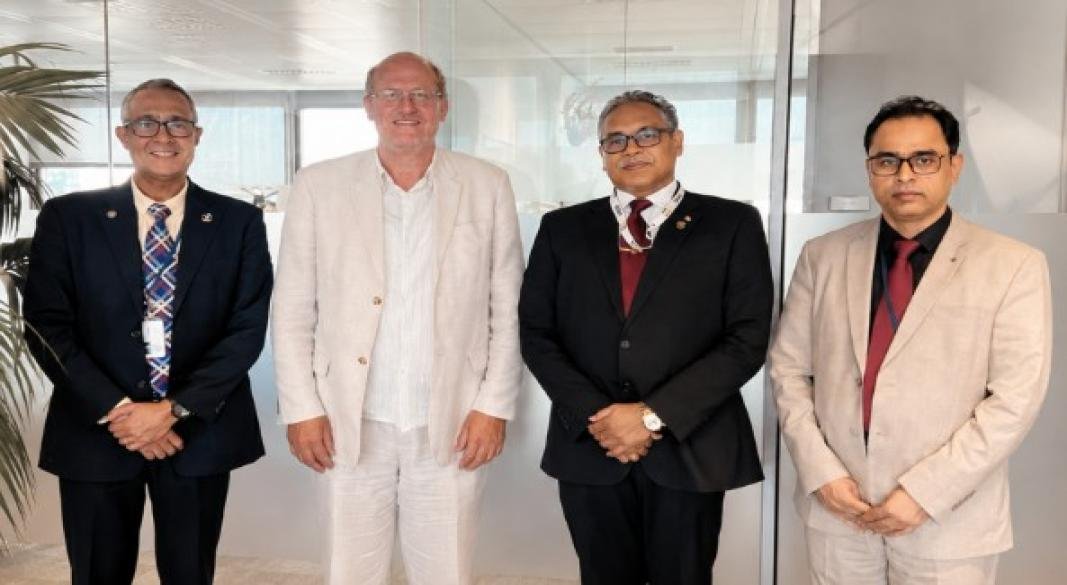
On the sidelines of the Council meeting, the Indian delegation held high-level discussions with IMO Secretary-General Arsenio Dominguez, the International Chamber of Shipping (ICS), the International Transport Workers' Federation (ITF) and representatives from Kenya. The engagements focused on maritime digitalisation, global standards for seafarer welfare, capacity building, maritime education and stronger international partnerships.
India also highlighted its progress in digitising maritime administration through online certification systems, upgraded recruitment and training platforms and measures to curb fraudulent crewing practices. These initiatives are expected to enhance the global recognition and competitiveness of Indian seafarers while supporting efficient maritime compliance.
Addressing geopolitical concerns, India emphasised the importance of restoring peace and ensuring safe navigation through critical shipping routes, particularly the Strait of Hormuz. The delegation underlined that disruptions in strategic maritime corridors have significant implications for global supply chains, trade continuity and shipping costs, reiterating that dialogue and diplomacy remain the most effective means of resolving regional conflicts.
India's constructive interventions at the 137th IMO Council underscore its emergence as a responsible maritime nation that is actively contributing to safer, greener and more resilient global shipping. For the logistics and supply chain industry, India's growing role at the IMO is expected to support stronger maritime governance, improved seafarer welfare and enhanced resilience across international trade networks.
𝐒𝐭𝐚𝐲 𝐓𝐮𝐧𝐞𝐝 𝐭𝐨 CARGOCONNECT 𝐟𝐨𝐫 𝐥𝐚𝐭𝐞𝐬𝐭 𝐮𝐩𝐝𝐚𝐭𝐞𝐬!
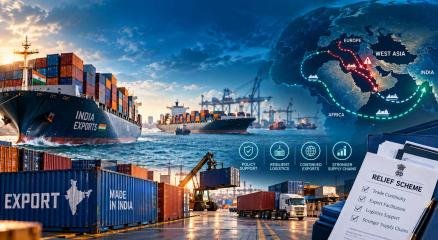
The Government of India has extended the Resilience & Logistics Intervention for Export Facilitation (RELIEF) scheme until March 31, 2027, to support exporters facing continued geopolitical disruptions in West Asia. The extension aims to provide greater insurance protection and cost certainty for eligible shipments as maritime logistics across the Gulf and neighbouring regions remain under pressure. The Department of Commerce announced the extension under Component II of RELIEF, an initiative operating within the government’s Export Promotion Mission (EPM). The revised timeline was notified through notification, in response to the continuing impact of regional instability on shipping operations and export trade. Enhanced Insurance Cover for Eligible Exporters Under Component II, the Export Credit Guarantee Corporation of India (ECGC) facilitates enhanced risk coverage of up to 95% for eligible losses arising from war-related and associated political risks, subject to policy conditions and verification. The scheme also protects eligible exporters against increases in insurance premiums beyond pre-disruption levels during the specified period. The benefit applies to qualifying standalone and whole-turnover insurance policies obtained on or after March 16, 2026. Eligible cargo categories include Full Container Load (FCL), Less than Container Load (LCL) and refrigerated container shipments, while energy shipments are excluded. Exporters must meet the prescribed policy and shipment requirements to access the benefits. Logistics Disruptions Continue to Challenge Trade The extension comes amid persistent challenges for exporters, including elevated freight rates, port congestion, uncertain transit schedules and higher operating costs. Disruptions to maritime routes have affected cargo movement through key West Asian trade corridors, complicating shipment planning and increasing financial pressure on businesses with limited margins. Exporters dealing in agricultural commodities and other price-sensitive products are particularly vulnerable, as additional freight and insurance expenses can erode profitability. Smaller exporters may also face difficulties managing delayed payments and maintaining reliable delivery schedules. By extending RELIEF, the government aims to strengthen exporters’ ability to manage eligible geopolitical risks and maintain trade continuity with designated markets. The measure is particularly relevant for businesses dependent on containerised maritime shipments to the Gulf and adjoining regions. However, the scheme does not guarantee lower freight charges or eliminate operational disruptions. Its effectiveness will depend on exporters securing eligible insurance cover and complying with documentation and claim requirements. The extension provides a longer window of risk protection as Indian exporters navigate an uncertain trade environment, while the stability of shipping routes and logistics costs will remain critical to export performance in the coming months. 𝐒𝐭𝐚𝐲 𝐓𝐮𝐧𝐞𝐝 𝐭𝐨 CARGOCONNECT 𝐟𝐨𝐫 𝐥𝐚𝐭𝐞𝐬𝐭 𝐮𝐩𝐝𝐚𝐭𝐞𝐬!
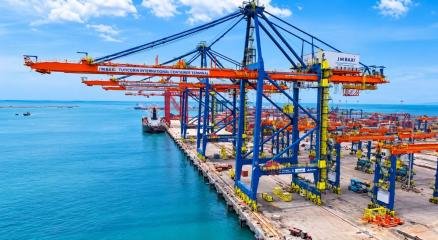
Tuticorin International Container Terminal (TICT) at V.O. Chidambaranar (VOC) Port has been declared a “Green Terminal” after achieving 100% electrification of its operational equipment, according to an official statement. Union Shipping Secretary Vijay Kumar made the declaration during a review of ongoing development projects at VOC Port, valued at approximately ₹18,000 crore. As part of the terminal’s green transition, the Secretary flagged off 13 electric Internal Transfer Vehicles (E-ITVs) to support cleaner and more sustainable container-handling operations. Advancing Green Port Operations The complete electrification of TICT’s operational equipment is expected to reduce diesel consumption and local emissions from container-yard and quay operations. The initiative marks a significant step towards cleaner port logistics, as the maritime sector increasingly focuses on reducing its environmental footprint. The green terminal designation relates to the electrification of operational equipment and does not imply that visiting vessels are powered by alternative fuels. VOC Port Expands Green Energy Initiatives During the review, the Shipping Secretary also assessed several green infrastructure initiatives at VOC Port, including a pilot methanol bunkering and refuelling facility, a green hydrogen pilot project, and wind energy infrastructure. VOC Port Chairman Sushanta Kumar Purohit highlighted the port’s annual cargo-handling capacity of 82 million tonnes and its long maritime history, with trade links dating back to 123 AD. The port is also pursuing employee welfare and social infrastructure projects, including a golf course and a Kendriya Vidyalaya. Outer Harbour Project to Boost Transshipment The review also covered the outer harbour project, which is expected to add 4 million tonnes per annum of cargo-handling capacity. The project aims to strengthen Tamil Nadu’s position as a major transshipment hub for southern India. With the electrification of terminal equipment and investments in alternative fuels and green energy, VOC Port is advancing its efforts to combine sustainable port operations with expanded cargo-handling and transshipment capacity. Follow CARGOCONNECT for more such updates
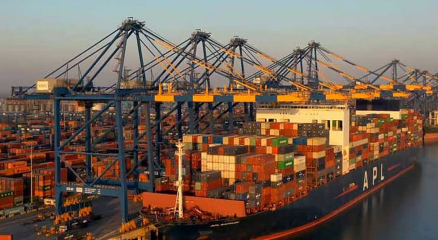
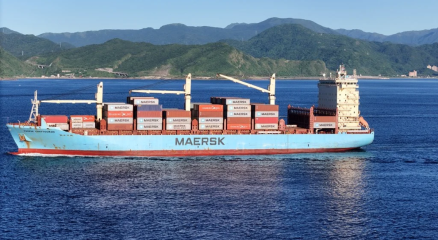
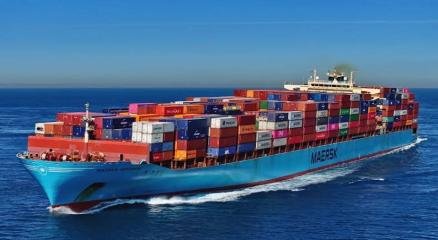
Maersk’s Singapore-flagged container vessel Maersk Chattogram is undergoing its first planned drydocking in India at L&T Shipbuilding’s Kattupalli Shipyard near Chennai, marking the first operational milestone under the Maersk–L&T maritime collaboration. A.P. Moller-Maersk has partnered with Larsen & Toubro (L&T) for the planned drydocking of the Maersk Chattogram at the Kattupalli Shipyard near Chennai. The Singapore-flagged container vessel is scheduled to arrive at the yard on October 20, 2026, subject to operational and weather conditions. The project is the first operational outcome of the Memorandum of Understanding signed by Maersk and L&T during India Maritime Week 2025. The MoU covers potential cooperation in shipbuilding, ship repair, knowledge exchange and development of global-standard maritime capability in India. 10-Year Maintenance and Special Survey The drydocking forms part of the vessel’s planned 10-year lifecycle maintenance programme. Work will include the scheduled special survey along with maintenance and overhaul of the hull and structure, machinery, equipment and propulsion systems. Drydocking allows inspection and repair of areas normally submerged underwater, alongside work on onboard systems. The process is essential for maintaining a vessel’s safety, seaworthiness, operational performance and reliability for the next five years. India’s Largest Shiplift System Maersk Chattogram will undergo a specialised lift-out operation using India’s largest Shiplift system at L&T Shipbuilding, Kattupalli. The system will lift the vessel out of the water for extensive inspection, maintenance and repair work. The project will bring together Maersk’s fleet and technical teams with L&T, Indian subcontractors, suppliers and maritime service providers. The companies said the focus will be on safe execution, quality delivery and knowledge sharing throughout the docking. Boost for India’s Ship Repair Ecosystem The drydocking signals growing confidence in India’s ship repair and shipyard capabilities. Maersk said the project aligns its global technical requirements with India’s developing shipyard, supplier and maritime-service ecosystem. L&T said the docking advances its strategic partnership with Maersk and supports efforts to strengthen domestic capabilities and supply chains across the shipbuilding ecosystem. Both companies view India as having strong potential to become a more important global maritime hub