
Loading...
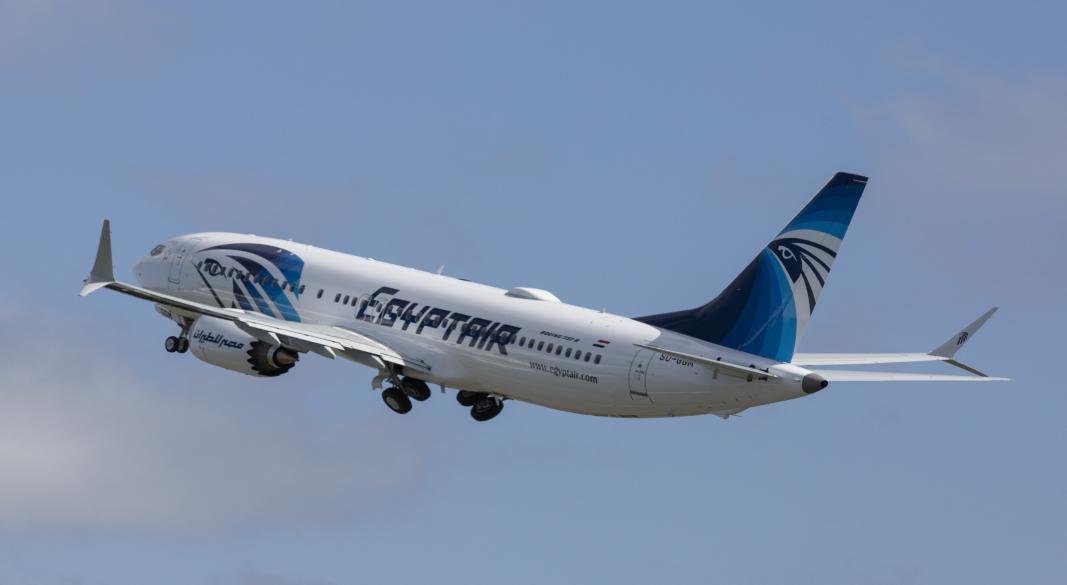
EgyptAir has taken delivery of its first Boeing 737 MAX aircraft, marking a major milestone in the airline’s fleet modernisation and sustainability strategy.
The newly delivered 737-8 is the first of 18 aircraft being leased from SMBC Aviation Capital and also represents the first Boeing 737 MAX aircraft to enter service in Egypt.
The aircraft will support EgyptAir’s short- and medium-haul network across key international destinations including Paris, Brussels, Istanbul and Vienna, while complementing the carrier’s existing fleet of Next-Generation 737 aircraft.
According to Ahmed Adel, Chairman and CEO of EgyptAir Holding Company, "The integration of the 737 MAX marks a significant milestone in our fleet modernization strategy and providing passengers with a superior travel experience while achieving greater operational efficiency.
"This aircraft's advanced technology and reduced environmental footprint align perfectly with our vision for sustainable growth and our dedication to maintaining a young, state-of-the-art fleet that connects Egypt to the world," he noted.
The Boeing 737-8 offers approximately 20% lower fuel consumption and emissions compared to older-generation aircraft, while featuring upgraded passenger amenities including the Boeing Sky Interior, enhanced LED lighting, larger windows and expanded overhead storage space.
Commenting on the delivery, Anbessie Yitbarek, Vice President of Commercial Sales and Marketing for Africa, Boeing added, "With this delivery, we build on 60 years of partnership with EgyptAir and welcome them as a 737 MAX operator. The 737 MAX offers the efficiency, range and passenger comfort airlines need as they grow and enhance their operations."
EgyptAir remains one of Africa’s oldest operators of the Boeing 737 family, with its association with the aircraft platform dating back to 1975.
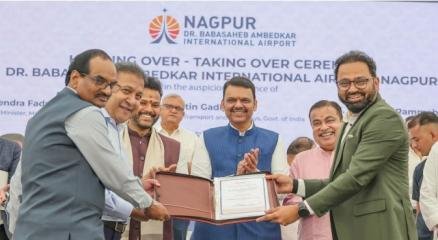
GMR Airports Limited has formally assumed operational control of Dr. Babasaheb Ambedkar International Airport in Nagpur, marking a significant milestone in India's aviation infrastructure landscape. The move is expected to accelerate the airport's transformation into a major passenger, cargo and multimodal logistics hub, reinforcing Nagpur's strategic position at the geographical centre of the country. The Handing Over ceremony was attended by Maharashtra Chief Minister Devendra Fadnavis, Union Minister Nitin Gadkari, former Union Civil Aviation Minister Praful Patel, Chairman of GMR Airports G B S Raju, senior officials of the Civil Aviation Ministry, Airports Authority of India and GMR Group, along with public representatives and industry stakeholders. The takeover expands GMR's airport portfolio to nine airports operated or under development globally, strengthening its presence as India's largest private airport operator. The transition follows the Centre's approval of a 30-year public-private partnership (PPP) concession, paving the way for large-scale infrastructure upgrades and capacity expansion. Union Civil Aviation Minister Kinjarapu Rammohan Naidu said that the city is uniquely positioned to emerge as a major aviation, cargo and aircraft maintenance hub as the redevelopment of Dr Babasaheb Ambedkar International Airport formally entered a new phase with its handover to GMR Group. "Cargo operations would be major growth driver, helping connect Nagpur's oranges, handicrafts, artisan products, electronics and manufactured goods with global markets.," he said. CM Fadnavis said Nagpur's central location makes it a natural aviation and logistics hub and revealed that the state government is exploring the establishment of a Free Trade Zone linked to MRO activities to attract aircraft maintenance business from across Southeast Asia. He said the airport would serve as a catalyst for investment, employment generation, cargo growth and overall economic development in the region. For the supply chain and logistics sector, the development holds considerable significance. Nagpur has long been viewed as a natural logistics gateway due to its central location and its proximity to the Multi-modal International Cargo Hub and Airport at Nagpur (MIHAN). GMR plans to leverage this advantage by developing modern cargo handling infrastructure capable of supporting growing domestic and international freight movement. In the first phase, the airport operator will expand the existing passenger terminal to handle around three million passengers annually while introducing a state-of-the-art cargo terminal with an initial handling capacity of 20,000 metric tonnes. Future development plans include a new integrated passenger terminal, a second parallel runway and infrastructure capable of supporting long-term passenger demand of up to 30 million annually. The redevelopment is also expected to strengthen Nagpur's role within India's evolving hub-and-spoke aviation network. Improved cargo infrastructure, enhanced air connectivity and aircraft maintenance facilities are anticipated to attract logistics operators, exporters, e-commerce companies and manufacturing industries looking to optimise distribution across domestic and international markets. Overall, the airport will potentially emerge as a key economic growth engine for Central India. Enhanced aviation infrastructure is expected to improve trade, tourism, industrial investment and employment opportunities across Maharashtra's Vidarbha region while supporting exports of agricultural produce and manufactured goods, positioning it to evolve into a critical aviation and logistics gateway over the coming decade. 𝐒𝐭𝐚𝐲 𝐓𝐮𝐧𝐞𝐝 𝐭𝐨 CARGOCONNECT 𝐟𝐨𝐫 𝐥𝐚𝐭𝐞𝐬𝐭 𝐮𝐩𝐝𝐚𝐭𝐞𝐬!

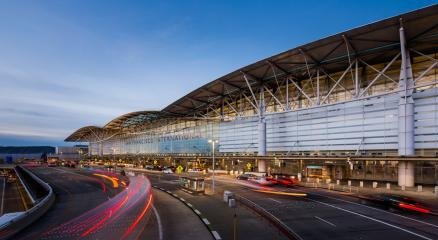
San Francisco International Airport (SFO) is set to significantly strengthen its air cargo capabilities through a major infrastructure expansion project that will feature advanced automation technology from Lödige Industries. The airport is investing more than $300 million in a new cargo terminal designed to enhance handling capacity, improve operational efficiency, and support future growth in air freight volumes. The new facility forms part of SFO’s long-term strategy to modernize its cargo infrastructure and reinforce its position as one of the leading air cargo gateways on the U.S. West Coast. With global air freight demand expected to continue growing, the airport is focusing on automation-driven solutions that can streamline cargo flows while maximizing available space and resources. Under the project, Lödige Industries has been selected to provide customized automated cargo handling systems for the terminal. The company will deploy technologies that enable automated storage and retrieval, high-throughput cargo processing, and optimized cargo movement across the facility. The systems are expected to reduce manual handling requirements, improve turnaround times, and increase overall terminal productivity. According to industry reports, the terminal has been designed to accommodate rising cargo volumes while supporting the operational needs of airlines, freight forwarders, and logistics service providers operating through SFO. The integration of advanced automation is also expected to improve cargo visibility and handling accuracy, helping stakeholders manage increasingly complex supply chains more efficiently. The investment reflects a broader trend across global airports, where digitalization and automation are becoming critical to addressing capacity constraints, labor challenges, and growing e-commerce demand. By incorporating automated technologies into its cargo operations, SFO aims to create a future-ready facility capable of supporting both current and emerging logistics requirements. Construction and implementation activities are expected to progress over the coming years, with the expanded cargo terminal anticipated to be operational by 2028. Once completed, the project is expected to deliver a substantial increase in cargo handling capacity while enhancing service reliability and operational resilience. For Lödige Industries, the contract further strengthens its footprint in the global air cargo sector, where automated storage, transport, and terminal management solutions are increasingly being adopted by airports seeking greater efficiency and scalability. The SFO project represents another milestone in the industry’s transition toward smart, technology-enabled cargo operations. As international trade and e-commerce continue to drive air freight demand, investments such as SFO’s automated cargo terminal are likely to play a crucial role in ensuring airports can meet future logistics and supply chain requirements efficiently and sustainably. 𝐒𝐭𝐚𝐲 𝐓𝐮𝐧𝐞𝐝 𝐭𝐨 CARGOCONNECT 𝐟𝐨𝐫 𝐥𝐚𝐭𝐞𝐬𝐭 𝐮𝐩𝐝𝐚𝐭𝐞𝐬!
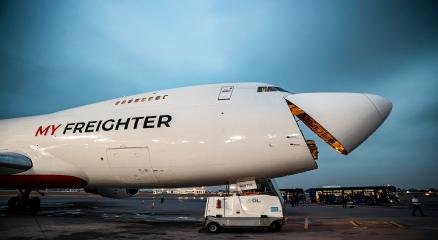
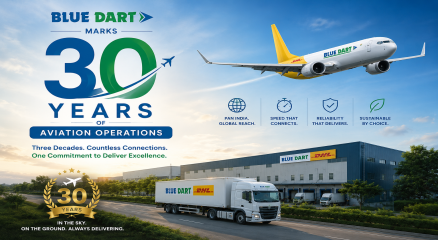
Blue Dart has completed 30 years of aviation operations, marking a significant milestone for the express logistics company as it continues to expand its air cargo network across India. Since 1996, the company has operated more than 2.15 lakh flights and transported over 20.5 lakh tonnes of air cargo, underscoring the scale of its dedicated air express network. The aviation division forms a key part of Blue Dart’s integrated logistics infrastructure, supporting time-definite deliveries and enabling nationwide connectivity for businesses and consumers. Over the past three decades, Blue Dart’s air network has played an important role in serving a broad range of industries, including life sciences, banking and financial services, manufacturing, automotive, e-commerce and small and medium-sized enterprises. The company said its aviation capabilities have contributed to improved supply chain efficiency and strengthened logistics connectivity across the country. The network also supported the movement of critical supplies during the COVID-19 pandemic, including vaccines, personal protective equipment (PPE) and other essential goods, helping maintain the flow of healthcare and emergency shipments during a period of severe disruption. Commenting on the milestone, Balfour Manuel, Managing Director of Blue Dart Express Limited, said the company’s aviation infrastructure has been instrumental in supporting next-day and under-24-hour delivery services across India. “Blue Dart’s aviation capability has strengthened the speed, reliability and certainty that customers associate with the brand, while connecting businesses, markets and communities,” Manuel said. Today, Blue Dart operates a dedicated fleet of eight Boeing 737 and 757 freighter aircraft. The fleet serves as a critical component of the company’s logistics network, facilitating the movement of shipments between major metropolitan centres and emerging economic hubs. Capt. Nikhil B. Ved, Managing Director of Blue Dart Aviation Limited, said the milestone reflects the company’s long-standing role in supporting India’s air express logistics network. “The journey has been defined by operational excellence, safety and a relentless focus on customer needs. As we enter the next decade, our focus remains on strengthening capabilities and building a future-ready aviation network,” Ved said. Looking ahead, the company said it will focus on strengthening network resilience, improving operational efficiency and expanding the use of technology and automation across its aviation operations. These efforts are expected to support growing cargo demand and the evolving requirements of India’s logistics sector as the country continues to expand its economic footprint. As Blue Dart enters the fourth decade of its aviation business, the company remains focused on enhancing air cargo capabilities and supporting faster, more reliable movement of goods across domestic markets. Follow CARGOCONNECT for more such updates.