
Loading...

Blue Dart has completed 30 years of aviation operations, marking a significant milestone for the express logistics company as it continues to expand its air cargo network across India.
Since 1996, the company has operated more than 2.15 lakh flights and transported over 20.5 lakh tonnes of air cargo, underscoring the scale of its dedicated air express network. The aviation division forms a key part of Blue Dart’s integrated logistics infrastructure, supporting time-definite deliveries and enabling nationwide connectivity for businesses and consumers.
Over the past three decades, Blue Dart’s air network has played an important role in serving a broad range of industries, including life sciences, banking and financial services, manufacturing, automotive, e-commerce and small and medium-sized enterprises. The company said its aviation capabilities have contributed to improved supply chain efficiency and strengthened logistics connectivity across the country.
The network also supported the movement of critical supplies during the COVID-19 pandemic, including vaccines, personal protective equipment (PPE) and other essential goods, helping maintain the flow of healthcare and emergency shipments during a period of severe disruption.
Commenting on the milestone, Balfour Manuel, Managing Director of Blue Dart Express Limited, said the company’s aviation infrastructure has been instrumental in supporting next-day and under-24-hour delivery services across India. “Blue Dart’s aviation capability has strengthened the speed, reliability and certainty that customers associate with the brand, while connecting businesses, markets and communities,” Manuel said.
Today, Blue Dart operates a dedicated fleet of eight Boeing 737 and 757 freighter aircraft. The fleet serves as a critical component of the company’s logistics network, facilitating the movement of shipments between major metropolitan centres and emerging economic hubs.
Capt. Nikhil B. Ved, Managing Director of Blue Dart Aviation Limited, said the milestone reflects the company’s long-standing role in supporting India’s air express logistics network. “The journey has been defined by operational excellence, safety and a relentless focus on customer needs. As we enter the next decade, our focus remains on strengthening capabilities and building a future-ready aviation network,” Ved said.
Looking ahead, the company said it will focus on strengthening network resilience, improving operational efficiency and expanding the use of technology and automation across its aviation operations. These efforts are expected to support growing cargo demand and the evolving requirements of India’s logistics sector as the country continues to expand its economic footprint.
As Blue Dart enters the fourth decade of its aviation business, the company remains focused on enhancing air cargo capabilities and supporting faster, more reliable movement of goods across domestic markets.
Follow CARGOCONNECT for more such updates.

New Delhi | September 5, 2026 India and Belgium are looking to strengthen cooperation in civil aviation, with discussions focusing on direct air connectivity, pharmaceutical air cargo and advanced air mobility. Union Civil Aviation Minister Ram Mohan Naidu held discussions with Belgian Prime Minister Bart De Wever during his official visit to India. The talks explored options for improving direct air links between the two countries, which could support passenger travel, business activity and trade. A key area of cooperation is air cargo for the high-value pharmaceutical sector. Stronger cargo connectivity could help facilitate the movement of pharmaceutical products between India and Europe while supporting more efficient international supply chains. The two sides also discussed advanced air mobility, highlighting potential opportunities for cooperation in emerging aviation technologies. The discussions come as India and Belgium seek to expand their broader economic relationship. The two countries have also expressed an ambition to double bilateral trade over the next five years, creating additional opportunities for aviation and logistics cooperation. What it means for aviation and logistics Stronger India–Belgium air connectivity could create new opportunities for passenger services, pharmaceutical logistics and international cargo movement. For the logistics industry, improved air links could strengthen India's access to European markets, particularly for time-sensitive and high-value shipments. The focus on advanced air mobility also signals growing interest in next-generation aviatiohttp://www.cargoconnect.co.inn technologies as part of the evolving India–Belgium partnership. Key takeaway: India and Belgium are exploring stronger direct air connectivity, pharmaceutical cargo links and advanced air mobility, potentially opening new opportunities for trade, passenger travel and aviation logistics between India and Europe. Follow CARGOCONNECT for more such updates



Hong Kong Air Cargo is adding Brisbane to its charter network, launching round-trip freighter services between Hong Kong and the Australian city from August 29 as the carrier expands its cargo connectivity into Australia. The new service will link Hong Kong International Airport with Brisbane Airport (BNE), providing additional airfreight capacity between the two markets. The Brisbane operation forms part of Hong Kong Air Cargo’s charter offering and is intended to provide shippers with additional options for moving cargo between Asia and Australia. Hong Kong Air Cargo has been developing its charter operations alongside its scheduled freighter services. The carrier operates a fleet centred on Airbus A330 freighters and provides cargo transportation covering general freight, express and priority shipments, dangerous goods and other specialised cargo requirements. Adding Brisbane gives the airline another gateway into Australia and strengthens the connection between Hong Kong, one of Asia’s major airfreight hubs, and Queensland’s principal international cargo airport. For freight forwarders and cargo owners, charter operations can provide additional capacity and scheduling flexibility where available scheduled services do not fully match shipment requirements. The new link comes as carriers and logistics providers continue to adjust international cargo networks in response to changing trade flows and demand for additional capacity.Brisbane serves a broad industrial and consumer market in Queensland and provides connections to manufacturing, retail, agriculture and other freight sectors. Direct or dedicated cargo capacity between Hong Kong and Brisbane can reduce reliance on alternative routings through other Australian gateways, depending on shipment requirements and available capacity. For Hong Kong, the expansion also supports the airport's role as a major international air cargo hub connecting Asian production centres with markets across the Asia-Pacific region. The Brisbane service therefore adds capacity without necessarily representing a permanent scheduled route commitment. Its longer-term role in the carrier's network will depend on cargo demand, customer requirements and future operating plans. The launch further broadens Hong Kong Air Cargo's presence in the Asia-Pacific cargo market and gives shippers another airfreight option between Hong Kong and Australia's east coast. Follow CARGOCONNECT for more such updates



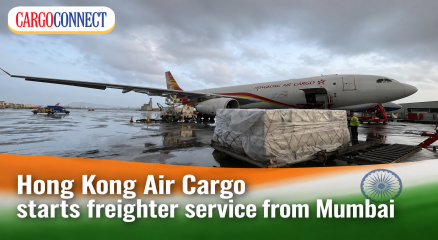
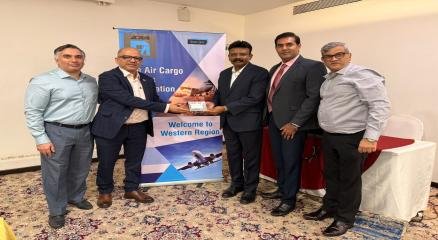
Hong Kong Air Cargo has launched a dedicated freighter service from Mumbai, expanding its India network and strengthening cargo connectivity between India, Hong Kong and onward global markets. The new service adds dedicated inbound cargo capacity to India while giving exporters in the country greater access to Hong Kong and international destinations. The launch comes within two months of Aeroprime Group being appointed as Hong Kong Air Cargo’s Cargo General Sales and Service Agent (GSSA) in India. Abhishek Goyal, Executive Director, Aeroprime Group, said Mumbai is one of India’s strategic cargo gateways and that the new service would provide customers with greater capacity, improved connectivity and reliable cargo solutions. He added that the launch reflects the commitment and agility of both teams. Raymond Chen, Vice President and Commercial Spokesperson, Hong Kong Air Cargo, said the Mumbai freighter service marks an important step in the airline’s India growth strategy. He highlighted Mumbai’s importance as a key export hub and credited Aeroprime Group with supporting the airline’s expansion in the Indian market. The Mumbai launch strengthens Hong Kong Air Cargo’s focus on India while expanding Aeroprime Group’s role in the carrier’s market development and commercial activities. Follow CARGOCONNECT for more such updates