
Loading...
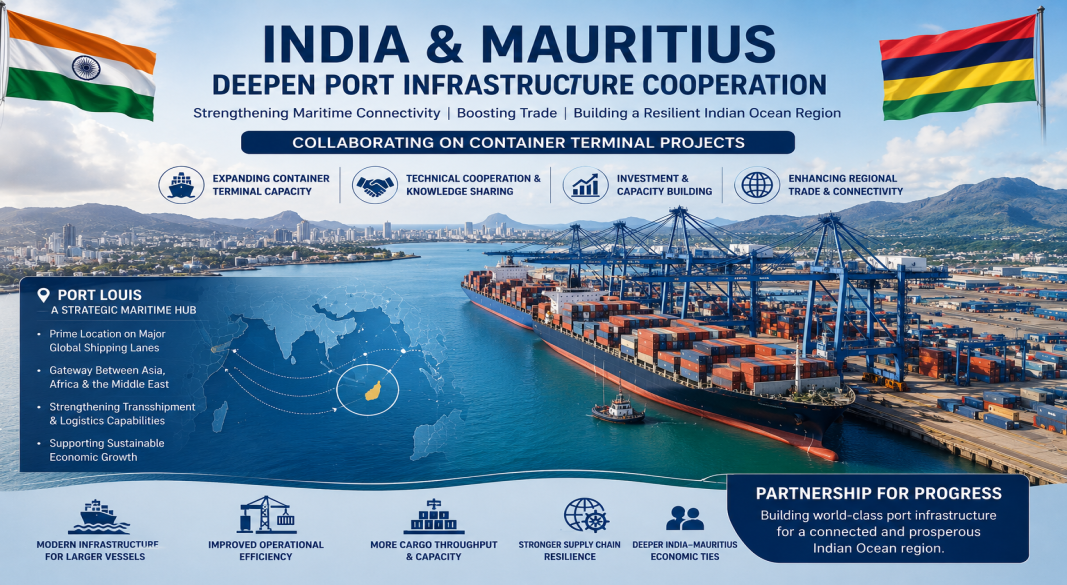
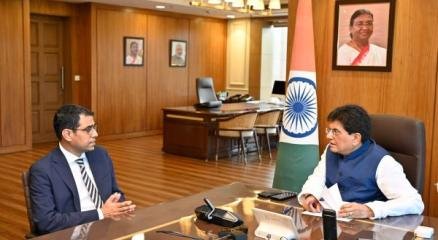
India and Mauritius have agreed to deepen cooperation in port infrastructure development, with both countries exploring collaboration on container terminal projects aimed at strengthening maritime connectivity and trade flows across the Indian Ocean region.
The initiative is expected to support the expansion and modernization of container-handling infrastructure in Mauritius while reinforcing economic and logistics ties between the two countries. Officials from both sides discussed opportunities for technical cooperation, investment, and knowledge sharing in port development and maritime operations. Mauritius has been pursuing long-term plans to expand capacity at Port Louis, its primary commercial gateway, as container volumes continue to grow.
The proposed partnership aligns with broader efforts to improve regional supply chain resilience and enhance the role of Mauritius as a transshipment and logistics hub serving trade routes connecting Africa, Asia and the Middle East. Port Louis occupies a strategic position along major shipping lanes in the western Indian Ocean and has been seeking additional infrastructure to accommodate larger vessels and rising cargo demand.
Industry observers note that closer collaboration could create opportunities for Indian port operators, engineering firms and maritime service providers while supporting Mauritius' plans to expand container terminal capacity. The island nation has already identified major investments in port modernization, including new terminal facilities and supporting infrastructure designed to improve operational efficiency and cargo throughput.
For India, the project forms part of a wider strategy to strengthen maritime partnerships across the Indian Ocean and improve connectivity with key regional trading partners. The country has increased investment in port infrastructure and container-handling capacity in recent years as it seeks to expand its role in global shipping and logistics networks.
The discussions also reflect growing interest in developing alternative logistics hubs across the Indian Ocean amid changing shipping patterns and increasing demand for resilient supply chains. Analysts say enhanced container terminal infrastructure in Mauritius could support regional cargo redistribution, transshipment activities and trade integration across eastern and southern Africa.
While financial and implementation details have yet to be disclosed, the proposed collaboration signals a continued focus on maritime infrastructure development as both countries seek to strengthen trade competitiveness and regional logistics connectivity.
Follow CARGOCONNECT for more such updates.
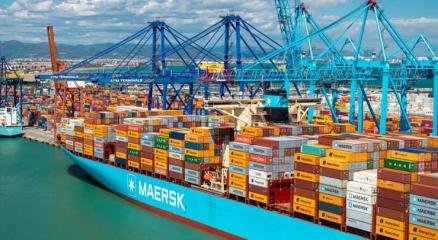
Maersk has announced an increase in its Emergency Contingency Surcharge (ECS) for cargo moving from the Indian subcontinent to North Europe and the Mediterranean, with the revised charges coming into effect from August 1, 2026. The move is expected to raise ocean freight costs for exporters across India and neighbouring South Asian markets, adding further pressure on supply chains already navigating volatile global shipping ecosystem. The revised ECS applies to cargo transported on Maersk's E3W (North Europe) and E4W (Mediterranean) services originating from North West India, South and East India, Nepal, Pakistan, Bangladesh, Sri Lanka and the Maldives. According to the carrier, the surcharge revision follows a review of prevailing market conditions aimed at maintaining the stability and reliability of its ocean freight. Under the new tariff structure, the ECS for shipments from North West India and Pakistan to North Europe will increase to US$3,500 per container across dry and reefer equipment, up from US$2,500. Similarly, shipments from South and East India and Nepal to North Europe will attract an ECS of US$3,800 for 20-foot containers and US$4,400 for 40-foot containers and reefers. Bangladesh-bound exports to North Europe will see the surcharge rise to US$4,000 for 20-foot containers and US$4,800 for 40-foot dry containers. Comparable increases have also been announced for shipments destined for the Mediterranean. The surcharge increase effectively adds US$1,000 per container across most trade lanes, making exports to Europe more expensive for manufacturers and shippers. Industry observers believe sectors such as textiles, engineering goods, chemicals, pharmaceuticals and automotive components, which rely heavily on Europe-bound container traffic, are likely to witness higher logistics costs in the coming months. The announcement comes amid continued uncertainty in global shipping markets, where carriers are adjusting freight rates and surcharges to offset elevated operating costs, capacity constraints and network disruptions. Shipping lines have increasingly relied on emergency and contingency surcharges to recover additional expenses arising from changing trade dynamics and operational challenges. In a separate advisory issued on July 17, Maersk also introduced a Heavy Load Surcharge (HWS) for cargo moving from North West India to North Europe and Israel-bound Mediterranean destinations, indicating a broader review of pricing across its regional services. For Indian exporters, the revised ECS is expected to translate into higher freight bills from August, prompting many to reassess logistics budgets, negotiate shipping contracts and explore cost optimisation strategies as Europe remains one of India's largest export markets. 𝐒𝐭𝐚𝐲 𝐓𝐮𝐧𝐞𝐝 𝐭𝐨 CARGOCONNECT 𝐟𝐨𝐫 𝐥𝐚𝐭𝐞𝐬𝐭 𝐮𝐩𝐝𝐚𝐭𝐞𝐬!
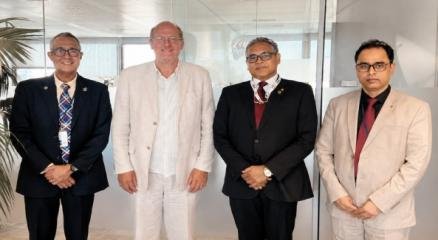
India has reaffirmed its growing influence in global maritime governance through an active and policy-driven participation at the 137th Session of the International Maritime Organization (IMO) Council, held in London from July 6 to 10. The country's delegation engaged in key discussions on maritime safety, governance reforms, digitalisation, seafarer welfare and international cooperation, reinforcing India's commitment to shaping the future of global shipping. Led by Shyam Jagannathan, IAS, Director General of Maritime Administration, the Indian delegation advocated a balanced, consensus-based approach to reforms within the IMO. India stressed that any amendments to the organisation's rules should preserve its technical and collaborative character while ensuring greater transparency and consistency in maritime governance. The delegation also highlighted the need for contextual interpretation of audit outcomes under the IMO Member State Audit Scheme, cautioning against simplistic country rankings. Seafarer welfare remained a key focus during the session. India called for stronger international collaboration to ensure timely repatriation, effective financial security mechanisms and improved implementation of the Maritime Labour Convention. The delegation showcased several digital initiatives, including the 24x7 e-Navik Seafarer Assistance Portal and an integrated crisis response framework designed to provide faster grievance redressal and support to Indian seafarers across the world. On the sidelines of the Council meeting, the Indian delegation held high-level discussions with IMO Secretary-General Arsenio Dominguez, the International Chamber of Shipping (ICS), the International Transport Workers' Federation (ITF) and representatives from Kenya. The engagements focused on maritime digitalisation, global standards for seafarer welfare, capacity building, maritime education and stronger international partnerships. India also highlighted its progress in digitising maritime administration through online certification systems, upgraded recruitment and training platforms and measures to curb fraudulent crewing practices. These initiatives are expected to enhance the global recognition and competitiveness of Indian seafarers while supporting efficient maritime compliance. Addressing geopolitical concerns, India emphasised the importance of restoring peace and ensuring safe navigation through critical shipping routes, particularly the Strait of Hormuz. The delegation underlined that disruptions in strategic maritime corridors have significant implications for global supply chains, trade continuity and shipping costs, reiterating that dialogue and diplomacy remain the most effective means of resolving regional conflicts. India's constructive interventions at the 137th IMO Council underscore its emergence as a responsible maritime nation that is actively contributing to safer, greener and more resilient global shipping. For the logistics and supply chain industry, India's growing role at the IMO is expected to support stronger maritime governance, improved seafarer welfare and enhanced resilience across international trade networks. 𝐒𝐭𝐚𝐲 𝐓𝐮𝐧𝐞𝐝 𝐭𝐨 CARGOCONNECT 𝐟𝐨𝐫 𝐥𝐚𝐭𝐞𝐬𝐭 𝐮𝐩𝐝𝐚𝐭𝐞𝐬!
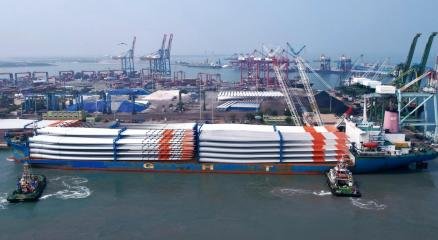
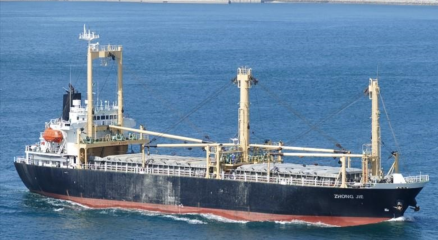
New Mangalore Port Authority (NMPA) welcomed the newly built vessel MV MINI ATLAS 2 on its maiden call, marking another milestone in the port's efforts to strengthen its position as a preferred maritime gateway on India's west coast. The vessel, built in Indonesia, received a traditional ceremonial welcome upon its arrival, reflecting the maritime industry's long-standing practice of honouring a ship's inaugural visit to a port. The maiden call underscores the growing confidence of international shipping lines in New Mangalore Port's operational capabilities and efficient cargo-handling infrastructure. Such first-time vessel calls are considered significant as they often pave the way for long-term commercial engagements and regular shipping services, enhancing trade connectivity and port competitiveness. Officials from the New Mangalore Port Authority extended a warm reception to the vessel's master and crew, commemorating the occasion with the exchange of plaques and mementoes. The event highlighted the port's commitment to fostering strong relationships with global shipping stakeholders while promoting seamless vessel operations. Strategically located on Karnataka's coastline, New Mangalore Port has emerged as a key gateway for handling a diverse range of cargo, including petroleum products, coal, fertilizers, containers, edible oils, timber, iron ore pellets and project cargo. The addition of new international vessel calls further reinforces the port's role in supporting India's expanding maritime trade and supply chain ecosystem. The arrival of MV MINI ATLAS 2 also reflects the increasing integration of regional shipping networks across Asia. As trade volumes continue to grow, ports that offer efficient turnaround times, modern infrastructure and customer-focused services are becoming increasingly attractive to shipping companies seeking reliable logistics hubs. Over the past few years, New Mangalore Port has been investing in capacity enhancement, digitalisation and sustainability initiatives aimed at improving operational efficiency. These efforts have helped the port strengthen its standing among India's major ports while supporting the objectives of the Ministry of Ports, Shipping and Waterways to modernise the country's maritime infrastructure. Industry observers note that maiden vessel calls are more than ceremonial occasions—they signal new commercial opportunities, expand shipping connectivity and contribute to stronger regional trade links. For exporters, importers and logistics service providers, increased vessel traffic translates into greater flexibility, improved shipping options and enhanced supply chain resilience. As global shipping networks continue to evolve, the successful maiden call of MV MINI ATLAS 2 reinforces New Mangalore Port's growing importance as a strategic maritime hub capable of facilitating international trade while supporting India's ambition of becoming a global logistics powerhouse. 𝐒𝐭𝐚𝐲 𝐓𝐮𝐧𝐞𝐝 𝐭𝐨 CARGOCONNECT 𝐟𝐨𝐫 𝐥𝐚𝐭𝐞𝐬𝐭 𝐮𝐩𝐝𝐚𝐭𝐞𝐬!