Loading...
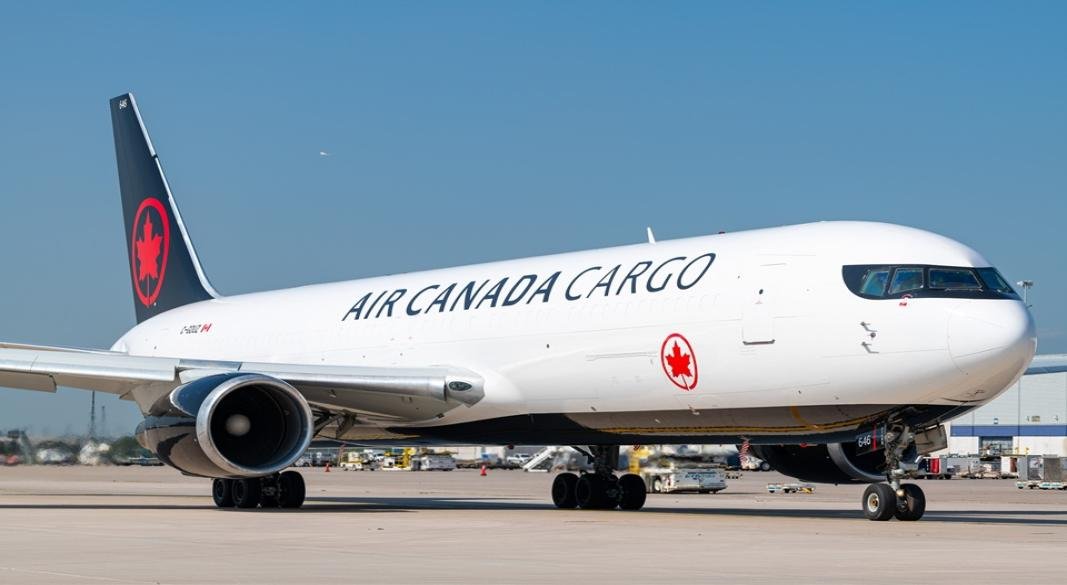
Air Canada Cargo is expanding its dedicated freighter network for the 2026-27 winter season, introducing new services from its Toronto hub to Amsterdam in the Netherlands, Monterrey in Mexico and Panama City in Panama. The additions are expected to strengthen air freight connectivity across transatlantic and Latin American trade lanes, while providing shippers with additional cargo capacity and routing options.
The airline will launch its twice-weekly freighter service to Amsterdam on 29 October. The new route will complement Air Canada’s existing passenger operations to the Dutch city, providing dedicated main-deck cargo capacity during the winter period, when reduced passenger flight frequencies can constrain available belly-hold capacity on some transatlantic routes.
The expansion also extends the carrier’s reach across key manufacturing and distribution markets in Latin America. Freighter services to Monterrey will begin on 26 October, operating three times a week, while operations to Panama City are scheduled to commence on 25 October, with up to two weekly flights. Air Canada Cargo already serves Mexico City and Guadalajara with its dedicated freighter aircraft.
Matthieu Casey, Managing Director, Commercial – Cargo at Air Canada, said the Amsterdam service would strengthen the airline’s European network by providing dedicated cargo capacity and improving access for customers in the Netherlands and across Europe.
He added that the new services to Monterrey and Panama City would improve two-way connectivity between Europe and the airline’s growing Latin American network, creating more opportunities to reach markets including Quito, Lima, Bogotá and Mexico City.
The expanded network is expected to benefit freight forwarders and businesses seeking greater flexibility in moving goods between Canada, Europe and Latin America. Toronto Pearson, Air Canada Cargo’s principal hub for the new services, will continue to play a key role in connecting Canadian businesses with international markets.
By adding dedicated freighter capacity across these routes, Air Canada Cargo is positioning its winter schedule to address seasonal capacity constraints and support more reliable international supply chains.
𝐒𝐭𝐚𝐲 𝐓𝐮𝐧𝐞𝐝 𝐭𝐨 CARGOCONNECT 𝐟𝐨𝐫 𝐥𝐚𝐭𝐞𝐬𝐭 𝐮𝐩𝐝𝐚𝐭𝐞𝐬!
Air Canada Cargo is expanding its dedicated freighter network for the 2026-27 winter season, introducing new services from its Toronto hub to Amsterdam in the Netherlands, Monterrey in Mexico and Panama City in Panama. The additions are expected to strengthen air freight connectivity across transatlantic and Latin American trade lanes, while providing shippers with additional cargo capacity and routing options. The airline will launch its twice-weekly freighter service to Amsterdam on 29 October. The new route will complement Air Canada’s existing passenger operations to the Dutch city, providing dedicated main-deck cargo capacity during the winter period, when reduced passenger flight frequencies can constrain available belly-hold capacity on some transatlantic routes. The expansion also extends the carrier’s reach across key manufacturing and distribution markets in Latin America. Freighter services to Monterrey will begin on 26 October, operating three times a week, while operations to Panama City are scheduled to commence on 25 October, with up to two weekly flights. Air Canada Cargo already serves Mexico City and Guadalajara with its dedicated freighter aircraft. Matthieu Casey, Managing Director, Commercial – Cargo at Air Canada, said the Amsterdam service would strengthen the airline’s European network by providing dedicated cargo capacity and improving access for customers in the Netherlands and across Europe. He added that the new services to Monterrey and Panama City would improve two-way connectivity between Europe and the airline’s growing Latin American network, creating more opportunities to reach markets including Quito, Lima, Bogotá and Mexico City. The expanded network is expected to benefit freight forwarders and businesses seeking greater flexibility in moving goods between Canada, Europe and Latin America. Toronto Pearson, Air Canada Cargo’s principal hub for the new services, will continue to play a key role in connecting Canadian businesses with international markets. By adding dedicated freighter capacity across these routes, Air Canada Cargo is positioning its winter schedule to address seasonal capacity constraints and support more reliable international supply chains. 𝐒𝐭𝐚𝐲 𝐓𝐮𝐧𝐞𝐝 𝐭𝐨 CARGOCONNECT 𝐟𝐨𝐫 𝐥𝐚𝐭𝐞𝐬𝐭 𝐮𝐩𝐝𝐚𝐭𝐞𝐬!


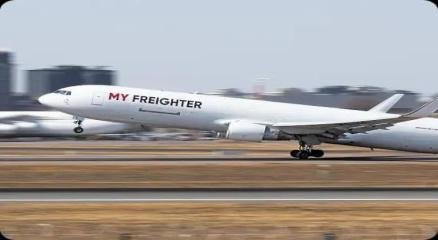
Tashkent-based air cargo carrier My Freighter has secured approval to operate cargo services to the United Kingdom, as it expands its fleet and international network. The carrier has received ACC3 designation from the UK Department for Transport, confirming that its cargo security procedures meet the country's aviation security requirements. The airline expects to commence UK-bound operations soon, with flight schedules to be announced. The approval will enable My Freighter to offer secure and compliant air freight services from Tashkent to the UK, establishing another connection for shippers and freight forwarders in Uzbekistan and neighbouring markets. The development is expected to strengthen cargo connectivity between Central Asia and Europe, while providing businesses with an additional air freight option for international shipments. ACC3 designation is a key regulatory requirement for air carriers transporting cargo or mail from outside the UK into the country. Under the UK's aviation security framework, carriers must obtain this designation before such shipments can be accepted for arrival at UK airports. The approval therefore provides My Freighter with the necessary security clearance to pursue its planned operations in the market. Fleet Expansion Supports Network Growth The UK approval comes as My Freighter continues to expand its dedicated freighter fleet. On 4 October 2026, the airline received its tenth Boeing 767 freighter, registered UK67023, at its Tashkent hub. The aircraft, a Boeing 767-328ER converted freighter, brought the carrier's Boeing 767 fleet to 10 aircraft and its total fleet to 11, including one Boeing 757 freighter. The airline plans to add four freighters during 2026 and is targeting a fleet of 50 aircraft by 2030, according to Business Development Director Mohy Sheneshen. It is also planning to introduce an Airbus A330-200 freighter to support longer-distance routes, with the United States identified as a key potential market. Tashkent Emerging as a Cargo Hub My Freighter is developing its network around Tashkent through a hub-and-spoke operating model, connecting regional cargo flows with international destinations. In August, it launched daily cargo flights from Liège Airport to improve connectivity between Europe and Central Asia. The carrier has also signed interline agreements with Air Canada Cargo and Singapore Airlines Cargo, extending its access to partner networks. Alongside its fleet and route expansion, the airline is developing a dedicated cargo terminal at Tashkent Airport. The facility was expected to begin a soft opening in November or December 2026, supporting its growing operational requirements. My Freighter is also targeting cargo flows across Africa and the Middle East, as well as trade lanes linking Asia and the Commonwealth of Independent States (CIS) with Europe. North and South American markets form part of its broader expansion plans. The UK designation adds another market to the carrier's growth strategy. As My Freighter increases its aircraft capacity, strengthens its hub infrastructure and develops partnerships, the planned UK services could create additional routing options for freight forwarders and businesses moving goods between Central Asia and international markets. 𝐒𝐭𝐚𝐲 𝐓𝐮𝐧𝐞𝐝 𝐭𝐨 CARGOCONNECT 𝐟𝐨𝐫 𝐥𝐚𝐭𝐞𝐬𝐭 𝐮𝐩𝐝𝐚𝐭𝐞𝐬!
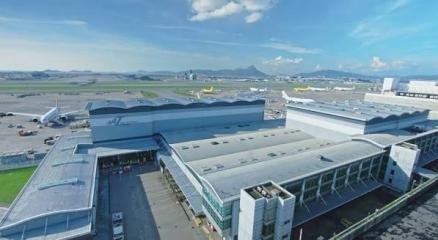

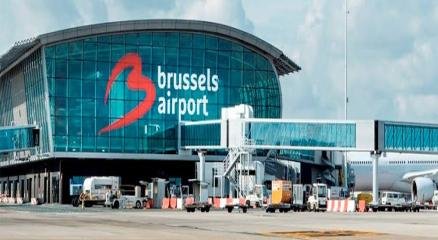
Brussels Airport recorded a 6.8% year-on-year increase in cargo volumes in September 2026, handling 70,257 tonnes of freight as growth in trucked cargo and shipments carried on passenger aircraft supported overall performance. The airport also maintained positive momentum during the first nine months of the year, with cumulative cargo throughput rising 8.1% to more than 627,000 tonnes. The September figures highlight the contribution of road-based cargo movements to the airport’s expanding logistics activity, alongside continued growth in air freight transported on passenger services. Trucked Cargo Drives Monthly Growth Trucked cargo volumes increased by 37.2% compared with September 2025, emerging as the primary driver of the airport’s overall cargo growth. Meanwhile, flown cargo volumes rose by 2.5%, supported largely by an 11.4% increase in freight carried aboard passenger aircraft. However, the airport reported marginal declines in two other segments. Full-freighter cargo volumes decreased by 1.1%, while the integrator segment recorded a 0.2% contraction. The contrasting performance across cargo categories underlines the importance of diversified transport capacity and the integration of road and air networks in supporting freight flows through major European logistics hubs. Asia and the Americas Remain Key Trade Regions Asia, Latin America and North America were the leading regions for imports handled at Brussels Airport in September. On the export side, Asia and Latin America ranked highest, followed by Africa. These trade flows reinforce the airport’s role in connecting European supply chains with major international markets. Brussels Airport also specialises in pharmaceutical products, perishable goods, e-commerce shipments and live-animal transport, supporting cargo segments with specific handling and infrastructure requirements. The airport’s focus on specialised logistics is particularly relevant to pharmaceutical and life sciences supply chains, where temperature-controlled facilities and reliable handling processes are essential. Cargo Growth Continues Through 2026 From January to September 2026, Brussels Airport handled more than 627,000 tonnes of cargo, an 8.1% increase over the corresponding period in 2025. Cargo flight movements also grew by 3.2% in September year on year, indicating an increase in dedicated cargo flight activity despite the slight declines recorded in the full-freighter and integrator volume segments. Overall, the airport has also been strengthening its cargo ecosystem through industry partnerships and infrastructure development. In September, it signed a memorandum of understanding with Hyderabad International Airport to enhance air cargo connectivity between Belgium and India, with particular attention to pharmaceutical and life sciences shipments. Separately, a new 14,000-square-metre logistics facility for Yusen Logistics and Air Promotions Agencies is under development, with completion scheduled for 2027. The combination of rising throughput, stronger road-feeder activity and targeted infrastructure investments positions Brussels Airport to support evolving international freight requirements. 𝐒𝐭𝐚𝐲 𝐓𝐮𝐧𝐞𝐝 𝐭𝐨 CARGOCONNECT 𝐟𝐨𝐫 𝐥𝐚𝐭𝐞𝐬𝐭 𝐮𝐩𝐝𝐚𝐭𝐞𝐬!