
Loading...
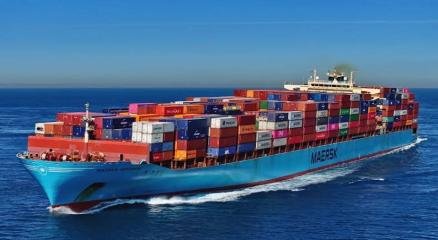
A.P. Moller-Maersk expects to restore all its shipping services through the Suez Canal by March 2027, according to the Suez Canal Authority (SCA). The outlook signals a potential step towards normalising global container shipping routes as the Danish shipping group continues to revise its vessel schedules and gradually increases its use of the strategic waterway. The timeline emerged during a video conference on 20 October between SCA Chairman and Managing Director Admiral Ossama Rabiee and senior Maersk executives, including Chief Operating Officer Rabab Boulos. The discussions focused on accelerating the return of the carrier’s services to the canal and strengthening cooperation between the two organisations. However, March 2027 remains an expected target rather than a confirmed deadline for individual services. According to the SCA, Maersk-affiliated vessels completed 276 transits through the Suez Canal between January and September 2026, compared with 146 during the corresponding period in 2025. The combined net tonnage increased to 23.3 million tonnes from seven million tonnes, indicating a significant rise in the group’s canal activity. Boulos acknowledged the progress made in restoring services through cooperation with the authority and expressed the expectation that all Maersk services would return by March 2027. She also identified the Suez Canal as the group’s preferred option, reflecting its strategic importance to international shipping networks. Maersk Vice President of Operations Ahmed Hassan said the company was continuing to update its sailing schedules to enable additional services to transit through the canal in the coming months. Hani El-Nady, the group’s representative for the Middle East and North Africa, added that Maersk was working to accelerate the return of its remaining services. The Suez Canal provides a direct maritime connection between the Red Sea and the Mediterranean, serving as a critical link for trade between Asia and Europe. Its use can reduce voyage distances and sailing times compared with routing vessels around the Cape of Good Hope at the southern tip of Africa. SCA Chairman Rabiee highlighted the canal’s economic advantages, particularly for large container ships, noting that geopolitical developments and their impact on fuel prices and freight rates have reinforced the importance of efficient shipping routes. A broader return by Maersk could help reduce voyage durations, improve vessel utilisation and release capacity currently tied up in longer voyages. These changes could also influence container shipping costs, although the eventual impact on freight rates will depend on market demand, available capacity and operating conditions. Despite the positive outlook, the pace of Maersk’s return will depend on conditions in the Red Sea region. The SCA has not announced confirmed return dates for every service, and Maersk continues to review its navigation plans. Both parties agreed to maintain discussions to strengthen cooperation and facilitate the restoration of services. The anticipated return by March 2027 will therefore be an important development to watch for global supply chains, particularly businesses relying on Asia-Europe trade routes. 𝐒𝐭𝐚𝐲 𝐓𝐮𝐧𝐞𝐝 𝐭𝐨 CARGOCONNECT 𝐟𝐨𝐫 𝐥𝐚𝐭𝐞𝐬𝐭 𝐮𝐩𝐝𝐚𝐭𝐞𝐬!
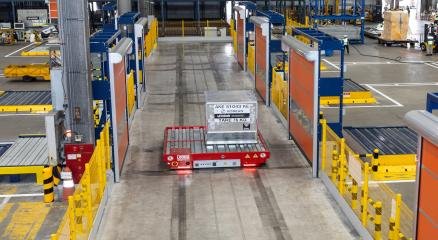
Korean Air has completed the modernisation of its cargo terminal at Incheon International Airport in South Korea, transforming the facility into an integrated smart cargo terminal equipped with advanced automation technologies. The upgrade is expected to increase overall cargo-handling capacity by more than 25%, strengthening the airline’s ability to accommodate growing air freight demand and improve operational efficiency. The modernisation project began in June 2025 and was completed in September 2026. It introduced automated guided vehicles (AGVs), upgraded elevating transfer vehicles (ETVs) and improvements to the terminal’s cargo-transfer infrastructure. These technologies are designed to streamline freight movement, improve handling accuracy and reduce operational bottlenecks while maintaining service quality. A key development is the expansion of the terminal’s bypass infrastructure from a single line to two automated transfer lines integrated with the new ETVs. This has increased the hourly processing capacity for unit load devices (ULDs), the standardised containers and pallets used to transport air freight, from 18 to 30 units. The increased throughput is expected to support faster cargo processing and improve the efficiency of terminal operations. Automating the movement of heavy equipment also reduces manual handling requirements, helping improve workplace safety and working conditions. Infrastructure improvements include upgrades intended to create a more efficient working environment for terminal personnel. Alongside automation, Korean Air is expanding facilities for specialised and high-value shipments, including cargo requiring temperature-controlled handling. Its dedicated Cool Cargo Center at Incheon can store and process more than 150 tonnes of fresh cargo at a time, supporting the movement of perishables and other temperature-sensitive goods. The Incheon upgrade forms part of the airline’s broader efforts to strengthen its cargo infrastructure. Korean Air is also modernising its cargo terminal at John F. Kennedy International Airport in New York, with completion targeted for 2027. By investing in automated handling systems and specialised cargo infrastructure, Korean Air aims to enhance throughput, operational precision and service capabilities across its international air cargo network. 𝐒𝐭𝐚𝐲 𝐓𝐮𝐧𝐞𝐝 𝐭𝐨 CARGOCONNECT 𝐟𝐨𝐫 𝐥𝐚𝐭𝐞𝐬𝐭 𝐮𝐩𝐝𝐚𝐭𝐞𝐬!
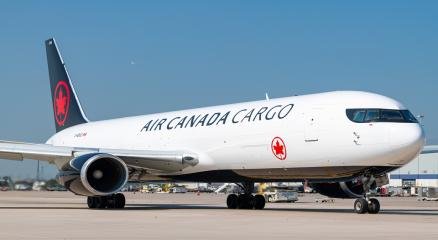
Air Canada Cargo is expanding its dedicated freighter network for the 2026-27 winter season, introducing new services from its Toronto hub to Amsterdam in the Netherlands, Monterrey in Mexico and Panama City in Panama. The additions are expected to strengthen air freight connectivity across transatlantic and Latin American trade lanes, while providing shippers with additional cargo capacity and routing options. The airline will launch its twice-weekly freighter service to Amsterdam on 29 October. The new route will complement Air Canada’s existing passenger operations to the Dutch city, providing dedicated main-deck cargo capacity during the winter period, when reduced passenger flight frequencies can constrain available belly-hold capacity on some transatlantic routes. The expansion also extends the carrier’s reach across key manufacturing and distribution markets in Latin America. Freighter services to Monterrey will begin on 26 October, operating three times a week, while operations to Panama City are scheduled to commence on 25 October, with up to two weekly flights. Air Canada Cargo already serves Mexico City and Guadalajara with its dedicated freighter aircraft. Matthieu Casey, Managing Director, Commercial – Cargo at Air Canada, said the Amsterdam service would strengthen the airline’s European network by providing dedicated cargo capacity and improving access for customers in the Netherlands and across Europe. He added that the new services to Monterrey and Panama City would improve two-way connectivity between Europe and the airline’s growing Latin American network, creating more opportunities to reach markets including Quito, Lima, Bogotá and Mexico City. The expanded network is expected to benefit freight forwarders and businesses seeking greater flexibility in moving goods between Canada, Europe and Latin America. Toronto Pearson, Air Canada Cargo’s principal hub for the new services, will continue to play a key role in connecting Canadian businesses with international markets. By adding dedicated freighter capacity across these routes, Air Canada Cargo is positioning its winter schedule to address seasonal capacity constraints and support more reliable international supply chains. 𝐒𝐭𝐚𝐲 𝐓𝐮𝐧𝐞𝐝 𝐭𝐨 CARGOCONNECT 𝐟𝐨𝐫 𝐥𝐚𝐭𝐞𝐬𝐭 𝐮𝐩𝐝𝐚𝐭𝐞𝐬!

Milwaukee Mitchell International Airport (MKE) has completed a new air cargo centre in partnership with real estate developer Crow Holdings, marking a significant addition to Wisconsin’s freight and logistics infrastructure. The facility will strengthen regional cargo operations and improve access to domestic and international freight markets. Located at the MKE Regional Business Park on the former site of the 440th Airlift Wing, the 337,000-square-foot facility is designed to accommodate up to five Boeing 747-400 aircraft simultaneously. Construction began in February 2025, following years of planning and collaboration between the airport and Crow Holdings. The development is intended to provide manufacturers, distributors and logistics providers with additional air freight capacity and a more direct route to global shipping networks. A key objective of the project is to offer businesses in southeastern Wisconsin an alternative to routing freight through airports in neighbouring Illinois, particularly Chicago-area gateways that can experience congestion, delays and higher operating costs. By expanding cargo infrastructure closer to regional manufacturing and distribution centres, MKE aims to support more predictable freight movements and improve supply chain efficiency. The airport’s location along the Interstate 94 corridor also provides access to trucking networks serving Wisconsin and the wider Midwest. Its existing airfield capabilities, road connectivity and potential for further cargo development could help attract additional cargo operators and strengthen links between air freight and road transport. The project represents an investment of approximately $80 million and forms part of a public-private partnership between Milwaukee Mitchell International Airport and Crow Holdings. Alongside the cargo facility, the broader development includes improvements to adjacent taxiways to support wide-body freighter operations, as well as a new Milwaukee County Highway Maintenance Facility. These infrastructure enhancements are expected to improve accessibility for cargo aircraft and support the region’s transportation requirements. The new centre is also expected to generate recurring revenue for the airport. Projections indicate annual aircraft landing fees of more than $1.3 million, in addition to over $1 million in ground lease rents and fees. The development is expected to create employment opportunities, attract new business and contribute to economic growth across Wisconsin. For the regional logistics industry, the facility provides an opportunity to expand air freight capacity while offering shippers another gateway for moving goods across the United States and international markets. Its long-term contribution will depend on cargo operator participation, freight volumes and the development of supporting logistics services. With the completion of the new air cargo centre, the airport is strengthening its position as an alternative cargo gateway in the Midwest, supporting manufacturers and supply chain operators seeking greater flexibility, connectivity and efficiency in freight transportation. 𝐒𝐭𝐚𝐲 𝐓𝐮𝐧𝐞𝐝 𝐭𝐨 CARGOCONNECT 𝐟𝐨𝐫 𝐥𝐚𝐭𝐞𝐬𝐭 𝐮𝐩𝐝𝐚𝐭𝐞𝐬!

UPS has opened a new international air hub at Clark International Airport in the Philippines, backed by an investment of more than US$80 million. The facility is designed to strengthen global trade connectivity, expand parcel-processing capacity and improve delivery speeds across key international trade lanes. The development forms part of UPS’s broader strategy to reinforce its Asia-Pacific logistics network amid evolving trade patterns and growing demand for reliable, time-sensitive international shipments. UPS Clark Hub Expands Package Processing and Global Connectivity Spanning 30,000 square metres, the new facility is 15 times larger than the previous hub and can process an average of 46,000 packages daily, with a maximum throughput of 15,000 packages per hour. It is equipped to support specialised shipments for healthcare, high-tech and manufacturing customers, including consignments that require time-sensitive or temperature-controlled handling. The hub operates within UPS’s expanding international air network, with 170 weekly flight segments to and from Clark. These services connect businesses across Asia-Pacific, India, Europe and the United States, enabling shipments to reach some international destinations in as little as one business day. According to UPS, the expanded facility will improve services across more than 1,100 global trade lanes. Shipments to and from eastern China and other major Asia-Pacific markets could benefit from delivery times up to two days faster. Connections between several Southeast Asian markets and India are also expected to become faster, alongside improvements to services originating from or destined for the Philippines. Extended collection cut-off times and earlier deliveries are additional benefits for customers. Automation and Temperature-Controlled Handling Technology and specialised infrastructure form a central part of the new hub's operations. The facility incorporates an automated small-package sorting system capable of handling up to 9,000 packages weighing less than three kilograms per hour. This is intended to improve sorting efficiency and support the processing of high shipment volumes. For healthcare and other sensitive cargo, the hub features three refrigeration and freezer units operating across a temperature range of -20°C to 25°C, dedicated re-icing capabilities and UPS Premier radio-frequency identification (RFID) technology. These systems are designed to support priority handling and improve shipment visibility for critical and temperature-sensitive consignments. The facility also incorporates electric ground-service equipment, including cargo tractors, belt loaders, cargo loaders, ground power units and forklifts. Its sustainability certification and building design aligned with Leadership in Energy and Environmental Design (LEED) standards reflect an emphasis on operational efficiency and environmental considerations. Investment Strengthens the Philippines' Logistics Infrastructure The investment has created nearly 600 jobs across operations, security, information technology, maintenance and other functions, with recruitment extending to communities in Pampanga and neighbouring areas. UPS established its first hub at Clark International Airport in 2002, making the new facility a significant expansion of its long-standing presence in the Philippines. Bernard Jiang, president of UPS Asia-Pacific, said the project forms part of a sustained investment strategy to strengthen the company's regional network and provide faster connections in response to growing trade flows. The Clark hub follows other recent UPS investments in Asia-Pacific, including the opening of a major logistics centre in Taiwan, construction of a new hub at Hong Kong International Airport and an expansion at Incheon Airport in South Korea. Together, these developments underline the company's focus on improving regional connectivity, service reliability and supply chain resilience as businesses navigate changing trade routes and increasingly complex logistics requirements. 𝐒𝐭𝐚𝐲 𝐓𝐮𝐧𝐞𝐝 𝐭𝐨 CARGOCONNECT 𝐟𝐨𝐫 𝐥𝐚𝐭𝐞𝐬𝐭 𝐮𝐩𝐝𝐚𝐭𝐞𝐬!

Brussels Airport recorded a 6.8% year-on-year increase in cargo volumes in September 2026, handling 70,257 tonnes of freight as growth in trucked cargo and shipments carried on passenger aircraft supported overall performance. The airport also maintained positive momentum during the first nine months of the year, with cumulative cargo throughput rising 8.1% to more than 627,000 tonnes. The September figures highlight the contribution of road-based cargo movements to the airport’s expanding logistics activity, alongside continued growth in air freight transported on passenger services. Trucked Cargo Drives Monthly Growth Trucked cargo volumes increased by 37.2% compared with September 2025, emerging as the primary driver of the airport’s overall cargo growth. Meanwhile, flown cargo volumes rose by 2.5%, supported largely by an 11.4% increase in freight carried aboard passenger aircraft. However, the airport reported marginal declines in two other segments. Full-freighter cargo volumes decreased by 1.1%, while the integrator segment recorded a 0.2% contraction. The contrasting performance across cargo categories underlines the importance of diversified transport capacity and the integration of road and air networks in supporting freight flows through major European logistics hubs. Asia and the Americas Remain Key Trade Regions Asia, Latin America and North America were the leading regions for imports handled at Brussels Airport in September. On the export side, Asia and Latin America ranked highest, followed by Africa. These trade flows reinforce the airport’s role in connecting European supply chains with major international markets. Brussels Airport also specialises in pharmaceutical products, perishable goods, e-commerce shipments and live-animal transport, supporting cargo segments with specific handling and infrastructure requirements. The airport’s focus on specialised logistics is particularly relevant to pharmaceutical and life sciences supply chains, where temperature-controlled facilities and reliable handling processes are essential. Cargo Growth Continues Through 2026 From January to September 2026, Brussels Airport handled more than 627,000 tonnes of cargo, an 8.1% increase over the corresponding period in 2025. Cargo flight movements also grew by 3.2% in September year on year, indicating an increase in dedicated cargo flight activity despite the slight declines recorded in the full-freighter and integrator volume segments. Overall, the airport has also been strengthening its cargo ecosystem through industry partnerships and infrastructure development. In September, it signed a memorandum of understanding with Hyderabad International Airport to enhance air cargo connectivity between Belgium and India, with particular attention to pharmaceutical and life sciences shipments. Separately, a new 14,000-square-metre logistics facility for Yusen Logistics and Air Promotions Agencies is under development, with completion scheduled for 2027. The combination of rising throughput, stronger road-feeder activity and targeted infrastructure investments positions Brussels Airport to support evolving international freight requirements. 𝐒𝐭𝐚𝐲 𝐓𝐮𝐧𝐞𝐝 𝐭𝐨 CARGOCONNECT 𝐟𝐨𝐫 𝐥𝐚𝐭𝐞𝐬𝐭 𝐮𝐩𝐝𝐚𝐭𝐞𝐬!

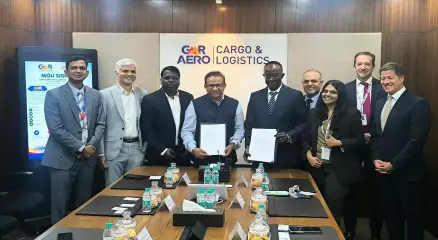
Aramex has signed a Memorandum of Understanding (MoU) with GMR Airports Limited (GAL) to strengthen its express cargo and freight infrastructure across GMR-operated airports in India, with a focus on improving cross-border logistics, customs clearance and international trade connectivity. The proposed collaboration aims to support micro, small and medium enterprises (MSMEs), exporters, importers and other businesses by enabling more efficient movement of international shipments through key airport gateways. Signed at GMR Hyderabad Air Cargo (GHAC) in Hyderabad, the agreement will explore opportunities to enhance Aramex’s operational infrastructure at GMR Airports’ express cargo terminals. The proposed facilities include dedicated truck docks, screening systems and designated operational space, subject to mutually agreed terms and conditions under a definitive agreement. The infrastructure is expected to facilitate integrated customs clearance capabilities for multiple international products, helping streamline cargo processing, improve operational efficiency and support smoother movement of shipments across borders. Exploring Warehousing and Airside Connectivity Under the proposed arrangement, GMR Airports will maintain the identified infrastructure at the express cargo terminal in accordance with the terms to be finalised by both parties. Aramex and GAL are also exploring the development of a warehousing facility close to the express cargo terminal, with dedicated airside corridor access to support cargo movement. GMR Airports may additionally facilitate engagement with relevant authorities and share its technical expertise and operational experience to support the proposed development. The initiative is intended to strengthen Aramex’s logistics network in India while enhancing the capabilities available to businesses using GMR-operated airports for international shipments. The collaboration places particular emphasis on supporting trade flows between India and the Gulf Cooperation Council (GCC) region. The two companies are working towards developing the proposed infrastructure by March 2027. Investment requirements, project timelines and other implementation details will be explored jointly as discussions progress. Strengthening India's Global Trade Connectivity Commenting on the partnership, Amadou Diallo, Group CEO, Aramex, said, “Our focus on India goes beyond expanding our footprint; it is about building the capabilities and infrastructure needed to support the country's next phase of growth in global trade. At Aramex, we are committed to strengthening our network, investing in local capabilities and working with strategic partners to create more efficient channels for businesses to access international markets. Our collaboration with GMR Airports Limited reflects this long-term commitment to India and will further strengthen our ability to support businesses across the country with efficient logistics solutions.” Veena Bhogaonkar, Managing Director, Aramex India, said, “We are pleased to partner with GAL to strengthen our logistics capabilities across GMR-operated airports. By enhancing our infrastructure and operational capabilities at the express cargo terminal, we aim to provide businesses, including MSMEs, with more efficient and seamless express and freight services to support their domestic and international trade requirements.” Abbas Panju, Regional CEO GCC and Indian Subcontinent, Aramex, said, “India is a strategically important market for Aramex, and we continue to see significant opportunities to strengthen our logistics network and support the country's growing international trade. Our collaboration with GAL will help us enhance our capabilities through GAL’s key international gateways and further support businesses looking to connect with global markets.” Therefore, this MoU reflects the companies’ intent to build stronger airport-linked logistics capabilities as India’s international trade and cross-border shipment requirements expand. Subject to the final agreements and implementation plans, the proposed infrastructure could help businesses access more integrated express and freight services while supporting the efficiency of international supply chains. 𝐒𝐭𝐚𝐲 𝐓𝐮𝐧𝐞𝐝 𝐭𝐨 CARGOCONNECT 𝐟𝐨𝐫 𝐥𝐚𝐭𝐞𝐬𝐭 𝐮𝐩𝐝𝐚𝐭𝐞𝐬!

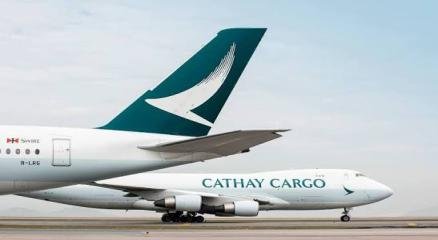
Cathay Cargo has introduced an AI-assisted screening capability designed to help customers identify potential permit and trade-control requirements earlier in the air cargo shipment process, strengthening compliance as international trade regulations become increasingly complex. The new digital capability uses artificial intelligence-assisted language analysis to assess shipment information against relevant trade-control requirements covering imports, exports and transhipments. Unlike conventional screening processes that depend largely on keyword matching, the system is designed to interpret the context of goods descriptions and identify potential links to applicable control-list requirements. The additional layer of digital screening is intended to give shippers greater visibility of regulatory obligations before cargo enters Cathay Cargo’s network. It can also help reduce the risk of shipment delays or disruptions arising from unidentified compliance requirements. However, shippers remain responsible for providing accurate and complete cargo declarations, while human oversight continues to be an integral part of the process. Cathay Cargo Director Cargo Dominic Perret said: “As global trade requirements continue to evolve, what customers value most is certainty — knowing that obligations are identified before a shipment moves, not after. Leveraging this new AI-assisted screening and clearer operational context for our frontline teams, Cathay Cargo is strengthening our ability to identify potential compliance requirements earlier, keep information accurate throughout the shipment journey, and facilitate safe, reliable and responsible cargo movement.” Alongside the AI capability, Cathay Cargo has redesigned its frontline display to present screening alerts and regulatory information more clearly. Operational teams can see why a shipment has been flagged and determine the follow-up action required, enabling them to prioritise alerts and address potential compliance issues before cargo moves through the network. The initiative builds on Cathay Cargo’s broader digitalisation and AI strategy. The carrier already uses AI-assisted technologies in areas including lithium-battery screening, predictive safety analysis and AI-enhanced CCTV at its cargo terminals. Perret added: “Through digital innovation and AI, Cathay Cargo continues to set the new industry standards that will shape the future of air cargo. The value of this enhancement is in how dense regulatory requirements are made clearer and more actionable for our people. Pairing digital intelligence with operational expertise creates better outcomes for customers, regulators and the wider air cargo community. We will continue to enhance the capability through operational feedback and compliance reviews.” As global trade controls continue to evolve, Cathay Cargo said it will further refine the screening capability through operational feedback and compliance reviews, reinforcing its focus on secure, compliant and efficient cargo movement. 𝐒𝐭𝐚𝐲 𝐓𝐮𝐧𝐞𝐝 𝐭𝐨 CARGOCONNECT 𝐟𝐨𝐫 𝐥𝐚𝐭𝐞𝐬𝐭 𝐮𝐩𝐝𝐚𝐭𝐞𝐬!

FedEx has introduced Global Trade Navigator, a new suite of digital tools designed to help businesses simplify international shipping, improve shipment data and navigate customs requirements with greater confidence. The initiative, announced on September 9, 2026, brings trade information and guidance earlier into the shipping process, helping businesses make more informed decisions and address potential clearance issues before they arise. International shipping can involve complex requirements related to customs documentation, duties, taxes, product classifications and regulatory compliance. FedEx said these challenges can affect businesses of all sizes. Its 2026 FedEx Small Business Trade Index found that 68% of small and medium-sized businesses regularly see customers surprised by duties at delivery, while 60% report losing revenue through refunds or abandoned purchases. Against this backdrop, Global Trade Navigator brings together digital capabilities covering key stages of international trade, from shipment planning and preparation to checkout, customs clearance and reporting. “International shipping requires businesses to make complex decisions long before a package begins its journey,” said Jason Brenner, senior vice president, digital portfolio, FedEx. “Building on decades of global trade expertise, Global Trade Navigator makes critical trade information and guidance more accessible to businesses as they grow internationally. The result is fewer surprises and a more predictable experience for businesses and consumers.” As part of the new offering, the FedEx Trade Planner will provide free, self-service guidance through fedex.com without requiring users to log in. Businesses can use the tool to look up Harmonized System codes, estimate duties, taxes and fees, and identify recommended documentation before creating a shipping label. FedEx is also enhancing FedEx Ship Manager, enabling customers to review product Harmonized System classifications, customs values and country-of-manufacture information. These capabilities are intended to improve the quality and completeness of shipment data before goods enter the international shipping process. For e-commerce businesses, the new FedEx Duty and Tax app on Shopify will allow merchants to display a duty and tax guarantee at checkout, giving customers greater visibility into potential import costs before completing purchases. Meanwhile, Global Trade APIs, available through the FedEx Developer Portal, will allow businesses to integrate product classifications, estimated duties and taxes, and regulatory information into their existing workflows. FedEx is also enhancing its Import Tool and Reporting capabilities, allowing customers to monitor customs clearance activity, identify required actions, manage payments and access global import and export data. The company said the tools are designed to serve a broad customer base, from small and medium-sized businesses undertaking international shipping for the first time to larger enterprises integrating trade information into established systems. The launch forms part of FedEx's wider investment in a more connected and intelligent international shipping experience aimed at helping businesses navigate cross-border trade complexity and expand globally. 𝐒𝐭𝐚𝐲 𝐓𝐮𝐧𝐞𝐝 𝐭𝐨 CARGOCONNECT 𝐟𝐨𝐫 𝐥𝐚𝐭𝐞𝐬𝐭 𝐮𝐩𝐝𝐚𝐭𝐞𝐬!

Frankfurt Airport (FRA), Europe’s leading air cargo gateway, recorded a notable increase in freight volumes during August 2026, underlining the resilience of global air cargo demand despite ongoing economic uncertainties. Operator Fraport AG reported that cargo throughput, comprising airfreight and airmail, rose by 3.2 per cent year-on-year to around 172,700 metric tonnes during the month. The growth in cargo volumes came even as passenger traffic remained broadly stable. Frankfurt Airport handled approximately 6.2 million passengers in August, reflecting marginal growth compared with the same period last year. The steady rise in freight activity highlights Frankfurt’s strategic importance as one of Europe’s key logistics and distribution hubs, connecting major manufacturing and consumer markets across the globe. Industry observers attribute the increase in cargo throughput to stronger demand from sectors such as pharmaceuticals, e-commerce, high-tech products and industrial components. Continued shifts in supply chain strategies and the need for faster transportation solutions have also supported airfreight demand across European gateways. Aircraft movements at Frankfurt Airport increased by 2.2 per cent year-on-year to nearly 41,500 take-offs and landings in August, while maximum take-off weights rose by 2.1 per cent, indicating healthy operational activity across passenger and cargo segments. Fraport’s international airport portfolio also reported positive traffic trends, reflecting improving global aviation demand. Frankfurt Airport remains a vital node in international trade flows, serving numerous freighter operators and integrated logistics providers. The latest cargo growth further reinforces the airport’s role in supporting European supply chains, particularly as businesses seek greater reliability and speed in global transportation networks. With air cargo demand expected to remain stable in the coming months, Frankfurt Airport is likely to continue benefiting from its strong infrastructure, extensive connectivity and position as one of the world’s leading freight hubs. 𝐒𝐭𝐚𝐲 𝐓𝐮𝐧𝐞𝐝 𝐭𝐨 CARGOCONNECT 𝐟𝐨𝐫 𝐥𝐚𝐭𝐞𝐬𝐭 𝐮𝐩𝐝𝐚𝐭𝐞𝐬!
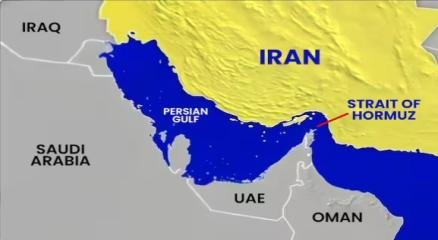
Iran is preparing to announce a new restricted maritime zone in the Gulf and a proposed international shipping corridor through the Strait of Hormuz, raising fresh concerns for global shipping, energy security and supply chains. The move comes amid heightened military tensions in the region and a sharp decline in vessel movements through the strategically vital waterway. Mohsen Rezaei, Secretary of Iran’s Supreme National Security Council, said the proposed restricted zone would begin from the point where the US blockade of Iran starts and extend into parts of the Gulf. Under the proposed arrangement, vessels entering the designated area could be placed on Iran’s sanctions list. Further details, including the exact boundaries and operating rules of the zone, are yet to be disclosed. At the same time, Tehran says it has agreed on maps for a new international maritime corridor running through Iranian and Omani waters. According to Rezaei, Iran would manage the proposed route, with the maps expected to be formally signed in the coming days. The initiative could introduce a new framework for vessel movements through the Strait of Hormuz, although its practical implementation remains unclear. The developments come as shipping activity through the Strait of Hormuz has fallen significantly. According to reports, an average of about 10 commodity vessels crossed the waterway each day over a recent 10-day period, marking the lowest level reported since May. Before the current disruption, the Strait carried roughly one-fifth of global oil supplies, underlining its importance to international energy and maritime trade. For India, the situation carries significant implications. The country imports nearly 90% of its crude oil requirements, with a substantial share sourced from Gulf producers and transported through the Strait of Hormuz. Any prolonged restriction, additional charges or uncertainty around vessel access could therefore increase freight, insurance and energy costs, while also affecting imports of LNG, LPG and petrochemical products. For global supply chains, the proposed restricted zone adds another layer of uncertainty to an already volatile maritime environment. Shipping lines, tanker operators, energy traders and cargo owners are likely to closely monitor the final route maps, sanctions framework and navigational arrangements before determining their operational strategies. 𝐒𝐭𝐚𝐲 𝐓𝐮𝐧𝐞𝐝 𝐭𝐨 CARGOCONNECT 𝐟𝐨𝐫 𝐥𝐚𝐭𝐞𝐬𝐭 𝐮𝐩𝐝𝐚𝐭𝐞𝐬!
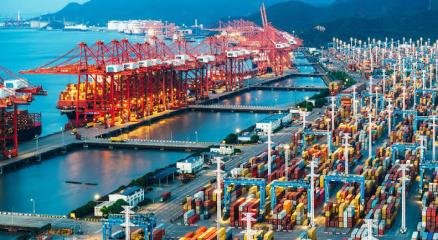
China’s Ningbo-Zhoushan Port has overtaken Singapore to become the world’s second-busiest container port during the first half of 2026, according to the latest container throughput rankings compiled by shipping analyst Alphaliner. The shift marks a notable change in the global port hierarchy, although the margin between the two gateways remains narrow. Ningbo-Zhoushan handled 22.90 million twenty-foot equivalent units (TEUs) between January and June 2026, registering an 8.8% year-on-year increase. Singapore, meanwhile, processed 22.74 million TEUs, up 4.7% from the corresponding period last year. The difference of roughly 160,000 TEUs highlights the increasingly competitive race for the second position. Shanghai retained its position as the world’s busiest container port, handling approximately 28.74 million TEUs in the first half of 2026, an increase of 6.2% year on year. The latest ranking therefore places two Chinese ports at the top, with Ningbo-Zhoushan moving ahead of Singapore for the first time over a complete six-month reporting period. Jintang Expansion Strengthens Ningbo-Zhoushan Ningbo-Zhoushan’s stronger growth has been supported by capacity expansion and improved international connectivity. The second phase of the Jintang container hub was completed in July 2026, bringing all five operational container berths within the expanded development. During the first half of the year, Jintang added 17 international shipping routes, while its container volumes increased by 23.4%. The expansion is expected to strengthen the port complex’s ability to accommodate rising cargo demand and serve an expanding network of global trade lanes. The port has experienced significant growth over the past two decades, crossing 20 million TEUs in 2015 and 30 million TEUs in 2021. In 2025, it exceeded 40 million TEUs for the first time, handling 43.87 million TEUs for the full year. Singapore remained ahead in the annual ranking, recording 44.66 million TEUs. Competition Expected to Remain Close Despite Ningbo-Zhoushan’s first-half lead, Singapore remains a formidable competitor. Alphaliner has indicated that Ningbo-Zhoushan’s growth could moderate during the second half of 2026, leaving open the possibility of Singapore reclaiming the second position. For global supply chains, the development underscores how port investments, shipping connectivity, cargo generation and changing trade patterns are reshaping the competitive landscape. With only a small volume separating the two ports, the battle for the world’s second-busiest container gateway is likely to remain closely watched through the remainder of 2026. 𝐒𝐭𝐚𝐲 𝐓𝐮𝐧𝐞𝐝 𝐭𝐨 CARGOCONNECT 𝐟𝐨𝐫 𝐥𝐚𝐭𝐞𝐬𝐭 𝐮𝐩𝐝𝐚𝐭𝐞𝐬!
The Indian government is developing a comprehensive customs playbook covering 100 high-value imported commodities to streamline the country's faceless customs regime, reduce assessment disputes, and enable businesses to access tariff concessions under India's expanding network of Free Trade Agreements (FTAs) more efficiently. The initiative forms part of the next phase of customs reforms aimed at improving trade facilitation and enhancing the ease of doing business. According to officials familiar with the development, the proposed framework will introduce detailed Standard Operating Procedures (SOPs) for each identified product category. These SOPs will provide commodity-specific and origin-specific assessment guidelines, ensuring uniform interpretation of customs rules across ports and customs formations operating under the faceless assessment system. A key objective of the initiative is to simplify the process of claiming preferential tariff benefits available under India's recently concluded FTAs. The playbook is expected to minimise inconsistencies in customs assessments, reduce clearance delays, and lower the number of queries raised during the processing of Bills of Entry. As part of the proposed reforms, customs offi cers handling faceless assessments will be encouraged to limit queries on each Bill of Entry to a maximum of three. The framework will also introduce greater accountability by tracking assessment timelines and holding officers responsible for unnecessary delays. These measures are intended to improve consistency in decision-making while making import clearances more predictable for businesses. The government introduced the faceless customs assessment mechanism to eliminate physical interaction between importers and customs officials, improve transparency, and create a technology-driven clearance process. While the system has strengthened digital processing, businesses have continued to report varying interpretations of customs provisions across assessment groups, particularly in relation to Rules of Origin and eligibility for FTA benefits. According to experts, a standardised assessment framework will help address these challenges by providing clear guidance for customs officers and importers alike. The move is also expected to strengthen confidence among businesses seeking to leverage preferential market access under India's growing portfolio of trade agreements, while supporting faster cargo movement, reducing transaction costs, and improving overall supply chain efficiency. 𝐒𝐭𝐚𝐲 𝐓𝐮𝐧𝐞𝐝 𝐭𝐨 CARGOCONNECT 𝐟𝐨𝐫 𝐥𝐚𝐭𝐞𝐬𝐭 𝐮𝐩𝐝𝐚𝐭𝐞𝐬!

CEVA Logistics and BYD have strengthened their long-standing collaboration by signing a new three-year Memorandum of Understanding (MOU), aimed at enhancing global automotive logistics operations and supporting the electric vehicle (EV) manufacturer’s accelerating international expansion. The agreement marks a significant step forward in the strategic relationship between the two companies and underscores the growing importance of resilient, sustainable, and integrated supply chains in the automotive sector. Signed in Marseille, France, the new MOU broadens the scope of cooperation between CEVA Logistics and BYD, building on an existing partnership that has supported the automaker’s global growth ambitions. The agreement will focus on delivering end-to-end logistics solutions across multiple regions, leveraging CEVA’s extensive logistics network and operational expertise alongside BYD’s expanding footprint in more than 100 countries across six continents. Under the expanded partnership, the companies will collaborate on key logistics functions, including route planning, capacity management, warehousing and distribution, customs coordination, localized operations, and comprehensive delivery management. The agreement also places a strong emphasis on developing low-carbon logistics solutions, reflecting both companies’ commitment to sustainability and supply chain decarbonization. The enhanced partnership comes at a time when BYD is rapidly scaling its global manufacturing and distribution capabilities to meet rising demand for electric vehicles. As automotive supply chains become increasingly complex, logistics providers are expected to play a critical role in ensuring operational continuity, inventory visibility, and efficient cross-border movement of vehicles and components. The collaboration is designed to address these challenges through greater supply chain integration and localized logistics support. In recognition of CEVA’s performance and service reliability, BYD also presented the logistics provider with its “Best Carrier of the Year 2026” award during the signing ceremony. The recognition highlights CEVA’s contribution to supporting BYD’s automotive logistics requirements and its ability to deliver agile, customer-focused logistics solutions in a rapidly evolving market. The latest agreement further reinforces the growing collaboration between logistics providers and EV manufacturers as the industry seeks scalable, sustainable, and resilient supply chain models. With global EV demand continuing to rise, partnerships such as the one between CEVA Logistics and BYD are expected to play a pivotal role in enabling efficient vehicle distribution and supporting international market expansion. 𝐒𝐭𝐚𝐲 𝐓𝐮𝐧𝐞𝐝 𝐭𝐨 CARGOCONNECT 𝐟𝐨𝐫 𝐥𝐚𝐭𝐞𝐬𝐭 𝐮𝐩𝐝𝐚𝐭𝐞𝐬!
The peace agreement between the United States and Iran could prove to be a significant catalyst for India’s economic growth, trade expansion and supply chain resilience. For a country that relies on imported energy and maintains deep commercial ties with the Gulf region, the easing of geopolitical tensions in West Asia is expected to deliver benefits across logistics, manufacturing, exports and infrastructure sectors. One of the most immediate gains for India is the decline in crude oil prices. Following the announcement of the peace framework, global oil benchmarks fell sharply amid expectations of increased Iranian oil supply and the reopening of the Strait of Hormuz, one of the world’s most critical maritime energy corridors. Lower oil prices could significantly reduce India’s import bill, ease inflationary pressures and improve the country’s current account balance. Analysts estimate that sustained lower crude prices could save India billions of dollars annually in energy imports. For the logistics and supply chain sector, stability in the Middle East is equally important. The Strait of Hormuz handles a substantial share of global oil and gas shipments, including a large portion of India’s energy imports. During the recent conflict, shipping routes faced disruptions, insurance premiums rose and freight costs increased. A return to normal maritime operations is expected to improve vessel availability, reduce transit risks and bring greater predictability to supply chains. Indian exporters are also preparing for a rebound in demand across Gulf Cooperation Council (GCC) markets. Several sectors including engineering goods, construction materials, food products, consumer goods and project services have significant exposure to the Middle East. With businesses in the region resuming investment plans and infrastructure projects, Indian companies are strengthening production schedules and securing shipping capacity to capitalize on renewed opportunities. The peace agreement could further strengthen India’s strategic connectivity ambitions. Improved regional stability may enhance the prospects of trade corridors linking India with the Middle East and Europe while also supporting the development of key infrastructure projects such as Iran’s Chabahar Port. Enhanced connectivity can reduce logistics costs, improve market access and diversify trade routes for Indian businesses. Financial markets have already responded positively to the easing tensions. Indian equities have gained amid expectations of lower energy costs and stronger trade flows, with sectors such as infrastructure, ports, aviation and exports expected to benefit the most. While the agreement remains subject to successful implementation, its potential impact on India is substantial. Lower energy costs, smoother trade flows, improved maritime security and renewed economic activity across West Asia could collectively accelerate India’s growth trajectory and strengthen its position as a leading global trade and logistics hub. 𝐒𝐭𝐚𝐲 𝐓𝐮𝐧𝐞𝐝 𝐭𝐨 CARGOCONNECT 𝐟𝐨𝐫 𝐥𝐚𝐭𝐞𝐬𝐭 𝐮𝐩𝐝𝐚𝐭𝐞𝐬!
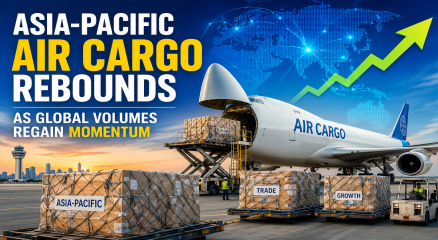
The global air cargo market is showing renewed resilience, with Asia-Pacific emerging as the key driver behind a rebound in worldwide freight tonnages after months of volatility and holiday-led slowdowns. According to recent data from WorldACD Market Data, cargo volumes from the region surged sharply in mid-May, helping lift global air freight demand despite persistent geopolitical and economic uncertainties. The recovery follows a seasonal dip caused by the “Golden Week” holidays in China and Japan, along with Children’s Day celebrations in South Korea. During week 20 of the year, chargeable weight from Asia-Pacific origins rose by 11 percent week-on-week, restoring shipment levels to those seen before the holiday lull. China and Hong Kong recorded notable gains, while Japan and South Korea posted particularly strong recoveries as manufacturing and export activity resumed. The resurgence in Asia-Pacific volumes played a decisive role in pushing worldwide air cargo tonnages up by around 3 percent week-on-week. Industry analysts noted that without the rebound from Asia-Pacific, global freight growth would have remained largely subdued. At the same time, cargo flows from Europe and the Americas weakened due to seasonal disruptions and softer demand conditions. Despite the increase in shipments, global spot rates remained relatively stable, signalling a more balanced market compared with the sharp pricing fluctuations witnessed earlier this year. Average worldwide spot rates hovered around US$3.67 per kilogram, while contract rates edged slightly higher due to improved demand from North America. Capacity trends also reflected cautious optimism. Worldwide air cargo capacity increased marginally, supported mainly by Asia-Pacific and Middle East-South Asia routes. However, overall global capacity still remains below pre-conflict levels due to disruptions linked to geopolitical tensions in the Gulf region. Airlines continue to face operational challenges as security concerns and rerouted services affect network planning and aircraft utilisation. Another positive development for carriers has been the moderation in jet fuel prices. Lower fuel costs have helped ease pressure on operating margins and reduced the likelihood of significant freight rate spikes in the near term. Even so, fuel prices remain elevated compared to last year, keeping cost management high on the agenda for airlines and freight operators. Industry observers believe the latest rebound highlights the central role of Asia-Pacific in global supply chains, particularly as manufacturers and retailers continue to rely on air freight for time-sensitive shipments, e-commerce flows and high-value goods. However, market sentiment remains cautious amid ongoing trade policy shifts and changing cargo patterns between Asia and North America. As global supply chains continue to stabilise, the coming months will be closely watched for signs of sustained demand growth, especially from Asia-Pacific export markets that remain critical to the health of the international air cargo industry. 𝐒𝐭𝐚𝐲 𝐓𝐮𝐧𝐞𝐝 𝐭𝐨 https://cargoconnect.co.in/ 𝐟𝐨𝐫 𝐥𝐚𝐭𝐞𝐬𝐭 𝐮𝐩𝐝𝐚𝐭𝐞𝐬!Top of Form

India and Italy have elevated their bilateral relationship to a “Special Strategic Partnership,” marking a significant step toward stronger maritime cooperation, trade connectivity, and resilient global supply chains. The announcement followed high-level talks between Prime Minister Narendra Modi and Italian Prime Minister Giorgia Meloni in Rome, where both leaders reaffirmed their commitment to advancing the India-Middle East-Europe Economic Corridor (IMEC) and deepening collaboration across strategic sectors. For the logistics and shipping industry, the development signals growing alignment between two major economies seeking to diversify trade routes and build more secure maritime supply chains amid geopolitical uncertainty. IMEC, first announced during the G20 Summit in 2023, is envisioned as a transformative trade corridor connecting India with Europe through the Middle East via integrated rail and maritime networks. Italy’s geographic position in the Mediterranean is expected to make it a critical European gateway for the initiative. The two countries reviewed progress under the India-Italy Joint Strategic Action Plan 2025-2029 and agreed to intensify cooperation in ports, shipping, logistics infrastructure, advanced manufacturing, and maritime technologies. Both governments emphasized the importance of resilient and sustainable connectivity corridors to support global commerce and reduce vulnerabilities in traditional supply chain routes. A major outcome of the Rome meeting was the announcement of a target to increase bilateral trade to €20 billion by 2029. Industry observers believe this could create new opportunities for freight movement, warehousing, multimodal logistics, and industrial collaboration between Indian and European companies. Discussions also covered defence manufacturing, critical minerals, clean energy, innovation, and digital technologies — all sectors closely linked to modern supply chain ecosystems. The maritime dimension of the partnership is particularly noteworthy. Both nations stressed the need for secure sea lanes and stronger cooperation in the Indo-Mediterranean region, reflecting the growing strategic importance of maritime trade networks. Analysts view the India-Italy partnership as part of a broader effort by India and European nations to strengthen economic resilience and reduce dependence on concentrated trade corridors. Italy’s expertise in shipbuilding, maritime engineering, and port management could complement India’s expanding logistics and port modernisation initiatives under programmes such as Sagarmala and PM Gati Shakti. The collaboration may also accelerate investments in smart ports, green shipping technologies, and digital freight systems. With IMEC gaining traction and India-EU trade negotiations progressing, the India-Italy strategic partnership is increasingly being viewed as a long-term framework that could reshape trade flows between Asia and Europe. For the global shipping and logistics industry, the partnership represents more than diplomacy — the emergence of a new connectivity architecture designed to support faster, diversified, and future-ready supply chains. 𝐒𝐭𝐚𝐲 𝐓𝐮𝐧𝐞𝐝 𝐭𝐨 https://cargoconnect.co.in/ 𝐟𝐨𝐫 𝐥𝐚𝐭𝐞𝐬𝐭 𝐮𝐩𝐝𝐚𝐭𝐞𝐬!
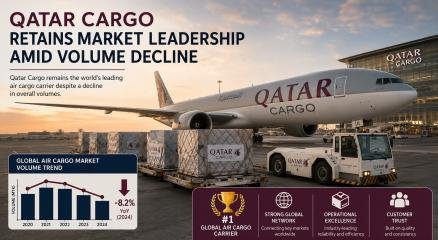
Qatar Airways Cargo has retained its position as the world’s leading air cargo carrier despite a decline in freight volumes and revenues during the latest financial year, underscoring the resilience of its global network and diversified cargo strategy. The carrier’s performance reflects the broader challenges facing the airfreight industry, including geopolitical disruptions, softening demand, and volatile operating conditions. According to the airline’s latest financial results, cargo revenues fell by 9.6% year-on-year to approximately $4.45 billion for the financial year ending March 2026. Freight volumes also declined as escalating tensions in the Middle East disrupted regional airspace and impacted trade flows during the closing months of the fiscal period. Despite the downturn, Qatar Airways Cargo maintained its leadership position in the global air cargo market, supported by its expansive international footprint and strong operational connectivity through Hamad International Airport in Doha. The airline transported around 1.43 million metric tonnes of freight during the year, accounting for an estimated 12% share of the global air cargo market. Industry analysts note that the carrier’s continued dominance is tied to long-term investments in fleet modernization, specialized cargo solutions, and digital transformation initiatives. Qatar Airways Cargo has steadily expanded its portfolio of premium logistics products targeting pharmaceuticals, perishables, e-commerce, aerospace, and semiconductor shipments—segments that continue to generate demand despite broader market volatility. The airline has also strengthened its operational capabilities through investments in dedicated cargo infrastructure and specialized handling facilities. Its Doha hub remains one of the most strategically positioned gateways linking Asia, Europe, Africa, and the Americas, enabling the carrier to maintain schedule reliability and transit efficiency even during periods of disruption. The broader air cargo sector, however, continues to face uncertainty. Rising fuel prices, ongoing geopolitical instability, and shifts in global trade patterns are placing pressure on yields across the industry. Several airlines have reported softer freight demand in 2026 as capacity growth outpaces market expansion. The airline appears focused on sustaining long-term growth through network expansion and specialised logistics services. The company has continued to invest in temperature-controlled facilities, live-animal transport, and high-value cargo handling solutions while deepening partnerships with freight forwarders and logistics providers. The latest results reinforce Qatar Airways Cargo’s ability to navigate cyclical market pressures while preserving its competitive edge in a rapidly evolving global airfreight landscape. As supply chains continue to adapt to geopolitical and economic shifts, the carrier’s scale, connectivity, and specialised service offerings are expected to remain key differentiators in the international cargo market. 𝐒𝐭𝐚𝐲 𝐓𝐮𝐧𝐞𝐝 𝐭𝐨 https://cargoconnect.co.in/ 𝐟𝐨𝐫 𝐥𝐚𝐭𝐞𝐬𝐭 𝐮𝐩𝐝𝐚𝐭𝐞𝐬!
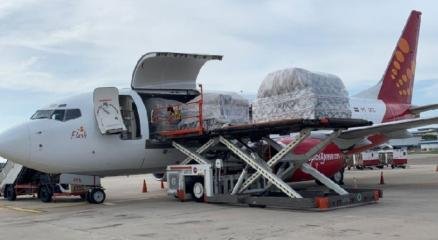
India’s air cargo sector has achieved a major milestone, handling a record 3.72 million metric tonnes (MMT) in FY2024-25, underlining the country’s growing prominence in global trade and logistics. The achievement marks a 47 percent rise compared to 2.53 MMT recorded a decade ago in FY2014-15, reflecting sustained investments in aviation infrastructure, policy reforms, and regional connectivity initiatives. The sharp rise in cargo volumes comes at a time when India is positioning itself as a strategic logistics hub for Asia-Pacific trade flows. Industry observers note that the growth has been supported by expanding e-commerce demand, rising pharmaceutical exports, perishables movement, and increasing integration of Indian manufacturers into global supply chains. Cargo operations are now active across 74 airports nationwide, significantly broadening the country’s air freight network. The government, along with the Airports Authority of India, has accelerated investments in warehousing capacity, cargo terminal modernisation, and multimodal logistics integration to support the sector’s expansion. Major infrastructure projects are expected to further strengthen capacity over the next few years. Upcoming greenfield airports at Noida International Airport and Navi Mumbai International Airport are developing large-scale cargo handling facilities aimed at reducing congestion at existing metro airports and improving regional cargo distribution. At the same time, AAI Cargo Logistics and Allied Services Company (AAICLAS) is modernising terminals at strategic locations including Srinagar, Dehradun, Dibrugarh, Dimapur, Vijayawada, and Jodhpur. Policy support has also emerged as a key growth enabler. One of the long-standing challenges for Tier-II and Tier-III airports has been the cost burden associated with customs operations. To address this issue, the government has introduced a reimbursement mechanism for customs deployment expenses at 27 airports, including 15 dedicated cargo terminals, during the 2024-27 period. The initiative is expected to improve the financial viability of smaller cargo gateways and promote decentralised trade growth across regional India. The momentum appears set to continue. Official figures indicate that India had already handled 2.98 MMT of air cargo by December of the current fiscal year, placing the sector on course for another record performance. Globally, air cargo demand also remains resilient. According to the International Air Transport Association, worldwide air cargo volumes touched record levels in 2025, supported by strong international trade activity and growing cross-border e-commerce. For India, the latest milestone signals more than just rising freight volumes. It reflects the country’s broader ambition to become a globally competitive logistics and manufacturing hub backed by modern infrastructure, policy-driven reforms, and stronger regional connectivity. 𝐒𝐭𝐚𝐲 𝐓𝐮𝐧𝐞𝐝 𝐭𝐨 https://cargoconnect.co.in/ 𝐟𝐨𝐫 𝐥𝐚𝐭𝐞𝐬𝐭 𝐮𝐩𝐝𝐚𝐭𝐞𝐬!

India has intensified its call for secure maritime trade routes amid escalating tensions in West Asia, warning that disruptions in key shipping corridors such as the Strait of Hormuz and the Red Sea could severely impact global supply chains, energy flows, and trade stability. Speaking at the BRICS foreign ministers’ meeting in New Delhi, External Affairs Minister Subrahmanyam Jaishankar stressed that “safe and unimpeded maritime flows” are essential for global economic well-being. The statement comes as geopolitical tensions surrounding Iran and the wider Gulf region continue to rattle international shipping markets and logistics networks. For the supply chain and logistics sector, the concerns are significant. The Strait of Hormuz handles nearly a fifth of the world’s oil trade and remains one of the most strategically important maritime chokepoints globally. Any prolonged disruption could trigger sharp increases in freight costs, marine insurance premiums, bunker fuel prices, and cargo transit delays across Asia, Europe, and Africa. Industry analysts warn that container shipping lines and tanker operators are already reassessing route risks as attacks on vessels and regional instability threaten operational continuity. Reports of reduced tanker traffic and heightened security risks in the Gulf have also raised fears of inventory shortages and inflationary pressures, particularly for energy-dependent economies such as India. India’s intervention at the BRICS forum also reflects broader concerns among emerging economies over the fragility of global supply chains amid geopolitical conflict. The expanded BRICS grouping — which now includes major energy producers and trade economies such as the UAE, Iran, Egypt, and Indonesia — is increasingly positioning itself as a platform to discuss supply chain resilience, trade continuity, and economic security. In parallel, India has reportedly strengthened maritime monitoring and energy security measures to safeguard cargo movement and critical imports. The country’s emphasis on uninterrupted sea lanes underscores the growing convergence between geopolitics and logistics planning, with supply chain resilience now emerging as a central pillar of global trade diplomacy.
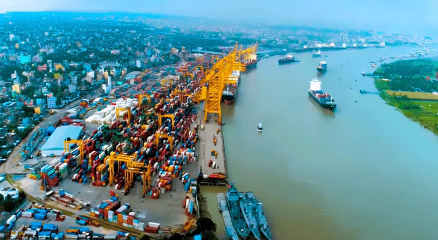
India’s two largest container gateways, Mundra and Nhava Sheva, are facing mounting congestion as rising cargo volumes, truck driver shortages and rerouted shipments from the Middle East strain operations across the country’s logistics network. Shipping lines and logistics operators are reporting worsening turnaround times at both ports, with vessel delays averaging nearly two and a half days and some unscheduled ships waiting up to five days for berthing. The disruptions are slowing cargo movement, tightening yard space and forcing carriers to make last-minute operational changes. According to industry reports, a shortage of truck drivers has become a major bottleneck for container transfers between terminals and inland transport hubs. The issue has reduced the pace of cargo evacuation from ports, adding pressure on already crowded container yards. Terminal operators have intermittently restricted gate access to control container inflow, while export gate schedules continue to shift frequently. These changes are complicating truck planning and increasing uncertainty for exporters and freight forwarders. The congestion is being intensified by cargo diversions linked to disruptions in the Middle East, particularly around Gulf trade routes. Shipping lines have increasingly redirected transshipment cargo to Indian ports as alternatives to facilities in the Persian Gulf, sharply increasing container volumes in recent weeks. The pressure has begun affecting carrier schedules. Some shipping companies are rerouting vessels between terminals at short notice to avoid yard congestion. Danish shipping giant Maersk recently shifted several sailings from its regular terminal at Nhava Sheva to PSA Mumbai after facing space constraints and a growing container backlog. Industry stakeholders say these sudden terminal changes are creating operational and financial challenges for shippers, including higher handling costs and difficulties coordinating customs clearance and inland transportation. The latest disruption comes at a time when India has been positioning itself as a major global manufacturing and logistics hub. Over the past decade, the country has expanded port capacity, improved freight corridors and modernised customs processes to strengthen supply chain efficiency. However, the current congestion highlights the vulnerability of port infrastructure during periods of sudden trade realignment and geopolitical disruption. Logistics experts warn that prolonged delays could increase freight costs, extend delivery timelines and place additional pressure on exporters already dealing with volatile global shipping conditions. Follow CARGOCONNECT for more such updates.
The diversification process by Apple continues to progress as India becomes one of the centers for manufacturing operations. Based on an analysis by Smart Analytics Global (SAG), the percentage share of Indian manufacturing of iPhones has increased from 14% in 2024 to 23% in 2025 and further to 28% by 2026, whereas China’s share has decreased from 83% to 74% within the same timeframe. As Apple continues to lower its reliance on China, India is all set to emerge as the major assembly hub for 28 percent of all iPhones exported around the world by 2026, compared to just 23 percent in the prior year. This change is due to the company's overall strategy of spreading its manufacturing operations in order to mitigate potential tariff risks and geopolitical risks, in addition to creating a more flexible manufacturing network beyond China. Based on the estimates of Smart Analytics Global (SAG), China's share in global iPhone production dropped from 83% in 2024 to 74% in 2025, while India's share increased from 14% in 2024 to 23% in 2025. Estimates provided by another market research firm, Counterpoint Research, indicate that India's share in global iPhone manufacturing could increase to approximately 26% in 2026 from 23% in 2025. As per SAG, “India will account for the manufacture of 28 percent of iPhones shipped globally in 2026, rising from 23 percent in 2025. This growth will be fueled by the ongoing diversification of Apple outside China and capacity build-up at existing manufacturers in India like Tata Electronics,” said Abhilash Kumar, an analyst at Smart Analytics Global. According to Tarun Pathak, research director at Counterpoint Research, “Apple's manufacturing partners have substantially increased their manufacturing capacities and assembly lines in India. They have also diversified their product portfolio made in India.” He further stated that the increase in manufacturing capacity of Tata Electronics is another factor aiding the growth. Apple has managed to localize production substantially in India through manufacturers like Foxconn and Tata Electronics. The recent takeover of Wistron and Pegatron in India by the Tata Group represents a huge step forward in Apple’s localization efforts in India. At present, India is assembling a larger number of iPhones, even the latest versions, and has become an important source of exports, targeting countries like the US and European nations. Over the past five years, Apple has manufactured iPhones worth almost $70 billion in India using its PLI scheme, where around $51 billion, or almost 73% of all iPhones manufactured, were exported from India. Moreover, iPhones have become the most exported goods from India during the previous financial year. India has become the biggest beneficiary of Apple’s changing supply chain. From initially assembling iPhones on a smaller scale, it has grown to become a manufacturing cluster for iPhones through government incentives, increased manufacturing capabilities, and the growing presence of suppliers. Several of the most important suppliers and manufacturers for Apple are still highly entrenched within China, allowing the country to enjoy an unrivaled capacity and adaptability when it comes to managing mass-scale productions and product shifts. For more such news and updates, visit CARGOCONNECT.
Shadowfax is significantly expanding its quick commerce infrastructure, announcing plans to scale its dark store network from 15 facilities to 100 by FY27. The move underscores the company’s growing focus on hyperlocal deliveries, same-day fulfilment, and direct-to-consumer (D2C) logistics as competition intensifies in India’s fast-evolving quick commerce ecosystem. The Bengaluru-based company plans to add 85 new dark stores over the next fiscal year, targeting metro cities with delivery radiuses of approximately seven kilometres and fulfilment timelines of around 30 minutes. The expansion is expected to support rising demand from vertical quick commerce platforms and D2C brands that increasingly rely on third-party logistics (3PL) partners for rapid deliveries. According to company executives, vertical marketplaces are emerging as a profitable segment because of their dependence on outsourced logistics infrastructure rather than captive fulfilment networks. Shadowfax believes this trend creates a strong opportunity for scalable 3PL-led quick commerce models. The dark store expansion will account for nearly 10% of Shadowfax’s planned capital expenditure of ₹180–190 crore in FY27. The company is simultaneously strengthening its automation and artificial intelligence capabilities to improve operational efficiency. AI-led demand forecasting, automated slotting, and smarter sorting centre operations are expected to reduce overhead costs while accelerating breakeven timelines for new facilities. Shadowfax’s aggressive expansion comes on the back of strong financial performance. The company reported a consolidated net profit of ₹55.8 crore in Q4 FY26, compared to a net loss of ₹9.9 crore during the same period last year. Revenue from operations surged 73.6% year-on-year to ₹1,237 crore, reflecting growing order volumes and increased adoption of quick commerce delivery services. Founded in 2015, Shadowfax has evolved into one of India’s largest logistics and last-mile delivery networks, serving over 2,500 cities and more than 15,000 pincodes. The company currently handles millions of shipments daily through a technology-driven delivery ecosystem that supports e-commerce, grocery, hyperlocal, and D2C brands. Industry analysts believe the dark store expansion reflects a broader shift within India’s logistics sector, where speed, proximity-based fulfilment, and automated operations are becoming central to supply chain competitiveness. As quick commerce adoption accelerates beyond groceries into categories such as fashion, electronics, and personal care, logistics providers like Shadowfax are positioning themselves as critical enablers of ultra-fast retail fulfilment. 𝐒𝐭𝐚𝐲 𝐓𝐮𝐧𝐞𝐝 𝐭𝐨 https://cargoconnect.co.in/ 𝐟𝐨𝐫 𝐥𝐚𝐭𝐞𝐬𝐭 𝐮𝐩𝐝𝐚𝐭𝐞𝐬!
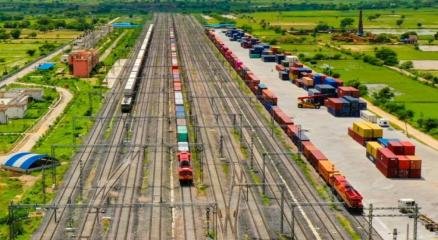
India’s Dedicated Freight Corridors (DFCs) are rapidly reshaping the country’s logistics landscape, with the Western Dedicated Freight Corridor (WDFC) between Dadri and Jawaharlal Nehru Port Authority (JNPA) emerging as a game-changing infrastructure project for supply chains and multimodal freight movement. Designed exclusively for cargo operations, the corridor is significantly reducing transit times, improving reliability, and easing congestion on conventional rail routes. Stretching nearly 1,500 km from Dadri in Uttar Pradesh to JNPA near Mumbai, the corridor forms the backbone of India’s western logistics artery, connecting manufacturing centres, inland container depots, industrial clusters, and ports. With dedicated tracks for freight trains, the network allows uninterrupted cargo movement at higher average speeds, eliminating delays caused by mixed passenger and freight operations. One of the biggest outcomes has been a sharp reduction in transit time. Freight movement between Dadri and JNPA that traditionally took close to 72 hours on congested rail routes is now being completed in nearly half the time, improving turnaround efficiency for exporters, importers, and logistics operators. Industry stakeholders believe the reduction in transit duration will strengthen India’s competitiveness in global trade and support the government’s target of lowering logistics costs as a percentage of GDP. The DFC network has also enabled the operation of longer and heavier freight trains, including double-stack container services on electrified routes. This has increased carrying capacity while lowering per-unit transportation costs. According to sector estimates, rail freight on dedicated corridors is considerably more energy-efficient and environmentally sustainable than road transport, aligning with India’s broader decarbonisation goals. Beyond operational efficiency, the corridors are catalysing the growth of integrated logistics ecosystems. Regions such as Dadri, Greater Noida, and Jewar are witnessing accelerated development of multimodal logistics parks, warehousing zones, and industrial hubs due to their strategic connectivity with both the Eastern and Western DFCs. The emerging “rail-road-air” logistics triangle around the National Capital Region is expected to attract substantial investments in manufacturing and distribution infrastructure. The Dedicated Freight Corridor Corporation of India (DFCCIL) has reported rising freight train volumes on the operational stretches, indicating growing industry adoption. The completion of key links on the western corridor is expected to further enhance throughput and reduce dependency on road transport for long-haul cargo. Analysts say the dedicated rail network could become central to India’s ambition of creating faster, greener, and more resilient supply chains. As India continues investing in additional freight corridors across the country, the success of the Dadri-JNPA route demonstrates how infrastructure modernisation can directly influence trade efficiency, logistics performance, and industrial growth. 𝐒𝐭𝐚𝐲 𝐓𝐮𝐧𝐞𝐝 𝐭𝐨 https://cargoconnect.co.in/ 𝐟𝐨𝐫 𝐥𝐚𝐭𝐞𝐬𝐭 𝐮𝐩𝐝𝐚𝐭𝐞𝐬
In a strategic warehousing move, the South Eastern Coalfields Limited (SECL), the second largest coal-producing subsidiary of Coal India Limited, has signed a Memorandum of Understanding (MoU) with Central Warehousing Corporation (CWC) for collaboration in coal logistics, railway rake provisioning under GPWIS and similar schemes, and integrated transportation services. Guided by the Union Ministry of Coal, SECL is rapidly working to improve India’s energy security and coal logistics infrastructure. The company is taking steps to boost coal evacuation efficiency and ensure a steady fuel supply to essential sectors. This partnership with CWC is a significant move in that direction. The goal of the partnership with CWC is to strengthen SECL’s coal evacuation capabilities by providing reliable and efficient rail logistics solutions to meet the rising demand from the power, steel, cement, and other sectors. The MoU outlines collaboration in various areas, including dedicated railway rake operations, integrated coal transportation solutions, multimodal logistics, first-mile and last-mile connectivity, and the deployment of digital systems for logistics monitoring and operational efficiency. Under the agreed framework, both organizations will explore provisioning and operation of GPWIS and equivalent racks, integrated rail logistics services, and long-term transportation solutions aimed at improving dispatch efficiency and reducing logistical obstacles. The MoU was signed in the presence of Harish Duhan, Chairman-cum-Managing Director of SECL, and Santosh Sinha, Managing Director of CWC. Functional Directors and senior officials from SECL, as well as representatives from CWC, attended the signing ceremony. SECL plays a vital role in meeting the country's growing coal demand. In the current financial year 2026-27, Coal India Limited has already surpassed the 100 million tonne production mark, with SECL contributing more than 26.8 million tonnes. Central Warehousing Corporation (CWC), a Navaratna Central Public Sector Enterprise under the Government of India, is a leader in integrated logistics and warehousing services. It has extensive experience in rail-linked cargo movement and multimodal transportation solutions. For more such news and updates, visit CARGOCONNECT.