
Loading...
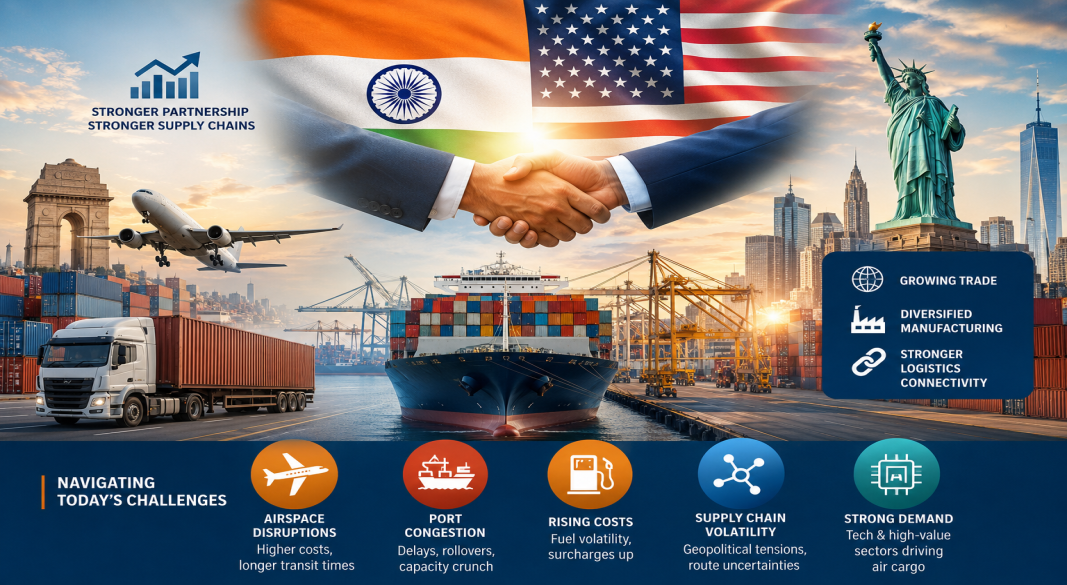
Growing economic and strategic cooperation between India and the United States could create new freight opportunities across global supply chains, even as logistics operators continue to face disruptions linked to geopolitical tensions, port congestion and rising transportation costs.
According to Dimerco’s latest Asia Pacific Freight Report, strengthening trade ties between New Delhi and Washington are expected to support long-term cargo growth by encouraging greater investment, manufacturing diversification and expanded logistics connectivity. The company said India is increasingly being viewed as an alternative sourcing and production base as businesses seek to reduce dependence on China and diversify supply chains.
The report comes at a time when both countries are deepening discussions on trade cooperation, market access and supply chain resilience. Industry observers believe stronger bilateral engagement could lead to increased movement of goods across sectors including electronics, pharmaceuticals, engineering products, textiles and consumer goods.
Despite the longer-term growth outlook, India’s logistics sector is facing immediate operational challenges. Dimerco noted that airlines continue to reroute or operate cautiously around Middle East airspace, resulting in longer transit times and higher air freight costs on routes to Europe and North America. The situation has tightened capacity and added pressure to regional supply chains.
On the maritime side, congestion at Nhava Sheva Port remains a major concern for exporters and importers. The report highlighted prolonged gate delays, trailer shortages, export cargo rollovers and extended delivery timelines, all of which are affecting cargo movement and supply chain reliability.
Global shipping markets are also dealing with continued volatility driven by fuel price fluctuations, geopolitical uncertainty and operational disruptions. According to Dimerco, concerns over instability in the Gulf region have prompted some shippers to move cargo earlier than planned in an effort to avoid potential disruptions and rising transportation costs. This frontloading activity has tightened vessel utilisation and contributed to higher ocean freight rates.
Carriers are responding by adjusting bunker surcharges more frequently, with some shipping lines moving from quarterly to monthly revisions to reflect changing fuel costs. The report noted that these developments are making freight planning more difficult for shippers managing international supply chains.
Across Asia-Pacific, shipping capacity remains relatively stable overall, although congestion in India and parts of Southeast Asia is affecting schedule reliability ahead of the traditional peak shipping season. Delays at ports and transshipment hubs are also creating bottlenecks as cargo volumes shift across regional trade lanes.
Air freight markets are facing a separate set of pressures. Jet fuel shortages in some regions have forced airlines to reduce cargo payloads or deploy smaller aircraft, limiting available capacity. Demand from semiconductor, artificial intelligence and high-tech manufacturing sectors continues to support air cargo volumes, particularly on routes connecting Asia with the United States and Europe.
For logistics providers, freight forwarders and exporters, the evolving India–US trade relationship presents a significant long-term growth opportunity. However, near-term supply chain performance will remain closely tied to geopolitical developments, transportation capacity and the ability of logistics networks to manage ongoing disruptions across global trade corridors.
Follow CARGOCONNECT for more such updates.
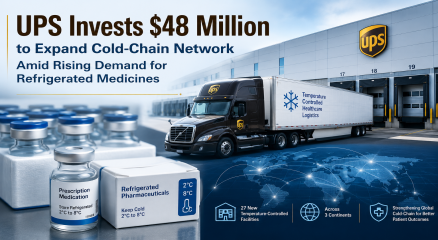
The rapid growth of temperature-sensitive pharmaceuticals, particularly GLP-1 weight-loss and diabetes treatments, is prompting global logistics providers to strengthen their cold-chain capabilities. In response to this trend, UPS has announced a $48 million investment to expand its temperature-controlled logistics infrastructure across key international markets. The company is developing 27 specialised cross-docking and storage facilities across North America, Europe, and Asia. These facilities are designed to support the safe movement of medicines and healthcare products that require strict temperature management throughout transportation and handling. The expansion comes at a time when demand for refrigerated drugs such as Novo Nordisk’s Wegovy and Ozempic continues to surge globally. Since these medications must remain within controlled temperature ranges from manufacturing to patient delivery, pharmaceutical companies are increasingly relying on advanced cold-chain logistics solutions. Commenting on the initiative, Kate Gutmann, President of International, Healthcare and Supply Chain Solutions at UPS, said the company is focused on ensuring critical therapies reach patients without compromising product integrity. She noted that healthcare logistics goes beyond package transportation and plays a direct role in supporting patient care worldwide. Industry forecasts indicate that the market for temperature-sensitive biologics is expected to witness sustained growth over the coming years. Research from Growth Market Reports projects the segment to reach nearly $39 billion by 2033, growing at a compound annual rate of more than 8%. The increasing importance of reliable cold-chain infrastructure is also underscored by findings from the World Health Organization, which has highlighted significant losses of vaccines and other medical products due to temperature-control failures during transit and storage. UPS has also been strengthening its healthcare business through strategic acquisitions. Earlier, the company acquired Canada-based Andlauer Healthcare Group in a cash transaction valued at approximately $1.6 billion. The acquisition enhanced UPS’s presence in pharmaceutical transportation, particularly in temperature-controlled ground logistics, which forms a substantial portion of Andlauer’s operations. Healthcare logistics has emerged as a major growth area within UPS’s broader business transformation strategy. During the company's first-quarter earnings discussion, CEO Carol Tomé stated that UPS has consistently increased its healthcare market presence since 2021. The first quarter of 2026 marked a milestone for the division, with quarterly healthcare revenue surpassing the $3 billion mark for the first time. While UPS generated $21.2 billion in revenue during the quarter, net profit declined year-on-year as the company continued restructuring parts of its domestic delivery network. Despite these challenges, the organisation remains focused on shifting toward higher-value and higher-margin service segments, with healthcare logistics playing a central role. John Bolla, President of UPS Healthcare, said the latest investments reinforce the company’s commitment to safeguarding innovative medicines, diagnostics, and life-science products while helping healthcare providers deliver improved patient outcomes.

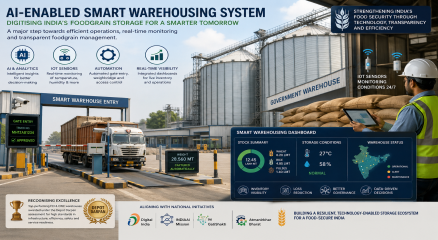
The Centre has launched an Artificial Intelligence (AI)-enabled Smart Warehousing System to modernise foodgrain storage operations, marking a major step in digitising India's public food storage infrastructure. The initiative aims to improve operational efficiency, strengthen inventory management and enhance transparency across the country's warehousing network. Introduced by the Department of Food and Public Distribution (DFPD), the technology-driven platform integrates AI, the Internet of Things (IoT), automation and data analytics to streamline warehouse operations and improve governance. The system is designed to support real-time monitoring of foodgrain storage facilities while enabling faster and more informed decision-making. Among its key features are automated gate entry and weighbridge management, digital access control, intelligent monitoring of storage conditions and real-time inventory visibility through integrated dashboards. These capabilities are expected to reduce manual intervention, improve stock accuracy and strengthen oversight across government warehouses. The initiative forms part of the government's broader strategy to modernise the foodgrain supply chain through digital technologies. It builds on earlier reforms focused on improving transparency, operational efficiency and service delivery in procurement, storage and distribution systems. Alongside the launch, the government recognised top-performing warehouses operated by the Food Corporation of India (FCI) and the Central Warehousing Corporation (CWC) under the Depot Darpan assessment framework. The programme evaluates warehouses on parameters such as infrastructure quality, operational efficiency, safety standards, hygiene and overall service readiness to encourage continuous improvement across the network. Officials said the Smart Warehousing System is expected to strengthen India's food security architecture by creating a more resilient, technology-enabled storage ecosystem. By improving visibility, monitoring and operational control, the platform is intended to minimise losses, optimise warehouse performance and support efficient foodgrain management over the long term. The initiative also aligns with national programmes such as Digital India, the IndiaAI Mission, PM GatiShakti and Atmanirbhar Bharat. Follow CARGOCONNECT for more such updates.
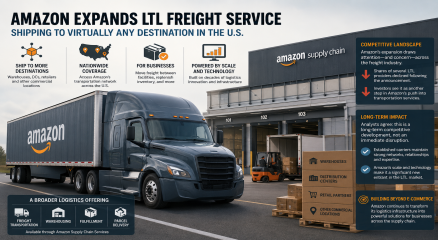
Amazon has expanded its less-than-truckload (LTL) freight service in the United States, allowing businesses to ship freight to virtually any destination rather than limiting deliveries to Amazon-operated facilities. The move broadens the reach of Amazon's logistics business and gives shippers access to the company's transportation network for deliveries to third-party warehouses, distribution centers, retail partners and other commercial locations. The expanded offering is available through Amazon Supply Chain Services, the company's end-to-end logistics platform. Previously, Amazon's LTL service was primarily designed for vendors and sellers moving inventory into the company's fulfillment network. By removing that restriction, Amazon is positioning itself as a larger player in the domestic freight market and increasing competition with established LTL carriers. The expansion follows Amazon's broader push into third-party logistics. In May, the company opened its logistics network to businesses beyond its marketplace ecosystem, offering access to freight transportation, warehousing, fulfillment and parcel delivery services. The initiative aims to monetize infrastructure Amazon has built over decades to support its own operations. The announcement drew attention across the freight sector, with investors viewing the move as another step in Amazon's expansion into transportation services traditionally dominated by carriers such as Old Dominion Freight Line, XPO and FedEx Freight. Shares of several LTL providers declined following the announcement, reflecting concerns that Amazon could gradually capture freight volumes from incumbent operators. Industry analysts, however, cautioned against expecting an immediate disruption. While Amazon's scale and technology capabilities make it a significant new entrant, established LTL carriers retain extensive terminal networks, longstanding customer relationships and specialized operational expertise. Several analysts noted that Amazon's latest expansion is more likely to represent a long-term competitive development rather than an immediate threat to industry leaders. The LTL expansion marks Amazon's latest effort to transform its internal logistics infrastructure into a commercial service for businesses, extending its role beyond e-commerce fulfillment and deeper into the broader freight and supply chain market. Follow CARGOCONNECT for more such updates.