
Loading...
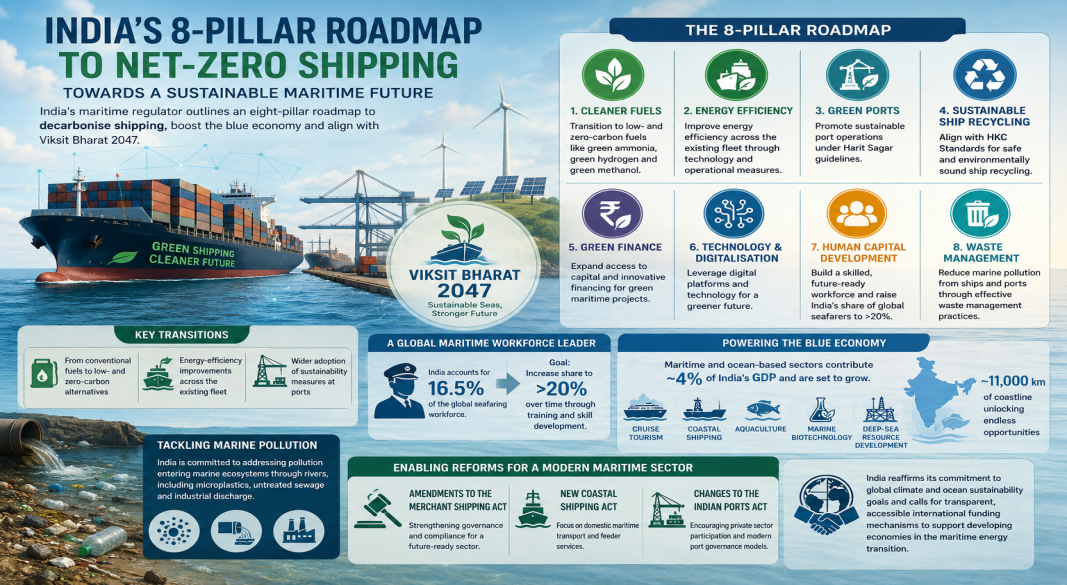
India’s maritime regulator has outlined an eight-pillar roadmap aimed at steering the country’s shipping sector toward net-zero emissions, with a focus on cleaner fuels, sustainable port operations, green financing, workforce development and environmentally responsible ship recycling.
Speaking on World Ocean Day, Director General of Shipping Shyam Jagannathan said the framework is designed to support the decarbonisation of a sector that handles the vast majority of India’s international trade while aligning with the country’s long-term economic and environmental objectives.
The roadmap forms part of the Directorate General of Shipping’s National Maritime Decarbonisation Policy Framework and centres on five broad themes: green shipping and ports, sustainable ship recycling, green finance and technology, human capital development, and waste management.
On ship recycling, India intends to align its practices with the standards of the Hong Kong International Convention for the Safe and Environmentally Sound Recycling of Ships. Authorities also plan to expand the use of digital platforms and improve access to capital for green maritime projects.
The roadmap places significant emphasis on workforce development. India currently accounts for around 16.5% of the global seafaring workforce, and policymakers aim to increase that share beyond 20% over time through training and skill development initiatives.
Jagannathan linked the maritime transition agenda to the government’s broader Viksit Bharat 2047 vision, highlighting the growing importance of the blue economy. He noted that maritime and ocean-based sectors contribute roughly 4% of India’s GDP and are expected to play a larger role in supporting long-term economic growth.
Beyond shipping, the strategy identifies opportunities in cruise tourism, coastal shipping, aquaculture, marine biotechnology and deep-sea resource development. India’s coastline, stretching approximately 11,000 kilometres, is expected to remain central to these growth plans.
The policy push is also accompanied by a wider legislative agenda. Proposed reforms include amendments to the Merchant Shipping Act, a new Coastal Shipping Act focused on domestic maritime transport and feeder services, and changes to the Indian Ports Act aimed at encouraging greater private-sector participation and modern port governance models.
Addressing environmental concerns, Jagannathan stressed the need to tackle pollution entering marine ecosystems through rivers, including microplastics, untreated sewage and industrial discharge. He reiterated India’s commitment to global climate and ocean sustainability goals while calling for transparent international funding mechanisms that support developing economies during the maritime energy transition.
Follow CARGOCONNECT for more such updates.
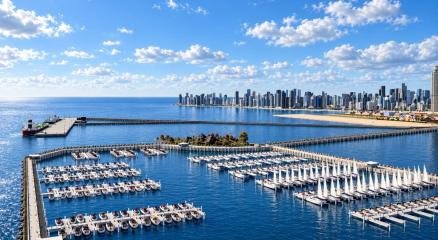
The Mumbai Port Authority (MbPA) has invited domestic and international bids for developing the Viksit Bharat Mumbai Marina, a full-service marina and integrated waterfront project at Victoria Dock in Mumbai. Estimated to cost ₹922.67 crore, the project aims to strengthen maritime tourism, yacht services and waterfront infrastructure while creating new opportunities for port-linked commercial activities. The project will be implemented under the Design, Build, Finance, Operate and Transfer (DBFOT) model, with a concession period of 45 years. The proposed marina will cover a protected water area of 37.3 hectares and accommodate 604 yachts at full development, including 424 berths in the first phase. Mumbai Port Authority has already commenced marine works, including a piled breakwater with an approximately 150-metre approach trestle, six piled service platforms, floating pontoons and gangways for around 424 berths, along with capital dredging. Environmental and Coastal Regulation Zone (CRZ) clearances have also been secured for the entire project area. The selected concessionaire will develop the landside infrastructure, expand berthing capacity beyond the first phase, and operate and maintain the marina throughout the concession period before transferring the assets to the port authority. Planned facilities include a marina terminal building, an international-standard sailing school, a yacht club, a yacht repair yard at Haji Bunder, dry-stack storage and a fuel station. The development will also feature a five-star hotel, tourism business centre, food and beverage outlets, retail zones, and dedicated space for boat shows and events. The tender follows a single-stage, two-envelope electronic bidding process. Bidders will be evaluated on the percentage of gross revenue they propose to share with Mumbai Port Authority, with the highest revenue-share offer determining the preferred bidder. Companies can participate individually or as part of a consortium comprising up to four members. The deadline for pre-bid queries is 28 October 2026, with pre-bid meetings scheduled for 30 October and 25 November. The final date for submitting bids is 15 December 2026. The marina forms part of Mumbai Port Authority’s broader strategy to expand cruise tourism, harbour services and waterfront development, complementing initiatives such as the Mumbai International Cruise Terminal and the city's water taxi network. The project is expected to connect Mumbai’s maritime heritage with sailing, yacht services, hospitality and tourism while retaining port safety and operational requirements as key priorities. 𝐒𝐭𝐚𝐲 𝐓𝐮𝐧𝐞𝐝 𝐭𝐨 CARGOCONNECT 𝐟𝐨𝐫 𝐥𝐚𝐭𝐞𝐬𝐭 𝐮𝐩𝐝𝐚𝐭𝐞𝐬!

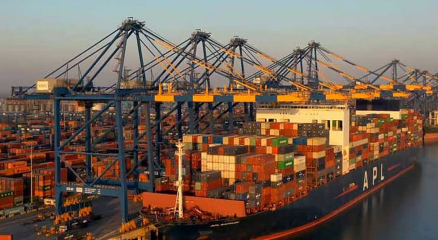
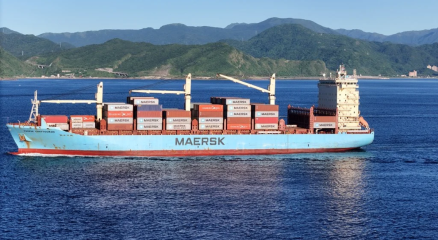
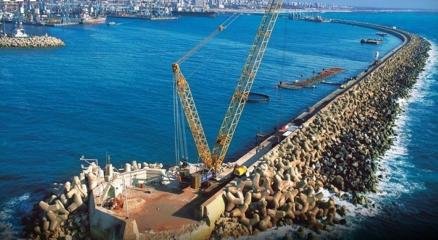
Andhra Pradesh has invited bids for a proposed ₹1,700-crore inland waterway corridor connecting Muktyala with the upcoming Machilipatnam Port to strengthen industrial freight movement and port connectivity. The project aims to establish an alternative cargo transportation route for industries in the state, reduce dependence on road freight and improve the movement of bulk commodities. The Andhra Pradesh Inland Waterways Authority (APIWA) has initiated the tendering process for the development of the corridor under the Design, Build, Finance, Operate and Transfer (DBFOT) model through a public-private partnership (PPP). The proposed 168-km route will combine an 82-km stretch along the Krishna River between Muktyala and Prakasam Barrage with the Bandar Canal section leading towards Machilipatnam Port. The initiative has received in-principal approval from the Inland Waterways Authority of India (IWAI). The project envisages upgrading the existing waterway infrastructure to accommodate cargo vessels and facilitate the movement of industrial materials, including cement, limestone and fly ash, from manufacturing clusters around Jaggayyapeta. By linking inland industrial centres with port infrastructure, the corridor is expected to improve freight efficiency and offer businesses an additional mode of transport. The Bandar Canal stretch between Prakasam Barrage in Vijayawada and Machilipatnam Port will be developed to specified navigation standards. Plans include maintaining a minimum channel depth of 1.5 metres and a bottom width of 20 metres. A navigation lock measuring 70 metres in length and 15 metres in width will be constructed at Prakasam Barrage to facilitate vessel movement. The development will also involve replacing low-level bridges that obstruct navigation with high-level structures, relocating utility lines and establishing cargo and passenger terminals. Cargo-handling infrastructure, including cranes and conveyors, will support loading and unloading operations. The selected developer will execute the project through a concession arrangement spanning 50 years, structured as an initial 30-year term with two possible 10-year extensions. Construction is expected to be completed within 36 months of the award. APIWA will facilitate statutory clearances and provide support for land acquisition. According to the tender conditions, prospective bidders must meet specified financial and infrastructure-experience requirements. Online bids are due by November 30, 2026, while technical bids are scheduled to be opened on December 7. For Andhra Pradesh, the project represents an opportunity to diversify its freight network by integrating inland waterways with industrial production centres and maritime gateways. If implemented effectively, the corridor could help ease road congestion, improve bulk-cargo logistics and strengthen Machilipatnam Port’s role in the state’s expanding trade infrastructure. 𝐒𝐭𝐚𝐲 𝐓𝐮𝐧𝐞𝐝 𝐭𝐨 CARGOCONNECT 𝐟𝐨𝐫 𝐥𝐚𝐭𝐞𝐬𝐭 𝐮𝐩𝐝𝐚𝐭𝐞𝐬!
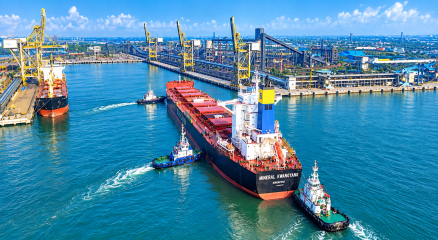
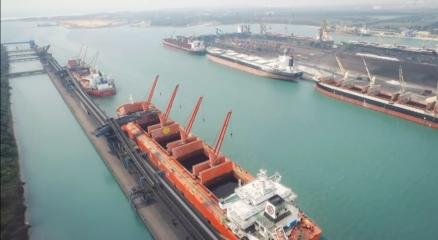
Paradip Port Authority (PPA) has constructed the 500-metre-long Atharabanki Bridge at a cost of ₹24.89 crore to strengthen road connectivity and facilitate smoother cargo transportation in the Paradip Port region. The three-lane bridge is expected to ease traffic congestion, improve the movement of commercial vehicles and enhance connectivity between the port and the surrounding road network. The development is particularly significant given that nearly 3,000 trucks move through Paradip Port every day. Three-Lane Bridge to Ease Traffic Congestion: The newly constructed Atharabanki Bridge replaces an ageing two-lane structure that faced capacity constraints amid rising transportation demand. Its expanded configuration is designed to accommodate increased traffic volumes and improve access for trucks and other vehicles involved in port-related operations. The upgraded infrastructure is expected to support more efficient cargo movement, reduce potential delays and improve road access for transport operators, logistics providers and other stakeholders associated with the port. Key Features of the Atharabanki Bridge: The project incorporates several features aimed at improving connectivity and functionality: Project cost: ₹24.89 crore Length: 500 metres Configuration: Three lanes Structural component: 30-metre composite girder Additional facilities: Dedicated footpaths and a pipeline corridor Dedicated pedestrian pathways provide designated space for people on foot, while the pipeline corridor accommodates infrastructure requirements associated with pipelines. Boost to Port Logistics and Regional Connectivity: As a major maritime gateway on India's eastern coast, Paradip Port plays an important role in cargo transportation and trade. Efficient road connectivity is essential to ensuring the smooth movement of goods between port facilities and the wider transportation network. The Atharabanki Bridge is expected to strengthen this vital link by improving traffic flow and supporting the movement of cargo-carrying vehicles. Better connectivity could also help reduce transportation delays, improve logistics efficiency and enhance the reliability of port-related operations. Beyond its immediate benefits for port traffic, the bridge is expected to improve regional accessibility and support economic activity in the Paradip area. Infrastructure Investment to Support Future Growth: The construction of the Atharabanki Bridge highlights the importance of developing supporting infrastructure to meet the evolving demands of ports, trade and logistics. As cargo volumes and road transportation requirements increase, investments in bridges and connectivity corridors are essential to strengthening supply-chain efficiency. By upgrading the existing two-lane crossing to a modern three-lane structure, Paradip Port Authority has taken a step towards improving the port's supporting infrastructure. The project is expected to contribute to smoother cargo movement, stronger regional connectivity and improved efficiency across India's maritime logistics network.