
Loading...
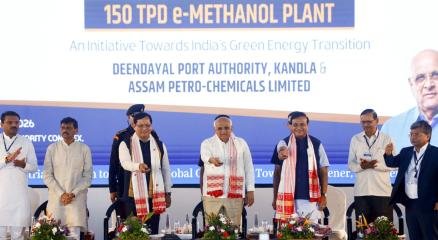
India has taken a landmark step towards establishing itself as a global supplier of green maritime fuel with the foundation stone laid for the country’s first port-based e-methanol production facility at Deendayal Port Authority (DPA) in Kandla, Gujarat. The ₹2,300-crore project is being jointly developed by DPA and Namrup-based Assam Petro-Chemicals Ltd (APCL) and is designed to support the decarbonisation of international shipping. The foundation stone was laid on September 26 by Union Minister for Ports, Shipping and Waterways Sarbananda Sonowal, Gujarat Chief Minister Bhupendra Patel and Assam Chief Minister Himanta Biswa Sarma. The facility will have a total production capacity of 150 tonnes of e-methanol per day. It will use renewable power, water and biogenic carbon dioxide (CO₂) to produce e-methanol, which is intended to be supplied to vessels operating along the Asia-Europe International Trade Corridor, one of the world’s busiest maritime routes. The e-methanol plant will be established through scalable modules in two phases. Phase I will add 50 tonnes per day of production capacity at an investment of ₹1,200 crore and is targeted for completion by January 2027. Phase II, involving a further 100 tonnes per day, will require an investment of ₹1,100 crore and is scheduled for completion by March 2027. Together, the two phases will take the project’s total investment to ₹2,300 crore. The capital contribution between DPA and APCL will be in a 76:24 ratio. DPA’s contribution includes ₹567.32 crore in equity capital, 75 acres of land, desalinated water and renewable energy in the form of green hydrogen. The facility is expected to rank among India’s largest e-methanol production plants and generate more than 3,500 direct and indirect jobs. According to the Ministry of Ports, Shipping and Waterways, the plant is expected to produce green methanol at around US$750 per tonne, compared with a global rate of about US$1,300 per tonne. This cost advantage could strengthen India’s position as a competitive producer and supplier of green fuel for international shipping. Beyond fuel production, the project is expected to stimulate a wider green-energy value chain around Kandla, covering transportation, storage, supply and other ancillary activities associated with green molecule production. It also aligns with India’s broader maritime decarbonisation objectives and its Net Zero emissions target for 2070. The government aims to add 100 ships to the Indian merchant fleet over the next five years and make India one of the world’s top five ship-owning nations by 2047. Therefore, the Kandla facility represents more than a new green-fuel production asset; it marks an effort to integrate port infrastructure, renewable energy and maritime fuel supply into a single ecosystem, potentially positioning Kandla as an emerging green-fuel hub for global shipping. 𝐒𝐭𝐚𝐲 𝐓𝐮𝐧𝐞𝐝 𝐭𝐨 CARGOCONNECT 𝐟𝐨𝐫 𝐥𝐚𝐭𝐞𝐬𝐭 𝐮𝐩𝐝𝐚𝐭𝐞𝐬!
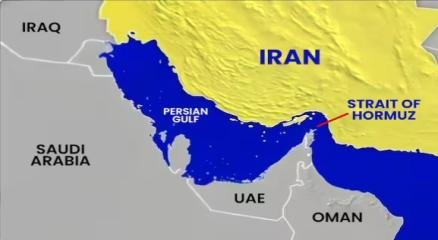
Iran is preparing to announce a new restricted maritime zone in the Gulf and a proposed international shipping corridor through the Strait of Hormuz, raising fresh concerns for global shipping, energy security and supply chains. The move comes amid heightened military tensions in the region and a sharp decline in vessel movements through the strategically vital waterway. Mohsen Rezaei, Secretary of Iran’s Supreme National Security Council, said the proposed restricted zone would begin from the point where the US blockade of Iran starts and extend into parts of the Gulf. Under the proposed arrangement, vessels entering the designated area could be placed on Iran’s sanctions list. Further details, including the exact boundaries and operating rules of the zone, are yet to be disclosed. At the same time, Tehran says it has agreed on maps for a new international maritime corridor running through Iranian and Omani waters. According to Rezaei, Iran would manage the proposed route, with the maps expected to be formally signed in the coming days. The initiative could introduce a new framework for vessel movements through the Strait of Hormuz, although its practical implementation remains unclear. The developments come as shipping activity through the Strait of Hormuz has fallen significantly. According to reports, an average of about 10 commodity vessels crossed the waterway each day over a recent 10-day period, marking the lowest level reported since May. Before the current disruption, the Strait carried roughly one-fifth of global oil supplies, underlining its importance to international energy and maritime trade. For India, the situation carries significant implications. The country imports nearly 90% of its crude oil requirements, with a substantial share sourced from Gulf producers and transported through the Strait of Hormuz. Any prolonged restriction, additional charges or uncertainty around vessel access could therefore increase freight, insurance and energy costs, while also affecting imports of LNG, LPG and petrochemical products. For global supply chains, the proposed restricted zone adds another layer of uncertainty to an already volatile maritime environment. Shipping lines, tanker operators, energy traders and cargo owners are likely to closely monitor the final route maps, sanctions framework and navigational arrangements before determining their operational strategies. 𝐒𝐭𝐚𝐲 𝐓𝐮𝐧𝐞𝐝 𝐭𝐨 CARGOCONNECT 𝐟𝐨𝐫 𝐥𝐚𝐭𝐞𝐬𝐭 𝐮𝐩𝐝𝐚𝐭𝐞𝐬!
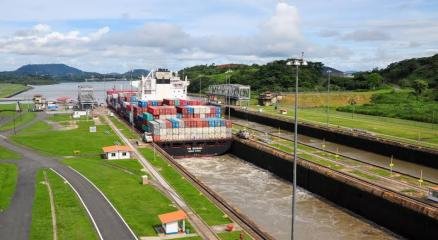
The Panama Canal could further reduce the number of vessels permitted to transit the crucial waterway as intensifying El Niño conditions worsen drought and water shortages, raising fresh concerns for global shipping, commodity flows and supply chains. The Panama Canal Authority’s new administrator, Ilya Espino de Marotta, has warned that daily transit slots could eventually fall to around 29 if rainfall fails to replenish the reservoirs that supply the canal’s lock system. The canal is currently moving towards a limit of 32 vessels a day, down from 36 previously. Authorities have indicated that further restrictions could be introduced in January, February or March depending on rainfall during the critical months ahead. The potential reduction comes as the Panama Canal is already facing heightened demand. The waterway has become particularly important for shipping lines seeking alternatives amid disruptions to traffic through the Strait of Hormuz. The canal handles around 5% of global maritime trade and provides a key shortcut between the Atlantic and Pacific oceans. The canal’s dependence on freshwater makes it especially vulnerable to prolonged dry conditions. Each vessel transit consumes approximately 200 million litres of water, which is used to operate the locks. Between April and August, Panama recorded a rainfall deficit of 35.8% against the historical average, with authorities reporting no immediate signs of recovery. Alongside transit restrictions, the maximum permitted vessel draft has already been reduced from 15.2 metres to 14.6 metres. A lower draft can restrict the amount of cargo vessels are able to carry, potentially affecting vessel economics and increasing pressure on freight rates. The situation recalls the severe 2023-24 drought, when daily Panama Canal crossings fell as low as 22. However, the canal authority does not currently expect restrictions to reach those levels. Any further reduction in Panama Canal capacity could increase waiting times, vessel operating costs and freight rates, while prompting carriers to consider longer alternative routes. Industry observers have already warned that the canal’s constraints could add to disruptions affecting global commodity and supply-chain movements. For a maritime industry already navigating geopolitical disruptions and shifting trade routes, the prospect of another capacity constraint highlights the growing influence of climate and water security on global logistics networks. Panama is pursuing a new reservoir project on the Rio Indio as a longer-term solution, although completion is expected to take several years. 𝐒𝐭𝐚𝐲 𝐓𝐮𝐧𝐞𝐝 𝐭𝐨 CARGOCONNECT 𝐟𝐨𝐫 𝐥𝐚𝐭𝐞𝐬𝐭 𝐮𝐩𝐝𝐚𝐭𝐞𝐬!
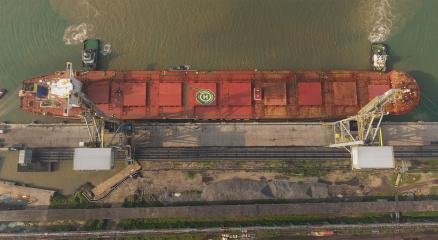
Paradip Port Authority (PPA) has achieved a significant operational milestone with the successful berthing of MV Mineral Kwangyang, its first-ever Capesize vessel with a 16.5-metre draft, at Western Dock-1 (WD-1). The development marks a major step forward in the port’s deep-draft vessel handling capabilities and reinforces its position as a key maritime gateway for bulk cargo in eastern India. The 292-metre-long and 45-metre-wide vessel arrived carrying 152,702 metric tonnes of coking coal from Hay Point, Australia. Its successful berthing demonstrates Paradip Port’s growing ability to accommodate larger bulk carriers and handle substantial cargo volumes through a single vessel call. The milestone is particularly significant for the port’s logistics and cargo-handling operations, as deeper-draft capabilities allow larger vessels to carry higher volumes, potentially improving economies of scale, cargo evacuation and overall supply chain efficiency. The development also strengthens Paradip’s role in supporting India’s bulk cargo and industrial supply chains, particularly across the eastern region. Susanta Kumar Purohit, IRSEE, Chairperson, Paradip Port Authority, congratulated Team PPA and Team JPPL for their coordinated efforts in executing the landmark operation. The successful berthing underscores the port’s operational preparedness, infrastructure capabilities and focus on safely handling larger vessels. The achievement comes amid a broader infrastructure expansion programme at Paradip. Union Minister for Ports, Shipping and Waterways Sarbananda Sonowal earlier inaugurated seven major infrastructure projects worth ₹427.80 crore at PPA, marking the port’s 18.5-metre deep-draft capability and its one-millionth tree milestone. He also witnessed the signing of concession agreements for three mechanisation projects worth ₹1,580.36 crore, aimed at strengthening cargo-handling capacity, operational efficiency and reducing vessel turnaround time. Sonowal said: "The expansion of Paradip Port's capacity is not only about strengthening one port; it is about creating a growth multiplier for eastern India. With deeper drafts, modern cargo-handling infrastructure, improved connectivity and greater mechanisation, Paradip is well positioned to drive trade, logistics, industry and employment across the region and contribute to India's emergence as a globally competitive maritime economy," With deeper berthing capability, infrastructure modernisation and increased mechanisation, Paradip Port is positioning itself to handle the next generation of large vessels while supporting higher cargo throughput and more efficient maritime logistics. The latest Capesize berthing therefore represents not only an operational achievement but also another step in strengthening India’s maritime infrastructure and eastern trade gateway. 𝐒𝐭𝐚𝐲 𝐓𝐮𝐧𝐞𝐝 𝐭𝐨 CARGOCONNECT 𝐟𝐨𝐫 𝐥𝐚𝐭𝐞𝐬𝐭 𝐮𝐩𝐝𝐚𝐭𝐞𝐬!
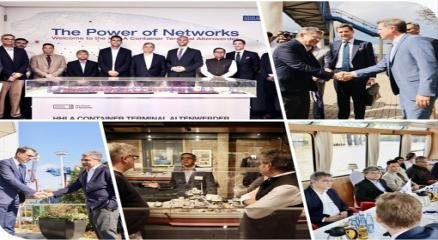
India is utilising the global platform of SMM Hamburg 2026 to deepen maritime cooperation with Germany, with a high-level Indian delegation undertaking strategic engagements with port authorities, terminal operators and maritime industry stakeholders in Hamburg. Led by Vijay Kumar, IAS, Secretary, Ministry of Ports, Shipping and Waterways (MoPSW), the delegation included Vipul Singhal, Director, MoPSW, and Pradeep Sudhakar, Chief Ship Surveyor, Directorate General of Shipping/Maritime Administration (DGMA). Their engagements focused on exchanging expertise and identifying opportunities for collaboration across port operations, maritime infrastructure, digitalisation and sustainability. A key component of the visit was an interaction at HHLA Container Terminal Altenwerder (CTA), where the delegation examined advanced approaches to automated container-terminal operations. Discussions with Patrick Krawutschke, Managing Director, Hamburg Port Consulting (HPC), covered terminal efficiency, automation, logistics planning and the deployment of technology to improve port management. The delegation also visited EUROGATE Container Terminal Hamburg and held discussions with Tom Eckelmann, President, EUROGATE, exchanging perspectives on terminal productivity, digitalisation and the evolution of modern maritime logistics infrastructure. Further discussions with senior representatives of the Hamburg Port Authority (HPA) and Hamburg’s Ministry of Economic Affairs, Labour and Innovation covered port modernisation, green-port initiatives, environmental sustainability, logistics management and future-ready maritime infrastructure. India's participation at SMM 2026 comes amid an expanded national presence at the world's leading maritime trade fair. For the first time, MoPSW and the Indian Ports Association are organising two official Indian joint pavilions, while around 35 Indian exhibitors are expected to showcase capabilities spanning shipbuilding, maritime technology and sustainable solutions. The Hamburg engagements assume added significance as India-Germany strategic relations enter a new phase, with both countries marking 75 years of diplomatic relations in 2026. The two governments have also reaffirmed their commitment to expanding cooperation in trade, investment, technology, innovation and sustainable development. For India's maritime sector, the discussions provide an avenue to learn from Hamburg's port ecosystem while exploring partnerships in smart ports, green shipping, automation, logistics integration and maritime infrastructure. The engagements are expected to contribute to stronger institutional and industry-level cooperation between India and Germany and support India's ambition to build a globally competitive, technology-enabled and sustainable maritime ecosystem. 𝐒𝐭𝐚𝐲 𝐓𝐮𝐧𝐞𝐝 𝐭𝐨 CARGOCONNECT 𝐟𝐨𝐫 𝐥𝐚𝐭𝐞𝐬𝐭 𝐮𝐩𝐝𝐚𝐭𝐞𝐬!
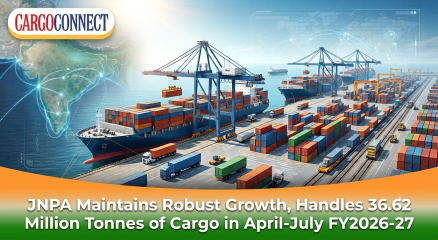
Jawaharlal Nehru Port Authority (JNPA) has continued its strong growth trajectory by recording double-digit growth in both container traffic and overall cargo handling during the first four months of FY2026-27. The port handled 29,94,859 twenty-foot equivalent units (TEUs) of container traffic and 36.62 million tonnes of total cargo between April and July 2026, reaffirming its position as a key gateway for the country’s maritime trade. The latest operational data shows that container throughput grew by 14.37% year-on-year, while overall cargo volumes increased by 11.95% compared with the corresponding period of the previous financial year. The sustained performance reflects JNPA’s continued focus on operational efficiency, infrastructure development and seamless cargo movement across the logistics value chain. According to JNPA, the growth has been driven by improved vessel turnaround time, enhanced cargo handling efficiency, higher terminal productivity and better multimodal connectivity. The collaborative efforts of terminal operators, shipping lines, logistics service providers, customs authorities and other stakeholders have also played a crucial role in sustaining the port’s momentum. The port’s investments in modern infrastructure, digital initiatives and capacity augmentation have enabled it to efficiently manage rising cargo volumes while maintaining reliable and efficient operations. Its integrated road and rail connectivity, supported by ongoing modernisation programmes, continues to strengthen JNPA’s position as one of India’s leading logistics and container handling hubs. Performance highlights released by the authority indicate that JNPA handled 7,45,059 TEUs of containers and 8.78 million tonnes of cargo in July 2026 alone, registering year-on-year growth of 11.48% and 3.18%, respectively. During the April–July period, the port also handled 2,317 container rakes, with rail movement accounting for 391,563 TEUs, underlining the importance of multimodal transport in facilitating efficient cargo evacuation. The encouraging results underscore the resilience of India’s maritime sector and the growing confidence of global shipping lines and trade partners in JNPA’s capabilities. As international trade volumes continue to expand, the port remains focused on enhancing customer experience through faster cargo evacuation, improved logistics efficiency and sustainable port operations. With continued investments in infrastructure and technology, JNPA is well-positioned to support India’s expanding trade ambitions while contributing to the Government’s vision of developing the country into a globally competitive maritime and logistics hub. 𝐒𝐭𝐚𝐲 𝐓𝐮𝐧𝐞𝐝 𝐭𝐨 CARGOCONNECT 𝐟𝐨𝐫 𝐥𝐚𝐭𝐞𝐬𝐭 𝐮𝐩𝐝𝐚𝐭𝐞𝐬!

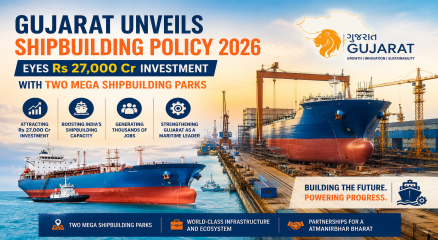
The Gujarat Government has launched the Shipbuilding Policy 2026, a strategic initiative aimed at transforming the state into India's premier shipbuilding and ship repair hub. The policy seeks to attract investments exceeding Rs 27,000 crore, create a shipbuilding capacity of 50 lakh Deadweight Tonnage (DWT), and establish two world-class shipbuilding parks, reinforcing Gujarat's position in the country's maritime and logistics ecosystem. The new policy comes at a time when India is intensifying efforts to strengthen domestic shipbuilding capabilities under the broader vision of developing a self-reliant maritime sector. With Gujarat already accounting for a significant share of India's ship recycling, ports and maritime trade, the state aims to leverage its extensive coastline, robust port infrastructure and industrial ecosystem to emerge as a global destination for shipbuilding. A key highlight of the policy is the development of two integrated mega shipbuilding parks equipped with modern infrastructure and common facilities. These parks are expected to support the construction of commercial vessels, specialised ships and offshore structures while also promoting ancillary industries involved in marine equipment, engineering and component manufacturing. To attract investors, the policy offers a range of financial incentives, including capital assistance, interest subsidies, skill development support and infrastructure incentives. The state government expects these measures to encourage both domestic and international companies to establish manufacturing facilities and expand operations in Gujarat. Besides increasing industrial investment, the initiative is projected to generate substantial employment opportunities across shipbuilding, ship repair, marine engineering, logistics and allied sectors. The policy also places emphasis on developing a skilled workforce through dedicated training programmes, ensuring the availability of specialised talent required by the industry. Industry experts believe the policy could significantly strengthen India's maritime manufacturing capabilities while reducing dependence on imported vessels. The expansion of shipbuilding infrastructure is also expected to improve coastal shipping, facilitate exports and enhance the efficiency of the country's logistics network. The Shipbuilding Policy 2026 aligns with the Centre's vision of making India a global maritime powerhouse and complements ongoing investments in ports, coastal infrastructure and multimodal logistics. By creating an enabling ecosystem for shipbuilding and marine manufacturing, Gujarat is positioning itself to play a pivotal role in supporting India's long-term ambitions in global trade and supply chain development. With substantial investments, infrastructure development and industry-friendly incentives, Gujarat's latest policy is expected to provide fresh momentum to the country's maritime economy while strengthening the state's leadership in the logistics and shipping sector. 𝐒𝐭𝐚𝐲 𝐓𝐮𝐧𝐞𝐝 𝐭𝐨 CARGOCONNECT 𝐟𝐨𝐫 𝐥𝐚𝐭𝐞𝐬𝐭 𝐮𝐩𝐝𝐚𝐭𝐞𝐬!
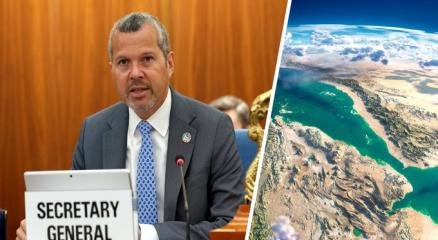
The International Maritime Organization (IMO) has strongly condemned the latest attacks on commercial vessels in the Red Sea, describing them as "indefensible" and warning that the renewed violence poses a serious threat to global trade, seafarer safety and already fragile supply chains. In a statement issued by IMO Secretary-General Arsenio Dominguez, the UN maritime agency expressed grave concern over the resurgence of attacks targeting international shipping in one of the world's busiest maritime corridors. The Red Sea serves as a vital gateway connecting Europe and Asia through the Suez Canal, carrying a significant share of global containerised cargo, energy shipments and manufactured goods. Dominguez stressed that the attacks not only endanger the lives of seafarers but also jeopardise the security of international shipping, threaten the marine environment and undermine the stability of global supply chains. He reiterated that freedom of navigation must be protected and called on all parties to uphold international law while avoiding actions that could further escalate regional tensions. The IMO also renewed its appeal for intensified diplomatic efforts to restore stability in the region. The organisation emphasised that seafarers, who play a critical role in facilitating global trade, should never become victims of geopolitical conflicts. According to the IMO, safeguarding maritime transport is essential to maintaining the uninterrupted movement of food, fuel, raw materials and consumer goods across international markets. The latest incidents have revived concerns across the shipping and logistics industry, which had already endured prolonged disruptions following earlier attacks in the Red Sea. Many shipping lines had previously diverted vessels around the Cape of Good Hope to minimise security risks, resulting in longer transit times, increased fuel consumption, vessel capacity constraints and higher freight costs. Those diversions also affected inventory planning and supply chain resilience for manufacturers and retailers worldwide. The IMO noted that confirmed attacks on merchant shipping in recent years have demonstrated the vulnerability of global maritime trade to regional conflicts. Industry stakeholders fear that renewed hostilities could once again trigger route diversions, increase insurance premiums and create fresh uncertainty for international logistics networks if security conditions continue to deteriorate. Reaffirming the organisation's commitment to maritime safety and security, Dominguez urged the international community to work collectively towards ensuring safe passage for commercial vessels and protecting the global maritime transport system that underpins international commerce. 𝐒𝐭𝐚𝐲 𝐓𝐮𝐧𝐞𝐝 𝐭𝐨 CARGOCONNECT 𝐟𝐨𝐫 𝐥𝐚𝐭𝐞𝐬𝐭 𝐮𝐩𝐝𝐚𝐭𝐞𝐬!
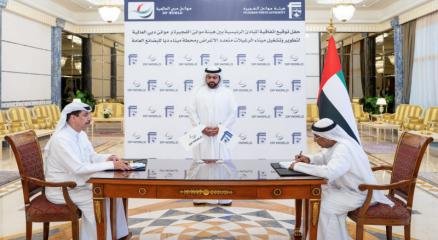
DP World has unveiled plans to develop two new maritime terminals on the UAE’s eastern coast in Fujairah under a 50-year concession agreement with the Fujairah Ports Authority, marking a major investment aimed at enhancing the country’s logistics resilience while reducing dependence on the Strait of Hormuz. The project will significantly strengthen the UAE’s gateway network by creating an alternative trade corridor outside one of the world’s busiest and most strategically sensitive shipping routes. The development includes the Al Rugaylat Container and Multi-purpose Terminal and the Dibba General Cargo Terminal. Together, the facilities will expand DP World’s cargo handling capabilities, improve multimodal connectivity and reinforce the company’s integrated logistics ecosystem linking ports, inland transport and distribution networks across the UAE. Once operational, the Al Rugaylat terminal will have an annual handling capacity of up to 2.5 million TEUs, 1.7 million tonnes of general cargo, and approximately 190,000 car equivalent units (CEUs). The Dibba terminal will add 3.6 million tonnes of annual general cargo capacity. The expansion is expected to increase DP World’s total container handling capacity in the UAE from 19.4 million TEUs to nearly 22 million TEUs, supporting growing regional and international trade volumes. Construction of both terminals will be carried out in phases over the next 24 to 30 months. The new facilities will complement DP World’s flagship Jebel Ali Port through an integrated inland logistics network, enabling cargo to move efficiently between the country’s eastern and western coasts while providing customers with greater flexibility and route diversification. The investment comes amid heightened geopolitical uncertainty in the Gulf region, where disruptions to shipping through the Strait of Hormuz have underscored the importance of supply chain resilience. By establishing additional port infrastructure on the Gulf of Oman, DP World aims to provide shippers with more reliable access to global markets while safeguarding trade flows against regional disruptions. DP World said the Fujairah expansion aligns with its long-term strategy of building an interconnected logistics network that combines ports, terminals, warehousing, transport and value-added supply chain services. The company believes the new terminals will not only improve cargo efficiency but also strengthen the UAE’s position as a global logistics and maritime hub capable of supporting evolving trade patterns. Overall, the project is expected to generate long-term economic benefits for Fujairah by attracting new investments, supporting industrial development and creating employment opportunities while reinforcing the UAE’s role as a critical gateway connecting Asia, Africa, Europe and the Middle East. 𝐒𝐭𝐚𝐲 𝐓𝐮𝐧𝐞𝐝 𝐭𝐨 CARGOCONNECT 𝐟𝐨𝐫 𝐥𝐚𝐭𝐞𝐬𝐭 𝐮𝐩𝐝𝐚𝐭𝐞𝐬!
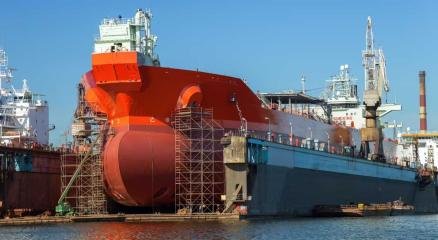
The Ministry of Ports, Shipping and Waterways (MoPSW) has granted in-principal approval for the development of a Greenfield Shipbuilding Cluster in Porbandar, Gujarat. The project, approved under the Shipbuilding Development Scheme is expected to enhance domestic shipbuilding capabilities, improve supply chain resilience and position India as a competitive global maritime manufacturing hub. The integrated shipbuilding cluster will be developed at Kuchhadi in Porbandar through the National Shipbuilding and Heavy Industries Park, Gujarat (NSHIP-Gujarat), jointly promoted by the Ministry of Ports, Shipping and Waterways and the Gujarat Maritime Board. Spread across nearly 2,000 acres, the facility will house modern shipyards, ancillary manufacturing units, common infrastructure and capability development centres to support large-scale vessel production. With an estimated annual shipbuilding capacity of 1.2 to 1.5 million gross tonnage (GT), the cluster is expected to significantly expand India’s indigenous manufacturing capabilities while creating a robust ecosystem for marine engineering, heavy fabrication, equipment manufacturing and logistics services. The project is also expected to generate substantial employment opportunities and attract investments across the maritime value chain. Alongside the Porbandar project, the ministry has also approved a state-of-the-art ship repair facility at Vadinar in the Gulf of Kutch. The ₹1,570-crore project, to be jointly developed by Cochin Shipyard Limited and Deendayal Port Authority, will receive financial assistance under the Shipbuilding Development Scheme for eligible infrastructure. The facility is expected to reduce dependence on overseas ship repair yards, improve vessel turnaround times and strengthen India’s maritime service capabilities. The twin projects form a key part of the government’s Maritime Amrit Kaal Vision 2047, which aims to transform India into a leading global maritime nation by developing world-class infrastructure, promoting indigenous manufacturing and enhancing competitiveness across the shipping sector. According to the ministry, these initiatives will support the growth of domestic shipbuilding and repair industries while improving integration with global supply chains. For the logistics and supply chain industry, the development is expected to create new opportunities for steel manufacturers, component suppliers, heavy engineering companies, port operators and multimodal logistics providers. By strengthening backward linkages and encouraging localisation of marine equipment manufacturing, the projects are likely to reduce import dependence and improve the efficiency of India’s maritime logistics ecosystem, supporting the country’s long-term ambitions of becoming a global shipping and manufacturing powerhouse. 𝐒𝐭𝐚𝐲 𝐓𝐮𝐧𝐞𝐝 𝐭𝐨 CARGOCONNECT 𝐟𝐨𝐫 𝐥𝐚𝐭𝐞𝐬𝐭 𝐮𝐩𝐝𝐚𝐭𝐞𝐬!
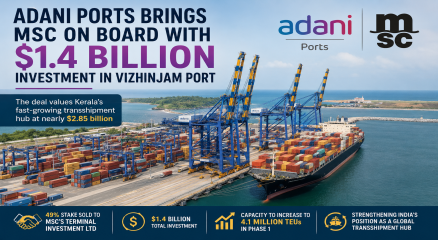
The deal values Kerala’s fast-growing transshipment hub at nearly $2.85 billion and marks a significant foreign investment in India’s maritime infrastructure. Adani Ports and Special Economic Zone (APSEZ) has entered into an agreement with Switzerland-based Mediterranean Shipping Company (MSC) to divest a 49% stake in its Vizhinjam International Seaport in Kerala for a total investment of $1.4 billion (around ₹13,225 crore). The partnership is expected to strengthen the port’s position as a leading transshipment hub while supporting its next phase of expansion. The investment will be made through Terminal Investment Ltd (TiL), MSC’s port investment arm. As per the agreement, TiL will initially invest $539 million to acquire a 49% stake in Adani Vizhinjam Port Pvt. Ltd. (AVPPL), a wholly owned subsidiary of APSEZ. It will further contribute $858 million by December 2028 towards its share of the port’s ongoing capacity enhancement programme. According to APSEZ, the transaction represents the largest single foreign private investment made in India's port sector to date. The company believes the strategic alliance with one of the world's biggest container shipping companies will accelerate cargo growth and improve long-term operational efficiency at Vizhinjam. Currently capable of handling 1.6 million TEUs annually, the port is undergoing a major expansion that will raise its capacity to 4.1 million TEUs, with a long-term roadmap to increase it further to 5.7 million TEUs. The expansion project carries an estimated cost of $1.75 billion. Beyond financial investment, the collaboration is expected to provide the port with stronger cargo commitments from MSC's global shipping network. APSEZ said this would improve traffic visibility, enable faster capacity utilisation, and help attract additional transshipment volumes, particularly cargo originating from Bangladesh that is presently routed through Southeast Asian ports. Investor sentiment remained positive following the announcement. Shares of Adani Ports traded about 1% higher during Tuesday's morning session, while the stock has gained more than 20% since the beginning of the year. Commenting on the development, APSEZ Whole-time Director and CEO Ashwani Gupta said Vizhinjam has rapidly established itself as India's leading transshipment port, becoming the country's first facility to handle over 2 million TEUs within just 18 months of commencing operations. Transshipment ports play a crucial role in global shipping by transferring cargo containers between vessels before they continue to their final destinations. Owing to its strategic location near major international shipping lanes and its naturally deep draft, Vizhinjam is expected to compete with established global hubs such as Singapore, Tanjung Pelepas (Malaysia), Busan (South Korea), Tanger Med (Morocco), and Shanghai (China). The port has witnessed remarkable growth since operations began. During its first full year, ending in December 2025, it handled approximately 1.3 million containers across 615 vessel calls, making it the fastest Indian port to surpass the one-million-TEU milestone. Within 18 months, it crossed the two-million-TEU mark, and recently welcomed its 1,000th vessel. Gupta added that expanding APSEZ's long-standing association with MSC to Vizhinjam would further enhance global supply chain connectivity while improving India's access to both established and emerging international markets.
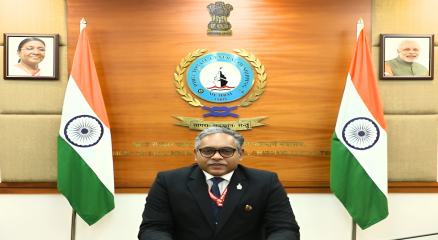
The Government of India has approved a two-year extension in the tenure of Shyam Jagannathan as the Director General of Shipping (DG Shipping), reinforcing continuity in the country's maritime governance at a time when the sector is undergoing significant digital and regulatory transformation. The extension, approved by the Appointments Committee of the Cabinet (ACC), will allow Jagannathan to continue serving in the Additional Secretary-level position under the Ministry of Ports, Shipping and Waterways. A 1997-batch Indian Administrative Service (IAS) officer of the Assam-Meghalaya cadre, Jagannathan assumed charge as Director General of Shipping on July 3, 2023. Since taking office, he has spearheaded several initiatives aimed at modernising India's maritime administration through technology-driven governance, process automation and enhanced regulatory compliance. The Directorate General of Shipping serves as India's apex maritime regulatory authority and is responsible for implementing the Merchant Shipping Act, enforcing international maritime conventions, promoting safety standards, regulating seafarer certification, and overseeing shipping operations in the country. Under Jagannathan's leadership, the organisation has accelerated efforts to digitise end-to-end workflows, simplify stakeholder interactions and strengthen examination reforms aligned with the International Convention on Standards of Training, Certification and Watchkeeping for Seafarers (STCW). Prior to his current assignment, Jagannathan held several key administrative positions across both the Central and State governments. He served as Zonal Development Commissioner of the Santacruz Electronic Export Processing Zone (SEEPZ) Special Economic Zone under the Ministry of Commerce and Industry. His experience also includes leadership roles as Commissioner and Secretary in Assam's Finance Department, Commissioner of North Assam Division, Commissioner of Commercial Taxes in Kerala, Chairman of the Civil Supplies Corporation, and District Magistrate of West Garo Hills in Meghalaya. This diverse administrative background has equipped him with extensive expertise in governance, public policy and institutional reforms. Industry stakeholders view the extension as a positive development for India's maritime ecosystem, as it ensures policy continuity amid ongoing efforts to strengthen the country's shipping competitiveness, improve ease of doing business, enhance seafarer welfare and advance the objectives of Maritime India Vision 2030. With global shipping navigating evolving regulatory requirements and increasing digitalisation, stable leadership at the Directorate General of Shipping is expected to support India's ambitions of becoming a leading maritime nation and logistics hub. 𝐒𝐭𝐚𝐲 𝐓𝐮𝐧𝐞𝐝 𝐭𝐨 CARGOCONNECT 𝐟𝐨𝐫 𝐥𝐚𝐭𝐞𝐬𝐭 𝐮𝐩𝐝𝐚𝐭𝐞𝐬!
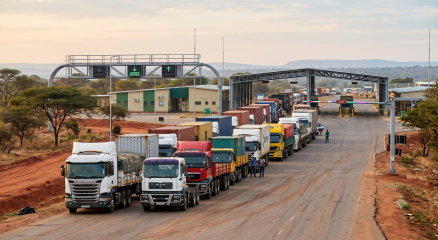
The Central government is planning a major expansion of border trade infrastructure in West Bengal, with proposals for seven to eight new international land ports along the borders with Bangladesh and Nepal. The move is aimed at facilitating smoother movement of both cargo and passengers while unlocking additional trade opportunities with neighbouring countries. The proposed facilities will be developed by the Land Ports Authority of India (LPAI), which functions under the Ministry of Home Affairs. At present, Petrapole—the country's busiest land port located near Bongaon on the India-Bangladesh border—remains West Bengal's only operational international land port. Officials believe that additional border infrastructure could significantly improve logistics efficiency in eastern India, particularly as trade volumes with neighbouring nations continue to grow. Several strategic locations have already been identified for development, including Panitanki on the India-Nepal border, Ghojadanga in North 24 Parganas, Hili in Dinajpur and Birpara in Alipurduar, among others. Many of these locations currently handle trade through existing land customs stations. However, authorities are looking to upgrade them into fully integrated land ports equipped with modern facilities capable of supporting larger cargo volumes and streamlined passenger movement. According to LPAI Chairman Jayant Singh, the authority is working on plans to establish multiple new land ports across the state. Speaking on the sidelines of an industry event in Kolkata, he indicated that each project would typically require around 50 acres of land situated directly along the international border. Land acquisition has emerged as one of the primary challenges slowing the rollout of these projects. While infrastructure plans have been under consideration for some time, securing suitable land parcels near the border has proven difficult. Officials are hopeful that closer coordination between state and central authorities will help address these hurdles and accelerate project implementation. Unlike conventional border checkpoints, modern land ports function as integrated trade and transit hubs. They bring together cargo handling facilities, warehousing infrastructure, truck parking zones, customs clearance, immigration services, cold storage units and security operations under a single framework. Such facilities are designed to reduce congestion, improve turnaround times and enhance the overall efficiency of cross-border trade. The proposed projects in West Bengal form part of a much larger national strategy. The Centre is evaluating plans to develop 74 additional land ports across India, significantly expanding the country's border trade network beyond the 15 facilities currently in operation. The government's focus on land-port infrastructure comes at a time when trade with neighbouring countries is gaining momentum. Official estimates show that India's trade with neighbouring nations amounted to ₹2.27 lakh crore, of which nearly ₹82,844 crore was routed through existing land ports. Authorities also believe that India's land borders hold substantial untapped potential, with opportunities for additional trade worth more than ₹4.44 lakh crore. With their strategic location and proximity to key regional markets, the proposed land ports in West Bengal are expected to play an important role in strengthening supply chains, improving trade connectivity and supporting economic integration across South Asia in the years ahead.
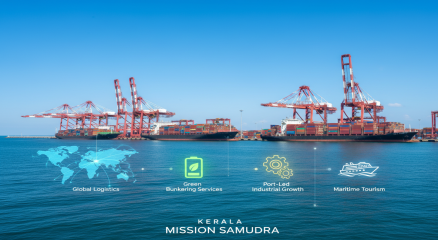
Kerala has launched an ambitious ₹400 crore initiative, Mission Samudra, aimed at transforming the state into a leading maritime and logistics hub while driving a port-led economic development model. Announced as part of the Kerala Budget 2026-27, the programme seeks to integrate the state’s extensive coastline, ports, inland waterways, logistics infrastructure, and maritime industries into a unified economic ecosystem. Mission Samudra is expected to play a pivotal role in strengthening Kerala’s position within India’s maritime trade network. The state plans to leverage its nearly 600-km coastline, two international seaports, the Vizhinjam International Transshipment Port, multiple non-major ports, and inland water transport systems to create a globally competitive maritime cluster. For the logistics and supply chain sector, the initiative signals a significant push toward multimodal connectivity and cargo movement efficiency. The government has proposed the development of manufacturing clusters, container stuffing facilities, dry ports, and logistics parks around key maritime gateways, particularly Vizhinjam and Kochi. These investments are expected to improve hinterland connectivity, reduce logistics costs, and attract export-oriented industries. A phased coastal water transport network is also planned under the mission. The first phase will focus on cargo transportation, followed by passenger services and eventually a fully integrated waterway network linking major and minor ports with inland waterways. Industry observers believe such connectivity could unlock new opportunities for coastal shipping and last-mile logistics. Another key component of Mission Samudra is the promotion of emerging maritime industries. Kerala intends to establish shipbuilding and ship repair facilities, expand maritime tourism, and explore green shipping opportunities. The state has also announced plans to position Vizhinjam as a pioneering green bunkering destination, aligning with the global shipping industry’s transition toward cleaner fuels. The government is simultaneously working on a comprehensive maritime policy that will encourage private sector participation in port infrastructure, logistics services, and maritime industrial development. By unlocking the economic potential of its coastal assets, Kerala aims to attract investments, generate employment in coastal communities, and strengthen its role in international trade corridors. With Mission Samudra, Kerala is placing maritime infrastructure and logistics at the centre of its growth strategy. If executed effectively, the initiative could emerge as one of India’s most significant examples of integrated port-led development, creating new opportunities across shipping, warehousing, manufacturing, and supply chain services. 𝐒𝐭𝐚𝐲 𝐓𝐮𝐧𝐞𝐝 𝐭𝐨 CARGOCONNECT 𝐟𝐨𝐫 𝐥𝐚𝐭𝐞𝐬𝐭 𝐮𝐩𝐝𝐚𝐭𝐞𝐬!
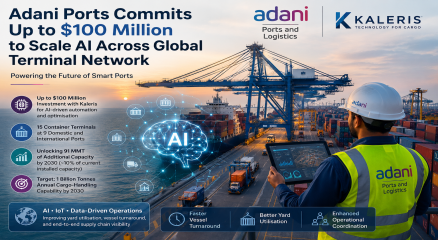
Adani Ports and Special Economic Zone (APSEZ) has expanded its technology partnership with US-based supply chain software provider Kaleris, committing up to $100 million toward automation and optimisation initiatives as it accelerates digital transformation across its port operations. The multi-year agreement will see Kaleris deploy AI-enabled terminal operating and optimisation systems across APSEZ’s network of 15 container terminals located at nine domestic and international ports. The rollout is intended to create a unified digital platform that improves operational visibility, planning accuracy and resource utilisation across the company’s maritime logistics ecosystem. The investment forms part of APSEZ’s broader plan to spend approximately $850 million on technology upgrades and decarbonisation initiatives by 2031. The company said automation investments under the Kaleris partnership will be implemented in phases to support long-term capacity expansion and operational efficiency goals. According to APSEZ, the technology deployment is expected to help unlock an additional 91 million metric tonnes (MMT) of cargo-handling capacity by 2030, equivalent to roughly 10% of its current installed capacity. The company is targeting annual cargo-handling capability of one billion tonnes by the end of the decade. The expanded programme builds on earlier deployments at six ports and will extend advanced planning, container handling and terminal optimisation capabilities across the wider network. APSEZ expects the systems to improve yard utilisation, accelerate vessel turnaround times and enhance end-to-end coordination between port assets and logistics operations. The company said the initiative aligns with its strategy to integrate artificial intelligence, Internet of Things (IoT) technologies and data-driven decision-making into port operations. By standardising systems across multiple terminals, APSEZ aims to improve productivity and operational consistency while supporting future growth in cargo volumes. As India’s largest integrated transport and logistics operator, APSEZ currently accounts for a significant share of the country’s port cargo volumes and continues to expand its domestic and international footprint. The latest investment underscores the growing role of automation and AI in modern container terminal management as operators seek higher efficiency, faster vessel turnaround and improved supply chain visibility. Follow CARGOCONNECT for more such updates.
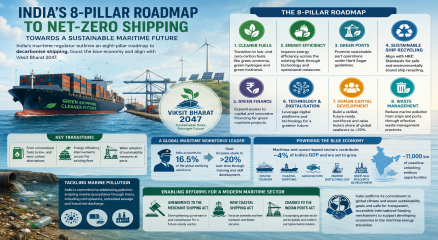
India’s maritime regulator has outlined an eight-pillar roadmap aimed at steering the country’s shipping sector toward net-zero emissions, with a focus on cleaner fuels, sustainable port operations, green financing, workforce development and environmentally responsible ship recycling. Speaking on World Ocean Day, Director General of Shipping Shyam Jagannathan said the framework is designed to support the decarbonisation of a sector that handles the vast majority of India’s international trade while aligning with the country’s long-term economic and environmental objectives. The roadmap forms part of the Directorate General of Shipping’s National Maritime Decarbonisation Policy Framework and centres on five broad themes: green shipping and ports, sustainable ship recycling, green finance and technology, human capital development, and waste management. On ship recycling, India intends to align its practices with the standards of the Hong Kong International Convention for the Safe and Environmentally Sound Recycling of Ships. Authorities also plan to expand the use of digital platforms and improve access to capital for green maritime projects. The roadmap places significant emphasis on workforce development. India currently accounts for around 16.5% of the global seafaring workforce, and policymakers aim to increase that share beyond 20% over time through training and skill development initiatives. Jagannathan linked the maritime transition agenda to the government’s broader Viksit Bharat 2047 vision, highlighting the growing importance of the blue economy. He noted that maritime and ocean-based sectors contribute roughly 4% of India’s GDP and are expected to play a larger role in supporting long-term economic growth. Beyond shipping, the strategy identifies opportunities in cruise tourism, coastal shipping, aquaculture, marine biotechnology and deep-sea resource development. India’s coastline, stretching approximately 11,000 kilometres, is expected to remain central to these growth plans. The policy push is also accompanied by a wider legislative agenda. Proposed reforms include amendments to the Merchant Shipping Act, a new Coastal Shipping Act focused on domestic maritime transport and feeder services, and changes to the Indian Ports Act aimed at encouraging greater private-sector participation and modern port governance models. Addressing environmental concerns, Jagannathan stressed the need to tackle pollution entering marine ecosystems through rivers, including microplastics, untreated sewage and industrial discharge. He reiterated India’s commitment to global climate and ocean sustainability goals while calling for transparent international funding mechanisms that support developing economies during the maritime energy transition. Follow CARGOCONNECT for more such updates.
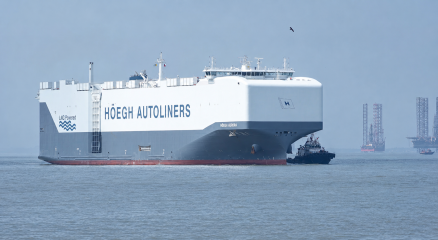
Höegh Aurora, the flagship of Höegh Autoliners' next-generation Aurora Class fleet, makes its historic maiden calls to the Indian ports of Ennore, Mumbai, and Pipavav, marking a significant milestone in the company's continued commitment to India and its growing export economy. The maiden voyage of Höegh Aurora to India underscores Höegh Autoliners' long-standing partnership with the Indian industry and its commitment to supporting the country's rapidly expanding automotive, industrial, and project cargo sectors with sustainable and future-ready ocean transportation solutions. For more than 15 years, Höegh Autoliners has been connecting Indian manufacturing to global markets, transporting millions of cubic metres of automobiles, project cargo, and industrial equipment from Indian ports to customers across four continents. From metro coaches and locomotives to construction, mining, and agricultural equipment, the company continues to play a key role in enabling India's growing industrial footprint worldwide. Commenting on the occasion, Mr. Andreas Enger, CEO of Höegh Autoliners, said: "The maiden call of Höegh Aurora marks an exciting new chapter in our 15-year commitment to Indian trade. As one of our most important and dynamic markets, India plays a key role in our global network, and with Höegh Aurora we can now offer our customers industry-leading capacity and the most sustainable deep-sea transportation in our segment." Her arrival comes at a particularly fitting moment. Just two weeks ago, during the first visit by an Indian Prime Minister to Norway in more than 40 years, our two countries launched a Green Strategic Partnership, with green shipping identified as a key priority. A Norwegian-flagged vessel at the forefront of maritime decarbonisation, carrying Indian cargo to global markets, is a tangible example of that ambition being put into practice. Capt. Atuldutt Sharma, Head of Sales – Middle East, India & Sri Lanka, Höegh Autoliners, added: "The maiden call of Höegh Aurora to India is a significant milestone for our customers and partners across the region. India continues to be one of the fastest-growing manufacturing and export hubs globally, and the Aurora Class is purpose-built to support this growth. Combining industry-leading sustainability with unmatched cargo flexibility, these vessels enable us to offer safe, efficient, and future-ready transportation solutions for automobiles, High & Heavy, breakbulk, and project cargoes from India to global markets." The Aurora Class represents a transformational leap in sustainable deep-sea transportation and reflects Höegh Autoliners' commitment towards decarbonisation and greener shipping solutions. Designed as the world's most environmentally friendly Pure Car and Truck Carrier (PCTC), the Aurora Class has sustainability at the core of its design and operations. With a carrying capacity of 9,100 CEUs, the Aurora Class vessel “Höegh Aurora” is the largest PCTC to call India, a record previously held by Höegh Autoliners Horizon class vessels with a carrying capacity of 8,500 CEUs, which have been regularly calling Indian ports since “Höegh Tracer” made its maiden call in 2017. The Aurora Class vessels are multi-fuel ready and equipped with advanced MAN engines capable of operating on Marine Gas Oil (MGO) and LNG, while also being prepared for future conversion to carbon-neutral ammonia and methanol propulsion. The Aurora Class is the first vessel class in the PCTC segment to receive DNV's ammonia-ready and methanol-ready notations and is designed to reduce carbon emissions per car transported by up to 58% compared to the current industry standard. The Aurora Class is a key enabler of Höegh Autoliners' ambition to achieve net-zero emissions by 2040 and provides customers with a significantly lower carbon footprint for their supply chains while maintaining the highest standards of safety, efficiency, and operational flexibility. Beyond its environmental credentials, the Aurora Class has been purpose-built to carry a wide range of High & Heavy, breakbulk, and project cargoes in addition to automobiles. Key features include: • Additionally strengthened decks for heavier cargo loads • Wide internal ramps for seamless cargo movement • Shore ramp with Safe Working Load (SWL) of up to 375 metric tonnes • 12-metre-wide and 6.5-metre-high stern door opening • Enhanced deck heights and cargo flexibility for future cargo requirements These advanced cargo capabilities enable the safe transportation of oversized and complex cargoes, including mining and construction equipment, wind turbine components, transformers, locomotives, rolling stock, metro coaches, heavy machinery, and other project cargoes alongside automotive cargo. The successful maiden call of Höegh Aurora to Indian ports further demonstrates Höegh Autoliners' confidence in India as a strategic manufacturing and export hub. As India continues to strengthen its position in global trade, Höegh Autoliners remains committed to supporting the country's growth ambitions through sustainable shipping solutions, innovative vessel technology, and reliable global ocean transportation services. The arrival of Höegh Aurora represents not only the introduction of the most environmentally friendly PCTC ever built but also a clear demonstration of Höegh Autoliners' long-term commitment to India, its customers, and a more sustainable future for global shipping. For more such news and updates, visit CARGOCONNECT.
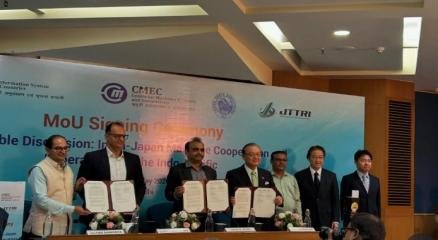
India’s maritime sector received a significant boost with the signing of a Memorandum of Understanding (MoU) between the Indian Ports Association (IPA), the Centre for Maritime Economy and Connectivity (CMEC), and Japan Transport and Tourism Research Institute (JTTRI). The agreement is aimed at strengthening bilateral cooperation in maritime research, policy development, port connectivity, logistics, and sustainable maritime growth between India and Japan. The tripartite partnership marks an important step in expanding collaboration between two of Asia’s leading maritime nations at a time when resilient supply chains, port modernization, and regional connectivity are becoming critical priorities for global trade. Under the MoU, the three organizations will work together on joint research initiatives, knowledge exchange programmes, capacity building, and policy studies focused on emerging trends in the maritime and logistics sectors. Industry stakeholders believe the agreement will create a stronger framework for sharing expertise in areas such as port-led development, maritime infrastructure, logistics efficiency, digital transformation, and sustainable shipping practices. The collaboration is also expected to facilitate academic exchanges and research projects that support evidence-based policymaking for the maritime sector. India and Japan have steadily strengthened their maritime and economic partnership over the past decade, driven by shared interests in enhancing regional connectivity, securing maritime trade routes, and building robust supply chains across the Indo-Pacific region. The latest MoU aligns with these broader strategic objectives by promoting deeper institutional engagement between maritime research bodies and industry stakeholders from both countries. Officials associated with the initiative highlighted that the agreement will encourage the exchange of best practices and innovative solutions to address evolving challenges facing the global maritime industry. The partnership is expected to support research on port competitiveness, green shipping corridors, maritime decarbonization, and multimodal logistics integration—areas that are increasingly shaping the future of international trade. For India, the collaboration complements ongoing efforts to enhance port efficiency and strengthen its position as a leading maritime hub under its long-term maritime development vision. For Japan, the partnership provides an opportunity to expand research cooperation and contribute to sustainable maritime growth across the region. As global supply chains continue to evolve amid geopolitical and economic shifts, the IPA-CMEC-JTTRI partnership is expected to play a meaningful role in fostering innovation, strengthening maritime connectivity, and advancing India-Japan cooperation in the maritime and logistics ecosystem. The agreement reinforces the commitment of both countries to building a more resilient, efficient, and sustainable maritime future. 𝐒𝐭𝐚𝐲 𝐓𝐮𝐧𝐞𝐝 𝐭𝐨 CARGOCONNECT 𝐟𝐨𝐫 𝐥𝐚𝐭𝐞𝐬𝐭 𝐮𝐩𝐝𝐚𝐭𝐞𝐬!
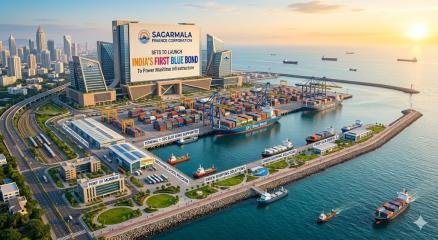
India’s maritime financing landscape is poised for a significant milestone as Sagarmala Finance Corporation Limited (SMFCL) is set to launch the country’s first-ever blue bond, marking a new chapter in sustainable financing for the maritime and coastal infrastructure sectors. The proposed issuance is expected to raise up to ₹1,000 crore, including a greenshoe option of ₹500 crore, according to company officials. The initiative is aimed at diversifying funding sources while supporting projects linked to ports, coastal infrastructure, inland waterways and other ocean-based economic activities. The move also aligns with India’s broader vision of strengthening the blue economy through environmentally responsible investments. Blue bonds are a specialised category of debt instruments designed to finance projects that promote the sustainable use of marine and water resources. While green bonds have gained considerable traction globally in recent years, blue bonds remain a relatively niche segment of the sustainable finance market. According to World Bank estimates, global blue bond issuances crossed $15 billion by mid-2025, highlighting growing investor interest in ocean-focused development initiatives. For SMFCL, the proposed bond issue represents more than just a fundraising exercise. The maritime-focused non-banking financial company is seeking to secure longer-tenure funding to better match the duration of the loans it extends to infrastructure projects. Industry estimates indicate that while the company’s existing borrowings carry an average tenor of around 3.5 years, the loans it disburses typically extend to nearly 12 years. The blue bond is therefore expected to help reduce asset-liability mismatches and strengthen the institution’s long-term lending capabilities. Established under the Ministry of Ports, Shipping and Waterways, SMFCL has emerged as India’s first dedicated maritime-sector NBFC. Since commencing lending operations, the institution has focused on addressing financing gaps across strategic maritime segments, including port development, shipbuilding, logistics infrastructure and coastal connectivity projects. The company received its NBFC licence in 2025 and has since positioned itself as a key financial enabler for India’s port-led development strategy. The upcoming blue bond issue is expected to complement the company’s broader capital-raising plans. SMFCL has previously indicated its intention to mobilise as much as ₹10,000 crore during FY27 through a combination of bonds, term loans and overseas borrowings to support the expansion of India’s maritime ecosystem. Funding will be channelled towards greenfield and brownfield port projects, shipbuilding facilities, inland waterways, multimodal logistics networks and last-mile connectivity infrastructure. Industry experts view the proposed issuance as a potential catalyst for the development of India’s blue finance market. If successful, the bond could pave the way for other infrastructure and financial institutions to tap sustainable debt instruments dedicated to marine conservation and ocean-linked economic growth, reinforcing India’s ambitions to become a leading maritime nation while advancing environmental stewardship. 𝐒𝐭𝐚𝐲 𝐓𝐮𝐧𝐞𝐝 𝐭𝐨 https://cargoconnect.co.in/ 𝐟𝐨𝐫 𝐥𝐚𝐭𝐞𝐬𝐭 𝐮𝐩𝐝𝐚𝐭𝐞𝐬!
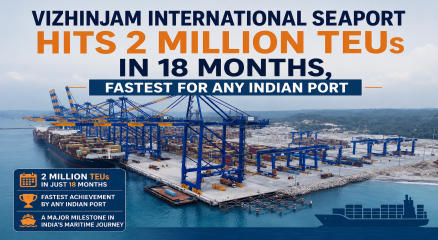
The Adani Group-operated Vizhinjam International Seaport in Kerala has handled over 2 million twenty-foot equivalent units within just 18 months of starting operations, making it the fastest Indian facility to reach this milestone. According to the port operator, Adani Ports and Special Economic Zone Ltd, Vizhinjam crossed the 1 million TEU mark in August 2025 and has now doubled that figure quickly after trial operations started in July 2024. The port was dedicated to the nation by Prime Minister Narendra Modi in May 2025. "Vizhinjam International Seaport has become the fastest Indian port to cross both the 1 million TEU and 2 million TEU milestones since beginning operations in 2024," the company stated on Thursday. The port has handled over 950 vessels, including 67 ultra-large container vessels (ULCVs). It has also berthed some of the world’s largest container ships, such as the MSC Irina, noted as the world’s largest container vessel, and the MSC Verona, among the deepest-draft vessels to arrive at an Indian port. Located about 10 nautical miles from the busy east-west international shipping route, Vizhinjam is becoming a major transshipment hub connecting South Asia, West Asia, Europe, Africa, and South America. The port has a natural draft of around 20 meters, allowing large vessels to dock without significant dredging. Shipping operators say the location reduces transit time and fuel costs, making the port appealing for global trade routes that are increasingly affected by geopolitical tensions and supply chain disruptions. For years, a large portion of India's transshipment cargo has been managed at foreign ports. With Vizhinjam expanding quickly, India aims to handle more of this cargo domestically and lessen its dependence on overseas hubs. The port is also expected to grow further. Phase II development is underway with an investment of around Rs 16,000 crore and is slated for completion by 2028. Once finished, the expansion will greatly improve container handling capacity and support full-scale export-import operations. APSEZ recently announced that it became the first Indian integrated transport utility to handle over 500 million metric tonnes (MMT) of cargo in a single year. For more such news and updates, visit CARGOCONNECT.
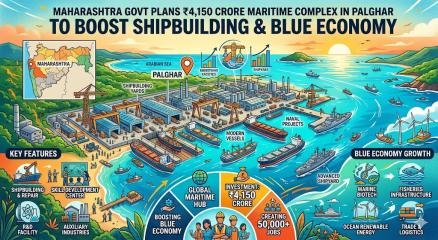
Maharashtra is set to strengthen its position in India’s maritime and logistics landscape with plans to develop a ₹4,150 crore Integrated Maritime Complex in Palghar district near the upcoming Vadhvan Port. The proposed project is expected to boost shipbuilding capabilities, maritime infrastructure, coastal employment, and the state’s larger blue economy ambitions. The proposed “United Sadhav Integrated Maritime Complex” will be developed at Nandgaon in the Vadhvan region of Palghar over nearly 600 acres. The project is being positioned as a strategic maritime infrastructure initiative aimed at creating an integrated ecosystem for shipbuilding, ship repair, offshore marine services, and green ship recycling. According to Maharashtra Fisheries and Ports Minister Nitesh Rane, the state aims to emerge as a major global maritime and shipbuilding hub by leveraging its coastline, port connectivity, and industrial ecosystem. The project proposal was recently reviewed in a meeting involving officials from the Maharashtra Maritime Board (MMB) and representatives of the private developer. The maritime complex is expected to include modern dry docks, advanced ship repair yards, marine engineering facilities, and environmentally sustainable recycling infrastructure. Industry stakeholders believe the development could significantly improve India’s domestic shipbuilding capacity while reducing dependence on overseas repair and maintenance facilities. The investment also aligns with the rapid development of the Vadhvan Port project, which has been identified as one of India’s largest upcoming deep-draft ports with an estimated project cost exceeding ₹76,000 crore. The port is being developed through a joint venture between Jawaharlal Nehru Port Authority (JNPA) and Maharashtra Maritime Board. The proximity of the proposed maritime complex to Vadhvan Port is expected to create strong synergies for cargo movement, marine engineering services, and export-oriented manufacturing. Experts note that integrated maritime clusters are increasingly becoming critical for global supply chains as shipping companies seek faster turnaround times, integrated maintenance facilities, and sustainable marine infrastructure. The Palghar project could also support India’s broader ambitions under the Maritime India Vision 2030 programme, which focuses on enhancing port-led industrialization and coastal economic development. The first phase of the project is expected to begin within the next two years, subject to regulatory approvals and land allocation. The developers have reportedly sought government support in the form of long-term land lease arrangements, single-window clearances, mega-project status, and skill development assistance. Apart from strengthening the maritime economy, the project is expected to generate substantial employment opportunities across shipbuilding, logistics, engineering, fabrication, and ancillary services in Maharashtra’s coastal belt. The development could also attract downstream investments in marine technology, offshore services, and coastal manufacturing. As India continues to expand its maritime infrastructure and logistics capabilities, Maharashtra’s proposed integrated maritime complex may emerge as a key catalyst in positioning the state as a leading maritime industrial hub on the western coast. 𝐒𝐭𝐚𝐲 𝐓𝐮𝐧𝐞𝐝 𝐭𝐨 https://cargoconnect.co.in/ 𝐟𝐨𝐫 𝐥𝐚𝐭𝐞𝐬𝐭 𝐮𝐩𝐝𝐚𝐭𝐞𝐬!
India’s two largest container gateways, Mundra and Nhava Sheva, are facing mounting congestion as rising cargo volumes, truck driver shortages and rerouted shipments from the Middle East strain operations across the country’s logistics network. Shipping lines and logistics operators are reporting worsening turnaround times at both ports, with vessel delays averaging nearly two and a half days and some unscheduled ships waiting up to five days for berthing. The disruptions are slowing cargo movement, tightening yard space and forcing carriers to make last-minute operational changes. According to industry reports, a shortage of truck drivers has become a major bottleneck for container transfers between terminals and inland transport hubs. The issue has reduced the pace of cargo evacuation from ports, adding pressure on already crowded container yards. Terminal operators have intermittently restricted gate access to control container inflow, while export gate schedules continue to shift frequently. These changes are complicating truck planning and increasing uncertainty for exporters and freight forwarders. The congestion is being intensified by cargo diversions linked to disruptions in the Middle East, particularly around Gulf trade routes. Shipping lines have increasingly redirected transshipment cargo to Indian ports as alternatives to facilities in the Persian Gulf, sharply increasing container volumes in recent weeks. The pressure has begun affecting carrier schedules. Some shipping companies are rerouting vessels between terminals at short notice to avoid yard congestion. Danish shipping giant Maersk recently shifted several sailings from its regular terminal at Nhava Sheva to PSA Mumbai after facing space constraints and a growing container backlog. Industry stakeholders say these sudden terminal changes are creating operational and financial challenges for shippers, including higher handling costs and difficulties coordinating customs clearance and inland transportation. The latest disruption comes at a time when India has been positioning itself as a major global manufacturing and logistics hub. Over the past decade, the country has expanded port capacity, improved freight corridors and modernised customs processes to strengthen supply chain efficiency. However, the current congestion highlights the vulnerability of port infrastructure during periods of sudden trade realignment and geopolitical disruption. Logistics experts warn that prolonged delays could increase freight costs, extend delivery timelines and place additional pressure on exporters already dealing with volatile global shipping conditions. Follow CARGOCONNECT for more such updates.
The diversification process by Apple continues to progress as India becomes one of the centers for manufacturing operations. Based on an analysis by Smart Analytics Global (SAG), the percentage share of Indian manufacturing of iPhones has increased from 14% in 2024 to 23% in 2025 and further to 28% by 2026, whereas China’s share has decreased from 83% to 74% within the same timeframe. As Apple continues to lower its reliance on China, India is all set to emerge as the major assembly hub for 28 percent of all iPhones exported around the world by 2026, compared to just 23 percent in the prior year. This change is due to the company's overall strategy of spreading its manufacturing operations in order to mitigate potential tariff risks and geopolitical risks, in addition to creating a more flexible manufacturing network beyond China. Based on the estimates of Smart Analytics Global (SAG), China's share in global iPhone production dropped from 83% in 2024 to 74% in 2025, while India's share increased from 14% in 2024 to 23% in 2025. Estimates provided by another market research firm, Counterpoint Research, indicate that India's share in global iPhone manufacturing could increase to approximately 26% in 2026 from 23% in 2025. As per SAG, “India will account for the manufacture of 28 percent of iPhones shipped globally in 2026, rising from 23 percent in 2025. This growth will be fueled by the ongoing diversification of Apple outside China and capacity build-up at existing manufacturers in India like Tata Electronics,” said Abhilash Kumar, an analyst at Smart Analytics Global. According to Tarun Pathak, research director at Counterpoint Research, “Apple's manufacturing partners have substantially increased their manufacturing capacities and assembly lines in India. They have also diversified their product portfolio made in India.” He further stated that the increase in manufacturing capacity of Tata Electronics is another factor aiding the growth. Apple has managed to localize production substantially in India through manufacturers like Foxconn and Tata Electronics. The recent takeover of Wistron and Pegatron in India by the Tata Group represents a huge step forward in Apple’s localization efforts in India. At present, India is assembling a larger number of iPhones, even the latest versions, and has become an important source of exports, targeting countries like the US and European nations. Over the past five years, Apple has manufactured iPhones worth almost $70 billion in India using its PLI scheme, where around $51 billion, or almost 73% of all iPhones manufactured, were exported from India. Moreover, iPhones have become the most exported goods from India during the previous financial year. India has become the biggest beneficiary of Apple’s changing supply chain. From initially assembling iPhones on a smaller scale, it has grown to become a manufacturing cluster for iPhones through government incentives, increased manufacturing capabilities, and the growing presence of suppliers. Several of the most important suppliers and manufacturers for Apple are still highly entrenched within China, allowing the country to enjoy an unrivaled capacity and adaptability when it comes to managing mass-scale productions and product shifts. For more such news and updates, visit CARGOCONNECT.
Shadowfax is significantly expanding its quick commerce infrastructure, announcing plans to scale its dark store network from 15 facilities to 100 by FY27. The move underscores the company’s growing focus on hyperlocal deliveries, same-day fulfilment, and direct-to-consumer (D2C) logistics as competition intensifies in India’s fast-evolving quick commerce ecosystem. The Bengaluru-based company plans to add 85 new dark stores over the next fiscal year, targeting metro cities with delivery radiuses of approximately seven kilometres and fulfilment timelines of around 30 minutes. The expansion is expected to support rising demand from vertical quick commerce platforms and D2C brands that increasingly rely on third-party logistics (3PL) partners for rapid deliveries. According to company executives, vertical marketplaces are emerging as a profitable segment because of their dependence on outsourced logistics infrastructure rather than captive fulfilment networks. Shadowfax believes this trend creates a strong opportunity for scalable 3PL-led quick commerce models. The dark store expansion will account for nearly 10% of Shadowfax’s planned capital expenditure of ₹180–190 crore in FY27. The company is simultaneously strengthening its automation and artificial intelligence capabilities to improve operational efficiency. AI-led demand forecasting, automated slotting, and smarter sorting centre operations are expected to reduce overhead costs while accelerating breakeven timelines for new facilities. Shadowfax’s aggressive expansion comes on the back of strong financial performance. The company reported a consolidated net profit of ₹55.8 crore in Q4 FY26, compared to a net loss of ₹9.9 crore during the same period last year. Revenue from operations surged 73.6% year-on-year to ₹1,237 crore, reflecting growing order volumes and increased adoption of quick commerce delivery services. Founded in 2015, Shadowfax has evolved into one of India’s largest logistics and last-mile delivery networks, serving over 2,500 cities and more than 15,000 pincodes. The company currently handles millions of shipments daily through a technology-driven delivery ecosystem that supports e-commerce, grocery, hyperlocal, and D2C brands. Industry analysts believe the dark store expansion reflects a broader shift within India’s logistics sector, where speed, proximity-based fulfilment, and automated operations are becoming central to supply chain competitiveness. As quick commerce adoption accelerates beyond groceries into categories such as fashion, electronics, and personal care, logistics providers like Shadowfax are positioning themselves as critical enablers of ultra-fast retail fulfilment. 𝐒𝐭𝐚𝐲 𝐓𝐮𝐧𝐞𝐝 𝐭𝐨 https://cargoconnect.co.in/ 𝐟𝐨𝐫 𝐥𝐚𝐭𝐞𝐬𝐭 𝐮𝐩𝐝𝐚𝐭𝐞𝐬!
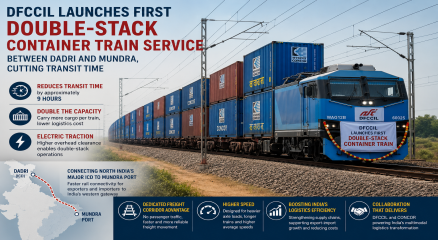
India’s Dedicated Freight Corridors (DFCs) are rapidly reshaping the country’s logistics landscape, with the Western Dedicated Freight Corridor (WDFC) between Dadri and Jawaharlal Nehru Port Authority (JNPA) emerging as a game-changing infrastructure project for supply chains and multimodal freight movement. Designed exclusively for cargo operations, the corridor is significantly reducing transit times, improving reliability, and easing congestion on conventional rail routes. Stretching nearly 1,500 km from Dadri in Uttar Pradesh to JNPA near Mumbai, the corridor forms the backbone of India’s western logistics artery, connecting manufacturing centres, inland container depots, industrial clusters, and ports. With dedicated tracks for freight trains, the network allows uninterrupted cargo movement at higher average speeds, eliminating delays caused by mixed passenger and freight operations. One of the biggest outcomes has been a sharp reduction in transit time. Freight movement between Dadri and JNPA that traditionally took close to 72 hours on congested rail routes is now being completed in nearly half the time, improving turnaround efficiency for exporters, importers, and logistics operators. Industry stakeholders believe the reduction in transit duration will strengthen India’s competitiveness in global trade and support the government’s target of lowering logistics costs as a percentage of GDP. The DFC network has also enabled the operation of longer and heavier freight trains, including double-stack container services on electrified routes. This has increased carrying capacity while lowering per-unit transportation costs. According to sector estimates, rail freight on dedicated corridors is considerably more energy-efficient and environmentally sustainable than road transport, aligning with India’s broader decarbonisation goals. Beyond operational efficiency, the corridors are catalysing the growth of integrated logistics ecosystems. Regions such as Dadri, Greater Noida, and Jewar are witnessing accelerated development of multimodal logistics parks, warehousing zones, and industrial hubs due to their strategic connectivity with both the Eastern and Western DFCs. The emerging “rail-road-air” logistics triangle around the National Capital Region is expected to attract substantial investments in manufacturing and distribution infrastructure. The Dedicated Freight Corridor Corporation of India (DFCCIL) has reported rising freight train volumes on the operational stretches, indicating growing industry adoption. The completion of key links on the western corridor is expected to further enhance throughput and reduce dependency on road transport for long-haul cargo. Analysts say the dedicated rail network could become central to India’s ambition of creating faster, greener, and more resilient supply chains. As India continues investing in additional freight corridors across the country, the success of the Dadri-JNPA route demonstrates how infrastructure modernisation can directly influence trade efficiency, logistics performance, and industrial growth. 𝐒𝐭𝐚𝐲 𝐓𝐮𝐧𝐞𝐝 𝐭𝐨 https://cargoconnect.co.in/ 𝐟𝐨𝐫 𝐥𝐚𝐭𝐞𝐬𝐭 𝐮𝐩𝐝𝐚𝐭𝐞𝐬
In a strategic warehousing move, the South Eastern Coalfields Limited (SECL), the second largest coal-producing subsidiary of Coal India Limited, has signed a Memorandum of Understanding (MoU) with Central Warehousing Corporation (CWC) for collaboration in coal logistics, railway rake provisioning under GPWIS and similar schemes, and integrated transportation services. Guided by the Union Ministry of Coal, SECL is rapidly working to improve India’s energy security and coal logistics infrastructure. The company is taking steps to boost coal evacuation efficiency and ensure a steady fuel supply to essential sectors. This partnership with CWC is a significant move in that direction. The goal of the partnership with CWC is to strengthen SECL’s coal evacuation capabilities by providing reliable and efficient rail logistics solutions to meet the rising demand from the power, steel, cement, and other sectors. The MoU outlines collaboration in various areas, including dedicated railway rake operations, integrated coal transportation solutions, multimodal logistics, first-mile and last-mile connectivity, and the deployment of digital systems for logistics monitoring and operational efficiency. Under the agreed framework, both organizations will explore provisioning and operation of GPWIS and equivalent racks, integrated rail logistics services, and long-term transportation solutions aimed at improving dispatch efficiency and reducing logistical obstacles. The MoU was signed in the presence of Harish Duhan, Chairman-cum-Managing Director of SECL, and Santosh Sinha, Managing Director of CWC. Functional Directors and senior officials from SECL, as well as representatives from CWC, attended the signing ceremony. SECL plays a vital role in meeting the country's growing coal demand. In the current financial year 2026-27, Coal India Limited has already surpassed the 100 million tonne production mark, with SECL contributing more than 26.8 million tonnes. Central Warehousing Corporation (CWC), a Navaratna Central Public Sector Enterprise under the Government of India, is a leader in integrated logistics and warehousing services. It has extensive experience in rail-linked cargo movement and multimodal transportation solutions. For more such news and updates, visit CARGOCONNECT.