
Loading...
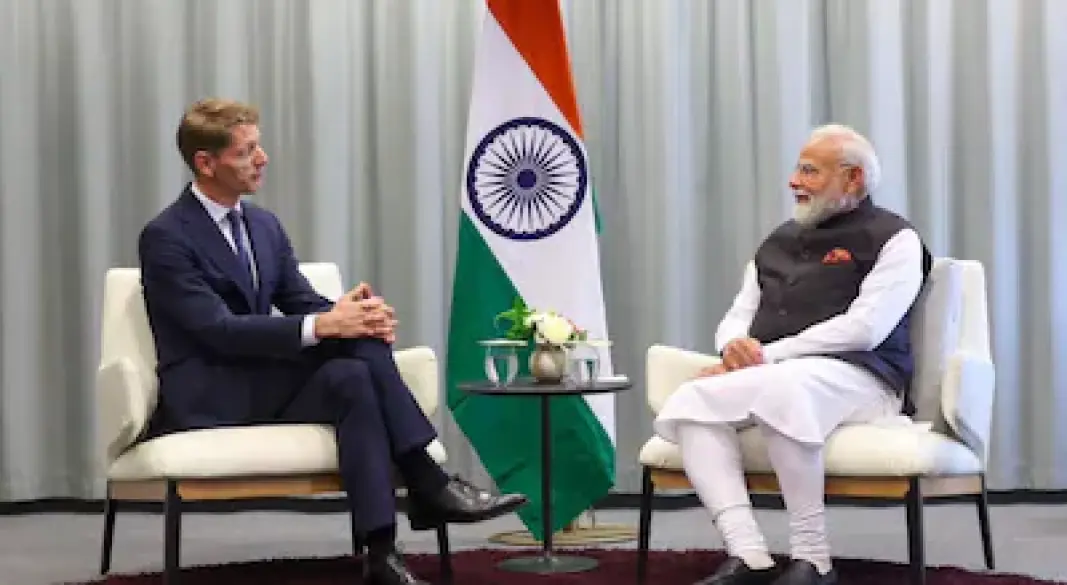
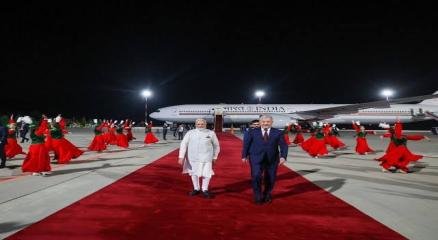
Prime Minister Narendra Modi held discussions with senior leadership of A.P. Moller–Maersk in Gothenburg, Sweden, focusing on strengthening cooperation in maritime logistics, port infrastructure development, and green shipping initiatives. The meeting underscores India’s growing push to modernise its maritime ecosystem and position itself as a major global logistics and shipping hub.
During the interaction, PM Modi met Maersk Chairman Robert Maersk Uggla on the sidelines of his engagements in Sweden, where he has been holding talks with European industry leaders and government officials. Discussions reportedly centred on opportunities for investments in India’s ports, logistics infrastructure, and sustainable maritime solutions.
The talks assume significance as India accelerates efforts under its Maritime Amrit Kaal Vision 2047, aimed at transforming the country’s shipping and logistics capabilities through port-led development, improved multimodal connectivity, and adoption of green technologies. The government has been actively engaging global maritime companies to attract investments and technological expertise into the sector.
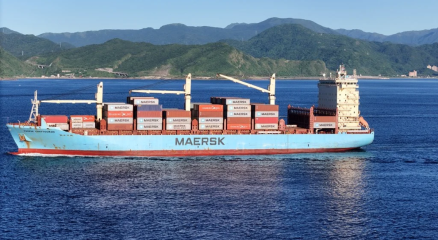
Maersk, one of the world’s largest container shipping and integrated logistics companies, has been expanding its presence in India across supply chain solutions, warehousing, inland logistics, and port operations. The company has also been at the forefront of global decarbonisation efforts in shipping, including investments in alternative fuels and low-emission vessel technologies.
Green shipping emerged as a key area of discussion during the Gothenburg meeting. India has increasingly prioritised sustainable maritime operations through international collaborations and policy initiatives focused on reducing emissions and building greener port infrastructure. Recent partnerships with European countries, including Denmark, have already paved the way for initiatives such as a Centre of Excellence in Green Shipping and studies on green maritime corridors.
The meeting with Maersk aligns with India’s broader strategy of strengthening resilient supply chains and enhancing trade connectivity with Europe. Modi, during his engagements in Sweden, highlighted the importance of trusted global partnerships, resilient logistics networks, and sustainable industrial growth amid evolving geopolitical and economic challenges.
Industry observers believe deeper collaboration between India and global shipping leaders such as Maersk could accelerate the modernisation of Indian ports, improve cargo handling efficiencies, and support the transition towards cleaner maritime transport systems. The discussions also reinforce India’s ambition to emerge as a leading player in the global blue economy and sustainable shipping ecosystem.
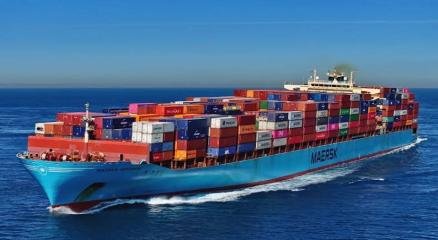
A.P. Moller-Maersk expects to restore all its shipping services through the Suez Canal by March 2027, according to the Suez Canal Authority (SCA). The outlook signals a potential step towards normalising global container shipping routes as the Danish shipping group continues to revise its vessel schedules and gradually increases its use of the strategic waterway. The timeline emerged during a video conference on 20 October between SCA Chairman and Managing Director Admiral Ossama Rabiee and senior Maersk executives, including Chief Operating Officer Rabab Boulos. The discussions focused on accelerating the return of the carrier’s services to the canal and strengthening cooperation between the two organisations. However, March 2027 remains an expected target rather than a confirmed deadline for individual services. According to the SCA, Maersk-affiliated vessels completed 276 transits through the Suez Canal between January and September 2026, compared with 146 during the corresponding period in 2025. The combined net tonnage increased to 23.3 million tonnes from seven million tonnes, indicating a significant rise in the group’s canal activity. Boulos acknowledged the progress made in restoring services through cooperation with the authority and expressed the expectation that all Maersk services would return by March 2027. She also identified the Suez Canal as the group’s preferred option, reflecting its strategic importance to international shipping networks. Maersk Vice President of Operations Ahmed Hassan said the company was continuing to update its sailing schedules to enable additional services to transit through the canal in the coming months. Hani El-Nady, the group’s representative for the Middle East and North Africa, added that Maersk was working to accelerate the return of its remaining services. The Suez Canal provides a direct maritime connection between the Red Sea and the Mediterranean, serving as a critical link for trade between Asia and Europe. Its use can reduce voyage distances and sailing times compared with routing vessels around the Cape of Good Hope at the southern tip of Africa. SCA Chairman Rabiee highlighted the canal’s economic advantages, particularly for large container ships, noting that geopolitical developments and their impact on fuel prices and freight rates have reinforced the importance of efficient shipping routes. A broader return by Maersk could help reduce voyage durations, improve vessel utilisation and release capacity currently tied up in longer voyages. These changes could also influence container shipping costs, although the eventual impact on freight rates will depend on market demand, available capacity and operating conditions. Despite the positive outlook, the pace of Maersk’s return will depend on conditions in the Red Sea region. The SCA has not announced confirmed return dates for every service, and Maersk continues to review its navigation plans. Both parties agreed to maintain discussions to strengthen cooperation and facilitate the restoration of services. The anticipated return by March 2027 will therefore be an important development to watch for global supply chains, particularly businesses relying on Asia-Europe trade routes. 𝐒𝐭𝐚𝐲 𝐓𝐮𝐧𝐞𝐝 𝐭𝐨 CARGOCONNECT 𝐟𝐨𝐫 𝐥𝐚𝐭𝐞𝐬𝐭 𝐮𝐩𝐝𝐚𝐭𝐞𝐬!
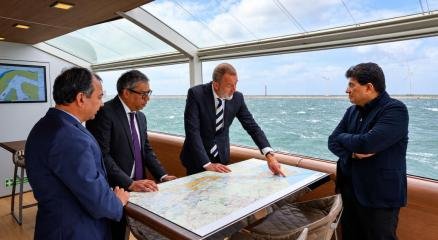
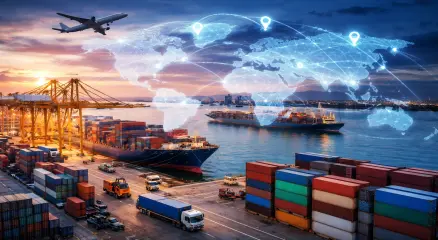
Global container freight rates have surged 130% since February 2026, as renewed tensions in the Middle East disrupt shipping routes and increase uncertainty across international trade. The sharp rise in ocean freight costs comes even as India’s container-based export-import trade continues to record strong growth, according to a report by financial services firm Jefferies. According to the report, global container freight rates have climbed from approximately US$2,000–2,500 in February to around US$4,000–4,500 in October 2026. The increase reverses the downward trend witnessed through much of 2025 and early 2026, when an improved demand-supply balance helped ease shipping costs following elevated rates in 2024. The latest surge highlights the vulnerability of global supply chains to geopolitical developments and changes in maritime operations. Higher freight rates can put additional pressure on exporters, importers, freight forwarders and manufacturers by increasing transportation costs and complicating shipment planning. Jefferies identified the potential return of shipping lines to the Suez Canal as a key factor to monitor. Any change in vessel routing could influence transit times, available shipping capacity and freight pricing, depending on security conditions and operational decisions. Despite the rise in global freight rates, India’s containerisable export-import trade recorded a 23% year-on-year increase in value in September 2026. Exports grew 22%, while imports increased 23%, according to the report. Exports to the United States rose 48% year-on-year during the month. However, shipments to the United Arab Emirates and Saudi Arabia declined by 12–15%, reflecting differing trade trends across key markets. India’s port performance was also mixed. Cargo volumes at major ports increased 13% year-on-year in September, while non-major ports registered a 1% decline. Among non-major ports, Gujarat recorded 3% growth, while ports in Maharashtra and Tamil Nadu reported increases of 6–7%. Ports along the eastern coast experienced a sharper decline in volumes. With geopolitical uncertainty continuing to influence maritime operations, developments in West Asia and the possible return of shipping lines to the Suez Canal will remain important indicators for global freight markets. Changes in routing and shipping capacity could shape transportation costs in the coming months, making freight-rate volatility a critical consideration for businesses managing international supply chains. 𝐒𝐭𝐚𝐲 𝐓𝐮𝐧𝐞𝐝 𝐭𝐨 CARGOCONNECT 𝐟𝐨𝐫 𝐥𝐚𝐭𝐞𝐬𝐭 𝐮𝐩𝐝𝐚𝐭𝐞𝐬!
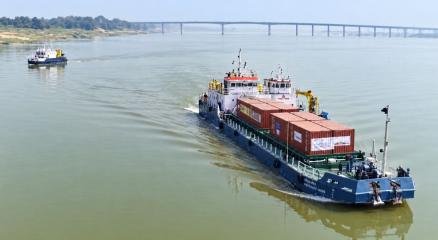
India’s inland waterway cargo traffic reached 218 million metric tonnes in the 2025–26 financial year, exceeding the 200-million-tonne target set under Maritime India Vision 2030. The milestone reflects the sector’s expansion over the past decade, as the government continues to develop navigation infrastructure, improve operational information and encourage cargo owners to consider waterway-based freight solutions. According to government figures highlighted on 16 October 2026, inland waterway cargo increased from 29 million tonnes in 2014–15 to 218 million tonnes in 2025–26. The latest volume is 18 million tonnes above the 2030 benchmark, representing a 9% increase over the target. The next challenge for the sector is to translate higher cargo volumes into dependable, commercially competitive freight services that can connect waterways with road and rail networks. Inland Waterway Network Continues to Expand: India has 111 National Waterways spanning 20,187 kilometres across 23 states and four Union Territories. However, 32 waterways, covering 5,155 kilometres, were operational as of March 2026. The distinction between designated and operational waterways remains important for cargo owners and logistics providers. Commercial services require navigable channels, suitable terminals, reliable vessel operations and effective connections to production and consumption centres. The Union Budget 2026–27 announced plans to operationalise 20 additional National Waterways over five years. The initiative forms part of the broader effort to expand the availability of inland water transport and strengthen its role in the national freight network. Longer-term policy ambitions include increasing inland water transport’s share of freight movement from approximately 2% to 5% and reaching 500 million tonnes of cargo by 2047. Navigation Information Becomes Critical to Operations: As cargo volumes rise, navigation reliability and access to timely operational information are becoming increasingly important. By September 2026, regular surveys monitoring the deepest navigable channel covered 22 National Waterways. Depending on local requirements, surveys are conducted weekly, fortnightly or monthly to assess available depth and support decisions on vessel draft and cargo loading. Electronic Navigational Charts had also been prepared for 18 operational and tidal waterways. Digital platforms, including PANI and IWAI Vessel Tracker, provide navigation-related information to operators. Access to more reliable data can help vessel operators plan voyages, determine loading conditions and manage schedules. However, digital information must be supported by physical infrastructure and fairway maintenance to ensure that waterways remain usable under changing conditions. For freight customers, the effectiveness of these measures will depend on whether they improve service consistency, vessel utilisation and the predictability of cargo movements. Jalvahak Scheme Seeks to Encourage Cargo Shift: Financial incentives are another element of the government’s strategy to increase waterway utilisation. Launched in December 2024, the Jalvahak scheme provides incentives of up to 35% of eligible operating expenditure for the waterway leg of qualifying cargo movements. The scheme covers National Waterways 1, 2 and 16, along with eligible routes under the Indo-Bangladesh Protocol. A separate component supports scheduled services operated by Inland and Coastal Shipping Limited, with funding from the Inland Waterways Authority of India (IWAI). The scheme addresses a key challenge in multimodal logistics: while water transport may offer advantages over certain long-distance road movements, additional handling, terminal charges and connecting transport can affect the overall cost of delivery. The incentive excludes first- and last-mile expenditure. Cargo owners must therefore evaluate the full logistics chain, including terminal handling, connecting road or rail transport, sailing frequency, transit time and delivery requirements. The commercial viability of waterway freight ultimately depends on the cost and reliability of the complete journey rather than the waterborne segment alone. Infrastructure Supports Multimodal Freight Movement: Infrastructure developed under the Jal Marg Vikas Project provides part of the foundation for cargo operations along National Waterway 1. Key developments include multimodal terminals at Varanasi, Sahibganj and Haldia, an intermodal terminal at Kalughat and a navigation lock at Farakka. These facilities are intended to support cargo handling and connect river transport with inland logistics networks. Private investment is also being encouraged to expand terminal infrastructure. The National Waterways (Construction of Jetties/Terminals) Regulations, 2025 established a framework intended to facilitate the development of jetties and terminals by companies, public bodies and joint ventures. The combination of infrastructure investment, navigation support and cargo incentives is intended to create more opportunities for businesses to incorporate inland waterways into their transport strategies. Commercial Competitiveness Remains the Next Test: Crossing the 200-million-tonne target represents a significant milestone in the expansion of India’s inland waterway cargo business. Sustaining this growth will require more than increasing aggregate tonnage. For manufacturers, exporters, importers and logistics providers, key considerations include predictable transit times, dependable vessel schedules, adequate terminal capacity and effective road and rail connections. Cargo volumes also need to be assessed alongside the distances travelled and the economics of individual routes. Tonnage measures the quantity of cargo handled, while tonne-kilometres account for both cargo weight and distance, offering a different perspective on freight activity. As additional waterways become operational and supporting infrastructure develops, the sector’s progress will increasingly depend on its ability to secure regular commercial cargo commitments. For India’s logistics industry, the priority is now to turn the expansion in inland waterway traffic into reliable, cost-effective and integrated freight services that can support long-term supply chain development. Follow CARGOCONNECT for more such updates