
Loading...
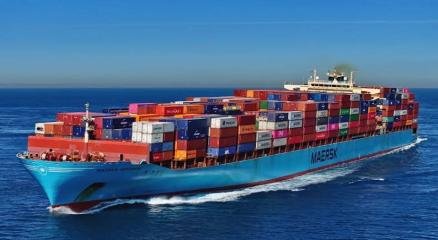
A.P. Moller-Maersk expects to restore all its shipping services through the Suez Canal by March 2027, according to the Suez Canal Authority (SCA). The outlook signals a potential step towards normalising global container shipping routes as the Danish shipping group continues to revise its vessel schedules and gradually increases its use of the strategic waterway. The timeline emerged during a video conference on 20 October between SCA Chairman and Managing Director Admiral Ossama Rabiee and senior Maersk executives, including Chief Operating Officer Rabab Boulos. The discussions focused on accelerating the return of the carrier’s services to the canal and strengthening cooperation between the two organisations. However, March 2027 remains an expected target rather than a confirmed deadline for individual services. According to the SCA, Maersk-affiliated vessels completed 276 transits through the Suez Canal between January and September 2026, compared with 146 during the corresponding period in 2025. The combined net tonnage increased to 23.3 million tonnes from seven million tonnes, indicating a significant rise in the group’s canal activity. Boulos acknowledged the progress made in restoring services through cooperation with the authority and expressed the expectation that all Maersk services would return by March 2027. She also identified the Suez Canal as the group’s preferred option, reflecting its strategic importance to international shipping networks. Maersk Vice President of Operations Ahmed Hassan said the company was continuing to update its sailing schedules to enable additional services to transit through the canal in the coming months. Hani El-Nady, the group’s representative for the Middle East and North Africa, added that Maersk was working to accelerate the return of its remaining services. The Suez Canal provides a direct maritime connection between the Red Sea and the Mediterranean, serving as a critical link for trade between Asia and Europe. Its use can reduce voyage distances and sailing times compared with routing vessels around the Cape of Good Hope at the southern tip of Africa. SCA Chairman Rabiee highlighted the canal’s economic advantages, particularly for large container ships, noting that geopolitical developments and their impact on fuel prices and freight rates have reinforced the importance of efficient shipping routes. A broader return by Maersk could help reduce voyage durations, improve vessel utilisation and release capacity currently tied up in longer voyages. These changes could also influence container shipping costs, although the eventual impact on freight rates will depend on market demand, available capacity and operating conditions. Despite the positive outlook, the pace of Maersk’s return will depend on conditions in the Red Sea region. The SCA has not announced confirmed return dates for every service, and Maersk continues to review its navigation plans. Both parties agreed to maintain discussions to strengthen cooperation and facilitate the restoration of services. The anticipated return by March 2027 will therefore be an important development to watch for global supply chains, particularly businesses relying on Asia-Europe trade routes. 𝐒𝐭𝐚𝐲 𝐓𝐮𝐧𝐞𝐝 𝐭𝐨 CARGOCONNECT 𝐟𝐨𝐫 𝐥𝐚𝐭𝐞𝐬𝐭 𝐮𝐩𝐝𝐚𝐭𝐞𝐬!
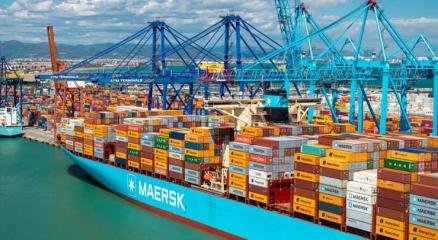
Maersk has announced an increase in its Emergency Contingency Surcharge (ECS) for cargo moving from the Indian subcontinent to North Europe and the Mediterranean, with the revised charges coming into effect from August 1, 2026. The move is expected to raise ocean freight costs for exporters across India and neighbouring South Asian markets, adding further pressure on supply chains already navigating volatile global shipping ecosystem. The revised ECS applies to cargo transported on Maersk's E3W (North Europe) and E4W (Mediterranean) services originating from North West India, South and East India, Nepal, Pakistan, Bangladesh, Sri Lanka and the Maldives. According to the carrier, the surcharge revision follows a review of prevailing market conditions aimed at maintaining the stability and reliability of its ocean freight. Under the new tariff structure, the ECS for shipments from North West India and Pakistan to North Europe will increase to US$3,500 per container across dry and reefer equipment, up from US$2,500. Similarly, shipments from South and East India and Nepal to North Europe will attract an ECS of US$3,800 for 20-foot containers and US$4,400 for 40-foot containers and reefers. Bangladesh-bound exports to North Europe will see the surcharge rise to US$4,000 for 20-foot containers and US$4,800 for 40-foot dry containers. Comparable increases have also been announced for shipments destined for the Mediterranean. The surcharge increase effectively adds US$1,000 per container across most trade lanes, making exports to Europe more expensive for manufacturers and shippers. Industry observers believe sectors such as textiles, engineering goods, chemicals, pharmaceuticals and automotive components, which rely heavily on Europe-bound container traffic, are likely to witness higher logistics costs in the coming months. The announcement comes amid continued uncertainty in global shipping markets, where carriers are adjusting freight rates and surcharges to offset elevated operating costs, capacity constraints and network disruptions. Shipping lines have increasingly relied on emergency and contingency surcharges to recover additional expenses arising from changing trade dynamics and operational challenges. In a separate advisory issued on July 17, Maersk also introduced a Heavy Load Surcharge (HWS) for cargo moving from North West India to North Europe and Israel-bound Mediterranean destinations, indicating a broader review of pricing across its regional services. For Indian exporters, the revised ECS is expected to translate into higher freight bills from August, prompting many to reassess logistics budgets, negotiate shipping contracts and explore cost optimisation strategies as Europe remains one of India's largest export markets. 𝐒𝐭𝐚𝐲 𝐓𝐮𝐧𝐞𝐝 𝐭𝐨 CARGOCONNECT 𝐟𝐨𝐫 𝐥𝐚𝐭𝐞𝐬𝐭 𝐮𝐩𝐝𝐚𝐭𝐞𝐬!

The Government of India and A.P. Moller-Maersk have reaffirmed their commitment to strengthening India's maritime sector through deeper collaboration across shipping, port infrastructure, shipbuilding, repair, container manufacturing and workforce development. The discussions reflect the country's growing focus on building a globally competitive maritime ecosystem while enhancing supply chain resilience and trade connectivity. Union Minister of Commerce and Industry, Piyush Goyal recently met Ahmed Hassan, Head of Asset Strategy at A.P. Moller-Maersk Group, to explore opportunities that align with India's long-term vision of becoming a leading maritime and logistics hub. The meeting highlighted the importance of public-private partnerships in accelerating investments, innovation and capacity building across the maritime value chain. The discussions covered multiple areas of collaboration, including port modernization, ship repair and maintenance, vessel flagging under the Indian registry, development of container manufacturing capabilities and strengthening maritime infrastructure. Both sides also emphasized the need to enhance India's competitiveness in global shipping while creating new employment and skill development opportunities. Maersk has been steadily expanding its engagement with India's maritime sector through strategic initiatives aimed at supporting the country's logistics transformation. The company has already partnered with Indian shipyards to explore repair, maintenance and shipbuilding opportunities while also evaluating the local sourcing and manufacturing of seaworthy containers. These initiatives are expected to encourage technology transfer, develop domestic capabilities and strengthen India's position in the global maritime supply chain. The collaboration also supports the Government of India's broader agenda of improving multimodal connectivity, modernizing ports and creating a resilient logistics network that can support the country's growing manufacturing and export ambitions. A stronger maritime sector is expected to reduce logistics costs, improve trade efficiency and enhance India's integration with global supply chains. Industry observers believe partnerships between the government and Maersk will play a critical role in driving investment, sustainability and operational excellence across India's maritime ecosystem. As international trade patterns continue to evolve, collaborative initiatives focused on infrastructure, technology and skills are expected to position India as a preferred destination for global shipping and logistics operations. The engagement between the Government of India and A.P. Moller-Maersk underscores a shared vision of creating a future-ready maritime sector capable of supporting economic growth, strengthening supply chain resilience and reinforcing India's emergence as a global logistics powerhouse. 𝐒𝐭𝐚𝐲 𝐓𝐮𝐧𝐞𝐝 𝐭𝐨 CARGOCONNECT 𝐟𝐨𝐫 𝐥𝐚𝐭𝐞𝐬𝐭 𝐮𝐩𝐝𝐚𝐭𝐞𝐬!
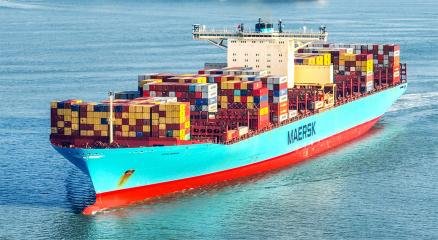
Maersk has launched a new weekly ocean freight service connecting China with India’s western ports, as the global shipping company looks to expand capacity on one of Asia’s busiest trade corridors. The move comes amid growing cargo volumes between the two countries and increasing demand from manufacturers for quicker inland connectivity. The new service, named FI2, will begin its first westbound sailing from Shanghai on June 4 and will operate between key ports in China, Malaysia, India and Pakistan. The route includes Shanghai, Ningbo, Nansha, Tanjung Pelepas, Nhava Sheva, Pipavav and Port Qasim. Maersk said the service will be deployed using six vessels with a carrying capacity of about 4,500 TEUs each. The company introduced the route in response to rising customer demand for additional shipping capacity and more reliable transit schedules between Far East Asia and the Indian subcontinent. A major feature of the new network is its integration with India’s Dedicated Freight Corridor (DFC) through Pipavav port in Gujarat. The rail-linked corridor is expected to improve cargo movement from ports to inland industrial centres across northern India, including Delhi NCR, Gurugram and Noida. The added rail connectivity is likely to benefit sectors dependent on time-sensitive cargo movement, including automotive, chemicals, electronics, retail and industrial manufacturing. Industry executives say direct port-to-rail integration is becoming increasingly important as companies seek to reduce transit delays and improve supply chain visibility. The FI2 route will complement Maersk’s existing FI3 service, giving shippers two direct Far East–India connections. Shipping analysts say additional frequency options could help importers and exporters manage inventory flows more efficiently, particularly at a time when global supply chains continue to face periodic disruptions linked to geopolitical tensions and port congestion. India’s container trade with China has remained strong despite broader geopolitical and economic challenges, driven largely by imports of industrial inputs, machinery, electronics and manufacturing components. Logistics providers have increasingly been investing in integrated multimodal networks to support this growth and improve cargo turnaround times. Follow CARGOCONNECT for more such updates.
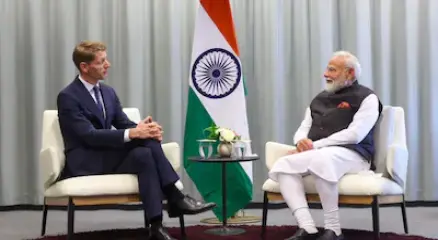
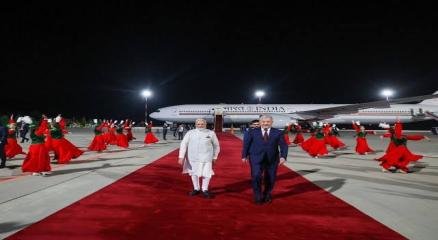
Prime Minister Narendra Modi held discussions with senior leadership of A.P. Moller–Maersk in Gothenburg, Sweden, focusing on strengthening cooperation in maritime logistics, port infrastructure development, and green shipping initiatives. The meeting underscores India’s growing push to modernise its maritime ecosystem and position itself as a major global logistics and shipping hub. During the interaction, PM Modi met Maersk Chairman Robert Maersk Uggla on the sidelines of his engagements in Sweden, where he has been holding talks with European industry leaders and government officials. Discussions reportedly centred on opportunities for investments in India’s ports, logistics infrastructure, and sustainable maritime solutions. The talks assume significance as India accelerates efforts under its Maritime Amrit Kaal Vision 2047, aimed at transforming the country’s shipping and logistics capabilities through port-led development, improved multimodal connectivity, and adoption of green technologies. The government has been actively engaging global maritime companies to attract investments and technological expertise into the sector. Maersk, one of the world’s largest container shipping and integrated logistics companies, has been expanding its presence in India across supply chain solutions, warehousing, inland logistics, and port operations. The company has also been at the forefront of global decarbonisation efforts in shipping, including investments in alternative fuels and low-emission vessel technologies. Green shipping emerged as a key area of discussion during the Gothenburg meeting. India has increasingly prioritised sustainable maritime operations through international collaborations and policy initiatives focused on reducing emissions and building greener port infrastructure. Recent partnerships with European countries, including Denmark, have already paved the way for initiatives such as a Centre of Excellence in Green Shipping and studies on green maritime corridors. The meeting with Maersk aligns with India’s broader strategy of strengthening resilient supply chains and enhancing trade connectivity with Europe. Modi, during his engagements in Sweden, highlighted the importance of trusted global partnerships, resilient logistics networks, and sustainable industrial growth amid evolving geopolitical and economic challenges. Industry observers believe deeper collaboration between India and global shipping leaders such as Maersk could accelerate the modernisation of Indian ports, improve cargo handling efficiencies, and support the transition towards cleaner maritime transport systems. The discussions also reinforce India’s ambition to emerge as a leading player in the global blue economy and sustainable shipping ecosystem.
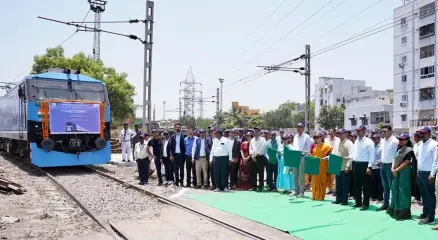
Maersk has launched a dedicated weekly reefer rail service linking Hyderabad’s pharmaceutical hub with Nhava Sheva port, marking a significant step toward more sustainable and efficient cold-chain logistics. Developed in collaboration with CONCOR, the service is designed to meet the pharmaceutical industry’s growing demand for dependable temperature-controlled transportation while also helping reduce greenhouse gas (GHG) emissions compared to conventional road freight. The new corridor has been designed specifically for Hyderabad-based pharmaceutical exporters, offering scheduled weekly movement of 40-foot refrigerated containers between the pharmaceutical hub and the port. The service incorporates pre-trip inspection compliance and carefully selected temperature-controlled containers to ensure cargo quality throughout transit. Under the arrangement, Maersk will manage the shipment process through a single-window model covering inland rail transportation, ocean freight, and cargo visibility across the supply chain. The integrated system is expected to streamline logistics operations for exporters handling sensitive pharmaceutical products. Thomas Theeuwes, Managing Director, Maersk South Asia, noted, “India is central to Maersk’s global growth ambitions, and we are committed to building logistics infrastructure that meets the evolving needs of the Indian industry.” He added that the pharmaceutical sector demands that cargo be moved with precision, reliability, and accountability at every step of the supply chain. The rail service will support exports to several international markets, including ports on the East Coast of North America such as Newark, Norfolk, Charleston, and Savannah, as well as destinations across Latin America, Europe, and other reefer trade routes. In addition to transportation, Maersk will provide exporters with documentation support, compliance assistance, cold-chain advisory services, and destination last-mile trucking when required. Sanjay Swarup, CMD CONCOR, highlighted, “Our collaboration with Maersk on this dedicated reefer rail corridor from Hyderabad reflects the confidence in rail as a reliable and efficient mode of transport for high-value, sensitive cargo.” He asserted that this is a significant step in strengthening India’s pharmaceutical export competitiveness, and we look forward to scaling this model further in partnership with industry. Industry observers believe the dedicated rail solution could address many of the operational challenges associated with road transportation, including delays caused by traffic congestion, driver fatigue, and compliance-related stoppages. The scheduled rail service is also expected to offer more reliable vessel loading, priority handling, and assured equipment availability for exporters. Maersk, which operates in more than 130 countries, has been expanding its integrated logistics capabilities while pursuing its target of achieving net-zero greenhouse gas emissions by 2040. Visit https://cargoconnect.co.in/ for more updates!

India’s two largest container gateways, Mundra and Nhava Sheva, are facing mounting congestion as rising cargo volumes, truck driver shortages and rerouted shipments from the Middle East strain operations across the country’s logistics network. Shipping lines and logistics operators are reporting worsening turnaround times at both ports, with vessel delays averaging nearly two and a half days and some unscheduled ships waiting up to five days for berthing. The disruptions are slowing cargo movement, tightening yard space and forcing carriers to make last-minute operational changes. According to industry reports, a shortage of truck drivers has become a major bottleneck for container transfers between terminals and inland transport hubs. The issue has reduced the pace of cargo evacuation from ports, adding pressure on already crowded container yards. Terminal operators have intermittently restricted gate access to control container inflow, while export gate schedules continue to shift frequently. These changes are complicating truck planning and increasing uncertainty for exporters and freight forwarders. The congestion is being intensified by cargo diversions linked to disruptions in the Middle East, particularly around Gulf trade routes. Shipping lines have increasingly redirected transshipment cargo to Indian ports as alternatives to facilities in the Persian Gulf, sharply increasing container volumes in recent weeks. The pressure has begun affecting carrier schedules. Some shipping companies are rerouting vessels between terminals at short notice to avoid yard congestion. Danish shipping giant Maersk recently shifted several sailings from its regular terminal at Nhava Sheva to PSA Mumbai after facing space constraints and a growing container backlog. Industry stakeholders say these sudden terminal changes are creating operational and financial challenges for shippers, including higher handling costs and difficulties coordinating customs clearance and inland transportation. The latest disruption comes at a time when India has been positioning itself as a major global manufacturing and logistics hub. Over the past decade, the country has expanded port capacity, improved freight corridors and modernised customs processes to strengthen supply chain efficiency. However, the current congestion highlights the vulnerability of port infrastructure during periods of sudden trade realignment and geopolitical disruption. Logistics experts warn that prolonged delays could increase freight costs, extend delivery timelines and place additional pressure on exporters already dealing with volatile global shipping conditions. Follow CARGOCONNECT for more such updates.
The diversification process by Apple continues to progress as India becomes one of the centers for manufacturing operations. Based on an analysis by Smart Analytics Global (SAG), the percentage share of Indian manufacturing of iPhones has increased from 14% in 2024 to 23% in 2025 and further to 28% by 2026, whereas China’s share has decreased from 83% to 74% within the same timeframe. As Apple continues to lower its reliance on China, India is all set to emerge as the major assembly hub for 28 percent of all iPhones exported around the world by 2026, compared to just 23 percent in the prior year. This change is due to the company's overall strategy of spreading its manufacturing operations in order to mitigate potential tariff risks and geopolitical risks, in addition to creating a more flexible manufacturing network beyond China. Based on the estimates of Smart Analytics Global (SAG), China's share in global iPhone production dropped from 83% in 2024 to 74% in 2025, while India's share increased from 14% in 2024 to 23% in 2025. Estimates provided by another market research firm, Counterpoint Research, indicate that India's share in global iPhone manufacturing could increase to approximately 26% in 2026 from 23% in 2025. As per SAG, “India will account for the manufacture of 28 percent of iPhones shipped globally in 2026, rising from 23 percent in 2025. This growth will be fueled by the ongoing diversification of Apple outside China and capacity build-up at existing manufacturers in India like Tata Electronics,” said Abhilash Kumar, an analyst at Smart Analytics Global. According to Tarun Pathak, research director at Counterpoint Research, “Apple's manufacturing partners have substantially increased their manufacturing capacities and assembly lines in India. They have also diversified their product portfolio made in India.” He further stated that the increase in manufacturing capacity of Tata Electronics is another factor aiding the growth. Apple has managed to localize production substantially in India through manufacturers like Foxconn and Tata Electronics. The recent takeover of Wistron and Pegatron in India by the Tata Group represents a huge step forward in Apple’s localization efforts in India. At present, India is assembling a larger number of iPhones, even the latest versions, and has become an important source of exports, targeting countries like the US and European nations. Over the past five years, Apple has manufactured iPhones worth almost $70 billion in India using its PLI scheme, where around $51 billion, or almost 73% of all iPhones manufactured, were exported from India. Moreover, iPhones have become the most exported goods from India during the previous financial year. India has become the biggest beneficiary of Apple’s changing supply chain. From initially assembling iPhones on a smaller scale, it has grown to become a manufacturing cluster for iPhones through government incentives, increased manufacturing capabilities, and the growing presence of suppliers. Several of the most important suppliers and manufacturers for Apple are still highly entrenched within China, allowing the country to enjoy an unrivaled capacity and adaptability when it comes to managing mass-scale productions and product shifts. For more such news and updates, visit CARGOCONNECT.
Shadowfax is significantly expanding its quick commerce infrastructure, announcing plans to scale its dark store network from 15 facilities to 100 by FY27. The move underscores the company’s growing focus on hyperlocal deliveries, same-day fulfilment, and direct-to-consumer (D2C) logistics as competition intensifies in India’s fast-evolving quick commerce ecosystem. The Bengaluru-based company plans to add 85 new dark stores over the next fiscal year, targeting metro cities with delivery radiuses of approximately seven kilometres and fulfilment timelines of around 30 minutes. The expansion is expected to support rising demand from vertical quick commerce platforms and D2C brands that increasingly rely on third-party logistics (3PL) partners for rapid deliveries. According to company executives, vertical marketplaces are emerging as a profitable segment because of their dependence on outsourced logistics infrastructure rather than captive fulfilment networks. Shadowfax believes this trend creates a strong opportunity for scalable 3PL-led quick commerce models. The dark store expansion will account for nearly 10% of Shadowfax’s planned capital expenditure of ₹180–190 crore in FY27. The company is simultaneously strengthening its automation and artificial intelligence capabilities to improve operational efficiency. AI-led demand forecasting, automated slotting, and smarter sorting centre operations are expected to reduce overhead costs while accelerating breakeven timelines for new facilities. Shadowfax’s aggressive expansion comes on the back of strong financial performance. The company reported a consolidated net profit of ₹55.8 crore in Q4 FY26, compared to a net loss of ₹9.9 crore during the same period last year. Revenue from operations surged 73.6% year-on-year to ₹1,237 crore, reflecting growing order volumes and increased adoption of quick commerce delivery services. Founded in 2015, Shadowfax has evolved into one of India’s largest logistics and last-mile delivery networks, serving over 2,500 cities and more than 15,000 pincodes. The company currently handles millions of shipments daily through a technology-driven delivery ecosystem that supports e-commerce, grocery, hyperlocal, and D2C brands. Industry analysts believe the dark store expansion reflects a broader shift within India’s logistics sector, where speed, proximity-based fulfilment, and automated operations are becoming central to supply chain competitiveness. As quick commerce adoption accelerates beyond groceries into categories such as fashion, electronics, and personal care, logistics providers like Shadowfax are positioning themselves as critical enablers of ultra-fast retail fulfilment. 𝐒𝐭𝐚𝐲 𝐓𝐮𝐧𝐞𝐝 𝐭𝐨 https://cargoconnect.co.in/ 𝐟𝐨𝐫 𝐥𝐚𝐭𝐞𝐬𝐭 𝐮𝐩𝐝𝐚𝐭𝐞𝐬!
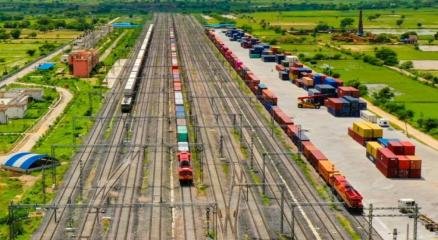
India’s Dedicated Freight Corridors (DFCs) are rapidly reshaping the country’s logistics landscape, with the Western Dedicated Freight Corridor (WDFC) between Dadri and Jawaharlal Nehru Port Authority (JNPA) emerging as a game-changing infrastructure project for supply chains and multimodal freight movement. Designed exclusively for cargo operations, the corridor is significantly reducing transit times, improving reliability, and easing congestion on conventional rail routes. Stretching nearly 1,500 km from Dadri in Uttar Pradesh to JNPA near Mumbai, the corridor forms the backbone of India’s western logistics artery, connecting manufacturing centres, inland container depots, industrial clusters, and ports. With dedicated tracks for freight trains, the network allows uninterrupted cargo movement at higher average speeds, eliminating delays caused by mixed passenger and freight operations. One of the biggest outcomes has been a sharp reduction in transit time. Freight movement between Dadri and JNPA that traditionally took close to 72 hours on congested rail routes is now being completed in nearly half the time, improving turnaround efficiency for exporters, importers, and logistics operators. Industry stakeholders believe the reduction in transit duration will strengthen India’s competitiveness in global trade and support the government’s target of lowering logistics costs as a percentage of GDP. The DFC network has also enabled the operation of longer and heavier freight trains, including double-stack container services on electrified routes. This has increased carrying capacity while lowering per-unit transportation costs. According to sector estimates, rail freight on dedicated corridors is considerably more energy-efficient and environmentally sustainable than road transport, aligning with India’s broader decarbonisation goals. Beyond operational efficiency, the corridors are catalysing the growth of integrated logistics ecosystems. Regions such as Dadri, Greater Noida, and Jewar are witnessing accelerated development of multimodal logistics parks, warehousing zones, and industrial hubs due to their strategic connectivity with both the Eastern and Western DFCs. The emerging “rail-road-air” logistics triangle around the National Capital Region is expected to attract substantial investments in manufacturing and distribution infrastructure. The Dedicated Freight Corridor Corporation of India (DFCCIL) has reported rising freight train volumes on the operational stretches, indicating growing industry adoption. The completion of key links on the western corridor is expected to further enhance throughput and reduce dependency on road transport for long-haul cargo. Analysts say the dedicated rail network could become central to India’s ambition of creating faster, greener, and more resilient supply chains. As India continues investing in additional freight corridors across the country, the success of the Dadri-JNPA route demonstrates how infrastructure modernisation can directly influence trade efficiency, logistics performance, and industrial growth. 𝐒𝐭𝐚𝐲 𝐓𝐮𝐧𝐞𝐝 𝐭𝐨 https://cargoconnect.co.in/ 𝐟𝐨𝐫 𝐥𝐚𝐭𝐞𝐬𝐭 𝐮𝐩𝐝𝐚𝐭𝐞𝐬
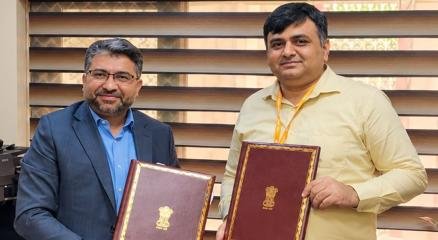
In a strategic warehousing move, the South Eastern Coalfields Limited (SECL), the second largest coal-producing subsidiary of Coal India Limited, has signed a Memorandum of Understanding (MoU) with Central Warehousing Corporation (CWC) for collaboration in coal logistics, railway rake provisioning under GPWIS and similar schemes, and integrated transportation services. Guided by the Union Ministry of Coal, SECL is rapidly working to improve India’s energy security and coal logistics infrastructure. The company is taking steps to boost coal evacuation efficiency and ensure a steady fuel supply to essential sectors. This partnership with CWC is a significant move in that direction. The goal of the partnership with CWC is to strengthen SECL’s coal evacuation capabilities by providing reliable and efficient rail logistics solutions to meet the rising demand from the power, steel, cement, and other sectors. The MoU outlines collaboration in various areas, including dedicated railway rake operations, integrated coal transportation solutions, multimodal logistics, first-mile and last-mile connectivity, and the deployment of digital systems for logistics monitoring and operational efficiency. Under the agreed framework, both organizations will explore provisioning and operation of GPWIS and equivalent racks, integrated rail logistics services, and long-term transportation solutions aimed at improving dispatch efficiency and reducing logistical obstacles. The MoU was signed in the presence of Harish Duhan, Chairman-cum-Managing Director of SECL, and Santosh Sinha, Managing Director of CWC. Functional Directors and senior officials from SECL, as well as representatives from CWC, attended the signing ceremony. SECL plays a vital role in meeting the country's growing coal demand. In the current financial year 2026-27, Coal India Limited has already surpassed the 100 million tonne production mark, with SECL contributing more than 26.8 million tonnes. Central Warehousing Corporation (CWC), a Navaratna Central Public Sector Enterprise under the Government of India, is a leader in integrated logistics and warehousing services. It has extensive experience in rail-linked cargo movement and multimodal transportation solutions. For more such news and updates, visit CARGOCONNECT.