Loading...

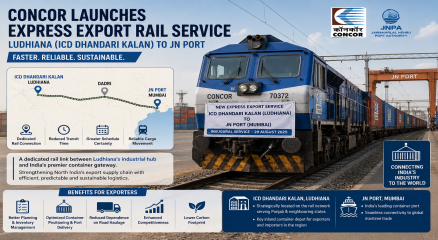
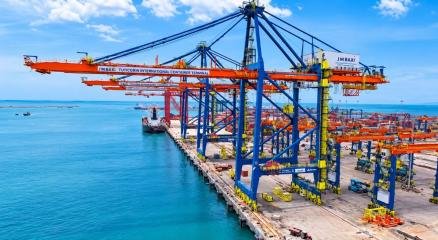
Container Corporation of India Ltd (CONCOR) has entered into an MoU with Bharat Mumbai Container Terminals Pvt. Ltd. (PSA Mumbai) — India’s largest container terminal facility at JNPA- Jawaharlal Nehru Port Authority for collaboration in rail movement of inland, cabotage, and customs-cleared EXIM cargoes.
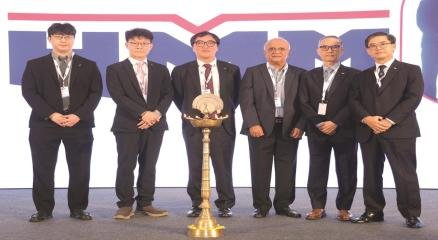
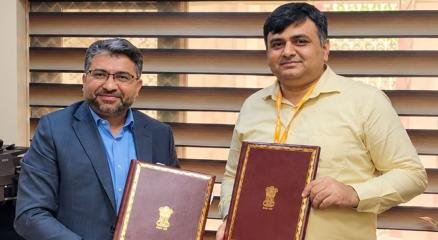
The MoU was signed by Sanjay Swarup, Chairman & Managing Director, CONCOR, and Vincent Ng, Regional Chief Executive Officer – Middle East, South Asia, Africa & Turkiye, PSA International in presence of other high-level representatives from the two companies in New Delhi. The two entities plan to utilise their respective capabilities to ensure seamless connectivity between PSA Mumbai and Inland Container Depots (ICD), alongwith domestic facilities of CONCOR in India.
The MoU seeks to achieve objectives that ensure smooth rail transport of domestic and containerised cargo as well as customs-cleared import and export containers between PSA Mumbai and CONCOR terminals. In addition, the partners will seek to minimise turnaround time and cost effectiveness.
The partnership also signals how India’s logistics ecosystem is increasingly moving toward faster evacuation of containers, better hinterland connectivity, and more sustainable freight movement facilitated by rail-based solutions.
As India accelerates its journey toward becoming a global manufacturing and export hub, strategic infrastructure collaborations like these will be instrumental in creating a stronger, more agile, and globally competitive logistics ecosystem.
Visit CARGOCONNECT for more news & updates!
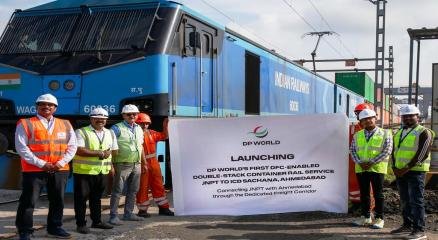
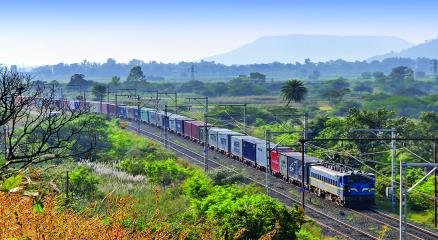
DP World has launched two new Dedicated Freight Corridor (DFC)-enabled double-stack rail services connecting Jawaharlal Nehru Port Authority (JNPA) with its inland container depot (ICD) network across the National Capital Region (NCR) and Sachana in Ahmedabad, Gujarat, strengthening rail-based cargo connectivity between India’s key maritime gateway and inland production and consumption centres. Effective September 2026, the first service links JNPA with DP World’s ICD network at Pali/Rewari, Jhattipur–Panipat and Modinagar in NCR. The second connects the port with ICD Sachana in Ahmedabad, extending the gateway’s double-stack rail connectivity into Gujarat. By combining dedicated freight infrastructure with higher-capacity double-stack operations, the services are designed to support more efficient cargo movement, potentially improve turnaround times and provide businesses with additional rail-based options for connecting inland markets with JNPA. The expanded network brings port and inland infrastructure together to support more predictable cargo movement and supply chain planning. Double-stack trains can carry greater volumes of containers per movement, while increased reliance on rail offers an alternative to road-based transportation and supports the development of a more sustainable freight network. Hemant Kumar Ruia, Country Manager, Subcontinent (India), DP World, said expanding double-stack rail connectivity through the DFC was an important step towards improving logistics efficiency. He highlighted the need to move goods more quickly and cost-effectively between ports and major markets as India’s economy grows, adding that the new services would help businesses strengthen supply chains and manage cargo movement more efficiently. Adhendru Jain, Vice President – Rail & Inland Terminals – SCO, DP World, said the expansion aligned with the objectives of the National Logistics Policy and PM GatiShakti to develop a more integrated, multimodal logistics ecosystem. He emphasised that connecting JNPA with inland terminals across NCR and Gujarat would combine dedicated freight infrastructure, higher-capacity rail operations and DP World’s inland network to provide customers with greater choice and more predictable cargo movement. The services are expected to support important industrial and commercial clusters across Gujarat and North India, including the automotive, engineering, manufacturing, pharmaceutical, chemical, textile and home-furnishing sectors. Improved rail connectivity with JNPA is intended to give exporters, importers and domestic supply chains greater access to rail capacity and more dependable freight movement. The launch further strengthens DP World’s integrated port-to-hinterland network, with a focus on improving cargo connectivity, supporting multimodal logistics and enabling more efficient movement between maritime gateways and inland markets.
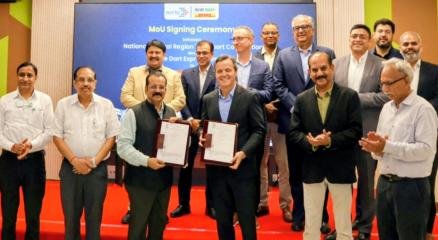
Blue Dart Express has signed a Memorandum of Understanding (MoU) with the National Capital Region Transport Corporation (NCRTC) to explore the movement of express parcels on the Delhi–Ghaziabad–Meerut Namo Bharat corridor. The collaboration will examine how Blue Dart’s pickup and delivery network can move express parcels utilizing the transformational regional rail connectivity to serve businesses and customers across the National Capital Region. As part of the MoU, the two organisations will assess operational requirements, parcel volumes, station facilities, service standards and commercial arrangements to arrive at a feasible solution. The 82 km Namo Bharat corridor connects Delhi, Ghaziabad and Meerut. Its Sarai Kale Khan station is seamlessly connected to Hazrat Nizamuddin railway station and the inter-state bus terminal, while the Anand Vihar station also has been connected to the Anand Vihar railway station and two inter-state bus terminals. On the partnership, Shalabh Goel, Managing Director, NCRTC, stated, “Namo Bharat is a strategic intervention to transform the regional connectivity across the National Capital Region and help reduce vehicular congestion and air pollution. In a short span of time, this service has gained popularity among the people and is enabling easy access to jobs, education, healthcare and affordable housing. Our collaboration with Blue Dart gives us an opportunity to explore how this new-age infrastructure could also serve the freight ecosystem with the convenience and benefit of the people at the centre.” Pablo Ciano, CEO, DHL eCommerce Division, said, “India is a significant growth market for DHL eCommerce, and Blue Dart’s service quality and network are central to how we serve its customers. As businesses grow and supply chains evolve, we need to keep looking at how new-age infrastructure can strengthen that network. This collaboration with NCRTC is an opportunity to explore how the transformational regional rail connectivity could add value for customers in the National Capital Region.” Balfour Manuel, Managing Director, Blue Dart Express, said, “For our customers, reliability depends on how well every part of a shipment’s journey works together. This MoU gives us the opportunity to examine how Namo Bharat’s semi-high-speed regional connectivity could be integrated with Blue Dart’s pickup and delivery capabilities. We will work with NCRTC to identify where this approach could add value for businesses while supporting our efforts to develop more sustainable logistics solutions.” Such multi-modal connectivity makes the corridor relevant to the movement of shipments between established transport hubs and the businesses they serve. The proposed approach would set-up an optimal link between the semi-high-speed regional rail movement with Blue Dart’s existing pickup and delivery services, subject to operational feasibility and arrangements agreed by both organisations. Therefore, the collaboration forms part of Blue Dart’s continued work to strengthen its integrated transportation network and explore solutions that respond to evolving customer needs. 𝐒𝐭𝐚𝐲 𝐓𝐮𝐧𝐞𝐝 𝐭𝐨 CARGOCONNECT 𝐟𝐨𝐫 𝐥𝐚𝐭𝐞𝐬𝐭 𝐮𝐩𝐝𝐚𝐭𝐞𝐬!


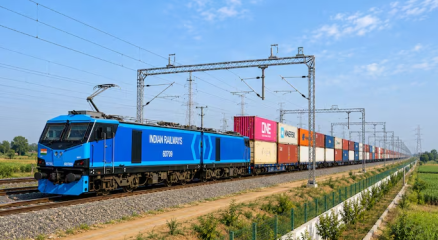
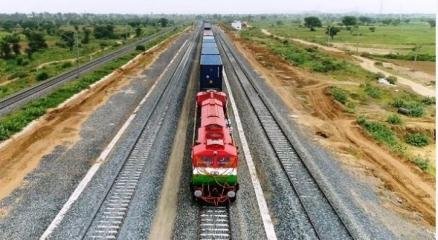
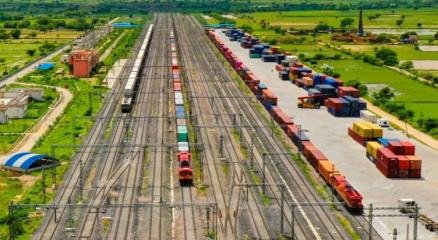
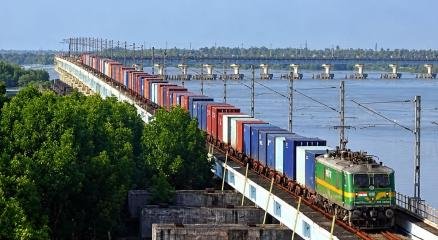
Prime Minister Narendra Modi has dedicated the final three sections of the Western Dedicated Freight Corridor (WDFC) to the nation, completing the entire freight rail connection between Jawaharlal Nehru Port (JNPT/JNPA) in Maharashtra and Dadri in Uttar Pradesh. The milestone marks a major step in strengthening India’s dedicated freight rail network and improving the movement of export-import cargo between ports and key industrial and consumption centres. The three newly completed sections—Sanand (North)-Makarpura, New Umbergaon-New Saphale and New Saphale-JNPA, span a combined 326 route kilometres and have been developed at an investment of more than ₹20,700 crore. Their commissioning completes the previously missing port-end link of the WDFC, enabling seamless freight movement between JNPA and the northern hinterland. The WDFC connects JNPA with Dadri, where it intersects with the Eastern Dedicated Freight Corridor (EDFC). The EDFC, stretching from Sonnagar in Bihar to Ludhiana in Punjab, is already operational. Together, the two corridors establish a dedicated freight rail backbone across India’s western, northern and eastern regions. According to the Times of India, the combined operational DFC network covers around 2,843 km. The completion of the WDFC is expected to have a direct impact on India’s logistics efficiency. The corridor allows the deployment of double-stack container trains, facilitating higher cargo volumes per train while improving rail capacity and reliability. Direct rail connectivity to JNPA is also expected to accelerate the evacuation of export-import containers, strengthen links between manufacturing centres and ports, and ease pressure on Mumbai’s conventional railway network. The development is particularly significant for exporters, importers, container train operators, logistics parks, inland container depots and manufacturing clusters across western and northern India. It is also expected to support a greater shift of long-haul freight from road to rail, potentially lowering transportation costs and reducing road congestion. The scale of utilisation of the dedicated freight network underscores its growing importance. Railway data cited by the Times of India shows that operational DFC stretches had handled approximately 5.2 lakh freight train trips as of August, averaging about 435 trains a day. The network had generated around 658 billion gross tonne-km and 360 billion net tonne-km. With the WDFC now fully connected from JNPA to Dadri, India’s freight infrastructure enters a new phase in which capacity, operational efficiency and greater rail-based cargo penetration will become key measures of the corridors’ impact on the country’s logistics and supply-chain ecosystem. 𝐒𝐭𝐚𝐲 𝐓𝐮𝐧𝐞𝐝 𝐭𝐨 CARGOCONNECT 𝐟𝐨𝐫 𝐥𝐚𝐭𝐞𝐬𝐭 𝐮𝐩𝐝𝐚𝐭𝐞𝐬!