
Loading...
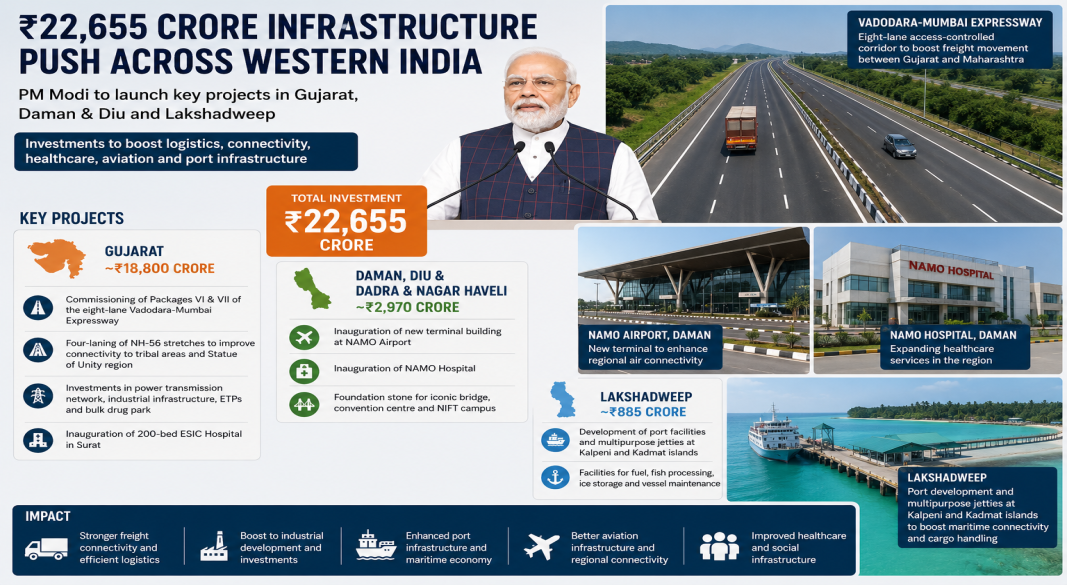
Prime Minister Narendra Modi is set to inaugurate and lay the foundation stone for infrastructure projects worth ₹22,655 crore across Gujarat, Dadra and Nagar Haveli and Daman and Diu, and Lakshadweep, with investments concentrated in transport, maritime infrastructure, healthcare, aviation and industrial development. The projects are expected to strengthen freight connectivity, improve logistics efficiency and support economic activity across key manufacturing, coastal and island regions.
The largest share of the investment, estimated at around ₹18,800 crore, is earmarked for Gujarat. Among the key projects is the commissioning of Packages VI and VII of the eight-lane Vadodara-Mumbai Expressway, a strategic freight corridor that will enhance connectivity between Gujarat and Maharashtra, two of India's largest industrial and logistics hubs. The government will also launch the four-laning of critical stretches of National Highway-56 to improve access to tribal districts and strengthen road connectivity to the Statue of Unity region.
In Daman, projects worth approximately ₹2,970 crore will focus on aviation, healthcare and urban infrastructure. The programme includes the inauguration of the new terminal building at NAMO Airport and the commissioning of NAMO Hospital. Foundation stones will also be laid for an iconic bridge, a convention centre and a National Institute of Fashion Technology (NIFT) campus, aimed at supporting regional development and investment.
Lakshadweep will receive infrastructure investments worth about ₹885 crore, primarily focused on maritime connectivity. The projects include the development of port facilities and multipurpose jetties at Kalpeni and Kadmat islands. The new facilities are designed to accommodate large passenger and cruise vessels while improving cargo handling capacity and supporting fisheries-related activities. Associated infrastructure will include facilities for fuel supply, fish processing, ice storage and vessel maintenance.
From a logistics perspective, the investment package reflects a continued focus on multimodal connectivity across western India. The combination of expressway expansion, port infrastructure development, airport upgrades and industrial utility projects is expected to improve supply chain efficiency, facilitate cargo movement and strengthen links between manufacturing centres, ports and consumption markets.
The projects form one of the largest infrastructure investment programmes announced this year for western India and the island territories, with a strong emphasis on transport networks, industrial competitiveness and regional connectivity.
Follow CARGOCONNECT for more such updates.
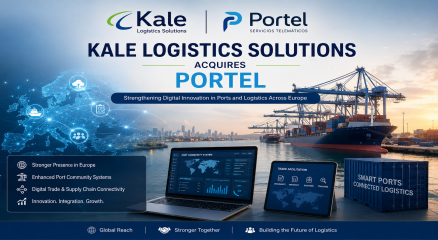
Indian logistics technology provider Kale Logistics Solutions has agreed to acquire Spanish port community systems specialist Portel, a move that strengthens the company's presence in Europe and broadens its reach across maritime trade and port digitisation markets. The transaction brings together Kale's cargo and logistics technology portfolio with Portel's established position in the European port sector. The acquisition is expected to expand Kale's access to customers across Spain and other European markets while adding expertise in port community systems and trade facilitation platforms. Portel has been active in the maritime technology sector for nearly three decades, providing digital solutions that connect ports, shipping lines, terminal operators, customs authorities and logistics stakeholders. The company has played a role in the digital transformation of Spanish port operations and has developed systems designed to improve information exchange across supply chains. For Kale, the deal represents a further step in its international growth strategy. The company has expanded its presence across airports, ports and logistics hubs in multiple regions and has identified Europe as a key market for future growth. In recent years, Kale has increased investment in international operations and technology platforms supporting cargo visibility, trade documentation and logistics collaboration. Industry observers note that the acquisition reflects broader consolidation trends in logistics technology, as software providers seek to offer integrated digital platforms covering multiple transport modes and supply chain processes. Growing regulatory requirements, cross-border trade complexity and demand for real-time data exchange have increased interest in digital infrastructure serving ports and logistics networks. The combined organisation is expected to focus on expanding digital services for port communities, freight stakeholders and government agencies involved in international trade. The transaction also provides Kale with a stronger operational base in Europe as demand for port and logistics digitalisation continues to grow across the region. Follow CARGOCONNECT for more such updates.
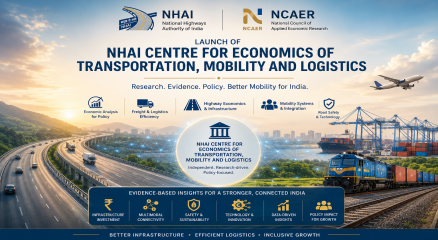

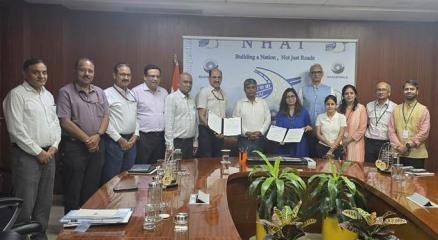

C.H. Robinson has announced the acquisition of DeSpir Logistics, a North America-based specialist in secure transportation and cargo escort services, marking a strategic move to strengthen its presence in the high-value and mission-critical freight segment. The deal, valued at approximately $75 million in cash is expected to enhance the company’s ability to serve customers requiring advanced security, compliance, and operational precision across complex supply chains. The acquisition comes at a time when cargo theft, supply chain disruptions, and increasing regulatory requirements are driving demand for specialized logistics solutions. DeSpir Logistics has built a strong reputation for transporting high-value, temperature-sensitive, and time-critical shipments across North America, serving industries such as healthcare, life sciences, aerospace, data centers, and premium retail. By integrating DeSpir’s expertise into its operations, C.H. Robinson aims to expand its portfolio of premium logistics services. The acquisition will provide access to a highly vetted carrier network focused on security-sensitive freight movements, supported by specialized driver certifications, stringent compliance protocols, and continuous monitoring systems. These capabilities are increasingly important for customers shipping pharmaceuticals, critical infrastructure equipment, and other high-risk cargo. A key advantage of the transaction is the addition of DeSpir’s advanced shipment monitoring technologies. The company’s platform offers enhanced visibility into freight movements, including real-time tracking of temperature conditions and cargo integrity. Combined with C.H. Robinson’s growing investment in AI-driven supply chain solutions, the acquisition is expected to deliver greater operational control, predictive insights, and risk mitigation for customers handling sensitive freight. Industry analysts view the deal as part of C.H. Robinson’s broader strategy to pursue targeted acquisitions that strengthen specialized service offerings while creating long-term value for customers and shareholders. DeSpir generated approximately $62 million in revenue during fiscal year 2025, and the acquisition is expected to be modestly accretive to C.H. Robinson’s earnings in 2026. The transaction has been financed through existing cash reserves and has already been completed. As supply chains become increasingly complex and security risks continue to evolve, the integration of DeSpir’s high-security logistics expertise positions C.H. Robinson to capitalize on growing demand for specialized transportation services. The move reinforces the company’s commitment to delivering secure, technology-enabled logistics solutions for some of the most critical freight movements in North America. 𝐒𝐭𝐚𝐲 𝐓𝐮𝐧𝐞𝐝 𝐭𝐨 CARGOCONNECT 𝐟𝐨𝐫 𝐥𝐚𝐭𝐞𝐬𝐭 𝐮𝐩𝐝𝐚𝐭𝐞𝐬!
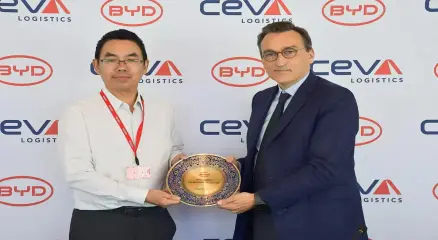

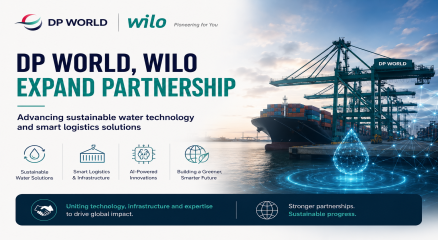
DP World and Germany-based Wilo Group have agreed to broaden their long-standing relationship through a new strategic partnership focused on sustainability, digital innovation and next-generation logistics solutions. Formalised through a Memorandum of Understanding (MoU), the collaboration will explore opportunities to integrate advanced water technologies, artificial intelligence applications and smart supply chain solutions across global operations. The agreement was signed at Wilo's headquarters in Dortmund by Oliver Hermes, President and Global CEO of Wilo Group, and Abdulla Al Hashmi, Global Chief Operating Officer for Parks and Economic Zones at DP World. The expanded partnership reflects a shared ambition to develop more efficient industrial ecosystems while supporting sustainable infrastructure projects in key international markets. According to Hermes, combining Wilo's expertise in intelligent water management with DP World's logistics and infrastructure capabilities creates new possibilities for large-scale projects. He noted that the growing role of artificial intelligence will help both organisations deliver solutions with long-term environmental and operational benefits across industries ranging from water management to logistics. For DP World, the agreement builds upon a relationship that has developed over many years through the Jebel Ali Free Zone (Jafza). Abdulla Al Hashmi said the collaboration brings together complementary strengths, with Wilo contributing engineering and technology expertise while DP World provides an integrated logistics platform capable of supporting global industrial growth. Beyond technology deployment, the partnership also places emphasis on knowledge sharing, workforce development and innovation-led industrial expansion. Both organisations see talent development as a critical factor in supporting future manufacturing and infrastructure requirements. The collaboration draws on Wilo's established presence in the UAE, particularly its Green Fab manufacturing facility in Dubai, which operates within Jafza and recently underwent a major expansion to support growing regional demand. Under the terms of the agreement, the companies will assess opportunities to deploy Wilo's AI-enabled solutions across DP World's ports, logistics parks and economic zones. They will also work on improving supply chain efficiencies and explore potential cooperation through the Wilo Global WATER AI Academy programme, which focuses on innovation, digital skills and sustainable water management technologies. The move highlights the increasing convergence of advanced manufacturing, smart logistics and sustainability initiatives as businesses seek more resilient and technology-driven supply chains.