
Loading...
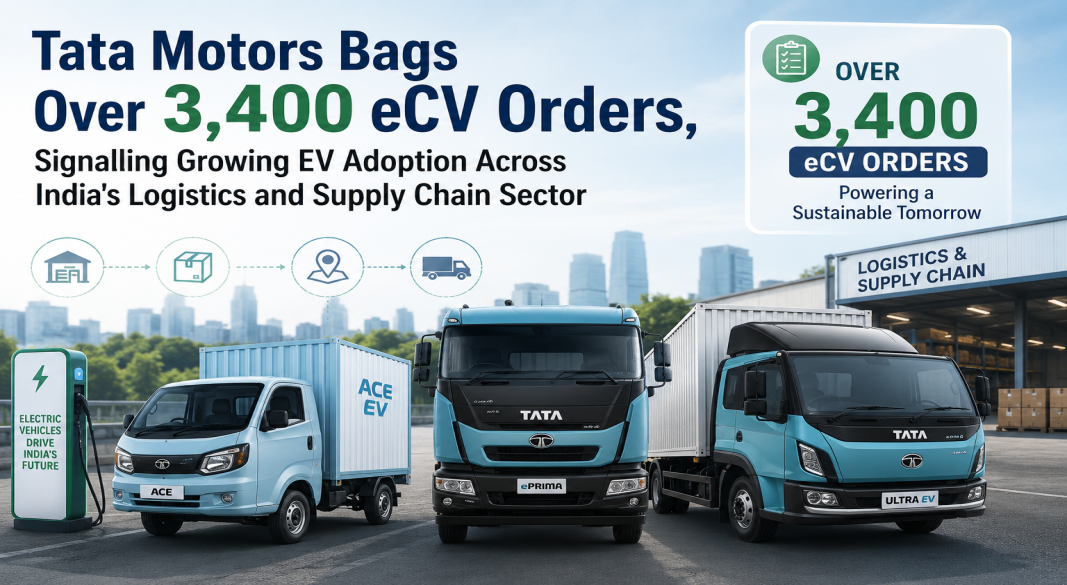
Tata Motors has received fresh orders for more than 3,400 electric commercial vehicles (eCVs), reinforcing the growing acceptance of electric mobility across India's freight transportation and passenger mobility sectors. The latest bookings span a broad spectrum of applications, ranging from urban deliveries and logistics operations to heavy-duty industrial transportation and public transport services.
According to the company, the order pipeline includes nearly 2,000 electric small commercial vehicles and pick-ups, around 900 electric trucks, and approximately 500 electric buses. These vehicles are expected to be deployed across sectors such as e-commerce, FMCG and FMCD distribution, logistics, construction materials transportation, mining operations, and city as well as intercity passenger movement.
The development reflects a notable shift in how commercial fleet operators are approaching electrification. While electric vehicles were initially introduced through pilot projects and limited deployments, businesses are now increasingly integrating them into day-to-day operations at scale. Industry observers note that this transition is being driven by improvements in vehicle performance, lower operating costs, and expanding charging infrastructure.
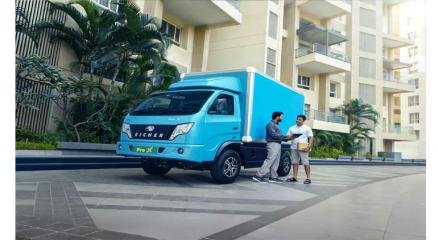
To address varying operational requirements, Tata Motors has steadily broadened its electric commercial vehicle portfolio over the past year. In the last-mile and intra-city delivery segment, models such as the Ace Pro EV, Ace EV, and Intra EV are designed to cater to urban logistics and distribution needs. These vehicles have found increasing relevance among e-commerce companies and logistics providers seeking cleaner and more cost-efficient transportation solutions.
Beyond the light commercial segment, the company has expanded its offerings into medium and heavy-duty categories. The Ultra EV range, available in the 7-12 tonne segment, serves diverse freight applications, while the Prima EV 55T tractor and Prima EV 28T tipper cater to heavier industrial and infrastructure-related operations. For passenger transport, Tata Motors continues to strengthen its presence through the Starbus EV and Ultra EV bus platforms, which are being deployed for both city and inter-city travel.
One of the key factors supporting wider adoption is the company's existing experience in electric mobility. Tata Motors currently has more than 3,800 electric buses operating across several Indian cities. Collectively, these buses have covered over 550 million kilometres, generating valuable operational insights across different climatic, geographic, and traffic conditions. Additionally, over 17,000 Tata electric small commercial vehicles are already active on Indian roads.
Such large-scale deployments provide important data on vehicle reliability, battery performance, maintenance requirements, and overall fleet economics. For commercial operators, these factors often carry greater weight than the initial acquisition cost, as purchasing decisions are increasingly based on uptime, efficiency, and total cost of ownership.
Industry experts also point out that vehicle availability alone will not determine the pace of commercial EV adoption. Recognising this, Tata Motors has focused on developing a supporting ecosystem around its electric vehicle portfolio. The company has partnered with more than 14 charging point operators, established financing arrangements through banks and NBFCs, and introduced digital fleet-management solutions through its Fleet Edge platform. It also offers uptime assurance programmes aimed at minimising operational disruptions.
The latest order win strengthens Tata Motors' position in India's evolving electric commercial vehicle market. The diversity of the orders—covering small commercial vehicles, trucks, and buses—highlights the expanding relevance of electric mobility across multiple transportation segments.
As businesses continue to pursue sustainability goals while seeking greater cost efficiencies, electric commercial vehicles are expected to play an increasingly significant role in fleet operations. For Tata Motors, these deployments not only contribute to market expansion but also create opportunities for further product refinement, stronger service networks, and deeper customer engagement in the years ahead.

Safexpress has inaugurated a new logistics park in Vapi, Gujarat, expanding its warehousing, distribution and transportation capabilities across one of western India’s key industrial regions. Located near National Highway 48 (NH-48) in Valsad district, the 3.5 lakh sq. ft facility is designed to support the growing logistics requirements of manufacturers, exporters and businesses operating across Gujarat and neighbouring markets. The new facility features dedicated transshipment infrastructure and third-party logistics (3PL) capabilities, with cross-dock infrastructure that can accommodate the simultaneous loading and unloading of more than 116 vehicles. The configuration is intended to streamline cargo movement, improve handling efficiency and reduce transit times by facilitating the faster transfer of shipments between incoming and outgoing vehicles. The logistics park also incorporates a column-free span exceeding 105 feet, allowing smoother movement of goods within the facility. Meanwhile, 16-foot-wide cantilever sheds are designed to support loading and unloading operations in different weather conditions, helping maintain operational continuity. Safety and environmental considerations have also been integrated into the facility’s design. The park is equipped with modern firefighting systems and trained emergency response personnel. Its sustainability measures include rainwater harvesting, green spaces and extensive use of natural daylight to help reduce energy consumption. Supporting Gujarat’s Industrial Supply Chains Vapi is an established manufacturing centre with industries spanning chemicals, pharmaceuticals, textiles, packaging, paper, plastics and engineering. Its industrial base generates demand for dependable transportation, warehousing and distribution services to move raw materials, intermediate goods and finished products to domestic and export markets. The new logistics park is expected to help businesses consolidate shipments, improve delivery reliability and strengthen distribution networks. Its location close to NH-48 also provides connectivity to major industrial and commercial markets, supporting freight movement across western India and other parts of the country. Expanding Logistics Footprint in Western India The Vapi facility adds to Safexpress’ presence in Gujarat, following its logistics park in Vadodara. It also forms part of the company’s broader expansion of logistics infrastructure along important highway corridors, including facilities in Vijayawada, Chennai and Hyderabad. The inauguration reflects the growing importance of modern, highway-linked logistics parks in supporting industrial growth and more efficient freight distribution. With dedicated cross-dock capacity, warehousing infrastructure and 3PL services, the Vapi facility is positioned to support regional businesses seeking improved supply chain connectivity and faster cargo movement. 𝐒𝐭𝐚𝐲 𝐓𝐮𝐧𝐞𝐝 𝐭𝐨 CARGOCONNECT 𝐟𝐨𝐫 𝐥𝐚𝐭𝐞𝐬𝐭 𝐮𝐩𝐝𝐚𝐭𝐞𝐬!
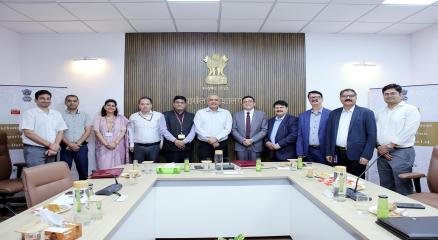


Blue Dart Express Limited has announced a planned leadership transition, with R.S. Subramanian set to take over as Managing Director from 30 November 2026, subject to requisite approvals. He will succeed Balfour Manuel, who will step down from the role on 29 November after a 43-year association with the express logistics company. As part of the succession plan, Manuel will continue with Blue Dart as Senior Strategic Advisor until 15 May 2027, supporting continuity across the company’s strategic priorities during the transition. The company’s Board approved Subramanian’s appointment for the period from 30 November 2026 to 25 May 2030, subject to shareholder and other statutory approvals. Manuel joined Blue Dart in 1983 as one of its earliest employees and has played a significant role in the company’s development, including its customer-centric culture, market position, network expansion and operational capabilities. He became Managing Director in 2019. Reflecting on the leadership transition, Balfour Manuel said, “Blue Dart has been the defining journey of my professional life. After careful consideration, I believe this is the right time to implement a structured succession plan that serves the company’s long-term interests. I have every confidence in R.S. Subramanian, who understands our business, respects our culture and shares our ambition. As Senior Strategic Advisor, I look forward to working closely with him and the Board to ensure continuity throughout the transition.” Subramanian brings more than three decades of experience across product-led and service businesses, with expertise spanning business strategy, customer experience, organisational transformation and profitable growth. He currently serves as Senior Vice President, DHL Express South Asia, and Managing Director, DHL Express India, and is a member of the DHL Express Asia Pacific Management Board. Associated with DHL Express since 2004, Subramanian has held leadership responsibilities across South Asia and has overseen operations in markets including India, Bangladesh, Sri Lanka, Nepal, the Maldives and Bhutan. He has also been a Director on the Blue Dart Express Board since 2019, giving him familiarity with the company’s operations and strategic priorities. Commenting on his appointment, R.S. Subramanian said, “It is a privilege to lead Blue Dart, an institution that has played a defining role in the development of India's express logistics industry. Having served on the Blue Dart Board over the past seven years, I have had the opportunity to gain a firsthand appreciation of the company’s strong customer focus, operational excellence and the culture that the team has built. My focus will be on building on Blue Dart’s strong foundation, advancing its market leadership and delivering sustainable, profitable growth, while continuing to create value for customers, employees and shareholders alike.” The leadership transition comes as Blue Dart continues to expand its express logistics network and capabilities. The company reported revenue of ₹6,141 crore for FY2025-26 and serves more than 56,400 locations in India, according to its latest fact sheet. 𝐒𝐭𝐚𝐲 𝐓𝐮𝐧𝐞𝐝 𝐭𝐨 CARGOCONNECT 𝐟𝐨𝐫 𝐥𝐚𝐭𝐞𝐬𝐭 𝐮𝐩𝐝𝐚𝐭𝐞𝐬!


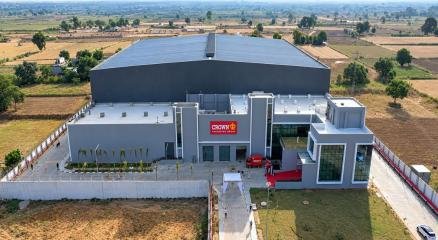
Crown Worldwide Group has expanded exXtra, its valet storage service, to six major Indian cities: Delhi, Mumbai, Bengaluru, Hyderabad, Chennai and Pune, as changing urban lifestyles and space requirements drive demand for more flexible storage solutions. The expansion extends exXtra’s reach across markets characterised by growing urban populations and evolving residential and business space needs, while leveraging Crown Worldwide Group’s more than three decades of experience in India across logistics, relocation, warehousing and related services. Moving beyond storage associated solely with relocation, exXtra is positioned to address a broader range of everyday requirements, from storing seasonal clothing, books, sports equipment, bicycles and documents to accommodating belongings during home renovations, downsizing or changing residential spaces for work and other purposes. Praveen Joseph, Assistant Vice President, South Asia, Crown Worldwide Group said, “With our understanding of moving, handling and storing belongings, we can offer customers a solution that gives them greater freedom over the space they have, without requiring them to make decisions about what to keep or let go.” The service combines doorstep pickup, secure storage and on-demand return, allowing customers to retain belongings without dedicating valuable space to items they do not need regularly. Customers can schedule pickups, track their inventory and manage payments through an online portal, adding greater convenience and visibility to the storage experience. The expansion draws on Crown’s established capabilities in handling, moving and storing belongings, with the company positioning exXtra around the changing ways in which households and businesses manage their available space. Crown Worldwide Group said exXtra will continue to explore further expansion across India through phased launches, with future growth guided by customer demand and opportunities in emerging markets where the Group already maintains a presence.