
Loading...
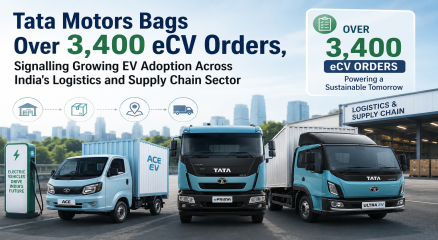
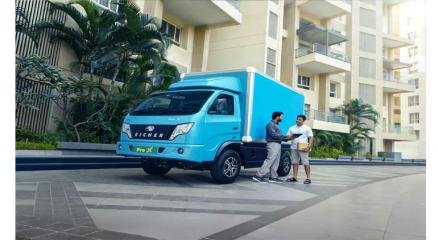
Tata Motors has received fresh orders for more than 3,400 electric commercial vehicles (eCVs), reinforcing the growing acceptance of electric mobility across India's freight transportation and passenger mobility sectors. The latest bookings span a broad spectrum of applications, ranging from urban deliveries and logistics operations to heavy-duty industrial transportation and public transport services. According to the company, the order pipeline includes nearly 2,000 electric small commercial vehicles and pick-ups, around 900 electric trucks, and approximately 500 electric buses. These vehicles are expected to be deployed across sectors such as e-commerce, FMCG and FMCD distribution, logistics, construction materials transportation, mining operations, and city as well as intercity passenger movement. The development reflects a notable shift in how commercial fleet operators are approaching electrification. While electric vehicles were initially introduced through pilot projects and limited deployments, businesses are now increasingly integrating them into day-to-day operations at scale. Industry observers note that this transition is being driven by improvements in vehicle performance, lower operating costs, and expanding charging infrastructure. To address varying operational requirements, Tata Motors has steadily broadened its electric commercial vehicle portfolio over the past year. In the last-mile and intra-city delivery segment, models such as the Ace Pro EV, Ace EV, and Intra EV are designed to cater to urban logistics and distribution needs. These vehicles have found increasing relevance among e-commerce companies and logistics providers seeking cleaner and more cost-efficient transportation solutions. Beyond the light commercial segment, the company has expanded its offerings into medium and heavy-duty categories. The Ultra EV range, available in the 7-12 tonne segment, serves diverse freight applications, while the Prima EV 55T tractor and Prima EV 28T tipper cater to heavier industrial and infrastructure-related operations. For passenger transport, Tata Motors continues to strengthen its presence through the Starbus EV and Ultra EV bus platforms, which are being deployed for both city and inter-city travel. One of the key factors supporting wider adoption is the company's existing experience in electric mobility. Tata Motors currently has more than 3,800 electric buses operating across several Indian cities. Collectively, these buses have covered over 550 million kilometres, generating valuable operational insights across different climatic, geographic, and traffic conditions. Additionally, over 17,000 Tata electric small commercial vehicles are already active on Indian roads. Such large-scale deployments provide important data on vehicle reliability, battery performance, maintenance requirements, and overall fleet economics. For commercial operators, these factors often carry greater weight than the initial acquisition cost, as purchasing decisions are increasingly based on uptime, efficiency, and total cost of ownership. Industry experts also point out that vehicle availability alone will not determine the pace of commercial EV adoption. Recognising this, Tata Motors has focused on developing a supporting ecosystem around its electric vehicle portfolio. The company has partnered with more than 14 charging point operators, established financing arrangements through banks and NBFCs, and introduced digital fleet-management solutions through its Fleet Edge platform. It also offers uptime assurance programmes aimed at minimising operational disruptions. The latest order win strengthens Tata Motors' position in India's evolving electric commercial vehicle market. The diversity of the orders—covering small commercial vehicles, trucks, and buses—highlights the expanding relevance of electric mobility across multiple transportation segments. As businesses continue to pursue sustainability goals while seeking greater cost efficiencies, electric commercial vehicles are expected to play an increasingly significant role in fleet operations. For Tata Motors, these deployments not only contribute to market expansion but also create opportunities for further product refinement, stronger service networks, and deeper customer engagement in the years ahead.
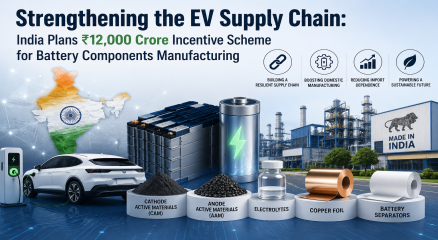
India is preparing to take a significant step towards building a stronger and more self-reliant electric vehicle (EV) supply chain with a proposed incentive scheme worth nearly ₹12,000 crore for the domestic manufacturing of battery components and materials. The initiative is expected to complement the existing ₹18,100 crore Production Linked Incentive (PLI) scheme for Advanced Chemistry Cell (ACC) battery manufacturing and help address a critical gap in India's EV ecosystem. Over the past few years, India has made considerable progress in attracting investments for battery cell production. However, industry stakeholders have consistently pointed out that a large portion of the battery value chain continues to rely on imported materials. While cell manufacturing capacity is being created domestically, many of the essential inputs required for battery production are still sourced from overseas markets, limiting overall localisation. The proposed scheme aims to change this dynamic by encouraging local production of critical battery materials and components. Reports indicate that the incentive framework may cover Cathode Active Materials (CAM), Anode Active Materials (AAM), electrolytes, copper foil, battery separators and other advanced battery materials that form the backbone of modern EV batteries. For India's rapidly expanding EV sector, these components are far more than just manufacturing inputs. They represent a strategic part of the supply chain, influencing production costs, availability, quality and long-term competitiveness. Industry estimates suggest that battery materials account for a substantial share of overall battery costs, making localisation an important lever for improving economics across the EV value chain. The initiative comes at a crucial time as automakers continue to accelerate their electrification plans. Demand for batteries is expected to rise sharply, driven by passenger electric vehicles, electric two-wheelers, commercial EV fleets, energy storage systems and renewable energy integration projects. To support this growth, India will require a robust and dependable supply network capable of serving domestic manufacturers at scale. According to industry projections, India could require more than 400,000 tonnes of Cathode Active Material and over 200,000 tonnes of Anode Active Material by 2030 to support the battery manufacturing capacities that have already been announced. Such figures highlight the enormous opportunity for companies willing to invest in upstream battery manufacturing and supply chain infrastructure. A key objective of the proposed scheme is to reduce India's dependence on global battery supply chains, many of which remain heavily concentrated in China. At present, China dominates several critical segments of the battery ecosystem, including cathode processing, anode materials, battery chemicals and copper foil production. This concentration exposes manufacturers worldwide to supply disruptions, geopolitical uncertainties and price volatility. By supporting local manufacturing, India hopes to create a more resilient and diversified supply chain while attracting global battery material producers to establish operations within the country. Such investments could strengthen domestic capabilities, improve supply security and increase value addition within India. The proposed incentive programme is also expected to complement the ACC PLI scheme, which was launched to establish large-scale battery cell manufacturing capacity. While the PLI scheme has succeeded in attracting investments from major players, the development of upstream battery materials has progressed at a slower pace. Industry experts believe the new initiative could bridge this gap and help create a more integrated battery ecosystem. Nevertheless, several challenges remain. Building a globally competitive battery supply chain will require access to critical minerals such as lithium, cobalt, nickel and graphite, along with significant capital investments, advanced manufacturing technologies and a skilled workforce. Industry observers have repeatedly emphasised that long-term success will depend on developing capabilities across mining, refining, recycling, component manufacturing and battery production. For automotive manufacturers such as Tata Motors, Mahindra & Mahindra, Maruti Suzuki and Hyundai Motor India, stronger domestic sourcing could eventually translate into lower battery costs, improved supply reliability and enhanced competitiveness. Since batteries account for nearly 35-45 per cent of an EV's total cost, supply chain localisation could play a pivotal role in making electric vehicles more affordable and accelerating their adoption across the country. As India pursues its ambitious EV targets, building battery cell factories alone may not be enough. Creating a comprehensive supply chain for battery materials and components will be equally important. If implemented effectively, the proposed ₹12,000 crore scheme could become a key milestone in India's journey towards establishing a globally competitive EV supply chain and emerging as a major hub for advanced battery manufacturing.
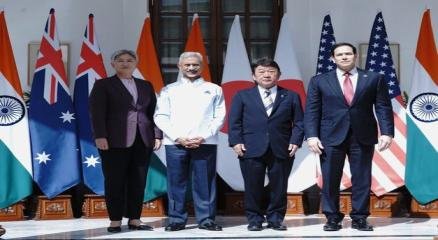
With rising concerns over maritime security, access to critical minerals, and fragile supply chains, the Quad nations pushed for deeper cooperation at the Foreign Ministers’ Meeting in New Delhi. External Affairs Minister Dr. S. Jaishankar stated that the Indo-Pacific must remain a driver of global growth and stability. The meeting takes place during a time of heightened geopolitical tensions, supply chain disruptions, and competition over strategic infrastructure that are reshaping the Indo-Pacific region. Given this backdrop, the Quad countries—India, the US, Japan, and Australia—aimed to present themselves as an action-oriented partnership focused on security, connectivity, technology, and economic resilience. Jaishankar opened the meeting by stating that the Quad’s agenda would focus on the “many challenges and opportunities” before the world, especially in the Indo-Pacific. “We have to address issues like supply chain resilience, connectivity choke points, manufacturing and resource concentrations, and gaps in critical infrastructure,” Jaishankar said. He added that these challenges also present new opportunities for partnerships, stronger growth, and realising the full potential of technology. He emphasized that the Indo-Pacific needs stronger strategic confidence, maritime security, and reliable partnerships. “Over the past several months, our officials have advanced collaboration across key priorities, including maritime security, critical technologies, economic resilience, and humanitarian assistance,” the External Affairs Minister noted, while recognizing “encouraging progress” in existing initiatives. Referring to the shared outlook among the four nations, he commented, “As maritime democracies, pluralistic societies, and market economies, we share the responsibility for a free and open Indo-Pacific.” US Secretary of State Marco Rubio mentioned that the Quad is evolving from a consultative platform to one focused on tangible outcomes. “My first meeting as Secretary of State was with the Quad, shortly after being sworn in. I believe this shows our commitment to this effort,” Rubio said. Rubio added that recent global developments have made the Quad’s initiatives more relevant, especially regarding energy security, critical minerals, humanitarian response, and freedom of navigation. Japanese Foreign Minister Toshimitsu Motegi affirmed that the Quad sends a bold message about endorsing a free and open Indo-Pacific. “Indo-Pacific nations should strengthen their resilience and capacity to shape their own future, including economic security,” Motegi said, while calling for quicker collaboration within the Quad. For more such news and updates, visit CARGOCONNECT.
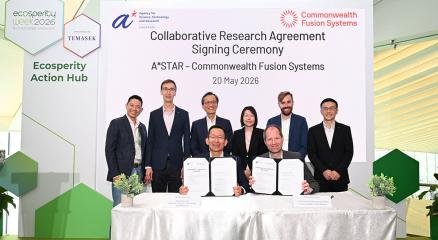
Singapore is strengthening its role in the emerging fusion energy sector through a strategic research agreement between the Agency for Science, Technology and Research (A*STAR) and Commonwealth Fusion Systems (CFS), a private fusion energy company backed by approximately S$3.85 billion ($3 billion) from leading investors like Temasek and Google. The five-year partnership will focus on developing technologies for commercial fusion power plants, including CFS’ ARC power plants, and aims to support Singapore in becoming an early player in the global fusion energy supply chain, the two parties announced last Thursday. This agreement builds on a previous partnership among A*STAR, CFS, and ST Engineering, a technology and engineering group, to produce components for CFS’s SPARC fusion demonstration machine, leveraging Singapore’s advanced manufacturing capabilities. “Fusion energy is at a critical juncture, with the global industry nearing the commercial rollout of clean, reliable power. This partnership with CFS brings A*STAR’s strengths in applied research into real-world fusion systems, utilizing capabilities in advanced materials, precision manufacturing, and materials testing,” said Professor Lim Keng Hui, Assistant Chief Executive, Science & Engineering Research Council (SERC), A*STAR. Such partnerships position Singapore to play a role in the growing fusion supply chain, while allowing local industries to develop capabilities in high-value, next-generation manufacturing, he added. Fusion energy operates by fusing light atomic nuclei to release significant energy, providing potential for a reliable, carbon-free power source at scale. With global investments in fusion exceeding S$19.1 billion ($14.96 billion), private firms like CFS are speeding up the commercial deployment of fusion energy. CFS aims to produce carbon-free electricity at a commercial level by the early 2030s, and this agreement allows A*STAR to participate in that commercialization process. Temasek, a global investment company valued at S$434 billion ($340 billion) as of March 31, 2025, has been an early investor in CFS, leading one of the company’s Series A funding rounds. Temasek also collaborates with A*STAR in various research and innovation initiatives. For more such news and updates, follow CARGOCONNECT.

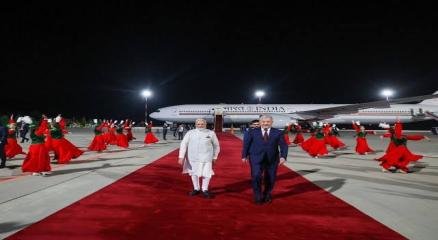
Indian Prime Minister Narendra Modi, during his visit to Europe, stated India is rapidly working with international partners to build robust energy supply chains, aiming to cut the energy crunch that arose from the current geopolitical crises. During his visit to the Netherlands, PM Modi addressed a gathering of the Indian community, calling the current era a decade of calamities and uncertainty. Modi highlighted the COVID-19 pandemic, subsequent wars, and now an energy crisis, warning that if the current scenario is not resolved quickly, years of progress and achievements could be lost, delivering a huge blow to the global economy. Speaking about the challenges facing the international community, the Indian Prime Minister said humanity is going through an exceptionally turbulent phase with uncertainty and economic stress. He added that the world first faced the Coronavirus Pandemic, followed by geopolitical conflicts and energy concerns, and these overlapping crises are testing the resilience of the global system, while warning of the consequences of inaction. Further, he said that unless we unite, the world will not be able to address the challenge of global security. PM Modi's remarks came during his address to the Indian diaspora in the Netherlands, where he highlighted the growing strategic, economic, and cultural cooperation between India and the Netherlands. The Indian Prime Minister is currently on a five-nation visit from May 15 to May 20, with the UAE being the first stop of the diplomatic tour. Earlier, during his meeting with the senior leadership of A.P. Moller–Maersk in Gothenburg, Sweden, the Indian Prime Minister Narendra Modi underscored India’s growing push to modernise its maritime ecosystem and position itself as a major global logistics and shipping hub. During the interaction, PM Modi met Maersk Chairman Robert Maersk Uggla on the sidelines of his engagements in Sweden, where he has been holding talks with European industry leaders and government officials. Discussions reportedly centred on opportunities for investments in India’s ports, logistics infrastructure, and sustainable maritime solutions. The talks assume significance as India accelerates efforts under its Maritime Amrit Kaal Vision 2047, aimed at transforming the country’s shipping and logistics capabilities through port-led development, improved multimodal connectivity, and adoption of green technologies. The government has been actively engaging global maritime companies to attract investments and technological expertise into the sector. For more such news and updates, follow CARGOCONNECT.

India’s two largest container gateways, Mundra and Nhava Sheva, are facing mounting congestion as rising cargo volumes, truck driver shortages and rerouted shipments from the Middle East strain operations across the country’s logistics network. Shipping lines and logistics operators are reporting worsening turnaround times at both ports, with vessel delays averaging nearly two and a half days and some unscheduled ships waiting up to five days for berthing. The disruptions are slowing cargo movement, tightening yard space and forcing carriers to make last-minute operational changes. According to industry reports, a shortage of truck drivers has become a major bottleneck for container transfers between terminals and inland transport hubs. The issue has reduced the pace of cargo evacuation from ports, adding pressure on already crowded container yards. Terminal operators have intermittently restricted gate access to control container inflow, while export gate schedules continue to shift frequently. These changes are complicating truck planning and increasing uncertainty for exporters and freight forwarders. The congestion is being intensified by cargo diversions linked to disruptions in the Middle East, particularly around Gulf trade routes. Shipping lines have increasingly redirected transshipment cargo to Indian ports as alternatives to facilities in the Persian Gulf, sharply increasing container volumes in recent weeks. The pressure has begun affecting carrier schedules. Some shipping companies are rerouting vessels between terminals at short notice to avoid yard congestion. Danish shipping giant Maersk recently shifted several sailings from its regular terminal at Nhava Sheva to PSA Mumbai after facing space constraints and a growing container backlog. Industry stakeholders say these sudden terminal changes are creating operational and financial challenges for shippers, including higher handling costs and difficulties coordinating customs clearance and inland transportation. The latest disruption comes at a time when India has been positioning itself as a major global manufacturing and logistics hub. Over the past decade, the country has expanded port capacity, improved freight corridors and modernised customs processes to strengthen supply chain efficiency. However, the current congestion highlights the vulnerability of port infrastructure during periods of sudden trade realignment and geopolitical disruption. Logistics experts warn that prolonged delays could increase freight costs, extend delivery timelines and place additional pressure on exporters already dealing with volatile global shipping conditions. Follow CARGOCONNECT for more such updates.
The diversification process by Apple continues to progress as India becomes one of the centers for manufacturing operations. Based on an analysis by Smart Analytics Global (SAG), the percentage share of Indian manufacturing of iPhones has increased from 14% in 2024 to 23% in 2025 and further to 28% by 2026, whereas China’s share has decreased from 83% to 74% within the same timeframe. As Apple continues to lower its reliance on China, India is all set to emerge as the major assembly hub for 28 percent of all iPhones exported around the world by 2026, compared to just 23 percent in the prior year. This change is due to the company's overall strategy of spreading its manufacturing operations in order to mitigate potential tariff risks and geopolitical risks, in addition to creating a more flexible manufacturing network beyond China. Based on the estimates of Smart Analytics Global (SAG), China's share in global iPhone production dropped from 83% in 2024 to 74% in 2025, while India's share increased from 14% in 2024 to 23% in 2025. Estimates provided by another market research firm, Counterpoint Research, indicate that India's share in global iPhone manufacturing could increase to approximately 26% in 2026 from 23% in 2025. As per SAG, “India will account for the manufacture of 28 percent of iPhones shipped globally in 2026, rising from 23 percent in 2025. This growth will be fueled by the ongoing diversification of Apple outside China and capacity build-up at existing manufacturers in India like Tata Electronics,” said Abhilash Kumar, an analyst at Smart Analytics Global. According to Tarun Pathak, research director at Counterpoint Research, “Apple's manufacturing partners have substantially increased their manufacturing capacities and assembly lines in India. They have also diversified their product portfolio made in India.” He further stated that the increase in manufacturing capacity of Tata Electronics is another factor aiding the growth. Apple has managed to localize production substantially in India through manufacturers like Foxconn and Tata Electronics. The recent takeover of Wistron and Pegatron in India by the Tata Group represents a huge step forward in Apple’s localization efforts in India. At present, India is assembling a larger number of iPhones, even the latest versions, and has become an important source of exports, targeting countries like the US and European nations. Over the past five years, Apple has manufactured iPhones worth almost $70 billion in India using its PLI scheme, where around $51 billion, or almost 73% of all iPhones manufactured, were exported from India. Moreover, iPhones have become the most exported goods from India during the previous financial year. India has become the biggest beneficiary of Apple’s changing supply chain. From initially assembling iPhones on a smaller scale, it has grown to become a manufacturing cluster for iPhones through government incentives, increased manufacturing capabilities, and the growing presence of suppliers. Several of the most important suppliers and manufacturers for Apple are still highly entrenched within China, allowing the country to enjoy an unrivaled capacity and adaptability when it comes to managing mass-scale productions and product shifts. For more such news and updates, visit CARGOCONNECT.
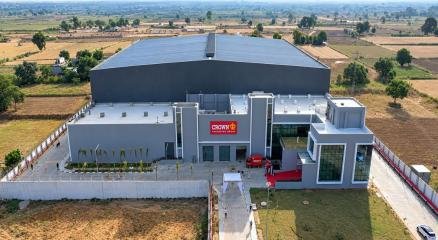
Shadowfax is significantly expanding its quick commerce infrastructure, announcing plans to scale its dark store network from 15 facilities to 100 by FY27. The move underscores the company’s growing focus on hyperlocal deliveries, same-day fulfilment, and direct-to-consumer (D2C) logistics as competition intensifies in India’s fast-evolving quick commerce ecosystem. The Bengaluru-based company plans to add 85 new dark stores over the next fiscal year, targeting metro cities with delivery radiuses of approximately seven kilometres and fulfilment timelines of around 30 minutes. The expansion is expected to support rising demand from vertical quick commerce platforms and D2C brands that increasingly rely on third-party logistics (3PL) partners for rapid deliveries. According to company executives, vertical marketplaces are emerging as a profitable segment because of their dependence on outsourced logistics infrastructure rather than captive fulfilment networks. Shadowfax believes this trend creates a strong opportunity for scalable 3PL-led quick commerce models. The dark store expansion will account for nearly 10% of Shadowfax’s planned capital expenditure of ₹180–190 crore in FY27. The company is simultaneously strengthening its automation and artificial intelligence capabilities to improve operational efficiency. AI-led demand forecasting, automated slotting, and smarter sorting centre operations are expected to reduce overhead costs while accelerating breakeven timelines for new facilities. Shadowfax’s aggressive expansion comes on the back of strong financial performance. The company reported a consolidated net profit of ₹55.8 crore in Q4 FY26, compared to a net loss of ₹9.9 crore during the same period last year. Revenue from operations surged 73.6% year-on-year to ₹1,237 crore, reflecting growing order volumes and increased adoption of quick commerce delivery services. Founded in 2015, Shadowfax has evolved into one of India’s largest logistics and last-mile delivery networks, serving over 2,500 cities and more than 15,000 pincodes. The company currently handles millions of shipments daily through a technology-driven delivery ecosystem that supports e-commerce, grocery, hyperlocal, and D2C brands. Industry analysts believe the dark store expansion reflects a broader shift within India’s logistics sector, where speed, proximity-based fulfilment, and automated operations are becoming central to supply chain competitiveness. As quick commerce adoption accelerates beyond groceries into categories such as fashion, electronics, and personal care, logistics providers like Shadowfax are positioning themselves as critical enablers of ultra-fast retail fulfilment. 𝐒𝐭𝐚𝐲 𝐓𝐮𝐧𝐞𝐝 𝐭𝐨 https://cargoconnect.co.in/ 𝐟𝐨𝐫 𝐥𝐚𝐭𝐞𝐬𝐭 𝐮𝐩𝐝𝐚𝐭𝐞𝐬!
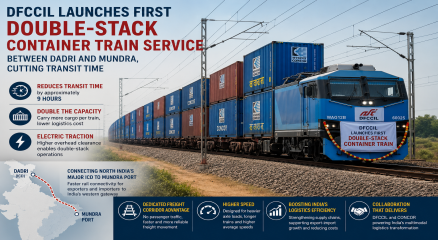
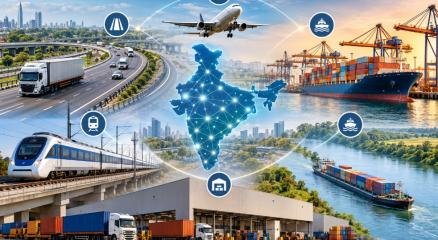
India’s Dedicated Freight Corridors (DFCs) are rapidly reshaping the country’s logistics landscape, with the Western Dedicated Freight Corridor (WDFC) between Dadri and Jawaharlal Nehru Port Authority (JNPA) emerging as a game-changing infrastructure project for supply chains and multimodal freight movement. Designed exclusively for cargo operations, the corridor is significantly reducing transit times, improving reliability, and easing congestion on conventional rail routes. Stretching nearly 1,500 km from Dadri in Uttar Pradesh to JNPA near Mumbai, the corridor forms the backbone of India’s western logistics artery, connecting manufacturing centres, inland container depots, industrial clusters, and ports. With dedicated tracks for freight trains, the network allows uninterrupted cargo movement at higher average speeds, eliminating delays caused by mixed passenger and freight operations. One of the biggest outcomes has been a sharp reduction in transit time. Freight movement between Dadri and JNPA that traditionally took close to 72 hours on congested rail routes is now being completed in nearly half the time, improving turnaround efficiency for exporters, importers, and logistics operators. Industry stakeholders believe the reduction in transit duration will strengthen India’s competitiveness in global trade and support the government’s target of lowering logistics costs as a percentage of GDP. The DFC network has also enabled the operation of longer and heavier freight trains, including double-stack container services on electrified routes. This has increased carrying capacity while lowering per-unit transportation costs. According to sector estimates, rail freight on dedicated corridors is considerably more energy-efficient and environmentally sustainable than road transport, aligning with India’s broader decarbonisation goals. Beyond operational efficiency, the corridors are catalysing the growth of integrated logistics ecosystems. Regions such as Dadri, Greater Noida, and Jewar are witnessing accelerated development of multimodal logistics parks, warehousing zones, and industrial hubs due to their strategic connectivity with both the Eastern and Western DFCs. The emerging “rail-road-air” logistics triangle around the National Capital Region is expected to attract substantial investments in manufacturing and distribution infrastructure. The Dedicated Freight Corridor Corporation of India (DFCCIL) has reported rising freight train volumes on the operational stretches, indicating growing industry adoption. The completion of key links on the western corridor is expected to further enhance throughput and reduce dependency on road transport for long-haul cargo. Analysts say the dedicated rail network could become central to India’s ambition of creating faster, greener, and more resilient supply chains. As India continues investing in additional freight corridors across the country, the success of the Dadri-JNPA route demonstrates how infrastructure modernisation can directly influence trade efficiency, logistics performance, and industrial growth. 𝐒𝐭𝐚𝐲 𝐓𝐮𝐧𝐞𝐝 𝐭𝐨 https://cargoconnect.co.in/ 𝐟𝐨𝐫 𝐥𝐚𝐭𝐞𝐬𝐭 𝐮𝐩𝐝𝐚𝐭𝐞𝐬
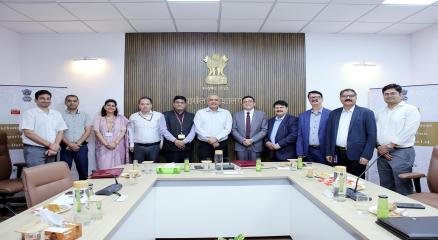
In a strategic warehousing move, the South Eastern Coalfields Limited (SECL), the second largest coal-producing subsidiary of Coal India Limited, has signed a Memorandum of Understanding (MoU) with Central Warehousing Corporation (CWC) for collaboration in coal logistics, railway rake provisioning under GPWIS and similar schemes, and integrated transportation services. Guided by the Union Ministry of Coal, SECL is rapidly working to improve India’s energy security and coal logistics infrastructure. The company is taking steps to boost coal evacuation efficiency and ensure a steady fuel supply to essential sectors. This partnership with CWC is a significant move in that direction. The goal of the partnership with CWC is to strengthen SECL’s coal evacuation capabilities by providing reliable and efficient rail logistics solutions to meet the rising demand from the power, steel, cement, and other sectors. The MoU outlines collaboration in various areas, including dedicated railway rake operations, integrated coal transportation solutions, multimodal logistics, first-mile and last-mile connectivity, and the deployment of digital systems for logistics monitoring and operational efficiency. Under the agreed framework, both organizations will explore provisioning and operation of GPWIS and equivalent racks, integrated rail logistics services, and long-term transportation solutions aimed at improving dispatch efficiency and reducing logistical obstacles. The MoU was signed in the presence of Harish Duhan, Chairman-cum-Managing Director of SECL, and Santosh Sinha, Managing Director of CWC. Functional Directors and senior officials from SECL, as well as representatives from CWC, attended the signing ceremony. SECL plays a vital role in meeting the country's growing coal demand. In the current financial year 2026-27, Coal India Limited has already surpassed the 100 million tonne production mark, with SECL contributing more than 26.8 million tonnes. Central Warehousing Corporation (CWC), a Navaratna Central Public Sector Enterprise under the Government of India, is a leader in integrated logistics and warehousing services. It has extensive experience in rail-linked cargo movement and multimodal transportation solutions. For more such news and updates, visit CARGOCONNECT.