
Loading...
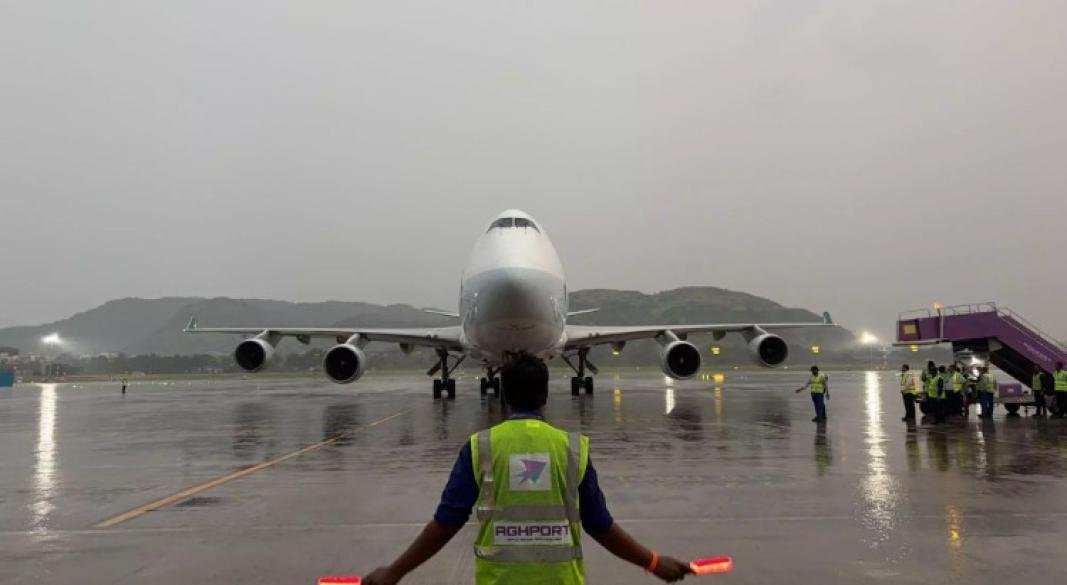
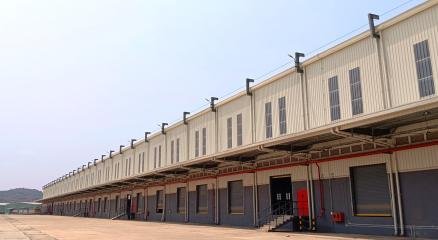
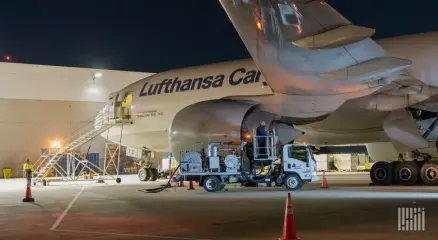
Cargo operations at Navi Mumbai International Airport (NMIA) are facing a series of operational challenges as airlines transition freight services from Mumbai’s Chhatrapati Shivaji Maharaj International Airport (CSMIA). Industry stakeholders have raised concerns over cargo-handling capacity, manpower shortages, equipment availability, delays in customs processes and inadequate coordination, creating uncertainty for carriers ahead of the peak air-freight season.
The concerns have intensified following the decision by Malta-based Challenge Group to temporarily suspend its Mumbai cargo operations. The carrier said the current operating environment at NMIA does not yet provide the reliability and certainty required to maintain its services. Challenge Group had shifted its freighter operations to NMIA following the mandatory transition from CSMIA.
According to Challenge Group, cargo-handling bottlenecks have affected both inbound and outbound operations. The airline's Chief Commercial Officer Or Zak highlighted constraints involving dollies, cargo availability and warehouse processes. He said a substantial volume of inbound cargo was waiting on dollies, limiting the ability to offload arriving aircraft, while export shipments were at times not ready, incorrectly built or awaiting release. The resulting bottlenecks could leave freighters departing with significantly reduced loads or, in some cases, without cargo.
Customs brokers have separately flagged serious delays at the NMIA cargo complex. The Brihanmumbai Customs Brokers’ Association (BCBA) has reported instances of flight-checking delays exceeding 72 hours, along with shortages of operational manpower, loaders, forklifts, trained equipment operators and supervisory personnel. The association has also raised concerns about delays in registration and Permanent Deposit account opening, which can hold up cargo clearance even after shipments are ready for customs processing.
Cargo storage has emerged as another concern, with the BCBA reporting instances of import consignments, including heavy and high-value shipments, being exposed to rain. The association has called for better covered storage, stronger cargo-handling procedures, adequate staffing and equipment, and faster resolution of operational grievances.
The timing of these challenges is particularly significant as air cargo volumes enter the traditional peak season. Industry bodies and freight forwarders have indicated that the problems are not isolated, pointing to recurring delays in flight checking, cargo handling and account registration since freighter operations began at NMIA.
Despite the hurdles, NMIA remains strategically important for Mumbai’s long-term aviation and logistics ecosystem. Several international freighter operators have already operated flights to the airport, while incentives such as landing-fee discounts are being offered to strengthen international cargo connectivity.
For NMIA to establish itself as a competitive air cargo hub, industry stakeholders say operational readiness will need to catch up with the airport’s infrastructure capacity, particularly across ground handling, warehousing, customs coordination and cargo-flow management.
𝐒𝐭𝐚𝐲 𝐓𝐮𝐧𝐞𝐝 𝐭𝐨 CARGOCONNECT 𝐟𝐨𝐫 𝐥𝐚𝐭𝐞𝐬𝐭 𝐮𝐩𝐝𝐚𝐭𝐞𝐬!
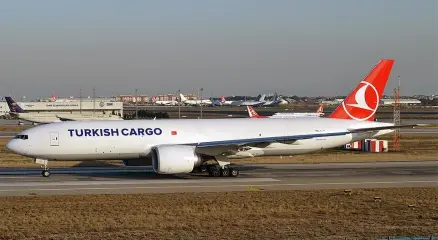
Turkish Cargo has operated its first scheduled cargo flight between Istanbul, Türkiye, and Yerevan, Armenia, establishing a new direct air freight connection between the neighbouring countries. The inaugural Istanbul–Yerevan–Istanbul operation was completed on 15 November 2026, marking a landmark development in regional air cargo connectivity and bilateral trade relations. The development adds Armenia to Turkish Cargo's expanding network and creates another air logistics link between the two markets. According to the company, the inaugural operation was undertaken through coordination between its regional management and operations teams. The new connection is intended to facilitate efficient and reliable cargo transportation while strengthening the airline's international logistics network. Strengthening Regional Air Cargo Connectivity The launch is particularly significant given the historical challenges affecting trade and transportation between Türkiye and Armenia. The two countries have not established formal diplomatic relations, while their shared land border has remained closed since 1993. Consequently, the movement of goods between the neighbouring markets has largely depended on alternative transportation arrangements, including transit through third countries. The introduction of the Istanbul–Yerevan cargo connection provides businesses with an additional air freight option. Istanbul's position as a major international aviation and logistics hub could also offer Armenian businesses improved access to Turkish and international cargo networks, supporting the movement of goods across regional and global markets. However, Turkish Cargo has not yet disclosed details regarding the aircraft deployed, cargo volumes handled, shipment categories or the frequency of future operations. The extent of the service's contribution to bilateral freight movement will depend on its operational schedule and subsequent capacity deployment. Türkiye-Armenia Economic Engagement Milestone The development also builds on earlier efforts to restore transportation and trade links between the two countries. In July 2022, Turkish and Armenian special representatives agreed to initiate direct air cargo transportation and facilitate land-border crossings for citizens of third countries. Türkiye formally lifted its restrictions on direct air cargo transportation with Armenia in January 2023. Passenger connectivity has also improved. Turkish Airlines commenced scheduled passenger flights between Istanbul and Yerevan on 11 March 2026, establishing a regular air link ahead of the latest cargo development. Meanwhile, both governments have continued discussions aimed at normalising bilateral relations and facilitating economic cooperation. In May 2026, Türkiye announced the completion of administrative preparations allowing goods transported through third countries to identify Türkiye or Armenia as their origin or final destination. However, the land-border reopening process remains pending. Against this backdrop, Turkish Cargo's first scheduled Istanbul–Yerevan cargo operation represents a meaningful step towards improving regional logistics connectivity. The development could create additional opportunities for businesses, strengthen commercial engagement and support wider efforts to establish more accessible trade and transportation corridors across the South Caucasus. 𝐒𝐭𝐚𝐲 𝐭𝐮𝐧𝐞𝐝 𝐭𝐨 CARGOCONNECT 𝐟𝐨𝐫 𝐥𝐚𝐭𝐞𝐬𝐭 𝐮𝐩𝐝𝐚𝐭𝐞𝐬!


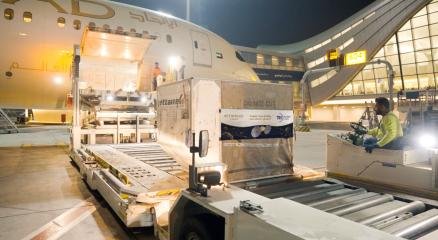
Etihad Cargo has successfully transported a UAE-built space mission probe from Abu Dhabi to the United States, supporting preparations for the Emirates Mission to the Asteroid Belt (EMA). The specialised shipment marks a significant milestone in the UAE's growing space exploration ambitions and highlights the airline's capabilities in handling highly specialised and sensitive cargo. The probe arrived in Colorado on 5 November 2026 after being transported from Abu Dhabi to Chicago on 2 November. The operation followed eight months of close coordination between Etihad Cargo, the UAE Space Agency, the Technology Innovation Institute (TII) and other mission partners to ensure the safe transportation of the specialised equipment. The shipment was undertaken after the probe successfully completed its design, development, assembly and testing in the UAE. It has now been delivered to the Laboratory for Atmospheric and Space Physics (LASP) at the University of Colorado, where it will undergo final integration with the MBR Explorer spacecraft. The next phase will also involve verifying the compatibility of their hardware, software and communication systems ahead of the mission's planned launch from Japan in the first quarter of 2028. The UAE Space Agency is leading and funding the Emirates Mission to the Asteroid Belt, overseeing its execution in collaboration with national and international partners. TII, through its Propulsion and Space Research Centre, led the probe's development in partnership with HEX20, Khalifa University and the National Space Science and Technology Centre at United Arab Emirates University. Commenting on the achievement, Stanislas Brun, Chief Cargo Officer at Etihad Airways, highlighted the airline's role in supporting the UAE's scientific and technological ambitions. He noted that transporting the probe demonstrated Etihad Cargo's ability to deliver safe and reliable solutions for highly specialised shipments while supporting the country's growing presence in advanced technology and space exploration. Eng Mohsen Al Awadhi, Mission Director of EMA, described the transfer as an important transition from the probe's development and testing phase in the UAE to its final integration with the spacecraft. He also highlighted the technical capabilities of the mission team, which achieved flight readiness in less than two years. The Emirates Mission to the Asteroid Belt is expected to cover approximately five billion kilometres, exploring seven asteroids before reaching its ultimate destination, asteroid 269 Justitia. During the final phase, the probe will separate from MBR Explorer and operate autonomously as it approaches the asteroid's surface, capturing detailed images to help scientists examine its characteristics. The successful transportation underscores the growing importance of specialised air cargo solutions in supporting complex scientific, technological and aerospace projects, while reinforcing the UAE's expanding capabilities across the global space ecosystem. 𝐒𝐭𝐚𝐲 𝐭𝐮𝐧𝐞𝐝 𝐭𝐨 CARGOCONNECT 𝐟𝐨𝐫 𝐥𝐚𝐭𝐞𝐬𝐭 𝐮𝐩𝐝𝐚𝐭𝐞𝐬


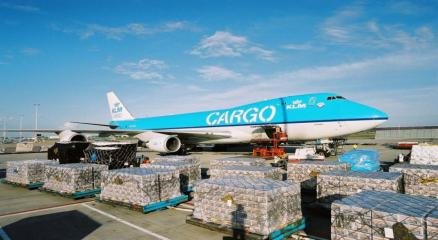
Air France-KLM Martinair Cargo (AFKLMP Cargo) is witnessing strong growth in its air freight business as global supply chain disruptions and rising demand for artificial intelligence (AI) infrastructure shipments encourage shippers to move time-sensitive cargo from sea to air. The trend has strengthened the group's cargo performance in the third quarter of 2026, with demand continuing to outpace available capacity. The cargo division reported a 25.2% year-on-year increase in third-quarter revenue to €677 million, while cargo traffic revenue climbed 24.9% to €566 million. Total cargo volumes increased 5% to 236,000 tonnes, while traffic, measured in revenue tonne-kilometres (RTK), grew 8%. Capacity expanded by a comparatively modest 2.3%, taking the cargo load factor up 2.4 percentage points to 46%. The airline attributed the improved performance to disruptions along key maritime trade routes, particularly around the Suez Canal and Strait of Hormuz, which prompted shippers to shift urgent and high-value consignments to air freight. Additionally, growing demand from AI-related supply chains, including infrastructure and technology shipments, has tightened global air cargo capacity. These developments have enabled the group to secure additional volumes and full-freighter charter opportunities, supporting yields across its network. Alongside the demand-led growth, KLM is restructuring its cargo handling operations at Amsterdam Schiphol Airport. The airline plans to consolidate freight carried on both passenger aircraft and freighters within its own warehouse. The move is aimed at simplifying processes, increasing automation and improving workforce productivity, allowing higher cargo volumes to be managed without additional recruitment. The consolidation will also prepare KLM Cargo for a new cargo terminal planned for completion in 2035, while strengthening Schiphol's potential to attract transfer cargo. KLM intends to expand support services for customers as part of the operational changes. The developments underline how changing global trade patterns, technology-driven demand and operational automation are reshaping the air cargo sector. For AFKLMP Cargo, the ability to respond to shifting freight flows while improving handling efficiency will remain central to sustaining growth. 𝐒𝐭𝐚𝐲 𝐓𝐮𝐧𝐞𝐝 𝐭𝐨 CARGOCONNECT 𝐟𝐨𝐫 𝐥𝐚𝐭𝐞𝐬𝐭 𝐮𝐩𝐝𝐚𝐭𝐞𝐬!