
Loading...
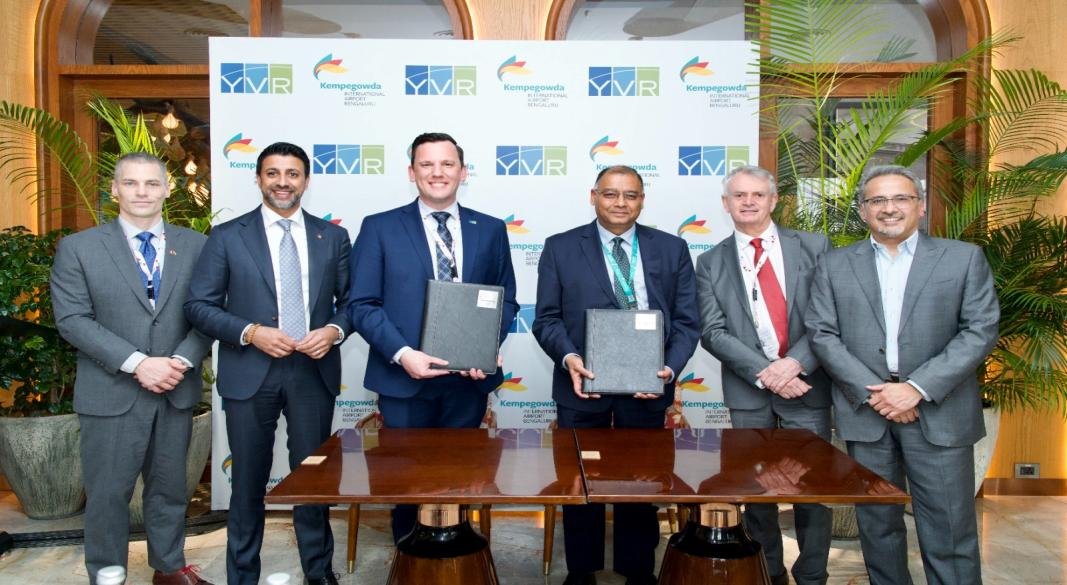
Kempegowda International Airport Bengaluru (BLR) and Vancouver International Airport (YVR) have signed a sister airport agreement aimed at strengthening air cargo connectivity and trade links between Southern India and Western Canada, alongside collaboration in airport technology and operational innovation.
The Memorandum of Understanding (MoU) establishes a framework for cooperation across seven areas, including facilitating air cargo movement between the two regions and exploring direct air services between Bengaluru and Vancouver. The partnership is also expected to support trade linked to growing industries, including technology, across both markets.
“This agreement highlights the growing importance of the Canada–India corridor and the need for stronger collaboration across the aviation ecosystem to support passengers, cargo, and trade. The partnership between YVR and Kempegowda International Airport Bengaluru is a practical example of that approach in action,” said Albert van Veen, Vice President of Innovation and Chief Information Officer, Vancouver International Airport.
The agreement comes amid rising cargo volumes at both gateways. YVR handled approximately 365,000 tonnes of cargo in 2025, registering a 7.4% Year-onYear (YoY) increase. The airport has also reported double-digit cargo growth in 2026 and outlined an ambition to double air cargo volumes over the next five years, supporting Canada's efforts to diversify trade and expand access to global markets.
“This strategic partnership establishes a robust framework to advance technology integration and operational excellence by benchmarking against global best practices. By leveraging Vancouver’s standing as a premier international gateway and Bengaluru’s position as one of India’s most dynamic aviation hubs, the collaboration will focus on co-developing next-generation capabilities across digital platforms, data-driven decision-making, and process optimisation,” noted Girish Nair, Chief Operating Officer of Bangalore International Airport Ltd (BIAL).
BLR Airport, meanwhile, handled approximately 532,000 tonnes of cargo in 2025, marking 6% growth year on year. The Bengaluru gateway is also India's leading airport for perishable exports, reinforcing its role in connecting Indian producers and exporters with international markets.
Combined, the two airports handled more than 897,000 tonnes of cargo (BLR: 532,000 tonnes and YVR: 365,000 tonnes) in 2025, based on their respective reported figures. This growing freight base provides a foundation for closer cooperation between the gateways as they look to strengthen trade flows and explore opportunities for improved air connectivity.
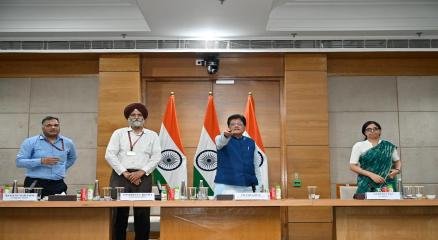
The agreement was announced alongside Canada's Minister of International Trade, the Honourable Maninder Sidhu, and senior representatives from both airports. Sidhu highlighted that YVR's cargo volumes grew by 7.4% in 2025, describing the agreement as a step towards establishing the groundwork for direct air service to Bengaluru and expanding trade and investment between the two countries.
“At Vancouver International Airport, air cargo volumes grew by 7.4% in 2025, and today's agreement with Kempegowda International Airport Bengaluru lays the groundwork for direct air service to one of the world's fastest-growing markets. That means more trade, more investment and stronger people-to-people ties between our countries,” expressed Maninder Sidhu, Canada’s Minister of International Trade.
For both airports, the partnership creates an avenue to exchange expertise in digital platforms, data-driven decision-making and process optimisation, while exploring technological innovations to improve operational efficiency and resilience. YVR's Digital Twin and potential joint innovation pilot projects are among the areas identified for collaboration.
With cargo volumes rising at both gateways and bilateral trade links continuing to develop, the sister airport agreement establishes a framework for closer engagement between the two regions. Its longer-term significance will depend on how the proposed cooperation translates into stronger cargo flows, improved operational capabilities and progress towards direct air connectivity.
“The announcement marks a significant milestone in deepening economic connections between Western Canada and Southern India, establishing a new runway for shared technological and innovative collaboration,” stated Jeff Nankivell, President and CEO of the Asia Pacific Foundation of Canada. “This is an important first step in establishing direct air connectivity between these two growing trade and transport hubs, which combinedly handled more than 885,000 MT of cargo last year,” he added.
“In an era of accelerating change, strategic connectivity is essential for business leaders,” emphasised Victor Thomas, President and CEO of the Canada-India Business Council. “The linkage between two world-class innovation hubs through YVR and BLR will strengthen Canada–India business ties and unlock new economic opportunities,” Thomas stated.

GMR Aero Technic (GAT) has signed a memorandum of understanding (MoU) with France-based UUDS Aero to develop advanced aircraft cabin interiors capabilities in India, with plans to establish an Integrated Cabin Excellence Centre at GAT’s Hyderabad facility. The partnership will bring together GMR Aero Technic’s maintenance, repair and overhaul (MRO) infrastructure and operational capabilities with UUDS Aero’s expertise in cabin interior design, engineering, certification and production. The proposed centre will focus on a comprehensive range of services, spanning cabin design and modification to certification, repair, retrofit, refurbishment, manufacturing and installation. The collaboration aims to provide airlines and aircraft operators with integrated cabin interior solutions, while expanding the scope of specialised aviation services available through India’s growing MRO ecosystem. UUDS Aero brings European design and production credentials to the partnership, holding EASA Part 21J Design Organisation Approval (DOA) and Part 21G Production Organisation Approval (POA). Combined with GMR Aero Technic’s established MRO capabilities, these competencies are expected to support the development of end-to-end cabin solutions for customers in India and international markets. Ashok Gopinath, President and Accountable Manager, GMR Aero Technic, described the agreement as an important milestone in strengthening the company’s aircraft cabin interior capabilities. “The partnership would combine UUDS Aero’s design and certification expertise with GMR Aero Technic’s MRO strengths to deliver integrated cabin solutions across domestic and international markets,” he said. Ashane Gunaratne, Group Chief Technology Officer and Managing Director – Middle East, UUDS Aero, said the collaboration reflected the company’s long-term commitment to the Indian aviation market. “The complementary technical capabilities of both organisations across cabin design, engineering, certification, manufacturing and MRO, with a shared focus on innovation, stronger technical capabilities and sustainable growth,” he highlighted. The proposed Integrated Cabin Excellence Centre marks a step towards broadening GMR Aero Technic’s specialised service portfolio and deepening technical collaboration with an international aerospace partner. Its development is intended to strengthen the availability of integrated aircraft cabin interior capabilities in India, serving the evolving requirements of airlines and aircraft operators.



Singapore Airlines is set to strengthen its presence at Munich Airport with the addition of three new weekly services from the 2026 winter schedule, increasing total flights between Munich and Singapore from seven to ten per week. The expanded schedule will introduce evening departures on Mondays, Wednesdays and Fridays, complementing the airline’s existing daily daytime operations and offering enhanced overnight connectivity between Europe and Asia-Pacific markets. The move is expected to improve onward connections through Singapore to major destinations including Bangkok, Bali, Jakarta, Ho Chi Minh City, Australia and New Zealand, while also enhancing schedule flexibility for both business and leisure travellers. As part of its joint venture partnership with the Lufthansa Group under the Star Alliance framework, Singapore Airlines and Lufthansa Group carriers will collectively offer 17 weekly services between Munich and Singapore. Commenting on the development, Oliver Dersch said the expansion reinforces Munich’s position as a premium European aviation hub while providing passengers with greater connectivity across the Asia-Pacific region. With the revised winter schedule, Singapore Airlines will operate a combined 24 weekly direct flights connecting Frankfurt and Munich with Singapore, further deepening its footprint in the German market and supporting growing long-haul travel demand between Europe and Asia.



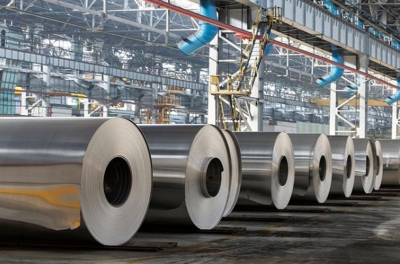
Tata Steel has become the first Indian company to develop pipes specifically designed for transporting hydrogen, marking a major milestone in the country's transition to clean energy. The company’s hydrogen-compliant API X65 pipes were processed at its Khopoli plant using steel produced at its Kalinganagar facility, meeting all critical requirements for safe and efficient hydrogen transportation. By managing the entire production chain—from designing and manufacturing hot-rolled steel to fabricating the pipes—Tata Steel has reinforced its expertise in building essential energy infrastructure. This achievement builds on its 2024 milestone when it became the first Indian steel manufacturer to produce hot-rolled steel for gaseous hydrogen transportation. The hydrogen qualification tests for these newly developed pipes were conducted at RINA-CSM S.p.A in Italy, a globally recognised agency for hydrogen-related testing and certification. The pipes have successfully undergone tests for transporting 100 percent pure gaseous hydrogen at high pressures of up to 100 bar, positioning Tata Steel as a key player in supporting the evolving hydrogen economy. Prabhat Kumar, Vice-President - Marketing & Sales (Flat Products) at Tata Steel, underscored the company’s commitment to innovation in steel manufacturing. "Tata Steel has always been at the forefront of developing advanced steel grades. The successful testing of these ERW pipes highlights our ability to support the energy sector. We are proud to contribute to India’s National Hydrogen Mission, which is a key part of the country’s clean energy transition," he said. He further added that Tata Steel is well-positioned to meet both domestic and global demand for specialised steel pipes used in hydrogen transportation. India’s National Hydrogen Mission aims to produce at least 5 million metric tonnes (MMT) of Green Hydrogen annually by 2030, with the potential to reach 10 MMT per annum to meet export demands. Achieving this ambitious target requires substantial investment in hydrogen generation and transportation infrastructure, including the development of hydrogen-compatible steel pipelines. With the demand for hydrogen-compliant steel expected to rise from 2026-27, industry projections indicate a total requirement of 350,000 tonnes of specialised steel over the next five to seven years. While multiple methods exist for transporting hydrogen, steel pipelines remain one of the most cost-effective solutions for large-scale distribution, ensuring efficiency and safety in India's evolving clean energy landscape.